
The main portion of the book was an interesting story from the perspective of fictional characters. The premise was clever, pointing out things about TV sci-fi that were true and somewhat amusing. (One evening while about half way through the book, I watched a few clips from different Star Trek series. When the situations pointed out in the book happened in each clip, I busted out laughing. My husband looked at me with confusion.) As the story progressed it focused on life and death, and got more interesting as the fictional characters interacted with their actor counterparts. The ending tied things up nicely and left lingering questions to ponder.
Then came the codas which were technically unneeded, but turned a fun story into a deeper, touching and thought-provoking book.
Then came the codas which were technically unneeded, but turned a fun story into a deeper, touching and thought-provoking book.
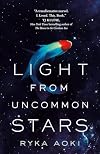
An abused trans girl runs away with her beloved violin, becomes a talented violinist through an extremely kind female instructor who looks to send her soul to hell but falls in love with a female alien. I really like this book despite the short abuse scenes and the whole Hell and demons angle. The weirdness and transcendence is what saved it. Plus it was extra deep to me because I not only play the violin but my husband is the luthier who made my violin. So I appreciated all the music, violin technique, and luthier references.

I read this detective fiction because I was looking for weird fiction. While the premise of not seeing the intersecting cities and the people was certainly clever, the weirdness wore off pretty fast and the characters seemed kind of flat to me. I would actually say the main characters were really the two cities as they seemed to be named at least once on every page. But all-in-all it was a decent read, sort of like watching a B movie on a rainy Sunday instead of going somewhere.

A silly little story from 1958 where a handwritten letter causes robot chaos. Here are a couple of fun quotes. "Hold still a second so the chair can grab you." and "Hitch onto the hookah and choose a tranquilizer from the tray at your elbow."
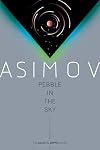
Asimov's first novel, but the last of the Empire series, published in 1950. A good story of an average guy thrown 50,000 years into the future on radioactive Earth. There he gets his mind tampered with, gets embroiled in politics he knows nothing about, and wrestles with becoming the reluctant hero. While enjoyable, this isn't his best novel, but is still very impressive for 1950. I haven't read the other Empire books yet, but greatly enjoyed the Foundation series and most of the robot books.
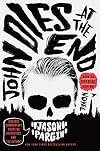
I went looking for a sci-fi with humor and this came highly recommended. But when I started reading this I wanted to stop right then because of the teenage boy humor and ghost/monster scenario. However, when I tried to put it down, I couldn't and didn't stop reading for an hour and continued every chance I got. This was an absolutely enjoyable ride full of monster-killing and psychoactive mind adventure, with a dark, complex and shifting story, friendship and love, and continual, well-placed humor.
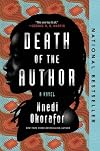
The wonderful story of a paraplegic woman living her life to the fullest despite her large unsupportive family and having to cope with the love and hate of her massive following. I loved this book!
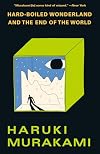
The alternating conscious and subconscious experiences of a Calcutec with an experimental walled world in his brain. A weird and wild ride with quirky characters and a palpable mood. Excellent.
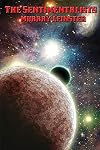
An adorable 1953 short story of honeymooning very alien creatures taking interest in cute human 'pets' and helping them against an evil company. Wonderful!
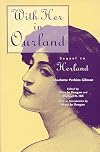
The 1916 sequel to Herland (2nd and 3rd in a trilogy) A heartbreaking look at treatment of women and children in most countries vs Herland with focus on the US. She provides many solutions for democracy and women's rights. While some things have improved for women since this book, on the whole, society's treatment of women, minorities, children and the poor really hasn't made much advancement in 100 years.
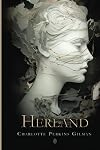
Three men work to understand a land of only women in this groundbreaking 1915 novel contrasting a feminist utopia to the real male dominated society. Gilman has taken all the knowledge of an essay and made it real through the novel format. That does make it a bit didactic but increased the audience who would not otherwise have read her ideas. I found it wonderful to immerse myself in their society but was left so depressed facing the reality of how little we've changed in 100 years.
The Long Earth: The First Sci-Fi Adventure in the Long Earth Series – An Epic Journey Through Parallel Worlds by Terry Pratchett
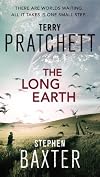
I liked the premise, but wasn't fond of the non-flowing writing or the hopping around to different character groups which also dulled the flow of the book. Rather than a page-turner, I struggled to stay with this book as some parts were repetitive and others redundant, and some characters/creatures are just introduced. Maybe it was because there were two writers or just too much scope to cover smoothly. Or because it was written as the start of a series, so it had to load up all the pre-information. What saved this book for me was Lobsang, the Tibetan motorcycle repairman who has been reincarnated as an ambulatory supercomputer. I even looked at reading the next in the series, but the name The Long War, killed it for me.
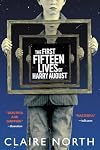
An interesting premise with historical intrigue, frenemy intensity, and the consequences of life's choices. As Harry kept repeating lives and making different choices, he changed those around him and how his life progressed. I enjoyed his relationships with the other kalachakras, especially the intense friend/enemy situation with the wise but evil Vincent. The general feeling of the book was one of sadness and struggle making the 900 pages seem very long, but maybe that was the point.
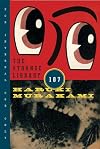
A lonely boy, a mysterious girl and a sheep man attempt to flee a nightmare library basement, in this weird, dream-like mood piece. I like the way we see the story from the perspective of the innocent boy trying to navigate though it all while still maintaining proper respect for elders. The illustrations in this version fit the character of the story perfectly with creepy faces and glowing eyes.
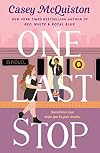
A delightful, life-affirming, LGBTQ+ positive story with warm characters and a spicy, time slip romance. There are thrills, chills and lots of smiles and tears.
The Dispossessed [50th Anniversary Edition]: A Special Edition of the Nebula Award–Winning Classic by Ursula K. Le Guin
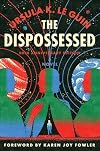
While I liked the concepts, the radical thinking, the characters and her little details, I found reading the book tedious. I was about to give up on it in the middle, when I hit some weird time inconsistencies that made me start looking back to see if I misread or missed something. I started to feel like I was being gaslighted, which I liked because finally something interesting was happening. But then it went back to dull with some encounters that were missed opportunities for character enrichment. I did like the ending events which all happened fairly quickly. Perhaps the slow feeling was meant to express the passage of years, but I would have enjoyed this more with a livelier pace.
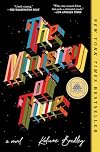
An excellently written, well-thought-out book full of humor, eroticism, danger, intrigue and time alteration. A government time travel project hires 'bridges' to teach several 'expats' brought from the past how to cope in modern times. The main focus is on the relationship between an 1847 seaman and his emotional bridge, both suffering from repressed trauma. I also enjoyed the other expat characters and the relationships they build with each other. This was a true page-turner and Obama's favorite summer read of 2024. I kept thinking, I wonder what Obama thought about that, or, OMG, Obama read that!
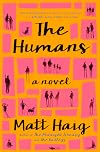
A humorous, griping, uplifting and deeply touching novel about an alien becoming human. It was absolutely excellent and I keep flashing back to it and feeling the emotions.
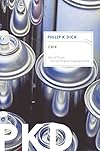
An excellent mind adventure! While reading this book I remembered I had read it as a teen. It must have been the impetuous for my life-long fascination with the brain, how the mind works, and what exactly is reality. I read it now 45 years later and realize what an incredible genius PKD was.