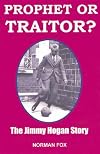
"...It’s the obscurity of Jimmy Hogan that makes the book in many ways. He’s obscure in England as well. He played in England and was 71 years old in 1953. Hogan is the mystery man behind it all as it were. Some of the English team of that time to their dying day regarded Hogan as a traitor. But there was no such thing, in those days, as a coach. So when he finished football he went abroad. And he went to various places –Switzerland, Austria, and so on. And, in each one, he taught them how to play. But he taught them, as it turns out, how to play a much, much superior game to the English. And the irony is that that’s still the case..." (reviewed by Rob Hughes in FiveBooks).
The full interview is available here: http://fivebooks.com/interviews/rob-hughes-on-football
The full interview is available here: http://fivebooks.com/interviews/rob-hughes-on-football
The ESPN World Cup Companion: Everything You Need to Know About the Planet's Biggest Sports Event by David Hirshey
"...If I was an American, and the World Cup is on and for about one month America understands soccer, I need a book that tells me something, that helps me through the tournament. And this book probably does it better for American terms, than the book that’s the real bible, the Brian Glanville book, The Story of the World Cup. The Companion is pacy, passionate, unsparing in detail, and, so far as I know, accurate..."(reviewed by Rob Hughes in FiveBooks).
The full interview is available here: http://fivebooks.com/interviews/rob-hughes-on-football
The full interview is available here: http://fivebooks.com/interviews/rob-hughes-on-football
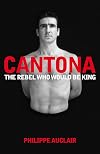
"...Cantona was an astoundingly gifted football player, a bit like Cruyff, and difficult to contain in a single side. And that’s the reason he came to England, because the French couldn’t abide him – imagine a man too arrogant for the French! He was all that. And what the book attempts to tell you, by going back to his origins, is that he’s not even accepted as a Frenchman. He comes from this strange family that lived in a cave that was built into the side of a mountain.
In this book Philippe Auclair, a French football correspondent based in London, turns his pursuit of Eric into an obsession to unravel the strange, and thus compelling, nature of the man. ‘I play with passion and fire. I have to accept that sometimes this fire does harm’ is one line in the book. Ultimately I’m not sure that Auclair, or any man, could explain everything that moves and motivates the dark side of this wonderful showman player. But I doubt anyone gets closer to it. And the irony is that Cantona never really played for France. He did play, maybe 30 times, but I remember the day he was dropped from the French squad. I remember asking the French team coach ‘Why?’ And the guy said to me, which was an astonishing thing to say, ‘Because I’ve got somebody better.’ And actually it proved right, because the guy he had was Zinedine Zidane. So if Cantona hadn’t been such a rebel, we might never have seen the beauty of Zidane…..."(reviewed by Rob Hughes in FiveBooks).
The full show more interview is available here: http://fivebooks.com/interviews/rob-hughes-on-football show less
In this book Philippe Auclair, a French football correspondent based in London, turns his pursuit of Eric into an obsession to unravel the strange, and thus compelling, nature of the man. ‘I play with passion and fire. I have to accept that sometimes this fire does harm’ is one line in the book. Ultimately I’m not sure that Auclair, or any man, could explain everything that moves and motivates the dark side of this wonderful showman player. But I doubt anyone gets closer to it. And the irony is that Cantona never really played for France. He did play, maybe 30 times, but I remember the day he was dropped from the French squad. I remember asking the French team coach ‘Why?’ And the guy said to me, which was an astonishing thing to say, ‘Because I’ve got somebody better.’ And actually it proved right, because the guy he had was Zinedine Zidane. So if Cantona hadn’t been such a rebel, we might never have seen the beauty of Zidane…..."(reviewed by Rob Hughes in FiveBooks).
The full show more interview is available here: http://fivebooks.com/interviews/rob-hughes-on-football show less
Goals from Galilee: The Triumphs and Traumas of the Sons of Sakhnin, Israel's Arab Football Club by Jerrold Kessel
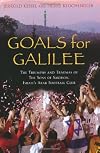
"...I have known Jerrold Kessel for 15 years. He’s a former CNN frontline reporter in the Middle East, and I saw at World Cups how the game gripped his imagination beyond some of the horrors he was sent to report. Now he lives in Jerusalem, and Kessel and his cameraman made a documentary film, We Have No Other Land, about the soccer team of Sakhnin, an Arab town in Galilee. It has a Jewish manager and several Jewish players, but is an Arab team. Against all odds it captured Israel’s State Cup, and represented Israel in Europe. It’s a true story of football conquering prejudice in one of the most suspicious lands on earth.
The documentary is really moving, really powerful. It was filmed four years ago, at the time when the team broke through. The book is an afterthought, if you like. The book certainly tells me a lot that the documentary didn’t, because it’s written in the person of the founder of the club and the players. So it’s an attempt to get inside the club, and to get inside the minds of the people who formed it. But it doesn’t quite come off. Partly, I suppose, because I’m spoilt by seeing the documentary first. The film just worked superbly; you can feel the Gaza Strip from seeing the documentary…
The message is that Arab and Jew are so close to each other, the border is so thin, that they’re really the same people. It’s really like having two different tribes of the same person, forever warring. For the club, there are two successes really. show more One is that the club survives, because its field has been bombed just about every time that Israel bombs across the border. But, forgetting the material side, the second success is a spiritual thing – the club has a Jewish coach, it has Jewish players, but mostly it’s an Arab team...."(reviewed by Rob Hughes in FiveBooks).
The full interview is available here: http://fivebooks.com/interviews/rob-hughes-on-football show less
The documentary is really moving, really powerful. It was filmed four years ago, at the time when the team broke through. The book is an afterthought, if you like. The book certainly tells me a lot that the documentary didn’t, because it’s written in the person of the founder of the club and the players. So it’s an attempt to get inside the club, and to get inside the minds of the people who formed it. But it doesn’t quite come off. Partly, I suppose, because I’m spoilt by seeing the documentary first. The film just worked superbly; you can feel the Gaza Strip from seeing the documentary…
The message is that Arab and Jew are so close to each other, the border is so thin, that they’re really the same people. It’s really like having two different tribes of the same person, forever warring. For the club, there are two successes really. show more One is that the club survives, because its field has been bombed just about every time that Israel bombs across the border. But, forgetting the material side, the second success is a spiritual thing – the club has a Jewish coach, it has Jewish players, but mostly it’s an Arab team...."(reviewed by Rob Hughes in FiveBooks).
The full interview is available here: http://fivebooks.com/interviews/rob-hughes-on-football show less
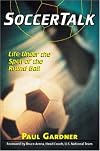
"...This book brings to life something that you can hear from the way I’m talking, informed me as journalist, the World Cup in Argentina in 78. I genuinely believe that that tournament changed history. I think the generals, having repressed the people and had night curfews for I don’t know how long before we got there, simply couldn’t maintain that repression once they’d let the people out on to the streets...." (reviewed by Rob Hughes in FiveBooks).
The full interview is available here: http://fivebooks.com/interviews/rob-hughes-on-football
The full interview is available here: http://fivebooks.com/interviews/rob-hughes-on-football
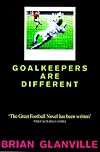
"...This is a novel for teenagers, really, about a guy who becomes a professional goalkeeper. As a teenager I must have read it five or eight times, and I’ve subsequently met other people who’ve had that experience too. It was a book about what you always dreamed of, of being a professional footballer, but it was rendered with grittiness and accuracy and it just has the pace of a really good novel..."(reviewed by Simon Kuper in FiveBooks).
The full interview is available here: http://fivebooks.com/interviews/simon-kuper-on-best-football-books-english
The full interview is available here: http://fivebooks.com/interviews/simon-kuper-on-best-football-books-english
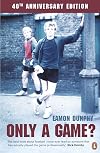
"...This is a cult book among those of us who like reading about football. Eamon Dunphy was a very run-of-the-mill professional footballer in London, playing for Millwall. And he sat down with a journalist to write this book about what it’s really like to be a footballer: the daily life, the grind, the stress, the frustrations with your team-mates, with the manager, the worries about money. It’s not very pretty.l..." (reviewed by Simon Kuper in FiveBooks).
The full interview is available here: http://fivebooks.com/interviews/simon-kuper-on-best-football-books-english
The full interview is available here: http://fivebooks.com/interviews/simon-kuper-on-best-football-books-english
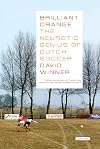
"...When I finished this book, I just wanted to break into applause. It’s completely original. David is a film buff so it has all these film references and it’s just very surprising. He interviews architects and rabbis about what makes Dutch football special. It’s not like other football books – he approaches football through architecture and space and landscape and painting, and it’s absurd, but it works..." (reviewed by Simon Kuper in FiveBooks).
The full interview is available here: http://fivebooks.com/interviews/simon-kuper-on-best-football-books-english
The full interview is available here: http://fivebooks.com/interviews/simon-kuper-on-best-football-books-english
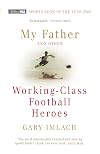
"....It’s a beautiful social history from a time when – it’s clichéd but true – footballers lived in the same area as the fans, they drank in the same pubs with the fans, caught the bus to the game with the fans. There was a maximum wage so there was none of your 170 grand a week. They were all ordinary working people. It’s written by Gary Imlach, a sports TV journalist, and it’s about his father, Stewart, who was a professional footballer in the 1950s...." ( Reviewed by Steve Bloomfield in Fivebooks).
The full interview is available here: http://fivebooks.com/interviews/steve-bloomfield-on-world-football
The full interview is available here: http://fivebooks.com/interviews/steve-bloomfield-on-world-football
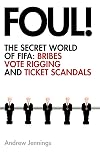
"....Andrew Jennings is a top investigative journalist and has done all sorts of things that people would consider more serious, but he has really lifted the lid on how corrupt some parts of the modern-day game really are. He is the only journalist who has ever been banned from FIFA press conferences. Sepp Blatter absolutely hates him. Blatter has been the president of FIFA since 1998. Football is incredibly undemocratic. You get people who have been in power for years and years and years and they nobble their opponents so they get to carry on. ..." ( Reviewed by Steve Bloomfield in Fivebooks).
The full interview is available here: http://fivebooks.com/interviews/steve-bloomfield-on-world-football
The full interview is available here: http://fivebooks.com/interviews/steve-bloomfield-on-world-football
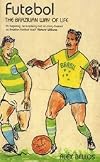
"....It’s a magical, magical book. It tells the story of the whole country by telling the story of its football. My favourite story is probably the tale of Brazil hosting the World Cup for the first time in 1950. They built a new stadium, the Maracan, which was the biggest in the world – for 200,000 people. We think of Brazil as the greatest ever World Cup side but back then they still hadn’t ever won it. Everyone was so confident they would win in 1950 that the newspapers anointed them champions the day before the final. They lost 2-1. Out of the ashes of that came the Brazil that we know now..."( Reviewed by Steve Bloomfield in Fivebooks).
The full interview is available here: http://fivebooks.com/interviews/steve-bloomfield-on-world-football
The full interview is available here: http://fivebooks.com/interviews/steve-bloomfield-on-world-football

"....This is one of the most extraordinary fictional works on sport that I’ve seen and certainly on women and sport. The principal character is called Hemprova Mitra, or Hem for short. She’s a Bengali girl from Calcutta who is chafing at school and family restrictions, and she decides that her school should have a football team. She’s a gay woman, and she leaves her husband who she’s married to as a result of an arranged marriage. She rejects her family and takes a female lover, and football seems to propel her and give her confidence as a character moving through life. It’s a much more interesting story than Bend It Like Beckham was, which some might compare it to..." (reviewed by John Turnbull in FiveBooks).
The full interview is available here: http://fivebooks.com/interviews/john-turnbull-on-soccer-second-language
The full interview is available here: http://fivebooks.com/interviews/john-turnbull-on-soccer-second-language
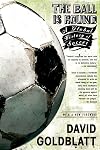
"....This book was published in 2006 in the UK and was sent to me. It’s about 1,000 pages long and the copy I got was a hardback and I remember the impact it made as it hit my doorstep. I think for a book on sport that’s unique, a book of that length. But, setting sport aside, I think it’s one of the best English-language narrative histories that I’ve read on any subject, certainly from the first decade of the 21st century. Goldblatt is an amazing, very gifted storyteller. He’s a football reporter for the BBC, and his work is a treasure, I think.
The author starts in pre-history. In Mesoamerican cultures the ball game is a place where you can encounter the gods – it’s almost a mythological setting. And he quickly gets to the modern game, association football, and goes through its development on every continent. He’s interested in the social mechanisms that work outside the sporting complex. He is very aware of context, that football never exists on its own, but that it shapes culture and is shaped by cultural forces. It’s more a work of history and sociology: the game, the matches that are played, are just a way of illustrating the social forces at work...." (reviewed by John Turnbull in FiveBooks).
The full interview is available here: http://fivebooks.com/interviews/john-turnbull-on-soccer-second-language
The author starts in pre-history. In Mesoamerican cultures the ball game is a place where you can encounter the gods – it’s almost a mythological setting. And he quickly gets to the modern game, association football, and goes through its development on every continent. He’s interested in the social mechanisms that work outside the sporting complex. He is very aware of context, that football never exists on its own, but that it shapes culture and is shaped by cultural forces. It’s more a work of history and sociology: the game, the matches that are played, are just a way of illustrating the social forces at work...." (reviewed by John Turnbull in FiveBooks).
The full interview is available here: http://fivebooks.com/interviews/john-turnbull-on-soccer-second-language
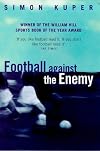
"....This book was published in the United Kingdom in 1994 and, to me, it’s the most important book on soccer in English. He wrote this as a very young person, just out of university, and what really impressed me is that early on in the book, in the first couple of pages, he confesses he knows very little about big soccer, big football, and that he’s never sat in a press box or spoken to a professional footballer. This is pretty unique for sports writers, who are usually claiming an expertise they don’t have. Early on he describes interviewing Roger Milla, the Cameroonian forward, and not being able to look up from his list of questions. I like that kind of openness, his willingness to learn about the sport. His father is Adam Kuper, a well-known anthropologist who’s done a lot of ethnographic studies in Southern Africa, and I’m sure that influenced Simon and the questions that he brought to the game. His questions are anthropological ones, in a sense, and that’s an influence for the good when writing about football. Another thing that he does, which is probably unique for that time, is he doesn’t take an England-centred view of football. The London publishing market, and the English press in particular, are infatuated with English football. Simon has one chapter on Celtic and Rangers, who are in Glasgow and so from a Londoner’s point of view might as well be on the moon. So he’s not going to the power centres of world soccer. Instead he goes to Ukraine, show more for example, and to South Africa.
It would be diminishing to call this book a travelogue, but that’s what it is, superficially. It is a nine-month journey he makes on £5,000 in the early 90s (when you could still travel the world on £5,000), watching football and talking to people. That’s what it is in some sense, but it’s also more than that. The power in it is that he’s not trying to get one theme or one message from his journey; he just allows it to happen...."(reviewed by John Turnbull in FiveBooks).
The full interview is available here: http://fivebooks.com/interviews/john-turnbull-on-soccer-second-language show less
It would be diminishing to call this book a travelogue, but that’s what it is, superficially. It is a nine-month journey he makes on £5,000 in the early 90s (when you could still travel the world on £5,000), watching football and talking to people. That’s what it is in some sense, but it’s also more than that. The power in it is that he’s not trying to get one theme or one message from his journey; he just allows it to happen...."(reviewed by John Turnbull in FiveBooks).
The full interview is available here: http://fivebooks.com/interviews/john-turnbull-on-soccer-second-language show less
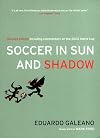
".... The title [Soccer in Sun and Shadow] refers to the football stadium, where you can buy seats on one side or the other. Some are in the sun and they are cheaper, or you can buy seats in the shady part which is preferable but more pricey. And the very first sentence of the book is: ‘The history of football is a sad voyage from beauty to duty.’ What Galeano means is that sport as play has been lost as an idea in Western capitalist culture. Sport is now competition and sport is consumable.
Galeano is, of course, well-known for his social activism, his writing about the marginalised, and the underside of Latin America. But it’s a complex metaphor; really it could be taken many different ways. The soccer in the sun could be what everyone sees on TV but the shadow side may be more interesting. But in this book he argues that the idea of play as a philosophy in sport is very important to humanity, and it gets minimised or cheapened when sport gets commodified. I think that’s what Galeano means. He’s looking for playfulness in soccer, he’s looking for a beauty in it, and when we only focus on the élite, and the very upper levels of the game, you miss some of that – the beauty of the shadow, the hidden part. Soccer is played every day, all over the world, in much more extraordinary circumstances than you’ll see at the World Cup. That’s what he’s trying to recapture. Although the odd thing is that he writes about the World Cup every four years and updates show more this book. He’s written about the 2002 and the 2006 World Cups and he’ll write about this one again.
He starts there [in Uruguay]. All his [Galeano's] work is written in what in Latin America is called the crónica form, which are very short episodes. He has great credibility because, of course, Uruguay hosted the first World Cup and won the first World Cup. And so he reaches back to those kinds of memories. I suppose, maybe, in the way of nostalgia, things always seem sweeter and more innocent and more playful looking back. But I think he’s probably right in some sense. His books were the first that I read when I started writing about soccer, and they influenced me to look elsewhere...." (reviewed by John Turnbull in FiveBooks).
The full interview is available here: http://fivebooks.com/interviews/john-turnbull-on-soccer-second-language show less
Galeano is, of course, well-known for his social activism, his writing about the marginalised, and the underside of Latin America. But it’s a complex metaphor; really it could be taken many different ways. The soccer in the sun could be what everyone sees on TV but the shadow side may be more interesting. But in this book he argues that the idea of play as a philosophy in sport is very important to humanity, and it gets minimised or cheapened when sport gets commodified. I think that’s what Galeano means. He’s looking for playfulness in soccer, he’s looking for a beauty in it, and when we only focus on the élite, and the very upper levels of the game, you miss some of that – the beauty of the shadow, the hidden part. Soccer is played every day, all over the world, in much more extraordinary circumstances than you’ll see at the World Cup. That’s what he’s trying to recapture. Although the odd thing is that he writes about the World Cup every four years and updates show more this book. He’s written about the 2002 and the 2006 World Cups and he’ll write about this one again.
He starts there [in Uruguay]. All his [Galeano's] work is written in what in Latin America is called the crónica form, which are very short episodes. He has great credibility because, of course, Uruguay hosted the first World Cup and won the first World Cup. And so he reaches back to those kinds of memories. I suppose, maybe, in the way of nostalgia, things always seem sweeter and more innocent and more playful looking back. But I think he’s probably right in some sense. His books were the first that I read when I started writing about soccer, and they influenced me to look elsewhere...." (reviewed by John Turnbull in FiveBooks).
The full interview is available here: http://fivebooks.com/interviews/john-turnbull-on-soccer-second-language show less

"...This book is a parody of the hooligan’s memoir, which is a genre, and there is a quite a big market for hooligans’ memoirs...."(reviewed by David Baddiel in FiveBooks).
The full interview is available here: http://fivebooks.com/interviews/david-baddiel-on-football
The full interview is available here: http://fivebooks.com/interviews/david-baddiel-on-football
The Story of the World Cup: The Essential Companion to South Africa, 2010 (World Cup 2010) by Brian Glanville
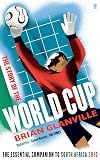
"...It’s continually being revised and updated and it is very, very good for knowing what happened in each World Cup, at each match. It’s the gold standard of sports writing.
This book does emote and is not just a reference book. It’s got match reports and polemic and its purpose is to be a reference book, but it gives more of a perspective, more vision...."(reviewed by David Baddiel in FiveBooks).
The full interview is available here: http://fivebooks.com/interviews/david-baddiel-on-football
This book does emote and is not just a reference book. It’s got match reports and polemic and its purpose is to be a reference book, but it gives more of a perspective, more vision...."(reviewed by David Baddiel in FiveBooks).
The full interview is available here: http://fivebooks.com/interviews/david-baddiel-on-football
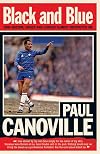
"...I met Paul Canoville at the FA Cup semi-final and, you know, heads up to him. He was the first black player at Chelsea [debuted in 1982]. He has ten kids by ten different women, which is also impressive. He’s 50 now and really looks very well, considering that racism, drugs and cancer almost destroyed him. I remember when a black player would get a lot of stick from the terraces, even from their own supporters. Now the players being black is just something we expect. He wasn’t a brilliant player but it’s an amazing story...."(reviewed by David Baddiel in FiveBooks).
The full interview is available here: http://fivebooks.com/interviews/david-baddiel-on-footbal
The full interview is available here: http://fivebooks.com/interviews/david-baddiel-on-footbal
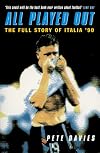
"...This is about the 1990 World Cup and is one man’s story of going as a fan to Italia 90 and it’s another example of the new emotional writing about football. The cover is Gazza crying, which is now rather clichéd, but then it was an icon of the change in attitude towards football and men and how emotional they can be about football – the sheer emotional experience of being there. England played Germany in the semi-final in an epic game and England went out on penalties. There’s no embarrassment about how emotional a man can feel about this and it goes with Nick’s book as part of the sea change in how men and football were being portrayed...."(reviewed by David Baddiel in FiveBooks).
The full interview is available here: http://fivebooks.com/interviews/david-baddiel-on-football
The full interview is available here: http://fivebooks.com/interviews/david-baddiel-on-football
"...In about 1990 there was this sea change in the way people expressed themselves about football – more emotionally. Nick’s book sets the stall out for that. It shows the inner life of the football fan and describes how men can be thinking about football all the time – that it’s always there, that it is the backdrop to your thoughts if your team is about to play an important match. It’s very easy to read and very easy to connect to if you’re a football fan..." (reviewed by David Baddiel in FiveBooks).
The full interview is available here: http://fivebooks.com/interviews/david-baddiel-on-football
"...Breyten Breytenback is another one of our most esteemed Afrikaans poets...My major issue with Notes from the Middle World is this concept of ‘unbelonging’. He’s anti the idea of identity. I find his reaction so powerful in the negative that you are left feeling he is as attached to identity and home as much as anybody talking about it in the positive...." (reviewed by Kevin Bloom in FiveBooks).
The full interview is available here: http://fivebooks.com/interviews/kevin-bloom-on-post-apartheid-identity
The full interview is available here: http://fivebooks.com/interviews/kevin-bloom-on-post-apartheid-identity
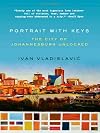
"...I think that Ivan Vladislavic is probably our most unheralded writer. He is an astoundingly accomplished master of the English sentence.
The book is a series of 138 fragments, each dealing with a specific symbol of Johannesburg, like our keys and our walls. The key is a very symbolic Johannesburg object because we are determined to lock up our stuff. We all walk about with a lot of keys, and Ivan homes in on that. But for me the most important thing that he focuses on is the walls. Through the 138 fragments, I think there are 19 or 20 that look at the subject. He explains to people how the Johannesburg psyche is totally embodied in the height of the walls. And he does it in a very subtle, suggestive and ultimately powerful way. He will talk about barbed wire on top of the wall above the metal spikes. He will talk about the electric fencing and how walls seem to get higher as the city becomes more inward looking. There is no street culture in the affluent parts of South Africa, there is no eye contact....." (reviewed by Kevin Bloom in FiveBooks).
The full interview is available here: http://fivebooks.com/interviews/kevin-bloom-on-post-apartheid-identity
The book is a series of 138 fragments, each dealing with a specific symbol of Johannesburg, like our keys and our walls. The key is a very symbolic Johannesburg object because we are determined to lock up our stuff. We all walk about with a lot of keys, and Ivan homes in on that. But for me the most important thing that he focuses on is the walls. Through the 138 fragments, I think there are 19 or 20 that look at the subject. He explains to people how the Johannesburg psyche is totally embodied in the height of the walls. And he does it in a very subtle, suggestive and ultimately powerful way. He will talk about barbed wire on top of the wall above the metal spikes. He will talk about the electric fencing and how walls seem to get higher as the city becomes more inward looking. There is no street culture in the affluent parts of South Africa, there is no eye contact....." (reviewed by Kevin Bloom in FiveBooks).
The full interview is available here: http://fivebooks.com/interviews/kevin-bloom-on-post-apartheid-identity
Country of My Skull: Guilt, Sorrow, and the Limits of Forgiveness in the New South Africa by Antjie Krog
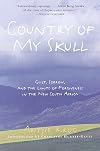
"...This is an astounding work of nonfiction. Antjie is one of South Africa’s most important Afrikaans poets. This was her first full book-length work of English prose. She worked as a journalist for the South African Broadcasting Corporation at the Truth and Reconciliation Commission, and she went around the country listening to testimony of victims of apartheid and families of people who had been killed by the apartheid security police. And this book is critical for an understanding of South Africa.
She takes you into the raw emotion that exists in South African to this day. And in terms of the emotional aspect, in terms of the feelings, the blood, the open wounds, the heartache and hope and hopelessness she expresses, she does it better than anyone else. She does pepper the book with her own reasons for staying committed to South Africa..." (reviewed by Kevin Bloom in FiveBooks).
The full interview is available here: http://fivebooks.com/interviews/kevin-bloom-on-post-apartheid-identity
She takes you into the raw emotion that exists in South African to this day. And in terms of the emotional aspect, in terms of the feelings, the blood, the open wounds, the heartache and hope and hopelessness she expresses, she does it better than anyone else. She does pepper the book with her own reasons for staying committed to South Africa..." (reviewed by Kevin Bloom in FiveBooks).
The full interview is available here: http://fivebooks.com/interviews/kevin-bloom-on-post-apartheid-identity
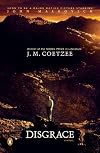
"...This book was written in the late 90s and although it is very difficult – especially with writers like J M Coetzee – to link the work to the man, my personal reading of the book is that it is a work of profound disappointment and sadness.
It is all about a 50-something professor, David Lurie, who teaches at a Cape Town university. He has an affair with a young student – Melanie. He gets hauled before a disciplinary panel and refuses to defend himself.
He doesn’t see why he should submit to a jury of his peers, who are as compromised, if not more compromised, than he is. He views the whole thing as a farce, and he goes off to live with his daughter Lucy on a farm in the Eastern Cape – which is a beautiful part of the country, and Coetzee’s descriptions of it are second-to-none. What happens here is a rape.
Lucy gets raped by a group of black men who break into the farmhouse. And David gets beaten and tied up in the bathroom and, ultimately, this is symbolic of his powerlessness over these sorts of events and eventually over history. What Coetzee is basically saying is that South Africa is the bastard child of an interracial rape. And it is a very powerful metaphor for what the country is.
Now the reaction to the book in South Africa was vicious. Coetzee was censured in parliament. Thabo Mbeki spoke out against the book in a public forum. One of Mbeki’s major issues when he was president, and I think it still remains, is this image of a black man as show more promiscuous and unhinged, and Disgrace did portray that. But I think what the ANC didn’t get was how the book was also portraying white culpability in that entire metaphor. It is an act of revenge for a rape that is perpetrated over 350 years.
Coetzee no longer lives in South Africa. Although he will never confirm or deny this, it is my reading that the reaction to Disgrace from the ANC had quite a bit to do with him leaving South Africa for Adelaide....." (reviewed by Kevin Bloom in FiveBooks).
The full interview is available here: http://fivebooks.com/interviews/kevin-bloom-on-post-apartheid-identity show less
It is all about a 50-something professor, David Lurie, who teaches at a Cape Town university. He has an affair with a young student – Melanie. He gets hauled before a disciplinary panel and refuses to defend himself.
He doesn’t see why he should submit to a jury of his peers, who are as compromised, if not more compromised, than he is. He views the whole thing as a farce, and he goes off to live with his daughter Lucy on a farm in the Eastern Cape – which is a beautiful part of the country, and Coetzee’s descriptions of it are second-to-none. What happens here is a rape.
Lucy gets raped by a group of black men who break into the farmhouse. And David gets beaten and tied up in the bathroom and, ultimately, this is symbolic of his powerlessness over these sorts of events and eventually over history. What Coetzee is basically saying is that South Africa is the bastard child of an interracial rape. And it is a very powerful metaphor for what the country is.
Now the reaction to the book in South Africa was vicious. Coetzee was censured in parliament. Thabo Mbeki spoke out against the book in a public forum. One of Mbeki’s major issues when he was president, and I think it still remains, is this image of a black man as show more promiscuous and unhinged, and Disgrace did portray that. But I think what the ANC didn’t get was how the book was also portraying white culpability in that entire metaphor. It is an act of revenge for a rape that is perpetrated over 350 years.
Coetzee no longer lives in South Africa. Although he will never confirm or deny this, it is my reading that the reaction to Disgrace from the ANC had quite a bit to do with him leaving South Africa for Adelaide....." (reviewed by Kevin Bloom in FiveBooks).
The full interview is available here: http://fivebooks.com/interviews/kevin-bloom-on-post-apartheid-identity show less

"...It was written by Qadi (judge) ‘Iyad, who lived in Spain in the 12th century, when it was ruled by the Muslims. Qadi ‘Iyad had read it all, and had considered it all, and was intimate with the events that happened in the lifetime of the Prophet. And he puts these events together in a way that makes it digestible. What Qadi ‘Iyad could do was to somehow translate his love of the Prophet into an account that was not limiting, but was reliable...." (reviewed by Ahmad Thomson in FiveBooks).
The full interview is available here: http://fivebooks.com/interviews/ahmad-thomson-on-essence-islam
The full interview is available here: http://fivebooks.com/interviews/ahmad-thomson-on-essence-islam

"...Imam Malik lived about 100 years after Muhammad, in the 8th century CE. Perhaps his most well-known book is the Muwatta, which means ‘the well-trodden path’. It’s like survival-kit Islam, if you like – this is the essentials, this is what you have to know. And so you’d find all the great people of knowledge of that time would know both the Qur’an and the Muwatta by heart. It’s not just a collection of sayings, it’s also about action, about behaviour: often he says, ‘This is what the people of knowledge (in Madina) do.’..." (reviewed by Ahmad Thomson in FiveBooks).
The full interview is available here: http://fivebooks.com/interviews/ahmad-thomson-on-essence-islam
The full interview is available here: http://fivebooks.com/interviews/ahmad-thomson-on-essence-islam
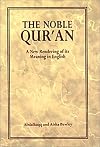
"...This is a beautiful translation, where some of the key terms are not even translated, and there’s a small glossary at the back with a description of what this term means. And it helps you to keep to the original meaning of the Qur’an – it’s just a clear, crisp rendering of its meaning in English...." (reviewed by Ahmad Thomson in FiveBooks).
The full interview is available here: http://fivebooks.com/interviews/ahmad-thomson-on-essence-islam
The full interview is available here: http://fivebooks.com/interviews/ahmad-thomson-on-essence-islam

"...One finds in it this extraordinary illumination and understanding of the meaning of the various acts of worship. It draws on the Qur’an, it draws on the sayings of the Prophet, it draws on the writings of some of the great people of wisdom of the past. The purpose of the book is to say: this is something you were never taught at school – it’s actually talking about a whole zone of knowledge that has been kept at bay, if you like, by established educational institutions in what’s called the West...." (reviewed by Ahmad Thomson in FiveBooks).
The full interview is available here: http://fivebooks.com/interviews/ahmad-thomson-on-essence-islam
The full interview is available here: http://fivebooks.com/interviews/ahmad-thomson-on-essence-islam

"...It’s set in the future, in an information-based society, where even students are monitored, and their access to information is restricted according to what is deemed necessary for their requirements. But then the main character in the book decides to leave. He has this meeting with a nomad, and the nomad says, ‘I’m leaving tomorrow at dawn if you want to come with me.’ And they’re going out into the desert, beyond this bubble of so-called civilisation, into a completely different world, which this society would define as backward and primitive, but, in fact, amongst whose people are people of great wisdom and knowledge..." (reviewed by Ahmad Thomson in FiveBooks).
The full interview is available here: http://fivebooks.com/interviews/ahmad-thomson-on-essence-islam
The full interview is available here: http://fivebooks.com/interviews/ahmad-thomson-on-essence-islam
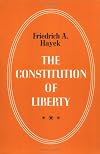
"...It’s about why democracy is not just about elections. The meaning of freedom, Hayek says, is negative: his is a negative concept of freedom, not a positive one. It’s not about what government or others should do, it is about freedom from coercion. And that gets complicated when more than one individual, when a multiplicity of individuals, share a society. Who should lead? Who is to govern? What are the criteria? And obviously in Western society there are different ideas about who is to govern and in what way – but the basic themes are liberty, the rule of law, a government that is elected by the people and is for the people..." (reviewed by Ayaan Hirsi Ali in FiveBooks).
The full interview is available here: http://fivebooks.com/interviews/ayaan-hirsi-ali-on-women-and-islam
The full interview is available here: http://fivebooks.com/interviews/ayaan-hirsi-ali-on-women-and-islam