
A rogue neutron star passes close to our solar system and an expedition is sent to investigate. What they find is... absolutely fascinating. Very highly recommended!!
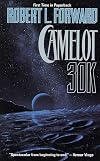
Wow. Beg, borrow, or steal a copy of this book and read it. Do not skip ahead -- the surprise ending will blow your mind. One of the most memorable sci-fi books I've ever read. Very original concept.
Adaptation in Natural and Artificial Systems: An Introductory Analysis with Applications to Biology, Control, and Artifi by John H. Holland
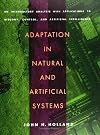
Great ideas from one of the foremost experts in this new field. Not the easiest read in the world; it's more of a scholarly treatise than a popularization. Very interesting, though.
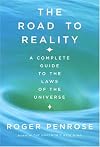
Just... wow. Apparently Dr. Penrose has written an entire Ph.D Physics course in a single volume. This book starts out with basic math concepts like fractions and exponents, then progresses to teach the higher math needed to understand the physics. Caveat lector: the first three hundred pages or so are a very intense math course in preparation for the rest of the book. Some books are meant to be read in a few hours, some over a weekend, some over the course of a few weeks or months. This book is in a class of its own; it's like finding a lost tome from an ancient civilization that holds the secrets of the Universe -- but which will take years to understand. I bought it when it came out, making a special trip to the store and paying full price. Worth every penny and then some. There are used copies available for well under US$20; for the cost of a nice dinner, you can buy many years' worth of college-level course content. Amazing. If I had to choose only one book to read for the rest of my life, this would be my choice, simply for the density of interesting content. I'll be reading this one for years. Best nonfiction book I've read in a long time. Possibly the best ever.
One of my all-time favorite books -- and the one that got me interested in dynamical systems. This would make the short list of books I would want along if stranded on the proverbial desert island. Gleick not only does an outstanding job of describing chaos (in the sense of sensitivity to initial conditions), but inspires readers to experiment. Reading this book while playing around with the ideas it inspires using your favorite programming language is a fun way to pass the time. (Try programming a model of the waterwheel and graphing its velocity!) Very, very highly recommended if you've ever had the slightest interest in science, math, or computers.
Well, it's a classic -- and Mandelbrot's idea of "fractals" is certainly a powerful one. I just wish he had decided to work with a co-author on this one. James Gleick and Ivars Peterson do a much better job of describing the science of fractals, IMHO. Kudos to Dr. Mandelbrot for discovering this new world, though!