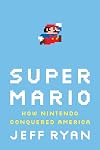
I didn't find this book dull, but there were some glaring editing issues that made it hard to read in spots. At one point, when discussing the CD based gaming system - the text uses "Philips" and "Panasonic" interchangeably over two pages.
There were were also a few paragraphs that just sort of ended, A couple that just sort of rambled, and a few that when I finished it, I couldn't help but say "what?" - and reread it (sometimes multiple times) and ended up with the same reaction.
In the notes to the book, the author states that he easily could have stretched the book out to twice it's size, but cut it down to make it more "user friendly". I agree with this decision, as the flow of the book seems to follow fairly well under this model - however, the copy editor needs to be smacked for not doing their job a little better and actually making sure things made sense, subjects agreed with verbs, etc.
Overall, a decent history, and I do recommend the book - just be willing to read it for information, and glean facts from that - don't expect it to be read flawlessly and you will be fine.
One other note - I have to agree that it waxes poetic about Mario a little bit too much. While I suppose if you look at the title as "Super Mario, How Nintendo Conquered America" it's fine, but if you but the colon in there (expecting the book to be about Nintendo's dominance over the past 3 decades in gaming, but cleverly named after their #1 superhero) it falls short.
There were were also a few paragraphs that just sort of ended, A couple that just sort of rambled, and a few that when I finished it, I couldn't help but say "what?" - and reread it (sometimes multiple times) and ended up with the same reaction.
In the notes to the book, the author states that he easily could have stretched the book out to twice it's size, but cut it down to make it more "user friendly". I agree with this decision, as the flow of the book seems to follow fairly well under this model - however, the copy editor needs to be smacked for not doing their job a little better and actually making sure things made sense, subjects agreed with verbs, etc.
Overall, a decent history, and I do recommend the book - just be willing to read it for information, and glean facts from that - don't expect it to be read flawlessly and you will be fine.
One other note - I have to agree that it waxes poetic about Mario a little bit too much. While I suppose if you look at the title as "Super Mario, How Nintendo Conquered America" it's fine, but if you but the colon in there (expecting the book to be about Nintendo's dominance over the past 3 decades in gaming, but cleverly named after their #1 superhero) it falls short.

The edition of the book that I have (which I purchased at the Hershey Story Museum, no less!) is now nine years old, and some things have already changed that are brought up in the book - but the crux of the story is still the same, and some of it is absolutely fascinating.
Brenner does an excellent job breaking down a large amount of information into an easy to follow narrative, and as is usual in the truth v. fiction debate, you could simply not make some of these characters up.
I agree with majorbabs, you certainly end up eating more chocolate than you might normally while reading this book, and you will need to ensure a decent supply near at hand.
I disagree with Naberius, though. The first chapter really sets up the tone of the relationship as it now stands between the companies, and the interview with the GAO official is priceless!
Overall, a good read and I would recommend it to all who are interested in candy, turn of the 20th century business ethics, or corporate management theory.
Brenner does an excellent job breaking down a large amount of information into an easy to follow narrative, and as is usual in the truth v. fiction debate, you could simply not make some of these characters up.
I agree with majorbabs, you certainly end up eating more chocolate than you might normally while reading this book, and you will need to ensure a decent supply near at hand.
I disagree with Naberius, though. The first chapter really sets up the tone of the relationship as it now stands between the companies, and the interview with the GAO official is priceless!
Overall, a good read and I would recommend it to all who are interested in candy, turn of the 20th century business ethics, or corporate management theory.