
Tell: Love, Defiance, and the Military Trial at the Tipping Point for Gay Rights by Major Margaret Witt
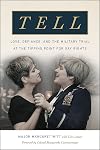
While Major Margie Witt (the "g" is hard) is the first author, the book is written in third person. Her collaborator, Tim Connor, is a law journalist, which is clearly apparent in the book's style. The first half reads like a high-quality magazine piece: engaging, personal, and precise. When the topic turns to courtroom action, the explanations of the legal principles involved are equally precise. It takes more concentration and reading some sentences two or three times, but the reader comes away with a clear understanding. It's a satisfying read both from getting to know Margie and from gaining insight into the legal issues involved. Connor's one stylistic stumbling block is his (I presume his) insistence on precision with verb tenses. Descriptions of people, places, or institutions, the descriptions still being applicable in 2017, sentences switch to present tense even when elsewhere in the same sentence past tense is used to tell the story. The juxtaposition is awkward. The book could have benefited from relaxing the grammatical precision in favor of a natural style, which it generally achieves in other respects.
To summarize: an in-depth look at one servicemember's military career under Don't Ask, Don't Tell, the course of her case through the legal system, the legal standard that bears her name, and the impact of her story on the larger advancement of civil rights.
To summarize: an in-depth look at one servicemember's military career under Don't Ask, Don't Tell, the course of her case through the legal system, the legal standard that bears her name, and the impact of her story on the larger advancement of civil rights.
 This review was written for LibraryThing Early Reviewers.
Essentially a middle-school-level textbook structured around Pride celebrations, this provides a concise but strong grounding in LGBTQ history and contemporary LGBTQ cultures, for kids who may have no personal connection to the LGBTQ community, or who know LGBT adults, or are themselves queer or questioning. Stevenson doesn't talk down to her audience, at times tackling tough subjects like oppression, AIDS, and struggle within the LGBTQ community. She maintains a broad perspective with emphasis on the roles young people may play, buttressed by interspersed personal stories (including her own) and a survey of LGBTQ experience in countries beyond the US and her native Canada. This is clearly a labor of love, as seems to be the focus of the publisher, but Stevenson and her editorial support have maintained a high standard to tell the LGBTQ story with as much candor and integrity as the book possibly can.
This review was written for LibraryThing Early Reviewers.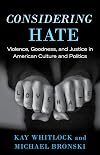
Considering Hate is a classic academic perspective on "hate." There are a few insightful passages, such as the retrospective on the role of "hate," racism, xenophobia, etc. over the first century of movies. There are careful definitions of a few key terms, like "goodness," although there is no explicit definition of "hate." In general the authors encourage a systemic perspective, and an activist orientation, rather than a demonizing or hopeless attitude. Liberal arts types will respond well to this discussion. For the rest of us, our eyes glazing over gets in the way of the message, and we would do better to look for a short-form essay from the authors.
This review was written for LibraryThing Early Reviewers.Winning Marriage: The Inside Story of How Same-Sex Couples Took on the Politicians and Pundits - and Won by Marc Solomon
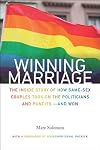
A gripping eyewitness account of some of the political work that has so far gone into achieving and securing equal marriage rights for LGBT Americans. I especially valued the inside perspective on the contributions, attitudes, and approaches of a number of familiar figures, including Deval Patrick, Ted Kennedy, Mitt Romney, Andrew Cuomo, Jim Alesi, and Marc Solomon himself. The same goes for the activists and state politicians working behind the scenes. The book provides insight as to how the marriage equality movement came to employ various strategies, for better or worse, in the several campaigns Solomon describes.
This review was written for LibraryThing Early Reviewers.
An enjoyable read, but of particular interest for the experience it relates. In this respect it makes a good companion to Dan Savage's _The Kid._ Where Savage and his partner adopted their son as an infant, Mahoney and his partner opted for surrogacy.
This review was written for LibraryThing Early Reviewers.
Strong characters, especially the main narrator, are made more vibrant by the way the author uses dialect. To illustrate, the protagonist is perfectly able to use sesquipedalian Queen's English when it suits his purposes. He uses Antiguan forms when speaking with compatriots and family, but it is not represented as an illegible pidgin. The bulk of the narration is somewhere in between, an informal voice well-suited to storytelling. He is bright, allowing for clever turns of phrase, metaphor, and associations. It's an entertaining read that, in the best tradition of novels, offers a glimpse into a different perspective.
This review was written for LibraryThing Early Reviewers.Keeping It Civil: The Case of the Pre-nup and the Porsche & Other True Accounts from the Files of a Family Lawyer by Margaret Klaw
Keeping it Civil offers a window into the world of family law: the situations that bring families into court, consultations in law office, negotiations, and court hearings. The author's first-hand perspective and decades of experience help portray the litigants as ordinary people working their way through an unpleasant process with the aid of caring professionals. The LGBT content is mostly limited to two chapters comprising about 10% of the book, respectively about non-traditional reproductive arrangements and divorce in the absence of legal recognition of a marriage. The author is clearly comfortable with gay and lesbian clients and knowledgable of the law surrounding same-sex relationships. The book serves less as a reference resource and more as a way people faced with a family law issue can gaincomfort with the system and set expectations for respect and professionalism from their legal counsel.
This review was written for LibraryThing Early Reviewers.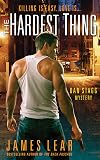
Very much a genre mystery. I'm not familiar with gay noir in general, but I'd say it goes beyond a straight gumshoe novel for sex and romance. The protagonist Dan Stagg is right from central casting, but by the middle it's delivering a good story with some sexy scenes to boot. Unfortunately, as the conflict peaks, Stagg continues to be distracted by sex and inappropriate emotional attachment, to the point that it's uncomfortable to read. Add to that a contrived resolution and I was left disappointed. But if you're looking for light reading in a thriller vein with plenty of sex, you could do a lot worse.
This review was written for LibraryThing Early Reviewers.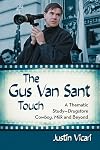
This is the sort of quasi-academic analysis that revels in words like "intertextuality" and "fatherness." If you don't try to read it too closely you can follow a feel for what the author is saying about Van Sant's body of work and about other works he sees as paralleling Van Sant movies. Not having seen most of the movies in question, I recognized in particular the distinction the author drew between the way Van Sant represented gay men and homoeroticism, as compared to the way they are treated in other contemporary movies. Best for a Van Sant fan, a film buff, or a queer theorist.
This review was written for LibraryThing Early Reviewers.Oddly Normal: One Family's Struggle to Help Their Teenage Son Come to Terms with His Sexuality by John Schwartz
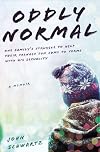
Inspiring in an understated way, Oddly Normal is as affecting as any memoir I've read. Schwartz's journalistic credentials serve the book well as he relates the highly personal story of how he, his wife, and his son Joseph managed the confusing issues of Joseph's childhood: how they came to realize Joseph was gay long before he came out to them, how they advocated for him in schools that weren't homophobic but didn't quite know what to do with the problems presented by this "squirrelly" kid, how to give Joseph all the love and support they could while still letting him come to his own sense of self. No parents of a gay child will have an experience like the Schwartzes' in every particular, and if they had it to do over there are things they would change, but Schwartz was motivated to write the book to inform other parents whose children struggle with their difference. I would further recommend it for anyone touched by an LGBT person, anyone touched by mental illness, or anyone interested in a window to these human experiences. Schwartz intersperses the story with broader context about the science and politics behind the issue, conveyed clearly and objectively. Knowing that Joseph is still in school makes the Schwartzes' experience all the more topical, and I wish them the very best.
This review was written for LibraryThing Early Reviewers.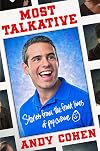
This year's minor celebrity memoir, chronicling Andy Cohen's rise from intern to TV producer and occasional host, and his brushes with stardom along the way. As one would expect, it has a boy-next-door tone. If you have followed Watch What Happens Live or The Real Housewives, you will enjoy the behind-the-scenes perspective.
This review was written for LibraryThing Early Reviewers.The Lesbian Fantastic: A Critical Study of Science Fiction, Fantasy, Paranormal and Gothic Writings by Phyllis M. Betz
Betz makes an excellent comparison to how women are treated in the heterosexual fantasy genre versus women in fantasy where lesbian is the theme. While women in heterosexual fantasy are constantly treated as damsels, secondary characters in their own lives, fantasy geared toward lesbians have women taking and being in control. Lesbian fantasy has strong women characters that are sensual and sexy. However, I did not think that her Gothic analysis fit well with the rest of her book.
This review was written for LibraryThing Early Reviewers.Conversations and Cosmopolitans: Awkward Moments, Mixed Drinks, and How a Mother and Son Finally Shared Who They Really Are by Robert Rave
There's nothing earth-shattering, but the book is good light reading. The unusual format allows for a rare feature in a memoir: two different perspectives on the same events. Robert's lifestyle during the main action is dated and represents only a small slice of 80's and 90's gay experiences, but it's his experience and it makes for a nice, heartfelt shared memoir.
This review was written for LibraryThing Early Reviewers.Serving LGBTIQ Library and Archives Users: Essays on Outreach, Service, Collections and Access by Ellen Greenblatt
This collection of essays and profiles is primarily by and for librarians. Topics include collection development, cataloging, LGBTIQ staff, serving LGBTIQ patrons, LGBTIQ archives, and censorship. In particular, it covers both external challenges to holdings or their placement, and the more subtle issue of self-censorship. Some of the essays and profiles are eminently readable accounts of experiences at specific libraries (e.g. When Collection Development Leads to Staff Development: The Transgender Resource Collection). Others are not as well-written, or come across as simple pleas. Only one was so poorly written that it was unreadable (Integrating LGBTIQ Representations Across the Library and Information Sciences Curriculum: A Strategic Framework for Student-Centered Interventions). Contributions come from small towns and large cities from all parts of the US, as well as Ontario, Alberta, and the Netherlands. Not surprisingly, every section includes a list of references, and many include bibliographies or lists of community or online resources. I wouldn't say the book is designed to be read cover to cover, but it's worth a close look by anyone involved in the operations of a library or archive. It will raise relevant, actionable topics and offer resources and advice for following through.
This review was written for LibraryThing Early Reviewers.
The Legal Answer Book for Families is a great starting point for orienting yourself to how the legal aspects of your relationships with your significant other, parents, children, or exes. It lays out the basics in plain language, gives you an idea of when you need to go to another source for more detailed information or professional assistance, and gives clear pointers to where to go next, including specific information for the 50 states and DC. Nolo's website serves as a companion to the book, with update, further details, and basic document templates and software.
Of particular importance to the Gay Alliance library is the book's consistently inclusive approach. Its language never presupposes a "Leave It to Beaver" style family unit. Specifically, each relevant chapter addresses how LGBT couples and families may particularly be affected.
With chapters on marriage; divorce; children and child custody, support, and adoption; elder care; estate planning; and when and how to engage a lawyer, there is something useful for any reader. It's not so much a reference book as a source of friendly, knowledgable advice that can give you direction and confidence in dealing with the law at life events. It's worth a read first to explain all those things no one ever explained to you. Then it will be a great place to turn when you begin or end a long-term relationship, gain a child, lose a loved one, begin to assume responsibilities for your parents, change your assets, or any number of show more others of life's mileposts. show less
Of particular importance to the Gay Alliance library is the book's consistently inclusive approach. Its language never presupposes a "Leave It to Beaver" style family unit. Specifically, each relevant chapter addresses how LGBT couples and families may particularly be affected.
With chapters on marriage; divorce; children and child custody, support, and adoption; elder care; estate planning; and when and how to engage a lawyer, there is something useful for any reader. It's not so much a reference book as a source of friendly, knowledgable advice that can give you direction and confidence in dealing with the law at life events. It's worth a read first to explain all those things no one ever explained to you. Then it will be a great place to turn when you begin or end a long-term relationship, gain a child, lose a loved one, begin to assume responsibilities for your parents, change your assets, or any number of show more others of life's mileposts. show less
This review was written for LibraryThing Early Reviewers.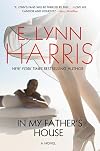
As regular readers of Harris's books will expect, "In My Father's House" is very light reading. It's an enjoyable read, good for the beach perhaps. It's more fantasy than novel, as Harris goes to great lengths with each character he introduces that she or he is fabulously rich, blindingly gorgeous, or both. This went on past absurdity -- if the book were a movie, there would be a drinking game marking every time it drew attention to an ostentatious detail. Players would also drink at the word "boi," which appears on average about once a page, to the exclusion of "boy."
Also distracting were a number of editing failures: "money is no option" in place of "money is no object," "switchy" as an adjective describing a fem guy where the rest of the world would use "swishy," and on. I hope any later editions of this book, or any later publications of Harris's work, will benefit from more thorough editing.
Also distracting were a number of editing failures: "money is no option" in place of "money is no object," "switchy" as an adjective describing a fem guy where the rest of the world would use "swishy," and on. I hope any later editions of this book, or any later publications of Harris's work, will benefit from more thorough editing.
This review was written for LibraryThing Early Reviewers.
After the first page I had reservations about Fall Asleep Forgetting. The prodigious use of adjectives was distracting and came off like a high school descriptive writing assignment. To my relief, Packard's writing style improves somewhat, but it still took me a month to wade through the rest of the book. An average novel takes me a week and a half and a thoroughly enjoyable one lasts only a couple of days. The highlight for me came a quarter of the way in, in a poem by the character Paul. Perhaps Packard's strength is more in the music of language than in storytelling.
In general the book is a succession of 1-3 page vignettes, each focusing on one of the book's half-dozen or more "central" characters. For most of the book I found it difficult to pick up the focal character and voice for each vignette. The all-caps titles centered over each don't help much, since in most books that's where a repeated header would go.
Looking beyond its stylistic shortcomings, Fall Asleep Forgetting tells a reasonably strong story, dealing with the various characters' perspectives on death, sex, and morality. Perhaps a gifted screenwriter could make it into a passable movie. For myself, I doubt I would have persevered to the end of the book without the obligation to write a review for you, dear reader, and stay in the good graces of the Early Reviewers program.
In general the book is a succession of 1-3 page vignettes, each focusing on one of the book's half-dozen or more "central" characters. For most of the book I found it difficult to pick up the focal character and voice for each vignette. The all-caps titles centered over each don't help much, since in most books that's where a repeated header would go.
Looking beyond its stylistic shortcomings, Fall Asleep Forgetting tells a reasonably strong story, dealing with the various characters' perspectives on death, sex, and morality. Perhaps a gifted screenwriter could make it into a passable movie. For myself, I doubt I would have persevered to the end of the book without the obligation to write a review for you, dear reader, and stay in the good graces of the Early Reviewers program.
This review was written for LibraryThing Early Reviewers.