
Annulled, Beheaded, Died, Annulled, Beheaded, Survived -- so goes the rhyme of how to remember the fates of the six wives of Henry VIII. Here in Bring Up the Bodies we have the story of one particular player in the affairs of the king, Sir Thomas Cromwell. After spending some 7 years wrangling to make Anne Boleyn wife and queen, Cromwell realizes that after only 3 years of marriage, Henry has his eye on someone new. Cromwell, as Master Secretary to the king, must find a way to bring about the destruction of Anne.
I knew the history of the Tudors well enough before reading Mantel’s version. Every young girl schoolgirl is curious about the history of the six wives of Henry VIII and his legendary cruelty (and most of all - the beheadings!). But Mantel’s novel is so fresh with its focus on Thomas Cromwell. Cromwell is complex and ever changing. I began the novel enamored by his brilliance, but by the end I was shocked to see what he was capable of. What were his motives? Love of the King? Ambition? Revenge against Anne for her part in the downfall of his beloved Cardinal Wolsey? The author’s cleverness is that she embeds Cromwell in every scene, in every dialogue, and yet he remains an enigma. (yes, the “he” is invariably Cromwell -- so fun to see how Mantel bows to the critics of Wolf Hall by toying with the pronoun this time around.)
I loved this book. I loved the history. I loved all the intrigue. I loved the portrayal of the characters. But most of all I loved show more the writing. Mantel’s prose is the best I’ve read in years and had me constantly marking favorite passages from the novel.
As with the first novel in the series, Wolf Hall, I am awed by the shadow of what is to come next. I know what will happen, but I pray it doesn’t happen. I want Mantel to rewrite the past and soften the king. For I can not bare to think of what lies ahead for the Master Secretary to the King, Thomas Cromwell. show less
I knew the history of the Tudors well enough before reading Mantel’s version. Every young girl schoolgirl is curious about the history of the six wives of Henry VIII and his legendary cruelty (and most of all - the beheadings!). But Mantel’s novel is so fresh with its focus on Thomas Cromwell. Cromwell is complex and ever changing. I began the novel enamored by his brilliance, but by the end I was shocked to see what he was capable of. What were his motives? Love of the King? Ambition? Revenge against Anne for her part in the downfall of his beloved Cardinal Wolsey? The author’s cleverness is that she embeds Cromwell in every scene, in every dialogue, and yet he remains an enigma. (yes, the “he” is invariably Cromwell -- so fun to see how Mantel bows to the critics of Wolf Hall by toying with the pronoun this time around.)
I loved this book. I loved the history. I loved all the intrigue. I loved the portrayal of the characters. But most of all I loved show more the writing. Mantel’s prose is the best I’ve read in years and had me constantly marking favorite passages from the novel.
As with the first novel in the series, Wolf Hall, I am awed by the shadow of what is to come next. I know what will happen, but I pray it doesn’t happen. I want Mantel to rewrite the past and soften the king. For I can not bare to think of what lies ahead for the Master Secretary to the King, Thomas Cromwell. show less
 This review was written for LibraryThing Early Reviewers.
Yes, Chef is the wonderful memoir of celebrity chef Marcus Samuelsson. Marcus, born an Ethiopian and later adopted by loving Swedish parents, developed a love of cooking in his Swedish grandmother's kitchen. His determination to become a top-rated chef is awe-inspiring. I especially enjoyed reading about Marcus's food explorations and his descriptions of favorite flavors. As a longtime fan of his from Top Chef and FoodNetwork, I was disappointed not to have more inside behind-the-scenes stories and secrets about being a TV chef. Still, what matters to Marcus is his heritage and his home in Harlem NY and I was fascinated to read his story.
This review was written for LibraryThing Early Reviewers.
Mixed review -- This retelling of the Achilles legend didn't quite measure up to other modern writings on mythology that I've enjoyed, nor, of course, The Iliad. I found the romance insipid with many lines like "Something tugged at me, just beneath my skin." Achilles just never came to life for me. The writing and the action did pick up in the final scenes at Troy, but even the important battles came across as rushed and underwritten. The ending also forced some awkward tweaking of the first person narrative. I did admire the author's clever decision at ending the hero's life. Not a bad effort, just not quite good enough.
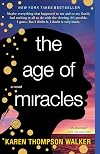
Inexplicably, a "slowing" occurs. The Earth's rotation decelerates and sunlight and nighttime become unbalanced. The government encourages its citizens to keep to "clock" time, rather than the natural tendancy to keep to circadian rhythms based on the presence of natural light. The author imagines a very interesting dystopian reality where panic and sickness spread and social interactions are tested. The novel focuses on young twelve-year-old Julia, who tries to be strong in the midst of such chaos, even as her family and friendships are unraveling around her. To me, I would have preferred a grittier adult perspective to perhaps add more drama; the novel definitely has a young adult feel to it. But it's engaging and wonderfully written in a subtle sort of way.
This review was written for LibraryThing Early Reviewers.
Thank you to the publisher and the LT Early Reviewer program for the gift of this book. Fans of T.C. Boyle's Drop City will enjoy this novel of the birth and demise of a hippie commune in New York State. The main character is Bit -- a little bit of a boy who spent his first 14 years entirely within the commune. The author writes beautifully of the highs and lows of the commune and of Bit's relationship with his father and depressed mother. The second half of the novel, when the family flees to NYC, was less focused and less successful for me. Still, a very interesting read from an author I expect to read more of in the future.
This review was written for LibraryThing Early Reviewers.
Oohh, this was a great read. Oates's controversial novel is a fictionalization of the life of the Hollywood siren Marilyn Monroe. Some have found it repellent that the author dared to write about such a tragedy without knowing the truth of possible abuses, love affairs, abortions, drug use, etc... But I accept this work as fiction and it seemed more than fair to me in its treatment of Norma Jeane. The writing is daring and thrilling in its unconventionality (e.g. Death comes riding on a bicycle in the opening scene). All I know is, I wasn't a fan of the actress before this novel, and now I may be bordering on obsessed. (can't get enough of her on youtube!) Read this if you're not entirely familiar with MM's story; if you are, you've been fair warned.

The cover says that it's a novel. It's so tiny, though, that I'd call it a novella, but not even really that. In my classroom we'd qualify such a work as a brainstorm, or what we call "seed ideas". The entire novel is written in the 3rd person plural narrative and follows a group of Japanese "picture brides" in the early 20th century. Not that it really follows them, for we never know exactly who the novel is about. It's strange to read a book without characters, where the characters are a collective people and share a collective experience. But that's not right, either. For the experiences of the women are all different and only in the various chapter headings does the author assimilate stories of their arrival in California, being young wives, mothers, and in the finale-- victims of the US government's internment of Japanese-American citizens during WWII. I wholly expected not to like this, yet the writing was so damn beautiful. I'll give it 4 stars-- it really is an original work. I would have preferred, however, that Otsuka use her gorgeous chapters as (what's the word?) frontispieces to chapters that follow specific characters. If nothing else, the author has given herself thousands of stories to explore and develop in the future.

Ten Thousand Saints is a strong debut novel set in the 80's in the NYC drug and music scene. Three teens cope with the death of their friend and their unstable parents. The "straight edge" counter-punk culture is new to me and it was interesting to read about this alternative life/music movement for kids who wanted to clean up their acts. The author does a great job of showing that parenting under the influence is quite ineffective! There were a lot of characters to keep straight and I sometimes wanted them to slow down and just stay in for a while, but you know teenagers. No doubt, the author tries to do too much here, but the writing is wonderfully intense and quite descriptive. Eleanor Henderson is definitely an author to watch.

Shields' final novel is exquisite. She packs more into 200 pages than I knew was possible. While not plot driven, the story is nevertheless intriguing. Reta Winters is a happy novelist, wife, and mother of 3 girls who's never experienced heartache until she discovers that her 19 year old daughter has dropped out of life and is sitting for hours upon the hard Toronto pavement begging, with a sign around her neck reading "Goodness". Norah won't speak to her family, and Reta, unable to break through to her, must try and carry on with her life.
The best parts of the book are letters that Reta composes to various authors speaking out against the exclusion of women in their writings. "But did you notice something even more significant: that there is not a single woman mentioned in the whole body of your very long article (16 pages, double columns), not in any context, not once?" Reta becomes convinced that her daughters, as well as herself and all modern women, are undervalued and not recognized for their greatness or potential greatness. "What Norah wants is to belong to the whole world or at least to have, just for a moment, the taste of the whole world in her mouth. But she can't. So she won't."
The reviews for this novel are quite mixed, but for me it was truly beautiful and said much that needed to be said. I've read only one other of Shield's novels, The Stone Diaries, which I loved, and I am sad to know that she's passed away. I can't wait to read the full body of her work.
The best parts of the book are letters that Reta composes to various authors speaking out against the exclusion of women in their writings. "But did you notice something even more significant: that there is not a single woman mentioned in the whole body of your very long article (16 pages, double columns), not in any context, not once?" Reta becomes convinced that her daughters, as well as herself and all modern women, are undervalued and not recognized for their greatness or potential greatness. "What Norah wants is to belong to the whole world or at least to have, just for a moment, the taste of the whole world in her mouth. But she can't. So she won't."
The reviews for this novel are quite mixed, but for me it was truly beautiful and said much that needed to be said. I've read only one other of Shield's novels, The Stone Diaries, which I loved, and I am sad to know that she's passed away. I can't wait to read the full body of her work.

I used to read a lot of Alice Hoffman's novels back in my 20's. When I saw that her new release was a historical drama of the Roman conquest of the Jewish stronghold of Masada in the 1st C., I jumped at the chance to read of an important historical event that I knew little about. What I'd forgotten about Hoffman's books was that they are well known for their magical realism, and indeed that's what turned me off of this work. She writes well of grief and I appreciate her feminist-empowered narrators, but the book was too long (I admit to skimming the final chapters) and the use of magic and abundant metaphors was overkill for me.

The sea is the monster here. And the sea demands much of the inhabitants of a quaint Swedish island. Although some plot elements were perhaps silly, this Stephen King-like thriller really delivered, largely thanks to fantastic character development. There's the depressed Anders, who returns to the island two years after the inexplicable disappearance of his young child, his grandmother,the matriarch of the town who knows the dark secret history of the sea, and her old boyfriend Simon, a former magician, who comes across a mysterious, worm-like, saliva awakened "Spiritus" that.. (no, I won't tell you!) The many backstories are each fascinating and often heart-wrenching and the novel moved at a brisk pace. -- quite a good read

Former National Book Award winner Ha Jin's newest novel recounts the cruel treatment of Chinese citizens during Japan's occupation of Nanking in 1937. The story focuses on the well-documented girls' school run by the American Minnie Vautrin, that serves as a refugee camp during the invasion, boarding some 10,000 displaced Chinese. While the novel started out strong with devastating descriptions of the real-life horror, the drama turned dry and uninvolving. How I wanted Jin to follow the stories of individual lives, and instead, the documentary approach felt unexplicably flat. quite a disappointment-- wish I'd read the nonfiction accounts instead.

Ghosh's trilogy is about the Opium Wars between Britain and China in the first half of the 19th century. The first novel (a favorite of mine) set the story in India where the poppies are grown and shipped to China. Here in River of Smoke, the story moves to Canton, and more specifically Fanqui-town--the sectioned-off portion of the coastal city where foreign traders have established a trading post. The main character is Bahram, an Indian importer of opium, who is invited to sit on the council of merchants and must face the threatening clampdown by the Chinese government on their profitable trade. Another beloved character is Robin Chinnery, a homosexual artist, who finds in Canton an inspiring setting where he can be open and find, in his words, a true "Friend".
While I was disappointed at first that Ghosh didn't continue his focus on the characters from Sea of Poppies, the new cast and setting were exhilarating. He describes every character and their backstory (and the backstories of their backstories) with extreme detail. What sets this trilogy apart is the language. Here is a taste of dialogue that contains many obscure references in Hindustani and Pidgin:
"So you have seen the world a little, eh munshiji?" said Bahram. "Done a chukker or two? Tasted something other than daal-bhat and curry-rice? Munshis who can manage chair-sitting are not easy to find. Can you handle knife-fork also? Little-little at least?"
Half the time I don't know what they're saying, but I was so show more caught up in the world that it hardly mattered. The theme of the drug trade is wholly relevant to today and it was heartbreaking to witness the gestation of a time when men made their riches from the addictions and misery of others. I can't wait for the 3rd installment where I'm sure Ghosh will bring all his characters into the explosive Opium Wars. show less
While I was disappointed at first that Ghosh didn't continue his focus on the characters from Sea of Poppies, the new cast and setting were exhilarating. He describes every character and their backstory (and the backstories of their backstories) with extreme detail. What sets this trilogy apart is the language. Here is a taste of dialogue that contains many obscure references in Hindustani and Pidgin:
"So you have seen the world a little, eh munshiji?" said Bahram. "Done a chukker or two? Tasted something other than daal-bhat and curry-rice? Munshis who can manage chair-sitting are not easy to find. Can you handle knife-fork also? Little-little at least?"
Half the time I don't know what they're saying, but I was so show more caught up in the world that it hardly mattered. The theme of the drug trade is wholly relevant to today and it was heartbreaking to witness the gestation of a time when men made their riches from the addictions and misery of others. I can't wait for the 3rd installment where I'm sure Ghosh will bring all his characters into the explosive Opium Wars. show less

Figured I couldn't go wrong with this one-- loved [Mudbound], love dystopia, and I'm a fan of The Scarlet Letter. But the dystopias I love paint a fascinating picture of a damaged society and all that can go wrong. In When She Woke, we are told very little about the setting and why the public is so hostile and repressed. The author supposes an America that is a strict, narrow-minded Christian society where prisons cannot cope with those sentenced and so the convicted are melachromed and forced to reenter society with colored skin. The main character, Hannah Payne, has been found guilty of abortion and her skin is dyed red.
Sounds good on paper, but the setup is weak, the characters are one-dimensionally offensive, and the writing is just uninspired. Seems that this book is well beloved by many, but I can't help but compare it to the amazing Handmaid's Tale, and it doesn't even come close.
Sounds good on paper, but the setup is weak, the characters are one-dimensionally offensive, and the writing is just uninspired. Seems that this book is well beloved by many, but I can't help but compare it to the amazing Handmaid's Tale, and it doesn't even come close.

What does it mean to be human? How have we evolved from our possible knuckle-walking ancestors to upright, speaking, cultured, modern Homo sapiens? Bruno Littlemore is a chimpanzee rescued from a Chicago zoo and reared among humans at a research lab who longs to become human. At the age of 40, Bruno walks upright, speaks and reads, and even directs theatrical plays (albeit with mostly ape actors). How did this remarkable transformation occur? Bruno narrates his story and, most shockingly and tenderly, tells about his love affair with Lydia, the primatologist who took Bruno into her home.
This novel is definitely flawed by its wordiness and over-descriptions (Bruno tends early on to spend pages describing his impressions of what to us are mundane things), and the third act when he leaves Chicago didn't work as well for me, but the writing is smart and the story always interesting. First time author, Benjamin Hale, is definitely a talent to watch. Bravo for Bruno!
This novel is definitely flawed by its wordiness and over-descriptions (Bruno tends early on to spend pages describing his impressions of what to us are mundane things), and the third act when he leaves Chicago didn't work as well for me, but the writing is smart and the story always interesting. First time author, Benjamin Hale, is definitely a talent to watch. Bravo for Bruno!

I admit it. I chose this book from the EarlyReviewers program based on its striking cover, but this based-on-a-true-story novel of art-world rivalry was quite dull. The story alternates between courtroom drama and its backstory. An artist is being sued for libel by his former close friend over a computer-generated image that might depict an unflattering portrait of the friend. The artist is indeed angry at his friend for abandoning true art and selling-out by producing commercial pottery. There wasn't enough drama here to hold my interest and ultimately, I can't see why the author felt that this story needed to be told.
This review was written for LibraryThing Early Reviewers.
Reading as therapy--I'm sure we all can relate. The chance not only to escape our worries, but be lifted by beautiful art and by the reflections of ourselves and our connectedness to the page. While grieving the death of her sister, Nina Sankovitch, a part-time book blogger, decides that she needs to take a year off work and just read. A book a day is her goal. And through the power of literature, she hopes to slow down and reconnect with herself, with her memories, and with her lost happiness.
I wish she'd written a little less about these feelings and written a bit more about the specific titles she chose (I did like her taste), but I did find Tolstoy and the Purple Chair to be a lovely book overall. For how could I, someone who craves that uninterrupted hour of reading, not smile and totally relate to her drive?
I wish she'd written a little less about these feelings and written a bit more about the specific titles she chose (I did like her taste), but I did find Tolstoy and the Purple Chair to be a lovely book overall. For how could I, someone who craves that uninterrupted hour of reading, not smile and totally relate to her drive?

So good that just a few hours after finishing this jewel, I went back and read it again. Denis Johnson, National Book Award Winner for Tree of Smoke, has written a tender, sparse novella of the life of Robert Grainier, a common laborer in the Northwestern US in the early 20th C.. Granier is a quiet man who lives, loves, works, and grieves and tries not to be too overwhelmed by the remarkable changing world. Just enough-- just perfect!

Completely ridiculous, yet so well written I didn't care. I understood Jake. I loved Jake and I wanted him to survive. For 200 years, he's lived as a lonely, rich, sex-driven man 353 days a year. But oh, those other 12 days. The delicious details and the amazing twist revealed in the 2nd half were so good that I easily overlooked some of the over-the-top plotting (did we really need vampires thrown into the mix?!). If you've not tried literary horror, then you need to smack yourself on your wrist and give this a go. Too much fun!

This was a curious book. It's not quite speculative fiction, not quite dystopian. The author just states that 3 years before, thousands just up and vanished in an event that became known as the Sudden Departure. There's no rhyme or reason to their disappearance. These weren't the "Faithful" as Christians are taught to believe. The novel simply deals with those left behind and how they survive the loss.
The author captures American suburbia perfectly. I love how he shows the not-quite-right creepiness of the new order of things. But perhaps I was looking for a stronger emotional connection to the characters and I didn't feel that all of it worked. Good in a thought-provoking kind of way, though.
The author captures American suburbia perfectly. I love how he shows the not-quite-right creepiness of the new order of things. But perhaps I was looking for a stronger emotional connection to the characters and I didn't feel that all of it worked. Good in a thought-provoking kind of way, though.

Denise and her older brother Nik grew up in the Los Angeles rock and roll scene of the 70's and 80's. Now middle-aged, Denise lives alone and agonizes over her obsession with stories of suffering on the cable news channels and her own perceived memory loss. Nik, who experienced limited success with his rock band experimentations in his youth, has spent his adult life in relative solitude chronicling his music that he produces solely for his sister and only a handful of others. Nik is truly a vituoso talent, and like other reclusive artists, he doesn't seem to need an audience to create. The author writes "One wonders, or at least I wonder, what happened to these people? Not the one-hit wonders but the no-hit wonders?"
Denise is the responsible one. As she cares for their aging mother who is experiencing dementia, she worries about her own memory. When the author writes of Denise's realization of the memories that we retain, the memories of the body-- of the senses, she truly hits the mark. Perhaps it is because these characters are my age, but I was greatly moved by their experiences and their decisions on how to enter the second halves of their lives. Denise says in my favorite quote--"The second half of my life was just the bill due for the pleasures of the first half." With its shared setting and themes, Stone Arabia makes a wonderful companion read to this year's Pulitzer Prize winner A Visit from the Goon Squad. I may even prefer it.
Denise is the responsible one. As she cares for their aging mother who is experiencing dementia, she worries about her own memory. When the author writes of Denise's realization of the memories that we retain, the memories of the body-- of the senses, she truly hits the mark. Perhaps it is because these characters are my age, but I was greatly moved by their experiences and their decisions on how to enter the second halves of their lives. Denise says in my favorite quote--"The second half of my life was just the bill due for the pleasures of the first half." With its shared setting and themes, Stone Arabia makes a wonderful companion read to this year's Pulitzer Prize winner A Visit from the Goon Squad. I may even prefer it.

War and Peace, yes, and so much more:
nobility and muzhiks (Russian peasants)
faith and doubt
dragoons and hussars
wolfhounds and borzois
dueling and dancing
Napoleon and Alexander
society and solitude
parents and siblings
laughter and tears
The war of the title refers to the Napoleonic wars that advanced into Russia in 1812. (Americans--know that there was an even bigger "War of 1812") The peace focuses primarily on three families of the upper class society of Petersburg and Moscow at the time, and also the peace that comes from the family and faith in God and acceptance of death. Yes, there's melodrama here in the portrayal of romance, but it is all rather suspenseful and fun. Who will end up with whom?! Don't be afraid of the descriptions of battle. I found Tolstoy's narrative very exciting and poignant.
For such an immense novel, the pacing is wonderful. Aside from perhaps a total of 30 or so pages of war theory and philosophical rants about the science of war and the meaning of history, which I skimmed, the story moved briskly from the personal stories of the main characters to the horrors of battle and back again. Tolstoy himself in the endpages wrote that this is not a conventional novel, but rather all that he wanted to express. But to me it is the perfect Russian novel and a beautiful gift to the world. I loved it.
nobility and muzhiks (Russian peasants)
faith and doubt
dragoons and hussars
wolfhounds and borzois
dueling and dancing
Napoleon and Alexander
society and solitude
parents and siblings
laughter and tears
The war of the title refers to the Napoleonic wars that advanced into Russia in 1812. (Americans--know that there was an even bigger "War of 1812") The peace focuses primarily on three families of the upper class society of Petersburg and Moscow at the time, and also the peace that comes from the family and faith in God and acceptance of death. Yes, there's melodrama here in the portrayal of romance, but it is all rather suspenseful and fun. Who will end up with whom?! Don't be afraid of the descriptions of battle. I found Tolstoy's narrative very exciting and poignant.
For such an immense novel, the pacing is wonderful. Aside from perhaps a total of 30 or so pages of war theory and philosophical rants about the science of war and the meaning of history, which I skimmed, the story moved briskly from the personal stories of the main characters to the horrors of battle and back again. Tolstoy himself in the endpages wrote that this is not a conventional novel, but rather all that he wanted to express. But to me it is the perfect Russian novel and a beautiful gift to the world. I loved it.

Sixteen-year old Margo lives in rural Michigan along the Stark River. The novel opens strongly with descriptions of her affinity to river life. She's happiest when drifting alone in the teak boat she inherited from her grandfather. Margo has a special knack for shooting and God help any animal that comes within her sights. There is a terrible act of violence early on and Margo takes to the river to escape.
I've read novels like this before. Part Odyssey, part Huckleberry Finn, part Swamplandia!, part Winter's Bone. The writing here is solid and I liked it best when Margo's survival instincts and newfound sexuality were explored. But the second half let me down. I didn't want her to settle where she did or with whom she did. What happened to the earlier tension and desperation? I wanted Margo's journey to continue.
I've read novels like this before. Part Odyssey, part Huckleberry Finn, part Swamplandia!, part Winter's Bone. The writing here is solid and I liked it best when Margo's survival instincts and newfound sexuality were explored. But the second half let me down. I didn't want her to settle where she did or with whom she did. What happened to the earlier tension and desperation? I wanted Margo's journey to continue.

The Inverted Forest is an interesting, original story about the goings-on at a summer camp for disabled adults. The camp's owner has to make some quick decisions about hiring counselor replacements after feeling compelled to let the previous staff go due to an unauthorized nighttime skinny dip. But are the new counselors qualified to care for the demands of the mentally retarded wards of the state hospital? And most compelling is the lead character of Wyatt Huddy, who was born with the congenital disorder of Apert syndrome and who is often mistaken as being mentally disabled himself. The author takes his time developing the story and building suspense toward the shocking climax. But then when the 2nd half opens and we see where the story goes, it's quite excellent. I found the author's treatment of the retarded refreshingly and brutally honest and not at all sentimental. highly recommended

Marshall Stone is a newly retired airline pilot and widower. He decides now's the time to return to France to visit the people and places from his WWII experience as a downed fighter pilot. There's a lot of sitting around reminiscing about the era of the French Resistance, when citizens risked their lives to aid stranded allied soldiers during the Nazi Occupation.
"Whatever I did for you, I also did for myself, for my family, for France. We were crushed, Marshall. Defeated. You cannot know the shame. Whatever any of us did, we did for ourselves--so that we could have still a little self-respect. Just a little."
Unfortunately, there's not enough story tension here and I found the novel quite dull. Shame to see a misfire from Bobbie Ann Mason, whose In Country was a favorite of mine years ago. There are just too many good WWII novels out there. Take a pass on this one.
"Whatever I did for you, I also did for myself, for my family, for France. We were crushed, Marshall. Defeated. You cannot know the shame. Whatever any of us did, we did for ourselves--so that we could have still a little self-respect. Just a little."
Unfortunately, there's not enough story tension here and I found the novel quite dull. Shame to see a misfire from Bobbie Ann Mason, whose In Country was a favorite of mine years ago. There are just too many good WWII novels out there. Take a pass on this one.

Here's a fun, exciting thriller that's perfect for summer reading. Christine has suffered a trauma and now has a form of extreme amnesia where she wakes up each morning with no memory of where she is and who the man sleeping beside her is. She stumbles into the bathroom each morning and is shocked to see her aged self. Taped to the mirror are pictures and notes to remind her of her husband Ben and her life. And every morning Ben patiently calms Christine down and tells her the story of what's happened to her. When Ben leaves for work, Christine receives a call from her therapist who reminds her that she has an appointment that day and that he can be trusted. The therapy involves keeping a journal of what happens to her everyday and any memories that begin to occur to her.
The contents of the journal make up most of this novel. Each day Christine rereads what she's written so she can piece together her present and her past. The journal is fascinating but, to me the reader, it did become tedious to reread some of the same details over and over again. The shocker of the book comes early when Christine reads a note she left herself about someone in her life that is not to be trusted. It's a great hook and this book quickly became one I didn't want to put down. I did have problems with the book's resolution and often its implausibility. But I suppose these things can be forgiven for a book like this that delivers thrills and much to puzzle over. recommended!
The contents of the journal make up most of this novel. Each day Christine rereads what she's written so she can piece together her present and her past. The journal is fascinating but, to me the reader, it did become tedious to reread some of the same details over and over again. The shocker of the book comes early when Christine reads a note she left herself about someone in her life that is not to be trusted. It's a great hook and this book quickly became one I didn't want to put down. I did have problems with the book's resolution and often its implausibility. But I suppose these things can be forgiven for a book like this that delivers thrills and much to puzzle over. recommended!

Sheri Holman's latest is an odd, complex novel of family secrets and yes, witchcraft. Eddie is a former late night horror show host (I can certainly remember the one from my childhood on our local independent tv station) who has cancer and is reaching out to his unhappy news-anchor daughter. Through flashbacks they tell 2 stories: Eddie of his boyhood in the mountains with his strange mother, and Wallis, his daughter, of the time a fosterchild stayed with the family and wrecked havoc. The scenes set in an Appalachian hollow (pronounced holler) are the best. Eddie's mother is a fascinating witch, with the ability to ... (well, I won't spoil it, but it's unlike anything I've read before!)
Sheri Holman is best known as the author of The Dress Lodger, which I love, and The Mammoth Cheese, which I also thought was good. She's wonderfully descriptive--for example Eddie's cancer is described as tumors that grow like a stalk of brussel sprouts, and the mother's beauty compared to a tin can rusted down to tetanus lace. Here though, I think she just does too much. I would have preferred the novel without the intrusion of the modern timeframes. The supernatural elements are strong and the book has a wonderful carnal, very erotic feel to it. Do I recommend this?...oh, yeah
Sheri Holman is best known as the author of The Dress Lodger, which I love, and The Mammoth Cheese, which I also thought was good. She's wonderfully descriptive--for example Eddie's cancer is described as tumors that grow like a stalk of brussel sprouts, and the mother's beauty compared to a tin can rusted down to tetanus lace. Here though, I think she just does too much. I would have preferred the novel without the intrusion of the modern timeframes. The supernatural elements are strong and the book has a wonderful carnal, very erotic feel to it. Do I recommend this?...oh, yeah

My boyfriend's a fan of the singer-songwriter Steve Earle so I took notice when I started seeing reviews of the release of his first novel. Known for his strong storytelling in his early music, it's no surprise that Earle delivers a beautifully written, well-structured, gritty novel. Lead character Doc is a heroin addicted doctor forced to support his habit by performing illegal abortions in 1963 San Antonio, Texas. Doc is haunted by his former friend, the now dead Hank Williams, who regularly appears to Doc when he's under the drug's spell. Hank wants something from Doc and it's not until Doc meets a lovely young Mexican girl who's sought his help that Doc begins to find hope and love. I had to suspend belief over aspects of the book: lots of religious tones here and the rather absurd notion of such a tight, loving community of drug-pushers and prostitutes and Earle's obvious political bias. But, it's a really good story and it's got me listening to some even better music.

So much to reflect on with this Booker Prize winning novel. Edith, a romance novelist, is hiding out at the Hotel Du Lac in Switzerland until the furor over her earlier rash decision has quieted down. The hotel is populated with the most eccentric characters and Edith is fascinated by the women she meets. The novel questions whether Edith, a shy, mild-mannered woman, needs to loosen up a bit and be more assertive in order to find love and fulfillment. The novel's resolution was just perfect and wholly satisfying (Brookner leaves Edith's future up in the air). I loved the smart writing here but I couldn't quite place the time. In my mind, Brookner was describing say the 1930's, yet there are references to 1980's fashions. No doubt the author deliberately wants to leave an impression of timelessness. And indeed the Hotel Du Lac does feel like a throwback to an earlier time and succeeds because of its thought-provoking modern feminist sensibilities.

Wow--fun, fun read! The Sisters brothers are two guns-for-hire working in the Gold Rush Days of Oregon and California. Eli, the younger and more tenderhearted of the two, narrates the story of himself and his brother, Charlie. Charlie is the brains of the operation. Charlie makes most of the calls and is ruthless when it comes to tolerating others. But Charlie loves his liquor too much to keep the boys on schedule. The brothers have been hired to track down a mysterious gold prospector who holds a dangerous secret. The author introduces some fantastic characters here, all fully fleshed out. Eli is a wonder to behold--worrying about love and even dieting on the one hand, yet ready to take a life if his brother so charges on the other. The writing is spot-on and is full of affection and also extreme cruelty. Most Westerns I've read take themselves far too seriously, but DeWitt delivers a lot of humor along the way. I had such a laugh over Eli's discovery of the wonders of brushing his teeth. In addition to the story, the book has an amazing cover and illustrated section breaks. The only criticism I can imagine is that the dialogue is unlike other Westerns. Here the men are well-spoken and good conversationalists. But, I for one, was pleased to trail along with these gunslingers as they journeyed through the Wild West seeking redemption.