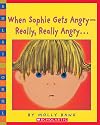
Sophie gets REALLY angry when her sister takes her gorilla and Sophie falls over a truck to get it back. She gets SO angry that she runs off into the woods. After running for a while, and crying for a while, Sophie finds comfort in the peace of nature and she looks around the world. When she returns home, she is welcomed back by her family, and she notices that she isn't even mad anymore. This book is great for teaching young children that their emotions are ok, and even how to deal with them. When Sophie gets angry, she runs, she cries, and she spends some time by herself just thinking. These are all great strategies for helping children deal with those big emotions, like anger or sadness. Molly Bang's illustrations are great examples of onomatopoeia as well, most pages include at least one example, such as a huge gout of red flame erupting from Sophie's mouth that says ROAR.
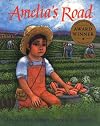
The story begins with a young girl named Amelia extolled her hatred for all manner of roads. Quickly we discover that Amelia's family are migrant workers, and she resents the constant travel and moving necessitated by her family's need to move for work. Amelia has to get up and pick apples for three hours before school starts. Unlike previous years, this year Amelia's teacher takes steps to make sure she is included in the class. After school, Amelia discovers an "accidental" road, more of an overgrown footpath, that leads her to a large tree. Following her personal road each day, she sits beneath the tree, a rare representation of permanence in her life. However, the end of the harvest nears and Amelia begins to dread the impending move. Amelia comes to the solution of creating an "Amelia box" full of things that she identified with, and buried it at the old tree like a time capsule. Now that she had a place to call her own, Amelia didn't dread moving so much anymore. Many more children than specifically the children of migrant workers are going to be able to identify with this book, particularly military children, but really any kids that have had to make significant moves in their lives. The sense of belonging and security is something universally experienced and desired, so we can all find some part of ourselves in Amelia. On the surface level, this book can also introduce the concept of migrant workers to school-age children, and in some schools, help normalize the show more population of migrant children to other students unfamiliar with the practice. show less
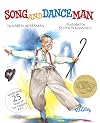
A trio of children go to visit their grandfather, who was a vaudeville performer in his youth. Their grandfather laments the passing of the "song and dance" days, but he still pulls out all his old vaudeville gear and puts on a one man variety show for his grandchildren. The children are genuinely delighted by their grandfather's performance, and he is equally pleased to be able to share a piece of his personal history with his descendants. Though this story has a sort of melancholy nostalgia to it, I think that ultimately what the grandfather was missing was performing for an audience, so that in addition to passing along memories of his performance to his grandchildren, he was also able to realize that he didn't necessarily miss performing for a large audience, just a grateful one.
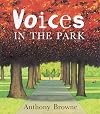
A trip to the park is told from four different points of view, a snooty woman, her son, a working class man, and his daughter. Both sets of parents go to the park with their dogs and their children, but each of them has quite a different experience. The children and the dogs meet and play, but the mother's disdain for her son playing with a lower class child ends the trip prematurely, with the son hoping that he runs into the daughter the next time they are at the park. This book is good for illustrating that even simple activities like a walk in the park can appear wildly different when viewed through someone else's eyes, even if that person is ostensibly closely related to us, like a parent.
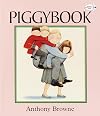
This story opens on a family of four who rely on the mother of the family to do all the cooking and cleaning for them. They constantly call out and ask to be served. One day, their mother disappears and leaves a not accusing them all of being pigs. The father and boys turn into pigs! Forced to care for themselves, the family slowly learns how much work goes into caring for them day in and day out. When the mother finally does return, the family begs her to stay and shows her they appreciate her by doing the chores that they used to expect her to do. This book can help kids understand not only the responsibilities inherent in running a household, but also that its not always the job of women to take care of men. Anthony Browne's illustrations are amazing here, and you can play a fun game counting all the hidden pigs in the pictures.
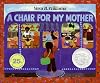
A little girl tells the story of how she and her mother and grandmother are all saving little by little to buy a large, comfy chair. They have a huge jar that they are slowly filling with change. This seems kind of silly at first until its revealed that the family recently lost everything in a fire. They are forced to live with her mother's sister while they try to rebuild the lives that they lost. Her mother now goes to work all day and has nowhere to rest when she comes home. In that context, a huge, comfy chair could be all the luxury in the world. When the jar is too heavy for the little girl to lift, they take the money to the bank and exchange it for bills so they can go chair shopping. When they finally get the perfect chair and get it home, it seems like a signal that the family is starting to rebuild their lives.
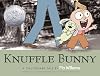
This simple tale of losing your favorite childhood stuffed animal is deeply relatable for most children, even if they don't have a favorite stuffed animal, all kids have some object they value over all others, and they also seem to inevitably lose it at least once. My Knuffle Bunny was a stuffed dog named Doogan, my kid's Knuffle Bunny was a blue teddy bear named Blue Bear, I'm pretty sure we all have something. The art style is very interesting in this book as well, as they superimposed purposefully flat 2D representations of the characters on top of 3D photographs of the settings. This gives the whole book the feeling of a child's memory and makes it even more relatable.
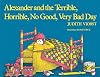
Alexander has a day where literally nothing goes right. From the moment he wakes up until the moment he goes to bed, everything bad that could happen, does. This is a relatable story for anyone, because regardless of how bad it ACTUALLY was, we've all had a day where it seemed like nothing went our way. We all need a reminded sometimes that there are days like these, but they all will pass, even in Australia.
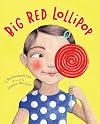
A young girl named Rubina receives an invitation to a classmate's birthday party, but when she asks her mom for permission to go, her little sister Sana throws a tantrum until Rubina agrees to take her along to the party, even though she knows the other children will think its strange. They go to the party, and in the gift bags they take home, both girls are given a big, red lollipop. Sana eats hers on the way home from the party, but Rubina wants to save hers, so she puts in the fridge. The next day, when Rubina goes to retrieve it, she finds that Sana has already eaten almost all of it. None of the children at school invite Rubina to any more parties because they know she'll have to bring Sana. One day, Sana brings home an invitation to a party, and their youngest sister, Maryam, throws a fit that she wants to go too. Rubina intervenes on behalf of Sana, sparing Sana the social ostracism she herself had caused her big sister. As a gesture of reconciliation, Sana gives Rubina the big green lollipop she receives at the party. This story will resonate with anyone who has a sibling, younger or older, and has a good message that doing good deeds without expecting reward brings rewards. There is also some relatively understated representation, as the family shown is of the Muslim faith, as the mother wears the hijab and they all have traditionally Middle Eastern names, but nothing more is really made of it from a cultural perspective.
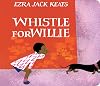
A young boy named Peter wants to learn how to whistle so that he can call his dog, Willie. He tries and tries, but he just can't seem to do it, and Willie just keeps on walking. Eventually, Peter finally gets the hang of whistling and goes all the way to the store and back while whistling, with Willie right beside him. A very short book with a "don't give up" message that is great for young readers. The bold illustration style with lots of brick red helps hold the reader's attention.
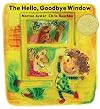
A young girl describes all the memories she has of spending time with her grandparents, presumably while her parents are at work. She has particularly vivid memories of the window in the kitchen, the room where they spent the majority of their time. That is the window that was using for waving hello and goodbye between the girl and her grandparents. This feels like a vivid recollection of a period in her life before school, and the feeling is made more complete by the crude but colorful watercolor painting used for the illustration. This choice of medium really made the story feel like a child's memory for me.
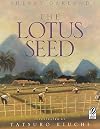
This story follows a Vietnamese woman from childhood to old age as she carries a lotus seed that she took from the imperial gardens the day the Vietnamese emperor gave up his throne. She carries it all the way through the Vietnam War, and then again on a refugee boat to America. She safeguards the seed for many years until eventually one of her grandsons finds the seed, takes it, and plants it in her garden. At first she is distraught because she no longer has the seed that reminds her of her childhood home. But then the lotus blooms in her garden, and she tells her grandchildren her story, and gives them all a seed from the lotus pod from her garden to remember it by. This story has a nice underlying theme of home and accepting change as inevitable, and also of letting go of the past. The idea that heritage should be cultivated and shared instead of guarded and kept away is good for children to have, they often neglect to find the stories of their elders until it is too late.
The titular Wilfrid Gordon McDonald Partridge is a young boy who lives next to a retirement home, and he visits the residents often. He knows all about them and their hobbies, so when he hears his parents talking about his favorite person, Miss Nancy, and how sad it is that she'd lost her memory, Wilfrid sets out to recover them. First, he tries to find out what a memory is, and he asks all the other residents of the retirement home what memory is, and they all give different answers based on their perspective. Then, Wilfrid makes a collection of objects that reminds him of each answer he got from a person at the retirement home. By going over the objects with Miss Nancy, she recalls memories of her own, and she and Wilfrid share their recollections. This book is a good way for children to talk about an older person in their life that may be experiencing some kind of Alzheimer's or dementia. It shows that older people are not scary or sickly, but fun and full of stories and life.
This picturebook covers a trip that CJ takes with his grandmother after church. They take the bus and interact with several diverse passengers along the way, ending up at a soup kitchen where CJ and his grandma serve food. The biggest thing I notice about this story is how it normalizes an experience that many kids may not identify with, if they are not from a city, or are unaccustomed to spending time is poverty stricken areas or performing charity. Another important message in this story is when you realize that CJ and his grandmother are likely not much better off financially than the patrons of the soup kitchen they volunteer at, but CJ's grandma makes a point to CJ about how those kids that are better off never get to meet any of the people that they do on the bus or at the soup kitchen. By talking about poverty without moralizing about it, this book makes a space for kids to find themselves in it without feeling ashamed.

Sofia and her friend Maddi play in the park, where Maddi shows off her climbing skills. Sofia is unable to climb the climbing wall, but she is faster than Maddi, so she runs to Maddi's house to get a snack. When she gets to the fridge, Sofia sees that Maddi and her family have nothing in the fridge but a small amount of milk. Maddi is embarrassed and makes Sofia promise not to tell anyone. Sofia is resolved to help Maddi and her little brother, so she tries to bring them some of her food from home. However, fish and eggs don't keep well in her uninsulated backpack, and they spoil before Sofia can get them to Maddi. Eventually, Sofia tells her mother about Maddi's family and her mother helps with groceries. This book is a great resource for teaching young kids about the realities of food insecurity without presenting any kind of blame or moralizing. Super important for young kids to know that there is help available and that there's no shame in needing help to get by. At the end of the book there is a short list of things a small child could reasonably do to help a peer that is dealing with hunger. The overall theme throughout is that friends help each other, and keep trying to help even if it doesn't always work out as planned.
Trail Blazers: An Illustrated Guide to the Women Who Explored the World (Women in History) by Lisa Graves
This book provides quick profiles on thirteen adventurous women from history. The author goes out of her way to include several less well-known women who nonetheless led exciting and notable lives, though the selection is still very Eurocentric. Of the thirteen women, only two are women of color, Sacajawea and Bessie Coleman, the first black female pilot. However, each of these stories can serve as its own jumping off point for kids to explore other people and events, and the spectrum of accomplishments is wide and various, if not the personalities. Unfortunately, the author does not include references or further readings in the book itself.
Death comes for Grandma Beetle in the form of Señor Calavera (Mr. Skull). Grandma, in the tradition of trickster fables, delays her departure with Señor Calavera repeatedly, until her grandchildren arrive for her birthday party. With each task she must complete, the English and Spanish words for the numbers one through ten are emphasized in bold on each page. Finally, Grandma seats Señor Calavera at the table for the celebration, declaring him the tenth and final guest. After the party concludes, Grandma looks for Señor Calavera, but he has gone, leaving a note expressing his appreciation for a lovely time and promise to return next year for her birthday. This book has an awful lot going on, starting with it being a simple counting book that teaches numbers one through ten in English and Spanish. You also get a very Hispanic trickster tale reminiscent of also 1001 Arabian Nights, where a woman outsmarts something conventionally more powerful than she, in this case Death. The treatment of Death like a physical entity that can be influenced is also a common theme that is used here as well.
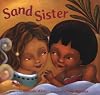
A little girl named Paloma goes to the beach with her family, and though she thinks it is the most beautiful place in the world, she is sad that other people have brothers and sisters to play with, while she does not. So she constructs another little girl to play with out of the beach sand, appropriately named Sandy. After Sandy pushes Paloma down on accident, Paloma runs away in anger. She soon regrets it as she realizes the tide is coming in and will sweep Sandy away. She finds Sandy just in time and the two exchange farewells before sandy is washed away. When Paloma tells her parents about Sandy, they promise to bring her back to the beach to play with her again. This is a good book about the power of imagination to overcome loneliness, but also the importance of friendships, even those that are destined to be fleeting.
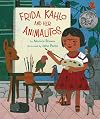
This somewhat fictionalized account of Frida Kahlo's life emphasizes the extensive collection of pets she had throughout her life, and tells some of her story through those pets. Her parrot and her dogs are described as connecting her to her culture, and several touchstones from Kahlo's real life, such as La Casa Azul, are repeatedly mentioned. The author's note at the end provides a list of Kahlo's works that are mentioned in the book or that feature her pets, which is super helpful if you want to compile a quick slide show to show some kids all the actual paintings.
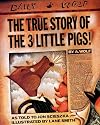
This retelling of the Three Little Pigs gives a sympathetic ear to the Big Bad Wolf's perspective. According to the wolf, he is just a victim of circumstance, stricken by a sneezing cold while out trying to borrow a cup of sugar from his neighbors. The pigs died from shoddy craftsmanship, and the wolf ate them because, well, wolves eat pigs. By the time he got to the third house, that pig was so rude that the wolf lost his temper and only appeared like he was trying to break down the door when the police arrived. The end reveals the wolf has been telling this story while sitting in jail, a pig for his guard. Villain-as-protagonist stories are a lot more popular now than they were when this was first written, but this is still a great example of the trope. Could lead to some interesting exploration about reliability of narrative based on perspective.
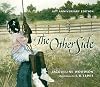
This story is told from the perspective of a young black girl named Clover who meets a young white girl named Annie and makes an unlikely friendship with her over a summer in a segregated community. The only problem I have with this book is that it would be easy for children to misinterpret (or have it misinterpreted to them) that this book argues for a "both sides were racist" narrative in the Jim Crow South. Particularly the scene where Annie asks to play with the group of black girls and is immediately told no is exactly the sort of passage that gets cherrypicked out of context and used to argue for the existence of black racism. What the author intended, but was more subtle about, is that the other girls did not want to play with a white girl not because she was white, but because that could endanger them and their families if the wrong people saw them playing together. The fact that they live under racial segregation is so pervasive and accepted that its hardly mentioned, and when it is, its immediately dismissed as "the way things are". This undercurrent frames a lot of the scenes, such as Clover's mother hurrying her along when she sees Annie in public, or her watching the girls sitting on the fence together, in a completely different light than if they're taken at face value.
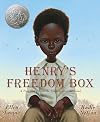
The story of Henry Box Brown mailing himself to freedom in antebellum America is entertaining and deservedly famous, but here that part of the tale almost exists to offset the first half of the story. Ellen Levine doesn't go over the top with her depiction of Henry's life as a slave, but she doesn't shy away from the harsh realities of his day to day life, particularly that his family could be separated at any time. After the first half of the story ends with Henry realizing he would never see his wife and children again, the tale of his plan to mail himself to freedom no longer seems as whimsical and clever as it does dangerous and desperate. Again, the author doesn't shy away from the description of the cramped, hot box, and when Henry's box is turned upside down, there is a sense for a moment that he might not make it. I enjoyed this substantially more realistic version of Brown's story, and I think it does more justice to the man himself and his likely experiences.
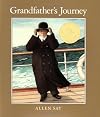
A story recounted by a grandson about his grandfather, who prior to WWII had lived in both Japan and California. His grandfather loved both places seemingly equally, and would long for one whenever he was in the other. his grandfather grew up in Japan, traveled throughout America, then returned to Japan and married his childhood sweetheart. His grandfather's plans to return to America with his family were thwarted by the onset of WWII and the bombing of Japan, and he was never able to take his family back to America. The grandson, however, was fortunate enough to have also grown up between both America and Japan, and echoes his grandfather's sentiments about belonging in both places. Fortunately, the grandson is able to easily travel between the two places, and can often visit Japan, so he feels more fortunate than his grandfather, who was left with only memories of half of his home.
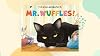
This book has no real words to it because it takes place almost entirely between a cat named Mr. Wuffles and a crew of tiny alien colonists that the cat is fascinated by. The aliens are shown speaking their native language, but as it is not English, we are left to interpret their actions through the illustrations. Luckily, the story is fairly linear and easy to follow, the aliens' ship is damaged by Mr. Wuffles, who believes that the ship, as with all of creation, is a cat toy. The aliens evade destruction by the comparatively enormous Mr. Wuffles, and join forces with the bugs that live in the household to formulate a plan to repair their ship and escape. The bugs share their food with the aliens, who then share their learning and technology with the bugs. The plan is put into action, and the combined forces of the aliens and the bugs manage to ensure the aliens' escape. The book closes on the ants in the walls, wearing clothes and using tools, creating cave drawings of their battle with the cat. I love the implication that aliens would arrive and endow a species with space-age knowledge and technology, but that the aliens would be so tiny the only species they could interact with would be bugs. Its a great twist on an old tale, and framing it as ostensibly a book about a cat's adventures makes everything inside all the more surprising.
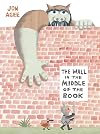
This book uses the natural divide of the book's binding to represent a wall that separates the book into two parts. On one side is a young knight, on the other a fearsome ogre. The knight believes his side of the wall is safe, even as it fills with water. However, he is saved from the water and the monsters within it by the very same ogre from the other side of the wall, who welcomes the knight to HIS side of the wall, and the knight decides to be friends with the ogre. A nice story about overcoming fear of the unknown and making new friends, as well as the dangers of letting fear trap you behind a metaphorical wall.
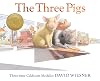
This postmodern retelling of The Three Pigs follows the titular characters as they escape the confines of their traditional setting and explore the wider world of children's literature. They interact with panels from other books and pass in and out of other stories, sometimes taking characters with them. They eventually settle on removing the brick house scene from the overall narrative and moving into it, along with some nursery rhyme characters and a giant dragon. One of the pigs can even interact with the letters on the page, and he gathers them up and writes them all a happy ending. I think this book will ask most kids to do a lot of thinking and interpreting, as there really isn't a lot of traditional story written in the book. The illustrations portray the characters' actions rewriting the plot as the story goes, so there is a fun sense of discovery as you wait to see what happens next to very familiar characters in an entirely unfamiliar setting.
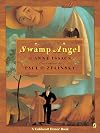
In the same vein as other American folklore featuring larger-than-life characters such as Paul Bunyan or Pecos Bill, Swamp Angel is the story of Angelica Longrider, the greatest Tennessee woodswoman who ever lived. She is unbelievably huge, strong, and tough, and performs all manner of impossible feats such as rescuing an entire wagon train that was mired in a swamp. In this story, the people of Tennessee are being tormented by a giant bear that no one can seem to kill, named Thundering Tarnation. Angelica fights with the enormous bear with so much gusto that the dust they raised renamed the mountain range the Great Smoky Mountains. Eventually, Angelica triumphs, and everyone in Tennessee shares in eating the bear, the pelt of which Angelica takes to Montana and turns into the Shortgrass Prairie. Kids should be delighted with this extremely over-the-top take on American frontier life, the illustrations capture the humor in the story very well.
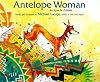
A beautifully illustrated picturebook that follows an older Apache man as he recounts the tale of how the Apache learned their fieldcraft. According to the legend, a man came who taught the tribe ways of crafting and hunting, but also taught them to honor nature. The man fell in love with a woman from the tribe, but the tribe would not accept their children, so he left the tribe with his wife and children, and they all transformed into antelope. The old man explains that this is why the Apache do not hunt the antelope, and why they must honor nature. The art in the story is very southwestern in flavor, with lots of vivid reds and greens interspersed between the earth tones, but the people and animals are drawn very realistically. Sometimes Native American stories fall prey to the desire to make everything look like a crude representation, as though that lends some air of authenticity to the story, but not here.
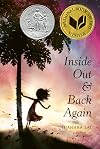
A poignant and sometimes touching story that is set in a familiar time and place, but from an unfamiliar point of view. In the immediate aftermath of the American retreat from Vietnam, a young Vietnamese girl is forced to flee her homeland and navigate her new home in 1975 Alabama. She and the rest of her family also must come to terms with the fact that her father, who is missing in action from the Vietnamese Navy, has died and will not join them in their new home. Written in free verse, this story conveys the great emotions of a 10 year old girl caught up in the life of a refugee, and the heartbreak she feels as she is forced to leave not only her home, but her father as well.
Butterflies on Carmen Street/ Mariposas en la calle Carmen (English and Spanish Edition) by Monica Brown
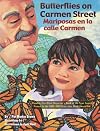
This story is told side-by-side in both English and Spanish, and is about a little girl who gets to raise a monarch butterfly from caterpillar to butterfly for a school project. She learns from her grandfather that the butterflies migrate to his childhood home in Mexico each year, and Julia voices a desire to travel to Mexico and see her grandfather's home, and visit the butterflies. There is a small science aspect to the book, as it describes the general process that metamorphizes caterpillars into butterflies, and touches on their migratory patterns, but it also does a good job of connecting those same butterflies to Julia's culture and heritage.