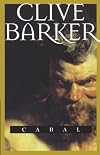
As a Canadian who's lived in every southern province from BC to Ontario, it's certainly fun actually knowing the details about the places an author is describing for once. Is this what you US East/West Coast people feel like every time you read a popular story? Beyond the location names the book doesn't feel terribly Canadian though.
Overall I didn't love or hate the book and feel very neutrally about it. It was really short, so I was never bored of it, but it just didn't grip me the same way as the growing, unreasonable horror of Barker's "In the Hills, the Cities". This book feels like an atypical urban fantasy thriller rather than horror-fantasy.
My biggest gripe is that the underworld aspect of Midian was basically a side-element. The hellish catacombs and fantastical, grotesque denizens of Midian were the most interesting parts of the story but I feel like there was a missed opportunity to dwell there, given how short the story was.
Also, I feel that Lori was actually the main character. A large slice of the novel is from her viewpoint, and most of the story seems to be about her coming to terms with the monstrous world she's been pulled into and the love she has for it deep inside. Boone's parts were more about not wanting to let Lori down the way he thought he always had in the past, as well as his revenge on the psycho psychiatrist.
Overall I didn't love or hate the book and feel very neutrally about it. It was really short, so I was never bored of it, but it just didn't grip me the same way as the growing, unreasonable horror of Barker's "In the Hills, the Cities". This book feels like an atypical urban fantasy thriller rather than horror-fantasy.
Also, I feel that Lori was actually the main character. A large slice of the novel is from her viewpoint, and most of the story seems to be about her coming to terms with the monstrous world she's been pulled into and the love she has for it deep inside. Boone's parts were more about not wanting to let Lori down the way he thought he always had in the past, as well as his revenge on the psycho psychiatrist.
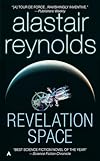
Space operas are perhaps my favourite genre (it's a tossup with cosmic horror). I also tend to enjoy books (and movies) that are not at all straightforward. That said, pretty much nothing in the entire first half of the book did anything for me. I listened to the audiobook and could barely follow who's who or where they were, I struggled with John Lee's (admittedly good) accents at my typical listening speed, and I really struggled to care about the technology/settings/characters.
Luckily, the second half was a lot better than the first half. The book probably would have been more enjoyable to read rather than listen to, but alas... When it comes down to it, I think I mostly didn't care for any of the scenes that were set in actual "society" (Yellowstone, the wedding, dig site, etc) but once things moved primarily to the ship the tone shifted and it felt a lot tighter. Glad I didn't drop it, because dropping things is a painful experience. One of these days I might grab some of the other books in the series.
Luckily, the second half was a lot better than the first half. The book probably would have been more enjoyable to read rather than listen to, but alas... When it comes down to it, I think I mostly didn't care for any of the scenes that were set in actual "society" (Yellowstone, the wedding, dig site, etc) but once things moved primarily to the ship the tone shifted and it felt a lot tighter. Glad I didn't drop it, because dropping things is a painful experience. One of these days I might grab some of the other books in the series.
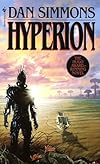
Otherwise, I thought it was a good book. Everyone calling it the "best sci-fi ever written" did not help its case though, as I ended up feeling it had been overhyped. The plot structure was enjoyable, once I got into it; though, certain subplots were far more interesting than others.
I was also lead to believe there was more of a horror element to it than there actually was, so I couldn't help be slightly disappointed about that, to no fault of the book. The sub-plot about the missionaries will certainly stick with me for a long time though...
The book was certainly well written, and I feel I would appreciate it more if I had a deep understanding of the poem and the mythology it's so clearly based on. But even knowing practically nothing about the poem, I feel it does a good job filling the reader in on key details as they are needed.
All-in-all, I feel that even just reading the first quarter of the following book elevates Hyperion to a solid 4/5. I wouldn't hesitate to recommend it to people who enjoy "sci-fantasy" and/or who appreciate literature, but I would do so with significantly less hype.

Grim & gory, but not necessarily scary. It had interesting concepts and didn't feel particularly derivative, but I wasn't engaged to the point of not being able to put it down. It was well written (and the narrators were good) but the literature itself didn't fill me with excitement for reading like some books do.
One thing I did really enjoy, however, was how (unless I'm mistaken) all six stories are related & completely canon to each other. I read a lot of short stories and the majority of the time each one is a stand-alone work. Even when an author creates a deliberate collection, they're usually only related thematically at most. But this book was a collection of stories all focusing on different aspects of the same shared event, at different times and places.
Not really spoilers but:the fact that the stories were literally, not metaphorically, about the border between hell and earth was an unexpected surprise, and why I'd describe the book as horror-fantasy.
The two most interesting elements to me were the Atlas skull (from the first and last story) and the Angels that appear occasionally. I think a lot of my issues with the stories comes down to the vague endings. The ideas and perspectives are really interesting to me, but the endings don't stick. "Skullpocket" wasn't my favorite story, but it's probably the one I remember best because the ending ties it together in a memorable way.
Apparently "The Visible Filth" was made into a movie, so I'll probably end up watching show more that since it was the story that caught my interest the most. show less
One thing I did really enjoy, however, was how (unless I'm mistaken) all six stories are related & completely canon to each other. I read a lot of short stories and the majority of the time each one is a stand-alone work. Even when an author creates a deliberate collection, they're usually only related thematically at most. But this book was a collection of stories all focusing on different aspects of the same shared event, at different times and places.
Not really spoilers but:
The two most interesting elements to me were the Atlas skull (from the first and last story) and the Angels that appear occasionally. I think a lot of my issues with the stories comes down to the vague endings. The ideas and perspectives are really interesting to me, but the endings don't stick. "Skullpocket" wasn't my favorite story, but it's probably the one I remember best because the ending ties it together in a memorable way.
Apparently "The Visible Filth" was made into a movie, so I'll probably end up watching show more that since it was the story that caught my interest the most. show less
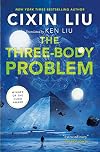
I've seen a few reviews saying that the novel takes a while to pick up, but as I was reading I never really got that indication. Sure, the sci-fi aspects take a while to materialize, but that doesn't indicate when the book starts to get good. The plot is definitely a slow burn at any rate (which isn't a bad thing), but I was just as lightly interested at the beginning as I was at, say, the middle for entirely different reasons. (My enjoyment did pick up quite a bit at the end when things get very sci-fi though).
As someone who has very little knowledge about any aspect of China, or any exposure to Chinese people, I found this book to be very confusing at the start (especially since I listened to the audiobook, and had a hard time keeping track of the names). The book is constantly jumping between timelines and events, and absolutely refuses to explain anything until the proper time. It will not spoon-feed you the plot, and you just have to accept that you need to wait until the end as things slowly start to make sense.
The author clearly enjoys attempting to explain complex scientific and mathematical theories in understandable terms and did what I—as a non-scientist who enjoys science—assumed was a good job.
It was a good book, with a few boring parts, and I'm hoping that the rest of the series will be even better given where the book ended.
As someone who has very little knowledge about any aspect of China, or any exposure to Chinese people, I found this book to be very confusing at the start (especially since I listened to the audiobook, and had a hard time keeping track of the names). The book is constantly jumping between timelines and events, and absolutely refuses to explain anything until the proper time. It will not spoon-feed you the plot, and you just have to accept that you need to wait until the end as things slowly start to make sense.
The author clearly enjoys attempting to explain complex scientific and mathematical theories in understandable terms and did what I—as a non-scientist who enjoys science—assumed was a good job.
It was a good book, with a few boring parts, and I'm hoping that the rest of the series will be even better given where the book ended.
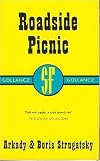
A classic and enjoyable alien invasion story.... sans the alien invasion. This story is all about the personal, social effects of a truly bizarre and nonhuman first contact. The influence on the also-enjoyable Southern Reach series is exceedingly obvious.
A very quick read, but not one that affected me much after putting the book down. The authors' info at the end was rather bland, but it was still interesting hearing the circumstances around the novel's publishing.
A very quick read, but not one that affected me much after putting the book down. The authors' info at the end was rather bland, but it was still interesting hearing the circumstances around the novel's publishing.
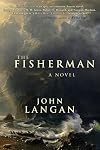
This is cosmic horror, yes, but a fresh take on it rather than a rehashing of Lovecraft (not that I have anything against works that build upon popular lore). I'd give this book 3 stars, but the writing style and subversion of typical Weird Horror expectations bumps it up half a star, which then gets rounded up.
Where other Weird Horror is woven with existential dread and things unknowable, The Fisherman is pervaded by the underlying horror of loss.
Where other Weird Horror is woven with existential dread and things unknowable, The Fisherman is pervaded by the underlying horror of loss.
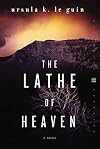
A must-read for anyone who enjoys a good story focused on the subjective nature of reality, which I certainly do. The only reason I'm rating it as "liked it" instead of "really liked it" is the second half doesn't quite pull its weight (not that the conclusion was completely dissatisfying or anything) and my ratings heavily favor a strong ending.
Regarding the context of the ideas that are played with in this book, I immediately thought of Steins;Gate, though the tone and underlying plot machinations completely diverge from that one point of commonality. But both share the circumstance of a single person given power they do not want, struggling with memories no one else remembers as they do their best to make things right despite the world (or the subconscious) apparently skewing itself towards chaos.
Regarding the context of the ideas that are played with in this book, I immediately thought of Steins;Gate, though the tone and underlying plot machinations completely diverge from that one point of commonality. But both share the circumstance of a single person given power they do not want, struggling with memories no one else remembers as they do their best to make things right despite the world (or the subconscious) apparently skewing itself towards chaos.
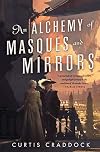
Disclaimer: I initially received this book for free in exchange for reviewing it once it would be published. But that was many years ago, and an early draft, so when the book was finally published I wasn't confident it hadn't changed in editing. So I bought the official version and this review will be based on that.
If you like fantastical science, strong female leads, wormfingers, political intrigue, and/or witty comebacks, it's safe to assume you'll enjoy this book. Well, as long as you also like books that have you thinking "There's no way this situation could get any wors—oh... How in the world are they getting out of this one?" While not as bleak as media such as Attack on Titan or Game of Thrones, the world of The Risen Kingdoms is still not a happy fantasy land. Being important doesn't keep people safe, and being smart doesn't mean you're safe from evil plots. Even the main characters' dashing personalities and wits still aren't enough to keep them ahead of the many nefarious plots and betrayals waiting for them at every corner. Unlike the aforementioned stories however, this book is less about "surviving" than "persevering", which is an important distinction in tone.
While fantasy may not be my favourite form of speculative fiction, I do appreciate steampunk aesthetics and science-focused details, both of which this novel has in abundance. But calling this novel steampunk would be a disservice to the fact that it's actually aetherpunk, and we all know that aether show more is a better form of steam. :) My main gripe with fantasy as a whole is that there are some very common tropes that it seems unable to escape, especially in regards to the basically-interchangeable settings (generic Medieval England anyone?). While An Alchemy is still very obviously fantasy, and full of fantasy tropes, it at least avoids most of the annoyingly common ones. The steampunk aspect necessitates a setting that's more Victorian than medieval, and the Kingdoms are culturally distinct (in fact, I would say that having passing familiarity with French and Spanish language is useful, though not necessary).
The magic systems are unique, but every fantasy novel requires as much. More kingdoms and systems of magic are hinted at, but I think it was a good idea to focus on only two, since the story doesn't info-dump its explanations. At times the novel can seem a bit literary or self-indulgent, but I typically assume that means the author is having fun writing, which is fine even if it takes me out of the story a tiny bit. I generally prefer flawed characters, and though the characters are flawed they're perhaps a bit too competent for my tastes. However, they stay far enough away from being Mary Sue's that it's not an issue; and as I stated earlier, being competent is just barely good enough to survive.
Looking forward to the sequels, and I'm glad they were all mostly finished before this novel was released, so that we don't have to wait a decade between each book. show less
If you like fantastical science, strong female leads, wormfingers, political intrigue, and/or witty comebacks, it's safe to assume you'll enjoy this book. Well, as long as you also like books that have you thinking "There's no way this situation could get any wors—oh... How in the world are they getting out of this one?" While not as bleak as media such as Attack on Titan or Game of Thrones, the world of The Risen Kingdoms is still not a happy fantasy land. Being important doesn't keep people safe, and being smart doesn't mean you're safe from evil plots. Even the main characters' dashing personalities and wits still aren't enough to keep them ahead of the many nefarious plots and betrayals waiting for them at every corner. Unlike the aforementioned stories however, this book is less about "surviving" than "persevering", which is an important distinction in tone.
While fantasy may not be my favourite form of speculative fiction, I do appreciate steampunk aesthetics and science-focused details, both of which this novel has in abundance. But calling this novel steampunk would be a disservice to the fact that it's actually aetherpunk, and we all know that aether show more is a better form of steam. :) My main gripe with fantasy as a whole is that there are some very common tropes that it seems unable to escape, especially in regards to the basically-interchangeable settings (generic Medieval England anyone?). While An Alchemy is still very obviously fantasy, and full of fantasy tropes, it at least avoids most of the annoyingly common ones. The steampunk aspect necessitates a setting that's more Victorian than medieval, and the Kingdoms are culturally distinct (in fact, I would say that having passing familiarity with French and Spanish language is useful, though not necessary).
The magic systems are unique, but every fantasy novel requires as much. More kingdoms and systems of magic are hinted at, but I think it was a good idea to focus on only two, since the story doesn't info-dump its explanations. At times the novel can seem a bit literary or self-indulgent, but I typically assume that means the author is having fun writing, which is fine even if it takes me out of the story a tiny bit. I generally prefer flawed characters, and though the characters are flawed they're perhaps a bit too competent for my tastes. However, they stay far enough away from being Mary Sue's that it's not an issue; and as I stated earlier, being competent is just barely good enough to survive.
Looking forward to the sequels, and I'm glad they were all mostly finished before this novel was released, so that we don't have to wait a decade between each book. show less
A story about stories, from the point of view of a storyteller.
Of course, it's really just one main story, but the lore of the world is interwoven throughout in a more-or-less seamless manner. However, I'll admit I misinterpreted the tone of the book because of the opening "story", and was rather confused when I realized this fantasy tale does not shy away from dark and uncomfortable territory.
As someone who's not necessarily a fan of the "folk tale" style employed by the insert stories, I often found myself waiting for the main plot lines to return, though some were alright.
Of course, it's really just one main story, but the lore of the world is interwoven throughout in a more-or-less seamless manner. However, I'll admit I misinterpreted the tone of the book because of the opening "story", and was rather confused when I realized this fantasy tale does not shy away from dark and uncomfortable territory.
As someone who's not necessarily a fan of the "folk tale" style employed by the insert stories, I often found myself waiting for the main plot lines to return, though some were alright.
This felt like the literary equivalent of being unceremoniously boarded onto a not-quite-whitewater raft with a reliable guide whose presence you trust despite repeated declarations that you shouldn't trust anything that he says. Then, before you know it, you're hurtling downstream, taking in the scenery and truly enjoying yourself even though you don't have a clue where you're going, but watching time and again as every detail and circumstance flows perfectly into the next. But even as things start to go wrong and your snarky co-passengers begin bailing overboard en masse, everything is as it should be.
I find that you can apply this to the plot, the structure, and the meta-narrative without issue. I've never read Vonnegut before, and I'm sad it's taken so long.
I find that you can apply this to the plot, the structure, and the meta-narrative without issue. I've never read Vonnegut before, and I'm sad it's taken so long.
This book was peculiar in that I started out not particularly interested in it, then quickly came to enjoy it, then lost some interest again near the end, then came back to a happy medium by the conclusion (and afterword).
If you do not enjoy hard, technical sci-fi, throw this book as far away from you as you are able. Don't even try it unless your love of political intrigue is more than enough to alleviate your inevitable boredom. As the afterword makes clear, this is simply a book about exploring reality-based near-future science through the lens of science-fiction. For a reasonably realistic but far more fictional sci-fi, I would recommend The Expanse series instead.
I would also recommend playing Kerbal Space Program as a primer on orbital mechanics, rocket propulsion, and the sheer magnitude of difficulty of both (just to appreciate the science behind it).
If you do not enjoy hard, technical sci-fi, throw this book as far away from you as you are able. Don't even try it unless your love of political intrigue is more than enough to alleviate your inevitable boredom. As the afterword makes clear, this is simply a book about exploring reality-based near-future science through the lens of science-fiction. For a reasonably realistic but far more fictional sci-fi, I would recommend The Expanse series instead.
I would also recommend playing Kerbal Space Program as a primer on orbital mechanics, rocket propulsion, and the sheer magnitude of difficulty of both (just to appreciate the science behind it).
A good book, but not necessarily an enjoyable read. It feels like it plods along quite slowly to the ending that it's constantly hinting at, resulting in a feeling of "just get there already" instead of the perhaps desired "I can't wait until we get there". Everything about this is a journey, and luckily the end of the journey--while hard to get through--is powerful and not without hope despite the overarching themes.