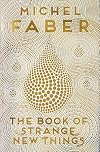
This tale of a Christian missionary in space tells us more about life, love and faith than most down-to-earth fiction.
Michel Faber once said that he was an atheist. If that is still true, his latest novel — The Book of Strange New Things — suggests that he takes religion so seriously, considers it so valuable, that he cannot bring himself to sully it by believing. Within the novel, the ‘Book of Strange New Things’ is the Bible, and so Faber has written his own bible, what he wants to say to our common humanity about life and death, faith and doubt. He has produced something far more lucid and alive to human joys and sorrows than any bowdlerised attempt by AC Grayling.
The book is full of humour, that warm kind of wit that dimples the cheeks when we catch a glimpse of the fact that everyday human existence was ever part comedy. Yet Faber had me weeping in despair for humanity too, and he gently led me back and forth between the two until I understood the need for both.
Peter Leigh is an English Christian pastor who has been called to be a missionary. To say that Peter's marriage to Beatrice is a happy one is an understatement: they are a perfect partnership and their love-life is good. But that mission means that they will be apart for the first time since they married. The novel opens with the couple driving to Heathrow Airport, finding a lay-by for last-minute lovemaking, and the nervous separation.
The Book of Strange New Things is sci-fi, but it would be wrong to show more pigeon-hole it as genre fiction. It depicts a near future: near enough for everything to be totally recognisable as if it were today. The only difference is that a faceless corporation — USIC — has started a colony on the planet Oasis (so named in competition by a schoolgirl in Nebraska). So much, so sci-fi, except that Peter has been called to bring the Gospel to the inhabitants of Oasis, the Oasans — when a colleague refers to them as ‘aliens’, Peter reminds her that the humans are the aliens on Oasis. We are saved from too much sci-fi by the fact that we are limited to Peter's experience and limited understanding of what is going on. As is common practice in sci-fi, Peter is put into a drug-induced suspended animation for the month-long ‘Jump’ to Oasis, resulting in some crazy, mind-bending jet lag. On arrival, his liaison, Grainger, apparently gives him a full briefing, but, as he cannot remember, we too are left in the dark about the practicalities of living in an extraterrestrial colony until Peter find out the hard way. And there is that nagging question: why would USIC want to spend millions to send a missionary into space?
Read more… https://christhum.wordpress.com/2014/11/25/book-review-the-book-of-strange-new-t... show less
Michel Faber once said that he was an atheist. If that is still true, his latest novel — The Book of Strange New Things — suggests that he takes religion so seriously, considers it so valuable, that he cannot bring himself to sully it by believing. Within the novel, the ‘Book of Strange New Things’ is the Bible, and so Faber has written his own bible, what he wants to say to our common humanity about life and death, faith and doubt. He has produced something far more lucid and alive to human joys and sorrows than any bowdlerised attempt by AC Grayling.
The book is full of humour, that warm kind of wit that dimples the cheeks when we catch a glimpse of the fact that everyday human existence was ever part comedy. Yet Faber had me weeping in despair for humanity too, and he gently led me back and forth between the two until I understood the need for both.
Peter Leigh is an English Christian pastor who has been called to be a missionary. To say that Peter's marriage to Beatrice is a happy one is an understatement: they are a perfect partnership and their love-life is good. But that mission means that they will be apart for the first time since they married. The novel opens with the couple driving to Heathrow Airport, finding a lay-by for last-minute lovemaking, and the nervous separation.
The Book of Strange New Things is sci-fi, but it would be wrong to show more pigeon-hole it as genre fiction. It depicts a near future: near enough for everything to be totally recognisable as if it were today. The only difference is that a faceless corporation — USIC — has started a colony on the planet Oasis (so named in competition by a schoolgirl in Nebraska). So much, so sci-fi, except that Peter has been called to bring the Gospel to the inhabitants of Oasis, the Oasans — when a colleague refers to them as ‘aliens’, Peter reminds her that the humans are the aliens on Oasis. We are saved from too much sci-fi by the fact that we are limited to Peter's experience and limited understanding of what is going on. As is common practice in sci-fi, Peter is put into a drug-induced suspended animation for the month-long ‘Jump’ to Oasis, resulting in some crazy, mind-bending jet lag. On arrival, his liaison, Grainger, apparently gives him a full briefing, but, as he cannot remember, we too are left in the dark about the practicalities of living in an extraterrestrial colony until Peter find out the hard way. And there is that nagging question: why would USIC want to spend millions to send a missionary into space?
Read more… https://christhum.wordpress.com/2014/11/25/book-review-the-book-of-strange-new-t... show less
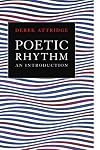
Poetic Rhythm is written by someone who knows what he is writing about: Attridge has analysed a lot of poetry in his time. I have read other books that attempt to explain poetic rhythm, metre, stresses, feet and the whole shebang, and they all look quite ridiculous after one has read Attridge. The basic point that makes the difference is the distinguishing of ‘stress’ from ‘beat’, where the former is the property of the vocabulary and phrasing, and the latter is a musical pulse that imposes itself when the stresses begin to line up. Poetic Rhythm has plenty of examples, and has exercises at the end of each chapter. In spite of this, it does not feel like a workbook or textbook, and I found myself drawn into the exercises to see if I could make them work. Reading Poetic Rhythm also encouraged me test out my new-learned skills in scansion on a stack of poems, enabling me to see more detail behind the rhythmic structure of poems.
Attridge's approach is that traditional ways of scanning and describing poems (iambic pentameter etc.) are only useful up to a point, so that it is about halfway through the book before he starts raising this terminology. His point is that we do not actually experience iambs and trochees and spondees when we read poetry, that these are artificial groupings of rhythmic patterns. In stead, Attridge teaches that we have to understand the history of what works in the poetic rhythm of the English language rather than trying to impose a show more faux-classicism on it. This approach is particularly rich when it comes to explaining all the metrical variations that might be used in syllable-stress metre (e.g. iambic pentameter) that allow greater freedom of expression without undermining the overall rhythm. Other books might just say that the odd iamb can be swapped for a trochee here and there to keep things interesting.
The book covers Anglo-Saxon alliterative verse (and some more recent attempts at it) and other less-strict stress metres; there is even a brief foray into rap. The chapter on free verse is perhaps understandably, yet also woefully, short. Basically, the book presents two rough rhythmical styles of free verse: using bits of traditional metre as building blocks, or not. It would have been good to have more of a survey of how different free-verse poets write the rhythm of their lines. This is the only blind spot, and Poetic Rhythm does, in fact, equip one with a more detailed approach to analysing free verse.
This book is a must for any poet, reader or critic of poetry. show less
Attridge's approach is that traditional ways of scanning and describing poems (iambic pentameter etc.) are only useful up to a point, so that it is about halfway through the book before he starts raising this terminology. His point is that we do not actually experience iambs and trochees and spondees when we read poetry, that these are artificial groupings of rhythmic patterns. In stead, Attridge teaches that we have to understand the history of what works in the poetic rhythm of the English language rather than trying to impose a show more faux-classicism on it. This approach is particularly rich when it comes to explaining all the metrical variations that might be used in syllable-stress metre (e.g. iambic pentameter) that allow greater freedom of expression without undermining the overall rhythm. Other books might just say that the odd iamb can be swapped for a trochee here and there to keep things interesting.
The book covers Anglo-Saxon alliterative verse (and some more recent attempts at it) and other less-strict stress metres; there is even a brief foray into rap. The chapter on free verse is perhaps understandably, yet also woefully, short. Basically, the book presents two rough rhythmical styles of free verse: using bits of traditional metre as building blocks, or not. It would have been good to have more of a survey of how different free-verse poets write the rhythm of their lines. This is the only blind spot, and Poetic Rhythm does, in fact, equip one with a more detailed approach to analysing free verse.
This book is a must for any poet, reader or critic of poetry. show less
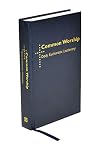
I bought this lectionary for weekday Communion services and immediately saw the problem: it will not lie open on the lectern. This is an appalling oversight, as lectern Bibles and lectionaries are expected to lie open. This book will be closed when one comes to the lectern, has then to be opened, and requires being pinned down by one hand or held while reading. It is thus awkward to use for its intended purpose. The contents is fine, reproducing NRSV and Common Worship Psalter texts. I first relegated my copy to the study, and then realised that it is no good there if it will not stay open. I have replaced it with the Weekday Missal. It, unfortunately, uses the Jerusalem Bible text, but has one great advantage: it can be used for its stated purpose. It also has Alleluia/Tract texts selected for each day in-line.
Given rebinding so that will lie open, this might be worth using.
Given rebinding so that will lie open, this might be worth using.

This is a beautiful book, part travel guide, part pilgrim manual. Its scope is simple yet comprehensive, a travel guide to the Christian holy places in Britain. It is unashamedly subjective, and necessarily so. However, the subjectivity is part of the book's charm, including the star ratings based on strict criteria (with bonus stars if the author felt the place particularly spiritual). The book is divided into broad regions, subdivided into counties, with each place given from half a page to two pages write up, with beautiful pictures of each site. The author visits each place and gives up-to-date descriptions and directions (including GPS coordinates). The anecdotal style is full of charming asides, such as "two ladies I met cleaning the church had never heard of the well" and "...her holy well, scene of so many healing miracles. There is now an NHS walk-in centre directly underneath". Flipping back and forth through this well produced and well indexed labour of love, makes one want to hit the local pilgrim trail, kiss the part-hidden shrines of our obscure saints and take a dip into the cold millponds that were the places of baptism and healing for the first Christians of these islands.

A few months ago, I was asked why science fiction was such a boy thing and what is the point of the genre. I cobbled together an answer about science fiction being used to create a narrative space removed from the here and now into which pertinent questions and ideas can be tried out. Science fiction might not be science, but it does have an experimental edge. As for the boyish enchantment of the genre, I imagine that it has something to do with love of grand ideas and machines rather than human relationships and emotions. Then I remembered reading somewhere about women’s science fiction, and yet still feminist science fiction. A quick web search led us to Feminist SF, and I recommend a browse.
I have long been a fan of Ursula LeGuin, since reading her Wizard of Earthsea at primary school. I was enrapt by her bringing imagined cultures and worlds to life through her writing: a skill, I later learned, was informed by her understanding of anthropology. Quite apart from Earthsea, The Left Hand of Darkness is considered a cornerstone of feminist science fiction: not only does LeGuin conjure up a fascinating world in which to immerse the reader, she also asks us to think deeply about sex and gender.
The Left Hand of Darkness is about Genly Ai, a man sent as an envoy of a collectivity of human-inhabited planets called the Ekumen to an arctic world they know as Winter, and known to its inhabitants as Gethen. The book is an account of Ai’s mission to Gethen to begin show more interplanetary dialogue. Interleaved in Ai’s account are logs from a previous investigative mission, collected folk tales and the excerpts from the diary of a Gethenian friend. These help to give the reader a number of points of views in parallel. This is not Flash Gordon territory: Ai has no ray gun, his ‘ship’ is impounded in a Gethenian warehouse, he’s black, and the Gethenians, while fairer skinned, are not white.
The Gethenians are human, but with one major difference: they are ambisexual. In Gethenian society there are no men or women, just people, and each has the potential to father or mother children. Most of the time, Gethenians are in an androgynous, neutral state, but once every 26 days they enter kemmer, a state of sexual readiness. In kemmer, a Gethenian becomes temporarily male or female based on hormone levels, and there is no telling which one might become, except that kemmering pairs tend to go into kemmer together and as opposite sexes. Lineage is traced through the parent of the flesh (‘mother’). There is no marriage, but an informal vow of kemmering exists for long-term partnerships. Employers give each employee leave from work during each one’s kemmer, a kind of romance/sex holiday. Friendship becomes a serious business, when any good friend could be one’s next sexual partner. Prostitution is absent from Gethen, and unpaired kemmerings can go to their local kemmer house to satisfy their needs with others.
It is certainly intriguing to dive into this thought-experiment of a world without gender. LeGuin skilfully spins this tale as neither a utopia of gender barriers overcome or a dystopia of circus oddities. In fact, the Gethenians consider Ai, who ‘carries his genitals always outside of his body’, a pervert for his permanent masculinity. Through Ai’s eyes, we see that it is not easy at all to overcome this ingrained bipolar distinction of sex. Ai is appalled to see politicians, whom he thinks of as men of power, gossiping and plotting like old women. He sees his landlady as an old woman, but, when asking her of her children, is surprised to hear that she has never borne a child, yet has sired two. He is amused to hear the king is pregnant. His difficulty is ours, always having to define each action, word or appearance as masculine or feminine, despite knowing that such terms are meaningless. At one point a Gethenian innocently asks Ai what women are like. He struggles to describe the whole idea so taken for granted by him, yet unknown to the questioner. In the end he is limited to meaningless generalisations, ‘They tend to eat less’.
When one becomes more accustomed to the situation on Gethen, philosophical issues begin to be seen. The fact that any Gethenian can be pregnant makes them less free than men, yet because this might happen to anyone they are more free than women. In fact, Gethenian life tends to be communal, centred on the ‘hearth’, a partially related group of Gethenians raising children together. However, a darker side of Gethenian communalism is seen in the labour camps for undesirables. The lack of sexual dualism also leads to lack of dualism in other areas. The old Gethenian religion is based on nothingness and praises ignorance, seeing them as just as important as existence and knowledge. For Gethenians, the undivided whole is important: the unity of darkness and light. On Gethen, there is no sense of Other. This means that there have be no real wars in their history, just the odd skirmish, foray or assassination. Likewise, the lack of sense of Other makes Gethenians uninquisitive, developing technology at a slow, steady pace. The cult of Yomesh, a younger religion, is gaining pace, bringing nascent dualistic thought to Gethen. Along with comes technological advancement, but also a jingoism of the need to prove superiority over the Other.
I finished the book with a sense of how deeply our division of sex and gender influence the smallest parts of our lives. I imagine LeGuin would have written The Left Hand of Darkness differently today. It was originally written in 1968, and its stance is neutral and open, certainly not feminist flag waving. However, I found this open approach, not pushy or preachy, to be the more compelling. How does sex shape our minds, our world? show less
I have long been a fan of Ursula LeGuin, since reading her Wizard of Earthsea at primary school. I was enrapt by her bringing imagined cultures and worlds to life through her writing: a skill, I later learned, was informed by her understanding of anthropology. Quite apart from Earthsea, The Left Hand of Darkness is considered a cornerstone of feminist science fiction: not only does LeGuin conjure up a fascinating world in which to immerse the reader, she also asks us to think deeply about sex and gender.
The Left Hand of Darkness is about Genly Ai, a man sent as an envoy of a collectivity of human-inhabited planets called the Ekumen to an arctic world they know as Winter, and known to its inhabitants as Gethen. The book is an account of Ai’s mission to Gethen to begin show more interplanetary dialogue. Interleaved in Ai’s account are logs from a previous investigative mission, collected folk tales and the excerpts from the diary of a Gethenian friend. These help to give the reader a number of points of views in parallel. This is not Flash Gordon territory: Ai has no ray gun, his ‘ship’ is impounded in a Gethenian warehouse, he’s black, and the Gethenians, while fairer skinned, are not white.
The Gethenians are human, but with one major difference: they are ambisexual. In Gethenian society there are no men or women, just people, and each has the potential to father or mother children. Most of the time, Gethenians are in an androgynous, neutral state, but once every 26 days they enter kemmer, a state of sexual readiness. In kemmer, a Gethenian becomes temporarily male or female based on hormone levels, and there is no telling which one might become, except that kemmering pairs tend to go into kemmer together and as opposite sexes. Lineage is traced through the parent of the flesh (‘mother’). There is no marriage, but an informal vow of kemmering exists for long-term partnerships. Employers give each employee leave from work during each one’s kemmer, a kind of romance/sex holiday. Friendship becomes a serious business, when any good friend could be one’s next sexual partner. Prostitution is absent from Gethen, and unpaired kemmerings can go to their local kemmer house to satisfy their needs with others.
It is certainly intriguing to dive into this thought-experiment of a world without gender. LeGuin skilfully spins this tale as neither a utopia of gender barriers overcome or a dystopia of circus oddities. In fact, the Gethenians consider Ai, who ‘carries his genitals always outside of his body’, a pervert for his permanent masculinity. Through Ai’s eyes, we see that it is not easy at all to overcome this ingrained bipolar distinction of sex. Ai is appalled to see politicians, whom he thinks of as men of power, gossiping and plotting like old women. He sees his landlady as an old woman, but, when asking her of her children, is surprised to hear that she has never borne a child, yet has sired two. He is amused to hear the king is pregnant. His difficulty is ours, always having to define each action, word or appearance as masculine or feminine, despite knowing that such terms are meaningless. At one point a Gethenian innocently asks Ai what women are like. He struggles to describe the whole idea so taken for granted by him, yet unknown to the questioner. In the end he is limited to meaningless generalisations, ‘They tend to eat less’.
When one becomes more accustomed to the situation on Gethen, philosophical issues begin to be seen. The fact that any Gethenian can be pregnant makes them less free than men, yet because this might happen to anyone they are more free than women. In fact, Gethenian life tends to be communal, centred on the ‘hearth’, a partially related group of Gethenians raising children together. However, a darker side of Gethenian communalism is seen in the labour camps for undesirables. The lack of sexual dualism also leads to lack of dualism in other areas. The old Gethenian religion is based on nothingness and praises ignorance, seeing them as just as important as existence and knowledge. For Gethenians, the undivided whole is important: the unity of darkness and light. On Gethen, there is no sense of Other. This means that there have be no real wars in their history, just the odd skirmish, foray or assassination. Likewise, the lack of sense of Other makes Gethenians uninquisitive, developing technology at a slow, steady pace. The cult of Yomesh, a younger religion, is gaining pace, bringing nascent dualistic thought to Gethen. Along with comes technological advancement, but also a jingoism of the need to prove superiority over the Other.
I finished the book with a sense of how deeply our division of sex and gender influence the smallest parts of our lives. I imagine LeGuin would have written The Left Hand of Darkness differently today. It was originally written in 1968, and its stance is neutral and open, certainly not feminist flag waving. However, I found this open approach, not pushy or preachy, to be the more compelling. How does sex shape our minds, our world? show less
Introduction to Syriac: An Elementary Grammar With Readings from Syriac Literature by Wheeler M. Thackston
This is certainly not the best Syriac teaching grammar. I would recommend Healey as the best around today, just ahead of Robinson. Thackston's use on unvoweled Estrangela makes things quite awkward for new learners to get a feel for the language, its presentation of grammar is not as clear as Robinson's, and its texts are not as well prepared as Healey's.

This is basically the book on the Odes of Solomon today. The transcription of the Syriac isn't always clear: it assumes some things that aren't in the mss and doesn't represent some things that are. The translation is pretty good, with just the occassional slip — the 'Christ speaks', 'Odist speaks' cues are rather clumsy insertions. However, this is the best book with which to get to grips with the Odes, bringing together all of the ms witnesses.
This book is full of lots of pretty squiggles. The scripts are well presented, but this thin handbook makes little distinction between transliteration, transcription and phonology. Nice but not solid.

This is quite a little handbook, but flawed certainly. The text is peppered with little mistakes, and the quality of information about each religion is quite uneven. Verdict: take with salt.

This is the gold standard for translating from Arabic to English: there is no other dictionary worth considering. If you buy a copy from Librairie du Liban, you can get the cheapest price for the hardback: carrying the papperback version just smacks of lack of commitment!
The Early Versions of the New Testament: Their Origin, Transmission and Limitations by Bruce M. Metzger
Metzger has a superb, encyclopaedic style, and he uses it brilliantly in this tour of the early versions of the New Testament. It is well written and backed up with solid scholarship. Metzger takes you on a journey through the details of the Syriac, Coptic, Armenian, Georgian, Ethiopic, Latin, Gothic and Slavonic versions of the New Testament, as well as giving little asides on the Arabic, Nubian, Persian, Sogdian, Caucasian Albanian, Anglo-Saxon, Old High German and Old Saxon versions.
I didn't know there was such a thing as a Calendar Nerd until I read this book. Calendrical Calculations has complete and reliable details on major calendar systems. It mixes culture with maths in a heady mix that will put your brain in epicycles.
How to Read Egyptian Hieroglyphs: A Step-by-step Guide to Teach Yourself Hieroglyphs by Mark Collier
This is a very clever little book. I read it, went to the British Museum's Egyptology Collection and could read the hieroglyphs fairly well. The authors are from the BM, but present the Egyptian in modern way for the beginner. The chapters are well-paced, and you can work your way through them by yourself. Egyptian isn't the easiest language to learn, but this book certainly helps.
The Luminous Eye: The Spiritual World Vision of Saint Ephrem (Cistercian Studies, No 124) by Sebastian Brock
This is the best little introduction to Ephrem the Syrian and his writing. Sebastian Brock writes as life-long scholar of Syriac, thoroughly inspired by Ephrem. If you need to know that theology is beautiful, read this.

I suppose there aren't too many introductory grammars of Classical Armenian, so this is pretty much what you have to read. If you can find the first edition, get that: I think a few improvements were made in the second edition, but, somehow, lots of typos crept in. If you're learning Armenian, misspelt Armenian words are going to trip you up. So, this book is annoying at times, but is pretty much the only option.
This book is beautiful. When it was a course book for Indian religion at Cardiff Univeristy, I thought it didn't look academic enough, but don't be deceived. The writing is thoroughly informed and informative, covering the basics of Indian religion. However, what sets this book apart are the sumptious photographs on every page. It's like a coffetable book, wrapped round encyclopaedia entries and squished down to decent size.