
This is a sweet book, and beautifully read.
Emmie Blue has had a sad life. She doesn't know her father and her mother is cold and unloving. Her trust has been brutally betrayed by a school-friend's father. Her only real joy has been her friendship with Lucas, the boy who found the balloon message she'd launched one day and emailed her. At sixteen years old, unloved and friendless, it's exactly what she needs, and is the start of a mutually supportive relationship that turns, quite effortlessly on her part, to an all-consuming love. Every year Emmie and Lucas meet for their shared birthday - this year it's their thirtieth, and she confidently expects that this is the year that he'll say that her love is reciprocated and they'll live happily ever after.
Only it's not. Poor Emmie finds herself betrayed yet again. Can her faith in life and happiness be restored? While her past unfolds in flashback we follow her struggle to pick up the search for her missing father and her attempt to find common ground with her mother, supported by her raucous, heart-of-gold friend and her eccentric boss.
Katy Sobey as narrator brings all the characters individuality with her reading, setting the tone perfectly for a poignant and heart-warming story that's going to stay with the reader for a long time.
Emmie Blue has had a sad life. She doesn't know her father and her mother is cold and unloving. Her trust has been brutally betrayed by a school-friend's father. Her only real joy has been her friendship with Lucas, the boy who found the balloon message she'd launched one day and emailed her. At sixteen years old, unloved and friendless, it's exactly what she needs, and is the start of a mutually supportive relationship that turns, quite effortlessly on her part, to an all-consuming love. Every year Emmie and Lucas meet for their shared birthday - this year it's their thirtieth, and she confidently expects that this is the year that he'll say that her love is reciprocated and they'll live happily ever after.
Only it's not. Poor Emmie finds herself betrayed yet again. Can her faith in life and happiness be restored? While her past unfolds in flashback we follow her struggle to pick up the search for her missing father and her attempt to find common ground with her mother, supported by her raucous, heart-of-gold friend and her eccentric boss.
Katy Sobey as narrator brings all the characters individuality with her reading, setting the tone perfectly for a poignant and heart-warming story that's going to stay with the reader for a long time.
I saw this title on NetGalley and was interested as I'm one of the many who grew up on the Narnia books, progressed to C.S. Lewis's adult books and later enjoyed the film Shadowlands, about his marriage to the poet and author Joyce Davidman.
What I hadn't realised when I requested the book was that this is a fictionalised version of that story, though it makes much use of letters between the two from their first correspondence - Davidman wrote to Lewis because his description of his religious conversion struck an immediate chord with her. He replied, and a lengthy and intimate exchange grew up between them. In many ways, fictionalisation is a good choice for biography - it serves to remind us that any account of another's life is necessarily a fiction, even when we have their writing to base it on (come to that, it's the case even when they've written it themselves). Initially though, it gave me some problems, because I found it rather overwritten - later, I told myself that Davidman (events are told in the first person, from her point of view) was, as a poet, given to wielding words dramatically, so a degree of self-dramatisation was appropriate.
I think the book's author, Patti Callahan, admired both Davidman and Lewis fairly uncritically, so I found myself reading between the lines quite a bit. Not with the sort of vilification that met Davidman when she had the "effrontery", as many saw it, to marry Lewis - they seem to me to have been a very successful couple, despite show more his qualms about her divorced state, their relationship being a genuine marriage of two minds - but I found Callahan's version of Joy quite hard to like, and I think that might well hold true for the real person. But then, I find Lewis quite hard to like too, if I'm honest - though the Inklings fascinate me and I find them eminently readable, I don't think I would actually like any of them.
I suppose my biggest problem was with the account of Davidman's first marriage, to fellow author William Gresham. He certainly comes across as a pretty loathsome person, but I suspect that during the time they spent together they would both have seemed, to me at least, self-centred and histrionic, probably bringing out the worst in each other. After her conversion to Christianity (she was Jewish, non-practising, and had flirted with communism – a much greater sin in the US than here in the UK), Davidman left her husband and two some for an extended research and writing trip to to the UK, during which she planned to meet Lewis in person. I can understand that she felt her writing was suffering at home, and that she needed to write to earn, but still found it hard to reconcile the length of time she was away from her children, particularly since there were already signs – according to Callahan’s account, at least – that at least one of the children feared their father, who had an explosive temper and was possibly a suicide risk.
Readers who share the Lewises' religion will almost certainly enjoy this retelling of their relationship, while those who, like me, are interested in the Inklings will find much of interest, albeit secondhand. I imagine for many it will provide an impetus to go back to Lewis's own non-fiction and some may be inspired to further explore Davidman's poetry, which is oft-quoted, which didn't appeal to me. I did, however, find a previously unread author amongst Davidman's Oxford friends (unfortunately, long out-of-print and therefore almost unobtainable). I found myself sympathising again with C.S. Lewis's brother Warnie who, although much troubled, seems to have been a gentle individual, and enjoyed an American's impressions of the shabby shambles in which the Lewis brothers lived in peculiarly English fashion. At one point I had wondered whether to give up on the book altogether. I’m glad that I didn’t, because I did end up enjoying this rather poignant story. Thanks go to NetGalley for providing me with a review copy. show less
What I hadn't realised when I requested the book was that this is a fictionalised version of that story, though it makes much use of letters between the two from their first correspondence - Davidman wrote to Lewis because his description of his religious conversion struck an immediate chord with her. He replied, and a lengthy and intimate exchange grew up between them. In many ways, fictionalisation is a good choice for biography - it serves to remind us that any account of another's life is necessarily a fiction, even when we have their writing to base it on (come to that, it's the case even when they've written it themselves). Initially though, it gave me some problems, because I found it rather overwritten - later, I told myself that Davidman (events are told in the first person, from her point of view) was, as a poet, given to wielding words dramatically, so a degree of self-dramatisation was appropriate.
I think the book's author, Patti Callahan, admired both Davidman and Lewis fairly uncritically, so I found myself reading between the lines quite a bit. Not with the sort of vilification that met Davidman when she had the "effrontery", as many saw it, to marry Lewis - they seem to me to have been a very successful couple, despite show more his qualms about her divorced state, their relationship being a genuine marriage of two minds - but I found Callahan's version of Joy quite hard to like, and I think that might well hold true for the real person. But then, I find Lewis quite hard to like too, if I'm honest - though the Inklings fascinate me and I find them eminently readable, I don't think I would actually like any of them.
I suppose my biggest problem was with the account of Davidman's first marriage, to fellow author William Gresham. He certainly comes across as a pretty loathsome person, but I suspect that during the time they spent together they would both have seemed, to me at least, self-centred and histrionic, probably bringing out the worst in each other. After her conversion to Christianity (she was Jewish, non-practising, and had flirted with communism – a much greater sin in the US than here in the UK), Davidman left her husband and two some for an extended research and writing trip to to the UK, during which she planned to meet Lewis in person. I can understand that she felt her writing was suffering at home, and that she needed to write to earn, but still found it hard to reconcile the length of time she was away from her children, particularly since there were already signs – according to Callahan’s account, at least – that at least one of the children feared their father, who had an explosive temper and was possibly a suicide risk.
Readers who share the Lewises' religion will almost certainly enjoy this retelling of their relationship, while those who, like me, are interested in the Inklings will find much of interest, albeit secondhand. I imagine for many it will provide an impetus to go back to Lewis's own non-fiction and some may be inspired to further explore Davidman's poetry, which is oft-quoted, which didn't appeal to me. I did, however, find a previously unread author amongst Davidman's Oxford friends (unfortunately, long out-of-print and therefore almost unobtainable). I found myself sympathising again with C.S. Lewis's brother Warnie who, although much troubled, seems to have been a gentle individual, and enjoyed an American's impressions of the shabby shambles in which the Lewis brothers lived in peculiarly English fashion. At one point I had wondered whether to give up on the book altogether. I’m glad that I didn’t, because I did end up enjoying this rather poignant story. Thanks go to NetGalley for providing me with a review copy. show less
I've given this 5 stars for its writing, which is lovely, but I do have ambivalent feelings about it. Not enough to stop me recommending it, albeit with caveats - in fact, I'll be interested to see what other people think. One of the reasons I liked it so much is that the author, Paul Kearney, is obviously crazy about mythology, and loves to feel the weight of myth behind everyday life.
You can read my entire review at https://geraniumcatsbookshelf.blogspot.com
**contain spoilers**
You can read my entire review at https://geraniumcatsbookshelf.blogspot.com
**contain spoilers**
I didn't realise that this was the last of a trilogy. It made no difference whatsoever to my enjoyment of it, Dunn's a good storyteller and all the information I needed was there, so that it didn't occur to me that I should have known anything more about the characters.
When Felix Roworth comes home from the wars, he has made his fortune and suddenly, his two sisters who have been rusticating genteelly, have the promise of seasons and husband-hunting. Unfortunately, the elder, Constantia, doesn't want any of it. She is, however, delighted that he has brought two friends to visit - Frank Ingram is a fellow officer, gravely wounded and is still slowly recovering, his twin sister Fanny has followed the drum all of her life. Felix's parents, Lord and Lady Westwood, disapprove, since the two are commoners, but Constantia and her younger sister Vickie are immediately taken with their new acquaintances, and it turns into a friendship which will open up lots of new opportunities for the two sisters.
Dunn's regency novels have a strong flavour of Georgette Heyer's, sharing all their wit and liveliness. In fact, next to Heyer, she is my favourite regency writer. Her books are slightly more untrammelled than Heyer's - she's less careful about minor anachronisms, for instance, but somehow one can forgive any niggles, because they are such fun. Especially, they have the same delicious romanticism about them and, indeed, very much the same formula. I have yet to find one that I haven't show more thoroughly enjoyed. show less
When Felix Roworth comes home from the wars, he has made his fortune and suddenly, his two sisters who have been rusticating genteelly, have the promise of seasons and husband-hunting. Unfortunately, the elder, Constantia, doesn't want any of it. She is, however, delighted that he has brought two friends to visit - Frank Ingram is a fellow officer, gravely wounded and is still slowly recovering, his twin sister Fanny has followed the drum all of her life. Felix's parents, Lord and Lady Westwood, disapprove, since the two are commoners, but Constantia and her younger sister Vickie are immediately taken with their new acquaintances, and it turns into a friendship which will open up lots of new opportunities for the two sisters.
Dunn's regency novels have a strong flavour of Georgette Heyer's, sharing all their wit and liveliness. In fact, next to Heyer, she is my favourite regency writer. Her books are slightly more untrammelled than Heyer's - she's less careful about minor anachronisms, for instance, but somehow one can forgive any niggles, because they are such fun. Especially, they have the same delicious romanticism about them and, indeed, very much the same formula. I have yet to find one that I haven't show more thoroughly enjoyed. show less
What a delightful and refreshing book! I requested it from NetGalley because I thought the title was intriguing and superb - I mean, how could you resist? And anyway, I like hamsters - I wouldn't call one Alan Shearer myself, but I can quite see why Al did.
It's the story of Al, who lives with his Mum, step-dad Steve and the stepsister-from-hell. On his 12th birthday, Al gets a letter from his dad, who's been dead for 4 years, asking him to travel back in time to prevent his death. No problem, the time machine is just there in his dad's old den. Except it IS a problem, because Al and his mum moved in with Steve when she remarried...
It's not a terribly long book, readable at a sitting, but there's no end to the riches. Al's a lonely kid - he doesn't have any real friends at his new school, but he's not particularly missing his friends from his old school, because he didn't really have any there either. he does make one during the course of the story, but it's complicated. The person he most likes to spend time with is Grandpa Byron, who once wrote a book on Indian methods of memory training - I haven't mentioned that Al is part-Punjabi - and who speaks in a wonderful mix of Geordie and anglo-Indian idiom.
There are aspects of Time Travelling... which reminded me of two other favourite books: The Salt-Stained Book by Julia Jones, and Sherman Alexie's The Absolutely True Diary of a Part-Time Indian (different kind of Indian!) - both, I guess, for the clarity of voice of the show more young boy who is the main character. In all these books the protagonist is troubled, something of a misfit, and their voices just ring absolutely true. I loved Al, and his family, and once I'd started I had to keep reading to find out what happens.
I also liked the lightness of touch with which a good deal of physics and philosophy is included - it's thoroughly accessible. Lastly, I really, really enjoyed the setting on the coast of north-east England, with a largely identifiable geography (Ross Welford's blog confirms that Culvercot IS based on Cullercoats), since I think that not enough books are about the north. show less
It's the story of Al, who lives with his Mum, step-dad Steve and the stepsister-from-hell. On his 12th birthday, Al gets a letter from his dad, who's been dead for 4 years, asking him to travel back in time to prevent his death. No problem, the time machine is just there in his dad's old den. Except it IS a problem, because Al and his mum moved in with Steve when she remarried...
It's not a terribly long book, readable at a sitting, but there's no end to the riches. Al's a lonely kid - he doesn't have any real friends at his new school, but he's not particularly missing his friends from his old school, because he didn't really have any there either. he does make one during the course of the story, but it's complicated. The person he most likes to spend time with is Grandpa Byron, who once wrote a book on Indian methods of memory training - I haven't mentioned that Al is part-Punjabi - and who speaks in a wonderful mix of Geordie and anglo-Indian idiom.
There are aspects of Time Travelling... which reminded me of two other favourite books: The Salt-Stained Book by Julia Jones, and Sherman Alexie's The Absolutely True Diary of a Part-Time Indian (different kind of Indian!) - both, I guess, for the clarity of voice of the show more young boy who is the main character. In all these books the protagonist is troubled, something of a misfit, and their voices just ring absolutely true. I loved Al, and his family, and once I'd started I had to keep reading to find out what happens.
I also liked the lightness of touch with which a good deal of physics and philosophy is included - it's thoroughly accessible. Lastly, I really, really enjoyed the setting on the coast of north-east England, with a largely identifiable geography (Ross Welford's blog confirms that Culvercot IS based on Cullercoats), since I think that not enough books are about the north. show less
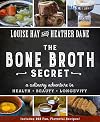
I've come across a certain amount of talk on the internet on the subject of bone broth, recently, and since I have been taking collagen as a supplement for some months I was interested to read further. I wasn't surprised to find that one of the authors, Heather Dane, has Ehlers-Danlos Syndrome, a congenital collagen disorder which causes problems throughout the body, from hypermobile joints to gut issues and more. Replacing collagen won't cure EDS, but it might alleviate some of the symptoms. Dane's co-author, Louise Hay, turned to bone broth after a cancer diagnosis.
Both authors are evangelical about their topic, and the first part is about the history of bone broth, the science behind it, and the practicalities of making and including it in everyday life. Part II is the bulk of the book, recipes for making it and for using it. Finally, the appendices contain information on the contributors and their stories, and more general recipe information like conversion charts.
Of late, bone broth has become fashionable in the US, with street stalls selling it as an alternative to coffee, so it certainly makes sense to produce a book telling people how to make their own. It's not difficult - the basic instructions, after all, are to take meat bones and simmer them. You can roast them first or not, as you choose, and add vegetables for more flavour if you want to. You can use any meat bones or even fish to make a flavourful broth. This stock needn't be limited to simply being the show more base for soups, excellent though those may be: the book includes recipes for making very neutral-flavoured broths as well, which can be more versatile.
A neutral bone broth can even be an ingredient in desserts. It's silly that I find myself reading an ice-cream recipe that includes bone broth with a slight sense of "eeuch" when I am perfectly prepared to make desserts with gelatine, which is simply bone broth in its powdered form. I should say at this point that there are lots of recipes - soups, meat dishes, fish, desserts - so that, should you choose to, you could embrace bone broth as the authors have done, and include it in every meal. It hasn't persuaded me, I have to admit. If I had an Aga, and could make stock (I find "bone broth" both unwieldy and over-trendy) conveniently, I would do it much more often, and I'll certainly continue to make it for individual dishes (tip: the inclusion of a ham hock in home-made salt beef results in the most unctuous meal you could possibly wish for, and yields enough left-overs to make sandwiches heavenly for days), but I'm not turning over my life to it, I'll keep taking the collagen capsules. For the real convert, however, there are also recipes for cocktails and for cosmetic treatments.
It's an attractively-produced book with good, tempting illustrations. I do rather wish that, instead of repeating the same set of instructions for each recipe that uses the same process, they had simply included them at the start of the section (I thought if I read that one should be careful about blowing the top off the blender one more time, I'd scream), but I suppose they intend it as an everyday cook-book. It did come over as a book for people who don't actually cook, but anything which encourages people to make food themselves is good as far as I'm concerned. Certainly, if you have a condition like EDS, or any of the conditions which tend to go along with it - arthritis, IBS, and so on - you should consider taking a look, and changing your diet. I haven't mentioned the other trendy word, "paleo", but if you're considering that, then this book is probably for you, but even as the basis for a sensible, healthy, home-cooked diet it has a lot to offer.
My copy was courtesy of NetGalley. show less
Both authors are evangelical about their topic, and the first part is about the history of bone broth, the science behind it, and the practicalities of making and including it in everyday life. Part II is the bulk of the book, recipes for making it and for using it. Finally, the appendices contain information on the contributors and their stories, and more general recipe information like conversion charts.
Of late, bone broth has become fashionable in the US, with street stalls selling it as an alternative to coffee, so it certainly makes sense to produce a book telling people how to make their own. It's not difficult - the basic instructions, after all, are to take meat bones and simmer them. You can roast them first or not, as you choose, and add vegetables for more flavour if you want to. You can use any meat bones or even fish to make a flavourful broth. This stock needn't be limited to simply being the show more base for soups, excellent though those may be: the book includes recipes for making very neutral-flavoured broths as well, which can be more versatile.
A neutral bone broth can even be an ingredient in desserts. It's silly that I find myself reading an ice-cream recipe that includes bone broth with a slight sense of "eeuch" when I am perfectly prepared to make desserts with gelatine, which is simply bone broth in its powdered form. I should say at this point that there are lots of recipes - soups, meat dishes, fish, desserts - so that, should you choose to, you could embrace bone broth as the authors have done, and include it in every meal. It hasn't persuaded me, I have to admit. If I had an Aga, and could make stock (I find "bone broth" both unwieldy and over-trendy) conveniently, I would do it much more often, and I'll certainly continue to make it for individual dishes (tip: the inclusion of a ham hock in home-made salt beef results in the most unctuous meal you could possibly wish for, and yields enough left-overs to make sandwiches heavenly for days), but I'm not turning over my life to it, I'll keep taking the collagen capsules. For the real convert, however, there are also recipes for cocktails and for cosmetic treatments.
It's an attractively-produced book with good, tempting illustrations. I do rather wish that, instead of repeating the same set of instructions for each recipe that uses the same process, they had simply included them at the start of the section (I thought if I read that one should be careful about blowing the top off the blender one more time, I'd scream), but I suppose they intend it as an everyday cook-book. It did come over as a book for people who don't actually cook, but anything which encourages people to make food themselves is good as far as I'm concerned. Certainly, if you have a condition like EDS, or any of the conditions which tend to go along with it - arthritis, IBS, and so on - you should consider taking a look, and changing your diet. I haven't mentioned the other trendy word, "paleo", but if you're considering that, then this book is probably for you, but even as the basis for a sensible, healthy, home-cooked diet it has a lot to offer.
My copy was courtesy of NetGalley. show less

I can't resist books with cats! And to add to the enjoyment, this one has a dog and a horse as well. What more could one want?
Wildwitch is by an award-winning Danish author, Lene Kaaberbøl, and is the first in a series. It introduces Clara, a nice, ordinary 12-year-old who lives with her single mum and is best friends with Oscar. Her world changes when she's attacked without reason by a huge black cat. When she develops a high fever her mother takes her away from the city to visit Aunt Isa, who she's never met before, and she learns that, like her aunt, she's a wildwitch. But the moment she first walked the wildways she made a deadly enemy, and now she's in grave danger.
This is a short book, only 160 pages, so it's an easy read. Like many modern children's fantasies, though, I think it's genuinely scary - at times, Clara is in fear for her life. It's too short for very much leisurely character development, but nonetheless there's a sense of real people populating the story, and Clara, who tells the story, is immediately likable. I very much look forward to seeing how she grows throughout the series - the second is on its way, I believe.
The translation by Charlotte Barslund is excellent, and Wildwitch is delightfully illustrated by Rohan Eason.
Wildwitch is by an award-winning Danish author, Lene Kaaberbøl, and is the first in a series. It introduces Clara, a nice, ordinary 12-year-old who lives with her single mum and is best friends with Oscar. Her world changes when she's attacked without reason by a huge black cat. When she develops a high fever her mother takes her away from the city to visit Aunt Isa, who she's never met before, and she learns that, like her aunt, she's a wildwitch. But the moment she first walked the wildways she made a deadly enemy, and now she's in grave danger.
This is a short book, only 160 pages, so it's an easy read. Like many modern children's fantasies, though, I think it's genuinely scary - at times, Clara is in fear for her life. It's too short for very much leisurely character development, but nonetheless there's a sense of real people populating the story, and Clara, who tells the story, is immediately likable. I very much look forward to seeing how she grows throughout the series - the second is on its way, I believe.
The translation by Charlotte Barslund is excellent, and Wildwitch is delightfully illustrated by Rohan Eason.
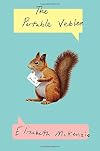
Oh dear, I did want to like this. It sounded exactly like the kind of quirky read which appeals to me, and I don't have any problem at all with talking squirrels. I thought the cover was charming. I can see that lots of reviewers loved it, and conclude that the problem is me. I'm too old-fashioned, and I like old-fashioned books. Neither Veblen nor Paul interested me, and I didn't want to read about them.
My copy was kindly provided via NetGalley.
My copy was kindly provided via NetGalley.
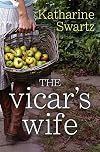
I liked this a lot. It's the story of a woman moving from the US, where she has a busy life with a job she loves, to Goswell, West Cumbria, to live in old vicarage. Jane is reluctant to leave New York, but tells herself it is her British husband's "turn" to have the life he wants. Nevertheless, she privately resents the change, and makes little attempt to adapt to her new life. The only thing that piques her interest at all is the scrap of paper she finds while exploring the larder, a brief shopping list. She manages to identify the writer of the list tentatively as Alice James, wife of the vicar of Goswell in the 1930s, and thus, a former resident of Jane's new home.
At this point, Alice's story starts in parallel, and the two run side-by-side for the remainder of the book. In many ways, Alice is the real protagonist, although Jane is the one the reader is expected to identify with. But both are depicted with equal sympathy, as is the community of Goswell, clearly based on the author's own experience of living in Cumbria.
It may be purely coincidence that the title echoes that of one of Joanna Trollope's very successful "Aga sagas", though I doubt it, because this is very much in the Trollope tradition. Something Swartz shares with Trollope is the ability to create convincing child characters, and to engage your interest in them. The depiction of the gradual realisation of unhappiness is also very reminiscent of Trollope at her best. Even the cover could be Trollope.
This show more is not the only time that Swartz has written about Goswell, I've discovered, and I shall be reading more of her books. Thoroughly recommended.
My copy was courtesy of NetGalley. show less
At this point, Alice's story starts in parallel, and the two run side-by-side for the remainder of the book. In many ways, Alice is the real protagonist, although Jane is the one the reader is expected to identify with. But both are depicted with equal sympathy, as is the community of Goswell, clearly based on the author's own experience of living in Cumbria.
It may be purely coincidence that the title echoes that of one of Joanna Trollope's very successful "Aga sagas", though I doubt it, because this is very much in the Trollope tradition. Something Swartz shares with Trollope is the ability to create convincing child characters, and to engage your interest in them. The depiction of the gradual realisation of unhappiness is also very reminiscent of Trollope at her best. Even the cover could be Trollope.
This show more is not the only time that Swartz has written about Goswell, I've discovered, and I shall be reading more of her books. Thoroughly recommended.
My copy was courtesy of NetGalley. show less
The Dog Stays in the Picture: How My Rescued Greyhound Helped Me Cope with My Empty Nest by Susan Morse
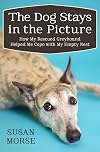
The Dog Stays in the Picture was just a bit of a disappointment, mostly because the dog - a rescue greyhound called Lilly - wasn't the focus for so much of it. Okay, I should have read the sub-title. I was expecting a book about a recue greyhound and instead it's a book about the author. They do tie in from time to time, such as when author Susan Morse talks about her family origins, before going on to Lilly's - and of course, greyhound owners do that, because their lineage is so carefully recorded. They all trace back to a very few dogs, and many have distinguished doggy forbears (fordogs?) I've been through it all with the rescue in our family, Milly: it's easy when you have the dog's kennel name and ID to look her up online and even see her racing history. Even if you don't approve of racing there's something about knowing your about own dog's life, and like Morse, I also got interested in, and researched in a desultory - but for a day or two obsessive - way. And I'm glad that Morse takes time to make clear some of the horrors of racing, which make our survivor dogs so much more precious and admirable - you went through all that, and you can find so much love and warmth for us? Of course you can have the sofa to yourself, darling, and let me get you some cheese.
I suppose, too, that Susan Morse and I have more in common than a rescue grey - much of the book centres on the disabling condition she develops, eventually diagnosed as anaplasmosis, a tick-born disease. While show more looking for a diagnosis she inevitably went down other routes with a nod to hypermobility syndromes and similar, but I must admit to having lost my evangelical interest in chronic conditions, and I wanted more about the dog, dammit!
If you're thinking of adopting a rescue greyhound, this might be a good place to start, especially if you are interested in recent American television series (Morse's husband is an actor). I don't think you'd emerge with any illusions about just how demanding a grey can be, especially when they haven't had much socialisation, or a proper puppyhood. But you might also get just an inkling of how rewarding and lovable they can be. Here's Morse on one of my favourite characteristics:
"I can't get enough of Lilly's glorious thirty-second speed demonstrations. have to catch her in the right mood, usually sometime in the late afternoon, when she rouses from her nap and starts hinting about dinner... she gets this goofy grin on her face, spinning madly in place for a while sort of winding herself up, and then she's off for a few gleeful laps around the yard, just for the joy of it."
Yup, recognise that - Milly even chooses the same time of day.
My copy was courtesy of NetGalley. show less
I suppose, too, that Susan Morse and I have more in common than a rescue grey - much of the book centres on the disabling condition she develops, eventually diagnosed as anaplasmosis, a tick-born disease. While show more looking for a diagnosis she inevitably went down other routes with a nod to hypermobility syndromes and similar, but I must admit to having lost my evangelical interest in chronic conditions, and I wanted more about the dog, dammit!
If you're thinking of adopting a rescue greyhound, this might be a good place to start, especially if you are interested in recent American television series (Morse's husband is an actor). I don't think you'd emerge with any illusions about just how demanding a grey can be, especially when they haven't had much socialisation, or a proper puppyhood. But you might also get just an inkling of how rewarding and lovable they can be. Here's Morse on one of my favourite characteristics:
"I can't get enough of Lilly's glorious thirty-second speed demonstrations. have to catch her in the right mood, usually sometime in the late afternoon, when she rouses from her nap and starts hinting about dinner... she gets this goofy grin on her face, spinning madly in place for a while sort of winding herself up, and then she's off for a few gleeful laps around the yard, just for the joy of it."
Yup, recognise that - Milly even chooses the same time of day.
My copy was courtesy of NetGalley. show less
would have to admit that this book - Allingham's first - is not her best. However, it's a perfectly good train or holiday read, undemanding, entertaining and a good enough mystery to keep you reading.
Jerry Challoner, a nice young man who happens to be a policeman's son carries act a minor act of gallantry - assisting a young woman on a country lane with a heavy basket. He's slightly surprised when she fails to respond to his pleasantries, but even more surprised when, a few minutes after he's dropped her off at her gate (at the White Cottage of the title), there is a gunshot from the house, followed by cries of "Murder!"
Jerry's presence seems to be enough to bring in his father from Scotland Yard, and the dead man is established to be from the neighbouring house. He's also quickly established to be a thoroughly unpleasant individual, the type to simply walk into another person's house uninvited, and who just happens to have a servant who is known to Inspector Challoner as a low-life and a criminal and not someone likely to be employed by a "nice" person. It becomes clear that the dead man, Crowther, has been making life miserable for everyone around him for years, so most of the family at the White Cottage have a motive of some kind.
I spotted the murderer early on, but I never mind that unless it's accompanied by clumsy writing. Allingham is already showing herself capable in this one, though it took her until after The Crime at Black Dudley, and her discovery of Albert show more Campion, to truly get into her stride (she claimed he was an incidental character in that, who took over regardless of his author's wishes!). Completists will certainly want to read The White Cottage Mystery, and I see no reason why anyone who enjoys Golden Age detective novels shouldn't enjoy it as well. show less
Jerry Challoner, a nice young man who happens to be a policeman's son carries act a minor act of gallantry - assisting a young woman on a country lane with a heavy basket. He's slightly surprised when she fails to respond to his pleasantries, but even more surprised when, a few minutes after he's dropped her off at her gate (at the White Cottage of the title), there is a gunshot from the house, followed by cries of "Murder!"
Jerry's presence seems to be enough to bring in his father from Scotland Yard, and the dead man is established to be from the neighbouring house. He's also quickly established to be a thoroughly unpleasant individual, the type to simply walk into another person's house uninvited, and who just happens to have a servant who is known to Inspector Challoner as a low-life and a criminal and not someone likely to be employed by a "nice" person. It becomes clear that the dead man, Crowther, has been making life miserable for everyone around him for years, so most of the family at the White Cottage have a motive of some kind.
I spotted the murderer early on, but I never mind that unless it's accompanied by clumsy writing. Allingham is already showing herself capable in this one, though it took her until after The Crime at Black Dudley, and her discovery of Albert show more Campion, to truly get into her stride (she claimed he was an incidental character in that, who took over regardless of his author's wishes!). Completists will certainly want to read The White Cottage Mystery, and I see no reason why anyone who enjoys Golden Age detective novels shouldn't enjoy it as well. show less
I love Glimpses of the Moon - it's gloriously witty and chaotic and utterly implausible, even by Crispin's normal standards!
Taste of Beirut: 175 Delicious Lebanese Recipes from Classics to Contemporary to Mezzes and More by Joumana Accad
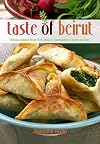
As an introduction to Lebanese food Joumana Accad's book provides both basic recipes and a wide selection of everyday and more special dishes, accompanied by some mouth-watering illustrations. I found it a leant a little heavily on the American experience of what was available and cooking terms, but it's easy enough to get ingredients over the internet these days if you don't live anywhere that sells Middle Eastern foods – for instance I was able to find the spice mix zaatar quite readily.
There are some American adaptations: for instance a po'boy sandwich, and I found the use of a pineapple a bit surprising in one dish. But there's plenty that's authentic even while allowing the use of canned chickpeas rather than the dried version, in recognition that not many households can spare someone to cook all day!
The book starts with a list of staples: breads, rice varieties, couscous etc with a guide to how they are used, before tackling the basic recipes that turn up as elements in many dishes: mint or coriander pestos, walnut sauce, garlic paste and so on (though I must admit to using garlic paste out of a tube rather than making it), with directions for how to keep an excess quantity so that you can make a batch rather than a single recipe's worth. Dough and basic meat pastes are included in this section, so by the end of it you’ve had a pretty good grounding in both ingredients and methods. I was pleased, too, to see my favourite pilaf here, ruz bel-sh’ariyeh, made show more with rice and vermicelli – it sounds plain, but it’s a superb accompaniment to a stew.
Breakfasts and snack foods (lunches, sandwiches, soups) come in the next chapters, before a fairly lengthy section on mezze, which seems an appropriate reflection of its importance in Lebanese cuisine. I found this a particularly attractive section and instantly wanted to start planning a party to share all these delicious recipes – I do like finger food!
Main courses next, and I have resolved to try making kibbeh again – Joumana’s instructions look much better than those in the recipe I followed last time, and she has a whole page of illustrations showing how to score it beautifully. Here I noticed a couple of concessions to western preferences for lower calorie foods which I approved of. I’m inspired by the roast turkey recipe (habash w-hashwet al-ruz) to try in this Christmas, served with spiced rice, nuts and chestnuts, and I needed no persuading that yakhnet-al-arnabeet (cauliflower stew) would be enjoyed by the family. Roasting a cauliflower does something quite wonderful to it.
I must admit to being less interested in puddings, as we don’t eat them much, and I found that many looked too sweet for my taste. It doesn’t matter though, there’s so much else in this book to try, and to enjoy. The author has a website, too, with more recipes.
My copy was courtesy of NetGalley. show less
There are some American adaptations: for instance a po'boy sandwich, and I found the use of a pineapple a bit surprising in one dish. But there's plenty that's authentic even while allowing the use of canned chickpeas rather than the dried version, in recognition that not many households can spare someone to cook all day!
The book starts with a list of staples: breads, rice varieties, couscous etc with a guide to how they are used, before tackling the basic recipes that turn up as elements in many dishes: mint or coriander pestos, walnut sauce, garlic paste and so on (though I must admit to using garlic paste out of a tube rather than making it), with directions for how to keep an excess quantity so that you can make a batch rather than a single recipe's worth. Dough and basic meat pastes are included in this section, so by the end of it you’ve had a pretty good grounding in both ingredients and methods. I was pleased, too, to see my favourite pilaf here, ruz bel-sh’ariyeh, made show more with rice and vermicelli – it sounds plain, but it’s a superb accompaniment to a stew.
Breakfasts and snack foods (lunches, sandwiches, soups) come in the next chapters, before a fairly lengthy section on mezze, which seems an appropriate reflection of its importance in Lebanese cuisine. I found this a particularly attractive section and instantly wanted to start planning a party to share all these delicious recipes – I do like finger food!
Main courses next, and I have resolved to try making kibbeh again – Joumana’s instructions look much better than those in the recipe I followed last time, and she has a whole page of illustrations showing how to score it beautifully. Here I noticed a couple of concessions to western preferences for lower calorie foods which I approved of. I’m inspired by the roast turkey recipe (habash w-hashwet al-ruz) to try in this Christmas, served with spiced rice, nuts and chestnuts, and I needed no persuading that yakhnet-al-arnabeet (cauliflower stew) would be enjoyed by the family. Roasting a cauliflower does something quite wonderful to it.
I must admit to being less interested in puddings, as we don’t eat them much, and I found that many looked too sweet for my taste. It doesn’t matter though, there’s so much else in this book to try, and to enjoy. The author has a website, too, with more recipes.
My copy was courtesy of NetGalley. show less
Smoke and Mirrors: The 2nd Stephens and Mephisto Mystery (Stephens & Mephisto Mystery 2) by Elly Griffiths (2015-11-05) by Elly Griffiths
Elly Griffiths has taken a new turn in this new series, after her Ruth Galloway novels, with a period setting, Brighton in the early 1950s. Max Mephisto is starring in pantomime - Aladdin - when two local children disappear. His old friend DI Edgar Stephens is in charge of the investigation, and turns to Max when it looks as though some of the pantomime cast might be involved. When the children's bodies are discovered in the snow both locals and cast are implicated. And is the children's interest in fairytales significant?
I didn't enjoy this series as much as the Ruth Galloway books, but both theatrical setting and period work well; in some of the scenes which took place actually in the theatre, I was reminded of Ngaio Marsh, which is always a good thing, and I feel that Griffiths has something to build on here. If I have a gripe, it's that the characters are all a little too bland, and although the female detective sergeant should have been a positive addition, I really wasn't convinced by her. Would she really have made it to sergeant? I want her to be a successful character, even if such a thing would probably be out of period, but she doesn't cut it. And I don't empathise with any of them much, sadly.
Then there's Edgar's girlfriend (and Max's daughter). For a start, I can't stand the name Ruby, but that, at least, is my problem. But there is no chemistry between Edgar and Ruby, and not much of a relationship between Ruby and Max, but again, I just don't care very show more much.
Other reviewers have clearly loved this new series, so my opinion shouldn't count for too much. And I did finish it, although it took me quite a while for a relatively short book - it's a successful novel in that sense. I'm just not excited by it, and probably won't read any more. Just have to hope for another Ruth Galloway novel!
My copy was courtesy of the splendid NetGalley. show less
I didn't enjoy this series as much as the Ruth Galloway books, but both theatrical setting and period work well; in some of the scenes which took place actually in the theatre, I was reminded of Ngaio Marsh, which is always a good thing, and I feel that Griffiths has something to build on here. If I have a gripe, it's that the characters are all a little too bland, and although the female detective sergeant should have been a positive addition, I really wasn't convinced by her. Would she really have made it to sergeant? I want her to be a successful character, even if such a thing would probably be out of period, but she doesn't cut it. And I don't empathise with any of them much, sadly.
Then there's Edgar's girlfriend (and Max's daughter). For a start, I can't stand the name Ruby, but that, at least, is my problem. But there is no chemistry between Edgar and Ruby, and not much of a relationship between Ruby and Max, but again, I just don't care very show more much.
Other reviewers have clearly loved this new series, so my opinion shouldn't count for too much. And I did finish it, although it took me quite a while for a relatively short book - it's a successful novel in that sense. I'm just not excited by it, and probably won't read any more. Just have to hope for another Ruth Galloway novel!
My copy was courtesy of the splendid NetGalley. show less
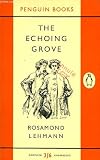
The Echoing Grove is not an easy read. The two main characters are difficult to like, flawed, uncomfortable... they are two sisters who were in love with the same man, now dead. While Madeleine was married to Ricky, Dinah had an affair with him which led to her pregnancy. The resulting still-birth precipitates a crisis which transforms their already distant relationship into estrangement. Now, briefly reunited after their mother's funeral, they remember the past and its pain.
It's not only the subject and characters which make it heavy going - the novel's structure reflects their turmoil as, in adjacent rooms for the first time in many years, they succumb to memories of a past they've each tried to evade, Dinah in her busy life, Madeleine in her garden.
What struck me most, re-reading this novel decades after I first discovered Lehmann, is the delicacy with which such raw emotions are described. Pain is exquisitely - almost sadistically - delineated, while the reader is constantly kept off-balance by the shifting timelines and unattributed points of view.
All Lehmann's writing stays with me, years after reading, but this haunting book, even if it's one of her best, is ultimately too grief-laden to be satisfying. Admirable, but not enjoyable.
My copy was courtesy of NetGalley.
It's not only the subject and characters which make it heavy going - the novel's structure reflects their turmoil as, in adjacent rooms for the first time in many years, they succumb to memories of a past they've each tried to evade, Dinah in her busy life, Madeleine in her garden.
What struck me most, re-reading this novel decades after I first discovered Lehmann, is the delicacy with which such raw emotions are described. Pain is exquisitely - almost sadistically - delineated, while the reader is constantly kept off-balance by the shifting timelines and unattributed points of view.
All Lehmann's writing stays with me, years after reading, but this haunting book, even if it's one of her best, is ultimately too grief-laden to be satisfying. Admirable, but not enjoyable.
My copy was courtesy of NetGalley.
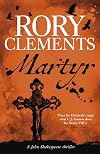
Elizabethan England is probably associated in most people’s minds with dark deeds, notorious spymasters and religious strife – although things were better under Elizabeth than they had been under her sister Mary, being Catholic was still dangerous and recusants were expected to demonstrate their allegiance to the new church. Conspiracy was rife – England was surrounded by Catholic countries and, with her cousin Mary Queen of Scots awaiting execution for plotting against Elizabeth, there was a very real danger of invasion. A plot to murder Sir Francis Drake would, if successful, throw the English fleet into disarray and open the way to England’s enemies. John Shakespeare (brother of the more famous Will) is chief intelligencer to Sir Francis Walsingham, the Queen’s spymaster, and it is his task to uncover the plot. It must be a Catholic conspiracy, but could it be linked to the murder of a young woman who is known to have Catholic sympathies? Thwarting Shakespeare’s efforts is the brutal torturer Richard Topcliffe, a man who enjoys his work and despises Shakespeare.
Although I thought the plot moved a little slowly at times, there are some gripping moments and loads of period atmosphere, which bodes well. Historical crime is rather fashionable at the moment, and a well-written series is always welcome. There are already two sequels to Martyr, exploring the darker corners of the period, and it’s good to have an author’s website with some nice pictures of show more Elizabethan houses, a lexicon, and information about some of the real people who appear in the books. The third in the series, Prince, has just been published.
My copy was courtesy of Lovereading: http://www.lovereading.co.uk/ show less
Although I thought the plot moved a little slowly at times, there are some gripping moments and loads of period atmosphere, which bodes well. Historical crime is rather fashionable at the moment, and a well-written series is always welcome. There are already two sequels to Martyr, exploring the darker corners of the period, and it’s good to have an author’s website with some nice pictures of show more Elizabethan houses, a lexicon, and information about some of the real people who appear in the books. The third in the series, Prince, has just been published.
My copy was courtesy of Lovereading: http://www.lovereading.co.uk/ show less
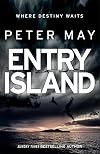
I haven’t read anything else by Peter May so I don’t know if the dual timeline is characteristic of his work, but it is used here to add depth and interest to what would otherwise be a fairly straightforward detective novel about an apparently domestic murder: when the Québec Sureté are called to a remote island to investigate the murder of one of the inhabitants, it seems immediately clear that his wife must be the killer. Sime Mackenzie (pronounced “Sheem”; it’s Gaelic) isn’t so sure, though, because he feels oddly drawn to Kirsty Cowell, the woman who is likely to be arrested. Is his feeling that he has met her before real, or is it a product of the prolonged sleeplessness that has followed the break-up of his marriage?
The Magdalen Islands are an archipelago in the Gulf of St Lawrence with a population of French, Scots, English and Acadians, and part of the province of Quebec; Entry Island, however, is English-speaking, and that is why Sime has been sent as part of the investigation team – to conduct interviews in English. With him he takes the baggage of his own Scots descent, distant memories of the brutal Highland Clearances which uprooted thousands of impoverished Highlanders, often putting them straight onto emigration ships bound for Canada, where those who survived the journey must make a life for themselves in the young colony. Thanks to his grandmother, Sime has grown up with the stories of his ancestry on the Isle of Lewis, but his rediscovery show more of that history as an adult is woven throughout his investigation of the present-day murder.
A haunting story of exile and loss, Entry Island will stay with you long after you finish reading. show less
The Magdalen Islands are an archipelago in the Gulf of St Lawrence with a population of French, Scots, English and Acadians, and part of the province of Quebec; Entry Island, however, is English-speaking, and that is why Sime has been sent as part of the investigation team – to conduct interviews in English. With him he takes the baggage of his own Scots descent, distant memories of the brutal Highland Clearances which uprooted thousands of impoverished Highlanders, often putting them straight onto emigration ships bound for Canada, where those who survived the journey must make a life for themselves in the young colony. Thanks to his grandmother, Sime has grown up with the stories of his ancestry on the Isle of Lewis, but his rediscovery show more of that history as an adult is woven throughout his investigation of the present-day murder.
A haunting story of exile and loss, Entry Island will stay with you long after you finish reading. show less
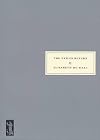
I must be one of the few people who hasn't read The Hare with Amber Eyes by Edmund de Waal, though one of my reasons for not having done so has to be that it was written this century and I've been reading a lot from the last one. When I was asked if I'd be interested in reviewing one of the most recent Persephones, though, the description made me leap at the chance. It's a previously unpublished novel about five people returning to Vienna in the early 1950s, and there was every indication that it was going to be one of those rather quiet, uneventful novels that I like so much and that Persephone Books do so well. The author is Elisabeth de Waal, grandmother of Edmund, and herself an exile from Vienna, which she left in 1939. This book is her "return" to the city where she grew up.
I wasn't disappointed in my expectations, unless it was because it seemed to be over so quickly. That's not to say there was anything rushed about it, just that I was so absorbed in the life of the characters that I wanted more of them. When Professor Kuno Adler decides to return to Vienna, his wife is appalled. She has made a success of their life in America and the promise of reinstatement to his old job has no absolutely appeal for her, so he goes alone. "Reinstatement" turns out to be a bit of a misnomer, and there is awkwardness with former friends who had stayed throughout the war, but there is some small pleasure in rediscovering the city, and the surrounding areas. Kanakis, on the other show more hand, wants to recreate the life he had before the war, and is looking for "a pavilion of graceful eighteenth century proportions...a little palais" such as he thinks he might have heard of once, and which just might have survived the conflict. While he's looking for his perfect house he meets the rather louche "Bimbo" Grein, a pleasure-loving but penniless young prince who will, sooner or later, be hanging out for a rich bride, and Bimbo's serious older sister Nina.
The remaining exile is the beautiful Resi, daughter of one of the Princesses Altmandorff, who has grown up in America but really doesn't fit in there. Her parents, unsure what they can do for the best, send her to stay with her aunt on the family estate, and the scene is set for the intertwining of the lives of all our characters. At first Resi is absolutely content at Wald; lazing in the garden, helping with the flowers, "she floated on the broad unruffled stream of life". The idyll is interrupted, though, by the arrival of cousins and friends, including Nina Grein, who unwittingly ousts her from the position she's happily fallen into as her aunt's companion, setting her adrift again.
The lives of these returning exiles become intertwined, providing the focus for the second half of the book. And it's here that I have some reservations about the overall shape, since it felt a little like two separate books stuck together. Professor Adler, who is in some ways the most interesting and fully-rounded character, fades into the background for a long section, so much so that I wondered whether he was ever going to reappear! Resi, on the other hand, is of interest mostly because she's a misfit - she's actually rather young and dull, and given to melodrama, and she didn't emerge sharply enough from the pages for me to feel much patience with her. However, the eventual contrast between two people searching for a place to feel at home, the faltering Resi, and the quiet Professor Adler, aware as he is of so much about the recent war that is unspoken, becomes a compelling study of identity.
In the end, I felt that this was very nearly a wonderful novel. But its minor flaws are more than compensated for by its interest as a remarkable piece of social history, one which offers a rare insight into postwar Vienna. It's certainly an excellent addition to the Persephone canon. show less
I wasn't disappointed in my expectations, unless it was because it seemed to be over so quickly. That's not to say there was anything rushed about it, just that I was so absorbed in the life of the characters that I wanted more of them. When Professor Kuno Adler decides to return to Vienna, his wife is appalled. She has made a success of their life in America and the promise of reinstatement to his old job has no absolutely appeal for her, so he goes alone. "Reinstatement" turns out to be a bit of a misnomer, and there is awkwardness with former friends who had stayed throughout the war, but there is some small pleasure in rediscovering the city, and the surrounding areas. Kanakis, on the other show more hand, wants to recreate the life he had before the war, and is looking for "a pavilion of graceful eighteenth century proportions...a little palais" such as he thinks he might have heard of once, and which just might have survived the conflict. While he's looking for his perfect house he meets the rather louche "Bimbo" Grein, a pleasure-loving but penniless young prince who will, sooner or later, be hanging out for a rich bride, and Bimbo's serious older sister Nina.
The remaining exile is the beautiful Resi, daughter of one of the Princesses Altmandorff, who has grown up in America but really doesn't fit in there. Her parents, unsure what they can do for the best, send her to stay with her aunt on the family estate, and the scene is set for the intertwining of the lives of all our characters. At first Resi is absolutely content at Wald; lazing in the garden, helping with the flowers, "she floated on the broad unruffled stream of life". The idyll is interrupted, though, by the arrival of cousins and friends, including Nina Grein, who unwittingly ousts her from the position she's happily fallen into as her aunt's companion, setting her adrift again.
The lives of these returning exiles become intertwined, providing the focus for the second half of the book. And it's here that I have some reservations about the overall shape, since it felt a little like two separate books stuck together. Professor Adler, who is in some ways the most interesting and fully-rounded character, fades into the background for a long section, so much so that I wondered whether he was ever going to reappear! Resi, on the other hand, is of interest mostly because she's a misfit - she's actually rather young and dull, and given to melodrama, and she didn't emerge sharply enough from the pages for me to feel much patience with her. However, the eventual contrast between two people searching for a place to feel at home, the faltering Resi, and the quiet Professor Adler, aware as he is of so much about the recent war that is unspoken, becomes a compelling study of identity.
In the end, I felt that this was very nearly a wonderful novel. But its minor flaws are more than compensated for by its interest as a remarkable piece of social history, one which offers a rare insight into postwar Vienna. It's certainly an excellent addition to the Persephone canon. show less

It's clear right from the start of Patience that our leading lady is a rather downtrodden wife, even if she hasn't yet realised it. She's appropriately named, and she regards herself as happily married until the day her self-righteous brother comes to tell her that he's seen her husband Edward with another woman. Patience's world has revolved around Edward and her home and "the babies" and, to be fair, he's a kindly tyrant, pompous and unimaginative. Her brother Lionel is much more immediately loathsome, solely concerned with the fact that Edward is committing Sin - he doesn't really care about Patience as a wronged wife, but busies himself with Edward's "spiritual welfare" and worries that the children will be disgraced if they don't have a father. Lionel has already more or less disowned his other sister, Helen, because she got divorced -- she has remarried and had a child, but Lionel refers to him as a bastard. Lionel is a staunch Catholic, Patience a rather less fanatical one, but sincere, and Helen is lapsed, of course. But Edward's infidelity is only really a catalyst for the events which follow, leading to a what should prove a shattering discovery for Patience. Only it isn't, quite -- it's not nearly as earth-shattering as some of the other discoveries Patience is about to make. And to her, they are really much more interesting....
As befits its title, Patience is a very quiet book. There was a point, reading it, where I stopped and thought "This is written by a show more man!" In fact, I had to look back at the cover to be certain. Because although it's also very funny, it is very delicately so, and Patience's at time bemused but nonetheless gratified exploration of her thoughts and feelings is handled with a gentle irony and deftness. Compared, say, to Denis Mackail, of whom I am exceedingly fond, this is a much more subtle work, with the quality of a fable about it.
I see, however, that some readers have found Patience as a character irritatingly naive and passive in her seven-year marriage and self-absorbed in her desire to extricate herself. Hmm. I can't say I agree -- yes, she is an absolute innocent and has been very complacent thus far in her life, but I saw that as more to do with the period. It's difficult, from the twenty-first century, to appreciate just how sheltered an upbringing could still be, in the 1950s, when a girl could go straight from living at home with mummy and daddy to a husband who expected to be the authority in his home. And to those who find it too pat that she instantly falls for someone, well, I'm still a believer in love at first sight, and this is, after all, a comedy. show less
As befits its title, Patience is a very quiet book. There was a point, reading it, where I stopped and thought "This is written by a show more man!" In fact, I had to look back at the cover to be certain. Because although it's also very funny, it is very delicately so, and Patience's at time bemused but nonetheless gratified exploration of her thoughts and feelings is handled with a gentle irony and deftness. Compared, say, to Denis Mackail, of whom I am exceedingly fond, this is a much more subtle work, with the quality of a fable about it.
I see, however, that some readers have found Patience as a character irritatingly naive and passive in her seven-year marriage and self-absorbed in her desire to extricate herself. Hmm. I can't say I agree -- yes, she is an absolute innocent and has been very complacent thus far in her life, but I saw that as more to do with the period. It's difficult, from the twenty-first century, to appreciate just how sheltered an upbringing could still be, in the 1950s, when a girl could go straight from living at home with mummy and daddy to a husband who expected to be the authority in his home. And to those who find it too pat that she instantly falls for someone, well, I'm still a believer in love at first sight, and this is, after all, a comedy. show less
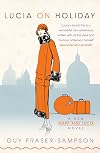
It seems very clear to me that Guy Fraser-Sampson has caught both the tone and the spirit of Tilling and its denizens (I find myself much inclined to think outside my usual vocabulary and possibly even to essay un po italiano) – I was already laughing while still on the Introduction. The story begins with Lucia, having made some money on the stockmarket, deciding that Georgie should choose the holiday of his desires (and then, perhaps, he will appreciate her properly). What she doesn’t intend is that Georgie should consult his old friend from their Riseholme days, Olga Bracely, and come up with a plan which will avoid days spent trailing in Lucia’s wake around museums and other cultural delights: they will go to the Italian resort of Bellagio, where there is nothing very much except a hotel, although one beautifully situated on the shores of Lake Como. She doesn’t intend, too, that not only Olga, but horror of horrors! the Mapp-Flints should also head for Bellagio, although the reader, of course, knows that this is inevitable the moment the tickets are booked. If Lucia had realised that the Mapp-Flints were going to encroach on her holiday, she would no doubt have changed her plans at the last minute, but Elizabeth, knowing this, makes sure that Lucia’s arrival at the hotel will be accompanied by the “joy unconfined” of finding Elizabeth and Major Benjy already in residence. A battle for supremacy immediately ensues and any weapon -- foreign royalty, show more enormous Bugattis, famous Italians, sundry countesses -- is fair game.
Lucia, who said elsewhere, and no doubt believed as she uttered it, “Nobody shall be able to say of me that I caused splits and dissensions. ‘One and all,’ as you know, is my favourite motto” sails through the pages with all her usual aplomb, always emerging unscathed from Elizabeth’s attempts at sabotage. She is more vulnerable, though she chooses to look on it simply with mild disapproval, to Georgie’s friendship with Olga -- they share a sense of humour, something which is singularly lacking in the divine Lucia. Indeed, she sails close to disaster, prepared to gamble both wealth and marriage on her conviction that she is always in the right. But the Wall Street Crash looms and she may, this time, have pushed Georgie too far. Will she survive?
The major departure from E.F. Benson is that Guy Fraser-Sampson allows the real world to intervene -- it's hard to imagine that Benson, who managed never to mention the war that had torn Europe apart, would have tackled the impending financial crisis head on, or introduced the notorious Gabriele D'Annunzio as a character (to great effect). As with Benson, though, lightness of touch is all.
This lovely bit of froth is a worthy addition to the Mapp and Lucia canon, just what you need on a winter weekend to transport you to the shores of Lake Como where you can sit and sip a prosecco (or a Negroni) on the terrace. Delicious! show less
Lucia, who said elsewhere, and no doubt believed as she uttered it, “Nobody shall be able to say of me that I caused splits and dissensions. ‘One and all,’ as you know, is my favourite motto” sails through the pages with all her usual aplomb, always emerging unscathed from Elizabeth’s attempts at sabotage. She is more vulnerable, though she chooses to look on it simply with mild disapproval, to Georgie’s friendship with Olga -- they share a sense of humour, something which is singularly lacking in the divine Lucia. Indeed, she sails close to disaster, prepared to gamble both wealth and marriage on her conviction that she is always in the right. But the Wall Street Crash looms and she may, this time, have pushed Georgie too far. Will she survive?
The major departure from E.F. Benson is that Guy Fraser-Sampson allows the real world to intervene -- it's hard to imagine that Benson, who managed never to mention the war that had torn Europe apart, would have tackled the impending financial crisis head on, or introduced the notorious Gabriele D'Annunzio as a character (to great effect). As with Benson, though, lightness of touch is all.
This lovely bit of froth is a worthy addition to the Mapp and Lucia canon, just what you need on a winter weekend to transport you to the shores of Lake Como where you can sit and sip a prosecco (or a Negroni) on the terrace. Delicious! show less
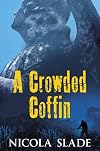
When I read Nicola Slade's first book in this series, Murder Fortissimo, I decided that I thoroughly approved of retired headmistress Harriet Quigley's cautious approach to investigation; hmm, perhaps that was her convalescent status in the first book, because here she's a good deal more gung-ho. Okay, she always convinces herself there's a good reason not to wait but, like her cousin Sam, I keep wanting to tell her to be more careful! And that a young artist who's recovering from a long period of privation ought to be tucked up in bed at night, and not recruited to go hunting criminals in the dark with women who ought to know better! Maybe Sam is right and Harriet is just a bit too keen on becoming the Miss Marple of Locksley.
Events here are very much focused on Harriet and her family. Sam is moving in next door, something they both anticipate with pleasure. Meanwhile another cousin, Walter Attlin, has had a accident in which he was knocked down by a car. His grand-daughter Edith comes rushing home from the States where she's been working for several years, full of concern and determined to stay and look after her grandparents. She finds Walter's making a good recovery, except for insisting that someone did it on purpose. There are new people sharing her family home now, too: Karen the housekeeper and her Polish husband, and Rory Attlin, an artist who seems to be a hitherto unheard-of relation.
Edith and Harriet are both very concerned about the apparent attack on Walter, show more although he now refuses to say any more about it. Harriet is also curious about a young archivist who disappeared after visiting the local pub, and then there are the figures spotted moving around after dark near the Attlins' farm. There are newcomers to the village too -- could one of them be responsible for Walter's "accident"? There do seem to be a number of suspiciously dented cars around...
Not listed in the Dramatis Personae at the start of A Crowded Coffin is the Attlin family's farmhouse, although you feel it should be there; once known as the Angel House, Locksley Farm Place dates back centuries, perhaps to a Roman villa on the same site. The author conveys the sense of the house's age and antiquity seamlessly, as Rory learns its history and explores its nooks and crannies, and the reader is left with an impression of great solidity and warmth which permeates the whole book, transforming it from just another murder-mystery into an intimate experience. Harriet Quigley is rapidly joining Sheila Malory as an old-friend-of-the-family who just happens to get involved in mysteries, and I look forward to hearing about her further exploits! show less
Events here are very much focused on Harriet and her family. Sam is moving in next door, something they both anticipate with pleasure. Meanwhile another cousin, Walter Attlin, has had a accident in which he was knocked down by a car. His grand-daughter Edith comes rushing home from the States where she's been working for several years, full of concern and determined to stay and look after her grandparents. She finds Walter's making a good recovery, except for insisting that someone did it on purpose. There are new people sharing her family home now, too: Karen the housekeeper and her Polish husband, and Rory Attlin, an artist who seems to be a hitherto unheard-of relation.
Edith and Harriet are both very concerned about the apparent attack on Walter, show more although he now refuses to say any more about it. Harriet is also curious about a young archivist who disappeared after visiting the local pub, and then there are the figures spotted moving around after dark near the Attlins' farm. There are newcomers to the village too -- could one of them be responsible for Walter's "accident"? There do seem to be a number of suspiciously dented cars around...
Not listed in the Dramatis Personae at the start of A Crowded Coffin is the Attlin family's farmhouse, although you feel it should be there; once known as the Angel House, Locksley Farm Place dates back centuries, perhaps to a Roman villa on the same site. The author conveys the sense of the house's age and antiquity seamlessly, as Rory learns its history and explores its nooks and crannies, and the reader is left with an impression of great solidity and warmth which permeates the whole book, transforming it from just another murder-mystery into an intimate experience. Harriet Quigley is rapidly joining Sheila Malory as an old-friend-of-the-family who just happens to get involved in mysteries, and I look forward to hearing about her further exploits! show less

We've seen quite a number of new books in Victorian style of late, some better than others. Common features include murder, a touch of the supernatural, séances, secluded country houses, dark secrets - all the hallmarks of Victorian gothic. This is a reasonably successful foray into the territory, with a couple of nice extra touches: crusading religion and music hall (nicely antipathetic to each other). There's also some commentary on the mores of the period, in a way that you wouldn't find in a contemporaneous novel, where the author would be more likely to share the prejudices of the characters.
I thought it a little over-long - the pace flagged a bit at one stage, but it does enough to keep you involved nonetheless. On balance, a good read.
I thought it a little over-long - the pace flagged a bit at one stage, but it does enough to keep you involved nonetheless. On balance, a good read.
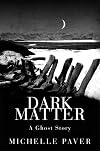
Paver has pulled off two real achievements here: first, she perfectly recreates the explorer’s diary, with its combination of matter-of-fact relation of everyday detail, the excitement of discovery and the loneliness of exile; second, she has written a “classic” ghost story, a creepy, chilling tale that will linger unsettlingly with the reader.
It’s 1937, and Jack Miller’s plans to become a physicist have been hit by the Depression, so he is working in a dead-end job when he hears of an expedition to the High Arctic in need of a radio operator. He’s initially put off by the four ex-public schoolboys he meets, but realising how important the expedition might be in shaping the rest of his life, agrees to go.
From the outset, however, the expedition seems fated, and by the time they arrive in Norway, they are already one person down – the doctor of the team has had to stay in England following the death of his father. Nonetheless, the remaining members decide to go ahead – after all, how could they possibly guess that before long only Jack would be left to face the Arctic winter alone? The first obstacle is overcoming the reluctance of Eriksson, the skipper of the boat they have chartered, to land them at Gruhuken, the site they have chosen for their camp. He won’t give reasons, but insists that it’s not a good place. It’s not a virgin site, there is a ruined mine there, with the remains of a cabin, and a “bear post”, used to attract polar bears so show more that they could be shot.
From the very start, the bear post makes Jack uneasy, something he puts down at first to his distaste for fellow expedition-member Algie’s evident pleasure in killing animals. Gradually, however, he comes to a conviction that the post is the focus of…not a haunting – the rational Jack can’t entertain that idea – but a memory, an echo of something from the past. And alone and afraid in the Arctic night, Jack is at risk, not just from whatever may or may not be outside the cabin, but also of the loss of routine induced by his own fear.
Paver strikes a perfect balance between describing the beauty of the Arctic and the creeping paranoia of the people at Gruhuken. The chill is cracklingly tangible as winter settles in to the remote bay, and more so when it becomes clear that even the dogs are afraid of something. Paver’s background in writing for young adults shows to the good, I think: at 200-odd pages, it’s a tightly written story, ideal for one so hard to put down and, with its pre-war setting, feels like a book from an earlier tradition of story-telling. I found myself thinking of M.R. James while I was reading, and at times, of John Buchan’s Sickheart River, or some of his supernatural tales. This is a story not just for one deliciously creepy Hallowe’en, but for many to come. show less
It’s 1937, and Jack Miller’s plans to become a physicist have been hit by the Depression, so he is working in a dead-end job when he hears of an expedition to the High Arctic in need of a radio operator. He’s initially put off by the four ex-public schoolboys he meets, but realising how important the expedition might be in shaping the rest of his life, agrees to go.
From the outset, however, the expedition seems fated, and by the time they arrive in Norway, they are already one person down – the doctor of the team has had to stay in England following the death of his father. Nonetheless, the remaining members decide to go ahead – after all, how could they possibly guess that before long only Jack would be left to face the Arctic winter alone? The first obstacle is overcoming the reluctance of Eriksson, the skipper of the boat they have chartered, to land them at Gruhuken, the site they have chosen for their camp. He won’t give reasons, but insists that it’s not a good place. It’s not a virgin site, there is a ruined mine there, with the remains of a cabin, and a “bear post”, used to attract polar bears so show more that they could be shot.
From the very start, the bear post makes Jack uneasy, something he puts down at first to his distaste for fellow expedition-member Algie’s evident pleasure in killing animals. Gradually, however, he comes to a conviction that the post is the focus of…not a haunting – the rational Jack can’t entertain that idea – but a memory, an echo of something from the past. And alone and afraid in the Arctic night, Jack is at risk, not just from whatever may or may not be outside the cabin, but also of the loss of routine induced by his own fear.
Paver strikes a perfect balance between describing the beauty of the Arctic and the creeping paranoia of the people at Gruhuken. The chill is cracklingly tangible as winter settles in to the remote bay, and more so when it becomes clear that even the dogs are afraid of something. Paver’s background in writing for young adults shows to the good, I think: at 200-odd pages, it’s a tightly written story, ideal for one so hard to put down and, with its pre-war setting, feels like a book from an earlier tradition of story-telling. I found myself thinking of M.R. James while I was reading, and at times, of John Buchan’s Sickheart River, or some of his supernatural tales. This is a story not just for one deliciously creepy Hallowe’en, but for many to come. show less

In The Cruellest Month, Sheila Malory visits Oxford where her son is studying. She arrives to find him upset by the death of a staff member in the Bodleian Library so, rather reluctantly, she begins to investigate the circumstances and finds that memories from her own past are raked up. Meanwhile, she is staying with friends in one of those chaotic academic households that would drive anyone with an ounce of organisation absolutely demented - it's a wonderful portrait that really enriches this book and makes a wonderful contrast to, say, Gaudy Night (Dorothy Sayers) which I've also just read.
On the face of it a "cosy" mystery, The Cruellest Month is very much in the Sayers tradition, and is my favourite of the Mrs Malory books.
On the face of it a "cosy" mystery, The Cruellest Month is very much in the Sayers tradition, and is my favourite of the Mrs Malory books.

Peter Heller's book is about an essentially cultured man forced into an alien role when most of the population has been wiped out by some sort of plague. Only infected people and marauding gangs remain. On the Colorado airfield to which he's retreated (and from which he still flies his two-seater plane), Hig will do what he has to to survive, but he's not going to seek out trouble for its own sake. As he tells his story, often terse and sometimes contemplative, we learn that, although by necessity capable of self-defence, he's no tough, unimaginative outdoors survivalist and he is unapologetic about his affection for his dog, Jasper, who is a much better and more appreciated companion than the man he shares the airfield with. Bangley is a survivalist, weaponed up and ruthless, but he and Hig each gain from having someone else to watch their backs and have weathered a number of attacks. Hig is haunted, though, by a faint message that suggests there are other healthy survivors, and he sometimes wonders whether he'll settle Jasper on his special quilt in the front of the Cessna and set out to look for them. But mostly he's as content as it's possible to be with the day-to-day routines of his life, growing vegetables, lying out under the stars at night, and flying, which offers detachment from the "sticky details" of everyday existence. Until something happens to spur him into action...
In this very plausible depiction of post-apocalyptic America, the action alternates with show more lyricism to make something much more than a run-of-the-mill adventure story. There are echoes of Saint-Exupery, not just in the transformative nature of flight but in an essential innocence in the hero. Even while aware of the need to be mistrustful of other people, Hig can still feel warmth towards them, and he grieves for the animals that are gone, and the trout he used to catch. In Hig's relationship with the world that is left, the author's love of the outdoors is palpable -- here is no imagined wilderness, but one that is real and intimately known. And hope remains. If this is a parable of our impending and self-inflicted apocalypse, Heller is telling us that it's not yet time to give up. show less
In this very plausible depiction of post-apocalyptic America, the action alternates with show more lyricism to make something much more than a run-of-the-mill adventure story. There are echoes of Saint-Exupery, not just in the transformative nature of flight but in an essential innocence in the hero. Even while aware of the need to be mistrustful of other people, Hig can still feel warmth towards them, and he grieves for the animals that are gone, and the trout he used to catch. In Hig's relationship with the world that is left, the author's love of the outdoors is palpable -- here is no imagined wilderness, but one that is real and intimately known. And hope remains. If this is a parable of our impending and self-inflicted apocalypse, Heller is telling us that it's not yet time to give up. show less

Mara is a postgraduate at Durham University, researching women in cults for her Master's -- a topic she's chosen because she had a disturbing experience with a sect which sucked in both her and her twin sister. It quickly becomes evident that she was emotionally frail anyway, but is now deeply scarred, and she's arrived at university determined to stay aloof from her fellow students and to concentrate on her work. Her detachment is read as contempt by those around her, particularly by her neighbour in her hall of residence, whom she has immediately named "the polecat". Two of the undergrads, however, May and Maddy, both, like Mara, clergy daughters, refuse to be put off by by her manners, and set out to befriend her. In their wake are clean-cut Rupert and local boy Johnny, both ordinands, both wildly attractive, and the disturbingly insidious Joanna, whose religion is of the charismatic kind. Mara finds herself, albeit against her will, caught up in college life and struggling to maintain the defences she's built to protect herself from further damage.
Does this sound oppressive? Well, it might be, except that Mara is cursed -- for someone who wants to stay angry all the time -- with a sense of humour. She can be disarmed by wit. The story as it unfolds is by turns funny and painful, but always compelling, and even when she's accused of histrionics, Mara's pain is plausible and convincing. Despite her prickliness, though, it's clear to the reader that she is capable of the show more active process of healing, however reluctantly she embarks on it. The other students both help and hinder, of course.
The intensity of college life is wonderfully depicted against the background of cathedral and castle -- Fox's portrait of the city reminds me a little of Elizabeth Goudge's portrayal of Ely and Wells, perhaps in the way that they both linger on rock and stone, the cathedrals rooted in the earth but soaring upwards. The river runs a constant course through the novel too, while behind the massive city sprawl the industrial wastelands of Johnny's birthplace.
I ache for a sequel to Angels and Men. Fox has written two other books which I'll be reading just as soon as I get my paws on them. Meantime, I shall be busily imagining futures for all the characters... show less
Does this sound oppressive? Well, it might be, except that Mara is cursed -- for someone who wants to stay angry all the time -- with a sense of humour. She can be disarmed by wit. The story as it unfolds is by turns funny and painful, but always compelling, and even when she's accused of histrionics, Mara's pain is plausible and convincing. Despite her prickliness, though, it's clear to the reader that she is capable of the show more active process of healing, however reluctantly she embarks on it. The other students both help and hinder, of course.
The intensity of college life is wonderfully depicted against the background of cathedral and castle -- Fox's portrait of the city reminds me a little of Elizabeth Goudge's portrayal of Ely and Wells, perhaps in the way that they both linger on rock and stone, the cathedrals rooted in the earth but soaring upwards. The river runs a constant course through the novel too, while behind the massive city sprawl the industrial wastelands of Johnny's birthplace.
I ache for a sequel to Angels and Men. Fox has written two other books which I'll be reading just as soon as I get my paws on them. Meantime, I shall be busily imagining futures for all the characters... show less
This is a bit of an oddity, but none the worse for that. It's a mystery set in the 1730s in Newcastle, written by a musicologist, so you can be assured that the occupation of the main characters is going to be convincing. Charles Patterson is a harpsichord player (though he's proficient on other instruments too) who aspires to lead the city's small chamber orchestra, a position he thinks should be his by right. However, Patterson has an arch rival, first violin Henri Le Sac, and it is he who leads - and, as Patterson grudgingly admits, is a virtuoso player, dextrous and showy, to the frequent delight of audiences. Patterson himself, meanwhile, is proficient and an excellent leader, but unexciting. The two men vie for pupils, as well, as teaching provides an important supplementary income, and it only exacerbates their antagonism that each has a friend who is a dancing master. Indeed, if anything, Demsey and Nichols hate each other even more than the two musicians.
The oddity comes with the story's supernatural element. We quickly learn that hauntings are a part of everyday existence - spirits, it seems, usually take a hundred years before they leave the place where death occurred - and I can imagine that some readers will feel uncomfortable with the notion that ghosts, if they can be found, can reveal the identity of their murderers, but there are constraints on the ways this can happen, and anyway, there's something about the 18th-century world which is amenable to the show more paranormal, perhaps because it gave birth to the gothic. I found that I quickly accepted the spirits almost as part of the period detail - which, not surprisingly, is excellent, since the author's own research area is 18th-century music-making. She evokes Newcastle of the time, a provincial city surrounded by by coalmines, to great effect, persuading me that it's every bit as fascinating as London or Edinburgh.
There's a slightly longer version of this review at http://geraniumcatsbookshelf.blogspot.co.uk/2012/07/broken-harmony-by-roz-southe... show less
The oddity comes with the story's supernatural element. We quickly learn that hauntings are a part of everyday existence - spirits, it seems, usually take a hundred years before they leave the place where death occurred - and I can imagine that some readers will feel uncomfortable with the notion that ghosts, if they can be found, can reveal the identity of their murderers, but there are constraints on the ways this can happen, and anyway, there's something about the 18th-century world which is amenable to the show more paranormal, perhaps because it gave birth to the gothic. I found that I quickly accepted the spirits almost as part of the period detail - which, not surprisingly, is excellent, since the author's own research area is 18th-century music-making. She evokes Newcastle of the time, a provincial city surrounded by by coalmines, to great effect, persuading me that it's every bit as fascinating as London or Edinburgh.
There's a slightly longer version of this review at http://geraniumcatsbookshelf.blogspot.co.uk/2012/07/broken-harmony-by-roz-southe... show less
Considering that the death of the novel is confidently predicted almost daily, there have been a surprising number of these high-end fantasies about intelligent women of late. I've read several, and I started to wonder what it is that makes this one so successful. While its non-human characters make it very much of its time - caring vampires are so 21st century! - in many ways the All Souls trilogy reminds me most of Dorothy Dunnett's Lymond and Niccoló chronicles. These are less complex but share some of the brio of those works and the sense of the author's involvement with the period and her extensive research - though in Harkness's case it has a rather narrower focus, on the histories of science and magic. The characterisation is a strength too, and the gradual revealing of personal secrets. There's also a quiet humour in the writing - no laugh-out-loud moments, or broad comedy, no grand set pieces that turn from hilarity to tragedy in a moment, à la Dunnett, but amusement at foibles and a gentle playfulness between certain of the characters that amuses and lends a sense of reality - that sort of humour, between rather than about, doesn't always work in novels; it can feel very contrived, but here it seems natural and unforced.
Full version at http://geraniumcatsbookshelf.blogspot.co.uk/2012/07/shadow-of-night-by-deborah-h...
Full version at http://geraniumcatsbookshelf.blogspot.co.uk/2012/07/shadow-of-night-by-deborah-h...
The plot of Kiss the Dead, briefly, is that there's a new kind of vampire in town, one who holds no allegiance to a vampire master (such as Anita's lover, Jean-Claude). These vampires are recruiting indiscriminately, and they are harming humans - in fact, they've kidnapped a young girl. It's hard for the St Louis vampires to believe that this can be happening - it's unthinkable to make vampires and them leave them to their own devices because they can't control their appetites. Jean-Claude thinks this might have happened because the new vampires simply don't appreciate how democratic American vampires are these days, but the important thing is that they have got to be stopped, and that's Anita's job. She'll try to talk them into giving themselves up, but if necessary, she'll kill them. Cue action.
I'm guessing that regular readers of the series are probably going to be pretty happy with this latest offering. There's quite a bit of action, with appropriate weaponry and the occasional whiff of holy water. There's a new angle on Anita's growing powers which is going to cause some difficulty for her various lovers. There's a good deal of angst about the role of the vampire executioner and the heavy responsibility of caring for all the people bound to her in by some means or other. And there's way to much sex. Well, that last is probably a matter of opinion, and I'm sure lots of readers adore it, but frankly, I'm a believer in closed bedroom doors. I don't mind at all that show more she's sleeping with vampires, weretigers, wererats and what-have-yous, but keep it to yourselves, guys! One sex scene went on for three chapters, which says much for the characters' endurance, but it was beyond mine - I skipped it. What's worse, the concentration on the pleasures of the flesh (yawn) doesn't leave a lot of room for plot, which was slender, and was itself interrupted much too frequently by long explanations about the now huge cast of characters. As each lover appears, his or her relationship to Anita, and consequently to the rest of the tribe, has to be covered in detail, which slows everything down again. Some of this detail appeared more than once, suggesting that the author, too, has begun to find her path being impeded by the depth of treacle that has to be waded through.
[There's a slightly longer version of this at http://geraniumcatsbookshelf.blogspot.co.uk/2012/06/kiss-dead-by-laurell-k-hamil... show less
I'm guessing that regular readers of the series are probably going to be pretty happy with this latest offering. There's quite a bit of action, with appropriate weaponry and the occasional whiff of holy water. There's a new angle on Anita's growing powers which is going to cause some difficulty for her various lovers. There's a good deal of angst about the role of the vampire executioner and the heavy responsibility of caring for all the people bound to her in by some means or other. And there's way to much sex. Well, that last is probably a matter of opinion, and I'm sure lots of readers adore it, but frankly, I'm a believer in closed bedroom doors. I don't mind at all that show more she's sleeping with vampires, weretigers, wererats and what-have-yous, but keep it to yourselves, guys! One sex scene went on for three chapters, which says much for the characters' endurance, but it was beyond mine - I skipped it. What's worse, the concentration on the pleasures of the flesh (yawn) doesn't leave a lot of room for plot, which was slender, and was itself interrupted much too frequently by long explanations about the now huge cast of characters. As each lover appears, his or her relationship to Anita, and consequently to the rest of the tribe, has to be covered in detail, which slows everything down again. Some of this detail appeared more than once, suggesting that the author, too, has begun to find her path being impeded by the depth of treacle that has to be waded through.
[There's a slightly longer version of this at http://geraniumcatsbookshelf.blogspot.co.uk/2012/06/kiss-dead-by-laurell-k-hamil... show less
Every now and then you find a book which is just pure delight from start to finish. This was one - I eked it out across as many days as I could, just to stay with the such an amusing group of characters for a little longer. From time to time I'd stop reading and go back to the beginning, to savour the pleasure of the opening pages, the warm glow of finding a writer whose humour so deftly combines the sardonic with the zany.
Thus Was Adonis Murdered is in large part epistolary, a narrative device which always pleases me. Most of the letters are from Julia Larwood, a young barrister noted for her scattiness except as concerns the Finance Act, who is holidaying in Venice. Although addressed to her friend Selena they are intended for all her friends at 62 New Square, Lincoln's Inn, and are explicit regarding her reasons for suddenly signing up for an Art Lover's Tour - namely, that she is bent on amusement and intends to seduce the first available young man. Her friends, knowing that Julia is as accident-prone as she is nubile, are apprehensive, rightly so, as it turns out, because barely have her first missives arrived, than they learn that she has been arrested on a murder charge.
The young barristers at 62 New Square - Serena, Michael Cantrip, Desmond Ragwort and Timothy Shepherd (who is soon to leave for Venice himself to see a client) are determined to rescue Julia and there is much discussion of her letters, which are read over coffee, lunch and dinner (the first two to show more the despair of their clerk, Henry, who really thinks they ought to be doing some work. They are armed with Julia's descriptions of her fellow Art Lovers, a good deal of detail about their itinerary, and a blow-by-blow (as it were) account of her seduction of the exquisite Ned.
The story is actually narrated by Professor Hilary Templar, former tutor of Timothy, in London for the purpose of conducting some research. Hilary's style, somewhat reminiscent of that of Horace Rumpole, would be ponderous were it not so delicious, and it is entirely consonant with this style that we never learn the gender of the writer. Hilary's work doesn't progress very fast, since Julia's dilemma demands longer and longer coffee breaks and lunches while fellow Art Lovers are investigated.
For those who delightedly cast themselves upon Professor's Tamar's barbed erudition, there are three more books with the same cast: The Shortest Way to Hades, The Sirens Sang of Murder and The Sibyl in Her Grave.
There is a longer version of this review at http://geraniumcatsbookshelf.blogspot.co.uk/2012/05/thus-was-adonis-murdered-by-... show less
Thus Was Adonis Murdered is in large part epistolary, a narrative device which always pleases me. Most of the letters are from Julia Larwood, a young barrister noted for her scattiness except as concerns the Finance Act, who is holidaying in Venice. Although addressed to her friend Selena they are intended for all her friends at 62 New Square, Lincoln's Inn, and are explicit regarding her reasons for suddenly signing up for an Art Lover's Tour - namely, that she is bent on amusement and intends to seduce the first available young man. Her friends, knowing that Julia is as accident-prone as she is nubile, are apprehensive, rightly so, as it turns out, because barely have her first missives arrived, than they learn that she has been arrested on a murder charge.
The young barristers at 62 New Square - Serena, Michael Cantrip, Desmond Ragwort and Timothy Shepherd (who is soon to leave for Venice himself to see a client) are determined to rescue Julia and there is much discussion of her letters, which are read over coffee, lunch and dinner (the first two to show more the despair of their clerk, Henry, who really thinks they ought to be doing some work. They are armed with Julia's descriptions of her fellow Art Lovers, a good deal of detail about their itinerary, and a blow-by-blow (as it were) account of her seduction of the exquisite Ned.
The story is actually narrated by Professor Hilary Templar, former tutor of Timothy, in London for the purpose of conducting some research. Hilary's style, somewhat reminiscent of that of Horace Rumpole, would be ponderous were it not so delicious, and it is entirely consonant with this style that we never learn the gender of the writer. Hilary's work doesn't progress very fast, since Julia's dilemma demands longer and longer coffee breaks and lunches while fellow Art Lovers are investigated.
For those who delightedly cast themselves upon Professor's Tamar's barbed erudition, there are three more books with the same cast: The Shortest Way to Hades, The Sirens Sang of Murder and The Sibyl in Her Grave.
There is a longer version of this review at http://geraniumcatsbookshelf.blogspot.co.uk/2012/05/thus-was-adonis-murdered-by-... show less