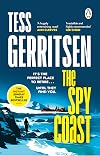
Back and forth in places, back and forth in time, back and forth in characters. Just couldn't get into this. I did finish it, in hope. Nope. Nice intro to a whiskey: Longmorn.

An absolutely compelling book- both the writing and the story itself. It connects the fishing-community's divergent priorities along with anything but "still water"- full of bluefin tuna and orcas. Definitely worth your time.

Absolutely fascinating how the author painted picture upon picture (at least to me). I re-read the book after seeing the movie. Excellent movie but the book filled me in on the milieu. Interesting end to the movie.
Last Seen Wearing: The First-Ever Police Procedural (Library of Congress Crime Classics) by Hillary Waugh
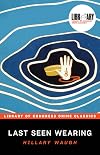
This edition with the introduction and notes by Leslie S. Klinger is certainly valuable for those reading Hillary Waugh for the first time. Being at that "certain age", I had to laugh at some of the footnotes explaining a 1950s-type situation. Well acquainted with them....
Indeed as a police procedural, and the first of its kind according to many, the reader is taken through the whole investigation: more than just interesting. However, I think that as a reader you have to have patience. But each page of information builds on the preceding information so you are always in the know. Good story.
This is the first of many police procedurals by Hillary Waugh. Two years later in 1954, Waugh published "A Rag and A Bone", also worth reading.
Indeed as a police procedural, and the first of its kind according to many, the reader is taken through the whole investigation: more than just interesting. However, I think that as a reader you have to have patience. But each page of information builds on the preceding information so you are always in the know. Good story.
This is the first of many police procedurals by Hillary Waugh. Two years later in 1954, Waugh published "A Rag and A Bone", also worth reading.
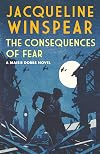
For the first time ever, in reading the Maisie Dobbs series, I came away feeling uncomfortable with my thoughts that somehow I was missing something here. There was just too much going on and things were getting muddled. Always, though, I remain an ardent fan of Jacqueline Winspear and am now re-reading the book with perhaps more attention than I gave it first time around.
What I should be paying attention to is the title.
What I should be paying attention to is the title.
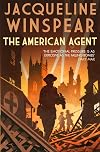
All others aside, this is the most thoughtful of the Maisie Dobbs books and my choice as the best of Jacqueline Winspear. Her dedication "In Memory of Don" and its explanation in Author's Notes is an indication of the seriousness with which Jacqueline Winspear treats her craft and her readers. The "final accounting" of the case is, I thought, exceptionally emotional.
Others here in the Review section have touched on the plot. Usually it bothers me to have figured out the results of Maisie's investigation but not this time. As I followed the discussions of the case map, the culprit was obvious as well as the upheaval that the results would cause. Altogether, at the end, a tear-jerker....
Others here in the Review section have touched on the plot. Usually it bothers me to have figured out the results of Maisie's investigation but not this time. As I followed the discussions of the case map, the culprit was obvious as well as the upheaval that the results would cause. Altogether, at the end, a tear-jerker....
This is a scary book.
The author takes time to patiently explain constitutional law and how its interpretations affect our everyday lives. And how the interpretations are directly connected to the people interpreting it.
But to make a story readable and get it to move forward, there has to be a certain amount of trigger incidents that the author creates. To use the analogy of "mind mapping", I see a "story mapping". Put imam Omar al Mustafa in the center and allow any number of lines to emanate from the circle. Keeping A. Scott Fenney as the protagonist in mind, here are possibilities to end all possibilities. Which, I think, the author uses admirably.
A. Scott's girls are a bit older and so allow a bit of raucous humor; he is now a Federal Judge; he's got the same gang for support, legal and otherwise; and he's still unmarried.
There's a second "story" swirling which resolves A. Scott's problem of "til death do us part", with reference to the previous books about A. Scott Fenney.
There's also a huge red herring which, I'm ashamed to admit, I didn't catch until nearly the end. But the one item that was absolutely blatantly given to the reader is how the imam situation is dealt with. At least I caught that....
Page-turner. The blurb doesn't say it all.
The author takes time to patiently explain constitutional law and how its interpretations affect our everyday lives. And how the interpretations are directly connected to the people interpreting it.
But to make a story readable and get it to move forward, there has to be a certain amount of trigger incidents that the author creates. To use the analogy of "mind mapping", I see a "story mapping". Put imam Omar al Mustafa in the center and allow any number of lines to emanate from the circle. Keeping A. Scott Fenney as the protagonist in mind, here are possibilities to end all possibilities. Which, I think, the author uses admirably.
A. Scott's girls are a bit older and so allow a bit of raucous humor; he is now a Federal Judge; he's got the same gang for support, legal and otherwise; and he's still unmarried.
There's a second "story" swirling which resolves A. Scott's problem of "til death do us part", with reference to the previous books about A. Scott Fenney.
There's also a huge red herring which, I'm ashamed to admit, I didn't catch until nearly the end. But the one item that was absolutely blatantly given to the reader is how the imam situation is dealt with. At least I caught that....
Page-turner. The blurb doesn't say it all.
A follow-up to The Color of Law and as always, an insight into the reality of The Law. I believe it., both the good and not good sides. But, as in the Color of Law, I saw the true ending from the start but didn't know how Gimenez would work it. A page-turner. I like the humor which comes sidling in. Good characterization of Rebecca. You'll need to watch her behavior carefully.
It took until page 363 before the main character realizes he has missed an important piece of evidence; that I as the reader had already noticed at the beginning of the book. And I think this was on purpose, because it is only now that A Scott Fenney comes face to face with himself? his client?. It took all that writing for the character to evolve, bringing along the reader step by step. A memorable trip.
A totally absorbing book and also scary. For every book I read by Gimenez, I learn more and more about the legal profession How he gets away with it is a mystery.
And like his other books, the ending is realistic and couldn't have been otherwise. I always enjoy the city/nature descriptions, along with the bit of history about the surroundings. The writing is clear; the humor always in the right place.
And we all knew what the A stood for. Page-turner of first quality.
A totally absorbing book and also scary. For every book I read by Gimenez, I learn more and more about the legal profession How he gets away with it is a mystery.
And like his other books, the ending is realistic and couldn't have been otherwise. I always enjoy the city/nature descriptions, along with the bit of history about the surroundings. The writing is clear; the humor always in the right place.
And we all knew what the A stood for. Page-turner of first quality.

I always think of Leila Lindholm kind of like "Sweden's Martha Stewart" in terms of perfect photos, every recipe is "grymt...goda" or "otroligt god" or "underbart" and most of all "enkelt att göra".
And she's right. I find her photos professional, and the recipes both tasty and easy to follow.
HOWEVER, in this particular cookbook she doesn't tell you until the very end in the section "första hjälpen i köket" that the oven temperature given in the recipes reflect värmlufts ugen: "alla mina recept utgår ifrån det".
Not good.
And she's right. I find her photos professional, and the recipes both tasty and easy to follow.
HOWEVER, in this particular cookbook she doesn't tell you until the very end in the section "första hjälpen i köket" that the oven temperature given in the recipes reflect värmlufts ugen: "alla mina recept utgår ifrån det".
Not good.
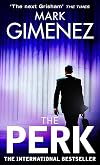
I had never heard of this author, ashamed to say, since I read crime voraciously. Picked this up at the second-hand store, new condition for about $1.50, noting that it had been bought in India for 295 whatevers. The blurb was good and since Gimenez was being called "The next Grisham", I figured this would be OK. I am not a Grisham fan and only read him when I have to think about a problem or situation that needs solving. Grisham, to me, writes the same book over and over, giving only new names to his two-dimensional characters. So if Gimenez was supposed to be...Grisham in the making and I needed to think about a situation at this moment, I bought the book.
Oh, my. Why ever would one label Gimenez as ...? No way. Gimenez actually assumes his reader is intelligent, wanting to know reasons behind thoughts and actions. The characters are well-formed and always add to moving the story forward. I thoroughly enjoyed his descriptions of the area, the history behind the surrounding countryside. The book is a page-turner- I couldn't put it down; all 482 pages read in one day.
It got me to the next step in my problem-solving....
Oh, my. Why ever would one label Gimenez as ...? No way. Gimenez actually assumes his reader is intelligent, wanting to know reasons behind thoughts and actions. The characters are well-formed and always add to moving the story forward. I thoroughly enjoyed his descriptions of the area, the history behind the surrounding countryside. The book is a page-turner- I couldn't put it down; all 482 pages read in one day.
It got me to the next step in my problem-solving....
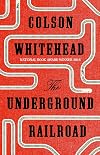
Tending to think visually about the nature of a book, all I could see was the Infinity symbol. Forever and ever. There will never be an end to the inhumanity amongst us. It's amazing that Colson Whitehead managed to portray any sense of hope in his characters. This was an overwhelming book to read and I had to lay it aside several times to catch my breath.
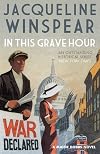
Having read the Maisie Dobbs series since the beginning, I am sorry to say that this is the first one that I found wanting. The historical arena is true to form and gives foundation to the story. However, there are just too many hops, skips and jumps from one situation to another, with nothing in between to bind them together. And the sudden trip to Belgium is completely hovering in the air (no pun intended). For me, there was absolutely no build-up for this trip. As always though, I am satisfied with the character descriptions. But I am definitely not satisfied with the motive for the murders- perhaps the character of the murderer escaped me.
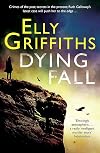
Boring. Have no idea what the title refers to. Confusing relationships, confusing story. Keeps switching attention within chapters. No thread. The inside blurb was a good one and made me borrow it from the library. Beware of blurbs.
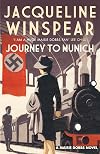
Having started with Book 1 of the Maisie Dobbs series, I can honestly say that this is the first time at the very start of the book that I had chills down my spine. This is a scary book. Not to mention the cover illustration (but in a lighter tone, kudos to the illustrator for the seams on the nylons!).
After returning to England from travels thither and yon around the world, Maisie is plunged into an intrigue entirely out of her range. Or so we think. Which I did. That's what makes this book scary. We are here not dealing with rogue characters, logically thinking criminals. We are dealing with monsters. And I surely did fear for Maisie. The year is 1938; a year of invasions, of invasions to come, of Chamberlain naiveté, of high-stepping boots, of personal decisions and the reader's knowledge of what is to come.
Jacqueline Winspear is successful in presenting a Germany starting out to achieve its goal. She presents characters twisted to appear normal; situations glaring in their sadness (two little girls BFF, they think); people who already are putting defiance in place and much more.
It is a story with many confusing turns and I am amazed how well Maisie can handle them. This is a Maisie who has grown to the heights that Maurice Blanche suspected she could achieve. And because it is a scary story, I will tell you Maisie comes out of Germany only at the very end and by means which is nothing short of the angel-on-my-shoulder type of luck (provided by the author, of show more course).
As a lead-in to the next book in the series, we are introduced to a Mr. Scott and reintroduced to the whole kit and caboodle of family and friends back home in England. show less
After returning to England from travels thither and yon around the world, Maisie is plunged into an intrigue entirely out of her range. Or so we think. Which I did. That's what makes this book scary. We are here not dealing with rogue characters, logically thinking criminals. We are dealing with monsters. And I surely did fear for Maisie. The year is 1938; a year of invasions, of invasions to come, of Chamberlain naiveté, of high-stepping boots, of personal decisions and the reader's knowledge of what is to come.
Jacqueline Winspear is successful in presenting a Germany starting out to achieve its goal. She presents characters twisted to appear normal; situations glaring in their sadness (two little girls BFF, they think); people who already are putting defiance in place and much more.
It is a story with many confusing turns and I am amazed how well Maisie can handle them. This is a Maisie who has grown to the heights that Maurice Blanche suspected she could achieve. And because it is a scary story, I will tell you Maisie comes out of Germany only at the very end and by means which is nothing short of the angel-on-my-shoulder type of luck (provided by the author, of show more course).
As a lead-in to the next book in the series, we are introduced to a Mr. Scott and reintroduced to the whole kit and caboodle of family and friends back home in England. show less
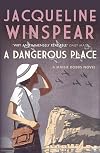
Having followed Jacqueline Winspear from the start of the Maisie Dobbs series, I was not surprised to find that the words of the title "a dangerous place" can take on diverse meanings. Maisie is indeed in a dangerous place and not only physically. Her decision to travel before giving her lover James the answer to his proposal is in tune with her personality, integrity, honesty and cautiousness about how she will live her life. And the cautiousness definitely comes into play here and battles it out with her personal integrity. The cover illustration also defines the specific place of Gibraltar and a specific incident totally horrendous in its implementation- Guernica. In all of the Maisie Dobbs books, the author places her character in real time; and Maisie always seems to be the very center of a tornado which is twirling her round and round until she finally lands and can be quit of the velocity. I found myself learning more about the Spanish Civil War and the positions that countries would and did take in the years to come.
It all starts as Maisie stumbles, literally, across a dead man during one of her evening walks. And because she is Maisie Dobbs, the fact that she reports this to the local police doesn't leave her satisfied. Into the whirlwind she goes, insisting, persistently. Not to everyone's liking as usual. I very much approve of the ending, feeling that this is entirely in character for Maisie Dobbs.
I have noted that several other reviewers caution first-time show more readers of the Maisie Dobbs series not to begin with this book. Agree. The Maisie Dobbs series has to begin at the very beginning, with Book 1. show less
It all starts as Maisie stumbles, literally, across a dead man during one of her evening walks. And because she is Maisie Dobbs, the fact that she reports this to the local police doesn't leave her satisfied. Into the whirlwind she goes, insisting, persistently. Not to everyone's liking as usual. I very much approve of the ending, feeling that this is entirely in character for Maisie Dobbs.
I have noted that several other reviewers caution first-time show more readers of the Maisie Dobbs series not to begin with this book. Agree. The Maisie Dobbs series has to begin at the very beginning, with Book 1. show less
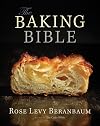
This is absolutely one of the most pretentious merchandise-flouting baking/cook books I have ever read. It is not for the beginner, nor the "Gee, I think I'll bake today" person. This is a book to read, mostly. And for the pretty much experienced baker. I bought the book because most of my cookbooks are of the older basic kinds. So I thought I would invest in a new up-to-date cookbook. If I were to follow all those instructions about essentials for this and that, I would have to be the single winner of the lottery. A bread machine? Are you kidding me? Who uses a bread machine nowadays- it makes the most tasteless ordinary bread, no matter what kind of flour you put into it. I haven't seen one of those in the stores (for home baking) since I don't know when. Silicone? What! I wouldn't go near any kind of silicone baking item. Yes, I use spatulas and like but no way will I put food into a silicone dish and place it in a hot oven. And I am absolutely horrified at all this enthusiasm over baking spray. But then again, I am not enthusiastic about anything that sprays stuff around food, including whipped cream. However, if you do actually read this book, it will provide you with a true understanding of the different kinds of flours, sugars, et al. The book also gives the good advice- and explains why- it is always better to weigh than measure. It also provides the grams and Centigrade alternatives. But the book is basically useless re the size of pans (always in inches), which show more is essential for recipes to be successful; and it provides the exact brands of flours, sugars, etc which are not available outside the US. So in order to accurately use the recipes you, as an experienced baker, must be able to adapt the type of flours, etc. to what is available in your country. I bake in Sweden with both American and Swedish recipe measurements. Swedish Apricot Walnut Bread- a very typical type of sourdough bread which I bake in a swish- do I really measure the slashes? Give me a break. I find the photos engaging and helpful along with the ingredients section. It is, however, not a book that lends itself to easy handling- very heavy. Would I recommend this book? Yes, I would: to someone who enjoys reading about baking. show less

I denna tredje boken om kommissarien Carl Hell och polissyster Maria Gustavsson har vi hunnit till året 1936 i Sverige. Bakgrunden och miljön är ännu mer påträngande. Livsöde- då och nu- sammanfalla på ett oväntat sätt och hela tiden tänkte jag på Bea Uusmas bok "Expeditionen" .
Historien slutar som vanligt med en knorr och leder oss läsare vidare till nästa bok. Mer av Carl Hells bakgrund har kommit fram och Maria skriva vidare på sina verser. Boken slutar den 12 augusti 1936. Snart är det 1 september.
Historien slutar som vanligt med en knorr och leder oss läsare vidare till nästa bok. Mer av Carl Hells bakgrund har kommit fram och Maria skriva vidare på sina verser. Boken slutar den 12 augusti 1936. Snart är det 1 september.

Den andra boken om kommissarien Carl Hell och polissyster Maria Gustavsson och deras polisiärt arbete som visas sig alltmer ifrågasatt av polisledningen.
Som läsare börja få man en mer omfattande inblick i de personer som år 1935 i Sverige konfronteras med svåra moraliska frågor.
Mycket upprörande. Läsvärd. En lång historia med det enda möjliga slut.
Som läsare börja få man en mer omfattande inblick i de personer som år 1935 i Sverige konfronteras med svåra moraliska frågor.
Mycket upprörande. Läsvärd. En lång historia med det enda möjliga slut.

Första boken om kommissarien Carl Hell och hans val av assistent polissyster Maria Gustavsson. Det är viktigt att börja med den här första boken. Samma personer återkommer i de följande böcker.
Mycket spännande historia men lite komplicerat att följa om man inte koncentrera sig.
"Mörkret faller över Europa 1934. I Tyskland har nazisterna tagit makten och i Sverige klubbas steriliseringslagen igenom." En god sammanfattning på baksidan av boken.
Boken ger också en skildring av Sverige vid denna tidpunkten och man rygga tillbaka.
Mycket spännande historia men lite komplicerat att följa om man inte koncentrera sig.
"Mörkret faller över Europa 1934. I Tyskland har nazisterna tagit makten och i Sverige klubbas steriliseringslagen igenom." En god sammanfattning på baksidan av boken.
Boken ger också en skildring av Sverige vid denna tidpunkten och man rygga tillbaka.
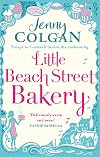
This was a charming and silly story. Definitely an escape. Too much this way and that way. But you saw it all coming. Neill, the puffin was best. Being an amateur bread-baker, I had a hard time getting the timing here. Considering that Polly had enough customers even at the start, I found it confusing that she could manually knead all the needed dough (sorry, the pun). She would have to have had at least three stages going at the same time: bread being sold, bread in the oven, bread on the rise; also, the sourdough yeast in preparation continuously. Plus all the other goodies besides bread. I got tired just reading about all that work.... The included recipes were kind of lackadaisical.
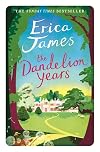
After the first few chapters which introduce the characters, the story starts. It's a two-for. And you know how the present-day one will end. But read on anyway. One story in present-day England, the other in England of the 1940s. The 1940s include the war years and I was reminded of the TV-series Bletchley Park and Foyle's War. And glad that I had read Eric Larson's "Dead Wake" about the sinking of the Lusitania in 1915. That book provided background for much of the discussions still prevalent within the Bletchley Park of the 1940s. The portrayal of the granddaughter Saskia is, however, disastrous: she is a woman in her mid-thirties but comes over as a 20s something out of touch with her peers- both the thirties-somethings and the twenty-somethings. Read it and see if you agree. Good story.
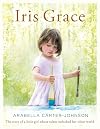
The inside front flap introduces the book thusly: "Iris Grace is six years old and severely autistic. For the first five years of her life she barely communicated at all.... Then one day the family decided to get a cat."
From prose to illustrations. From insight to insight. This is the story of a family into which, one day, a child is born who challenged their days and nights but never challenged their love. It is an amazing story about a family who provided their autistic child with means to grow within her whole world and still become part of the outside world.
Her mother, Arabella Carter-Johnson, has written a narrative of their family life these past few years. It is poetical and realistic; not an easy combination. She has succeeded in conveying the struggles, the successes; the joys and the sadness.
It is a story that truly doesn't pull any punches. At the same time, as you read this book, you realize that Iris Grace has parents who are aware. They are attuned to the possibilities available to them; they analyze and experiment with these possibilities; they plan and implement. This goes on 24/7- there is no other way.
And then one day, they got a cat.
This is a beautiful book. The photographs, the font, the layout, the illustrations all add to the beauty of the story. As do all the paintings by Iris Grace herself.
Don't miss this one. "Iris Grace: The Story of a Little Girl Whose Talent Unlocked Her Silent World."
From prose to illustrations. From insight to insight. This is the story of a family into which, one day, a child is born who challenged their days and nights but never challenged their love. It is an amazing story about a family who provided their autistic child with means to grow within her whole world and still become part of the outside world.
Her mother, Arabella Carter-Johnson, has written a narrative of their family life these past few years. It is poetical and realistic; not an easy combination. She has succeeded in conveying the struggles, the successes; the joys and the sadness.
It is a story that truly doesn't pull any punches. At the same time, as you read this book, you realize that Iris Grace has parents who are aware. They are attuned to the possibilities available to them; they analyze and experiment with these possibilities; they plan and implement. This goes on 24/7- there is no other way.
And then one day, they got a cat.
This is a beautiful book. The photographs, the font, the layout, the illustrations all add to the beauty of the story. As do all the paintings by Iris Grace herself.
Don't miss this one. "Iris Grace: The Story of a Little Girl Whose Talent Unlocked Her Silent World."
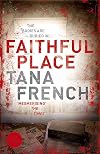
You have to be a good swimmer to get along with all the red herrings thrown your way.
I knew who did it from the start. But, as always, even if I guessed who did it, I couldn't really figure out why. It's just a gut feeling. So I just kept reading- it is a real page-turner but I don't think I will read any more Tana French. Her books all seem to deal with the dysfunctional aspects of a family or whatever according to reviewers. It gets a three-star rating because the author successfully manipulates episodes from different points of view and in the end this is what brings the story together.
It's rather a sad story.
I knew who did it from the start. But, as always, even if I guessed who did it, I couldn't really figure out why. It's just a gut feeling. So I just kept reading- it is a real page-turner but I don't think I will read any more Tana French. Her books all seem to deal with the dysfunctional aspects of a family or whatever according to reviewers. It gets a three-star rating because the author successfully manipulates episodes from different points of view and in the end this is what brings the story together.
It's rather a sad story.

Mycket inspirerande. Fantastiska foto.
Fika: The Art of The Swedish Coffee Break, with Recipes for Pastries, Breads, and Other Treats by Anna Brones
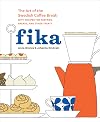
During a lunch break while researching at the Stockholm City Archives, I read a book review in the magazine Swedish American Genealogist (2015:3). The title was Have Some Coffee! and I'm always game for that. The book: Fika (pronounced Fee-ka): The Art of the Swedish Coffee Break, with Recipes for Pastries, Breads, and Other Treats by Anna Brones and Johanna Kindvall.
And surprisingly enough, I found the book on a Swedish online bookstore. And, naturally, bought it.
What an absolutely delightful and charming book! From layout to illustrations, from recipes to prose. The authors mention two absolute staples for recipes: Sju Sorters Kakor (Seven Kinds of Cookies) and Vår Kokbok (Our Cookbook), both of which 9 out of 10 Swedish households are sure to have and if you're my age, you have the earlier editions….
The authors have chosen wisely. Any home baker can tell you that they have baked these recipes for years, over and over again. I know I have. The recipes are clear and true to the originals. All of this is baking from scratch- don't even think that word “mix”.
Each chapter begins with a description of Fika in all its forms- from the kind of cup you drink out of to when, where and why there should be a Fika.
My fika today was Kärleksmums (chocolate coffee squares). The recipe is on page 62 and has the same basic ingredients as in the Agneta Lampe book “att lyckas med gott hembakat” where it is known as Mias mockabitar. It's a favorite among chocoholics.
And surprisingly enough, I found the book on a Swedish online bookstore. And, naturally, bought it.
What an absolutely delightful and charming book! From layout to illustrations, from recipes to prose. The authors mention two absolute staples for recipes: Sju Sorters Kakor (Seven Kinds of Cookies) and Vår Kokbok (Our Cookbook), both of which 9 out of 10 Swedish households are sure to have and if you're my age, you have the earlier editions….
The authors have chosen wisely. Any home baker can tell you that they have baked these recipes for years, over and over again. I know I have. The recipes are clear and true to the originals. All of this is baking from scratch- don't even think that word “mix”.
Each chapter begins with a description of Fika in all its forms- from the kind of cup you drink out of to when, where and why there should be a Fika.
My fika today was Kärleksmums (chocolate coffee squares). The recipe is on page 62 and has the same basic ingredients as in the Agneta Lampe book “att lyckas med gott hembakat” where it is known as Mias mockabitar. It's a favorite among chocoholics.


Mycket enkelt. Inköpt andra hand- s.k. "bra att ha" kokbok. Snabb.

Inköpt på loppis för en billig peng. I mycket bra skick. Mönsterdelen aldrig använt. Egentligen är detta en bok för de redan frälste. Med sin utgivningsår 1985 är modellerna tidstypiska.