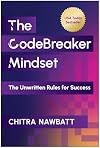
The CodeBreaker Mindset has powerful, practical insights for business leaders or just about anyone ready to think bigger and lead smarter. Chitra Nawbatt breaks down the rules of success in a way that is motivating and actionable. I appreciated how clearly the book shows readers how to create big opportunities, navigate challenges, and build a real path toward long-term success. It’s packed with wisdom on mindset, leadership, and strategic growth. This is such an inspiring guide for entrepreneurs, professionals, and more. For anyone wanting to achieve more in life, this is a great read. Recommended.
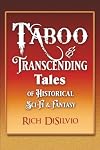
Taboo and Transcending Tales of Historical Sci-Fi & Fantasy, by Rich DiSilvio, is an amazing collection that blends eras, cultures, and speculative ideas into stories that are timeless. The stories explore moral boundaries, human resilience, and the consequences of innovation. Vivid settings and solid characterization invite you to question history. This collection is perfect for fans who enjoy speculative fiction. The writing challenges conventions while delivering a rich atmosphere. Overall, a great story collection and well worth diving into.
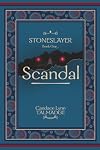
This is the first book in a series, and Talmadge has done a wonderful job writing a fully immersive universe with unique, deep, and rich characters. The action kicks off right away in the preface, and though the pacing does slow a bit throughout, Talmadge makes up for it with exquisite worldbuilding. It’s clear that a lot of care went into providing a good reader experience as well (glossary, family tree, etc.).
Overall, this book is fiction, but it’s very creative and takes on class division, with a strong leading lady caught up in the whirlwind of politics, bloodlines, and perception. The trials she overcomes in this book alone are impressive, and this is a great foundation for a series. Recommend!
Overall, this book is fiction, but it’s very creative and takes on class division, with a strong leading lady caught up in the whirlwind of politics, bloodlines, and perception. The trials she overcomes in this book alone are impressive, and this is a great foundation for a series. Recommend!
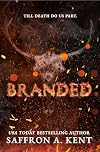
A gritty, intoxicating dark western romance that starts as a fantasy and turns into something far more dangerous.
A shy college student gets pulled into a prison pen pal program through a lie, writing spicy letters under a false identity to a convicted cowboy with a ranch in his past and hunger in his present. Then he gets out. She ends up face to face with him, still pretending. He is not the man on the page.
The most compelling thing here is the split between who these two believe they are and who they become when desire stops being theoretical. Reverie reads like someone who has been lonely for a long time and finally found a place to pour all of her longing. It is messy. It is selfish. It is also painfully human. Her choices are not pretty, but they make sense, because the book understands how easily a woman can confuse attention with safety and fantasy with control.
Beau is the darker mirror. The letters offer one kind of intimacy, almost tender in its fixation, but the real man is sharpened by prison, revenge, and pride. The tension between those versions is the point. This is a romance that keeps asking what people are allowed to want, and what they do when they realize wanting is not the same thing as being chosen. Power hums under everything. So does shame. The book does not flinch from the ugly edges, including coercion and consent boundaries that will not work for every reader. It is doing that on purpose.
Craft wise, the emotional through line is excellent, and show more the heat lands hard. The plot can feel jumpy at times, like it is sprinting past connective tissue to get to the next collision. Still, when the characters are in a room together, the book delivers.
Unsettling. That is the word. And it works. show less
A shy college student gets pulled into a prison pen pal program through a lie, writing spicy letters under a false identity to a convicted cowboy with a ranch in his past and hunger in his present. Then he gets out. She ends up face to face with him, still pretending. He is not the man on the page.
The most compelling thing here is the split between who these two believe they are and who they become when desire stops being theoretical. Reverie reads like someone who has been lonely for a long time and finally found a place to pour all of her longing. It is messy. It is selfish. It is also painfully human. Her choices are not pretty, but they make sense, because the book understands how easily a woman can confuse attention with safety and fantasy with control.
Beau is the darker mirror. The letters offer one kind of intimacy, almost tender in its fixation, but the real man is sharpened by prison, revenge, and pride. The tension between those versions is the point. This is a romance that keeps asking what people are allowed to want, and what they do when they realize wanting is not the same thing as being chosen. Power hums under everything. So does shame. The book does not flinch from the ugly edges, including coercion and consent boundaries that will not work for every reader. It is doing that on purpose.
Craft wise, the emotional through line is excellent, and show more the heat lands hard. The plot can feel jumpy at times, like it is sprinting past connective tissue to get to the next collision. Still, when the characters are in a room together, the book delivers.
Unsettling. That is the word. And it works. show less
Shape Your Path at IE University : What to expect from Spain’s Instituto de Empresa University by calvozcordoacutenpil
This felt like getting a pep talk and a survival guide from someone who actually lived it.
At its core, Shape Your Path at IE University is a practical, personal roadmap for students planning to study business at IE. Pilar turns her four years’ worth of notes and lived experience into a short, straight-shooting reference guide less “glossy brochure,” more “here’s what I wish someone told me before I showed up.”
What worked for me is how grounded it feels in real decisions students actually stress over. The Segovia vs. Madrid breakdown alone is worth the read, because she doesn’t pretend one choice is magically perfect. It’s very “pick your trade-offs,” with specifics on community vibes, social life, travel ease, study focus, and cost differences. She even includes quick comparison charts that make the financial side feel less abstract and more… okay, I can plan for this.
I also appreciated how broad the coverage is without losing the student perspective. Housing (apartment vs. residency), mentors, holidays, networking, clubs, and the day-to-day reality of juggling group projects and exams, it’s all here. The chapters on mentors and advisors especially hit, because they focus on what you can do (how to reach out, how to build the relationship, what to ask) instead of vague “use your resources” advice. And yes, the reminder that social life vs. grades is a balance you have to actively learn? True.
My small critiques: the tone can be a little show more repetitive in places, and some sections read more like expanded journal guidance than a tightly edited handbook. A few areas could’ve used sharper organization or a faster “so what do I do next?” wrap-up. But honestly, I’d rather have a guide that’s slightly rambly and real than one that’s polished and useless.
Perfect for: students considering IE (or already committed) who want realistic expectations, smart starting moves, and a calm voice saying, “You’re not behind you’re just new.” show less
At its core, Shape Your Path at IE University is a practical, personal roadmap for students planning to study business at IE. Pilar turns her four years’ worth of notes and lived experience into a short, straight-shooting reference guide less “glossy brochure,” more “here’s what I wish someone told me before I showed up.”
What worked for me is how grounded it feels in real decisions students actually stress over. The Segovia vs. Madrid breakdown alone is worth the read, because she doesn’t pretend one choice is magically perfect. It’s very “pick your trade-offs,” with specifics on community vibes, social life, travel ease, study focus, and cost differences. She even includes quick comparison charts that make the financial side feel less abstract and more… okay, I can plan for this.
I also appreciated how broad the coverage is without losing the student perspective. Housing (apartment vs. residency), mentors, holidays, networking, clubs, and the day-to-day reality of juggling group projects and exams, it’s all here. The chapters on mentors and advisors especially hit, because they focus on what you can do (how to reach out, how to build the relationship, what to ask) instead of vague “use your resources” advice. And yes, the reminder that social life vs. grades is a balance you have to actively learn? True.
My small critiques: the tone can be a little show more repetitive in places, and some sections read more like expanded journal guidance than a tightly edited handbook. A few areas could’ve used sharper organization or a faster “so what do I do next?” wrap-up. But honestly, I’d rather have a guide that’s slightly rambly and real than one that’s polished and useless.
Perfect for: students considering IE (or already committed) who want realistic expectations, smart starting moves, and a calm voice saying, “You’re not behind you’re just new.” show less
I went into Fallen in a Dark Uneven Way, not quite knowing what to expect, and it pulled me in fast. Lo Monaco writes with a moody, atmospheric style that lingers, letting tension and emotion build in quiet, unsettling ways. The characters are flawed and human, and the darkness doesn't seem forced in any way. I appreciated how the story unfolds unevenly in an intentional way, mirroring the inner struggles at its core. It’s raw, introspective, and quite haunting, and it lingered with me long after I read the last page. I’d especially recommend it to readers who enjoy thoughtful, emotionally driven stories.
I went into The Dog Walker: Reckoning expecting a sleek “we’re on the run in a gorgeous foreign city” thriller, and… yes, it absolutely delivers that vibe. But it also kept widening the circle in a way I didn’t totally anticipate, and I found myself both impressed and slightly overwhelmed (in a good, anxious way).
Jane Ashcroft and R land in Bergen trying to disappear with their money and their dog, Fable, and the early chapters are honestly my favorite kind of tension: the quiet kind. Rain on cobblestones, fog that makes every street feel like a blind corner, the ritual of taking a Norwegian class and pretending you’re normal… while your nervous system is still scanning for threats. Then a compass-rose mark starts surfacing in their life, first as an elegant little clue, then as something far more ominous, and the story shifts from “maybe we can rest” to “oh, we are being sized up.”
What worked for me most is character connection. Jane is competent, but not invincible, and I liked that her calm reads less like superhuman cool and more like a choice she has to keep making. R, meanwhile, is all razor-edged vigilance and loyalty, and their relationship feels lived-in in the best way: funny in tiny flashes, fierce when it counts, and occasionally prickly because of course it is. And Fable… listen, I am always going to be the easiest audience member for a dog who’s treated like a real presence instead of a prop. I would follow Fable into battle, no show more questions asked.
The setting is also doing a ton of heavy lifting. Bergen isn’t just “pretty backdrop,” it’s atmosphere, beautiful and claustrophobic at the same time. And when the book leans into art-world menace, private power, and the way civility can be a disguise, it gets genuinely riveting.
My small issues: the cast balloons as the stakes escalate, and there were moments where I had to pause and re-orient myself (wait, who’s aligned with who right now…). And the plot gets so tightly wound that a few turns feel almost too polished, like the machinery is showing, just a bit.
Still, by the time everything barrels toward its final confrontations, I was very into it, heart-in-throat, flipping pages like it was my job . If you like thrillers with mood, smart tension, and characters you actually care about… this one is worth the ride. show less
Jane Ashcroft and R land in Bergen trying to disappear with their money and their dog, Fable, and the early chapters are honestly my favorite kind of tension: the quiet kind. Rain on cobblestones, fog that makes every street feel like a blind corner, the ritual of taking a Norwegian class and pretending you’re normal… while your nervous system is still scanning for threats. Then a compass-rose mark starts surfacing in their life, first as an elegant little clue, then as something far more ominous, and the story shifts from “maybe we can rest” to “oh, we are being sized up.”
What worked for me most is character connection. Jane is competent, but not invincible, and I liked that her calm reads less like superhuman cool and more like a choice she has to keep making. R, meanwhile, is all razor-edged vigilance and loyalty, and their relationship feels lived-in in the best way: funny in tiny flashes, fierce when it counts, and occasionally prickly because of course it is. And Fable… listen, I am always going to be the easiest audience member for a dog who’s treated like a real presence instead of a prop. I would follow Fable into battle, no show more questions asked.
The setting is also doing a ton of heavy lifting. Bergen isn’t just “pretty backdrop,” it’s atmosphere, beautiful and claustrophobic at the same time. And when the book leans into art-world menace, private power, and the way civility can be a disguise, it gets genuinely riveting.
My small issues: the cast balloons as the stakes escalate, and there were moments where I had to pause and re-orient myself (wait, who’s aligned with who right now…). And the plot gets so tightly wound that a few turns feel almost too polished, like the machinery is showing, just a bit.
Still, by the time everything barrels toward its final confrontations, I was very into it, heart-in-throat, flipping pages like it was my job . If you like thrillers with mood, smart tension, and characters you actually care about… this one is worth the ride. show less