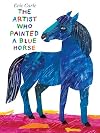
Over the last year, my daughter and I have spent much of our time reading mass amounts of books. She just turned two, and she's beginning to discover more than just a book's illustrations. It's amazing to watch her brain develop, and the things she's able to understand absolutely blow me away. We read all sorts of picture storybooks, but she definitely enjoys Carle's works more than anything else. We probably have a copy of Brown Bear in every room of the house, as it really is that important! I've come to enjoy his books almost as much as she has in this time, and I think that The Artist Who Painted a Blue Horse is my favorite. I gave this one too her as a Christmas gift this year, and it sends a message to her that will last a lifetime. In the story, our artist paints pictures of animals, but colors them in a rather, well, unorthodox manner. The book goes through a series of animals, ending with the most powerful line in any children's book that I've read, "I am a good artist." Such a powerful, confident declaration by our artist, one that must be instilled into children. I wrote a note on the endpage to her that reads, "Paint the world as you see fit, even when no one seems to understand." Thank you, Eric Carle, for inspiring millions of minds, regardless of age.
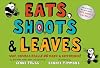
After Lynne Truss blessed us with Eat, Shoots & Leaves:Zero Tolerance, she came back with round two for the children. This wonderful picture book focuses on the (mis)use of commas, or rather how their placement can significantly alter the meaning of a sentence. The book has 12 sentences that are allotted two pages each. For each sentence, one page has the correct comma usage and an illustration to depict the sentence. On the opposite page is the same sentence with an improperly placed comma and the illustration that depicts the new, often bizarre meaning. At the end of the book is a recap of the sentences and notes on how the technical aspects of the sentence changed. For example, a sentence may read, "After we left Grandma, Mommy and I skipped about in the park." The comma separates the independent from the introductory clause, and as the illustration depicts, Mom and daughter skip around the park after leaving Grandma on the park bench. The next sentence reads,"After we left, Grandma, Mommy and I skipped around the park." With the addition of another comma, Grandma joins the list of skipping individuals in the park. This is one of the more tame examples, but it's one that I see misused very often. The book takes a humorous approach towards punctuation, and it could be great to use with younger children to show just how important commas are.

For some time now, I've wanted to find a book, rather textbook in nature, that is essentially an old school primer type piece that strictly covers grammar. I told myself not to actively search one out, as the right one would show up at the right time. Good's book is exactly what I was looking for. The book is very dry and straightforward, as he makes note of in the preface. Good states that although this is pretty boring stuff, it still is necessary to know, particularly now that all of our lives are consumed by media and the necessary literacy. Part one of the book deals with the eight major parts of speech, and these eight chapters consume almost half of the book. From here we head into phrases, clauses, verbs as adjectives, verbs as nouns, verbs as anything, all that active vs passive goodness that drives most insane but makes me smile. From here, the text goes into 'common' mistakes, aka the grammar on social media sites that makes me want to break phones and tablet monitors. "Your going to the store huh? Get me some of there boudin they sale. Mom wants some to. Thanks." The final part delves into punctuation, from commas to brackets to the lowly colon. There are countless rules thrown in over the course of this book, most done with a touch of humor. I've used this book for reference over the semester, and once I pick it up it's very hard to put down. It's just fun. Many argue that these rules aren't as important as they once were and that it's a waste of precious show more instructional time to dwell on something so tedious. I say boo to that. It's imperative to know what's fundamentally correct, especially as writing totally consumes us at this point in time. show less
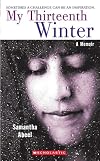
In My Thirteenth Winter, we learn through a personal memoir the story of Samantha Abeel's struggle with dyscalculia. I knew very little about this disorder before reading this book, and it proved to be as dark and haunting as I predicted. The cover of the book seems to set an overall tone tor the piece-a sullen appearing woman behind rain covered glass, looking down in a sort of melancholy way. However, she shows a trace of a grin, like perhaps she knows that through the pain everything is okay. Struggle, pain, hope and perseverance are recursive elements of this memoir, and the cover is a wonderful depiction. We learn in the introduction that Abeel is telling the story in her mid 20's, and the book then starts with her early childhood. The chapters proceed to take us on a chronological journey through her life, through grade school to her post-collegiate life. Each chapter is told in narrative form, with roughly half of the text as flashbacks to the particular time being discussed. What we learn is that through what can be seen as a potentially debilitating disorder comes hope and success. I don't want this to sound easy, as Abeel spends her life looking for answers for herself and others with the disorder, and often encounters hardship and heartbreak. But through her connection to the power of poetry, the beauty of the written word, she seems to find a placid place within a life of uncertainty and confusion. Before each chapter is a sort of intro piece that always has a show more free verse poetic essence to it that naturally flows into the chapter. I don't know if this is intended, but it works beautifully, and it accentuates the idea of how powerful poetry has been in her life. I really feel for Abeel through the book, as it's horrifying to me to imagine how difficult such simple things must be. The disorder scares me in some way, like a dream that you can't wake up from. Of all the things she accomplished, however, none stood out to me like when she acknowledged her disorder and moved forward with it. THAT is strength-admitting to yourself and your loved ones that there's a problem and that you'll do whatever to fix it. Like most memoirs, it's easy to see ourselves in our narrator, and we should model our own lives after the perseverance she embodies. show less
As an aspiring ELA teacher, there are many things I'm excited about and just as many that make me really nervous. I've felt a calling to teach English for some time now, as I want to genuinely help the youth of my community. I feel that there are many gifts I can give students, but none are more powerful than the ability to write effectively. As Gallagher says in the first chapter, we are witnessing a "literacy stampede" (3) like no other time in history. The amount of information surrounding us today is unnerving, and if you want to succeed, there's no choice but to jump in and run with it. At no other time has writing been so critical to success, and attaining the right tools is a must. As an ELA teacher, it's my responsibility to supply students with these tools, and my biggest question is where to even start. This is something I've been wrestling with since I made the decision to teach, and Kelly Gallagher has worked to alleviate my fears. I was introduced to his works this year, and I absolutely love them. Teaching Adolescent Writers is yet another in a series of solidly written books, and may prove to be the most beneficial of all. Like his other books that I've read, it's set up with chapters dedicated to certain topics. Within the chapters are information, prompts, examples of student and teacher writings, and most importantly variety of ways to approach each topic. This book is centered around six "pillars" that he feels that successful writing should be built show more upon: practice, modeling, reading other writers, choice, authentic purposes and audiences, and feedback (13). The book takes each pillar and suggests plans for how to approach them, ultimately creating better all-around writing. I read this book as part of a personal growth project in an ELA methods course and not only did it help me from the vantage point of a teacher, it made me a better writer as well. Gallagher is able to do something that most writers can't-create total clarity with simple ideas and language. This book is just further proof. show less
Whistling Vivaldi: How Stereotypes Affect Us and What We Can Do (Issues of Our Time) by Claude M. Steele
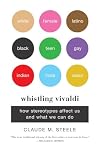
The first sentence of the acknowledgements set me up for what I anticipated to be a rather brutal read. When Steele prefaced the entire work with the idea that scientists are made to create articles rather than books, I predicted that the work would present significant challenges to this quite non-science minded reader. Well, my predictions proved true, as I struggled through the bulk of the text, having to re-read certain passages numbers of times just to get the vaguest of understandings as to what was going on. The narrative structure moved things along at a pace that read somewhat smoother than a textbook, but not by much. Regardless, every bit of struggle was absolutely worth it in the end. Not only was I able to walk away with insight towards the effects of stereotypes and their detrimental effects, but I was forced to take a look at myself and the way that identity contingencies affect me. I’ve spent most of my life trying (and in my mind succeeding) to break certain stereotypes placed on me, the middle class, middle aged white guy. Now that I think that I’ve shaken this image, another falls in my lap-the old person who’s going back to school. At any rate, the text forced me to consider that perhaps I can be my own worst enemy in my attempts to break free of these threats.
Because the book deals with these threats and contingencies being so engrained into the individual, I really think Steele’s work could be a beneficial read not only to educators but to show more anyone with an interest towards bettering the human condition. As Steele says early on, these “identity threats…play an important role in some of society’s most important social problems” (15). As I made predictions about the work based on its subtitle and the number of groups represented on the cover, I assumed that it would focus strictly on external components f stereotyping, not the way that these threats are internalized. This is coupled with the fact that the internalizing of these if a new concept for me. I guess I expected more “hard factors” (26) as Steele puts it, factors based on social structures, etc. All considered, it proves that stereotype threats, though “often subtle enough to be beneath our awareness, can nonetheless significantly affect things as important as our functioning” (61).
Personally I found chapter six to be the most interesting as well as the most relatable. Like most guys my age (almost 40), I grew up with a generation of parents, particularly fathers, who lived by the philosophy of “just buckle down and overcome” (98). I guess I’ve never been necessarily opposed to this philosophy as I’m one to put my head down and fight my way out of anything, but as the text and research suggest, it often just isn’t that simple. The result for me was a fierce independence coupled with determination to prove to others and to myself that “I got this,” often resulting in an “over efforting” (105) that consistently proved counterproductive. Though it establishes a determined work ethic in mind and body, the effects can be of detrimental consequence, “fiercely interfering with performance” as well as making it “difficult to stay in the setting” (111).
From the perspective of a future educator, chapter nine seemed to resonate the most. What particularly stood out was the way in which the presentation of feedback was framed. Regardless of the student, the standard is set high, and every student is told that they can achieve said standard. Under the philosophy of “self-affirmation theory,” if a student’s self-image is threatened, there is still a chance to “step back, take a breath and affirm a larger valued sense of self” (173). The text is filled with loads of other ideas to put into practice as educators, but these stood out to me the most. Although the book was by far the most challenging piece that I read this semester, it was also the most fulfilling. It’s one of those books that I have difficulty in explaining to others, but it doesn’t matter because I get it. show less
Because the book deals with these threats and contingencies being so engrained into the individual, I really think Steele’s work could be a beneficial read not only to educators but to show more anyone with an interest towards bettering the human condition. As Steele says early on, these “identity threats…play an important role in some of society’s most important social problems” (15). As I made predictions about the work based on its subtitle and the number of groups represented on the cover, I assumed that it would focus strictly on external components f stereotyping, not the way that these threats are internalized. This is coupled with the fact that the internalizing of these if a new concept for me. I guess I expected more “hard factors” (26) as Steele puts it, factors based on social structures, etc. All considered, it proves that stereotype threats, though “often subtle enough to be beneath our awareness, can nonetheless significantly affect things as important as our functioning” (61).
Personally I found chapter six to be the most interesting as well as the most relatable. Like most guys my age (almost 40), I grew up with a generation of parents, particularly fathers, who lived by the philosophy of “just buckle down and overcome” (98). I guess I’ve never been necessarily opposed to this philosophy as I’m one to put my head down and fight my way out of anything, but as the text and research suggest, it often just isn’t that simple. The result for me was a fierce independence coupled with determination to prove to others and to myself that “I got this,” often resulting in an “over efforting” (105) that consistently proved counterproductive. Though it establishes a determined work ethic in mind and body, the effects can be of detrimental consequence, “fiercely interfering with performance” as well as making it “difficult to stay in the setting” (111).
From the perspective of a future educator, chapter nine seemed to resonate the most. What particularly stood out was the way in which the presentation of feedback was framed. Regardless of the student, the standard is set high, and every student is told that they can achieve said standard. Under the philosophy of “self-affirmation theory,” if a student’s self-image is threatened, there is still a chance to “step back, take a breath and affirm a larger valued sense of self” (173). The text is filled with loads of other ideas to put into practice as educators, but these stood out to me the most. Although the book was by far the most challenging piece that I read this semester, it was also the most fulfilling. It’s one of those books that I have difficulty in explaining to others, but it doesn’t matter because I get it. show less
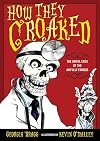
I've been a lifelong fan of books that are able to effectively combine death, gore and humor, and Georgia Bragg's work certainly makes the cut. Witfully written and beautifully illustrated, the book gives us inside info on the final days of twenty of history's more notable figures. It's safe to say that I know a reasonable amount the lives of each person covered in the book, but I knew very little-if anything at all-about how they left this life. The book follows a chronological order (date of death) from King Tut to Einstein, and it held my interest the entire way. I admit that initially I picked and chose certain chapters, but one led to another to another to another and before I knew it, I read the entire thing.
What stood out to me in each chapter was Bragg's masterfully witty use of language. Although many of the puns can skip past you during an initial reading, the book's sentences are loaded with lively wordplay. Metaphors, similes, idioms, you name it abound throughout the text. Although the writing may come off as abrasive, over-the-top or in-your-face, it's really quite brilliant in its use of subtleties. At a glance, it seems to be a series of provocative statements, but it's so much more than that. I really like the way the book was organized with a chapter dedicated to one person. None of the chapters are dependent upon others, and everyone has to admit that it's fum now and then to be able to pick up a book and just jump in wherever.
Bragg makes use of a show more varied sentence structure and vivid language, which lends itself to being a quick, fun read, and the fact that it's written in narrative form only accentuates this. At times, some chapters can seem a bit too 'cute' in their use of humor, but the writing overall has enough deep wordplay for me personally. I also enjoyed the random factual info at the end of each chapter. It's just plan fun, and fum is important, too. I think that death is too often held with so much reverence that we forget its okay to laugh about it and poke fun just like we do everything else. Bragg so elegantly drives this idea home. show less
What stood out to me in each chapter was Bragg's masterfully witty use of language. Although many of the puns can skip past you during an initial reading, the book's sentences are loaded with lively wordplay. Metaphors, similes, idioms, you name it abound throughout the text. Although the writing may come off as abrasive, over-the-top or in-your-face, it's really quite brilliant in its use of subtleties. At a glance, it seems to be a series of provocative statements, but it's so much more than that. I really like the way the book was organized with a chapter dedicated to one person. None of the chapters are dependent upon others, and everyone has to admit that it's fum now and then to be able to pick up a book and just jump in wherever.
Bragg makes use of a show more varied sentence structure and vivid language, which lends itself to being a quick, fun read, and the fact that it's written in narrative form only accentuates this. At times, some chapters can seem a bit too 'cute' in their use of humor, but the writing overall has enough deep wordplay for me personally. I also enjoyed the random factual info at the end of each chapter. It's just plan fun, and fum is important, too. I think that death is too often held with so much reverence that we forget its okay to laugh about it and poke fun just like we do everything else. Bragg so elegantly drives this idea home. show less
When the Beat Was Born: DJ Kool Herc and the Creation of Hip Hop (Coretta Scott King - John Steptoe Award for New Talent) by Laban Carrick Hill
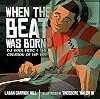
As I perused the shelves of the NOLA public library downtown, I stumbled upon what has to be the best picture storybook cover and title ever. A children's book dedicated to the story of Kool Herc and the roots of hip hop. Yes. Yes. Yes. The title is great, but the cover art is what really hooked me. An illustration of Kool Herc, needle in one hand and platter in the other, head crooked to the side, headphones on one ear, presumably matching or listening for a breakbeat. Beautiful. Seeing this added on to my experience with picture books over the course of this semester-they literally touch on every subject. The author, Laban Hill, has penned three other works that deal with African American cultural issues from slavery to the Harlem Renaissance. The book is graced by the artistry of Theodore Taylor III, who makes his picute book debut. The illustrations are really what sell the book to me. Each work covers two full pages, employing a warm color scheme that really works to draw you in. They follow the text closely but offer so much more than being supplemental visuals. Each are great works unto themselves, and I found myself getting lost in them before I read the text. They have great detail, and the characters bring the story to life with a bit more realist version of graffiti-style cartoons. The use of perspective is very pronounced, creating sharp angles that when viewed from a distance almost take the form of old-school block letters used in the early days of graffiti show more writing, and I can't help but think that this is the artist's intent. The text tells the story of Clive 'Kool Herc" Campbell and his contribution to the very roots of what ultimately came to be known as hip hop music. We're given a glimpse into Herc's life from his beginnings in Kingston to his teenage years and beyond in the Bronx. As a physically large kid who had basketball skills that he likened to Cool Clyde Frazier, the kids on the streets called him Cool Hercules, shortened down to Kool Herc. Outside of sports, Herc also loved music, and spent much of his time emulating the style of DJs that he was around as a child in Jamaica. Herc started doing house and block parties around the Bronx, and he found that the most dancing was done during the breaks of the songs, when the lyrics stopped and just the beats played through. What Herc began doing was to take two turntables and hook them together with a crossfader that would transfer the sound from one turntable to the other. He then took two copies of the same song, one on each table, and could play only the breaks on each record over and over without stopping the beat. Basic, elemental hip hop DJing. The roots of it all! His parties became the rage all over the Bronx and set the groundwork for what would become an entire music culture. Although the book tells a great story with great artwork, the significance lies in the fact that it tells the story of someone who all too often gets overlooked. As hip hop constantly evolves, the roots of the music get more and more blurred, and it's very easy to focus on rappers as the base of everything. They're the stars; it's their faces and voices that are remembered. However, no one would be rapping without the efforts and the sweat of the DJ, and Herc was the pioneer of pioneers. show less
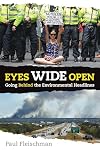
Paul Fleischman covers a wide range of environmental topics with his 2014 book Eyes Wide Open. Although the work was at times frustrating to read due to the barrage of information on every page, overall I enjoyed the book and could see myself using it in the classroom. The book's cover and endpages were very inviting for me, as they seemed to foster the notion that the book would address a range of issues, from physical effects of pollution to human responses. They're both very busy, particularly the cover with its array of colors, much like the structure of the book itself. The table of contents offered a glimpse into the somewhat erratic makeup of the book. It presented six chapters, each with subheadings, that initially don't seem like they would flow well together. I believed this due to how vague everything in the table of contents was worded. Very little seemed concise, and this worried me about the book's ultimate direction before I read the first page. As far as the wording, there's essentially nothing either descriptive or figurative. Ultimately, however, the book flowed with more coherently than I predicted, although there were plenty of rough patches.
The primary impediment for me was the amount of visual displays and information that basically induated every page. Photographs, definitions, illustrations, tables, diagrams, charts, graphs, sidebars, inserts, you name it were everywhere. The sheer amount was so overwhelming that I had no choice but to read show more everything inserted on the pages before I could read the text itself. Most of the information was interesting, relevant, and supplemental to the text; I just don't think there needed to be so much. All of the side info worked to create an effect where the book was easy to skim through for main ideas but was difficult to read word for word. I imagine there's as many words in all of the inserted pieces as there are in the text itself! I'm glad that all of the visual information was in black and white like the text, because if not it would have been just too overwhelming. Of all the visuals, I liked the photographs the most. They encompassed a good range and are graphic enough to press issues but weren't inappropriate for younger readers.
I read this book cover to cover, and many times I had to refer back to previous chapters to get a full understanding of a few issues. With everythng so jam-packed, I often referred to the index and found it very organized. It accessed both written and visual text and is very complete. The glossary was useful as well, shedding light on popular terminology as well as newer buzzwords that surround the issues of climate change. I think perhaps the most valuable part of the book was the section on weighing information. This is very critical skill for young readers to develop, and it's something that adults need to often refresh themselves on. If you're a bit older and have been keeping up with the issue of climate change at all over the years, I don't think there's a whole lot of new information that the book offers. However, this book isn't written for 'my' (the about-to-be forty peeps) age group. I think it's a great starting point for younger readers to engage in the many dynamics that encompass climate change. It's so so so important that students understand that although it may be a bitter pill for them to swallow, what's going on around us is real. It's science. show less
The primary impediment for me was the amount of visual displays and information that basically induated every page. Photographs, definitions, illustrations, tables, diagrams, charts, graphs, sidebars, inserts, you name it were everywhere. The sheer amount was so overwhelming that I had no choice but to read show more everything inserted on the pages before I could read the text itself. Most of the information was interesting, relevant, and supplemental to the text; I just don't think there needed to be so much. All of the side info worked to create an effect where the book was easy to skim through for main ideas but was difficult to read word for word. I imagine there's as many words in all of the inserted pieces as there are in the text itself! I'm glad that all of the visual information was in black and white like the text, because if not it would have been just too overwhelming. Of all the visuals, I liked the photographs the most. They encompassed a good range and are graphic enough to press issues but weren't inappropriate for younger readers.
I read this book cover to cover, and many times I had to refer back to previous chapters to get a full understanding of a few issues. With everythng so jam-packed, I often referred to the index and found it very organized. It accessed both written and visual text and is very complete. The glossary was useful as well, shedding light on popular terminology as well as newer buzzwords that surround the issues of climate change. I think perhaps the most valuable part of the book was the section on weighing information. This is very critical skill for young readers to develop, and it's something that adults need to often refresh themselves on. If you're a bit older and have been keeping up with the issue of climate change at all over the years, I don't think there's a whole lot of new information that the book offers. However, this book isn't written for 'my' (the about-to-be forty peeps) age group. I think it's a great starting point for younger readers to engage in the many dynamics that encompass climate change. It's so so so important that students understand that although it may be a bitter pill for them to swallow, what's going on around us is real. It's science. show less
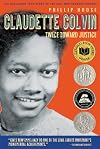
Phillip Hoose's award-winning biography of Claudette Coleman follows the life and times of a 1950's Alabama teen who chose to oppose segregation in the heart of the Deep South. The author hooked me with the first chapter and kept me engaged throughout with the narrative of Colvin's life, told from both Claudette's personal accounts as well as through a historical lens. Although the book centers on Colvin's life, particularly the years when she was actively challenging segregation in the court system, it also sheds light on the people and events surrounding the African American struggle for civil liberty. The bulk of events in the book take place essentially in one year, but the scope was far wider than such a short length of time. When I think back on the happenings in and around Montgomerey, I guess I never gave as much attention to particular years as I did to the decade as a whole. This said, it's amazing how much happened in such a short time. Hoose does a great job of touching on the multitude of events without losing focus on Colvin's story.
Structurally, the book follows a chronological order after the first chapter, beginning with Claudette's birth and ending with a conversation between her and the author in present time. The narrative structure made the book a great read for me personally, as it held my interest throughout. I really enjoyed the use of so many direct quotes, both recounted from cited works as well as from Colvin's interviews. The narrative show more becomes so rich with dialogue that at times it's easy to forget one is reading a work of nonfiction, for it takes on the essence of fictional prose. This was particularly true for me during the chapter that covered the Browdre v. Gayle case. The narration itself is clever as well, splitting time between first and third person. I've read other books, fiction and nonfiction alike, where this technique can muddy the text, but Hoose does a great job of intertwining the two while keeping clarity. Internally, there are examples of cause and effect structures, as the events of the book are based on multiple legal decisions and their respective ramifications.
The book makes good use of organization within its structure. Following a table of contents, the text is divided into two parts, each representing one of Colvin's chance for justice. Both parts have relevant chapters that follow, chronicling Colvin's life as well as events of the time in a clear, concise, logical pattern. Inserted information appears in both blocks and sidebars throughout the book, providing details on relative people, places, events and laws during the years of civil rights activism. An epilogue extends the story from1957 to the current time, told again in split narration. In the author's note and afterword, Hoose tells us of his inspiration as well as his struggle to make the book happen, mostly due to Colvin's secluded nature. It also has an interview with Colvin in which she talk about her life today. A well organized bibliography and index complete the text. show less
Structurally, the book follows a chronological order after the first chapter, beginning with Claudette's birth and ending with a conversation between her and the author in present time. The narrative structure made the book a great read for me personally, as it held my interest throughout. I really enjoyed the use of so many direct quotes, both recounted from cited works as well as from Colvin's interviews. The narrative show more becomes so rich with dialogue that at times it's easy to forget one is reading a work of nonfiction, for it takes on the essence of fictional prose. This was particularly true for me during the chapter that covered the Browdre v. Gayle case. The narration itself is clever as well, splitting time between first and third person. I've read other books, fiction and nonfiction alike, where this technique can muddy the text, but Hoose does a great job of intertwining the two while keeping clarity. Internally, there are examples of cause and effect structures, as the events of the book are based on multiple legal decisions and their respective ramifications.
The book makes good use of organization within its structure. Following a table of contents, the text is divided into two parts, each representing one of Colvin's chance for justice. Both parts have relevant chapters that follow, chronicling Colvin's life as well as events of the time in a clear, concise, logical pattern. Inserted information appears in both blocks and sidebars throughout the book, providing details on relative people, places, events and laws during the years of civil rights activism. An epilogue extends the story from1957 to the current time, told again in split narration. In the author's note and afterword, Hoose tells us of his inspiration as well as his struggle to make the book happen, mostly due to Colvin's secluded nature. It also has an interview with Colvin in which she talk about her life today. A well organized bibliography and index complete the text. show less
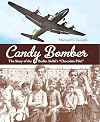
Candy Bomber is the heartwarming story of Lt. Gail 'Chocolate Pilot' Halverson's role as both aviator and humanitarian in the !948 Berlin airlift as told by Michael O. Tunnell. The book is in essence a biography of Halverson's life from his time in the USAF to the present, but it incorporates so many wonderful photos that it can almost double as a photographic essay. Tunnell explains in an author's note how he met Halverson by chance and was so inspired by the pilot's story and message that he set out to write a picture book about his life. Tunnell soon found out that a picture book had already been published, and decided instead to embark on a larger project with an abundance of photos that would still be geared towards a younger audience. The author begins with a brief summary of how Germany was divided into occupation zones following World War II and how Russia, wary of western influence on its zone, physically blockaded their areas so as to prohibit any Western intervention or assistance to the German people. With no way to get supplies into the Russian occupied area by land, the Allied forces took to the skies, dropping food and supplies from the air into East Berlin and the surrounding areas. One of the American pilots was Lt. Gail Halverson, a Utah farm boy. While on this mission, Halverson took to filming everything that he could with his 8 mm movie camera, especially the landing of planes on their makeshift runway. One day while filming, he encountered a group of show more children hanging out at the end of the runway and took time to listen to their stories of struggle, survival and hope. The children’s stories tugged at the pilot’s heart, offering him what he called, “the most meaningful lesson in freedom I ever had” (21). The only thing he had to offer the children other than the promise that he and his fellow pilots were there to help the German people, was a couple of pieces of gum. He gave them to the children and in awe watched them selflessly divide the tiny ration among themselves. In a moment of inspiration, he came up with the idea to drop some candy along with the usual supplies the next day. He told the kids that he would wiggle the plane’s wings to signify which one was him and would drop small parachutes of sweets. This simple gesture quickly became such a hit that the Air Force soon dubbed Halverson’s drops ‘Operation Little Vittles.’ Word spread around Europe and back to the states of the pilot’s deeds, and Halverson soon had schools and candy companies donating to the cause. Halverson became a hero to the German people and through the years received small gifts, tokens of thanks and letters of praise from those he helped. In January of 1949, Halverson was given a new assignment in Mobile and handed over control of his project to Willy Williams. Halverson stayed in touch with hundreds of the children he dropped candy to, who were now adults with children of their own. Halverson made return trips on certain anniversaries of the airlift, and even dropped candy to the children of Bosnia and Kosovo during their times of war. Halverson’s gift to humanity is priceless, and a quote of his sums it up best, ‘From little things come big things.’ This idea, like Halverson’s initial act, is so simple in nature but can mean so much. Although the book is intended for a younger audience, I think that readers of any age or level would enjoy it. The photographs are wonderful, not only in helping to tell the story but also in depicting just how ravaged Germany, especially Berlin, was once the war ended. Through the years I’ve read books and looked at photos that deal with the effects of the war on Europe, particularly England, but I don’t recall looking at many that show just how bad it was in Germany. I think this book has a place in not only history classrooms but in social studies as well. In thinking of the book as related to ELA, I think it could be effective in a unit that focused on both fiction and nonfiction texts in relation to a theme of humanitarianism. show less
Although the title of this book makes it sound like it could possibly be a book on writing an autobiography, it is actually an instructional how-to book that walks readers through the process of penning a biography. The book uses language and follows a structure that could be rather easily comprehended by most middle and high school ELA students. The purpose of the book is to engage its readers in the process of researching, planning, designing and writing a biographical work. The book uses a methodical, calculated approach to sequentially guide the reader through the writing process from getting started to searching for a potential publisher. At the bottom of each page is a color-coded bar that displays not only every step of the process but how far along the project's progress is. The bar is very helpful, as you can open to any page and know exactly where in the writing process that you are. It also makes it easy to locate information quickly. The text begins with an intro of how to use the book, explaining the key components of creating the biography as well as how to use the information contained in the various boxes and side bars. These include case studies, quotes and excerpts from published biographies, tips/techniques, and quick writing exercises. All of these boxes and bars can make the pages cluttered at times but not to the point where the reader loses direction. What I like most about this book is that it offers essentially a formula for putting the project show more together while offering plenty of creative freedom. Writing a biography can be a daunting task for anyone, let alone younger writers, and the text provides step-by-step instruction without making it a mindless effort. This book could be used to satisfy basically all of CCSS writing standards two (writing informative/explanatory texts to examine and convey complex ideas....) as well as the production and distribution standards and the research to build and present knowledge standards. show less
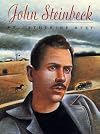
This book is a really good biography of the life and works of John Steinbeck, presented in a linear narrative from the author's birth to death. The book is divided into chapters that deal with particular times in his life as well as the work(s) produced during that time. The text also sheds light on how certain events of the time shaped Steinbeck's life as well as his writing. As the jacket of the book states, the biography "interweaves Steinbeck's experiences and excerpts from his writing, highlighting his skillful transformation of significant historical and social events into classics of American literature." The first chapter is the only one that is set out of chronological order, serving to foreshadow events, people and places that the author uses to help mold his stories. As a reporter for a San Francisco paper, he is sent to witness firsthand the suffering, deplorable living conditions, exploitation and discrimination that the the migrant farm workers are being subjected to. Steinbeck holds a special place in his heart for these people and returns to them time and time again to expose their stories through both his journalism and fiction. The next few chapters let us in on the author's younger days, from his youth in Salinas County through college. Somewhat of a quiet, shy kid and young adult, he was the son of parents who pushed him to read throughout his childhood and supported him in his writing. After finishing high school, he attended Stanford, set on being a show more writer for his career. After deciding college wasn't for him, he moved to NYC to work towards his career. The city had its ups and downs, and ultimately Steinbeck moved back to California. He took a job as a caretaker and basically isolated himself for two years, penning his first novel, Cup of Gold. From here, the book moves us along his life and works over the course of ten chapters. While it was a struggle for him to get published early on, Tortilla Flat made it big, and initiated the writing of his bigger known novels like Grapes of Wrath and East of Eden. Through it all, Steinbeck never lost his love for the poor, the struggling, the afflicted, the beaten down, and his genuine love for humanity shines through in all of his works. Though he was hated by many during his time and considered a communist sympathizer, all Steinbeck ever did was expose the nasty sides that many didn't want to be seen and others simply didn't want to see. I believe the author himself sums it up best with one of my favorite quotes, "A writer who does not passionately believe in the perfectability of man has no dedication nor any membership in literature." Throughout the book are loads of great black and white photos of both Steinbeck and friends/family as well as ones depicting the times, from rural farming towns to WWII Europe. The bulk of the photos were classics taken by Dorothea Lange for the Farm Security Administration. I think this book would be a wonderful way to introduce certain works of Steinbeck prior to reading them in class. The chapters give great historical and cultural context as they relate to the works and could really spark student interest not only in the literature but the times as well. I also like the language and voice that the author uses, as it can communicate to a wide range of reading ages. I think Steinbeck's works are great for high school kids, and Catherine Reef nails it when she says, "Steinbeck appeals to young readers because he shows that it is possible to enter adulthood yet never lose the idealism, courage and natural humor of youth." show less
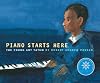
This Caldecott Honor Winner picture book is an autobiographical account of jazz legend Art Tatum. The author, also a jazz musician, both wrote and narrated the book. The book takes us from Tatum's childhood in Toledo to success in the local cafes, bars and radio stations to international stardom. As big as Tatum was in his day and as much has his music has persevered through the years, he always seems to me to be one of the lesser known jazz giants. With that said, people often don't know that he was born with terribly limited vision which only worsened throughout his life. The book tells us how Tatum never let this bring him down at any time in his life. If anything, he sharpened his other senses around this, especially his auditory. Tatum was known to be able to masterfully play basically anything that he heard. Everything I've ever read about Tatum, including this picture book, always tells of what a kind, generous, great human being that he was, and his friends and family always supported him in everything that he did. For me, this book tells more than just the story of Tatum's life. It speaks on qualities like humility (even with giant success), perseverance, and achieving your dreams no matter what. I think that it would also be a good way to introduce autobiographies to students. The illustrations are as great as the text. All of the pictures are a style that I really like, where watercolor is used as a sort of base for figures and then ink is used to outline and show more fill in the images to provide detail. It's exactly what I love about jazz-fuzzy, at times blurry improvisation accompanied by more finite structure, creating that beautiful offset balance. show less
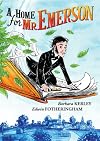
This work takes a biographical look at the life of Ralph Waldo Emerson. I really liked this book a lot, as it took a part of Emerson's life which I knew very little about, his yearning from childhood into old age for a place that he could call home. The book is basically divided into two parts, both of which deal with Emerson's search. The first half is not only a physical quest but a spiritual one as well, and the second half is a longing for his old home after it is destroyed by fire. We learn from our third-person narrator that as a young boy and into his college years Emerson longed to get away from the busy streets of Boston and into the country where he could be closer to nature, in "a place he could make his own." After settling in Concord, he was able to relish in nature, books, a new family, writing, friends and what would ultimately be transcendentalism. As good as things were, tragedy struck, and he lost his home to a fire. This nearly broke him spiritually, to the point where he considered himself "an invalid." His friends in Concord agreed that the best remedy would be to send him across the pond for a while, and Emerson spend times in England, Egypt and Italy, and the journey seemed to help. He still missed his home, however, and couldn't wait to return to Concord. What a homecoming he had! His friends and family had rebuilt his cherished home. I often fall guilty to the idea that a biographic book is always going to be one that gives general summations of a show more person's life, works, achievements, etc, but that's so far from the truth. The fact that none of Emerson's works were discussed and his movement was never talked about wasn't what I expected, but it was quite satisfying nonetheless. Throughout the book, quotes from different Emerson writings are worked into the text with relative ease, never making things choppy at all. The front and back inside covers are littered with quotes as well. Ultimately I think this book could best be used to introduce biographies. It does a great job of showing how biographies can focus on an interesting aspect of someone's life who many make think is otherwise boring. The book's illustrations, like the book itself, are physically large and full of color. They're quite cartoonish in nature but achieve in following the text quite literally. Of all the biography type books I've read to my 20 month daughter, this is by far her favorite. I think the size and the vibrant colors make the difference. After reading this book, we try to get outside, stray away from the concrete and into the little grass we have, appreciate nature and eat apples. show less
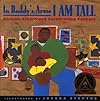
I enjoyed reading the collected poetry in this book, but in the end I thought it was a bit flat. I can't really put my finger on anything in particular, other than the selections at time just seemed to be rather uninspired. I wasn't very familiar with many of the book's poets, so it was a good reading experience for me personally. I do like the way that the poets were selected from different generations, adding both to the timelessness and significance of fathers playing roles in their children's lives. The basic composition of the book is two pages of art with a poem on one of the pages. Other than two poems, the works are written in free verse. The poems themselves are all works that I enjoyed reading, but there doesn't seem to be any kind of flow from one to the next-it's the type of book that I'd rather open and read random pages than read front to back. The artwork, on the other hand, is great. Most of the art is collage-type work that is created with multiple forms of media. With each poem, the art seems to depict both literal and implied meanings. As the inside sleeve states, the art (which is the artist's first picture book!) uses "an inventive range of media," and I think it coincides nicely with the range of poets and works chosen. This book could work well in lessons or units covering African American poetry. I think the strength of this book is that the works can be read by a wide range of ages. Another is that it touches on social and cultural issues, show more particularly one that is of huge importance in the African American community. show less
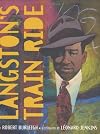
This wonderful picture book recounts a journey taken by Hughes that inspired him to pen "The Negro Speaks of Rivers." It's also on this train ride that Hughes begins to believe in himself as a poet who is able to "sing his America as the other great poets have sung theirs." The book is written with Hughes as its narrator, and it opens with the poet strolling through a vibrant Harlem on his way to a party to celebrate the release of his first book of poems. Exuding confidence, happiness and success, Hughes thinks back to earlier days and an unforgettable train ride. The story flashes back years to a trip Hughes took to Mexico to visit his father. As the sun sets that first day, the train is crossing the Mississippi River, and Hughes becomes deeply inspired, "feeling more awake than ever before." The sight sparks images not only of the Mississippi but of African rivers as well, and the poet reflects on how these rivers all contribute, for better or for worse, to the African as well as the African American experience. Hughes writes the poem quickly, seemingly with ease, and tucks it away in his pocket. The story then comes back to the release party, and Hughes reads the poem to the crowd. After the story ends, the poem in its entirety covers three pages of beautiful art. As great as the story itself is, I think the artwork is even better. As much of the story takes place on the train, there are many images of what the poet is watching through the window. The colorful scenes show more and landscapes are depicted beautifully, mostly with a cool color scheme with lots of blues and yellows. Warm tones are basically only used when the train crosses the river. I think this masterfully follows the text as well as the feel that I associate with the Harlem Renaissance not only in poetry but in music as well. Another excellent part of the artwork is that the poet's reflection is worked into virtually every image, sometimes obvious, sometimes very subtly. This seems to nurture the idea that the trip was not only a time of inspiration for Hughes but a time of finding himself, as well. I think this book would be an excellent piece to read while studying not only the works of Langston Hughes but the Harlem Renaissance holistically. The book could also be read over some early Duke Ellington, tying the writing of the time with the jazz being played. Transcending poetry, however, the book touches on two life lessons. One is that you have to believe that you're good enough, no matter what course you're on. The second, one that I always both practice and preach, is that inspiration can come from anywhere at any time. When you become inspired spontaneously, act on it. This is a great lesson for all artists, but I think it especially pertains to writing. show less
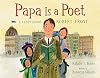
Papa is a Poet is a picture book that gives a brief history of Robert Frost's life. The story is told from the perspective of Lesley, Frost's oldest daughter, and is an account of their lives before Frost's works were published. The story begins with the family returning to New York from England, and upon their arrival they see a review of Frost's poetry in "The New Republic." Bewildered as to what is going on, Frost tells the family to hang out at Grand Central Station while he walks down to his publisher's office. At this point the book flashes back fifteen or so years, and Lesley reminisces on their lives leading up to this special point in time. We learn of simple times on a New Hampshire poultry farm, home schooling, and the family's fondness of reading. Lesley tells us how her father instilled in them a love of literature, poetry and writing. Imagine having Robert Frost as your personal at-home English teacher! We also take in how Frost manages his time as a farmer, maximizing his opportunities to be alone, to think and to write poetry. Although life seemed very "ordinary but meaningful," Frost longed for a place where he would be able to write freely without the scrutiny and prejudices of New Hampshire, and off to England they went. The book comes to a close as it flashes back to the station, and the family learns that Frost will finally be published and paid for his works. Throughout the book, lines from a number of Frost's works are interjected into the text. show more These lines don't detract from the story being told, and they never seem forced in any way. Instead, they provide a rather organic flow, and they make it easy to remember the nature of simplicity that so many of his works embody. The final excerpt is from "The Road Not Taken," and it seems a fitting summation of the book's lesson: trust your feelings and take the meaningful path, even if it isn't necessarily the easiest. The illustrations are quite literal in relation to the text, and they are drawn and painted rather simply. To me, they work well with the text in a manner that isn't too visually vivid or overwhelming, especially the way that the watercolor is used. At the end of the book is a short biography of Frost penned by the author, followed by quotations and full versions of the poems that were quoted in the story. I took time to read these works in their entirety, and this was very refreshing for me as I haven't sat and read Frost for years. I think the book would be ideal to use as an introduction to Frost's work, as it provides an interesting biographical take. Too often we know of authors' achievements without understanding the struggle and strife it takes to get there. show less