Shark Drunk: The Art of Catching a Large Shark from a Tiny Rubber Dinghy in a Big Ocean by Morten Stroksnes
In a rubber dinghy off a small island at the top of the world sit two men gazing into the deep. Part friendship tale, part fishing adventure into the frozen North, Shark Drunk examines our relationship with the sea--from poets to painters to scientists to fishermen. Strokes fluently blends the brutally honest with the lyrically picturesque. This book is more human than two mere men; more intoxicating than one shark.

My guilty pleasure/brain-blank read is pulpy, doorstop horror that doesn't skimp on the gore. What's more pulpy than Cold-War-era-vampire-spy-vs-dimension-hopping-zombie-spy? Nothing, that's what. Definitely tripping down to my local used bookstore to pick up the next Necroscope book.
What evidence can there be after a trauma? Bodies carry the evidence. Gay's prose style is clipped and curt. She holds the reader at a defensive distance--keeps her own story close, revealing the facts of her trauma at her own pace as the growing fact of her body outpaces her control. This story does not have a happy ending. This story does not have an ending. And I am grateful. I am hungry for Roxane Gay, and any story that she continues to tell, especially her own.
Guinn's approach to this history of Rev. Jim Jones and the People's Temple displays compassion for the Temple's followers; but is highly critical of Jones himself. The compassion is most apparent in the absence of the word "cult" anywhere in this book. Guinn's mission is to impart the value in critically analyzing our demagogues in order to recognize them as they arise and keep each other safe from them. Jones was one of the most dangerous demagogues because he appealed to the best in human nature--that people want to be good, more than they want to be rich and powerful. A former follower, looking back on the Temple's mission claims, "we failed, but we tried." The truth is that his people didn't fail: Jones failed his people.
Imagine the whole of nothingness. What it means. Its weight. Nothing encompasses everything because it is everything that everything is not. An interrogator tells the narrator, "I can no longer imagine your suffering to be greater than mine."
Now imagine sympathy. The effort and ability it takes to truly sympathize in the face of nothingness. Nothing calls one to be sympathetic. "I can no longer imagine your suffering to be greater than mine." In this you have the most human of stories.
I don't know why it took me so long to read The Sympathizer, (I have one of the first galleys that Grove/Atlantic sent to bookstores--I held onto it for years) but my book club is reading The Refugees later this month, so I decided to pick up the book-I've-been-meaning-to-read-but-haven't-gotten-around-to-it. I'm still stirring this complex, messy, darkly sardonic book in my brain.
Now imagine sympathy. The effort and ability it takes to truly sympathize in the face of nothingness. Nothing calls one to be sympathetic. "I can no longer imagine your suffering to be greater than mine." In this you have the most human of stories.
I don't know why it took me so long to read The Sympathizer, (I have one of the first galleys that Grove/Atlantic sent to bookstores--I held onto it for years) but my book club is reading The Refugees later this month, so I decided to pick up the book-I've-been-meaning-to-read-but-haven't-gotten-around-to-it. I'm still stirring this complex, messy, darkly sardonic book in my brain.
Vronsky’s thesis to counter the public perception that women can’t be aggressive killers. An interesting premise, but his lack of compassion does give me pause. Do I think women can be just as aggressive as men? Absolutely, but Vronsky doesn’t exactly address the “how” and the “why” in his title. He is more interested in categorizing the killers than exploring the individual psychology of his title.
I love Shirley Jackson. Consistent with shared American school experience, my first introduction to Jackson was "The Lottery" on my school reading list. Unfortunately, I might have been in a "white British writer canon" phase (ugh. I've given myself all the requisite lectures, trust me.) which led me to push Jackson off the radar. Years later, I married a film snob obsessed with The Haunting, which led me back to Jackson. (He hosts a book/film club, and I always push hard for a discussion of The Haunting of Hill House and viewing of the film.) This collection of 50 plus previously unpublished pieces--some of which are unfinished--showcase the drastically different modes of writing from her tall tales of small-town psychology to comic family tableau to line drawings that deliver to the reader a searing view into Jackson's vulnerability as a writer, mother, and wife. Jackson weaves a spell from your nightstand. Just as she intended.
The Private Memoirs and Confessions of a Justified Sinner (New York Review Books Classics) by James Hogg
Hogg's darkly comic moralistic tale is unjustifiably obscure. The elegantly crafted 19th century tale of a rich young man who justifies his violent tendencies through both the doctrine of predestination and the influence of a nameless stranger. He is an amoral sinner, building his repertoire up to murder as soon as he is declared saved by his reverend adoptive father. Hogg's sophisticated prose offers a classic dark tale of temptation by an external devil as well as a modern psychological (internal sublimation) reading. The story is wholly microscopic of 19th century Scotland, but wholly timeless and universal.
This is a pretty important book for a cisgendered heterosexual woman.
For everyone else...not so much.
The entire architecture of the book hinges on belief in the myth of binary gender. The second edition of the book has an updated chapter addressing the erasure of transgender people in the original edition. But it is apparent that Muscio isn't available to provide the measure of advice and resources for transgender women as she is for cisgender women. I recommend it, but think critically about what might be missing in messages of empowerment.
For everyone else...not so much.
The entire architecture of the book hinges on belief in the myth of binary gender. The second edition of the book has an updated chapter addressing the erasure of transgender people in the original edition. But it is apparent that Muscio isn't available to provide the measure of advice and resources for transgender women as she is for cisgender women. I recommend it, but think critically about what might be missing in messages of empowerment.
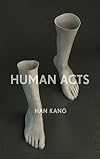
Readers of Han Kang's English debut The Vegetarian might not be surprised to discover that her second English language translation, Human Acts, begins with a pile of bodies. Westerners are not usually familiar with the economic and political conditions which led to the Gwangju Uprising in South Korea in 1980, but the thing about the emotional truths behind human acts is that they are often disturbing, heartrending, senseless, and so very familiar. Kang seeks not to inform, but to awaken that which we instinctively recognize and draw close--the fact of our shared humanity. The various fictional voices--a student, a factory girl, a prisoner, a dead child's mother--represent the threads that bind trauma to memory and give birth to a history.
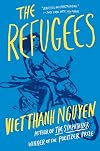
Refugees have existed as long as people have formed communities of "insiders" and "outsiders" and created conflict. By their very nature, refugee stories--huge swaths of history--don't get recorded. So every time we see a heavy period of refugee activity, we have to redefine the word "refugee." This is almost Nguyen's life's work. He explores all the different ways in which people can be physical, global, economic, political, emotional, and spiritual refugees. Thoughts characters have in one story form the theme of another story. These stories are absolutely essential to defining "refugee" in our cultural lexicon.

Jesus Christ meets Alexander Delarge as told through the Gospel of Judas. Motorcycle gangs tear through midnight Seoul and fight with cops for the right to monopolize violence. Kim remains a maestro of graceful darkness.
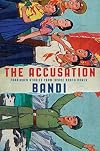
I cannot overstate the importance of The Accusation by Bandi. It is possible that this is the most noteworthy work to be published this year. This is a FIRST in literary history: the first piece of dissident literary fiction to come from a writer currently living inside North Korea. Written between 1989 and 1995 (during the last years of Kim Il-sung's life and the beginning of The Arduous March)--never meant to be seen by any eyes in the author's homeland besides his own--these six stories and a poem, highlight the everyday lives of the people--from all stations--who live under these oppressive regimes. While here in the West, we've heard these kinds of stories from defectors, we have no idea what the literary tradition in North Korea looks like outside of propaganda novels, memoirs, and poetry. We simply don't know how North Korean writers craft stories, establish themes, develop characters; we don't know what are popular genres. And it is possible we may never read another word from Bandi after this. And so Deborah Smith proves once again that she is a champion translator, talented and compassionate, able to interpret the author's intent while simultaneously weaving the narratives that are compelling to Western readers. With the ability to perform such a weighty task as this one--with what is possibly someone's life's work--I would not be surprised if she won another award this year. I think this is a Nobel Prize-worthy work.
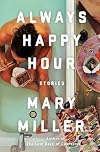
If Mary Miller’s last novel The Last Days of California was a love letter to adolescence, her latest work is a series of love letters to arrested development--letters never sent, pushed to the back of the desk drawer--unread, but not forgotten.
This dark satire strikes to the heart current political horror in aptly invoking the chaos of post-fascist Italy--where inexplicable violence from an unstoppable apotheon bulldozes the bodies of citizens; a "Library" eerily divines the 21st century Internet, shared anxiety and individual secret activity breeds a shared psychotic insomnia described in images of "drying out" and mountainous filth.
Medicine is like faith, "a collection of interpretations...rife with conflict." Doctors interpret data and apply those interpretations to wholly unique circumstances. In this way medicine is an applied science, of a sort. Elizabeth L. Silver, with precision of language and fullness of thought, chronicles the years she spent inhabiting the uncertain spaces between treatment and trust in this open memoir that tears a heart in two, then mends it to the beating hearts of humanity.
I read this in one sitting. Arimah's characters seethe with internalized violence they sublimate through storytelling, the same violence that eventually extinguishes the fire of girls as god, their mothers, and society mold them into proper young women. Complete with dashes of magical realism and steeped in lore.
Riverhead has 2017 locked down.
Riverhead has 2017 locked down.
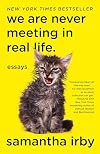
I want to hug Sam, but will settle for a respectful fist-bump if joint issues are a thing. I want to start an Introvert-Chronic-Pain-Suffering-Self-Deprecating-Funny-Ladies Club whose membership consists of just me and Sam. In keeping with the thematic title of the book, our club holds no meetings.
Albert Camus's THE STRANGER meets Billy Wilder's LOST WEEKEND from a 19th century brig to a Salem, Massachusetts jail.
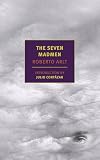
A group of criminals, sociopaths, and man-babies, inspired by the KKK, decide to take over the Argentinian government using false propaganda, replacing the government with industry-based society that is run by slave labor and forced prostitution. A brutal absurdist tale whose characters recognize that those they are following are madmen, but follow them anyway. This fever dream of an early 20th century mind eerily prescient of 2016 America.
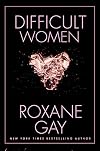
This is more than a book about difficult women. These are stories about how difficult situations transform ordinary women. These women are our friends, neighbors, sisters, ourselves. These stories are, of course, difficult to read, but necessary to understand how women deal with and internalize pain. How that pain doesn't destroy, but transforms--and leads women to seek out their own destruction. I've added this to my library of "The Complex Inner Lives of Women." Recommended if you enjoyed Han Kang's THE VEGETARIAN
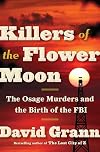
"The richest people per capita in the world were becoming the most murdered."
True crime aficionados will be gripped by this 1920s semi-cold case involving a tribe of oil-wealthy Osage Indians; corrupt oil barons, bankers, police, and local officials; bootlegging gangs; and a death toll of over twenty-four. Nearly a century later, Grann revisits old information with a fresh perspective and uncovers new evidence that points to dozens more murders, revealing that prejudice toward American Indians decimated a people and soaked their tribal land in blood.
As in The Lost City of Z, Grann focuses his investigative lens on an old mystery, not necessarily to seek justice, but for a true account to be recorded for history.
True crime aficionados will be gripped by this 1920s semi-cold case involving a tribe of oil-wealthy Osage Indians; corrupt oil barons, bankers, police, and local officials; bootlegging gangs; and a death toll of over twenty-four. Nearly a century later, Grann revisits old information with a fresh perspective and uncovers new evidence that points to dozens more murders, revealing that prejudice toward American Indians decimated a people and soaked their tribal land in blood.
As in The Lost City of Z, Grann focuses his investigative lens on an old mystery, not necessarily to seek justice, but for a true account to be recorded for history.
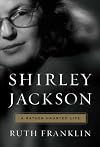
“No live organism can continue for long to exist sanely under conditions of absolute reality.” While that sounds like a perfect description of 2016, it is in fact the opening line of The Haunting of Hill House, Shirley Jackson’s 1959 National Book Award Finalist. For over half a century, Jackson not only delighted us, and terrified us, (mostly because she delighted in what she feared), but she also made us empathize with intelligent women trapped in domesticity. Through her autobiographical essays and fiction, Jackson tilted the perspective of suburban domestic life into the light and into the darkness. Ruth Franklin, with access to previously undiscovered correspondence, writes a compassionate look into the life and work of an American icon who could strike to the heart of loneliness.
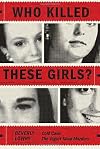
Examining this unsolved murder, Lowry goes into detail about what we know versus what we thought we knew. No one really knows exactly what happened in the 40-something minutes between the 11 o’clock closing time to the first report of fire at 11:48. In a masterful stroke, Lowry’s storytelling lets the mind do what it naturally wants to: fill in the narrative gaps. I have a great admiration for people who write about unsolved cases. At the heart of this narrative is the suspicion that professional pride hindered the investigation and is potentially keeping a dangerous killer at large to this day. From the slain young girls to the defendants and suspects, victims included everybody who counts on a functional criminal justice system. “Who killed these girls?” is only the first of the unanswered questions about this case. But until we can definitively answer the “who,” there is no possible way there will ever be an answer to ultimately more challenging “why.”
A Really Good Day: How Microdosing Made a Mega Difference in My Mood, My Marriage, and My Life by Ayelet Waldman
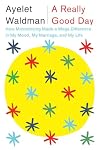
Ayelet Waldman is a middle-aged mother of four, former public defender and current writer--not the type of person who you’d think would partake in regular dosing of LSD. In fact, the most mundane middle class reasons (perimenopausal mood swings and chronic pain) lead Waldman to undertake a journey of becoming a “psychedelic researcher”--one who self-experiments on subperceptual microdosing of hallucinogenic drugs. She also administers microdoses of medical history which leads to a call for rejecting the current narrative that’s been the decades-long directive of the War on Drugs and to start asking the right questions: what treatments for psychological distress are we missing by banning research on psychedelics? Is the war on drugs more harmful than helpful? This little book is an optimistic revolution of consciousness and perception.
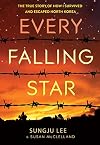
For anyone who loves a teenage underdog fighting for survival against a dystopian landscape, this guy actually lived it! Love and protection turns into loss turns into resilience turns into hope. Sungju Lee shares the same hope of every fictional dystopian hero: our world can be a better place.
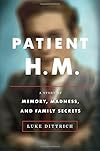
This is not a medical text illuminating the secrets of the brain; it is an expose of ethics in human experimentation on mental health and epilepsy patients in the middle of the 20th century. The personal story of Dittrich’s grandfather tends to get buried under the history of brain research, which is informative, if not the promise made by the author.
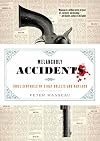
First, I can only imagine the research Manseau had to undertake in order to locate newspaper clippings of accidental deaths by gunshot among all the news of intentional homicide. Give the man a research award (and probably a drink). Additionally, get all his archivists and research assistants drinks as well. Second, as a gun control advocate who lives in the middle of gun country Texas, I will happily hand over this book to anyone who casually begins the motto, “Guns don’t kill people…”Don’t tell me guns don’t kill people, here is 300 years of printed record–not counting the last 100 years–that says they do.
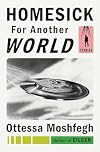
First the novel Eileen, and now the collection Homesick for Another World, Ottessa Moshfegh’s fiction cleanses your soul of attachments by salting your brain. These tales are for people who walk the tightrope just this side of sociopathy. These stories have a dark heartbeat--the one you feel pounding deep in your ears when you’re under pressure. And there is no more perfect story to end a collection called Homesick for Another World than “A Better Place.”