
I recently rediscovered an old friend. I hadn’t seen her for over thirty years, but I recognised her instantly. Her name is Sara Dane, and with more than 2 million copies sold, she became the most acclaimed novel of 20 authored by Catherine Gaskin (1929 – 2009). Needless to say, our friendship had stood the test of time, and our meeting again resulted in another reading of this very memorable book.
The novel, Sara Dane is a romance (historical), published in 1954. It’s the story about a young convict woman, sentenced to transportation to Port Jackson, in 1792 (for nothing more than would be considered a child’s prank in modern times) and the hardships she endures in overcoming the stigma of her conviction, before rising to a position of wealth and prominence among the citizens of early New South Wales.
This book appealed to me for several reasons back in the 1980’s; it was most likely the very first novel (fiction) I had ever read on British settlement in Australia, and as an Australian, why I found it especially interesting. It also appealed to me because Sara Dane is an unforgettable character with a great deal of backbone, unlike many heroines in earlier romance novels.
However, the reason I consider the novel Sara Dane to be an old friend, is quite frankly because the author Catherine Gaskin is such a wonderful story teller. Well written stories aren’t easily forgotten, and the memories of them often remain in both a readers mind and heart. It wasn’t at all show more surprising after reading Sara Dane to learn that many of Catherine Gaskins novels became best sellers, and earned her such titles as ‘the girl with the golden pen’ and ‘the queen of storytellers’.
~
Sara Dane by Catherine Gaskin (Back Cover):-
A wild cacophony of screams and shrieks issued from the dark hold where a maniacal group of women rolled together in a frenzied struggle.
Lieutenant Andrew Maclay could see that one of them, almost hidden beneath the others, was fighting alone. ‘Silence!’ Andrew roared. The mob slowly quietened. ‘Is there a woman here called Sara Dane?’ he asked.
The lone fighter struggled to her feet. Slim and straight, the skin of her throat and face was unlined, but the dirt of the stinking hold covered whatever beauty she might have possessed. She wore a hacked and tattered gown many sizes too large; but she wore it with an air of cherished grandeur. She lifted her head proudly.
‘I am Sara Dane,’ she said.
~
A list of Catherine Gaskin’s novels:-
This Other Eden (1947)
Dust in Sunlight (1950)
All Else is Folly (1951)
Daughter of the House (1952)
Sara Dane (1954)
Blake’s Reach (1958)
Corporation Wife (1960)
I Know My Love (1962)
The Tilsit Inheritance (1963)
The File On Devlin (1965)
Edge of Glass (1967)
Fiona (1970)
A Falcon For A Queen (1972)
The Property of a Gentleman (1974)
The Lynmara Legacy (1975)
The Summer of the Spanish Woman (1977)
Family Affairs (1980)
Promises (1982)
The Ambassador’s Women (1985)
The Charmed Circle (1988)
J M Lennox show less
The novel, Sara Dane is a romance (historical), published in 1954. It’s the story about a young convict woman, sentenced to transportation to Port Jackson, in 1792 (for nothing more than would be considered a child’s prank in modern times) and the hardships she endures in overcoming the stigma of her conviction, before rising to a position of wealth and prominence among the citizens of early New South Wales.
This book appealed to me for several reasons back in the 1980’s; it was most likely the very first novel (fiction) I had ever read on British settlement in Australia, and as an Australian, why I found it especially interesting. It also appealed to me because Sara Dane is an unforgettable character with a great deal of backbone, unlike many heroines in earlier romance novels.
However, the reason I consider the novel Sara Dane to be an old friend, is quite frankly because the author Catherine Gaskin is such a wonderful story teller. Well written stories aren’t easily forgotten, and the memories of them often remain in both a readers mind and heart. It wasn’t at all show more surprising after reading Sara Dane to learn that many of Catherine Gaskins novels became best sellers, and earned her such titles as ‘the girl with the golden pen’ and ‘the queen of storytellers’.
~
Sara Dane by Catherine Gaskin (Back Cover):-
A wild cacophony of screams and shrieks issued from the dark hold where a maniacal group of women rolled together in a frenzied struggle.
Lieutenant Andrew Maclay could see that one of them, almost hidden beneath the others, was fighting alone. ‘Silence!’ Andrew roared. The mob slowly quietened. ‘Is there a woman here called Sara Dane?’ he asked.
The lone fighter struggled to her feet. Slim and straight, the skin of her throat and face was unlined, but the dirt of the stinking hold covered whatever beauty she might have possessed. She wore a hacked and tattered gown many sizes too large; but she wore it with an air of cherished grandeur. She lifted her head proudly.
‘I am Sara Dane,’ she said.
~
A list of Catherine Gaskin’s novels:-
This Other Eden (1947)
Dust in Sunlight (1950)
All Else is Folly (1951)
Daughter of the House (1952)
Sara Dane (1954)
Blake’s Reach (1958)
Corporation Wife (1960)
I Know My Love (1962)
The Tilsit Inheritance (1963)
The File On Devlin (1965)
Edge of Glass (1967)
Fiona (1970)
A Falcon For A Queen (1972)
The Property of a Gentleman (1974)
The Lynmara Legacy (1975)
The Summer of the Spanish Woman (1977)
Family Affairs (1980)
Promises (1982)
The Ambassador’s Women (1985)
The Charmed Circle (1988)
J M Lennox show less
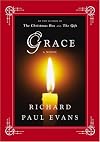
When the quiet of the night descends upon the house, and it’s time to rest the body, but the mind is wide awake – I like to read. I wasn’t to know when I recently picked up, ‘Grace’ from the bookshelf, that it would indeed grace not only the late hours, but the early hours as well.
‘Grace’, by Richard Paul Evans, may not be the most well known novel of this internationally acclaimed best author, but it is one that I believe is truly worthy of notice. It was first published October 2008 by Simon & Schuster, and has recently been awarded the German Audience Book Award (Mein Winter mit Grace).
In the author’s words: - ‘In some ways this is the most autobiographical of all my novels’.
Grace is the story of a young runaway girl, and the boy who hides her from a frightening world too large and unfathomable for him to comprehend. It is also about two brothers and the love that binds them together through difficult times.
Excerpts from ‘Grace’:
~
She was my first kiss. My first love. She was a little match girl who could see the future in the flame of a candle. She was a runaway who taught me more about life than anyone has before or since. And when she was gone, my innocence left with her.
As I begin to write, a part of me feels as if I am awakening something best left dead and buried, or at least buried. We can bury the past, but it never really dies. The experience of that winter has grown on my soul like ivy climbing the outside of a home, growing until it show more begins to tear and tug at the brick and mortar.
I pray I can still get the story right. My memory, like my eyesight, has waned with age. Still, there are things that become clearer to me as I grow older. This much I know: too many things were kept secret in those days. Things that never should have been hidden. And things that should have.
~
‘Grace’ is a touching story, one based in-part on the author’s personal experience, but also a story that reminds us that the ramifications of the choices we make in life can have a huge bearing in our own lives and the lives of others, for ever.
J M Lennox show less
‘Grace’, by Richard Paul Evans, may not be the most well known novel of this internationally acclaimed best author, but it is one that I believe is truly worthy of notice. It was first published October 2008 by Simon & Schuster, and has recently been awarded the German Audience Book Award (Mein Winter mit Grace).
In the author’s words: - ‘In some ways this is the most autobiographical of all my novels’.
Grace is the story of a young runaway girl, and the boy who hides her from a frightening world too large and unfathomable for him to comprehend. It is also about two brothers and the love that binds them together through difficult times.
Excerpts from ‘Grace’:
~
She was my first kiss. My first love. She was a little match girl who could see the future in the flame of a candle. She was a runaway who taught me more about life than anyone has before or since. And when she was gone, my innocence left with her.
As I begin to write, a part of me feels as if I am awakening something best left dead and buried, or at least buried. We can bury the past, but it never really dies. The experience of that winter has grown on my soul like ivy climbing the outside of a home, growing until it show more begins to tear and tug at the brick and mortar.
I pray I can still get the story right. My memory, like my eyesight, has waned with age. Still, there are things that become clearer to me as I grow older. This much I know: too many things were kept secret in those days. Things that never should have been hidden. And things that should have.
~
‘Grace’ is a touching story, one based in-part on the author’s personal experience, but also a story that reminds us that the ramifications of the choices we make in life can have a huge bearing in our own lives and the lives of others, for ever.
J M Lennox show less
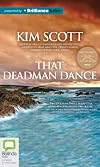
That Deadman Dance by Kim Scott is the book that many readers (and Australians in particular) have been waiting for, perhaps without even realising it. Many authors have attempted to describe early settlement in Australia, but their efforts remain primarily from the European perspective. Scott, on the other hand, as the son of an Aboriginal father and English mother, was able to authentically deliver from both perspectives.
Kim Scott is no stranger to fame. He is the first indigenous Australian author to ever win the Miles Franklin Award; the most prestigious Australian literary award, and not only once, but – twice. Benang: From the Heart was the first of Scott’s books to win the Miles Franklin Award along with the Western Australia Premier’s Books Award, in 2000.
Commentary for That Deadman Dance, by the Judging Panel, 2011 Miles Franklin Award:-
'A powerful and innovative fiction that shifts our sense of what an historical novel can achieve. ... That Deadman Dance tells the story of the rapid destruction of Noongar people and their traditions. At the same time, there is the enchanting possibility of the birth of a new world in the strange song, dance, ceremony and language that are produced by these encounters of very different peoples’.
Along with the Miles Franklin Award 2011, That Deadman Dance was also awarded:-
• the Australian Literary Society Gold Medal
• the Regional Commonwealth Literary Prize for Best Book
It was also shortlisted for the show more following:-
• the Prime Minister’s Literary Award for Fiction
• the WA Premier’s Book Award for Fiction
• and the Book Industry Award for Best Novel
While That Deadman Dance is a work of fiction, it was inspired by the authors (Noongar) ancestry and the history of the area in which he lives (Albany, Western Australia), which is also the setting of the book. Set in the first two decades of the nineteenth century, it is not only a story of early contact between indigenous Australians and European settlers, in that area of Western Australia, but it is a story told in the form of beautiful prose, through the character of a small Aboriginal boy, Bobby Wabalanginy.
The book is totally unique in its style and content. Bobby takes the reader on a journey of discovery into the way of life of the original inhabitants of Australia at the time of settlement; an edifying and thought provoking journey, which had history not dictated otherwise, could have given the reader even the smallest semblance of hope that the new arrivals would attempt to understand the way of Bobby’s people; their respect for the land, and their willingness to share it.
My favourite parts:-
‘Because you need to be inside the sound and the spirit of it, to live here properly. And how can that be, without we people who have been here for all time?’
‘We thought making friends was the best thing. We learned your words and songs and stories, [but] you didn't want to hear ours.’
Congratulations to Kim Scott for winning the 2011 Miles Franklin Award for That Deadman Dance, but more importantly I believe, for creating a piece of literature that not only has great historical value, but untold significance to all those seeking understanding and healing.
J M Lennox show less
Kim Scott is no stranger to fame. He is the first indigenous Australian author to ever win the Miles Franklin Award; the most prestigious Australian literary award, and not only once, but – twice. Benang: From the Heart was the first of Scott’s books to win the Miles Franklin Award along with the Western Australia Premier’s Books Award, in 2000.
Commentary for That Deadman Dance, by the Judging Panel, 2011 Miles Franklin Award:-
'A powerful and innovative fiction that shifts our sense of what an historical novel can achieve. ... That Deadman Dance tells the story of the rapid destruction of Noongar people and their traditions. At the same time, there is the enchanting possibility of the birth of a new world in the strange song, dance, ceremony and language that are produced by these encounters of very different peoples’.
Along with the Miles Franklin Award 2011, That Deadman Dance was also awarded:-
• the Australian Literary Society Gold Medal
• the Regional Commonwealth Literary Prize for Best Book
It was also shortlisted for the show more following:-
• the Prime Minister’s Literary Award for Fiction
• the WA Premier’s Book Award for Fiction
• and the Book Industry Award for Best Novel
While That Deadman Dance is a work of fiction, it was inspired by the authors (Noongar) ancestry and the history of the area in which he lives (Albany, Western Australia), which is also the setting of the book. Set in the first two decades of the nineteenth century, it is not only a story of early contact between indigenous Australians and European settlers, in that area of Western Australia, but it is a story told in the form of beautiful prose, through the character of a small Aboriginal boy, Bobby Wabalanginy.
The book is totally unique in its style and content. Bobby takes the reader on a journey of discovery into the way of life of the original inhabitants of Australia at the time of settlement; an edifying and thought provoking journey, which had history not dictated otherwise, could have given the reader even the smallest semblance of hope that the new arrivals would attempt to understand the way of Bobby’s people; their respect for the land, and their willingness to share it.
My favourite parts:-
‘Because you need to be inside the sound and the spirit of it, to live here properly. And how can that be, without we people who have been here for all time?’
‘We thought making friends was the best thing. We learned your words and songs and stories, [but] you didn't want to hear ours.’
Congratulations to Kim Scott for winning the 2011 Miles Franklin Award for That Deadman Dance, but more importantly I believe, for creating a piece of literature that not only has great historical value, but untold significance to all those seeking understanding and healing.
J M Lennox show less

I recently downloaded the book, ‘Gone With The Wind’ to my Kindle. It’s not because I haven’t read the book – far from it! Like millions of readers world-wide, I have already savoured every page of this best-selling listed book of all time in hardback, at least twice so far. I was 6 years old when my grandmother first noticed me looking intently at her copy of ‘Gone With The Wind’ in her bookcase. And it was shortly after my grandmother passed away a few months later that the very same book was placed gently into my hands to keep (as was her request).
There have been so many book reviews about ‘Gone With The Wind’, authored by Margaret Mitchell, that I was almost tempted not to write this review. It seems somewhat pointless in repeating what has already been written countless times about this masterpiece, and the only book ever published by this author in 1936, who received a Pulitzer Prize for Fiction for it, in 1937. With over 30 million sales, a film, and sequel attempts by other authors in attempts to keep the ‘Gone With The Wind’ saga alive, it is a book well known, world-wide.
For those unfamiliar; set in the state of Georgia, southern United States in 1861, ‘Gone With The Wind’ is the story of the high spirited, un-conforming southern belle Scarlett O’Hara and her tumultuous struggles of the heart, with (southern gentleman) Ashley Wilkes and (charming rogue) Rhett Butler. But it is not just a romance novel; it is also a novel bathed in show more American history, and the story of a young woman’s determination and strength of will to save her beloved plantation home called Tara in any way possible, through times of the American Civil War and the early years of Reconstruction.
I cannot recall why I was so captivated by this book when I looked at it on my grandmother’s book shelf all those years ago (it did not have a colourful outside cover). I certainly wasn’t at an age to fully comprehend the contents of it, despite the fact that as a child growing up in the Australian bush in the 1960’s, reading was a huge part of my childhood, especially as my mother and grandmother were both teachers. However, once I read the book I realised that my grandmother would have known I would relate to Scarlett’s love of the land; her home, Tara, which she fought to protect at any cost.
My favourite excerpts:-
Gerald O’Hara (Scarlett’s father): ‘’Do you mean to tell me, Katie Scarlett O'Hara, that Tara, that land doesn't mean anything to you? Why, land is the only thing in the world worth workin' for, worth fightin' for, worth dyin' for, because it's the only thing that lasts.’’
"Somewhere, on the long road that wound through those four years, the girl with her sachet and dancing slippers, had slipped away, and there was left a woman with sharp green eyes, who counted pennies and turned her hands to many menial tasks, a woman to whom nothing was left from the wreckage, except the indestructible red earth on which she stood."
‘Gone With The Wind’ will appeal to readers for so many different reasons. I highly recommend it!
J M Lennox show less
There have been so many book reviews about ‘Gone With The Wind’, authored by Margaret Mitchell, that I was almost tempted not to write this review. It seems somewhat pointless in repeating what has already been written countless times about this masterpiece, and the only book ever published by this author in 1936, who received a Pulitzer Prize for Fiction for it, in 1937. With over 30 million sales, a film, and sequel attempts by other authors in attempts to keep the ‘Gone With The Wind’ saga alive, it is a book well known, world-wide.
For those unfamiliar; set in the state of Georgia, southern United States in 1861, ‘Gone With The Wind’ is the story of the high spirited, un-conforming southern belle Scarlett O’Hara and her tumultuous struggles of the heart, with (southern gentleman) Ashley Wilkes and (charming rogue) Rhett Butler. But it is not just a romance novel; it is also a novel bathed in show more American history, and the story of a young woman’s determination and strength of will to save her beloved plantation home called Tara in any way possible, through times of the American Civil War and the early years of Reconstruction.
I cannot recall why I was so captivated by this book when I looked at it on my grandmother’s book shelf all those years ago (it did not have a colourful outside cover). I certainly wasn’t at an age to fully comprehend the contents of it, despite the fact that as a child growing up in the Australian bush in the 1960’s, reading was a huge part of my childhood, especially as my mother and grandmother were both teachers. However, once I read the book I realised that my grandmother would have known I would relate to Scarlett’s love of the land; her home, Tara, which she fought to protect at any cost.
My favourite excerpts:-
Gerald O’Hara (Scarlett’s father): ‘’Do you mean to tell me, Katie Scarlett O'Hara, that Tara, that land doesn't mean anything to you? Why, land is the only thing in the world worth workin' for, worth fightin' for, worth dyin' for, because it's the only thing that lasts.’’
"Somewhere, on the long road that wound through those four years, the girl with her sachet and dancing slippers, had slipped away, and there was left a woman with sharp green eyes, who counted pennies and turned her hands to many menial tasks, a woman to whom nothing was left from the wreckage, except the indestructible red earth on which she stood."
‘Gone With The Wind’ will appeal to readers for so many different reasons. I highly recommend it!
J M Lennox show less