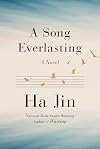
A Song Everlasting is Ha Jin's subdued tale of a popular Chinese singer turned unexpected dissident. While on tour with a state-sponsored musical troupe, Tian is approached to perform in a private event. Unbeknownst to him, the event is sponsored by a pro-Taiwan group, and Tian is plunged into bureaucratic dangers. He faces denouncement and loss of his passport and his position. He and his wife decide that for him to remain safe, he should take refuge in the United States.
Tian's life in the U.S. is difficult. He has limited opportunities to perform, and what chances he does have are stymied by the Chinese government and the media it quietly backs.
While the corruption and coercion of the government serves as a backdrop for this novel, the forefront is consumed with Tian's struggles for life in America to achieve personal and professional freedom and to survive in a country with few restrictions, but few supports as well. Tian navigates his way through a multitude of problems, including financial troubles, marital strife, and a near-disastrous health scare to navigate his way in this new world, ultimately finding a home amongst a small circle of friends and family.
Very moving and understated, and ultimately uplifting.
Tian's life in the U.S. is difficult. He has limited opportunities to perform, and what chances he does have are stymied by the Chinese government and the media it quietly backs.
While the corruption and coercion of the government serves as a backdrop for this novel, the forefront is consumed with Tian's struggles for life in America to achieve personal and professional freedom and to survive in a country with few restrictions, but few supports as well. Tian navigates his way through a multitude of problems, including financial troubles, marital strife, and a near-disastrous health scare to navigate his way in this new world, ultimately finding a home amongst a small circle of friends and family.
Very moving and understated, and ultimately uplifting.
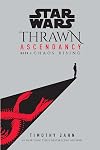
Star Wars: Thrawn Ascendancy (Book I: Chaos Rising) (Star Wars: The Ascendancy Trilogy 1) by Timothy Zahn
This is not a book I would typically read, but my son decided :
A) Dad likes books,
B) Dad likes Star Wars.
A B) I'll get Dad a Star Wars book for Father's Day.
So being an appreciative Dad, I decided I'll read it. However, he bought me Book 2 of this series, so I borrowed this one via Overdrive.
All that being said, it was a quick read, and pretty fun. If you only watched the SW movies, you won't know Thrawn, which is where I started out. The book could have taken place in any universe, except for a few indications of SW things to come in the latter pages. Anyway, I liked it well enough that I won't dread reading the one my son gave me in a week or two, but I probably won't search out others anytime soon.
A) Dad likes books,
B) Dad likes Star Wars.
A B) I'll get Dad a Star Wars book for Father's Day.
So being an appreciative Dad, I decided I'll read it. However, he bought me Book 2 of this series, so I borrowed this one via Overdrive.
All that being said, it was a quick read, and pretty fun. If you only watched the SW movies, you won't know Thrawn, which is where I started out. The book could have taken place in any universe, except for a few indications of SW things to come in the latter pages. Anyway, I liked it well enough that I won't dread reading the one my son gave me in a week or two, but I probably won't search out others anytime soon.
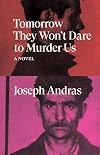
Tomorrow They Won’t Dare to Murder Us by Joseph Andras
Reviewed by Jason Chambers
Joseph Andras’s slim debut novel, winner of the prix Goncourt du Premier Roman (First Novel), is the fictionalization of the story of Fernand Iveton, a pied noir in Algeria in early 1957, during the Algerian War for Independence.
Fernand and Hélène are lovers in Algiers during the Algerian War for Independence (1954-62). When Fernand plants a bomb in the factory where he works, he is quickly arrested, tortured, and sentenced to death. Joseph Andras skillfully weaves Fernand and Hélène’s present with their past and presents this single action as a launch point for this brief novel about love, politics, and freedom.
Opening the novel, Fernand meets with his Algerian National Liberation Front (NLF) contact, who gives him two bombs in shoeboxes. Due to the size of his bag, he only takes one, which he hides in the factory. Within hours, revealed by some unknown source, the police arrest him. They are aware of the existence of the second bomb and torture him with increasing brutality to reveal the names and descriptions of his accomplices, as well as the location of the second bomb, the factory where the bombs were made. He knows very little, yet he eventually tells what he knows, while inventing answers for the other questions, to cease the ongoing torture.
While Fernand is held in custody, Hélène supports him by destroying evidence left at home, and undergoing her own interrogation at show more the police station, albeit under far less duress. Upon her release, the reader gets their first clear insight to the split in the society. The police have paraded Fernand before photographers and placed stories in the media naming him a terrorist and traitor, a danger to society. Yet, when Hélène takes a taxi home from the police station, the driver, upon learning her identity, reveres them both. He calls them heroes, patriots, and he refuses payment.
Interspersed amongst these present narratives is the tender story of the couple, and their relationship. Fernand is Algerian, though his parents came from the continent.
Hélène comes from Poland. They each have communist roots and links to—and pride in—the French Resistance against the Nazis. Her support for Fernand, and resilience in the onslaught of local media and manufactured outrage would be ripe territory for a novel of it’s own.
By and by, the novel explores, moving easily from past to present and back, the ugliness and brutality of the French control in Algeria, through revelations about murders, inequality, and prisoner treatment. Colonial police commit ruthless torture against orders from France. Inequity is punctuated by Fernand’s treatment, where, even in prison, European prisoners receive two blankets to one for Algerians, and two showers and shaves per week compared to a only one for the North Africans. The murder of Fernand’s friend, Henri, triggers his activism.
Throughout the novel, Andras draws lines to show the segmentation of the Algerian society—French versus Algerian, French versus pied noir versus Arabs, French resistance versus Algerian freedom fighters.
By turns, readers will feel the echoes of Camus, a pied noir himself, whose opposition to Algerian separation still contributes to his complex legacy; Sartre, (We Are All Assassins), who supported the Communists who favored it; and Kafka, who reverbates in the bureaucracy of the courts and sentencing. Iveton’s end is at once unfairly expedited and concurrently dragged through the black box of the French-Algerian penal system, where the inputs of politicians and public outrage hold a higher stance than justice.
In all, Iveton’s story, whether you know or not the ending in advance, is one of political outrage, tender relationships, and an ending stirring in pathos. show less
Reviewed by Jason Chambers
Joseph Andras’s slim debut novel, winner of the prix Goncourt du Premier Roman (First Novel), is the fictionalization of the story of Fernand Iveton, a pied noir in Algeria in early 1957, during the Algerian War for Independence.
Fernand and Hélène are lovers in Algiers during the Algerian War for Independence (1954-62). When Fernand plants a bomb in the factory where he works, he is quickly arrested, tortured, and sentenced to death. Joseph Andras skillfully weaves Fernand and Hélène’s present with their past and presents this single action as a launch point for this brief novel about love, politics, and freedom.
Opening the novel, Fernand meets with his Algerian National Liberation Front (NLF) contact, who gives him two bombs in shoeboxes. Due to the size of his bag, he only takes one, which he hides in the factory. Within hours, revealed by some unknown source, the police arrest him. They are aware of the existence of the second bomb and torture him with increasing brutality to reveal the names and descriptions of his accomplices, as well as the location of the second bomb, the factory where the bombs were made. He knows very little, yet he eventually tells what he knows, while inventing answers for the other questions, to cease the ongoing torture.
While Fernand is held in custody, Hélène supports him by destroying evidence left at home, and undergoing her own interrogation at show more the police station, albeit under far less duress. Upon her release, the reader gets their first clear insight to the split in the society. The police have paraded Fernand before photographers and placed stories in the media naming him a terrorist and traitor, a danger to society. Yet, when Hélène takes a taxi home from the police station, the driver, upon learning her identity, reveres them both. He calls them heroes, patriots, and he refuses payment.
Interspersed amongst these present narratives is the tender story of the couple, and their relationship. Fernand is Algerian, though his parents came from the continent.
Hélène comes from Poland. They each have communist roots and links to—and pride in—the French Resistance against the Nazis. Her support for Fernand, and resilience in the onslaught of local media and manufactured outrage would be ripe territory for a novel of it’s own.
By and by, the novel explores, moving easily from past to present and back, the ugliness and brutality of the French control in Algeria, through revelations about murders, inequality, and prisoner treatment. Colonial police commit ruthless torture against orders from France. Inequity is punctuated by Fernand’s treatment, where, even in prison, European prisoners receive two blankets to one for Algerians, and two showers and shaves per week compared to a only one for the North Africans. The murder of Fernand’s friend, Henri, triggers his activism.
Throughout the novel, Andras draws lines to show the segmentation of the Algerian society—French versus Algerian, French versus pied noir versus Arabs, French resistance versus Algerian freedom fighters.
By turns, readers will feel the echoes of Camus, a pied noir himself, whose opposition to Algerian separation still contributes to his complex legacy; Sartre, (We Are All Assassins), who supported the Communists who favored it; and Kafka, who reverbates in the bureaucracy of the courts and sentencing. Iveton’s end is at once unfairly expedited and concurrently dragged through the black box of the French-Algerian penal system, where the inputs of politicians and public outrage hold a higher stance than justice.
In all, Iveton’s story, whether you know or not the ending in advance, is one of political outrage, tender relationships, and an ending stirring in pathos. show less
Savages was fine, but pales in comparison to The Cartel, especially, but The Force, as well.
Great stories. Includes new ones like The Slap and a number of classics from previous collections. Highly reccommended.
Pretty fun. Reminiscent of Robert Crais's early Elvis Cole novels.
Two days before the first session at the Kindermann Forest Summer Camp, the camp director fires his entire staff for participation in a lewd late-night pre-session celebration.
Enter Wyatt Huddy, genetically disfigured and trained by life to be pliant and agreeable, currently living in a back room of the Salvation Army. One of a dozen new camp counselors, brought in on the fly, Wyatt and his new colleages are quickly settled in and explained their duties, but not until the first buses of campers roll in are they told that for the first two weeks, the campers are not, in fact, children, but rather handicapped adults from the state hospital. Oops.
Aside from the initial sorting chaos and a few minor incidents, the session begins surprisingly smoothly and humorously. When one counselor begins manipulating staff and campers alike, the situation derails. Wyatt is faced with protecting someone weaker than himself, and his own experience-begotten insecurities.
The first section of The Inverted Forest, more or less indicated above, is an interesting, occasionally humorous, but only mildly surprising build up to an act of violence. The second section, though, turns the previous story on its head. Nicely and smartly flipped.
One of the best features of Dalton’s writing in The Inverted Forest is the careful generosity of it all. In a story with ample opportunity for offense and cruelty, his portrayal of Wyatt, his colleagues (save one), and his campers, even at their worst, is tinged show more with humor. It renders the reader’s shock at the transgressions greater, and makes the book’s resolution very satisfying. Very good. show less
Enter Wyatt Huddy, genetically disfigured and trained by life to be pliant and agreeable, currently living in a back room of the Salvation Army. One of a dozen new camp counselors, brought in on the fly, Wyatt and his new colleages are quickly settled in and explained their duties, but not until the first buses of campers roll in are they told that for the first two weeks, the campers are not, in fact, children, but rather handicapped adults from the state hospital. Oops.
Aside from the initial sorting chaos and a few minor incidents, the session begins surprisingly smoothly and humorously. When one counselor begins manipulating staff and campers alike, the situation derails. Wyatt is faced with protecting someone weaker than himself, and his own experience-begotten insecurities.
The first section of The Inverted Forest, more or less indicated above, is an interesting, occasionally humorous, but only mildly surprising build up to an act of violence. The second section, though, turns the previous story on its head. Nicely and smartly flipped.
One of the best features of Dalton’s writing in The Inverted Forest is the careful generosity of it all. In a story with ample opportunity for offense and cruelty, his portrayal of Wyatt, his colleagues (save one), and his campers, even at their worst, is tinged show more with humor. It renders the reader’s shock at the transgressions greater, and makes the book’s resolution very satisfying. Very good. show less
Wonderful, wonderful book. Harbach had me thinking about Owen Meany and Ethan Canin, but this book stands just fine on its own. Perfect storytelling.
Usually when someone contacts me via email about reading their book, they give me a description of it and I say sure, send it, or no that’s not for me. And usually, if the description includes a phrase like “gangster noir epic set a thousand years into the future.” I’ll pass because, well, that’s just not for me, in most cases. Usually, the name on the book is not James Boice. I said it once, when I reviewed NoVA, and I’ll repeat it here: I don’t know why this guy doesn’t get more attention.
The Good and the Ghastly is as described in that email. Set in 3348, after the war and the nuclear destruction, after 1000 years of crawling back to a time that reflects our own. Bits of ancient history seep through the years – the great leaders and artists who stand tall throughout the centuries – Alexander the Great, Bob Dylan, Sarah Palin. Thank god Visa is there to hold everything together.
more at Three Guys One Book
The Good and the Ghastly is as described in that email. Set in 3348, after the war and the nuclear destruction, after 1000 years of crawling back to a time that reflects our own. Bits of ancient history seep through the years – the great leaders and artists who stand tall throughout the centuries – Alexander the Great, Bob Dylan, Sarah Palin. Thank god Visa is there to hold everything together.
more at Three Guys One Book
Really sophisticated stories. Makes me think of Richard Powers.
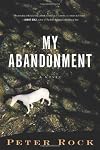
Caroline and her father live a simple, meager existence, shrouded in Forest Park, a nature preserve in Portland, Oregon. Ostensibly homeless, they have built a secluded home in the woods, complete with garden, library, and shower. Caroline reads the encyclopedia and runs barefoot in the forest, exploring the boundaries of her domain. Occasionally, she and her father visit the nearby town for food, the library, his SS check, but mostly stay out of the reach of other people.
Peter Rock's My Abandonment is really a huge surprise. This slim novel examines their lives with dazzling, electric prose, starting with the childish naivete of the opening pages, to the shock of her father's subsequent unraveling, to the quiet mournful remembrance at the end. As each chapter unfolds, a stranger, more twisted history evolves, yet Rock writes with a tenderness that belies the darker truths.
Read this. Jeez, it will only take an hour. Okay, maybe two, but it's worth it.
jc
Peter Rock's My Abandonment is really a huge surprise. This slim novel examines their lives with dazzling, electric prose, starting with the childish naivete of the opening pages, to the shock of her father's subsequent unraveling, to the quiet mournful remembrance at the end. As each chapter unfolds, a stranger, more twisted history evolves, yet Rock writes with a tenderness that belies the darker truths.
Read this. Jeez, it will only take an hour. Okay, maybe two, but it's worth it.
jc

Reading JDW's intricate little collection of stories about a small town and the covey of strange characters that haunt it, I was initially at a loss in trying to describe it. Here is this sleepy village, populated by tendancies and residents and laws worthy of a strange, pleasant dream. The inanimate shake with life. The episodes are farcical, but at the edge of every joke or wordplay is a hint of seriousness. Or perhaps it's the reverse. Punctuating each story is Wood's artwork, introducing characters and places with drawings that sometimes simplify, and sometimes complicate his subjects.
Be prepared to relax your sense of reality for Woods. One of the earliest tales relates the story of chopsticks, which are the required eating utensils of the town. Local chopstick shopowner Mr. Greenjeans has an enviable collection, topped by the most beautiful set, displayed in his store window, and ogled by the townspeople. One night he leaves the store unlocked and watches from a hidden locale to see what the people will do. Only one checks the door, Belle, the woman he wishes for unrequitedly. She takes the chopsticks, and Mr. G turns her in, with a quiet twist to his heart. Strange and poignant. Perhaps as if Garrison Keillor recalled something of Murakami's dreams.
Be prepared to relax your sense of reality for Woods. One of the earliest tales relates the story of chopsticks, which are the required eating utensils of the town. Local chopstick shopowner Mr. Greenjeans has an enviable collection, topped by the most beautiful set, displayed in his store window, and ogled by the townspeople. One night he leaves the store unlocked and watches from a hidden locale to see what the people will do. Only one checks the door, Belle, the woman he wishes for unrequitedly. She takes the chopsticks, and Mr. G turns her in, with a quiet twist to his heart. Strange and poignant. Perhaps as if Garrison Keillor recalled something of Murakami's dreams.

The judges for the Man Booker and I are, quite frankly, almost never on the same wavelength. I've read a lot of the winners and frequently find that I prefer something else on the short list far more than the winner. So it was with trepidation, along with a little annoyance that I declined to read the galley when it was offered to me in January, that I picked up The White Tiger.
The White Tiger is the assumed name of our protagonist Balram, born to the candymaker caste, ambitious chauffeur, loyal servent, traveller from the dark to the light, entrepreneur and murderer, and his epistolary tale is written over 9 nights to Chinese Premier Wen Jaibao, preceding his visit to India. Balram uses his personal history and insights to point out the strengths and weaknesses of modern Indian society. Along the way, he skewers family traditions, religion, government corruption, the rich and the poor.
I thought this was a good first novel, with lots of social satire and some poignant indictments of the gap between India's wealthy and impoverished. However, I'm not sure it falls in my top 10 books of 2008, and it is half the book (both literally and figuratively) that the Booker shortlisted A Fraction of the Whole is.
The White Tiger is the assumed name of our protagonist Balram, born to the candymaker caste, ambitious chauffeur, loyal servent, traveller from the dark to the light, entrepreneur and murderer, and his epistolary tale is written over 9 nights to Chinese Premier Wen Jaibao, preceding his visit to India. Balram uses his personal history and insights to point out the strengths and weaknesses of modern Indian society. Along the way, he skewers family traditions, religion, government corruption, the rich and the poor.
I thought this was a good first novel, with lots of social satire and some poignant indictments of the gap between India's wealthy and impoverished. However, I'm not sure it falls in my top 10 books of 2008, and it is half the book (both literally and figuratively) that the Booker shortlisted A Fraction of the Whole is.
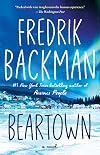
It was ok. Stylistically not as good as Ove. Also, whereas Ove felt honest, this was emotionally manipulative.

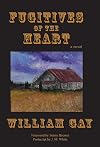
Fugitives of the Heart is the last of William Gay’s posthumous, stolen novels. You can read the story about that in the introduction by Sonny Brewer, a welcome addition to the lit on Gay.
At base, Fugitives is a coming-of-age story. Marion Yates is fifteen-year-old, the fatherless son of a part-time prostitute in the hills of the deep South. Though mired in poverty, Yates has has other things on his mind: that pocketknife in the general store, that girl who came to stay above the Muledick Saloon, seeing that big cat at the circus. He becomes friends with a black man named Crowe and cares for him after a mining accident. The two develop a wary relationship.
Enough has been written about Fugitives as an homage to Huckleberry Finn, so I’ll let readers find that elsewhere. Gay’s writing here is exactly what you’ve come to expect. His lyrical descriptions of nature and decadence remain unmatched. Marion accepts the facts of a world overpopulated with scavengers, bootleggers, dissemblers, and villains while trying his best to find a way forward, out of this depressing landscape, to something of a future. It’s not pretty, but it’s really fantastic.
As a minor complaint: it’s complex to criticize a book posthumously edited and published. Depending on the personnel involved, they may have been reticent to make any but the most obvious edits, or made wholesale changes depending on their relationship and experience with the author. I think there was a bit of redundancy show more early in the novel that might have been better smoothed out, but I don’t know if this was a hands-off editorial approach to the existing manuscript, or the felt need to pad the already thin novel.
Overall, Fugitives of the Heart is darkly funny, occasionally bawdy, frequently threatening, and unsentimentally thoughtful; an welcome addition to Gay’s body of work. show less
At base, Fugitives is a coming-of-age story. Marion Yates is fifteen-year-old, the fatherless son of a part-time prostitute in the hills of the deep South. Though mired in poverty, Yates has has other things on his mind: that pocketknife in the general store, that girl who came to stay above the Muledick Saloon, seeing that big cat at the circus. He becomes friends with a black man named Crowe and cares for him after a mining accident. The two develop a wary relationship.
Enough has been written about Fugitives as an homage to Huckleberry Finn, so I’ll let readers find that elsewhere. Gay’s writing here is exactly what you’ve come to expect. His lyrical descriptions of nature and decadence remain unmatched. Marion accepts the facts of a world overpopulated with scavengers, bootleggers, dissemblers, and villains while trying his best to find a way forward, out of this depressing landscape, to something of a future. It’s not pretty, but it’s really fantastic.
As a minor complaint: it’s complex to criticize a book posthumously edited and published. Depending on the personnel involved, they may have been reticent to make any but the most obvious edits, or made wholesale changes depending on their relationship and experience with the author. I think there was a bit of redundancy show more early in the novel that might have been better smoothed out, but I don’t know if this was a hands-off editorial approach to the existing manuscript, or the felt need to pad the already thin novel.
Overall, Fugitives of the Heart is darkly funny, occasionally bawdy, frequently threatening, and unsentimentally thoughtful; an welcome addition to Gay’s body of work. show less