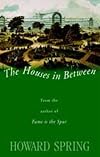
A dear friend of mine recently passed away. His wife, knowing we shared many interests, told me to come by the house and pick up some books. "My children will throw them away when I’m gone; they don’t read."
While I was browsing his shelves she took a book from one of her own and said, "This author writes as he should! You get lost in his books." It was the way she said it that stayed with me, and later I decided to buy My Son, My Son. Not from her, as she would not sell it. I opened the first page the day the book arrived, out of curiosity; I had no intention of starting it then, as my reading list was already long. A few minutes later I was no longer standing, and two weeks on I had finished it.
Since then three more books have found their way into my collection, and I face a delightful dilemma: give in to the temptation to read them straight away, or resist and save them for later. So far, it seems highly likely I will fail the Stanford marshmallow experiment.
While I was browsing his shelves she took a book from one of her own and said, "This author writes as he should! You get lost in his books." It was the way she said it that stayed with me, and later I decided to buy My Son, My Son. Not from her, as she would not sell it. I opened the first page the day the book arrived, out of curiosity; I had no intention of starting it then, as my reading list was already long. A few minutes later I was no longer standing, and two weeks on I had finished it.
Since then three more books have found their way into my collection, and I face a delightful dilemma: give in to the temptation to read them straight away, or resist and save them for later. So far, it seems highly likely I will fail the Stanford marshmallow experiment.
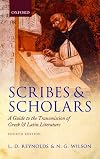
A wonderful account of the methods behind the transmission and survival of ancient texts from generation to generation. Fascinating read.
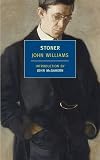
I read it in one pass, I just couldn't take my eyes away from it.
Space Between Words: The Origins of Silent Reading (Figurae: Reading Medieval Culture) by Paul Saenger
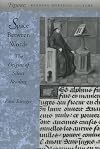
I found this book fascinating. It provides an exhaustive description of the factors behind the transition from reading aloud to silent reading and the outcomes of that transition. If your curiosity is aroused and leaves you wanting more, you will find plenty of references to follow. I'm only giving it three stars: first, because of the lack of illustrations, as other reviewers have pointed out. These would have been really useful to a novice like me; and second, because of the writing style. I found myself scratching my head a few too many times. Maybe this kind of writing is beyond me, but I did find many explanations for my confusion in Pinker's Sense of Style. Altogether, this is a terrific book and will provide plenty of good conversation.
SQL Antipatterns: Avoiding the Pitfalls of Database Programming (Pragmatic Programmers) by Bill Karwin
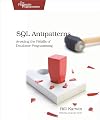
If in one way or another you are involved with databases you should read this book. Developers and DBAs alike would benefit from this read. It is very well written, great content and easy to follow. Also, no superfluous content in this one.
Mistakes Were Made (But Not by Me): Why We Justify Foolish Beliefs, Bad Decisions, and Hurtful Acts by Carol Tavris
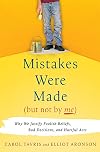
This book has given me a black eye! Every few pages I was mumbling, "Yep, I do that…"
In short, if you want to become a better person than you were last year, or you just want to understand some of the sources of human irritation, get this book. It’s also very well written.
In short, if you want to become a better person than you were last year, or you just want to understand some of the sources of human irritation, get this book. It’s also very well written.
The Circadian Code: Lose Weight, Supercharge Your Energy, and Transform Your Health from Morning to Midnight by Satchin Panda
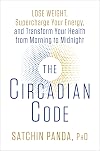
After reading some papers on circadian rhythms, one of them by Valter D. Longo and Satchidananda Panda (http://dx.doi.org/10.1016/j.cmet.2016.06.001), I came across this book while curious about the authors. I admit that if I hadn't already read the papers I would have dismissed it. Something about the "Lose Weight" and the Super(whatever) in the subtitle that made me flinch.
The author made a good job in communicating the essence and benefits of Time-Restricted Eating (TRE), also, "why" it does have such a positive effect on your well-being. You will find plenty of examples on how you could adjust your daily routines and improve your health. I believe this is just the tip of the iceberg. Lots of research is been currently done on the subject (a PubMed search will suffice to see) and the positive effects are been quantified in different labs all over the world.
Note that this is a book written by a scientist doing research in the field at a prestigious institution with proven results. And a final notes for everybody not using the U.S. metric system, get ready to make some conversions.
I have been recommending this book to everybody I care for, even before finishing it. This read is time well spent!
Grandpa was right after all on the importance of habits!
The author made a good job in communicating the essence and benefits of Time-Restricted Eating (TRE), also, "why" it does have such a positive effect on your well-being. You will find plenty of examples on how you could adjust your daily routines and improve your health. I believe this is just the tip of the iceberg. Lots of research is been currently done on the subject (a PubMed search will suffice to see) and the positive effects are been quantified in different labs all over the world.
Note that this is a book written by a scientist doing research in the field at a prestigious institution with proven results. And a final notes for everybody not using the U.S. metric system, get ready to make some conversions.
I have been recommending this book to everybody I care for, even before finishing it. This read is time well spent!
Grandpa was right after all on the importance of habits!
The Archaeology of Mind: Neuroevolutionary Origins of Human Emotions (Norton Series on Interpersonal Neurobiology) by Jaak Panksepp
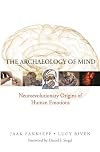
Panksepp and Biven have delivered a remarkable and detailed record of the neural architecture of human emotions. There is quite a lot to take from this book. In my opinion, Panksepp was way ahead of his time and I can't find a better description than one made by another Goodreads user (Morgan Blackledge): Panksepp was an underrated mega-dude! I would only add super- to it. Go buy this book now!
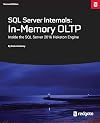
A book for the professional with detailed explanations that will give you real understanding on the subject. Also, plenty of excellent resources to follow. And finally, well written with a crystal clear structure, features that alas, are rare in this kind of literature.
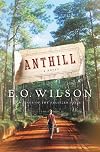
A life time of field observations compiled into a few pages for me to enjoy in my sofa; nice! The book is not completely about ants, but I did enjoy it nonetheless. I'll recommend this read to anyone interested in nature.
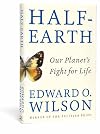
I think most of the problems with this book have already been pointed out in previous comments. That said, and having read several of Wilson's books previously, I was hoping to find a well-structured message for, and specially for, the people who have the power or influence to make and change policies that will affect the future of this planet. Alas, not so much so. I think this book needs an exhaustive revision so that the problems, consequences and solutions are presented with coherent flow, momentum, grip and clarity. So that the people who are not already convinced about the seriousness of the situation can be engaged. It is already a bad thing that most of the public reading this kind of literature are the ones that do not need to be convinced. And finally, since this subject is so important I will nevertheless recommend this book and advice some lenience.
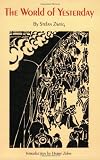
I found Zweig's writing style mesmerizing; it is fluent, clear, simple and at the same time elegant. This book was a real treat!