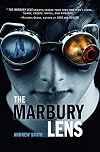
I think this book had a lot of potential, but it didn't live up to my expectations. I liked the concept; a teenage boy who may or may not be losing his mind gets dragged between two strikingly different, yet eerily similar worlds. Jack, the protagonist, is at the wrong place at the wrong time and ends up getting kidnapped by a psychopath doctor. He escapes but is never the same again. Whether the traumatic experiece (or the drugs administered by his kidnapper) unhinge his mind or he is granted a glimpse of an alternate reality is never certain. Aftter finishing this book, I'm left wondering how much of it actually happened, and how much was just in Jack's mind. Maybe he never even got kidnapped, he just went insane and fabricated the entire story. I'll never know because the book didn't have any resolution whatsoever.
The book did have some redeeming qualities however. The way the author compared Marbury to our world was thought provoking. Through Jack's eyes, both worlds are equally unpleasant, but at least in Marbury the unpleasantness doesn't beat around the bush. In our world it seems, evil comes in more subtle packages. I also really enjoyed Seth's story, even though it was short. All in all I would reccommend this book to anyone with a strong stomach (there is a lot of gore) who wants to read something interesting and unique. This book definitely is not for someone who wants happy endings and an uplifting plot.
The book did have some redeeming qualities however. The way the author compared Marbury to our world was thought provoking. Through Jack's eyes, both worlds are equally unpleasant, but at least in Marbury the unpleasantness doesn't beat around the bush. In our world it seems, evil comes in more subtle packages. I also really enjoyed Seth's story, even though it was short. All in all I would reccommend this book to anyone with a strong stomach (there is a lot of gore) who wants to read something interesting and unique. This book definitely is not for someone who wants happy endings and an uplifting plot.
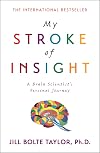
This was an easy read, but I was not impressed by it at all. I have a BA in neuroscience and I was expecting more science and less hippie propaganda. I am interested in neurogenesis and was hoping to hear more about how Taylor's brain changed as she recovered her left hemisphere facilities, but there was none of that at all. I also did not really approve of the way the author demonized the left hemisphere, depicting it as the source of all our selfish and negative emotions. The only people I would recommend this book to are those who have friends and loved ones who have suffered similar strokes as this book definitely offers some solid advice as to how to relate to stroke victims and help them recover.
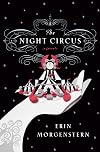
I absolutely loved this book. When I first read a description of it, I was instantly reminded of my childhood favorite, Something Wicked This Way Comes. Indeed, the two novels do have some elements in common. Aside from both containing mysterious and magical circuses, they both have a dark, distinctive tone. That is where the similarities end.
Unlike a lot of novels, The Night Circus is not a story about the characters; it is a story about how the Le Cirque des Reves came to be. Although at first the story seems to focus on Cilia and Marco and their challenge, it soon evolves to encompass a dozen characters from disparate locations, all of which are somehow tied to the circus. In a way, reading this book is a lot like putting together a puzzle. Usually, I prefer books in which the characters are more fleshed out, but in this case the lack of focus on the characters lets the reader see the bigger picture. I loved seeing how each of the character's decisions and feelings influenced the nature of the circus. I also really enjoyed the non-linear plot line; it added to the mystery and ambiance.
I would recommend this book to anyone interested in reading something unique, interesting, and beautifully written.
Unlike a lot of novels, The Night Circus is not a story about the characters; it is a story about how the Le Cirque des Reves came to be. Although at first the story seems to focus on Cilia and Marco and their challenge, it soon evolves to encompass a dozen characters from disparate locations, all of which are somehow tied to the circus. In a way, reading this book is a lot like putting together a puzzle. Usually, I prefer books in which the characters are more fleshed out, but in this case the lack of focus on the characters lets the reader see the bigger picture. I loved seeing how each of the character's decisions and feelings influenced the nature of the circus. I also really enjoyed the non-linear plot line; it added to the mystery and ambiance.
I would recommend this book to anyone interested in reading something unique, interesting, and beautifully written.
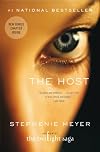
I really enjoyed this book, and thought it presented some very interesting ideas. People looking for another twilight should probably pass on this one; it's heavier on the science fiction and much lighter on the romance. The plot of this story follows Melanie, a human and Wanderer, an alien invader (of a race ironically referred to as Souls). The catch is that Wanderer's race is parasitic and they use human bodies as hosts. By the time the story begins, the Souls have almost completed their (mostly) peaceful takeover of our planet and there are only a few bands of human resistance remaining. Surprisingly, I found it almost impossible to dislike the Souls, especially Wanderer. The author did a good job making the Souls seem inhuman. No human being could be as altruistic, trusting, and peaceful as the Souls were depicted. This makes readers wonder if Earth isn't better off without destructive human influences.
Without spoiling any of the plot line, I'll also say that this book raises a lot of questions about how much our personalities depend on our biological makeup. The book seems to suggest that a lot of our emotions are directly influenced by our bodies rather than our conscious minds. It is also one of the few books that really blurs the lines between the 'good guys' and the 'bad guys'. By the end, I really wasn't sure whether I wanted the Souls or the humans to win.
Without spoiling any of the plot line, I'll also say that this book raises a lot of questions about how much our personalities depend on our biological makeup. The book seems to suggest that a lot of our emotions are directly influenced by our bodies rather than our conscious minds. It is also one of the few books that really blurs the lines between the 'good guys' and the 'bad guys'. By the end, I really wasn't sure whether I wanted the Souls or the humans to win.
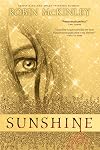
I have to admit, this book surprised me. I didn't ever expect to like a book about vampires, but one of my friends (who usually has good taste) recommended it and I thought I would give it a shot. I was drawn into this book immediately, mostly because I really related to the main character, Sunshine. Like her, I also work in a bakery and love it, so I enjoyed the descriptions of her work life. I also loved the way both Sunshine and Constantine were written, they had a lot more depth than your average character. The storyline was also compelling and included action, introspection, and a touch of romance (for those people looking for a book where the vampire and human fall madly in love and have lots of sex throughout the rest of the book, look elsewhere; the romance is pretty subtle).
I only had a couple of issues with this book, and they're pretty minor. For one thing, it bothered me that sometimes Sunshine would go off on this long tangent in her mind. By the time she got to her point, I sometimes forgot why she was even thinking about this stuff in the first place. I understand that a lot of her meandering thoughts included important elements of her history, it just seemed like it was a little too much sometimes. My other issue was with the ending. It resolved the main conflict in the novel, but left many questions unanswered. It seemed like the ending I would expect from the first book in a series, but Mckinley has said there will not be a sequel. Overall though, I show more really enjoyed this book. show less
I only had a couple of issues with this book, and they're pretty minor. For one thing, it bothered me that sometimes Sunshine would go off on this long tangent in her mind. By the time she got to her point, I sometimes forgot why she was even thinking about this stuff in the first place. I understand that a lot of her meandering thoughts included important elements of her history, it just seemed like it was a little too much sometimes. My other issue was with the ending. It resolved the main conflict in the novel, but left many questions unanswered. It seemed like the ending I would expect from the first book in a series, but Mckinley has said there will not be a sequel. Overall though, I show more really enjoyed this book. show less
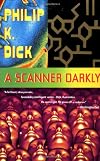
This was one of those novels that drew me in immediately. I was vaguely disturbed, yet couldn't help reading the description of Jerry Fabin, the man who thought he was infested with aphids. As it turns out, Jerry's brain is pretty much reduced to mush by substance D, a dangerous drug that law enforcement is unable to determine the source of. We then meet Bob Arctor, the undercover narcotics agent who becomes a little too caught up in the drug culture he is supposed to be infiltrating. The tone of this book is hopeless and depressing, yet full of dark humor (i.e the 10 speed bicycle incident). I especially enjoyed reading the banter between Bob and his roomates. As the novel progresses, it gets more and more surreal as Bob begins to lose his grip on reality. I did really enjoy the ending of the book. It's one of those things where you wonder if the end justifies the means. The reason I only gave this book four stars is that I didn't really care for how surreal and the novel became towards the end. This is just a personal preference though.
All in all I thought the novel was well written and did a good job of portraying drug culture and Arctor's downward spiral. By the time I reached the end of the book, I felt a little less sane than I had before I started.
All in all I thought the novel was well written and did a good job of portraying drug culture and Arctor's downward spiral. By the time I reached the end of the book, I felt a little less sane than I had before I started.
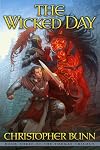
I'm honestly surprised so few people have heard of this trilogy. I thought the writing was excellent and the plot was well thought out. It seems like so many books I've read lately have had gaping plot holes and I was pleasantly surprised that this book had few if any. The characters were well developed and they always had logical motives for their actions (another thing lacking in a lot of recent fiction). I loved seeing Jute's character evolve, especially in this last book when the wind finally awakens. I also thought the ending was fitting for the series. There was a slightly sad feel to it, yet it wasn't outright depressing. It also left room for possible sequels, which I would certainly read.
The only complaint I have with this series in general was that the plot was predictable. I saw all the supposed "twists" coming about five miles away. All in all though, it was a very enjoyable read.
The only complaint I have with this series in general was that the plot was predictable. I saw all the supposed "twists" coming about five miles away. All in all though, it was a very enjoyable read.