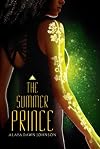
There's so much going on in this book, I'm not actually sure how to begin unpacking it. To start with, Johnson has built a believable post-apocalyptic science fiction world without info-dumping. That means the reader has to be paying attention to the clues dropped and then actually think about it to figure out what this world looks like, what the language means, how the society functions. The issues Johnson manages to address are legion, so there's no way I'll catch them all, but here are a few: fear of young people (teenagers in particular), the myth of a utopian matriarchal political system, the power of music and art, socio-economic barriers and justice, and the place of technology in our world. Johnson does all this without sacrificing any depth of character or the relationships between people. There's also wonderful diversity in the characters (both sexual orientation and race) that affects the story because it influences who the characters are, but doesn't necessarily drive the plot. Then there's that twisty-turny plot itself - who knows how much when? Keeping track of that must have been a Herculean effort! Read this with Ship Breaker by Paolo Bacigalupi and Feed by M. T. Anderson for a variety of thought-provoking, but accessible science fiction future worlds.
Red by Warren Ellis
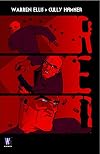
So I was curious about this because I've loved both of the RED movies, but I know Warren Ellis is often too dark for me. Unfortunately, this once again confirms that I am not destined to be an Ellis devotee. One of the things I love so much about the movies is the balance of lightness and action, but there's absolutely none of that lightness here. I am honestly amazed that the scriptwriters got from this source material to what was made. An example of how different formats and creators can bring out completely different aspects of the same story.
My Little Pony: Pinkie Pie and the Rockin' Ponypalooza Party! (My Little Pony Chapter Books) by G. M. Berrow
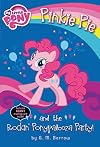
Nice to get some background on Pinkie Pie's family - there's nothing particularly new about the message here that you should be true to who you are, but it's pretty well executed.
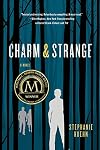
Win is away at boarding school. He doesn't see his family anymore and in chapters that alternate between the present and the past, Win, with the help of new girl Jordan and former friend Lex, works to come to terms with the curse within his bloodline.
Kuehn does brilliant things here with voice and plotting. As the reader moves deeper into the story it becomes apparent that Win is quite the unreliable narrator. With the chapters alternating between present and past, why Win is unreliable becomes a mystery to be solved with Kuehn giving clues that draw the reader further and further into Win's story. Kuehn does some very fine work with theme as well, drawing from both physics and paranormal tropes to highlight the horror of Win's past and his rocky road to recovery.
I loved, loved, loved this book although it was brutal to read. The focus on how Win had to choose to not just survive, but live past his childhood was beautifully done. I'm also a sucker for this kind of puzzle mystery.
Kuehn does brilliant things here with voice and plotting. As the reader moves deeper into the story it becomes apparent that Win is quite the unreliable narrator. With the chapters alternating between present and past, why Win is unreliable becomes a mystery to be solved with Kuehn giving clues that draw the reader further and further into Win's story. Kuehn does some very fine work with theme as well, drawing from both physics and paranormal tropes to highlight the horror of Win's past and his rocky road to recovery.
I loved, loved, loved this book although it was brutal to read. The focus on how Win had to choose to not just survive, but live past his childhood was beautifully done. I'm also a sucker for this kind of puzzle mystery.
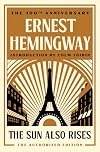
Listened to Books on Tape edition narrated by Alexander Adams. I had the same problem with this that I did with The Paris Wife - I just didn't like anybody. In fact, I felt like the one sober person at a party where all the drunk people think they're hilarious, but in actuality are mean and destructive. Partly, I find these kinds of people hard to relate to - everyone is unhappily married, but in the process of getting divorced so they can unhappily marry somebody else which is just mystifying to me - why not try being alone for a bit, drinking a little bit less and see if that makes you happier? It probably doesn't help that bull fighting does nothing for me. I think I am just not destined to be a Hemingway fan.
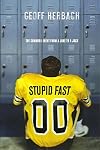
Felton's summer has not been how he imagined it would be at all. First, his best friend goes to Venezuela for the summer leaving his paper route for Felton. Then, Felton meets Aleah - a piano prodigy in town for the summer who just so happens to be beautiful and charming and interested in Felton. Meanwhile, Felton's new burly physique and accompanying speed have attracted the attention of the football coach and town jocks. When his mom's mental health starts to break down, it's more than Felton can handle, but he has no idea where to turn.
Three things I loved: the small-town setting, the sports stuff, and the excellent secondary characters. Some of the jocks are jerks and some of the jocks aren't. Sometimes the adults are competent and act as adults - other times...not so much. Nobody figures out what's going on with Felton's family because they're just as involved with their own lives as real people are. Felton doesn't just become amazing at football either - he clearly has a natural talent for running, but he has to work at everything else about sports. I also appreciated how well Herbach showed how running really helped to center Felton and kept him sane when nothing else could. The small Wisconsin town is just as insular as you would expect and Felton's worldview is clearly influenced by his limited experiences of the larger world.
Three things I loved: the small-town setting, the sports stuff, and the excellent secondary characters. Some of the jocks are jerks and some of the jocks aren't. Sometimes the adults are competent and act as adults - other times...not so much. Nobody figures out what's going on with Felton's family because they're just as involved with their own lives as real people are. Felton doesn't just become amazing at football either - he clearly has a natural talent for running, but he has to work at everything else about sports. I also appreciated how well Herbach showed how running really helped to center Felton and kept him sane when nothing else could. The small Wisconsin town is just as insular as you would expect and Felton's worldview is clearly influenced by his limited experiences of the larger world.
My Little Pony: Twilight Sparkle and the Crystal Heart Spell (My Little Pony Chapter Books) by G. M. Berrow
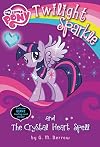
Clearly picking up from the end of the most recent season of My Little Pony: Friendship is Magic, Twilight Sparkle and the Crystal Heart Spell focuses on Twilight Sparkle trying to adapt to being a princess. Berrow includes background on some secondary characters and expands on the current My Little Pony world as a whole.
The only thing that could be better would be the addition of some actual illustrations (which would fit developmentally for the chapter book level this is at). There's a picture of Twilight Sparkle at the beginning of each chapter (although as a unicorn, not an alicorn, I believe), but nothing that matches what's happening in the story specifically.
A nice, solid opening to this new chapter book series that really captures the rhythms and feel of the TV show - so much so that I wonder if we're seeing a preview of some of next season's episodes! I wouldn't hesitate to recommend these to My Little Pony fans, but don't see them having an audience beyond that.
The only thing that could be better would be the addition of some actual illustrations (which would fit developmentally for the chapter book level this is at). There's a picture of Twilight Sparkle at the beginning of each chapter (although as a unicorn, not an alicorn, I believe), but nothing that matches what's happening in the story specifically.
A nice, solid opening to this new chapter book series that really captures the rhythms and feel of the TV show - so much so that I wonder if we're seeing a preview of some of next season's episodes! I wouldn't hesitate to recommend these to My Little Pony fans, but don't see them having an audience beyond that.
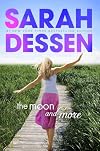
Emaline is spending the summer between high school and college working for her family in the same small beach town she's lived in all her life (Colby - one of Dessen's regular destinations). The arrival of her biological father, stepbrother, and a couple of New York filmmakers take Emaline's summer and future in directions she never expected.
This was a slower start for me than most of Dessen's have been, but it got better and better as it got going. By the end, I was invested in Emaline and her choices and her family, but these characters didn't stick with me like Ruby or Auden or Macy - I had to look up Emaline's name to write this! Still, Dessen does great work presenting complicated, strong, imperfect girls at turning points in their lives.
This was a slower start for me than most of Dessen's have been, but it got better and better as it got going. By the end, I was invested in Emaline and her choices and her family, but these characters didn't stick with me like Ruby or Auden or Macy - I had to look up Emaline's name to write this! Still, Dessen does great work presenting complicated, strong, imperfect girls at turning points in their lives.
Listening to eaudio version from HarperAudio narrated by Peter Altschuler.
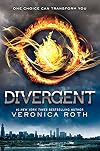
Listened to audio narrated by Emma Galvin. A good concept, but sloppy world building knocked me out of the story a couple of times. Roth makes it very clear through repeated mentions that parents almost never visit their children if they switch factions, but then on visiting day almost every transfer's parents came to visit with no mention of this being out of the ordinary. Little things like that bugged me. This was also a little more ooshy gushy than I expected; it's been compared to Hunger Games so many times that I expected less of the staring into each other's eyes bits. Still, it was good enough for me to want to finish out the trilogy and I think there's a strong possibility that things will improve since this was Roth's debut novel. Galvin's narration was competent given what she had to work with. I wonder if I would have had more patience for this if I was reading instead of listening.
The Year of Living Biblically: One Man's Humble Quest to Follow the Bible as Literally as Possible by A. J. Jacobs
Originally tried listening to this much earlier this year - got almost all the way through it and realized I had been listening to an abridged version. So started it again this month with the unabridged version. Both narrators did a fine job - the abridged version is A.J. Jacobs himself, while the unabridged is narrated by Jonathan Ross. Jacobs' insights as he tries to follow the Bible literally are quite interesting, particularly when he finds things meaningful. I appreciated that he tried to be as evenhanded and non-judgmental as possible while dealing with a wide range of people who believe very different things than he does.
Perhaps the most interesting bit for me, though, was discovering that I might have been ok with the abridged recording. I have always been vehemently pro-unabridged recordings because I don't want someone else to decide which parts I should hear and which I shouldn't. This was the first time where I felt like I would have still gotten the gist of the book from the abridgement and the full version felt like it took forever. I'm still glad I listened to the unabridged version, but for memoirs and/or non-fiction it will be good to keep in mind that if abridged is the only thing available, I might be all right.
COTC Book Club February 2013 selection
Perhaps the most interesting bit for me, though, was discovering that I might have been ok with the abridged recording. I have always been vehemently pro-unabridged recordings because I don't want someone else to decide which parts I should hear and which I shouldn't. This was the first time where I felt like I would have still gotten the gist of the book from the abridgement and the full version felt like it took forever. I'm still glad I listened to the unabridged version, but for memoirs and/or non-fiction it will be good to keep in mind that if abridged is the only thing available, I might be all right.
COTC Book Club February 2013 selection
Listened to the audio edition narrated by Libba Bray. I actually thought this started out a little slow. I found the characters hard to relate to in the beginning, but by the time the survival bits really got going I was hooked. Bray's narration (complete with footnotes and "commercials") was hilarious although her many, many accents slipped a little bit once in a while. The satire is heavy throughout and provides balance since the book as a whole has some pretty important things to say about gender and identity. The story is flat-out crazy, but I couldn't wait to get back to it each time I had to turn the audio off. I highly recommend the audio production (even the disc introductions are hilarious), but may take a look at the print copy as well to see what shenanigans Bray includes there.
I liked this, but it was really, really slow until the last couple of sections when everything seemed to happen all at once. Moriarty mostly seems to be focused on character building for Madeleine and Elliot and world building. The fantasy world of The Kingdom is very different from other fantasy I've read which is nice, but I'm much more interested in what happens next than I was in what happened in this book.
We get to see even more of Penny's world here as she begins by walking through her neighborhood. When Penny finds a marble, the temptation is too great and she scoops it up to take home. Penny's experience with guilt is very understandable, but the setup doesn't make a whole lot of sense to me. If Mrs. Goodwin wanted someone to have the marble, why in the world would she leave it in her grass instead of just giving it to someone? Kind of weird honestly. Otherwise this is pretty good. I love that Penny's outfits are a different color combo each time with her headband matching the color of her polka dotted shirt and jumper. This remains a solid series for beginning readers.
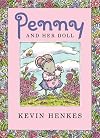
Penny has received a doll from her Gram and now must decide what to name her - a very important decision. Henkes manages to subtly and organically add to our knowledge of Penny's family - we learn everyone's names and see more of the house and garden. There's gentle humor throughout this series, such as when Mama says she doesn't have a favorite weed. This is definitely my favorite of the three I've read so far.
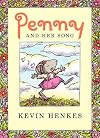
A charming start to a new series of easy readers with chapters starring Penny, a young mouse, and her family. In this first outing, Penny has a song that she would like to share with her family, but she must wait for the proper time. The design is varied with spot illustrations on some pages and full page boxed illustrations on others. The illustrations are classic Henkes with lots of pastels and fun details like the drawings on Penny's bedroom walls and her glass animal menagerie.
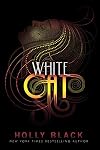
I love a good twisty, turny mystery and White Cat definitely delivers. Cassel's family are a piece of work - it's amazing he has any moral compass. The whole concept of curse working is scary - not being able to trust our emotions or memories far more so than the physical powers. Black builds a believable almost-ours world where even the smallest details have been adjusted for the concept of curse working. Lots of fun - although I wouldn't call it light - and I'm looking forward to the rest of the series.
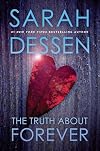
Listened to the Recorded Books audio edition narrated by Stina Nielsen.
By the end, I was solidly emotionally invested in the characters, but there were some niggling problems with the library being the biggest. Also a two-hour delivery time for Delia's baby seemed really fast to me.
Good so far, although this is the strangest library I've ever heard described, where three teenagers staff the "info desk" which appears to actually be the reference desk. Last time I read this was before I was working in a library so I don't remember it striking me as being so odd.
Previously read, but don't recall exactly when.
By the end, I was solidly emotionally invested in the characters, but there were some niggling problems with the library being the biggest. Also a two-hour delivery time for Delia's baby seemed really fast to me.
Good so far, although this is the strangest library I've ever heard described, where three teenagers staff the "info desk" which appears to actually be the reference desk. Last time I read this was before I was working in a library so I don't remember it striking me as being so odd.
Previously read, but don't recall exactly when.
Good entry in the series - I continue to enjoy these greatly, although this entry was definitely a little bit darker than the previous ones. Looking forward to seeing more of the mystery unraveled in the next book.
Listened to this with James on our way to Hilton Head. It was great to revisit the story in audio form - Carolyn McCormick's narration was excellent. The only quibble I have is that the print version is such a page turner the enforced pacing of the audio was hard to endure at times!
Took me a couple of attempts to get through this one, but I'm glad I kept trying. I thought it was very good, but suffered from having a little too much going on. The fire refugee stuff at the end felt particularly tacked on - like it was only there because that happened the same year as the pigeons so Timberlake tried to make it fit through the theme of Georgie learning mercy. Georgie's voice was strong and I enjoyed the twists and turns of the mystery surrounding Agatha's disappearance.
This was very, very silly and mostly an excuse for wordplay with not much substance behind it. I would not use it for a discussion again. Tricia Tusa's illustrations were charming.
Cover to Cover selection July 2013.
Cover to Cover selection July 2013.
I struggled with this one at first because I didn't really like any of the characters, even Hadley. By the end I was wrapped up in how the relationship was going to end, but if this weren't a book club selection, I probably wouldn't ever have made it that far. The writing was good; McLain did a much better job of hiding the research/non-fiction roots of the story than Vreeland did with Clara and Mr. Tiffany.
Narrated by Carrington MacDuffie. The narration was excellent complete with accents, both American and European, as needed for each character. MacDuffie did a great job of conveying Hadley's sometimes turbulent emotions.
COTC Book Club Selection May 2013.
Narrated by Carrington MacDuffie. The narration was excellent complete with accents, both American and European, as needed for each character. MacDuffie did a great job of conveying Hadley's sometimes turbulent emotions.
COTC Book Club Selection May 2013.
I found this highly amusing and entertaining, but I'm not convinced of its kid appeal. I felt like a lot of my enjoyment came from the way it was riffing on human historical fiction and comedies of manners. Probably works well for the right kid reader, but the number of right readers is likely to be small.
Narrated by Jayne Entwistle. The narration was lovely - Entwistle captured the rhythms of Peck's language nicely and managed to differentiate among the voices of the three mice sisters.
Narrated by Jayne Entwistle. The narration was lovely - Entwistle captured the rhythms of Peck's language nicely and managed to differentiate among the voices of the three mice sisters.
I really enjoyed this one, although it felt a little long. I can't wait for Emma's book - she's definitely my favorite character. I do think the kids all read a couple years younger than their stated ages, but once I ignored how old they were supposed to be, it was fine.
Jim Dale's narration was truly excellent. Different voices for everyone and lots of emotion.
Jim Dale's narration was truly excellent. Different voices for everyone and lots of emotion.
This definitely feels like a middle book. I spent a lot of time waiting for things to happen. Still enjoyed it, but I hope the third one's better.
There's more emotional stakes and heft here than with many romance novels, I think thanks to the developing of Jemma's story throughout the first four books. I really enjoyed seeing this relationship finally resolved.