
The Eyre Affair by Fforde
3 Stars
This book is the first in the Thursday Next series. Taking place in an alternate 1985, the book follows literary detective Thursday Next as she attempts to apprehend the evil Archeron Hades. The story is jam-packed with action and filled with wordplay and literary references. Characters step inside of various works of literature but the plot centers primarily around Jane Eyre.
I thought this book was based on a cute and clever concept. I loved the idea of stepping inside a famous work of literature. Overall I enjoyed it, but I didn’t love it as much as I thought I would after reading the synopsis. There were moments when I felt bored despite the fairly fast moving plot. I thought the word play was cute and I found lots of elements to be clever (e.g., politically dividing issue of Shakespearean authorship, the aunt who gets stuck in a Wordsworth poem). It was definitely a unique read that cuts across a variety of genres. However, at times I felt like the author was trying to pack so many different and unique elements into the storyline that it detracted from my overall enjoyment and with my connection with the story and the protagonist.
3 Stars
This book is the first in the Thursday Next series. Taking place in an alternate 1985, the book follows literary detective Thursday Next as she attempts to apprehend the evil Archeron Hades. The story is jam-packed with action and filled with wordplay and literary references. Characters step inside of various works of literature but the plot centers primarily around Jane Eyre.
I thought this book was based on a cute and clever concept. I loved the idea of stepping inside a famous work of literature. Overall I enjoyed it, but I didn’t love it as much as I thought I would after reading the synopsis. There were moments when I felt bored despite the fairly fast moving plot. I thought the word play was cute and I found lots of elements to be clever (e.g., politically dividing issue of Shakespearean authorship, the aunt who gets stuck in a Wordsworth poem). It was definitely a unique read that cuts across a variety of genres. However, at times I felt like the author was trying to pack so many different and unique elements into the storyline that it detracted from my overall enjoyment and with my connection with the story and the protagonist.
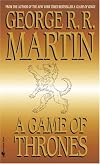
Game of Thrones by George R.R. Martin
4 stars
This is the first book in A Song of Ice and Fire series. There is little need to rehash the plot since I’m probably one of the last to read this book and many people have watched the HBO version. Told from the perspectives of a variety of characters, this book introduces us to the world of Westeros. Much of this book is centered on character building but it sets the framework for the plot twists and turns that we experience later in the series.
I really liked the book and was thoroughly entertained. I really like the HBO series too and found that it was very faithful to the book. I thought I’d be bored reading the books after knowing the plot, but I liked how they let us get into the heads of the characters in ways we couldn’t with the television series. I found myself disliking certain characters that I had liked in the show and vice versa. Martin does a great job creating a very realistic and vivid world. I liked it enough that when I returned it to the library this afternoon, I picked up the second one.
4 stars
This is the first book in A Song of Ice and Fire series. There is little need to rehash the plot since I’m probably one of the last to read this book and many people have watched the HBO version. Told from the perspectives of a variety of characters, this book introduces us to the world of Westeros. Much of this book is centered on character building but it sets the framework for the plot twists and turns that we experience later in the series.
I really liked the book and was thoroughly entertained. I really like the HBO series too and found that it was very faithful to the book. I thought I’d be bored reading the books after knowing the plot, but I liked how they let us get into the heads of the characters in ways we couldn’t with the television series. I found myself disliking certain characters that I had liked in the show and vice versa. Martin does a great job creating a very realistic and vivid world. I liked it enough that when I returned it to the library this afternoon, I picked up the second one.
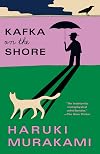
★★★.5
Trying to write a synopsis of a Murakami plot is really beyond my abilities but even more so with this book: Talking cats, raining fish and leeches, living spirits, Johnny Walker & Colonel Sanders all make appearances. The book is filled with Freudian concepts & music and literary references. Protagonist, Kafka Tamura, is a 15 year-old boy who runs away from home and finds refuge in a small private library. His story is interspersed with the narrative of Nakata, a elderly man who can talk with cats. As the book draws to a close, the connections between the characters are made clearer (all relative here since I never achieve full clarity in his books).
I am glad that this book was not my introduction to Murakami. I have loved his other books and in comparison this book fell short for me. The book has some of the same magical qualities that I have enjoyed in his other books but much less enjoyable. I usually don’t like books that focus so heavily on Oedipal complex and, as is the case with many of his books, the graphic sex described in this book was disturbing in the context of this “prophecy.” After recently finishing book II of IQ84 I couldn’t help but think that this author has some messed up thoughts about sex. All that aside, I was engaged in the general story and I loved Nakata. On the whole, I found the book more confusing than the average Murakami book and after it ended I was left with little understanding of the point what I had read.
Trying to write a synopsis of a Murakami plot is really beyond my abilities but even more so with this book: Talking cats, raining fish and leeches, living spirits, Johnny Walker & Colonel Sanders all make appearances. The book is filled with Freudian concepts & music and literary references. Protagonist, Kafka Tamura, is a 15 year-old boy who runs away from home and finds refuge in a small private library. His story is interspersed with the narrative of Nakata, a elderly man who can talk with cats. As the book draws to a close, the connections between the characters are made clearer (all relative here since I never achieve full clarity in his books).
I am glad that this book was not my introduction to Murakami. I have loved his other books and in comparison this book fell short for me. The book has some of the same magical qualities that I have enjoyed in his other books but much less enjoyable. I usually don’t like books that focus so heavily on Oedipal complex and, as is the case with many of his books, the graphic sex described in this book was disturbing in the context of this “prophecy.” After recently finishing book II of IQ84 I couldn’t help but think that this author has some messed up thoughts about sex. All that aside, I was engaged in the general story and I loved Nakata. On the whole, I found the book more confusing than the average Murakami book and after it ended I was left with little understanding of the point what I had read.
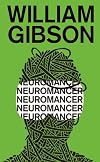
Apparently the cyberpunk genre is not my thing. I read this book because it was on the 1001 books to read. I found it difficult to get through. I couldn't really identify with any of the characters and therefore didn't really care what happened to any of them. I also found myself skimming over a lot of the chapters because I didn't really like the technical aspects. I read half the book without understanding what was happening (probably in large part b/c I skimmed over a lot) and by that time I didn't care enough to go back and re-read to make sense of it all. I can understand why it was considered an important book but I found it confusing and hard to follow.
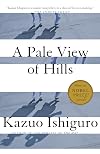
A Pale View of the Hills is, on the surface, a story of a Japanese woman who left post-war Japan to move to England. It is difficult to say much about the plot without giving it away but on a deeper level it is the story of the psychological impact of war on a nation and on individual families.
I was surprised to like this book after being underwhelmed by "Never Let me Go." I would actually rate it a 3.5 if I had the option. Ishiguro keeps you guessing throughout the book. He never provides the full story and the ending drifts off into nothingness, but this is part of the charm of the book. This book makes you think about the links between stories and time threads and make the reader fill in the missing information.
I was surprised to like this book after being underwhelmed by "Never Let me Go." I would actually rate it a 3.5 if I had the option. Ishiguro keeps you guessing throughout the book. He never provides the full story and the ending drifts off into nothingness, but this is part of the charm of the book. This book makes you think about the links between stories and time threads and make the reader fill in the missing information.
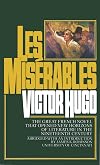
I've read this book several times and it's always a favorite. I love Hugo's writing. He can be very detailed but but is overall a beautiful and emotionally evocative writer. In this bool he captures Paris and the struggles of its poor perfectly. A moving and beautiful book
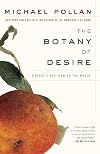
The book is comprised of 4 primary chapters, each dedicated to one of the four plants that are used to highlight the relationship between human desire and plant development. It is a book about coevolution, in which plants are portrayed as active agents of their own dissemination through their manipulation of human desire. Pollan explores the social history of these plants and how their development into their current forms was due in no small part to their ability to target very specific human desires. The four plants covered include the apple three (sweetness), tulips (representing desire beauty), marijuana (desire for intoxication), and potatoes (desire for control). In addition to covering each plant’s social history, Pollan discusses the problems in current status of these plants related to over-domestication and monoculture.
Overall, I enjoyed this book. I either forgot or simply never knew that apple trees that bare our common apples are grafted and that planting a seed from an apple will result in a tree that bear apples unlike the one that provided the seed. I enjoyed reading about the history of tulip. While, I enjoyed the book, I found that his argument fell flat in many places. Pollan often went off on tangents that I didn’t feel were helpful in building his specific argument. This was especially true for the marijuana chapter which was rambling and least interesting (to me). That said, I found the idea of the book to be an interesting one, and I enjoyed show more learning about the social history of all 4 plants. My favorite chapter was the potato chapter. My husband and I travelled to Peru about 5 years ago and did the 3-day Inca trail. During our stay in Peru we got to experience the amazing variety of potatoes that originated from Incan farming tradition. The potato chapter also disgusted me and made me glad that our family made the switch to organic potatoes several years ago. I don’t think I could ever go back to eating a conventional potato that is essentially a sponge for pesticides.
Side note: When I was a child I was terrified of tulips. I thought that the fact that they would open and close meant they were monsters and I would scream whenever I saw them. To this day tulips are not my favorite flower in terms of beauty because they remind me of my terror as a child. ☺ show less
Overall, I enjoyed this book. I either forgot or simply never knew that apple trees that bare our common apples are grafted and that planting a seed from an apple will result in a tree that bear apples unlike the one that provided the seed. I enjoyed reading about the history of tulip. While, I enjoyed the book, I found that his argument fell flat in many places. Pollan often went off on tangents that I didn’t feel were helpful in building his specific argument. This was especially true for the marijuana chapter which was rambling and least interesting (to me). That said, I found the idea of the book to be an interesting one, and I enjoyed show more learning about the social history of all 4 plants. My favorite chapter was the potato chapter. My husband and I travelled to Peru about 5 years ago and did the 3-day Inca trail. During our stay in Peru we got to experience the amazing variety of potatoes that originated from Incan farming tradition. The potato chapter also disgusted me and made me glad that our family made the switch to organic potatoes several years ago. I don’t think I could ever go back to eating a conventional potato that is essentially a sponge for pesticides.
Side note: When I was a child I was terrified of tulips. I thought that the fact that they would open and close meant they were monsters and I would scream whenever I saw them. To this day tulips are not my favorite flower in terms of beauty because they remind me of my terror as a child. ☺ show less
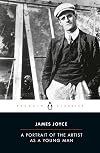
I’m not sure much of a synopsis is needed for this book. Briefly, it is a novel that follows the maturation and intellectual awakening of Stephen Dedalus, considered to be a reflection of the author’s own experiences. Over the course of the novel, Stephen questions and later rebels against societal conventions, in particular against the Catholic church and his religious upbringing. It is stream of consciousness novel with little in the way of traditional plot and jam packed with intellectual discourse on a range of topics including religion, Irish politics, and the nature of beauty and aesthetics.
I first read this when I was in high school and hated it with a passion. As an adult, my experience reading it was quite different in the degree to which I was able to appreciate the complexity of the novel and the beauty of the writing. Joyce’s books are challenging reads, and despite being considered one his easier, more accessible works, this book was still quite a challenge for me and required intense moments of concentration to fully appreciate.
In general, I have mixed feelings after finishing the book the second time. I generally dislike stream of consciousness types of books. I find that I get distracted and easily lost when there is minimal plot structure. There is no question that Joyce is an incredibly talented and brilliant author. His sentences are exquisite, each one crafted perfectly and beautifully. He also plays with style in a fascinating way throughout show more the novel with the language, sentence structure, and content growing increasingly complex as the protagonist matures.
The language and writing alone are worth the 4-star rating regardless of my enjoyment of the book. However, there were moments when I struggled to stay engaged. There were very long sections (seemingly never-ending) that were essentially dialogue from religious sermons, and those sections bored me to tears. I listened to this book (a much easier approach for me when trying to tackle stream of consciousness). The audio was over 8 hours and over 1 hour of audio was dedicated to sermons (about 45 minutes about hell, sin, and purgatory). I almost gave up during those sections. But, there were also sections that I loved. For example, I really enjoyed the dialogue between Stephen and his friends, the family discussion of Irish politics over dinner, and I loved their discussion of beauty and aesthetics. Some sections were quite funny. I also loved the fact that as a reader you are given a very vivid picture of how the artist perceives his world. Stephen notices things in the world around him in a very vivid and different way.
I do have to say that as much as I enjoyed certain sections, I do find Joyce’s style of writing somewhat pretentious. His books are clearly not geared toward the average reader. His vocabulary is complex and his ideas even more so. His books are the sorts of books that you want to tackle in a college course with the help of fellow intellectuals. I think it’s unfortunate in a sense because it limits the ability for the writing to be appreciated by a wider audience. His writing is clearly brilliant and his novels are not to be tackled lightly.
Quotes (below I’ve tried to list some quotes that I loved and also some that will give you a sense of the writing style):
“Welcome, O life! I go to encounter for the millionth time the reality of experience and to forge in the smithy of my soul the uncreated conscience of my race.”
His heart danced upon her movements like a cork upon a tide. He heard what her eyes said to him from beneath their cowl and knew that in some dim past, whether in life or revery, he had heard their tale before.”
To speak of these things and to try to understand their nature and, having understood it, to try slowly and humbly and constantly to express, to press out again, from the gross earth or what it brings forth, from sound and shape and colour which are the prison gates of our soul, an image of the beauty we have come to understand—that is art.” show less
I first read this when I was in high school and hated it with a passion. As an adult, my experience reading it was quite different in the degree to which I was able to appreciate the complexity of the novel and the beauty of the writing. Joyce’s books are challenging reads, and despite being considered one his easier, more accessible works, this book was still quite a challenge for me and required intense moments of concentration to fully appreciate.
In general, I have mixed feelings after finishing the book the second time. I generally dislike stream of consciousness types of books. I find that I get distracted and easily lost when there is minimal plot structure. There is no question that Joyce is an incredibly talented and brilliant author. His sentences are exquisite, each one crafted perfectly and beautifully. He also plays with style in a fascinating way throughout show more the novel with the language, sentence structure, and content growing increasingly complex as the protagonist matures.
The language and writing alone are worth the 4-star rating regardless of my enjoyment of the book. However, there were moments when I struggled to stay engaged. There were very long sections (seemingly never-ending) that were essentially dialogue from religious sermons, and those sections bored me to tears. I listened to this book (a much easier approach for me when trying to tackle stream of consciousness). The audio was over 8 hours and over 1 hour of audio was dedicated to sermons (about 45 minutes about hell, sin, and purgatory). I almost gave up during those sections. But, there were also sections that I loved. For example, I really enjoyed the dialogue between Stephen and his friends, the family discussion of Irish politics over dinner, and I loved their discussion of beauty and aesthetics. Some sections were quite funny. I also loved the fact that as a reader you are given a very vivid picture of how the artist perceives his world. Stephen notices things in the world around him in a very vivid and different way.
I do have to say that as much as I enjoyed certain sections, I do find Joyce’s style of writing somewhat pretentious. His books are clearly not geared toward the average reader. His vocabulary is complex and his ideas even more so. His books are the sorts of books that you want to tackle in a college course with the help of fellow intellectuals. I think it’s unfortunate in a sense because it limits the ability for the writing to be appreciated by a wider audience. His writing is clearly brilliant and his novels are not to be tackled lightly.
Quotes (below I’ve tried to list some quotes that I loved and also some that will give you a sense of the writing style):
“Welcome, O life! I go to encounter for the millionth time the reality of experience and to forge in the smithy of my soul the uncreated conscience of my race.”
His heart danced upon her movements like a cork upon a tide. He heard what her eyes said to him from beneath their cowl and knew that in some dim past, whether in life or revery, he had heard their tale before.”
To speak of these things and to try to understand their nature and, having understood it, to try slowly and humbly and constantly to express, to press out again, from the gross earth or what it brings forth, from sound and shape and colour which are the prison gates of our soul, an image of the beauty we have come to understand—that is art.” show less
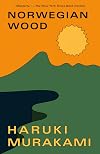
Really different than any of the other Murakami's I've read. Not my favorite of his but still a good read and I enjoyed it quite a bit.
Full review will follow on the blog first then on here.
Full review will follow on the blog first then on here.
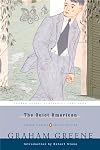
Unfortunately, I can't rate this book accurately because I listened to it as an audible and the narration was atrocious and really ruined the book for me.
The Quiet American is based on Greene experience as a war correspondent in French Indo-china. An interesting and beautifully written story that I would likely have rated relatively highly if not for the terrible audio. I plan to put this back on my TBR and read it.
The Quiet American is based on Greene experience as a war correspondent in French Indo-china. An interesting and beautifully written story that I would likely have rated relatively highly if not for the terrible audio. I plan to put this back on my TBR and read it.
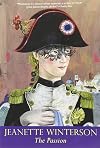
The Passion by Jeanette Winterson
4.5 stars
Set in the time of the Napoleonic Wars, the Passion is a novel about passion and love in its various forms. The story is told from the perspective of two protagonists: Henri, a young French soldier and Villanelle, the web-footed, cross-dressing daughter of a Venetian boatman. Part historical fiction and part fantasy, this book is all great story telling with multiple layers and messages.
I loved this book. I like magical realism and I loved the way she blended magical elements into what seemed initially like a historical novel. In adding these elements she blends genres and blurs the boundaries between history and storytelling and between the miraculous and the everyday. I found the story to be quite complex (with themes that go beyond these discussion questions) and definitely requires more than one reading to fully understand all that the author is trying to say. It's a commentary on war, history and storytelling, and of course love and passion in it's various forms (e.g., for war/violence, intimate passion, gambling, etc). I also really enjoyed her style of story telling with language that was exact and sparse but with elements of poetry and rhythm interweaved throughout (words, phrases, and even whole sentences repeated at various points throughout).
I do agree with some others in their critique of the blending of voices between the two protagonists. I personally didn't find it difficulty to tell them apart, however when I show more first started reading (before getting to Villanelle) I kept thinking that Henri was a woman because his narration felt very feminine to me. I wonder if this was intentional to blur the two voices since there were other elements of challenging gender boundaries throughout (e.g., Villanelle cross-dressing, and Villanelle seeming to have a more "masculine" or powerful voice than Henri. Villanelle was the more active, independent and powerful of the two whereas I say Henri as more passive (thus contradicting traditional stereotypes of the masculine and feminine).
Finally, I really liked some of the passages about love and passion. I found them compelling and very interesting and I enjoyed seeing how the various characters embodied passion in different ways. I will definitely be reaching for another one of her books in the near future. This was very enjoyable and thought-provoking book for me.
Favorite quotes:
I was happy but happy is an adult word. You don’t have to ask a child about happy, you see it. They are or they are not. Adults talk about being happy because largely they are not. Talking about it is the same as trying to catch the wind. Much easier to let it blow all over you. This is where I disagree with philosophers. They talk about passionate things but there is no passion in them. Never talk happiness with a philosopher.
The body shuts down when it has too much to bear; goes its own way quietly inside, waiting for a better time, leaving you numb and half alive.
Somewhere between fear and sex passion is. Passion is not so much an emotion as a destiny.
Do all lovers feel helpless and valiant in the presence of the beloved? Helpless because the need to roll over like a pet dog is never far away. Valiant because you know you would slay a dragon with a pocket knife if you had to. show less
4.5 stars
Set in the time of the Napoleonic Wars, the Passion is a novel about passion and love in its various forms. The story is told from the perspective of two protagonists: Henri, a young French soldier and Villanelle, the web-footed, cross-dressing daughter of a Venetian boatman. Part historical fiction and part fantasy, this book is all great story telling with multiple layers and messages.
I loved this book. I like magical realism and I loved the way she blended magical elements into what seemed initially like a historical novel. In adding these elements she blends genres and blurs the boundaries between history and storytelling and between the miraculous and the everyday. I found the story to be quite complex (with themes that go beyond these discussion questions) and definitely requires more than one reading to fully understand all that the author is trying to say. It's a commentary on war, history and storytelling, and of course love and passion in it's various forms (e.g., for war/violence, intimate passion, gambling, etc). I also really enjoyed her style of story telling with language that was exact and sparse but with elements of poetry and rhythm interweaved throughout (words, phrases, and even whole sentences repeated at various points throughout).
I do agree with some others in their critique of the blending of voices between the two protagonists. I personally didn't find it difficulty to tell them apart, however when I show more first started reading (before getting to Villanelle) I kept thinking that Henri was a woman because his narration felt very feminine to me. I wonder if this was intentional to blur the two voices since there were other elements of challenging gender boundaries throughout (e.g., Villanelle cross-dressing, and Villanelle seeming to have a more "masculine" or powerful voice than Henri. Villanelle was the more active, independent and powerful of the two whereas I say Henri as more passive (thus contradicting traditional stereotypes of the masculine and feminine).
Finally, I really liked some of the passages about love and passion. I found them compelling and very interesting and I enjoyed seeing how the various characters embodied passion in different ways. I will definitely be reaching for another one of her books in the near future. This was very enjoyable and thought-provoking book for me.
Favorite quotes:
I was happy but happy is an adult word. You don’t have to ask a child about happy, you see it. They are or they are not. Adults talk about being happy because largely they are not. Talking about it is the same as trying to catch the wind. Much easier to let it blow all over you. This is where I disagree with philosophers. They talk about passionate things but there is no passion in them. Never talk happiness with a philosopher.
The body shuts down when it has too much to bear; goes its own way quietly inside, waiting for a better time, leaving you numb and half alive.
Somewhere between fear and sex passion is. Passion is not so much an emotion as a destiny.
Do all lovers feel helpless and valiant in the presence of the beloved? Helpless because the need to roll over like a pet dog is never far away. Valiant because you know you would slay a dragon with a pocket knife if you had to. show less
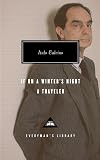
If On A Winter’s Night a Traveler by Italo Calvino
4.5 stars
This book is a series of book beginnings (10 to be precise) each with it’s own distinct author, tone, plot, style, and characters and each unfinished, ending at the story climax. Linking the stories together are two readers who attempt to follow the original story line but get drawn into multiple “false books” and other directions. It is hard to describe this book in a way that does it justice.
Unlike Invisible Cities, I loved this book. It’s clever, completely original, and very bizarre. Calvino plays with perspective at times seeming to talk directly to you and other times using “you” to refer to one of the two readers (the narrator talking directly to the characters). In many ways this book is also a commentary on the process of reading, writing, and literary analysis. I enjoyed it very much.
4.5 stars
This book is a series of book beginnings (10 to be precise) each with it’s own distinct author, tone, plot, style, and characters and each unfinished, ending at the story climax. Linking the stories together are two readers who attempt to follow the original story line but get drawn into multiple “false books” and other directions. It is hard to describe this book in a way that does it justice.
Unlike Invisible Cities, I loved this book. It’s clever, completely original, and very bizarre. Calvino plays with perspective at times seeming to talk directly to you and other times using “you” to refer to one of the two readers (the narrator talking directly to the characters). In many ways this book is also a commentary on the process of reading, writing, and literary analysis. I enjoyed it very much.
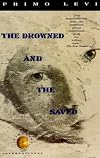
The Drowned and the Saved by Primo Levi
4 stars
The Drowned and the Saved was Primo Levi’s last book, published shortly before his death. The book is comprised of 8 chapters that read like short essays or meditations. The book explores the rationale behind the concentration camps during World War II and attempts to explain the mindset behind both the oppressors and the oppressed. Levi draws on his own experience as a prisoner in Auschwitz. There are chapters on memory, shame, gray zone (e.g. blurred lines between “us vs. them,” the situation of the intellectual prisoner, communication, and useless violence.
This was a wonderfully written and smart book. Levi’s speculations about various aspects central to the existence and consequences of extermination camps are fascinating. He writes in a way that is passionate, yet at the same time, he is able to reflect on what was a traumatic time in his life in a way that is intellectual rather than emotional.
I particularly appreciated the chapter on shame. He links this sense of shame to rates of suicide following liberation. I am a psychologist and I’ve worked with military Veterans including a few from WWII. I will never forget one WWII vet that I worked with who had witnessed and experienced many traumatic events during his service, but what he was most affected by was his experience of liberating one of the extermination camps. Like Levi, he talked about the differences between the movie versions of liberation as being show more joyful and big celebrations and his own experience seeing prisoners when he arrived at the camp. He talked about the pervasive sense of shame and anguish that preceded the immediate liberation.
The last chapter of the book is a series of excerpts from letters between Levi and German readers who responded to the first published German translation of “Survival in Auschwitz.” It is a powerful chapter that explores some of the perspectives of Germans citizens living during the time of the Holocaust.
Quotes:
The World into which one was precipitated was terrible, yes, but also indecipherable: it did not conform to any model; the enemy was all around but also inside, the “we” lost its limits, the contenders were not two, one could not discern a single frontier but rather many confused, perhaps innumerable frontiers, which stretched between each of us.
Thus the Lager, on a small scale but with amplified characteristics, reproduced the hierarchical structure of the totalitarian state, in which all power is invested from above and control from below is almost impossible.
Conceiving and organizing the squads was National Socialism’s most demonic crime. Behind the pragmatic aspect other more subtle aspects can be perceived. This institution represented an attempt to shift onto others – specifically the victims – the burden of guilt, so that they were deprived of even the solace of innocence.
A single Anne Frank excites more emotion than the myriads who suffered as she did but whose image has remained in the shadows. Perhaps it is necessary that it can be so. If we had to and were able to suffer the sufferings of everyone, we could not live.
show less
4 stars
The Drowned and the Saved was Primo Levi’s last book, published shortly before his death. The book is comprised of 8 chapters that read like short essays or meditations. The book explores the rationale behind the concentration camps during World War II and attempts to explain the mindset behind both the oppressors and the oppressed. Levi draws on his own experience as a prisoner in Auschwitz. There are chapters on memory, shame, gray zone (e.g. blurred lines between “us vs. them,” the situation of the intellectual prisoner, communication, and useless violence.
This was a wonderfully written and smart book. Levi’s speculations about various aspects central to the existence and consequences of extermination camps are fascinating. He writes in a way that is passionate, yet at the same time, he is able to reflect on what was a traumatic time in his life in a way that is intellectual rather than emotional.
I particularly appreciated the chapter on shame. He links this sense of shame to rates of suicide following liberation. I am a psychologist and I’ve worked with military Veterans including a few from WWII. I will never forget one WWII vet that I worked with who had witnessed and experienced many traumatic events during his service, but what he was most affected by was his experience of liberating one of the extermination camps. Like Levi, he talked about the differences between the movie versions of liberation as being show more joyful and big celebrations and his own experience seeing prisoners when he arrived at the camp. He talked about the pervasive sense of shame and anguish that preceded the immediate liberation.
The last chapter of the book is a series of excerpts from letters between Levi and German readers who responded to the first published German translation of “Survival in Auschwitz.” It is a powerful chapter that explores some of the perspectives of Germans citizens living during the time of the Holocaust.
Quotes:
The World into which one was precipitated was terrible, yes, but also indecipherable: it did not conform to any model; the enemy was all around but also inside, the “we” lost its limits, the contenders were not two, one could not discern a single frontier but rather many confused, perhaps innumerable frontiers, which stretched between each of us.
Thus the Lager, on a small scale but with amplified characteristics, reproduced the hierarchical structure of the totalitarian state, in which all power is invested from above and control from below is almost impossible.
Conceiving and organizing the squads was National Socialism’s most demonic crime. Behind the pragmatic aspect other more subtle aspects can be perceived. This institution represented an attempt to shift onto others – specifically the victims – the burden of guilt, so that they were deprived of even the solace of innocence.
A single Anne Frank excites more emotion than the myriads who suffered as she did but whose image has remained in the shadows. Perhaps it is necessary that it can be so. If we had to and were able to suffer the sufferings of everyone, we could not live.
show less
3.5 stars. Full review to come. Hated the first section, liked the second section, and understood only a small fraction of the whole.
The Odyssey by Homer
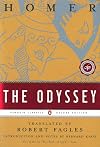
This book deserves 5 stars for its contribution and influence to art (e.g., literature, art, music, etc) alone.
There are so many translations and editions that a review is difficult. I've read 3 versions now, each vastly different with regard to style (some more faithful to metric others in more modern prose). Regardless, it's a story that pretty much everyone is familiar with and that alone is a testiment to the influence of this epic poem. I hadn't read this story since freshman year in college. It continues to be an engaging read and one that is a must read for those readers who want to trace some of the roots of classic literature and understand references in other classic works.
The story is fairly violent and views of justice has thankfully changed over the years, but it provides valuable insight into beliefs about morality during the time it was written.
There are so many translations and editions that a review is difficult. I've read 3 versions now, each vastly different with regard to style (some more faithful to metric others in more modern prose). Regardless, it's a story that pretty much everyone is familiar with and that alone is a testiment to the influence of this epic poem. I hadn't read this story since freshman year in college. It continues to be an engaging read and one that is a must read for those readers who want to trace some of the roots of classic literature and understand references in other classic works.
The story is fairly violent and views of justice has thankfully changed over the years, but it provides valuable insight into beliefs about morality during the time it was written.
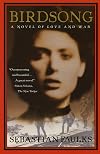
Birdsong is a novel that spans three generations but focuses primarily on Stephen Wraysford during World War I. It is a novel of love and war (as its title so aptly describes). Stephen falls in love and later finds himself on the front lines in France during WWI. Most of the novel follows his experiences in the trenches but interspersed with his story is the story of Elizabeth Benson who is living in the late 70s.
This was a tough book for me to read and rate. The book has some fairly graphic sex and violence, however since this essentially a romance set during WWI, it is appropriate. Overall, I didn’t really care too much for the romance (the early scenes of the book) and the violence was at times hard to deal with because it is very descriptive (albeit appropriate to really capture the picture of what these soldiers likely faced in the front lines). What I thought was brilliant, was the author’s accuracy in capturing the psychological aspects of war. I work with veterans, assessing and treating PTSD and depression. Faulks has a way of capturing how war impacts mental health in such a real way that I almost felt like I was in session with one of my veterans. This made the book hard to read at times and a fairly emotional read for me. I was most engaged by the portions of the book that dealt with Stephen’s experience of the war and was less interested in Elizabeth’s story although I felt like it was a nice way of wrapping up the storyline.
This was a tough book for me to read and rate. The book has some fairly graphic sex and violence, however since this essentially a romance set during WWI, it is appropriate. Overall, I didn’t really care too much for the romance (the early scenes of the book) and the violence was at times hard to deal with because it is very descriptive (albeit appropriate to really capture the picture of what these soldiers likely faced in the front lines). What I thought was brilliant, was the author’s accuracy in capturing the psychological aspects of war. I work with veterans, assessing and treating PTSD and depression. Faulks has a way of capturing how war impacts mental health in such a real way that I almost felt like I was in session with one of my veterans. This made the book hard to read at times and a fairly emotional read for me. I was most engaged by the portions of the book that dealt with Stephen’s experience of the war and was less interested in Elizabeth’s story although I felt like it was a nice way of wrapping up the storyline.
Aesop’s Fables
★★★
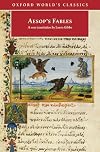
Aesop was thought to be slave who lived in Ancient Greece around 620BC. Historical accounts of Aesop suggest that he was owned by two masters, the latter who gave him is liberty as a reward for his learning and wit. Stories about Aesop are conflicting and some suggest that he was invented in order to provide and author for a collection of fables. Aesop’s fables are a collection of short stories used to illustrate particular moral lessons. The stories feature animals and plants as subjects but illustrate human traits and characteristics.
I enjoyed reading these fables. My edition had hundreds of fables and was about 200 pages. Some fables were 1-2 sentences, others a few paragraphs, and others a few pages. It was definitely interesting to see concepts of morality from long ago. There were a lot of stories about revenge and punishment for lots of offenses deemed immoral was death. Greed was a central theme. I also noticed a lot of contradictions in these stories. Some animals were rewarded for altruistic behavior whereas others were punished for similar behavior b/c it reflected naiveté. I would think children would be confused reading all the contrasting stories.
It’s a hard book to review so instead, I’ll provide you with some quotes, and in some cases whole fables:
Quotes:
“If words suffice not, blows must follow.”
“those who seek to please everybody please nobody.”
“A Shepherd once found the whelp of a Wolf and brought it up, and show more after a while taught it to steal lambs from the neighboring flocks. The Wolf, having shown himself an apt pupil, said to the shepherd, “Since you have taught me to steal, you must keep a sharp lookout, or you will lose some of your own flock.”
“A crab said to her son, “Why do you walk so one-sided my child? It is far more becoming to go straight forward.” The young Crab replied, “quite true, dear Mother; and if you will show me the straight way, I will promise to walk in it.” The Mother tried in vain, and submitted without remonstrance to the reproof of her child. Example is more powerful than precept.”
“our mere anticipations of life outrun it’s realities.”
“those who assume a character which does not belong to them, only make themselves ridiculous.”
“In a change of government the poor change nothing beyond the name of their master.”
“Every Man according to an ancient legend, is born into the world with two bags suspended from his neck, a small back in front full of his neighbors’ faults, and a large bag behind filled with his own faults. Hence it is that men are quick to see the faults of others, and yet are often blind to their own failings.” show less
★★★
Aesop was thought to be slave who lived in Ancient Greece around 620BC. Historical accounts of Aesop suggest that he was owned by two masters, the latter who gave him is liberty as a reward for his learning and wit. Stories about Aesop are conflicting and some suggest that he was invented in order to provide and author for a collection of fables. Aesop’s fables are a collection of short stories used to illustrate particular moral lessons. The stories feature animals and plants as subjects but illustrate human traits and characteristics.
I enjoyed reading these fables. My edition had hundreds of fables and was about 200 pages. Some fables were 1-2 sentences, others a few paragraphs, and others a few pages. It was definitely interesting to see concepts of morality from long ago. There were a lot of stories about revenge and punishment for lots of offenses deemed immoral was death. Greed was a central theme. I also noticed a lot of contradictions in these stories. Some animals were rewarded for altruistic behavior whereas others were punished for similar behavior b/c it reflected naiveté. I would think children would be confused reading all the contrasting stories.
It’s a hard book to review so instead, I’ll provide you with some quotes, and in some cases whole fables:
Quotes:
“If words suffice not, blows must follow.”
“those who seek to please everybody please nobody.”
“A Shepherd once found the whelp of a Wolf and brought it up, and show more after a while taught it to steal lambs from the neighboring flocks. The Wolf, having shown himself an apt pupil, said to the shepherd, “Since you have taught me to steal, you must keep a sharp lookout, or you will lose some of your own flock.”
“A crab said to her son, “Why do you walk so one-sided my child? It is far more becoming to go straight forward.” The young Crab replied, “quite true, dear Mother; and if you will show me the straight way, I will promise to walk in it.” The Mother tried in vain, and submitted without remonstrance to the reproof of her child. Example is more powerful than precept.”
“our mere anticipations of life outrun it’s realities.”
“those who assume a character which does not belong to them, only make themselves ridiculous.”
“In a change of government the poor change nothing beyond the name of their master.”
“Every Man according to an ancient legend, is born into the world with two bags suspended from his neck, a small back in front full of his neighbors’ faults, and a large bag behind filled with his own faults. Hence it is that men are quick to see the faults of others, and yet are often blind to their own failings.” show less
Audio narrated by Martin Jarvis
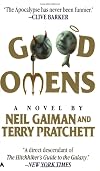
Good Omens is a comedic novel about the apocalypse. It features angels, demons, the four horsemen, witches, witch hunters, and an 11 year-old Antichrist. I don’t want to say too much about the plot, because part of the fun is seeing it all unfold as you read it.
It started off as a 3 star read for me but became progressively funnier over the course of the novel. There was a part of the book where a “secondary” group of horsemen of the apocalypse were discussing potential names that had me in tears of laughter. I liked all the characters and once again, Gaiman (and Pratchett) give us a great, entertaining story.
The audio was pretty good. Not as good as Gaiman reading, but pretty enjoyable (with the exception of his American accent, which was terrible).
This was not tagged futuristic but I do think it fits, so I tagged it myself.
Good Omens is a comedic novel about the apocalypse. It features angels, demons, the four horsemen, witches, witch hunters, and an 11 year-old Antichrist. I don’t want to say too much about the plot, because part of the fun is seeing it all unfold as you read it.
It started off as a 3 star read for me but became progressively funnier over the course of the novel. There was a part of the book where a “secondary” group of horsemen of the apocalypse were discussing potential names that had me in tears of laughter. I liked all the characters and once again, Gaiman (and Pratchett) give us a great, entertaining story.
The audio was pretty good. Not as good as Gaiman reading, but pretty enjoyable (with the exception of his American accent, which was terrible).
This was not tagged futuristic but I do think it fits, so I tagged it myself.
Untouchable by Anand
3 stars
Bakha is a young man born into a caste system in which he is labeled one of the untouchables because he cleans latrines and waste products. Untouchables are seen as less than human. They are unable to drink from the same water, cannot touch a member of the higher castes, and their presence is believed to pollute their environment. The Untouchable takes us into the world of these people in India and lets the reader experience the hardship, loneliness, and helplessness that go along with being seen as impure. Bakha is kind, a hard worker, and unwilling to accept his situation. He attempts to escape his social position by mimicking the clothes of the British. But escape is not so easy in his world and he faces multiple setbacks that remind him of the powerlessness of his situation.
I really enjoyed the first two thirds of the book. The author provided very rich detail about Bakha and his surroundings. Some of the passages were beautiful and I liked the way that Bakha was able to see the beauty in the world that was often ignored by others. I would have rated the book higher if not for the last third that devolved into very a preachy, hit-you-over-the-head message. Not that I disagree with the message -- I agree that it’s a terrible system that should have been outlawed from the beginning. However, I dislike when authors write as if the readers aren’t smart enough to figure out the message when it is weaved it into the narrative and instead feel show more the need to lecture the reader. One of the things I liked about the first two thirds was how Bakha’s story, his every day life, illustrated the cruelty and inhumanity of the caste system. I didn't think the author need to end the way he did because it felt tacked on and completely different with the rest of the book which told a story and supported the message that was lectured on at the end.
Quotes:
‘May you die,’ the woman cursed Bakha, thinking she had acquired enough merit by being good to the holy man and wouldn’t lose much of it by being unkind to the sweeper.
The mind which has once peeped into the wonderland of the new, contemplated various aspects of it with longing and desire, is shocked and disappointed when living reality pulls in the reins of the wild house of fancy.
He was feeling quite detached from the human world, swathed in a sort of unadulterated melancholy.
Heredity had furrowed no deep grooves in his soul where flowers could grow or grass abound. The cumulative influence of careful selection had imprisoned his free will in the shackles of slavery to the dreary routine of one occupational environment. show less
3 stars
Bakha is a young man born into a caste system in which he is labeled one of the untouchables because he cleans latrines and waste products. Untouchables are seen as less than human. They are unable to drink from the same water, cannot touch a member of the higher castes, and their presence is believed to pollute their environment. The Untouchable takes us into the world of these people in India and lets the reader experience the hardship, loneliness, and helplessness that go along with being seen as impure. Bakha is kind, a hard worker, and unwilling to accept his situation. He attempts to escape his social position by mimicking the clothes of the British. But escape is not so easy in his world and he faces multiple setbacks that remind him of the powerlessness of his situation.
I really enjoyed the first two thirds of the book. The author provided very rich detail about Bakha and his surroundings. Some of the passages were beautiful and I liked the way that Bakha was able to see the beauty in the world that was often ignored by others. I would have rated the book higher if not for the last third that devolved into very a preachy, hit-you-over-the-head message. Not that I disagree with the message -- I agree that it’s a terrible system that should have been outlawed from the beginning. However, I dislike when authors write as if the readers aren’t smart enough to figure out the message when it is weaved it into the narrative and instead feel show more the need to lecture the reader. One of the things I liked about the first two thirds was how Bakha’s story, his every day life, illustrated the cruelty and inhumanity of the caste system. I didn't think the author need to end the way he did because it felt tacked on and completely different with the rest of the book which told a story and supported the message that was lectured on at the end.
Quotes:
‘May you die,’ the woman cursed Bakha, thinking she had acquired enough merit by being good to the holy man and wouldn’t lose much of it by being unkind to the sweeper.
The mind which has once peeped into the wonderland of the new, contemplated various aspects of it with longing and desire, is shocked and disappointed when living reality pulls in the reins of the wild house of fancy.
He was feeling quite detached from the human world, swathed in a sort of unadulterated melancholy.
Heredity had furrowed no deep grooves in his soul where flowers could grow or grass abound. The cumulative influence of careful selection had imprisoned his free will in the shackles of slavery to the dreary routine of one occupational environment. show less
Audiobook narrated by Gaiman
Wall is a sleepy English country town named after the large stone barrier that surrounds it. On the other side of the barrier is the land of Faerie, a magical land with talking animals and trees, witches, seven sons vying for their father’s title, unicorns, and a host of other colorful characters. Adults from the town keep guard over the break in the wall to prevent others from wandering into the magical meadow. However, every 9 years, the rules of the town are relaxed and folks are allowed to cross over to attend the magical market. One year, Dunston Thorn agrees to provide lodging to a mysterious stranger who is visiting the town to visit the magical market. In exchange the stranger grants him a life changing miracle.
Years later, Dunston’s son, Tristan Thorn becomes enamored with Victoria Forester, a young woman from the town who repeatedly rejects his advances. One day as they are walking home together, they see a shooting star fall in the distance behind the wall. Victoria promises Tristan that if brings her back the falling star, she will give in to what he desires, whether it be a kiss or her hand in marriage. The vow leads Tristan to pack up his belongings and embark on a journey through the gap in the wall and into the land of Fairy where he discovers his roots and true love.
I really liked this book. Gaiman has a way with creating a very vivid and fantastical world. His books are a perfect blend of warm fuzzy feeling with a show more sprinkling of darker elements. I found the beginning of this book a little slow but once Tristan leaves the town, I was hooked. The writing is beautiful and his narration is wonderful. There are moments in this book that are dark and creepy, other moments that are humorous, and other moments that are tender and sweet. I enjoyed the characters and their journeys and was sad to leave them behind.
I highly recommend the audio. He is fabulous and I could listen to him all day.
Quotes:
“He stared up at the stars: and it seemed to him then that they were dancers, stately and graceful, performing a dance almost infinite in its complexity. He imagined he could see the very faces of the stars; pale, they were, and smiling gently, as if they had spent so much time above the world, watching the scrambling and the joy and the pain of the people below them, that they could not help being amused every time another little human believed itself the center of its world, as each of us does
“He had had a severe shock some weeks earlier, when, having narrowly failed to capture a large grey-brown hare for his dinner, it had stopped at the edge of the forest, looked at him with disdain, and said, 'Well, I hope you're proud of yourself, that's all,' and had scampered off into the long grass” show less
Wall is a sleepy English country town named after the large stone barrier that surrounds it. On the other side of the barrier is the land of Faerie, a magical land with talking animals and trees, witches, seven sons vying for their father’s title, unicorns, and a host of other colorful characters. Adults from the town keep guard over the break in the wall to prevent others from wandering into the magical meadow. However, every 9 years, the rules of the town are relaxed and folks are allowed to cross over to attend the magical market. One year, Dunston Thorn agrees to provide lodging to a mysterious stranger who is visiting the town to visit the magical market. In exchange the stranger grants him a life changing miracle.
Years later, Dunston’s son, Tristan Thorn becomes enamored with Victoria Forester, a young woman from the town who repeatedly rejects his advances. One day as they are walking home together, they see a shooting star fall in the distance behind the wall. Victoria promises Tristan that if brings her back the falling star, she will give in to what he desires, whether it be a kiss or her hand in marriage. The vow leads Tristan to pack up his belongings and embark on a journey through the gap in the wall and into the land of Fairy where he discovers his roots and true love.
I really liked this book. Gaiman has a way with creating a very vivid and fantastical world. His books are a perfect blend of warm fuzzy feeling with a show more sprinkling of darker elements. I found the beginning of this book a little slow but once Tristan leaves the town, I was hooked. The writing is beautiful and his narration is wonderful. There are moments in this book that are dark and creepy, other moments that are humorous, and other moments that are tender and sweet. I enjoyed the characters and their journeys and was sad to leave them behind.
I highly recommend the audio. He is fabulous and I could listen to him all day.
Quotes:
“He stared up at the stars: and it seemed to him then that they were dancers, stately and graceful, performing a dance almost infinite in its complexity. He imagined he could see the very faces of the stars; pale, they were, and smiling gently, as if they had spent so much time above the world, watching the scrambling and the joy and the pain of the people below them, that they could not help being amused every time another little human believed itself the center of its world, as each of us does
“He had had a severe shock some weeks earlier, when, having narrowly failed to capture a large grey-brown hare for his dinner, it had stopped at the edge of the forest, looked at him with disdain, and said, 'Well, I hope you're proud of yourself, that's all,' and had scampered off into the long grass” show less
Full review to follow shortly. Funny satire tackling the hypocrisy of the top 1%, capitalism, religion and more. Thankfully, I understood more of what was going on than I did in Cat's Cradle.
Cat's cradle is one of those books that makes me feel unintelligent. I just didn't get it. I don't understand what it was about. I realize that it was a satire with commentary about science and religion but that's where my understanding stops. I thought it was well written but clearly over my head.
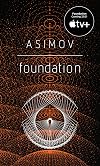
Foundation is the first book in Asimov’s Foundation series (7 books in all, I think). Psychohistorian/mathematician Hari Shelon uses science and mathematics to predict future events. Through the use of science he predicts a dark age in the future of the Galactic Empire that will last 30 thousand years and will be characterized by barbarism, warfare, possibly the end of the human race. In an effort to curb the length of this dark age, he concocts a plan to essentially sequester the brightest minds on a distant planet at the edge of the Galaxy. This planet becomes known as the Foundation. The story in the first book spans over a 100 years so there are several “main” characters but the central character is the whole Foundation and who it’s citizens deal with various emerging crises to their civilization’s integrity and future.
Finally a Sci-Fi book I actually enjoyed and didn’t make me want to die of boredom (okay, with the exception of the Dispossessed which I also liked). I found the idea of psychohistory to be interesting and I thought the ways in which the author discussed political, religious, and economic power was clever. It was an easy read and one that was not filled with technical jargon that has made me dislike so many other Sci-Fi reads.
Finally a Sci-Fi book I actually enjoyed and didn’t make me want to die of boredom (okay, with the exception of the Dispossessed which I also liked). I found the idea of psychohistory to be interesting and I thought the ways in which the author discussed political, religious, and economic power was clever. It was an easy read and one that was not filled with technical jargon that has made me dislike so many other Sci-Fi reads.
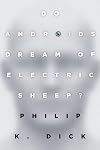
This book was the basis for the movie Blade Runner (one of my favorite movies when I was a teenager). It is a dystopian sci-fi novel about bounty hunter, Rick Deckard and his quest to hunt down and “retire” 6 androids. The story is set in the future in San Francisco after the Earth has become a wasteland filled with radioactive dust. Deckard is a bounty hunter who is hired to capture a group of six humanoid/androids who have killed humans in their escape back to Earth. The difficulty is that these androids look identical to humans and can only be distinguished through the use of empathy testing. The book has some very light philosophical (and somewhat simplistic) ponderings about what makes us human and what makes us feel alive.
I can’t believe I’ve only gotten around to reading this now. I enjoyed this book. It was a quick, easy, and entertaining read. I didn’t find it that deep or thought provoking, but I rated it 4 because I enjoyed it. The plot pulled me in and I liked a couple of the main characters so I was engaged in finding out what happened to them. I liked the concept of how and why animals were so important to the remaining survivors and I thought some of the creations (empathy box, mood dial, etc).
I can’t believe I’ve only gotten around to reading this now. I enjoyed this book. It was a quick, easy, and entertaining read. I didn’t find it that deep or thought provoking, but I rated it 4 because I enjoyed it. The plot pulled me in and I liked a couple of the main characters so I was engaged in finding out what happened to them. I liked the concept of how and why animals were so important to the remaining survivors and I thought some of the creations (empathy box, mood dial, etc).
2.5 stars
I know I'm probably in the minority here but I didn't think this book was all that amazing. I enjoyed the first half of the book but the second half stalled for me and was more about preaching a certain ideology than it was about plot development. His views on women (female characters are secretaries, strippers, or nurses) were bothersome to me. If you can get past that, some passages were brilliant but on the whole not as enjoyable a read as I had hoped.
I know I'm probably in the minority here but I didn't think this book was all that amazing. I enjoyed the first half of the book but the second half stalled for me and was more about preaching a certain ideology than it was about plot development. His views on women (female characters are secretaries, strippers, or nurses) were bothersome to me. If you can get past that, some passages were brilliant but on the whole not as enjoyable a read as I had hoped.
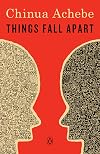
Things Fall Apart by Achebe
4 stars
Things Fall Apart follows the life of Okonkwo, a warrior and leader in the of an Ibo tribe in Nigeria. Okonkwo is a flawed man who is haunted by the shame he feels about his father. He becomes consumed by a need to differentiate himself from his father who was seen as weak and lazy, and who died leaving behind multiple debts on his family. The novel is split into three parts. While all parts follow Okonkwo, the first part is largely centered on building a picture of traditional tribe life and closely follows Okonkwo’s actions within his family and his tribe. The final third of the novel continues to follow Okonkwo’s actions but within the larger cultural context of colonialism—thus his actions take place in the midst of cultural clash between White missionaries and African tribesmen. The book provides readers with a wonderfully rich immersion into both the traditional customs of the Ibo, an immersion that makes the second part of the story so heart breaking.
Achebe’s story telling method is interesting, full of repeating patterns and with a sprinkling of Ibo words. Chapters almost read like a series of interconnected short storiee--like the kinds of stories told within the book by various Ido men and women.
Initially I struggled a little with the beginning of the book and I found it difficult to emotionally connect with the primary characters. However, as the story progressed I became much more engaged. I loved the descriptions of show more the traditions and the use of stories to teach lessons and pass down customs. I also found it interesting to see how very different spiritual beliefs and how these beliefs informed the tribe’s behavior and were infused into their stories.
A few passages I liked:
Never kill a man who says nothing… He ground his teeth again and told a story to illustrate his point. ‘Mother Kite once sent her daughter to bring food. She went and brought back a duckling. ‘You have done very well,’ said the Mother Kite to her daughter, ‘but tell me, what did the mother of this duckling say when you swooped and carried its child away? ‘ “It said nothing,’ replied the young kite. ‘It just walked away.’ ‘You must return the duckling,’ said Mother Kite. ‘There is something ominous behind the silence.’ And so Daughter Kite returned the duckling and took a chick instead. ‘What did the mother of this chick do?’ asked the young kite. ‘it cried and raved and cursed me,’ said the young kite. ‘Then we can eat the chick,’ said her mother. ‘There is nothing to fear from someone who shouts.’
“It’s true that a child belongs to its father. But when a father beats his child, it seeks sympathy in its mother’s hut. A man belongs to his fatherland when things are good and life is sweet. But when there is sorrow and bitterness he finds refuge in his motherland.” show less
4 stars
Things Fall Apart follows the life of Okonkwo, a warrior and leader in the of an Ibo tribe in Nigeria. Okonkwo is a flawed man who is haunted by the shame he feels about his father. He becomes consumed by a need to differentiate himself from his father who was seen as weak and lazy, and who died leaving behind multiple debts on his family. The novel is split into three parts. While all parts follow Okonkwo, the first part is largely centered on building a picture of traditional tribe life and closely follows Okonkwo’s actions within his family and his tribe. The final third of the novel continues to follow Okonkwo’s actions but within the larger cultural context of colonialism—thus his actions take place in the midst of cultural clash between White missionaries and African tribesmen. The book provides readers with a wonderfully rich immersion into both the traditional customs of the Ibo, an immersion that makes the second part of the story so heart breaking.
Achebe’s story telling method is interesting, full of repeating patterns and with a sprinkling of Ibo words. Chapters almost read like a series of interconnected short storiee--like the kinds of stories told within the book by various Ido men and women.
Initially I struggled a little with the beginning of the book and I found it difficult to emotionally connect with the primary characters. However, as the story progressed I became much more engaged. I loved the descriptions of show more the traditions and the use of stories to teach lessons and pass down customs. I also found it interesting to see how very different spiritual beliefs and how these beliefs informed the tribe’s behavior and were infused into their stories.
A few passages I liked:
Never kill a man who says nothing… He ground his teeth again and told a story to illustrate his point. ‘Mother Kite once sent her daughter to bring food. She went and brought back a duckling. ‘You have done very well,’ said the Mother Kite to her daughter, ‘but tell me, what did the mother of this duckling say when you swooped and carried its child away? ‘ “It said nothing,’ replied the young kite. ‘It just walked away.’ ‘You must return the duckling,’ said Mother Kite. ‘There is something ominous behind the silence.’ And so Daughter Kite returned the duckling and took a chick instead. ‘What did the mother of this chick do?’ asked the young kite. ‘it cried and raved and cursed me,’ said the young kite. ‘Then we can eat the chick,’ said her mother. ‘There is nothing to fear from someone who shouts.’
“It’s true that a child belongs to its father. But when a father beats his child, it seeks sympathy in its mother’s hut. A man belongs to his fatherland when things are good and life is sweet. But when there is sorrow and bitterness he finds refuge in his motherland.” show less