Amazing. The rhetoric skill of Three Guineas in particular is impressive.
This was my first read of 2010 because A Room of One's Own is mentioned, referenced or quoted from in almost every other feminist theory book I pick up, and it was starting to drive me around the bend. The reason it's quoted so much are now clear. These are a clearly argued, clever, funny and lively pair of works.
I particularly enjoyed Woolf's clear setting out of what economic independence means to a person's intellectual honesty, and their ability to hold and express opinions in opposition to power. I also liked her overall critique of the politics of domination, and the difference in public and private interactions between oppressor and oppressed.
Having struggled in the past with researching statistics to prove a point from poorly kept and haphazardly located records, I am rather in awe of Woolf's work in being able to present and provide references for her estimates of average income and spending on education for Victorian era women.
An excellent read.
This was my first read of 2010 because A Room of One's Own is mentioned, referenced or quoted from in almost every other feminist theory book I pick up, and it was starting to drive me around the bend. The reason it's quoted so much are now clear. These are a clearly argued, clever, funny and lively pair of works.
I particularly enjoyed Woolf's clear setting out of what economic independence means to a person's intellectual honesty, and their ability to hold and express opinions in opposition to power. I also liked her overall critique of the politics of domination, and the difference in public and private interactions between oppressor and oppressed.
Having struggled in the past with researching statistics to prove a point from poorly kept and haphazardly located records, I am rather in awe of Woolf's work in being able to present and provide references for her estimates of average income and spending on education for Victorian era women.
An excellent read.
Cute, if suffering from plot holes and a rather unforgivable approval of animal experimentation. And male-as-default syndrome.
I was so disappointed with this book. I wanted to love it. I've very much enjoyed the authors' previous work, and the concept of Havemercy was so interesting.
But not one female character. Not one. There's a woman who is either raped or wasn't, and is slut shamed and harassed either way - all offstage; it's just a plot point. There's a shrew mother-in-law who faints a lot. There's a little girl for a couple of paragraphs, who cries a lot. There's someone's ex girlfriend, who shows a little promise by having a name, being on the page, and speaking a few lines, but she dies in the next scene. There's the Mysterious Mindreader, who Mysteriously speaks a few lines in one scene and is never heard from again, either. There's the misnamed woman at a palace party who is there to be the 'sluts totally ask to get raped by the rapist character' stand-in, and that scene is all about the two men in it anyway. That's all.
Oh, and the three kindly prostitutes who raised one of the main characters. They don't have names, either.
The metal dragons are called 'girls'. But beast-machines, while cool, do not count as representations of women, and besides which none of them speak more than a few lines either. And then they all sacrifice themselves for their country.
All other references to women are derogatory. Sluts, whores, and shews, and when a male character wants to insult another it's by comparing him to a woman.
This from two women writers who I've liked in the past was incredibly show more disappointing. One of the protagonists that we're supposed to like is almost definitely a rapist, and is without question an out and out misogynist. That could have been forgivable if there was a foil to him. There wasn't. By having no female characters, and only the one ineffectual other character who's supposed to teach him to 'respect women' - why would he do that, in this imagined world where apparently there aren't any? - his attitudes stand unchallenged.
I really couldn't get past this. I would have liked to see more of the dragons, as well. And rather less of what looked like racial stereotyping of the enemy state.
Two stars because the characters were interesting, when they weren't awful. show less
But not one female character. Not one. There's a woman who is either raped or wasn't, and is slut shamed and harassed either way - all offstage; it's just a plot point. There's a shrew mother-in-law who faints a lot. There's a little girl for a couple of paragraphs, who cries a lot. There's someone's ex girlfriend, who shows a little promise by having a name, being on the page, and speaking a few lines, but she dies in the next scene. There's the Mysterious Mindreader, who Mysteriously speaks a few lines in one scene and is never heard from again, either. There's the misnamed woman at a palace party who is there to be the 'sluts totally ask to get raped by the rapist character' stand-in, and that scene is all about the two men in it anyway. That's all.
Oh, and the three kindly prostitutes who raised one of the main characters. They don't have names, either.
The metal dragons are called 'girls'. But beast-machines, while cool, do not count as representations of women, and besides which none of them speak more than a few lines either. And then they all sacrifice themselves for their country.
All other references to women are derogatory. Sluts, whores, and shews, and when a male character wants to insult another it's by comparing him to a woman.
This from two women writers who I've liked in the past was incredibly show more disappointing. One of the protagonists that we're supposed to like is almost definitely a rapist, and is without question an out and out misogynist. That could have been forgivable if there was a foil to him. There wasn't. By having no female characters, and only the one ineffectual other character who's supposed to teach him to 'respect women' - why would he do that, in this imagined world where apparently there aren't any? - his attitudes stand unchallenged.
I really couldn't get past this. I would have liked to see more of the dragons, as well. And rather less of what looked like racial stereotyping of the enemy state.
Two stars because the characters were interesting, when they weren't awful. show less
I had such fun with this book. I can't remember the last time I laughed so much reading a novel. The characters were well drawn and so different from one another - I couldn't choose a favourite.
I did wish there were more lose ends wrapped up - WHY was Saroj uncomfortable with Meenal? - but overall a very satisfying, engaging read. I escpecially liked the tips at the end of some of the recipes.
I did wish there were more lose ends wrapped up - WHY was Saroj uncomfortable with Meenal? - but overall a very satisfying, engaging read. I escpecially liked the tips at the end of some of the recipes.
This was such fun. Space opera fun! With horses! And it is full of awesome, well drawn, strong female characters. It passes the Bechdel test, well and truly.
Interesting characters, intriguing female friendships, and very well paced. I'm looking forward to rest of this series.
Interesting characters, intriguing female friendships, and very well paced. I'm looking forward to rest of this series.
I had a complicated relationship with Villette. The French-with-endnotes drove me to distraction, what with the constantly having to flip back and forth to understand what was going on. Footnotes. Footnotes are the way to go, Penguin, if you must make your primary text bilingual.
But I liked Lucy as a character, and the unreliable narrator thing was interesting. Frustrating, and intriguing as a literary technique. I loved her snarkiness, her sound knowledge that she is totally smarter than you, her stubbornness and self-reliance and bravery. And I think she had a crush on Ginevra.
I wasn't too fond of the plot-by-coincidence method - I can forgive this once or twice, but every major point that moved the plot forward hinged on a highly improbable attack of deus ex machina. Still, I don't do classics that often, and I am quite probably missing an understanding of how the genre works.
And the love interest. Was I supposed to loathe him? If so, the text is successful. I bitterly resented him becoming somewhat sympathetic toward the end, and so the ambiguous book ending suited me very well.
I keep waffling between this being a three star or a four star. It's stayed with me more than a three star read does, but there were parts I purely hated about this book. Also, the random, pointless ableism ought to have been cut.
But I liked Lucy as a character, and the unreliable narrator thing was interesting. Frustrating, and intriguing as a literary technique. I loved her snarkiness, her sound knowledge that she is totally smarter than you, her stubbornness and self-reliance and bravery. And I think she had a crush on Ginevra.
I wasn't too fond of the plot-by-coincidence method - I can forgive this once or twice, but every major point that moved the plot forward hinged on a highly improbable attack of deus ex machina. Still, I don't do classics that often, and I am quite probably missing an understanding of how the genre works.
And the love interest. Was I supposed to loathe him? If so, the text is successful. I bitterly resented him becoming somewhat sympathetic toward the end, and so the ambiguous book ending suited me very well.
I keep waffling between this being a three star or a four star. It's stayed with me more than a three star read does, but there were parts I purely hated about this book. Also, the random, pointless ableism ought to have been cut.
Kind of cute story, but I found it boring. I love Willis' Oxford Time Travel universe, but the rest of her work seems to be hit and miss for me. I'm in awe of the research she does for her work, and that's probably the most enjoyable part of this story for me.
I liked the linguistic shifts for this near-future world, and the film references worked into the narrative, but the story itself didn't go anywhere for me.
I liked the linguistic shifts for this near-future world, and the film references worked into the narrative, but the story itself didn't go anywhere for me.
X-Men in the dark ages! There was a lot I liked about this book.
I loved that Katsa's disinclination to marry isn't reversed by Her One True Love, and that her relationship with Po is fully negotiated and consensual. Nice to have a YA heroine running around using contraception, talking about what sex will mean for her, making the decision to follow her desire, and then having a mature, respectful conversation with her lover about her long term wants. And having him utterly respect her decision to remain unmarried. Damned refreshing.
I liked the revelations of what Katsa's true Grace actually is, and her and Po working out how to train together. I particularly liked her working with him after their separation to train together again. I loved the secret society, and so far, I'm interested in Bitterblue as a character. I loved that some Graces are so strange and useless.
What I couldn't get past was the utter ridiculous hand-waving coincidence that Katsa and Po crossed the border into Monsea at exactly the right second to surprise its king murdering its queen, you know, right on the border of the country. Because she's run that far. The capital city is not that close to the border, people. And they arrive in time to see and hear the whole incident. FFS, that was some serious lazy writing, there. It let the whole book down.
Still, I liked the world enough to pick up the second book.
I loved that Katsa's disinclination to marry isn't reversed by Her One True Love, and that her relationship with Po is fully negotiated and consensual. Nice to have a YA heroine running around using contraception, talking about what sex will mean for her, making the decision to follow her desire, and then having a mature, respectful conversation with her lover about her long term wants. And having him utterly respect her decision to remain unmarried. Damned refreshing.
I liked the revelations of what Katsa's true Grace actually is, and her and Po working out how to train together. I particularly liked her working with him after their separation to train together again. I loved the secret society, and so far, I'm interested in Bitterblue as a character. I loved that some Graces are so strange and useless.
What I couldn't get past was the utter ridiculous hand-waving coincidence that Katsa and Po crossed the border into Monsea at exactly the right second to surprise its king murdering its queen, you know, right on the border of the country. Because she's run that far. The capital city is not that close to the border, people. And they arrive in time to see and hear the whole incident. FFS, that was some serious lazy writing, there. It let the whole book down.
Still, I liked the world enough to pick up the second book.
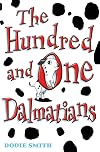
This was one of the most sexist books I have ever read. Worse, I first read it when I was ten or so and didn't notice the sexism, which means that its ridiculous list of 'male' and 'female' attributes went into my psyche unchallenged.
According to Dodie Smith, men and male dogs are stronger, don't feel the cold, understand both numbers and words better, have a sense of direction, possess deductive powers, are inventive, loyal and brave.
Women and female dogs can't tell their left from their right after a page of instruction in how to do so, feel proud of not getting lost while heading in a straight line, can't count - even one's own puppies, don't understand either human or dog speech as well as a male dog, get tired about four times as fast as male puppies, are jealous, vain, proud of their clothes, are hysterical, silly, distracted, and generally ridiculous. But they are pretty.
What a steaming pile of crap.
Also, there's a scene of "thieving gypsies", and one can speak either Romany or "normal". Ugh.
I really wanted to like this. It's a charming story, in parts. But it is choc full of blatant, unchecked sexism, and I am boggled that Disney seems to have done a better job than the source.
According to Dodie Smith, men and male dogs are stronger, don't feel the cold, understand both numbers and words better, have a sense of direction, possess deductive powers, are inventive, loyal and brave.
Women and female dogs can't tell their left from their right after a page of instruction in how to do so, feel proud of not getting lost while heading in a straight line, can't count - even one's own puppies, don't understand either human or dog speech as well as a male dog, get tired about four times as fast as male puppies, are jealous, vain, proud of their clothes, are hysterical, silly, distracted, and generally ridiculous. But they are pretty.
What a steaming pile of crap.
Also, there's a scene of "thieving gypsies", and one can speak either Romany or "normal". Ugh.
I really wanted to like this. It's a charming story, in parts. But it is choc full of blatant, unchecked sexism, and I am boggled that Disney seems to have done a better job than the source.
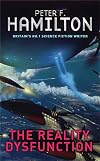
I hate this guy's writing. He needs an editor. He can't keep his tenses or his POVs straight, he shifts to passive voice in the middle of a fight for Pete's sake, and he doesn't check his facts.
Dear Peter F. Hamilton, there is no such thing as an Australian Marine, and most especially there is no such thing as an Australian Marine serving in the Vietnam war.
I can't think of many books I've had to force myself to finish as much as I did this one. Mostly to see how much worse it could get.
Dear Peter F. Hamilton, there is no such thing as an Australian Marine, and most especially there is no such thing as an Australian Marine serving in the Vietnam war.
I can't think of many books I've had to force myself to finish as much as I did this one. Mostly to see how much worse it could get.
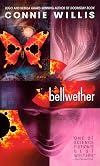
Connie Willis' research for books just impresses my socks off. The short stories themselves don't always.
I found it hard to decide what to call this, because it's not really science fiction - except in the sense that it's fiction about science.
The story didn't really hook me. I liked the resolution, but the story read to me more like a sitcom than what I was expecting.
Still, hating Flip was good fun.
I found it hard to decide what to call this, because it's not really science fiction - except in the sense that it's fiction about science.
The story didn't really hook me. I liked the resolution, but the story read to me more like a sitcom than what I was expecting.
Still, hating Flip was good fun.
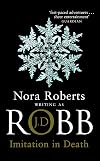
I loved this. And I'm so glad! Nora Roberts is smart and funny online, and it rather pained me that I couldn't stand the book of hers I picked up to try a couple of years ago. I really wanted to like her writing, and it turns out I do, if it's in my genre.
Great heroine, gripping mystery, interesting futuristic world, and likable supporting characters. I'm looking forward to devouring this series.
Great heroine, gripping mystery, interesting futuristic world, and likable supporting characters. I'm looking forward to devouring this series.
Huh. Well, I'm glad I picked up Book 17 before I picked up Book 1. Full of typos, to start with - embarrassing! This is a forth edition!
See, what I liked about Imitation in Death was that there was a great story, with excellent characters, and the heroine did not spend as much headspace on sorting out her omg confusing love life as she did solving the murder mystery.
If I'd started with this book, I wouldn't have continued with this series. Dallas falls for a suspect in her murder case, which I could maybe forgive, if he didn't exhibit reams and reams of controlling, pre-abusive warning signs. Christ! The man disregards Dallas's boundaries all over the place, both the ones she has made clear to him and that ones that one hopes not to have to make clear, such as don't break into my apartment and wait for me.
In almost every scene that Dallas and Roarke share, he decides if and when Dallas will leave his presence, disregarding what she wants. Dallas is shown over and over clearly stating her boundaries, Roarke overruling them, and Dallas giving in because, I don't know, as a woman written in a romance genre, she "knows" that this pushy man knows better than she does what she wants and needs? Yeah. Bloody disappointing.
Dallas is in most other ways an excellent feminist character. The rest of her personality doesn't match with failure to read warning signs like this - and she's a cop who tells us she's had plenty of experience with domestic violence. She knows better than show more to hook up with a man who doesn't listen to 'no', over and over again.
But the series gets better. I wonder when it turns the corner... show less
See, what I liked about Imitation in Death was that there was a great story, with excellent characters, and the heroine did not spend as much headspace on sorting out her omg confusing love life as she did solving the murder mystery.
If I'd started with this book, I wouldn't have continued with this series. Dallas falls for a suspect in her murder case, which I could maybe forgive, if he didn't exhibit reams and reams of controlling, pre-abusive warning signs. Christ! The man disregards Dallas's boundaries all over the place, both the ones she has made clear to him and that ones that one hopes not to have to make clear, such as don't break into my apartment and wait for me.
In almost every scene that Dallas and Roarke share, he decides if and when Dallas will leave his presence, disregarding what she wants. Dallas is shown over and over clearly stating her boundaries, Roarke overruling them, and Dallas giving in because, I don't know, as a woman written in a romance genre, she "knows" that this pushy man knows better than she does what she wants and needs? Yeah. Bloody disappointing.
Dallas is in most other ways an excellent feminist character. The rest of her personality doesn't match with failure to read warning signs like this - and she's a cop who tells us she's had plenty of experience with domestic violence. She knows better than show more to hook up with a man who doesn't listen to 'no', over and over again.
But the series gets better. I wonder when it turns the corner... show less
It ... read differently to the previous books. Lila has changed rather a bit. Everyone is a bit colder, a bit more practical. I think I liked it.
Still. Needs more half elf half demon rock star boyfriend.
Still. Needs more half elf half demon rock star boyfriend.
I liked it a lot. I finished it, a bit ambivalent, then went off reading reviews on Goodreads, whereupon I found myself disagreeing wildly with people's conceptions of the characters. Clearly I must have liked the book very much, though there's something a little unsatisfying about the ending - perhaps the ratio of wrap up after so very much set up - that stops me from loving it. But I found it an engrossing read; unusual for a welded-on fantasy genre reader - I can't usually get too excited about real-world novels.
I loved getting to know the three protagonists, and I liked the split structure of the book, shifting in POV and point in time, but in large enough chunks that you could get a real feel for the three different voices. I liked that Tony and Roz and Charis have nothing in common but college, and are therefore friends for life. I loved reading of their friendships and their early lives. Zenia, I don't know.
Boyce was pure bottled awesome.
I didn't like that the common weak point for all three of them was their partner, but then, it seemed true. I did like that Zenia had reasons having nothing to do with the men themselves for doing what she did. Even if she is a cipher for every stereotype of female relationships.
I think I'll be thinking about this for a long while. And I think I liked Roz best. Maybe Tony.
I loved getting to know the three protagonists, and I liked the split structure of the book, shifting in POV and point in time, but in large enough chunks that you could get a real feel for the three different voices. I liked that Tony and Roz and Charis have nothing in common but college, and are therefore friends for life. I loved reading of their friendships and their early lives. Zenia, I don't know.
Boyce was pure bottled awesome.
I didn't like that the common weak point for all three of them was their partner, but then, it seemed true. I did like that Zenia had reasons having nothing to do with the men themselves for doing what she did. Even if she is a cipher for every stereotype of female relationships.
I think I'll be thinking about this for a long while. And I think I liked Roz best. Maybe Tony.

As a rant, it's an excellent one and very funny in parts.
I had issues with the ableism of it, and I'm not sure what to do with the anti-gay slurs. Which seem ... not to be slurs to Solanas? Which doesn't give her the right to use them.
Read as a parody of the typical women-hating rant found in an awful lot of books by Manly Man, it's brilliance. Read literally, it's horrifying in parts and very, very clever in others.
For a 60-page work, it's generating more thought than anything else I've read this year.
I had issues with the ableism of it, and I'm not sure what to do with the anti-gay slurs. Which seem ... not to be slurs to Solanas? Which doesn't give her the right to use them.
Read as a parody of the typical women-hating rant found in an awful lot of books by Manly Man, it's brilliance. Read literally, it's horrifying in parts and very, very clever in others.
For a 60-page work, it's generating more thought than anything else I've read this year.
This short story masquerading as a novel apparently exists as an excuse to publish fanfiction about an unremarkable event in the author's life. It was a boring scene. It became cringe-worthy when the author had to retell the actual event in her author's notes. And include comic illustrations from her friend. Maybe ... this belongs on a livejournal, not a published work?
Meanwhile, Anita crosses major, major lines as a character. The fact that she's now perfectly happy to commit mind rape, physical rape, magical enslavement and a particularly violent murder by magic without blinking was an enormous shift in Anita's moral lines. It went unremarked in the text.
These books are getting more awful by the installment, and yet I still keep reading the damn things. Every time I wonder why.
Meanwhile, Anita crosses major, major lines as a character. The fact that she's now perfectly happy to commit mind rape, physical rape, magical enslavement and a particularly violent murder by magic without blinking was an enormous shift in Anita's moral lines. It went unremarked in the text.
These books are getting more awful by the installment, and yet I still keep reading the damn things. Every time I wonder why.
We Tell Ourselves Stories in Order to Live: Collected Nonfiction (Everyman's Library) by Joan Didion
I have been working on this read for two and a half months, in between other lighter - literal and figurative - reading. I struggled with Miami and Political Fictions; the pair of them needing more familiarity with the politics around them than I have, I think. And Political Fictions was, perhaps, too recent to be interesting to me.
I enjoyed with varying degrees the other books in the anthology, most notably Slouching Toward Bethlehem. Didion's turn of phrase is astoundingly engaging, and even the three essays that dealt with freeways, State waterworks, and suburban shopping malls, construction and terminology of, were interesting and readable. I could wish that she examined some of her subjects with a more feminist lens.
The descriptions of Los Angeles will stay with me the most, I think. She paints such excellent pictures with her words.
I enjoyed with varying degrees the other books in the anthology, most notably Slouching Toward Bethlehem. Didion's turn of phrase is astoundingly engaging, and even the three essays that dealt with freeways, State waterworks, and suburban shopping malls, construction and terminology of, were interesting and readable. I could wish that she examined some of her subjects with a more feminist lens.
The descriptions of Los Angeles will stay with me the most, I think. She paints such excellent pictures with her words.
Very nearly abandoned due to thump-you-over-the-head misogyny on the part of the two male characters. Even more nearly abandoned due to repeated rape threats in the head of the male love interest. Of course then there is soulbonding and his "protectiveness" is totally sweet and just means that he loves her forever, right? Ugh.
This reads like an early novel. Not a patch on the Valentine or Kismet books.
Two stars because I only give one-star reviews to books that bore me stupid as well as piss me off. This did not bore me stupid because magic systems are interesting to me, and also because I was waiting in vain for the two "ass-kicking" female characters to come to their senses and dump Mr. My Hormones Make Me Need to Rape You off a building. Alas, instead there is dinner with the parents. Sadface.
This reads like an early novel. Not a patch on the Valentine or Kismet books.
Two stars because I only give one-star reviews to books that bore me stupid as well as piss me off. This did not bore me stupid because magic systems are interesting to me, and also because I was waiting in vain for the two "ass-kicking" female characters to come to their senses and dump Mr. My Hormones Make Me Need to Rape You off a building. Alas, instead there is dinner with the parents. Sadface.
I liked this very much; the language, the characters, the heroine's eventual choice. Big Noodle as a name for a love interest, indeed. I have so met that guy.
I wish Colette was easier to come by. She seems to have been an incredible woman, with an impressive set of works to her name. The copy I turned up was falling apart and sourced from a regional library in Ballarat, a donated copy published in 1954. I wanted to keep it.
I wish Colette was easier to come by. She seems to have been an incredible woman, with an impressive set of works to her name. The copy I turned up was falling apart and sourced from a regional library in Ballarat, a donated copy published in 1954. I wanted to keep it.
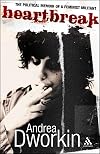
I loved this. I would have given it five stars apart from the sudden short burst of trans*-hatred at the end of the book. Disappointing.
I do love Dworkin's style, though; her passion and her way with words and her uncompromising attitude. This memoir is a fast read, made up of short snapshots of her life. It's Dworkin, so I wouldn't call it an easy read, given that her work was in confronting horrific abuse of herself and so many others. But it's engaging and wonderful as well as horrible and, yes, heartbreaking.
I do love Dworkin's style, though; her passion and her way with words and her uncompromising attitude. This memoir is a fast read, made up of short snapshots of her life. It's Dworkin, so I wouldn't call it an easy read, given that her work was in confronting horrific abuse of herself and so many others. But it's engaging and wonderful as well as horrible and, yes, heartbreaking.

My main impression when reading this book was that Crichton must have been having marriage trouble when he wrote it. It comes through. In that, "Wow, Author, I'm not sure you meant to show your issues off quite so publicly, and I'm sort of embarrassed on your behalf," sort of a way.
Also, plot holes. Still, a page turner, if not even managing to be internally consistent. Or have characters react in plausible ways. Or, or, or.
Greg Bear did this plotline much much better, though. Blood Music, if you liked the concept but thought Crichton fumbled it.
Also, plot holes. Still, a page turner, if not even managing to be internally consistent. Or have characters react in plausible ways. Or, or, or.
Greg Bear did this plotline much much better, though. Blood Music, if you liked the concept but thought Crichton fumbled it.
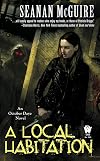
I wanted to like it. I liked the last one. Perhaps I'll like the next one. I'm still interested in the world and the characters, but as a mystery-based story this failed. It was glaringly obvious this was Resident Evil: Fairies as soon as April's history was related. Also glaring obvious what was happening after the *first* mention that Terrie and Alex are never in the same place at the same time, let alone the third, and Toby *still* has to wait for the reveal. Christ.
But what got me the most was the utter lack of both detective ability and understanding of human nature. Eliminating a suspect on the basis of a third party telling you the suspect was the victim's "best friend", and you believe no one would ever kill their "best friend"? Without even interviewing the suspect? And you're a professional PI? Really?
Also, the really really obvious tampering with the phone system? That Toby knew about from day one? Not ignoring that might have been a start.
Frustrating, author, frustrating. Will read the third book and see how that goes.
But what got me the most was the utter lack of both detective ability and understanding of human nature. Eliminating a suspect on the basis of a third party telling you the suspect was the victim's "best friend", and you believe no one would ever kill their "best friend"? Without even interviewing the suspect? And you're a professional PI? Really?
Also, the really really obvious tampering with the phone system? That Toby knew about from day one? Not ignoring that might have been a start.
Frustrating, author, frustrating. Will read the third book and see how that goes.
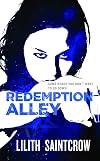
A fun, fast read. I enjoy Kismet rather more than I did Valentine - probably because Kismet lacks the abusive partner plot.
This time around, there's police corruption, nightside politics, genetic experiments, bio warfare, and class warfare by way of body snatching. The storyline sent Jill out on her own by cutting her off from the force and sending Saul out of town. Perry doesn't even show up more than once. Instead, Jill gets Theron as a deputy and a visit from hunter Leon of Texas when she needs help.
I like that Saintcrow calls out overt racism by characters in her text. I like that if she's going to write a canonically racist character, then another character will call the racist behaviour by its name.
I thought this installment was a cut above the last two in the series, although that could just be my relative boredom with crime fighter's love lives - I do tend to enjoy the story more when the lover is out of town.
This time around, there's police corruption, nightside politics, genetic experiments, bio warfare, and class warfare by way of body snatching. The storyline sent Jill out on her own by cutting her off from the force and sending Saul out of town. Perry doesn't even show up more than once. Instead, Jill gets Theron as a deputy and a visit from hunter Leon of Texas when she needs help.
I like that Saintcrow calls out overt racism by characters in her text. I like that if she's going to write a canonically racist character, then another character will call the racist behaviour by its name.
I thought this installment was a cut above the last two in the series, although that could just be my relative boredom with crime fighter's love lives - I do tend to enjoy the story more when the lover is out of town.
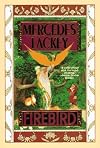
Mercedes Lackey, we usually get along tolerably well if not like a house on fire. What was this drivel? Really, what? If it's not outright offensive, it's boring as hell, or it's boring and offensive at once.
Struggled through to the end out of sheer bloody mindedness. Book did not improve. Please can I have those hours back?
Struggled through to the end out of sheer bloody mindedness. Book did not improve. Please can I have those hours back?
Very different to my first introduction to Justina Robson via the Quantum Gravity series. Hard SF and not a demon boyfriend in sight. Mostly. The seeds were there.
I liked it quite a bit. Great characters, totally believeable premise. Lots of women characters being awesome and not so awesome, but definitely themselves either way.
I liked it quite a bit. Great characters, totally believeable premise. Lots of women characters being awesome and not so awesome, but definitely themselves either way.
It took a while to get into this book. I found the chopping between characters and times and the same character within times (especially as they are known by different names in different times) to be a bit hard to follow. It wasn't until half way through that I felt really engaged, but the second half was gripping and I immediately ordered the second book in the arc.
Blackout is more in line with Doomsday Book than To Say Nothing of the Dog. That is, people are people, no matter what they live through.
In past Oxford Time Travel novels I've enjoyed the chaos of Oxford, but this time I found it annoying. Just, someone explain to me why this future society in which there is commonplace time travel there is no functioning system of instant communication? No cell phones? No pagers, if you must be a little archaic? I found it irritating that so many plot points hinge on one character not being able to contact another at a critical juncture, and so much Oxford time is spent in physically rushing from building to building searching for someone, or in leaving messages for them with inevitably unreliable message-takers.
I loved that the books stays focused on the historians in the past, and we never have any idea what's going on in Oxford once they're back in the past. I'm very interested to see what the conclusion to the story will be.
Blackout is more in line with Doomsday Book than To Say Nothing of the Dog. That is, people are people, no matter what they live through.
In past Oxford Time Travel novels I've enjoyed the chaos of Oxford, but this time I found it annoying. Just, someone explain to me why this future society in which there is commonplace time travel there is no functioning system of instant communication? No cell phones? No pagers, if you must be a little archaic? I found it irritating that so many plot points hinge on one character not being able to contact another at a critical juncture, and so much Oxford time is spent in physically rushing from building to building searching for someone, or in leaving messages for them with inevitably unreliable message-takers.
I loved that the books stays focused on the historians in the past, and we never have any idea what's going on in Oxford once they're back in the past. I'm very interested to see what the conclusion to the story will be.

It was fun, and certainly part of a particular era of urban fantasy. Reminded me of Mercedes Lackey's Bedlam's Bard universe, and her SERRAted Edge books. Not-very-alien fairy world, musicians-as-mortal-bards, motorcycles and angst-free interspecies romance.
I'd have liked it more if it didn't feel so contrived and easy. Bull's fairy world didn't have the horror and complete Otherness that makes a good story for me. Her fey are just people from a different culture and still come across as essentially understandable in their motivations.
Not being musically inclined, the many band practice scences dragged. All in all, a fluffy 80s urban fantasy with Mary Sue overtones. Don't think this one will stay in my collection.
I'd have liked it more if it didn't feel so contrived and easy. Bull's fairy world didn't have the horror and complete Otherness that makes a good story for me. Her fey are just people from a different culture and still come across as essentially understandable in their motivations.
Not being musically inclined, the many band practice scences dragged. All in all, a fluffy 80s urban fantasy with Mary Sue overtones. Don't think this one will stay in my collection.
This book holds the distinction of being the only one I have ever thrown across the room upon finishing it.
Usually I love Marsden.
Usually I love Marsden.