
Normally I wouldn't bother to read anything by Fareed Zakaria who, according to Wikipedia, is employed by CNN and the Washington Post, and has, therefore most likely, what used to be called a Communist outlook but this title indicated that it would be quick-scan material so I checked it out of my local library and did just that. There are so many books in this style now, I am starting a new tag called "quick scan books" for this growing market segment that targets the short attention span, low information reader.
I disliked the pollyannaish tone regarding the Coronavirus pandemic and much else. This tone, optimism where alarm should be the rational response, is the propaganda offshoot of the liberal mantra, never let a crisis go to waste. The New Republic got the author right ten years ago when it said, "There's something suspicious about a thinker always so perfectly in tune with the moment." That catches it just right: the futurist's prescience on the subject of the recent past. Another trademark of his declaiming tone is to claim responsibility where not is due: If a river is flowing placidly in its course its due to farsighted hydrologists not the tendency for water to flow downhill.
Let's take a quick look at the ten lessons as they are bulleted in the chapter headings followed by my read between the lines:
Lesson 2 - What matters is not the quantity of government but the quality. Big government is not the problem.
Lesson 3 - Markets are not enough. Capitalism show more sucks.
Lesson 4 - People should listen to the experts -- and experts should listen to the people. How likely is the latter?
Lesson 7 - Inequality will get worse. Sounds like Obama's "managing decline."
Lesson 8 - Globalization is not dead. This chapter was likely included in the event Trump had won reelection.
Lesson 9 - The world is becoming bipolar. Its America's fault of course and August 1914 awaits if the U. S. doesn't change its ways.
Lesson 10 - Sometimes the greatest realists are the idealists. Sometimes but usually not.
The note below that this book has 1,320 pages is a typo. As I said earlier this is a quick knock off job for the short attention span audience. show less
I disliked the pollyannaish tone regarding the Coronavirus pandemic and much else. This tone, optimism where alarm should be the rational response, is the propaganda offshoot of the liberal mantra, never let a crisis go to waste. The New Republic got the author right ten years ago when it said, "There's something suspicious about a thinker always so perfectly in tune with the moment." That catches it just right: the futurist's prescience on the subject of the recent past. Another trademark of his declaiming tone is to claim responsibility where not is due: If a river is flowing placidly in its course its due to farsighted hydrologists not the tendency for water to flow downhill.
Let's take a quick look at the ten lessons as they are bulleted in the chapter headings followed by my read between the lines:
Lesson 2 - What matters is not the quantity of government but the quality. Big government is not the problem.
Lesson 3 - Markets are not enough. Capitalism show more sucks.
Lesson 4 - People should listen to the experts -- and experts should listen to the people. How likely is the latter?
Lesson 7 - Inequality will get worse. Sounds like Obama's "managing decline."
Lesson 8 - Globalization is not dead. This chapter was likely included in the event Trump had won reelection.
Lesson 9 - The world is becoming bipolar. Its America's fault of course and August 1914 awaits if the U. S. doesn't change its ways.
Lesson 10 - Sometimes the greatest realists are the idealists. Sometimes but usually not.
The note below that this book has 1,320 pages is a typo. As I said earlier this is a quick knock off job for the short attention span audience. show less
Darwin's Doubt: The Explosive Origin of Animal Life and the Case for Intelligent Design by Stephen C. Meyer
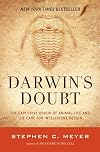
When I was sixteen I read a book by a Jehovah Witness titled "Did Man Get Here by Evolution or by Creation?" It presented the idea of a roomful of chimpanzees pounding away on typewriters and wondered how long it would take them to produce the works of William Shakespeare. It also looked askance on radiocarbon dating. That book was in print from 1930 to 1985. "Darwin's Doubt" updates those concerns. It accepts the data collected by the paleontologists but finds fault with the conclusions of neo-Darwinism, punctuated equilibrium, evolutionary developmental biology, etc. Basically it comes down to a paucity of fossil evidence and conclusions that can be drawn from the "body plans" of the fossils that have been found and combinatorial inflation. The author explains the latter with a clever scenario: Would a bicycle thief attempt to steal a bicycle secured by a three dial padlock or a four dial padlock? Which would take less time to crack? Since we know how long life has existed on Earth and since we know a great deal more about genetics since Crick and Watson's discovery in 1953, more than Darwin, LaMarck, and Mendel ever did, its a mathematical impossibility that natural selection and gene mutation can account for the history of life.
Anyone interested in Intelligent Design and the controversy surrounding it should read this book.
Anyone interested in Intelligent Design and the controversy surrounding it should read this book.

This is another book I probably reviewed and certainly recorded as read on Library Thing and which has now disappeared from my library. I will probably move back to Good Reads if this keeps up. I still have a few tabs left in the book; I'll list them here; I can't create a review from scratch this long after reading the book:
p. 65 - Post-monsoon jet stream winds preclude climbing over 26,000 feet. Only Cho Oyo has been so climbed (as of publication). However, it is" little more than a very high-altitude fell walk.”
p.67 - Argentinian expedition of autumn 1971.
p. 69 - Unsuccessful solo attempts on Everest.
p. 70 - "Another challenge on Everest, of course, is to try to climb the mountain without oxygen. This is the only way a truly light weight expedition could succeed...”
p.100 - The Nepalis are essentially of Indian ethnic background, Hindu by religion, with delicately moulded features slightly reminiscent of those of the Malays or Burmese. Sherpas, on the other hand, are essentially Tibetan...
p. 106 - Changes in habitations in Sola Khumbu between 1961 and 1972.
p. 124 - we were under no illusions about the type of climbing we were going to have on Everest - a great deal of hard work, with comparatively little exciting climbing.
p.127 - "There is no possibility of making a safe route through the Khumbu Icefall."
p. 143-144 - Cultural difficulties dealing with Sherpa porters.
p. 65 - Post-monsoon jet stream winds preclude climbing over 26,000 feet. Only Cho Oyo has been so climbed (as of publication). However, it is" little more than a very high-altitude fell walk.”
p.67 - Argentinian expedition of autumn 1971.
p. 69 - Unsuccessful solo attempts on Everest.
p. 70 - "Another challenge on Everest, of course, is to try to climb the mountain without oxygen. This is the only way a truly light weight expedition could succeed...”
p.100 - The Nepalis are essentially of Indian ethnic background, Hindu by religion, with delicately moulded features slightly reminiscent of those of the Malays or Burmese. Sherpas, on the other hand, are essentially Tibetan...
p. 106 - Changes in habitations in Sola Khumbu between 1961 and 1972.
p. 124 - we were under no illusions about the type of climbing we were going to have on Everest - a great deal of hard work, with comparatively little exciting climbing.
p.127 - "There is no possibility of making a safe route through the Khumbu Icefall."
p. 143-144 - Cultural difficulties dealing with Sherpa porters.

This is a Barnes and Noble reprint thirty-three years after the University of Michigan published it. I suspect it was out of copyright and there may be a dirth of Attila the Hun books. I shouldn't complain: I was looking for a down and dirty summation of Attila the man and this is an exhaustive vacuuming up of anything remotely related to Attila. Its also the first time much of it has been translated into English. These are fragments as the author calls them, much of it copied a few hundred years after Attila from documents contemporaneous with Attila but which since have disappeared. The fragments are presented in italics and the author's running commentary and remarks in a font only slightly different in appearance. The new University of Michigan rerelease has further commentary by David Stone Potter which has likely added sixty or so pages to the book.
Only one chapter, of fifty-six pages, is about the Huns; the subtitle should have been the giveaway before I bought this book. I previously reviewed this book but Library Thing or I failed to save it properly. I can now find only one tab about a personally interesting passage about Attila:
p.96: He could not stand the sight of Zercon, a Scythian so called, but a Moor by race.
There was a Roman envoy's description of Attila's living quarters. The envoy was impressed by the woodwork of these semi-nomadic people. Perhaps Fritz Lang's set designer read that passage before the filming of "Die Niebelungen."
There is one really show more interesting passage that gives an insight into Attila or his times. The author is a Roman envoy sent to parlay with Attila. After a long wait by the envoy, Attila returns home from a day of traveling around his dominion. They sit down to dinner and three bound prisoners are brought in. Attila asks about them, their crimes are explained and Attila is asked to pass judgement on them. Instead he eats dinner and converses with the envoy. After dinner as he is about to retire and almost as an afterthought, Attila quickly disposes of the prisoners. Each is to be killed in a different way, the details now escaping me, but they share the characteristics of cruel ingenuity.
There are no illustrations or photos. show less
Only one chapter, of fifty-six pages, is about the Huns; the subtitle should have been the giveaway before I bought this book. I previously reviewed this book but Library Thing or I failed to save it properly. I can now find only one tab about a personally interesting passage about Attila:
p.96: He could not stand the sight of Zercon, a Scythian so called, but a Moor by race.
There was a Roman envoy's description of Attila's living quarters. The envoy was impressed by the woodwork of these semi-nomadic people. Perhaps Fritz Lang's set designer read that passage before the filming of "Die Niebelungen."
There is one really show more interesting passage that gives an insight into Attila or his times. The author is a Roman envoy sent to parlay with Attila. After a long wait by the envoy, Attila returns home from a day of traveling around his dominion. They sit down to dinner and three bound prisoners are brought in. Attila asks about them, their crimes are explained and Attila is asked to pass judgement on them. Instead he eats dinner and converses with the envoy. After dinner as he is about to retire and almost as an afterthought, Attila quickly disposes of the prisoners. Each is to be killed in a different way, the details now escaping me, but they share the characteristics of cruel ingenuity.
There are no illustrations or photos. show less
The Ultimate Back Pain Solution: discover the true cause of your back pain and solve it in as little as 30 minutes by Rick Olderman
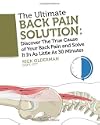
This is an excellent little book, at least it was for me, of 177 pages and as it says below measuring 10" x 8", liberally illustrated with photos and diagrams.
I had persistent lower back pain in 1990 but saw a chiropractor about seven times and have had no more pain until recently. Since continual consumption of NSAIDs is not recommended, I bought a kneeling chair since sitting seems to aggravate the pain. A rocking stool is probably a more apt descriptor for it. I bought the original such chair, designed in Germany and manufactured in Poland of ash for $350 rather than a Chinese knockoff. At first something like shin splints was a problem but my body seems to have accommodated more and more to the chair.
I felt a mixture of hope and skepticism when I read the subtitle of this book but felt I was in no position to ignore it.
A diagnosis of your back pain begins on page 56. Lie on your back on the floor with the backs of your legs also on the floor and evaluate how that feels. Then bend your knees and slide your feet up until your heels are near your buttocks and compare the comfort of these two positions. If you are undecided, bring your knees up to your chest to accentuate the second position. This shouldn't take more than a minute or so.
If you are still undecided the author says hardly anyone finds the first position more comfortable. For the much more common problem a posture analysis is then necessary. These postures, shown on pages 58 and 59, are the lordotic and the show more swayback. Both postures are problematic but the lordotic is with chest out and shoulders thrown back, a confident pose, I would say. The swayback seems to lack confidence with the shoulders hunched.
I seem to be the latter and on pages 73 and 74 sleep is discussed. Sleeping on your back with a pillow under the knees is recommended which I successfully tried. The author recommends trying to sleep on your stomach but before I bought a gel foam pillow I had to decide what sleeping posture I favored and determined that I am a back and side sleeper. I like the foam pillow (even though it may cause cancer) but may switch back to a traditional pillow so I can try sleeping on my stomach.
On pages 63 and 64 he recommends the Fours Rocking Stretch which he says everyone loves. It is described on page 121 and is sort of like a modified downward dog in yoga.
There is also a diagnosis for a third and final back problem. Remove your shirt and have someone consider your back from a near distance. If there is a fold in the flesh on the left or the right side just above the hips then you have a lateral problem.
But whichever problem or posture you have the author then devotes a chapter to exercises to fix the problem. So perhaps surprisingly the thirty minutes mentioned in the subtitle was no hollow boast, at least not for me.
The photo of the author on the back cover shows a fairly young man. A biographical sketch on page 173 states that he got a physical therapy degree in 1996 and practices in Denver. Contact information including his website is mentioned and he welcomes out of town patients. show less
I had persistent lower back pain in 1990 but saw a chiropractor about seven times and have had no more pain until recently. Since continual consumption of NSAIDs is not recommended, I bought a kneeling chair since sitting seems to aggravate the pain. A rocking stool is probably a more apt descriptor for it. I bought the original such chair, designed in Germany and manufactured in Poland of ash for $350 rather than a Chinese knockoff. At first something like shin splints was a problem but my body seems to have accommodated more and more to the chair.
I felt a mixture of hope and skepticism when I read the subtitle of this book but felt I was in no position to ignore it.
A diagnosis of your back pain begins on page 56. Lie on your back on the floor with the backs of your legs also on the floor and evaluate how that feels. Then bend your knees and slide your feet up until your heels are near your buttocks and compare the comfort of these two positions. If you are undecided, bring your knees up to your chest to accentuate the second position. This shouldn't take more than a minute or so.
If you are still undecided the author says hardly anyone finds the first position more comfortable. For the much more common problem a posture analysis is then necessary. These postures, shown on pages 58 and 59, are the lordotic and the show more swayback. Both postures are problematic but the lordotic is with chest out and shoulders thrown back, a confident pose, I would say. The swayback seems to lack confidence with the shoulders hunched.
I seem to be the latter and on pages 73 and 74 sleep is discussed. Sleeping on your back with a pillow under the knees is recommended which I successfully tried. The author recommends trying to sleep on your stomach but before I bought a gel foam pillow I had to decide what sleeping posture I favored and determined that I am a back and side sleeper. I like the foam pillow (even though it may cause cancer) but may switch back to a traditional pillow so I can try sleeping on my stomach.
On pages 63 and 64 he recommends the Fours Rocking Stretch which he says everyone loves. It is described on page 121 and is sort of like a modified downward dog in yoga.
There is also a diagnosis for a third and final back problem. Remove your shirt and have someone consider your back from a near distance. If there is a fold in the flesh on the left or the right side just above the hips then you have a lateral problem.
But whichever problem or posture you have the author then devotes a chapter to exercises to fix the problem. So perhaps surprisingly the thirty minutes mentioned in the subtitle was no hollow boast, at least not for me.
The photo of the author on the back cover shows a fairly young man. A biographical sketch on page 173 states that he got a physical therapy degree in 1996 and practices in Denver. Contact information including his website is mentioned and he welcomes out of town patients. show less

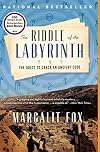
I should probably give a spoiler alert here. I don't like to ruin a book for someone who wants to read it but it seems that the great majority of reviews on this site do just that: "Hey! I read this book and here's the proof!" So in this case I will go ahead anyway.
Its been a few years since I read this book. Recently the last long Zodiac Killer cypher was broken which led to my receiving "Cracking the Egyptian Code" by Andrew Robinson as a Christmas present. That reminded me of this book "The Riddle of the Labyrinth" but I couldn't find it in my library here. Either I forgot to add it or it got lost when I transferred my library from GoodReads, if that is possible.
Thinking back on it now, I'm not sure this book makes clear any delineation or handoff between the efforts of Alice Kober to Michael Ventris. I suppose codebreaking is a solitary and cerebral activity above all else and it is all a codebreaker can do to keep track of where they are, never mind recording how they got there.
One commonality in all these cases is how mundane and unsatisfying the final revealed message seems whether it is a tongue in cheek rant by the Zodiac, bookkeeping accounts in Linear B, or the official pronouncements of the hieroglyphics. The latter seems most interesting to me although I find ancient Greece and Rome more simpatico. (The exception to this might be the Enigma machine in the high drama of WWII. But then you've got Bletchley Park finding out that Coventry will be bombed tonight show more and they sit on it, so there you go!)
The bulk of the book is about Kober, not Ventris. Kober huffs along, chain smoking, her ultimate undoing, teaching an uninteresting subject during the day and moonlighting on Linear B at night. As if those weren't enough handicaps for one person, the archeologist who found the tablets hordes them, parcelling them out in a niggardly way, all the while unable to solve them himself, a dog in the manger if ever there was one. But McGyver-like, Kober saves the paper in her cigarette packs - its World War II rationing in Brooklyn after all - and hole punches them to track the minutia of Linear B and holding them overlapped up to the light she discerns the hidden patterns.
Then along comes Ventris, a handsome (Kober never married or possibly even dated) polymath to the manor born, sports car, ascot, straight out of Central Casting, and he solves the riddle with seeming ease and brevity. That part of the story is hurried along; I suspect Fox experienced a feminist's loss of interest after Kober bowed out.
Since its about a Sisyphean undertaking not unlike decryption, "Longitude" by Dave Sobel may interest readers of this type of story.
(I read the hardcover version but this database has the author's name glommed into the title block so I used this paperback version instead.) show less
Its been a few years since I read this book. Recently the last long Zodiac Killer cypher was broken which led to my receiving "Cracking the Egyptian Code" by Andrew Robinson as a Christmas present. That reminded me of this book "The Riddle of the Labyrinth" but I couldn't find it in my library here. Either I forgot to add it or it got lost when I transferred my library from GoodReads, if that is possible.
Thinking back on it now, I'm not sure this book makes clear any delineation or handoff between the efforts of Alice Kober to Michael Ventris. I suppose codebreaking is a solitary and cerebral activity above all else and it is all a codebreaker can do to keep track of where they are, never mind recording how they got there.
One commonality in all these cases is how mundane and unsatisfying the final revealed message seems whether it is a tongue in cheek rant by the Zodiac, bookkeeping accounts in Linear B, or the official pronouncements of the hieroglyphics. The latter seems most interesting to me although I find ancient Greece and Rome more simpatico. (The exception to this might be the Enigma machine in the high drama of WWII. But then you've got Bletchley Park finding out that Coventry will be bombed tonight show more and they sit on it, so there you go!)
The bulk of the book is about Kober, not Ventris. Kober huffs along, chain smoking, her ultimate undoing, teaching an uninteresting subject during the day and moonlighting on Linear B at night. As if those weren't enough handicaps for one person, the archeologist who found the tablets hordes them, parcelling them out in a niggardly way, all the while unable to solve them himself, a dog in the manger if ever there was one. But McGyver-like, Kober saves the paper in her cigarette packs - its World War II rationing in Brooklyn after all - and hole punches them to track the minutia of Linear B and holding them overlapped up to the light she discerns the hidden patterns.
Then along comes Ventris, a handsome (Kober never married or possibly even dated) polymath to the manor born, sports car, ascot, straight out of Central Casting, and he solves the riddle with seeming ease and brevity. That part of the story is hurried along; I suspect Fox experienced a feminist's loss of interest after Kober bowed out.
Since its about a Sisyphean undertaking not unlike decryption, "Longitude" by Dave Sobel may interest readers of this type of story.
(I read the hardcover version but this database has the author's name glommed into the title block so I used this paperback version instead.) show less
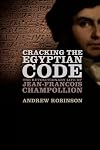
This book, printed in China for the Oxford University Press, is not the first in English or in translation from French, about this extraordinary man, Jean-Francois Champollion. It is printed on a thick, heavy, high quality paper that, I would imagine, will make it difficult for you to give away after reading. (272 pages including color plates weighing 1.95 pounds.)
The author's beat or wheelhouse, so to speak, is codebreaking and the polymaths who accomplish it, or, perhaps, accomplished it before the advent of computers. He takes a very biographical approach and on pages 127-128 explains that a lack of documentation makes it impossible to know step by step how Champillion actually unlocked the meaning of the hieroglyphic section of the Rosetta Stone.
Champillion was mercurial and often tactless, never good qualities and certainly not in unsettled post-Napoleonic France. Although Champillion knew from an early age, thanks to his bookseller father and autodidact older brother, that Egyptology would be his chosen career, he got a late start on the Rosetta Stone.
But by then an English polymath, Thomas Young, had discovered the key to understanding hieroglyphics. A cursory glance at hieroglyphics will intuitively tell you these little drawings are symbols, representative of meaning or words. This was a misconception from the beginning of the study of ancient Egyptian writing in the late 1600s.
Imagine if instead of writing an "a" you drew an apple, instead of a "b" a teddy show more bear, and on through the alphabet to a xylophone for a "z." It doesn't sound too plausible, does it? And yet that was Young's discovery, that hieroglyphics was largely a phonetic alphabet.
As the author Andrew Robinson explains, it is highly unlikely that Champollion made this discovery independently of Young. And yet to Champollion's discredit that is what he insisted. Young was very gracious about it. He was a true polymath who spread himself thin discovering the interference of light and astigmatism among other things. Champollion had settled down at this point in his life and was able to take Young's nascent discovery and run with it to completion. Later they made up so the story ends happily in this regard.
One issue I had was that late in the book on page 149 and late in Champollion's career, he made the observation that the Rosetta Stone contained 486 Greek words and 1,419 hieroglyphs and came to the logical conclusion that hieroglyphs must be letters not words. That strikes me as rather slow thinking for a polymath.
On page 244 is mentioned the discovery in 1866 of a second Rosetta-like stone which was quickly translated with Champollion's decipherment glossary thereby validating his work beyond doubt. show less
The author's beat or wheelhouse, so to speak, is codebreaking and the polymaths who accomplish it, or, perhaps, accomplished it before the advent of computers. He takes a very biographical approach and on pages 127-128 explains that a lack of documentation makes it impossible to know step by step how Champillion actually unlocked the meaning of the hieroglyphic section of the Rosetta Stone.
Champillion was mercurial and often tactless, never good qualities and certainly not in unsettled post-Napoleonic France. Although Champillion knew from an early age, thanks to his bookseller father and autodidact older brother, that Egyptology would be his chosen career, he got a late start on the Rosetta Stone.
But by then an English polymath, Thomas Young, had discovered the key to understanding hieroglyphics. A cursory glance at hieroglyphics will intuitively tell you these little drawings are symbols, representative of meaning or words. This was a misconception from the beginning of the study of ancient Egyptian writing in the late 1600s.
Imagine if instead of writing an "a" you drew an apple, instead of a "b" a teddy show more bear, and on through the alphabet to a xylophone for a "z." It doesn't sound too plausible, does it? And yet that was Young's discovery, that hieroglyphics was largely a phonetic alphabet.
As the author Andrew Robinson explains, it is highly unlikely that Champollion made this discovery independently of Young. And yet to Champollion's discredit that is what he insisted. Young was very gracious about it. He was a true polymath who spread himself thin discovering the interference of light and astigmatism among other things. Champollion had settled down at this point in his life and was able to take Young's nascent discovery and run with it to completion. Later they made up so the story ends happily in this regard.
One issue I had was that late in the book on page 149 and late in Champollion's career, he made the observation that the Rosetta Stone contained 486 Greek words and 1,419 hieroglyphs and came to the logical conclusion that hieroglyphs must be letters not words. That strikes me as rather slow thinking for a polymath.
On page 244 is mentioned the discovery in 1866 of a second Rosetta-like stone which was quickly translated with Champollion's decipherment glossary thereby validating his work beyond doubt. show less
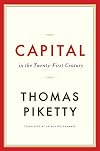
One of the interesting little details that made this book good was how the author put inflation in historical perspective: there was no long term inflation until recent times. And to prove it he shows how novels such as Jane Austen's would often mention "10,000 pounds per annum" as an acceptable income for a man to have before a woman would consider him marriageable. But after 1920 there are no further mentions of this in fiction.
So inflation is one way or consequence of government trying to function without the unpleasantness of raising taxes. Another is borrowing and Picketty delves into that also in an objective way, without digression, that I found riveting rather than dull. So that takes him back to the inevitability of increasing taxes and then Picketty is on to capital flight.
So inflation is one way or consequence of government trying to function without the unpleasantness of raising taxes. Another is borrowing and Picketty delves into that also in an objective way, without digression, that I found riveting rather than dull. So that takes him back to the inevitability of increasing taxes and then Picketty is on to capital flight.
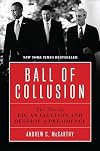
An excellent recounting of the worst political scandal in U. S. history.
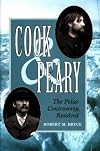
When I disembarked from the tour boat onto Eagle Island, Robert Peary's summer home in Penobscot Bay, the docent told us that Peary (pronounced with a long "e") was the first person to the North Pole and Cook was a fraud. I then asked him if he was a relative of Peary which made him angry. This book shows that Cook was indeed a fraud, not only about the North Pole but also about a first ascent of Mount McKinley, which isn't really late breaking news. What is remarkable to me is that the author shows that Peary was also a fraud.
At over a thousand pages some may find the level of detail excruciating but I find the subject of heroic exploration fascinating. One can skip the chapters that do not interest without missing anything vital.
At over a thousand pages some may find the level of detail excruciating but I find the subject of heroic exploration fascinating. One can skip the chapters that do not interest without missing anything vital.
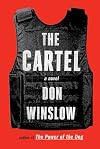
I decided to read this book after reading an article about the author in Men's Journal. Generally I avoid historical fiction but obviously that is the only genre that is going to get close to an inside look at the drug cartels. In the article Don Winslow shows the writer something he found on the dark web: a group of naked women from a competing cartel being hacked to death by men with machetes. Winslow pointed out that one of the women was well known for having committed many similar video recorded atrocities herself. A blurb on the back cover calls this book "the War and Peace of the drug wars." There is a sequel but for me one volume of this obscenity was enough. If you must smoke marijuana, please buy it from a legal source.
Green Illusions: The Dirty Secrets of Clean Energy and the Future of Environmentalism (Our Sustainable Future) by Ozzie Zehner

I came to this book after reading Michael Shellenberger's "Environmental Alarmism." Since each chapter covers a distinct subject, this is not a book that needs to be read chronologically or cover to cover. I did not find the chapter against nuclear power persuasive. He is certainly right that population growth is driving climate change and that the best way to reduce the birth rate is to support women's rights rather than just contraception. Reducing materialism and the energy consumption it necessitates is also important, he says.
A delightful little book that compelled me to go out and buy a used copy of TGG and highlight and tab it extensively. Just as Corrigan said I would, I found marginalia such as "green light = $."
Her visit to Manhassett was a complete bummer. It confirmed my belief that America's or at least Long Island's green breast days are behind it now and apparently were in FSF's time too, e. g., the author revisits her old parochial high school near Manhassett and finds it surrounded by a razor wire-topped cyclone fence. And I see that the homes there listed on line, rather drab and functional for the most part, list for over $1,000,000. And if you go to gawk at the home that is most likely the model for Gatsby's, you will be chased off.
The insights of the actor who has read the book aloud hundreds of times on stage likely warrant a book of their own.
In my personal pantheon Hemingway held top spot until I read his most recent biography. Now I have a suitable replacement.
Her visit to Manhassett was a complete bummer. It confirmed my belief that America's or at least Long Island's green breast days are behind it now and apparently were in FSF's time too, e. g., the author revisits her old parochial high school near Manhassett and finds it surrounded by a razor wire-topped cyclone fence. And I see that the homes there listed on line, rather drab and functional for the most part, list for over $1,000,000. And if you go to gawk at the home that is most likely the model for Gatsby's, you will be chased off.
The insights of the actor who has read the book aloud hundreds of times on stage likely warrant a book of their own.
In my personal pantheon Hemingway held top spot until I read his most recent biography. Now I have a suitable replacement.

I read this because Otto Penzler said it was the best mystery book of all time (or something similarly superlative). It may well be. I don't read enough of the genre to have an opinion.
What are the bones of political contention, i. e., domestic spending priorities, when oil revenues are unlimited? According to this author, in the Norwegian legislature, its complaints that describe 9:00am mail delivery as late.
This is not a book that dotes on the Utopian aspects of Scandanavian society although there is plenty of that. The author is English but married to a Dane whose country he somewhat apologetically shoehorns into the Scandinavian paradigm. In this capacity he can knowledgeably and humorously dish about the foibles and eccentricities of the people which I found to be the most interesting and entertaining aspect of the book.
Barak Obama said that Scandanavia is a model for the rest of us. But he never seemed to acknowledge that culture is upstream from politics. This book is not pedantic and might be a good read for those who have come to terms with the implications that culture is upstream from politics.
This is not a book that dotes on the Utopian aspects of Scandanavian society although there is plenty of that. The author is English but married to a Dane whose country he somewhat apologetically shoehorns into the Scandinavian paradigm. In this capacity he can knowledgeably and humorously dish about the foibles and eccentricities of the people which I found to be the most interesting and entertaining aspect of the book.
Barak Obama said that Scandanavia is a model for the rest of us. But he never seemed to acknowledge that culture is upstream from politics. This book is not pedantic and might be a good read for those who have come to terms with the implications that culture is upstream from politics.
The author, 65 at the time of publication, offers occasional autobiographical tidbits that portray a pretty remarkable person. He started his three year stint in the Israeli army in a barracks with fifty other soldiers and ended up as its chief medical officer with his own office, car and secretary and a helicopter available to fly him to inspections. A diabetic specialist by training, he came to the U. S. and is on the faculty of the Albert Einstein College of Medicine in the Bronx and is founding director of its Institute for Aging Research where he started a genomic survey of the city's Ashkenazi Jewish (AJ) centenarians. (The control group has two parts: AJs whose parents were centenarians and those whose parents aren't or weren't.) That led to a partnership with Hassy Cohen, dean of the USC (California) Leonard Davis School of Gerontology. Their venture, CohBar, identifies promising genetic variations from the AJ survey, shepards them along through funding and regulatory hurdles, incorporates them as "daughter" companies and sells them to big pharma.
Thus Dr. Barzilai has a pretty good perch from which to describe developments in the field of life span and health span research. He shows how difficult the research has been which fits in with my layman's limited understanding of the field. For example, when the mapping of the human genome was completed it was assumed that everything else was "garbage DNA." From a medical perspective the breast cancer 1 and 2 genes were show more the only positive discoveries to come out of it and now we don't hear about "garbage DNA" anymore. Its now considered to contain triggers and timers for other processes.
Besides the technical and procedural difficulties there can be legal ones too. He writes about humanin, the first-discovered mitochondrial-derived peptide (MDP), which Barzilai and Cohen consider the most promising MDP (or did at one time, its not clear) because of its relationship with insulin-like growth factor binding protein 3. Ikuo Nishimoto, the aging Japanese pharmacologist who discovered humanin, forgot to renew his patents on it so now it is financially worthless.
For those who want to cut to the chase, simply turn to chapter 8, "Stop the Clock" and the "What I Do" section (pp. 239-242). If you follow anti-aging developments closely I doubt you will find much surprising. He does take NMN and aspirin to prevent deep vein thrombosis. He also mentions that if you are geriatric, i.e., age 50+, the only efficient way to get vitamin D is through sun exposure. I've found that doing that has also improved my sleep quality. He monitors his sleep quality with a Fitbit. show less
Thus Dr. Barzilai has a pretty good perch from which to describe developments in the field of life span and health span research. He shows how difficult the research has been which fits in with my layman's limited understanding of the field. For example, when the mapping of the human genome was completed it was assumed that everything else was "garbage DNA." From a medical perspective the breast cancer 1 and 2 genes were show more the only positive discoveries to come out of it and now we don't hear about "garbage DNA" anymore. Its now considered to contain triggers and timers for other processes.
Besides the technical and procedural difficulties there can be legal ones too. He writes about humanin, the first-discovered mitochondrial-derived peptide (MDP), which Barzilai and Cohen consider the most promising MDP (or did at one time, its not clear) because of its relationship with insulin-like growth factor binding protein 3. Ikuo Nishimoto, the aging Japanese pharmacologist who discovered humanin, forgot to renew his patents on it so now it is financially worthless.
For those who want to cut to the chase, simply turn to chapter 8, "Stop the Clock" and the "What I Do" section (pp. 239-242). If you follow anti-aging developments closely I doubt you will find much surprising. He does take NMN and aspirin to prevent deep vein thrombosis. He also mentions that if you are geriatric, i.e., age 50+, the only efficient way to get vitamin D is through sun exposure. I've found that doing that has also improved my sleep quality. He monitors his sleep quality with a Fitbit. show less
Another wonderful Michael Connelly novel. His are the only ones I read in this genre. I have read all of them but the electronic-only ones.
Connelly is able to unobtrusively plug in the text of the novel the real FairWarning website and the two previous Jack McEvoy novels.
This novel is narrated in the first person. At a book signing Connelly said he wrote one of the Harry Bosch novels in the first person but it did not go well. I remembered thinking the same thing when I was reading it. But for some reason it works fine in this novel.
During the question and answer session following his speech I asked him a question that went more towards his craft or the underlying true crime behind his writing and it was evident that he did not want to talk about those things. Perhaps that comes too close to the secret proprietary methods that account for his popularity and commercial success.
Perhaps the difference in narration point of view between Bosch and McEvoy can be explained by each one's employment situation and resulting world view: Bosch is a career organization man and McEvoy struggles financially in an endangered profession and industry. As I recall the first person worked well for Raymond Chandler and Dashiell Hammett too. Their protagonists, as private eyes, were more like McEvoy than Bosch which may explain it. Unlike Connelly's novels though, those were noirish novels which first person narration seems to facilitate. Connelly's novels are more like procedurals.
Connelly is able to unobtrusively plug in the text of the novel the real FairWarning website and the two previous Jack McEvoy novels.
This novel is narrated in the first person. At a book signing Connelly said he wrote one of the Harry Bosch novels in the first person but it did not go well. I remembered thinking the same thing when I was reading it. But for some reason it works fine in this novel.
During the question and answer session following his speech I asked him a question that went more towards his craft or the underlying true crime behind his writing and it was evident that he did not want to talk about those things. Perhaps that comes too close to the secret proprietary methods that account for his popularity and commercial success.
Perhaps the difference in narration point of view between Bosch and McEvoy can be explained by each one's employment situation and resulting world view: Bosch is a career organization man and McEvoy struggles financially in an endangered profession and industry. As I recall the first person worked well for Raymond Chandler and Dashiell Hammett too. Their protagonists, as private eyes, were more like McEvoy than Bosch which may explain it. Unlike Connelly's novels though, those were noirish novels which first person narration seems to facilitate. Connelly's novels are more like procedurals.
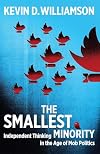
The title, "the smallest minority" refers to the individual. So this is a libertarian book. If that is not convincing, on the page that usually has the dedication, the author instead states that he "took" the title from Ayn Rand because she does not deserve it.
The first chapter's title is "A Volscian Commission." Its not clear to me why its called that since the Volsci were an Italic Osco-Umbrian tribe, well known in the history of the first century of the Roman Republic, according to Wikipedia, and there is no further mention of them in the chapter. Wikipedia often provides a "significance in broader culture" if it is warranted but perhaps forgot to here. It would seem to me more likely that Williamson wants to impress the reader with his intellect.
There are two chapter headings (out of eleven) that are clever, however: "The Road to Smurfdom" and "Shouting Fire in a Crowded Feedback Loop." (Tip of the hat to Hayek and Holmes.)
I believe the field of libertarianism has been so thoroughly gone over that Williamson is forced to resort to words like "ochlocracy" instead of "mob rule" and "streitbare Demokratie" instead of "militant democracy." There is also a liberal sprinkling of Latin words and phrases and Shakespeare quotations, some of them long enough to require indented margins. I'm sure Williamson knows the word for that too; he knows that the word for the squiggle or flourish at the end of a signature is a "paraph." He also uses a little symbol to mark subsections (I show more sure he knows the word for that too) that resembles the Fat Boy atomic bomb.
The chapter "Jeffrey and Me" about his firing or cancelling at "Atlantic [Monthly]" is quite humorous and cautionary and well worth reading. But then he goes and ends the chapter with:
But you don't need to worry about guys like Jeffrey and me. We're going to do fine.
It's the rest of you poor dumb bastards who need worrying about.
Obviously Jeffrey doesn't need worrying about since we have just been told Jeff Bezos ex-wife is his mistress; and anyone who knows the slightest thing about Ayn Rand-ism knows that her disciples don't like to be mollycoddled anyway.
While I agreed with everything I read, and I only got halfway through the third chapter, I was a little put off by the profanity and aggressive tone and will probably stick to Chuck Klosterman next time I get in the mood for this kind of outre writing. show less
The first chapter's title is "A Volscian Commission." Its not clear to me why its called that since the Volsci were an Italic Osco-Umbrian tribe, well known in the history of the first century of the Roman Republic, according to Wikipedia, and there is no further mention of them in the chapter. Wikipedia often provides a "significance in broader culture" if it is warranted but perhaps forgot to here. It would seem to me more likely that Williamson wants to impress the reader with his intellect.
There are two chapter headings (out of eleven) that are clever, however: "The Road to Smurfdom" and "Shouting Fire in a Crowded Feedback Loop." (Tip of the hat to Hayek and Holmes.)
I believe the field of libertarianism has been so thoroughly gone over that Williamson is forced to resort to words like "ochlocracy" instead of "mob rule" and "streitbare Demokratie" instead of "militant democracy." There is also a liberal sprinkling of Latin words and phrases and Shakespeare quotations, some of them long enough to require indented margins. I'm sure Williamson knows the word for that too; he knows that the word for the squiggle or flourish at the end of a signature is a "paraph." He also uses a little symbol to mark subsections (I show more sure he knows the word for that too) that resembles the Fat Boy atomic bomb.
The chapter "Jeffrey and Me" about his firing or cancelling at "Atlantic [Monthly]" is quite humorous and cautionary and well worth reading. But then he goes and ends the chapter with:
But you don't need to worry about guys like Jeffrey and me. We're going to do fine.
It's the rest of you poor dumb bastards who need worrying about.
Obviously Jeffrey doesn't need worrying about since we have just been told Jeff Bezos ex-wife is his mistress; and anyone who knows the slightest thing about Ayn Rand-ism knows that her disciples don't like to be mollycoddled anyway.
While I agreed with everything I read, and I only got halfway through the third chapter, I was a little put off by the profanity and aggressive tone and will probably stick to Chuck Klosterman next time I get in the mood for this kind of outre writing. show less
Great Britain's Royal Tombs: A Guide to the Lives and Burial Places of British Monarchs by Michael Thomas Barry

A coffee table book printed in China. Published three years before the discovery and reburial of the body of Richard III. Includes Queen Elizabeth II but not her heirs. Of course, they're not dead yet. It includes a timeline of genealogies but no map of burial sites or visitor information (hours of operation, etc.).
The New Rules of Aging Well: A Simple Program for Immune Resilience, Strength, and Vitality by Frank Lipman MD
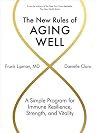
I picked this up at the library after reading "Age Later" by Nir Barzilai. Both books are by MDs but this one is more of a coffee table book with glossy pages and photos of a bath tub, mushrooms, a cat, etc. Right at the start the first section is: Just. Eat. Less. So much of this book can be skipped.Its been a few years since I have checked in with anti-aging so I discovered that sixteen-hour overnight fasting is a thing and the sun is no longer to be avoided. I liked Barsilai's explanations of these approaches better but if you just want it short and sweet this book may be preferable. Also this book covers a lot more and gets down to a granular level., for example, don't use mouth wash or anti-bacterial soap.The blood tests for longevity (pp. 167-170) and promising anti-aging treatments (pp. 177-179) are worth looking at. Barzilai contextualizes these better in my opinion.
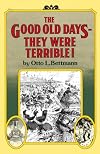
As you might except in a book by the owner of the Bettmann Archive, about half this book is illustrations of which less than half are photographs. Apparently the author was annoyed that most requests for his images were for happy nostalgic ones. This book is an antidote to that. Of course, most readers will likely already be aware that the progressive state of things today didn't always exist.
The only reason I looked into this book was because Robert J. Gordon credits it as the inspiration for his article that led to his book "The Rise and Fall of American Growth: The U. S. Standard of Living Since the Civil War." Gordon misstates the title as "The Bad Old Days."
The chapters concern air quality, traffic, housing, rural life, work conditions, crime, food and drink, health, education, travel and leisure. Subheadings are mostly quotations but it is never evident where the quotation comes from.
I came across a few cases of careless attention to detail. A humorous one was referring to the Battle of Cold Harbor as the Battle of Bar Harbor.
"The Jungle" covers much of this subject in a more compelling manner.
The only reason I looked into this book was because Robert J. Gordon credits it as the inspiration for his article that led to his book "The Rise and Fall of American Growth: The U. S. Standard of Living Since the Civil War." Gordon misstates the title as "The Bad Old Days."
The chapters concern air quality, traffic, housing, rural life, work conditions, crime, food and drink, health, education, travel and leisure. Subheadings are mostly quotations but it is never evident where the quotation comes from.
I came across a few cases of careless attention to detail. A humorous one was referring to the Battle of Cold Harbor as the Battle of Bar Harbor.
"The Jungle" covers much of this subject in a more compelling manner.
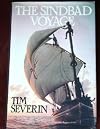
Another typically wonderful Tim Severin research/adventure real Dirk Pitt type book. In this one Severin retraces the medieval Arab trade route to China through the Seven Seas. (Uncharacteristically he identifies only five of the seven seas [the Persian Gulf, the Arabian Sea, the Bay of Bengal, the Malacca Strait, and the South China Sea]). The account of how the ship, commonly referred to by the generic term dhow, was designed and constructed, i. e., sewn with coconut fiber rather than nailed together, is equally fascinating. Severin also recounts three or four of Sindbad's adventures from "The Thousand and One Nights" and explains what may be the factual background for those stories.
The Arabic name for Ceylon is the origin of the word serendipity.
The Arabic name for Ceylon is the origin of the word serendipity.
Forever on the mountain : the truth behind one of mountaineering's most controversial and mysterious disasters by James M. Tabor
Maybe even better than "Into Thin Air" but certainly just as good. And since there was no peak- bagging tourism back then (1967), greed cannot be blamed for the disaster which makes the villains of the piece all the more compelling. Since they refused to speak to the author, or broke off their interviews abruptly, that authenticates the author's account in my opinion.

The popularity of this novel has always left me scratching my head.
The sword and the shield the Mitrokhin archive and the secret history of the KGB by Christopher Andrew
The first book and probably the only book you need to read if Soviet Cold War espionage interests you.

Let's say up front that I like the book but not the man described therein. Which is not to say that that man is not interesting.
His father was a district attorney whose everyday conversation style carried over from the courtroom, and his mother was hard of hearing; consequently his own conversational style was loud and hectoring. His reputation as America's twentieth century man of letters perhaps explains his large number of sexual partners which continued to increase well up into his seventies. His promiscuous appetite for sex and alcohol was only exceeded by his love for writing and literary reputation. His high output, however, is at least partially explained by anthologizing and repackaging. He was consistently a critical but not a commercial success.
Physically he was a sorry specimen, never learning to drive and failing to even hit the target during military marksmanship training. His diet left him pot bellied by his thirties and the only time he drove a motorcycle ended in accident and citation if not arrest. The author regards as apocryphal that he once leapt a somersault while waiting for an elevator.
Despite at least two trips to the Soviet Union in the 1930s he only reluctantly acknowledged its social reality in the 1960s. Conversely his service as a U. S. Army medic well behind the front lines in WWI France left him a lifetime pacifist even after the invasion of Russia in 1941.
The book has a number of humorous anecdotes although not enough for 483 pages of show more text. One of the most revealing was that he hired a taxi to take him from his home in Cape Cod to John Dos Passos' in northern Virginia. Once there Wilson refused to sit at the dinner table with the taxi driver. (The black cook refused to allow a white man to eat in the kitchen.) Wilson had never forgiven Dos Passos for turning against Communism in the 1930s anyway and they never saw each other again after that visit.
Summers he would leave Cape Cod and spend them in his gloomy and secluded ancestral (as he thought of it) home near Utica, New York. Unsurprising his wife refused to accompany him.
A good deal of the text is literary comment and criticism. Occasionally I got the impression the author was being more tactful than candid. show less
His father was a district attorney whose everyday conversation style carried over from the courtroom, and his mother was hard of hearing; consequently his own conversational style was loud and hectoring. His reputation as America's twentieth century man of letters perhaps explains his large number of sexual partners which continued to increase well up into his seventies. His promiscuous appetite for sex and alcohol was only exceeded by his love for writing and literary reputation. His high output, however, is at least partially explained by anthologizing and repackaging. He was consistently a critical but not a commercial success.
Physically he was a sorry specimen, never learning to drive and failing to even hit the target during military marksmanship training. His diet left him pot bellied by his thirties and the only time he drove a motorcycle ended in accident and citation if not arrest. The author regards as apocryphal that he once leapt a somersault while waiting for an elevator.
Despite at least two trips to the Soviet Union in the 1930s he only reluctantly acknowledged its social reality in the 1960s. Conversely his service as a U. S. Army medic well behind the front lines in WWI France left him a lifetime pacifist even after the invasion of Russia in 1941.
The book has a number of humorous anecdotes although not enough for 483 pages of show more text. One of the most revealing was that he hired a taxi to take him from his home in Cape Cod to John Dos Passos' in northern Virginia. Once there Wilson refused to sit at the dinner table with the taxi driver. (The black cook refused to allow a white man to eat in the kitchen.) Wilson had never forgiven Dos Passos for turning against Communism in the 1930s anyway and they never saw each other again after that visit.
Summers he would leave Cape Cod and spend them in his gloomy and secluded ancestral (as he thought of it) home near Utica, New York. Unsurprising his wife refused to accompany him.
A good deal of the text is literary comment and criticism. Occasionally I got the impression the author was being more tactful than candid. show less

The narrator and protagonist is a forty-six year old retired French bureaucrat who is impotent because he takes Captorix for depression. I think this would have been more realistic if he had been closer to the author's age of sixty-three when the book was published in 2019. His lack of libido doesn't inhibit cogitation about the women in his past. He tracks down one in particular, the love of his life and here the author goes into omniscient narrator mode to explain how she became a single mother. The man considers killing her four year old child so he can have her all to himself. It doesn't seem to have occurred to him that a single parent might welcome an extra pair of hands around the house. These quibbles aren't representative of the overall tone of the novel and I think most sixty year old white men would find much in this book to relate to.

I came to this book by way of Michael Shellenberger's recent book on environmental alarmism. At the time the Unabomber was caught his ideas were still on the fringe and considered countercultural but now the situation is inverted. The author's specialty is curriculum which means also philosophy and intellectual history. If Jacques Barzun interests you you will want to read this book.
I had high expectations for this story, especially since the author dangled an eventual meeting of Borges with George Mackay Brown, a rustic Orkney poet. It didn't help that the author had neither read nor heard of Borges. Other distractions are the author's preoccupation with the Vietnam War draft and losing his virginity. And then there is a whirl of other characters, interesting in their own right but creating drag on the velocity of the story. It all falls into place in the afterword when the author reveals that he wrote the book in order to get a movie deal. Nevertheless, there are a lot of delightful anecdotes about Borges the man.