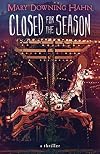
Hard to put down. It is an interesting read and very suspenseful for young children. You are always wondering what is going to happen. Closed for the season is full of interesting twists and turns of events and you never know what is going to happen next. I highly recommend it to read in your class.
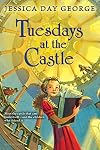
There can be many themes applied to this story. One, family is the most important thing and can never be replaced. Celie says, “It means that Father isn’t dead” (47). Celie may not have hard evidence supporting that her family is still alive but with the help of her friend the castle she is convinced not to give up on what matters, family.
This book is great book and I would introduce it to my kindergarten students in the future. The strengths of this book are that it has a strong moral to it. Preserver and stay strong and you will flourish in life. There are going to be ups and downs but how you handle them is what matters in life, like Pa had to. The thing that was most appealing to me was the sister bond in the story. I could relate to that more than anything because I myself would try anything and everything to be reunited with my sister if I was to get separated from her. The illustrations were also on point with this story. The pictures went along with text perfectly. It was easy to follow and very appealing to the eyes.
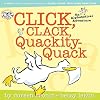
Critique: This book is a fantasy book. One of the criteria of a fantasy book is “the events, the setting, or the characters are outside the realm of possible” (124). This fits Giggle, Giggle, Quack because Duck is a class clown type that plays tricks on Farmer Brown’s brother. In reality ducks cannot do the things that Duck does like write notes. The second criteria for fantasy are, “authors must persuade readers to open themselves to believing that which is contrary to reality, strange, whimsical, or magical” (124). The duck that can write is appropriate for this story because it fits with children’s imagination. A child may not believe that the duck can write and play jokes on Bob but they go along with the idea. The third criteria is “theme [must go] beyond the specific details of the story to focus on what it means to be human in a complex world” (125). This is important because it allows readers to consider the question “what if.” What if Duck could really play pranks? It pulls a reality into the fantasy.