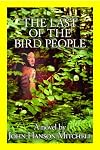
Fascinating tale of the last of an isolated, rag-tag band of wilderness dwellers, tracked down by a determined anthropologist as their forest territory is about to be flooded by a new dam. The Bird People, as they call themselves, appear to be descended from a mix of Native Americans, escaped slaves, and unhappy colonists, and they have lived hidden away in remote regions of Massachusetts for generations, having very little contact with the outside world and uninfluenced by modern technology. This novel tells of their difficult journey to find a new home, more remote than the last, where they can continue to live as they wish, in seclusion from the rest of American culture.
 This review was written for LibraryThing Early Reviewers.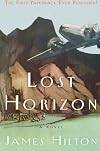
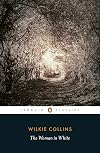


I loved this book when I was a child - it still fuels my hermit/survivalist fantasies. This is the same edition as the one I used to read at my grandparents' house.
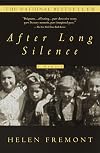
Interviews with children of Holocaust survivors, many of whom had never talked about their experiences before meeting the author. Moving to read about how this tragedy affected not only those who lived through it but also their children and grandchildren.
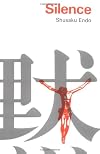
Based in 1500s Japan - a Catholic priest who struggles with his converts' and his own apostasy in the face of brutal persecution. Thoughtful, thought-provoking and hard to put down.
A bit too wordy for me - but I'm planning to give it another try.

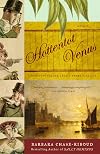
Based on the true story of Saartje Bartman, a South African woman who was brought to Europe and displayed in freak shows for the amusement of the crowds. Imaginative - the author brings Saartje's sad story to life.
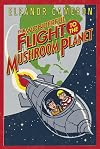
I loved this book as a child - I read it over and over again.
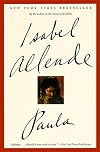
Moving reminiscence of Allende's daughter as she battles a life-threatening illness.
Fascinating and surprisingly readable for such a long, detailed work of non-fiction.
Surprisingly readable for such a long, detailed work of non-fiction.
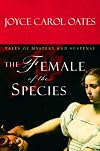
I couldn't finish this one - I read most of the stories but found them bizarre and disturbing.
i'm rating this book 1 star because i hated it when i read it in high school; however, i picked it up at a used book sale with the intention of giving it a second chance. we'll see.
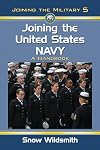
This is a fairly comprehensive guide for people thinking about joining the military. Much of the information is geared toward military service in general - checklists of things to consider for potential enlistees and their parents and spouses, brief descriptions of each branch of the service, tips on talking with recruiters, basic eligibility requirements and what to expect during initial enlistment processing. The first section in particular is reasonably frank about issues such as gender and sexual orientation - while the author doesn't outright discourage women, homosexuals and bisexuals from joining, she doesn't hesitate to mention that military life can be especially challenging for people in these categories. The most Navy-specific sections give a brief history of the Navy, describe career options, and cover how to prepare and what to expect during basic training.
The book seems to be geared toward people in their late teens - it is peppered with frequent reminders that potential recruits must finish high school before they can complete enlistment. The author also encourages potential recruits to discuss their options with their parents and to bring a parent with them to meetins with recruiters. While the Navy accepts enlistees up through age 35, no specific advice is given for this older group, though all potential recruits are encouraged to quit smoking, get in shape and put their affairs in order before completing enlistment.
Overall, Joining the United States Navy show more is a comprehensive overview of the enlistment process, and well worth a read for anyone thinking of joining up. show less
The book seems to be geared toward people in their late teens - it is peppered with frequent reminders that potential recruits must finish high school before they can complete enlistment. The author also encourages potential recruits to discuss their options with their parents and to bring a parent with them to meetins with recruiters. While the Navy accepts enlistees up through age 35, no specific advice is given for this older group, though all potential recruits are encouraged to quit smoking, get in shape and put their affairs in order before completing enlistment.
Overall, Joining the United States Navy show more is a comprehensive overview of the enlistment process, and well worth a read for anyone thinking of joining up. show less
This review was written for LibraryThing Early Reviewers.
I scored this book from the Library Thing Early Reviewers list, November 2010.
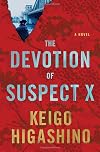
Keigo Higashino's riveting mystery opens with a murder. Set in Japan, the mystery is in the cover-up, not the murder itself - even the murderer doesn't fully know how the act was covered up. While the murder itself, an impulsive act of the moment, explodes out of a long and painful history, the cover-up is an intricately woven, gradually unfolding plot developed in in one evening, carried out over a couple of days but weighing the suspects down for months.
I couldn't put the book down - couldn't wait to find out what new twist of plot would unfold next. If Higashino has any other mysteries out in English translation, I'd love to read them.
Keigo Higashino's riveting mystery opens with a murder. Set in Japan, the mystery is in the cover-up, not the murder itself - even the murderer doesn't fully know how the act was covered up. While the murder itself, an impulsive act of the moment, explodes out of a long and painful history, the cover-up is an intricately woven, gradually unfolding plot developed in in one evening, carried out over a couple of days but weighing the suspects down for months.
I couldn't put the book down - couldn't wait to find out what new twist of plot would unfold next. If Higashino has any other mysteries out in English translation, I'd love to read them.
This review was written for LibraryThing Early Reviewers.
Brutal story of a child sent to the countryside to be protected during WWII; because of his dark complexion and his parents' absence, he is subjected to horrific treatment, and he is witness to all the inhumanity imaginable.
Describes about three years in the life of a wealthy family in China during the early 1920s. Main character Chueh-hui finds himself increasingly stifled and dissatisfied with traditional family life, particularly with the rigid structure and the costs incurred by innocent youth. Translation seems a bit stiff, though perhaps this is a reflection of the style of the original.

Totally different from the other Greene novels I've read - hilarious and surprising.
The Year of Living Biblically: One Man's Humble Quest to Follow the Bible as Literally as Possible by A. J. Jacobs
I enjoyed The Year of Living Biblically more than I expected. Jacobs is quite funny, and he is honest about his skepticism of all things religious. He tries to be open-minded about religion and religious people, and over the course of the year, he finds to his apparently great surprise that many religious people are intelligent, interesting, creative and sane. He describes his exploration of the Bible with humor and just enough humility to be likable.
Jane Austen's last finished novel - I enjoyed it more than many of her other novels. The characters seem better developed, the story is a bit more complex, and I liked Anne, the heroine, far better than some of Austen's other main characters (Emma, for instance).

Should probably be titled "The Lifetime of a Jewish Male" - Schauss's book addresses life cycle events as experienced by Jewish women infrequently and without the attention to detail given to events as experienced by Jewish men. Published in 1950, what makes the book compelling is the author's perspective: he has just narrowly escaped the Holocaust, and he writes to preserve in memory what has been lost forever: a flourishing Jewish community. As he writes, the world's Jewish population has been decimated, and it's clear he feels with great despair that the chances for revival are slim to none. In fact, 60 years later, Jewish communities ranging from Ultra-Orthodox to secular are thriving throughout the US and Israel, but from the perspective of 1950, things look pretty grim. Fortunately the Jewish people are survivors, and many traditions he describes as lost forever are making a comeback.
I scored Children and Autism from the October 2010 batch of Early Reviewer books and received it in early November.
Ennio Cipani presents seven heartwarming stories of autistic children whose parents and therapists used ABA (applied behavioral analysis) to bring their skills in line with those of their peers. Cipani is a dedicated proponent of ABA. He includes a brief introduction on autism and ABA treatment's effectiveness as well as a closing chapter illustrating the hurdles faced by an autistic child in the traditional classroom and an appendix describing a commonly-used ABA intervention. The intervening chapters are written by the featured children's therapists.
The children presented in the stories moved from severely impaired to normal or near-normal functioning, generally over the course of two to four years of intensive in-home therapy, up to 40 hours per week. Most began therapy between ages two and four, and all received assistance in school as well, at least for the first few years. Clearly ABA methods worked for these children, and I was pleasantly surprised at the warmth with which they are described by their therapists. As one parent indicates, ABA has a reputation for being a cold, mechanical intervention in which the child spends hours at a table "working for candy" (125). The children in these stories seem to have developed warm, comfortable relationships with their parents, therapists and teachers; these relationships defy the stereotypes about ABA. show more Ultimately, parents and professionals who work with autistic children should find the stories hopeful as they carry out the long, arduous treatment process.
While the stories are inspiring, I can't recommend the book without reservations. Cipiani presents ABA as the one-and-only, scientific, empirically proven treatment for autism. Unfortunately, the one longitudinal study cited as the pinnacle of an "amassing of research evidence" (20) had an intervention group of just 19 children. True, 17 of 19 demonstrated significant gains, but the sample size is just too small to be considered definitive. Certainly this study and the results presented with the children in the book are encouraging - ABA is an intervention well worth trying - but the author overreaches when he touts it as unquestionably proven.
Finally, the opening and closing chapters are awkwardly written and poorly edited; frequent instances of badly constructed sentences make the text difficult to follow. The chapters containing the stories themselves are somewhat better written, but sections are badly labeled ("One Month After Treatment" rather than "After One Month of Treatment," p. 105) and paragraphs are choppy. Sometimes terms and acronyms go undefined, which could make the book difficult to follow for a reader with no background in the field; a glossary at the back would be a useful addition, particularly as the book is geared towards lay readers. Overall, Cipiani and his co-authors could have benefited from a better editor. show less
Ennio Cipani presents seven heartwarming stories of autistic children whose parents and therapists used ABA (applied behavioral analysis) to bring their skills in line with those of their peers. Cipani is a dedicated proponent of ABA. He includes a brief introduction on autism and ABA treatment's effectiveness as well as a closing chapter illustrating the hurdles faced by an autistic child in the traditional classroom and an appendix describing a commonly-used ABA intervention. The intervening chapters are written by the featured children's therapists.
The children presented in the stories moved from severely impaired to normal or near-normal functioning, generally over the course of two to four years of intensive in-home therapy, up to 40 hours per week. Most began therapy between ages two and four, and all received assistance in school as well, at least for the first few years. Clearly ABA methods worked for these children, and I was pleasantly surprised at the warmth with which they are described by their therapists. As one parent indicates, ABA has a reputation for being a cold, mechanical intervention in which the child spends hours at a table "working for candy" (125). The children in these stories seem to have developed warm, comfortable relationships with their parents, therapists and teachers; these relationships defy the stereotypes about ABA. show more Ultimately, parents and professionals who work with autistic children should find the stories hopeful as they carry out the long, arduous treatment process.
While the stories are inspiring, I can't recommend the book without reservations. Cipiani presents ABA as the one-and-only, scientific, empirically proven treatment for autism. Unfortunately, the one longitudinal study cited as the pinnacle of an "amassing of research evidence" (20) had an intervention group of just 19 children. True, 17 of 19 demonstrated significant gains, but the sample size is just too small to be considered definitive. Certainly this study and the results presented with the children in the book are encouraging - ABA is an intervention well worth trying - but the author overreaches when he touts it as unquestionably proven.
Finally, the opening and closing chapters are awkwardly written and poorly edited; frequent instances of badly constructed sentences make the text difficult to follow. The chapters containing the stories themselves are somewhat better written, but sections are badly labeled ("One Month After Treatment" rather than "After One Month of Treatment," p. 105) and paragraphs are choppy. Sometimes terms and acronyms go undefined, which could make the book difficult to follow for a reader with no background in the field; a glossary at the back would be a useful addition, particularly as the book is geared towards lay readers. Overall, Cipiani and his co-authors could have benefited from a better editor. show less
This review was written for LibraryThing Early Reviewers.