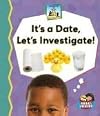
Will a magnet pick up blocks of wood? Will a wet paper towel hold a rubber duck as well as a dry paper towel? What steps should be taken to find answers to these and other science related questions? Kelly Doudna gives young children a good start in beginning to pose these types of questions and following a set of steps to find answers in the book It’s a Date, Let’s Investigate! The book discusses the terms investigate, hypothesis, conclusion, experiment, test, notion, question, and inquiry. Examples of all steps are listed in the book along with pictures, making it easy for young children to understand the process. There are several examples of children who have questions about something in the world around them and steps the children could follow to find answers.
This book would work well in a kindergarten classroom to get students thinking about scientific skill processes. I like that the book covers the steps of an investigation and includes pictures all along the way. If I used this book in my classroom, I would start by reading the book to the class. At the end of the book, there is a child who has a question about what type of foods birds like to eat. The book asks what steps the child should take in order to answer her question. I would have the students in my class answer what steps she should take. I would continue the lesson with the class actually carrying out the investigation about what types of foods birds like to eat.
This book would work well in a kindergarten classroom to get students thinking about scientific skill processes. I like that the book covers the steps of an investigation and includes pictures all along the way. If I used this book in my classroom, I would start by reading the book to the class. At the end of the book, there is a child who has a question about what type of foods birds like to eat. The book asks what steps the child should take in order to answer her question. I would have the students in my class answer what steps she should take. I would continue the lesson with the class actually carrying out the investigation about what types of foods birds like to eat.
Measuring With Sebastian Pig and Friends: On a Road Trip (Math Fun With Sebastian Pig and Friends!) by Jill Anderson
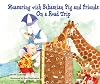
In the book Measuring with Sebastian Pig and Friends on a Road Trip Jill Anderson provides a simple and brief yet informative lesson on measurement. The book opens with Sebastian Pig and his friends planning for a road trip. As the group is preparing for the road trip, they decide to turn their adventures into a contest for who can find the biggest, heaviest, and longest items. The group of friends starts off by measuring their suitcases. They first decide to measure the height of the suitcase by standing next to their own suitcases and seeing how high on their body the suitcase reaches. The group of friends quickly discovers that this is not an ideal way to measure as they are all different heights. Sebastian gets out a yard stick and they measure the suitcases again using the yard stick. As the day goes on, the characters continue to use different measurement techniques to determine the weight, height, and length of various objects using standard and, at times, metric units of measure.
I enjoyed this book and think that it would be great to use in a first, second or third grade classroom to introduce measurement. The book demonstrates right away the importance of using a standard form of measurement. This also seems like a fun and simple way to begin talking with students about the metric system as the characters in the book discuss centimeters and explain that a centimeter is smaller than an inch. The content of the book was easy to understand, accurate, and a nice show more introduction to measurement. show less
I enjoyed this book and think that it would be great to use in a first, second or third grade classroom to introduce measurement. The book demonstrates right away the importance of using a standard form of measurement. This also seems like a fun and simple way to begin talking with students about the metric system as the characters in the book discuss centimeters and explain that a centimeter is smaller than an inch. The content of the book was easy to understand, accurate, and a nice show more introduction to measurement. show less
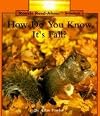
Leaves change color and fall to the ground, we return to school and begin wearing jackets, and flocks of birds fly to warmer places. These are all conditions that Allan Fowler lists as examples that summer is turning to fall in the book How Do You Know It’s Fall? Fowler continues in the book with how people (farmers) and animals (squirrels) prepare for winter in the fall by harvesting crops and gathering resources. Halloween, football, and Thanksgiving are listed as ways in which some people might celebrate the fall season. Fowler mentions that fall days are great for playing outside and that many people travel in the fall to see trees changing colors.
How Do You Know It’s Fall?is a very short and simple book that could be used in kindergarten and maybe first grade classrooms. I like that the book gives examples of things that most of the students have experienced and are familiar with. In an early elementary classroom, I would read this book on the first day of fall (or as close to it as possible). I would most likely have students share other ways that they know it is fall and/or other ways that they celebrate the fall season. If there are students in the classroom who do not recognize Halloween and Thanksgiving, asking students to share what their families might do during the fall season is a great way to not only make sure that those students are involved in the lesson, but also to learn more about the fall season. I would then take students on a nature walk, if show more possible, to collect evidence of fall. We could then repeat the nature walk one, or maybe two more times to see how much things have changed since our first walk. The class could then create a timeline demonstrating change from our first walk to our last walk. show less
How Do You Know It’s Fall?is a very short and simple book that could be used in kindergarten and maybe first grade classrooms. I like that the book gives examples of things that most of the students have experienced and are familiar with. In an early elementary classroom, I would read this book on the first day of fall (or as close to it as possible). I would most likely have students share other ways that they know it is fall and/or other ways that they celebrate the fall season. If there are students in the classroom who do not recognize Halloween and Thanksgiving, asking students to share what their families might do during the fall season is a great way to not only make sure that those students are involved in the lesson, but also to learn more about the fall season. I would then take students on a nature walk, if show more possible, to collect evidence of fall. We could then repeat the nature walk one, or maybe two more times to see how much things have changed since our first walk. The class could then create a timeline demonstrating change from our first walk to our last walk. show less
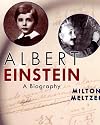
Milton Meltzer provides a brief yet comprehensive look into the life of Albert Einstein, one of the greatest scientists the world has known. In Albert Einstein, A Biography Meltzer manages to cover highlights from throughout Einstein’s life and career in just thirty-one pages. Meltzer’s book, complete with quotes, photographs, a timeline, excerpts from Einstein’s personal notes, and a letter that Einstein wrote to President Franklin D. Roosevelt, seems to bring Einstein to life.
Einstein was born in the small town of Ulm Germany in 1879. From early on in his life, Einstein displayed signs of being more intellectually advanced than his peers. He started speaking in full sentences before he turned three and began a lifelong love for playing music at age five. Einstein did not take well to the strict schools he attended and was labeled a dreamer by his teachers. A young Einstein was appalled at the lack of creativity and questioning allowed in his classes. He felt that what he learned in school was mostly “babbling from memory”. Einstein’s disdain for the way his teachers presented information prompted him to search for answers to his many questions outside of the classroom. At age sixteen, he wondered what it would be like to ride a beam of sunlight. Posing this question, which seemed ridiculous and impossible to answer by most, was the first step toward Einstein’s discovery of the Theory of Relativity.
Meltzer has given a great gift to children in writing show more this book. He provided an example of a brilliant man who insisted upon constantly questioning the world around him. This book would be a valuable addition to the library of any fourth or fifth student. After reading and reflecting on the book, the student will certainly feel motivated by Einstein’s persistence and questioning. show less
Einstein was born in the small town of Ulm Germany in 1879. From early on in his life, Einstein displayed signs of being more intellectually advanced than his peers. He started speaking in full sentences before he turned three and began a lifelong love for playing music at age five. Einstein did not take well to the strict schools he attended and was labeled a dreamer by his teachers. A young Einstein was appalled at the lack of creativity and questioning allowed in his classes. He felt that what he learned in school was mostly “babbling from memory”. Einstein’s disdain for the way his teachers presented information prompted him to search for answers to his many questions outside of the classroom. At age sixteen, he wondered what it would be like to ride a beam of sunlight. Posing this question, which seemed ridiculous and impossible to answer by most, was the first step toward Einstein’s discovery of the Theory of Relativity.
Meltzer has given a great gift to children in writing show more this book. He provided an example of a brilliant man who insisted upon constantly questioning the world around him. This book would be a valuable addition to the library of any fourth or fifth student. After reading and reflecting on the book, the student will certainly feel motivated by Einstein’s persistence and questioning. show less
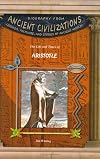
Aristotle is listed among the greatest scholars of all time. He observed, researched, and wrote about a variety of topics including philosophy, politics, religion, and science. While Aristotle was a scholar in many subject areas, his most notable contributions were to the scientific world. Aristotle’s insistence upon questioning, examining, and understanding the world around him is especially notable considering that he lived in a time when it was widely believed that the Gods were in control of everything. In The Life and Times of Aristotle, Jim Whiting provides a glimpse into the life of Aristotle and his contributions to our understanding of the world around us.
Aristotle was born in 384 BCE in a Greek province called Thrace. Like all great scientists, Aristotle had a passion for questioning the world. He made careful observations of nature and was particularly interested in understanding animals and their habitats. Aristotle is noted as the first to provide a systematic classification of animals and he sought to understand why animals were different. He was also the first to discover that the world was a sphere, although his theory that the earth was at the center of the solar system was later proven incorrect. The accuracy of Aristotle’s ideas and theories are not so much what make him a great scientist, rather, his exceptionality is found in the fact that he was motivated to question, observe, and explore.
I think that portions of this book would be great for show more use in a fifth grade classroom. Aristotle is an example of a man who questioned his world and sought answers that were not easily found. I feel that providing examples of people throughout the course of history who went against the grain in the pursuit of knowledge is a great way to motivate students to do the same. show less
Aristotle was born in 384 BCE in a Greek province called Thrace. Like all great scientists, Aristotle had a passion for questioning the world. He made careful observations of nature and was particularly interested in understanding animals and their habitats. Aristotle is noted as the first to provide a systematic classification of animals and he sought to understand why animals were different. He was also the first to discover that the world was a sphere, although his theory that the earth was at the center of the solar system was later proven incorrect. The accuracy of Aristotle’s ideas and theories are not so much what make him a great scientist, rather, his exceptionality is found in the fact that he was motivated to question, observe, and explore.
I think that portions of this book would be great for show more use in a fifth grade classroom. Aristotle is an example of a man who questioned his world and sought answers that were not easily found. I feel that providing examples of people throughout the course of history who went against the grain in the pursuit of knowledge is a great way to motivate students to do the same. show less