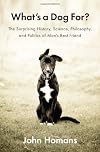
What's a Dog For?: The Surprising History, Science, Philosophy, and Politics of Man's Best Friend by John Homans
Disclosure: I received a free copy of What's a Dog For? The Surprising History, Science, Philosophy, and Politics of Man's Best Friend by John Homans via GoodReads First Reads, courtesy of Penguin Press.
What's a Dog For? is a blend of a touching story about the author's love for his own rescued dog, a Lab mix named Stella, a history of dogs as pets, a lengthy speculation on intelligence and empathy in dogs and other companion animals, and a discussion of the ethics of animal rescue. As it might sound, this mashup of subject matter and attempt to mix personal tales with a somewhat subjective history of dog ownership fails to create a truly cohesive narrative that would satisfy either fans of cute animal stories or those interested in a more factual account of dog and human relationships through time. Despite this, and the owner's obvious personal bias against the purebred "dog fancy," this book will appeal to many dog lovers who can't get enough true-life pet stories and will doubtlessly lap it up.
What's a Dog For? is a blend of a touching story about the author's love for his own rescued dog, a Lab mix named Stella, a history of dogs as pets, a lengthy speculation on intelligence and empathy in dogs and other companion animals, and a discussion of the ethics of animal rescue. As it might sound, this mashup of subject matter and attempt to mix personal tales with a somewhat subjective history of dog ownership fails to create a truly cohesive narrative that would satisfy either fans of cute animal stories or those interested in a more factual account of dog and human relationships through time. Despite this, and the owner's obvious personal bias against the purebred "dog fancy," this book will appeal to many dog lovers who can't get enough true-life pet stories and will doubtlessly lap it up.
Disclosure: I received a free copy of Countdown to Jihad courtesy of the author, via GoodReads First Reads.
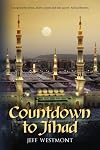
This CIA vs. terrorist thriller contains a real gem of an action story. The problem is, the plot doesn't truly get off the blocks until about one-third of the way into the book. Readers who hang on this far, however, are in for a wild ride, as CIA agent David and his allies pursue a dangerous bomber in a wild chase through the final pages.
David is an intriguingly complex character, whose history and family background complicate his work and lend him compassion for his enemies. His relationship with Iranian agent Parissa is sweet, if somewhat predictable. What is unpredictable is the plot-twist at the end, which perhaps could have been better set up.
Fans of traditional spy thrillers such as John leCarre's Smiley novels, who enjoy character development and don't mind slowly emerging backstory, will enjoy the similarly-themed Countdown to Jihad.
This CIA vs. terrorist thriller contains a real gem of an action story. The problem is, the plot doesn't truly get off the blocks until about one-third of the way into the book. Readers who hang on this far, however, are in for a wild ride, as CIA agent David and his allies pursue a dangerous bomber in a wild chase through the final pages.
David is an intriguingly complex character, whose history and family background complicate his work and lend him compassion for his enemies. His relationship with Iranian agent Parissa is sweet, if somewhat predictable. What is unpredictable is the plot-twist at the end, which perhaps could have been better set up.
Fans of traditional spy thrillers such as John leCarre's Smiley novels, who enjoy character development and don't mind slowly emerging backstory, will enjoy the similarly-themed Countdown to Jihad.
Disclosure: I received a free copy of The Gilded Fan by Christina Courtenay via GoodReads First Reads, courtesy of ChocLit Limited.
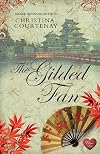
The heroine of The Gilded Fan, Midori, is an appealing character: bold but modest, proud but dutiful. She is both admirable and sympathetic. Unlike so many ladies in romantic historical fiction, she is a true lady, and it is understandable why the hero, Captain Nico, finds her so attractive.
Courtenay fills her entire narrative with cultural and historical detail that makes the dual settings of the shogun's Japan and Puritan England jump off the page in vivid color. The themes of honor, faith, and the importance of family are intertwined with an entrancing tale of romance and adventure, which is populated with unique and colorful characters. Despite the quirky improbability of the connections in Nico's and Midori's family past, their story as a whole rings true, and the ending leaves the reader wanting to read more about their life together.
The heroine of The Gilded Fan, Midori, is an appealing character: bold but modest, proud but dutiful. She is both admirable and sympathetic. Unlike so many ladies in romantic historical fiction, she is a true lady, and it is understandable why the hero, Captain Nico, finds her so attractive.
Courtenay fills her entire narrative with cultural and historical detail that makes the dual settings of the shogun's Japan and Puritan England jump off the page in vivid color. The themes of honor, faith, and the importance of family are intertwined with an entrancing tale of romance and adventure, which is populated with unique and colorful characters. Despite the quirky improbability of the connections in Nico's and Midori's family past, their story as a whole rings true, and the ending leaves the reader wanting to read more about their life together.
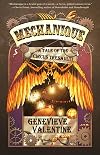
Mechanique is The Night Circus meets The Hunger Games, with a phenomenal dream-like quality.
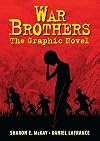
Disclosure: I received a free copy of War Brothers: The Graphic Novel by Sharon E. McKay via GoodReads First Reads, courtesy of Annick Press.
The graphic novel War Brothers tackles the difficult subject of child soldiers in Uganda's rebel army under Kony Joseph. This is a tasteful, sensitive portrayal through the eyes of a fictional boy who is captured by soldiers no older than himself and thrown headlong into the horrors of warfare that ravage his home country.
Some of the images and events in the book are disturbing, but they are taken from real-life events, and serve to bring an important message to teen readers: boys such as those in the book have in fact been forced into fighting, lost their lives, or suffered PTSD and social ostrazation if they are lucky enough to survive. The themes of friendship, bravery, faith, and family bring hope glimmering to the surface, just as lighter images appear toward the end of the book, symbolizing possibilities of a better future for the children who survived.
War Brothers is not overly wordy, instead allowing Daniel LaFrance's skillfully drawn images show the emotions of the characters far clearer than dialogue possibly could. Raw fear and pain in the faces of the young boys draw the reader in as one of this band of brothers, making it impossible not to empathize with their ordeal.
The graphic novel War Brothers tackles the difficult subject of child soldiers in Uganda's rebel army under Kony Joseph. This is a tasteful, sensitive portrayal through the eyes of a fictional boy who is captured by soldiers no older than himself and thrown headlong into the horrors of warfare that ravage his home country.
Some of the images and events in the book are disturbing, but they are taken from real-life events, and serve to bring an important message to teen readers: boys such as those in the book have in fact been forced into fighting, lost their lives, or suffered PTSD and social ostrazation if they are lucky enough to survive. The themes of friendship, bravery, faith, and family bring hope glimmering to the surface, just as lighter images appear toward the end of the book, symbolizing possibilities of a better future for the children who survived.
War Brothers is not overly wordy, instead allowing Daniel LaFrance's skillfully drawn images show the emotions of the characters far clearer than dialogue possibly could. Raw fear and pain in the faces of the young boys draw the reader in as one of this band of brothers, making it impossible not to empathize with their ordeal.
Despite how enigmatic and unsympathetic the protagonist Maribel is, her story is strangely entrancing. Clare Clark's beautifully woven descriptions draw the reader in, urging one to keep reading and attempt to understand the mysterious character and her past, even if the explanations are ultimately unsatisfactory.
Pyg, by Russell Potter, promises much and delivers little. For a book that is supposedly the "memoir of a learned pig," a subject which sounds at first inclination to have the potential to be most amusing, the actual narrative is very dry and lacking in much plot development. Essentially, Toby the pig is rescued from the slaughter, learns to spell as part of a performing act, and when it is recognized that he can actually read and understand the words in front of him, he gets the chance to become more educated. Nothing else of interest takes place that is not articulated in the cover description. Pyg is neither a comedy nor is it a social commentary in the style of Animal Farm. It is simply a matter-of-fact narrative that, had its protagonist been human rather than animal, would have no interest to readers whatsoever. As it stands, Pyg might be more interesting to advanced middle grade readers, providing that they have the necessary vocabulary and sufficient patience to wade through this text.
Kingsolver's descriptions are beautiful, but the plot of Flight Behavior seems to plod along. Compared to her previous novels, this does not have the same resonance.
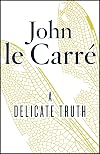
John leCarre's tightly-knit plot style is as compelling in this modern thriller as in his Cold War spy novels.
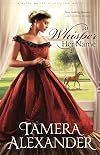
Olivia Aberdeen, the main character in To Whisper Her Name, is self-absorbed and her speech is so overly formal as to appear stilted. She is not a protagonist who it is easy to root for in life or in love. She keeps repeating that she doesn't want to get remarried, but until opportunities fall into her lap, she does nothing to seek an alternative to support herself as a widow. Her ridiculous fear of horses is ill-conceived: for someone in the Civil War era to be afraid of horses would be like someone in modern America having a fear of cars -- she simply would not be able to get through so many years of her life without addressing it. The love interest, Ridley Cooper, is more interesting and complex in his motivations, but what attracts him to such an unappealing heroine as Olivia is a mystery. The early development of their relationship, including stolen kisses before he proclaims an interest in marrying her, is sadly typical of so-called "historical" romances that have "historical" characters behaving like modern couples. The other issue that is glaringly present in this novel is the overly politically correct handling of interactions between the central characters and the servants: although it is nice to see the main characters treating black servants as their equals, everyone except the few stereotypically racist characters sees it as perfectly normally for blacks and whites to interact as equals, when of course that was the opposite of the norm in the South in the show more post-war years. The story's finale is overly rushed and feels even more unrealistic than what proceeded it, which is sad because the earlier chapters were too drawn out and the author could easily have spent more time on the ending. show less
Disclosure: I received a free copy of The Psi-Chotic Adventures of Drew Darby by Richard W. Kelly courtesy of the author, via GoodReads First Reads.
Drew Darby, an ordinary high school student with previously untested psychic powers, finds himself recruited into the U.S. Army's top-secret "Psi Ops" unit, and hurled head-long into a battle against the ultimate evil. Similarly to the Harry Potter novels, Drew's adventures of the epic scale are balanced between the usual challenges of a teenager, such as making friends and talking to girls. Since his missions are top-secret, Drew must maintain a double life so that even his parents don't suspect that he hasn't simply been working at his after-school job. Drew is a believable character that most pre-teens or early teens will relate to, and the novel is a fast-paced read, yet still gives thorough explanations of how Drew's psychic powers function. Some pieces of the story could have used further development; for example, far too many of the minor characters, including one of Drew's crushes, were not given names, which would have made the whole scenario seem more realistic.
Young fans of Harry Potter or Percy Jackson will enjoy reading The Psi-Chotic Adventures of Drew Darby, which will appeal to middle school students including those who are perhaps otherwise reluctant readers.
Drew Darby, an ordinary high school student with previously untested psychic powers, finds himself recruited into the U.S. Army's top-secret "Psi Ops" unit, and hurled head-long into a battle against the ultimate evil. Similarly to the Harry Potter novels, Drew's adventures of the epic scale are balanced between the usual challenges of a teenager, such as making friends and talking to girls. Since his missions are top-secret, Drew must maintain a double life so that even his parents don't suspect that he hasn't simply been working at his after-school job. Drew is a believable character that most pre-teens or early teens will relate to, and the novel is a fast-paced read, yet still gives thorough explanations of how Drew's psychic powers function. Some pieces of the story could have used further development; for example, far too many of the minor characters, including one of Drew's crushes, were not given names, which would have made the whole scenario seem more realistic.
Young fans of Harry Potter or Percy Jackson will enjoy reading The Psi-Chotic Adventures of Drew Darby, which will appeal to middle school students including those who are perhaps otherwise reluctant readers.
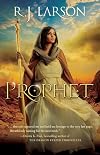
Prophet is a thrilling and emotionally driven story about a young woman who follows her faith and takes up the difficult, self-sacrificial task of being a prophet among unbelievers. The main character, Ela, is multi-faceted and inspiring: she wrestles with self-doubt even as she courageously leaves her home to obey the Creator's calling. Although Prophet is set in a fantasy world, not a factual place, few fantasy elements (ie, magic spells or elves) appear here, only a few mythological-type monsters. The themes of the book are overtly religious, and will largely resonate with Jewish, Christian, or Muslim readers, since the focus is monotheistic. However, Ela's story is a riveting read that stands strong even without looking closely at the spiritual overtones.
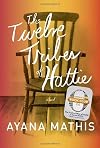
This novel is actually more like a series of interwoven short stories, focusing on the various children of the central character Hattie. Although most of the stories are riveting in and of themselves, none of the individual characters are adequately developed, nor are the relationships between the siblings particularly well defined. More disappointingly, Hattie herself is a rather shadowy figure, not coming together well into one cohesive portrait from the depictions of her rendered by her offspring. There are simply too many points of view at work here, tearing the narrative in many directions, and Mathis would have probably done better to focus on only a few of the children as her main characters. Fans of The Help by Kathryn Stockett will doubtlessly be interested to read The Twelve Tribes of Hattie, but will not necessarily find this tale as moving or articulate.
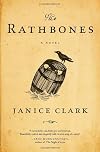
Disclosure: I received a free pre-release copy of The Rathbones by Janice Clark courtesy of Doubleday, via GoodReads First Reads.
The Rathbones is a hypnotic, surreal story of a family whose lives and history are so irrevocably bound to the sea and whaling that their entire lives are lived in an epic oceanic metaphor, even the young protagonist Mercy, who has previously not been on a sea voyage. Mercy's search to find traces of her lost family members brings out a dream-like narrative of multiple complex meanings, both to Mercy and to the reader. The character's name repeated throughout the novel seems like a distress call ("Mercy!") but exactly what Mercy wants to be saved from, she herself must decide as she moves forward from the Rathbone legacy towards her own destiny. Despite this novel's length, Janice Clark's storytelling prowess and seamless use of thematic language make it smooth sailing from one page to the next.
Fans of Barbara Kingsolver will particularly enjoy this fanciful family epic, which is stylistically similar to The Poisonwood Bible.
The Rathbones is a hypnotic, surreal story of a family whose lives and history are so irrevocably bound to the sea and whaling that their entire lives are lived in an epic oceanic metaphor, even the young protagonist Mercy, who has previously not been on a sea voyage. Mercy's search to find traces of her lost family members brings out a dream-like narrative of multiple complex meanings, both to Mercy and to the reader. The character's name repeated throughout the novel seems like a distress call ("Mercy!") but exactly what Mercy wants to be saved from, she herself must decide as she moves forward from the Rathbone legacy towards her own destiny. Despite this novel's length, Janice Clark's storytelling prowess and seamless use of thematic language make it smooth sailing from one page to the next.
Fans of Barbara Kingsolver will particularly enjoy this fanciful family epic, which is stylistically similar to The Poisonwood Bible.
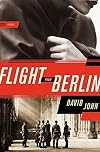
Flight From Berlin is a fast-paced historical thriller centering around the 1936 Berlin Olympics and a mysterious secret dossier with dangerous information from Hitler's past. Olympic swimmer Eleanor Emerson and reporter Richard Denham are unlikely heroes and unlikely companions in this adventure, but they are likable characters whose passion for each other and for doing the right thing truly make this an enjoyable read. Although some of the events in the novel become increasingly implausible as the plot unfolds, this page-turner will appeal to fans of authors such as Dan Brown. David John's skillful interweaving of historical fact and fiction is reminiscent of Dan Fesperman's The Armsmaker of Berlin, another historical thriller dealing with Nazi Germany.
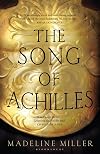
A beautifully woven retelling of a classic tale. The poetic style of the prose is worthy of Homer.
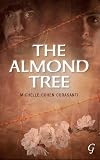
Disclosure: I received a free copy of The Almond Tree by Michelle Cohen Corasanti courtesy of the author, via GoodReads First Reads.
The Almond Tree is the compelling story of a young Palestinian's struggle to get an education and make a better life for himself, his family, and his people. Ambitious, hard-working, and devoted to those he loves, the main character Ichmad is not only captivating to read about, but an admirable example to aspire to as well. The detailed, nuanced relationships between the characters and the rich cultural background upon which the story is drawn make it almost easy to forget that one is reading a work of fiction, rather than a narrative biography. Readers will almost certainly learn something about the history and culture of Palestine and Israel by reading this book, as well as being inspired by Ichmad's trials and triumphs.
Fans of Khaled Hussaini's The Kite Runner or Andrea Busfield's Born Under a Million Shadows will certainly enjoy The Almond Tree as well.
The Almond Tree is the compelling story of a young Palestinian's struggle to get an education and make a better life for himself, his family, and his people. Ambitious, hard-working, and devoted to those he loves, the main character Ichmad is not only captivating to read about, but an admirable example to aspire to as well. The detailed, nuanced relationships between the characters and the rich cultural background upon which the story is drawn make it almost easy to forget that one is reading a work of fiction, rather than a narrative biography. Readers will almost certainly learn something about the history and culture of Palestine and Israel by reading this book, as well as being inspired by Ichmad's trials and triumphs.
Fans of Khaled Hussaini's The Kite Runner or Andrea Busfield's Born Under a Million Shadows will certainly enjoy The Almond Tree as well.
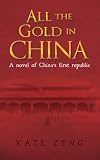
Disclosure: I received a free copy of All the Gold in China by Kate Zeng courtesy of the author, via GoodReads First Reads.
All the Gold in China tells the story of the China's Communist Revolution, through the eyes of an interlocking set of characters, but mainly focusing on Jong Lin, the aide and adopted son of General Han. Jong is mainly a passive narrator, in the style of Nick Carraway in The Great Gatsby, and his own story does
not become particularly compelling until close to the end of the narrative. The other characters are almost entirely selfishly motivated, by greed for either money or for power, so they are difficult to connect with. The plot gets off to a very slow start, and then after an unrealistic climax, the ending tapers off as slowly as the beginning. Despite the length of the novel and its drawn-out denouement, there are still questions left unanswered.
Throughout this novel, the sentence structure is simplistic, and other than where the action is fast-paced, this makes the narrative somewhat stilted. The number of typographical and grammatical errors, although not so overwhelming as to hamper the story's readability, are nevertheless glaringly noticeable and unfortunate in a published volume. All the Gold in China could have used additional editing for linguistic style and narrative flow.
All the Gold in China tells the story of the China's Communist Revolution, through the eyes of an interlocking set of characters, but mainly focusing on Jong Lin, the aide and adopted son of General Han. Jong is mainly a passive narrator, in the style of Nick Carraway in The Great Gatsby, and his own story does
not become particularly compelling until close to the end of the narrative. The other characters are almost entirely selfishly motivated, by greed for either money or for power, so they are difficult to connect with. The plot gets off to a very slow start, and then after an unrealistic climax, the ending tapers off as slowly as the beginning. Despite the length of the novel and its drawn-out denouement, there are still questions left unanswered.
Throughout this novel, the sentence structure is simplistic, and other than where the action is fast-paced, this makes the narrative somewhat stilted. The number of typographical and grammatical errors, although not so overwhelming as to hamper the story's readability, are nevertheless glaringly noticeable and unfortunate in a published volume. All the Gold in China could have used additional editing for linguistic style and narrative flow.
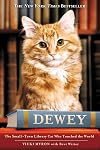
This book can sadly be summed up in about a single sentence: "Dewey the library cat changed people's lives." The author repeats this sentiment ad nauseum throughout the book, without ever truly elaborating in what ways the cat changed anyone's life at all. She merely describes a library patron and says, "then they met Dewey and he changed their life." Not particularly convincing, and lacking in the heart-warming stories readers might have hoped for. The one example that does stand out is the author's own relationship with the cat, which seems deeper and more genuine. Perhaps that should have been the focus of the book (ie, how Dewey changed her life) instead of the broader story about the cat at the library, which falls a bit flat and seems rather repetitive.
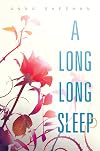
A Long, Long Sleep is a clever futuristic retelling of the story of Sleeping Beauty. The setting and the issues raised in the story are thought-provoking, and character development is strong. However, the ending feels a bit rushed and therefore is rather dissatisfying.
A must-read for fans of the Lunar Chronicles by Marissa Meyer.
A must-read for fans of the Lunar Chronicles by Marissa Meyer.
I thought I wouldn't be overly interested this book, being that it has to do with child-rearing and I don't have kids, but I found it to be both entertaining and thought-provoking.
Disclosure: I received a free advance uncorrected proof of Zealot by Reza Aslan courtesy of Random House, via GoodReads First Reads.
Zealot is not so much as biographical account of "The Life and Times of Jesus of Nazareth", as it is billed in the subtitle, as it is an in-depth historical exploration of the political and cultural climate during which Jesus' ministry took place. As Aslan admits, there are few sources that reveal much factual certainty about the historical Jesus. Much of the biographical detail, such as whether Jesus' mother was unmarried when he was born, is purely speculative from minute historical or Biblical clues. Nevertheless, Aslan does an admirable job of illuminating the background of Jesus' ministry, his possible sources of inspiration, and why people may have responded to him in the ways that they did in that historical context. Aslan also clears up a number of common misinterpretations of Gospel passages, such as the probable original meaning of references to Jesus as the Son of God that were later reread to establish the basis for Jesus' divinity. The final chapters of Zealot are concerned with the early church in the decades following Jesus' death, and although they are interesting in their own right and shed some further light on how Jesus' mission was either carried on or distorted by his followers, these sections probably belong in a separate work about early Christianity, as they do not adhere strictly to the topic of Jesus or his show more lifetime.
Not strictly a layman's text, Zealot requires a basic understanding of academic scripture study, ancient history, and theological terminology, as it might otherwise be a slightly difficult read. Readers who are interested in a more introductory work on the search for the historical Jesus would be best advised to start elsewhere, as this is more a scholarly than a popular work. show less
Zealot is not so much as biographical account of "The Life and Times of Jesus of Nazareth", as it is billed in the subtitle, as it is an in-depth historical exploration of the political and cultural climate during which Jesus' ministry took place. As Aslan admits, there are few sources that reveal much factual certainty about the historical Jesus. Much of the biographical detail, such as whether Jesus' mother was unmarried when he was born, is purely speculative from minute historical or Biblical clues. Nevertheless, Aslan does an admirable job of illuminating the background of Jesus' ministry, his possible sources of inspiration, and why people may have responded to him in the ways that they did in that historical context. Aslan also clears up a number of common misinterpretations of Gospel passages, such as the probable original meaning of references to Jesus as the Son of God that were later reread to establish the basis for Jesus' divinity. The final chapters of Zealot are concerned with the early church in the decades following Jesus' death, and although they are interesting in their own right and shed some further light on how Jesus' mission was either carried on or distorted by his followers, these sections probably belong in a separate work about early Christianity, as they do not adhere strictly to the topic of Jesus or his show more lifetime.
Not strictly a layman's text, Zealot requires a basic understanding of academic scripture study, ancient history, and theological terminology, as it might otherwise be a slightly difficult read. Readers who are interested in a more introductory work on the search for the historical Jesus would be best advised to start elsewhere, as this is more a scholarly than a popular work. show less
Disclosure: I received a free copy of The Weight of A Human Heart by Ryan O'Neill courtesy of St. Martin's Press, via GoodReads First Reads.
The short stories in O'Neill's collection The Weight of a Human Heart are for the most part overly focused on stylistic literary experimentation rather than on narrative or character development. This feels more like a self-assigned exercise in composition than any sort of enjoyable experience for the reader. A select few of the stories, notably "Africa was Children Crying" and "A Speeding Bullet," stand in isolation as less forced and more telling of the human experience.
The short stories in O'Neill's collection The Weight of a Human Heart are for the most part overly focused on stylistic literary experimentation rather than on narrative or character development. This feels more like a self-assigned exercise in composition than any sort of enjoyable experience for the reader. A select few of the stories, notably "Africa was Children Crying" and "A Speeding Bullet," stand in isolation as less forced and more telling of the human experience.
A unique and readable glimpse of an infrequently seen angle of women's lives in Afghanistan.
The Boys in the Boat: Nine Americans and Their Epic Quest for Gold at the 1936 Berlin Olympics by Daniel James Brown
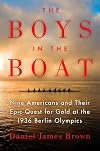
Disclosure: I received a free advance uncorrected copy of The Boys in the Boat via GoodReads First Reads, courtesy of Viking.
The Boys in the Boat is an engaging Cinderella story of a young team of rowers who came from very humble origins to win Olympic glory, despite the overwhelming odds against them. This compelling human interest story is very accessible even for those who have little or no previous knowledge of the sport of rowing.
Highly recommended for sports fans and anyone who enjoyed Unbroken, by Laura Hillenbrand. One side note: as this book is focused mainly on a single team, readers interested in Olympic history might prefer a more general work on the Berlin Games; at times, the backdrop of the games themselves is slightly wanting here.
The Boys in the Boat is an engaging Cinderella story of a young team of rowers who came from very humble origins to win Olympic glory, despite the overwhelming odds against them. This compelling human interest story is very accessible even for those who have little or no previous knowledge of the sport of rowing.
Highly recommended for sports fans and anyone who enjoyed Unbroken, by Laura Hillenbrand. One side note: as this book is focused mainly on a single team, readers interested in Olympic history might prefer a more general work on the Berlin Games; at times, the backdrop of the games themselves is slightly wanting here.
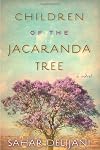
Disclosure: I received a free copy of Children of the Jacaranda Tree by Sahar Delijani from Atria Books Galley Alley.
Delijani's prose has a lyrical quality that makes it tempting to reread the descriptions and comparisons in each chapter. She brings the sights, sounds, and smells of Iran off the page and into the reader's senses.
Intertwined stories focusing on different protagonists at different points in time don't always work well, but Delijani is successful in weaving her narratives together to compliment each other. The characters each have their own goals, dreams, fears and true losses, but they are all connected by how the Iranian revolution and its aftermath have affected them. This is a novel filled with individual and shared tragedies, yet resounding with hope underscored by the power of strong familial bonds.
Children of the Jacaranda Tree is a gateway into a culture and to conversations about issues global and universal, certain to become a book group favorite. A must-read for anyone who enjoyed A Thousand Splendid Suns.
Delijani's prose has a lyrical quality that makes it tempting to reread the descriptions and comparisons in each chapter. She brings the sights, sounds, and smells of Iran off the page and into the reader's senses.
Intertwined stories focusing on different protagonists at different points in time don't always work well, but Delijani is successful in weaving her narratives together to compliment each other. The characters each have their own goals, dreams, fears and true losses, but they are all connected by how the Iranian revolution and its aftermath have affected them. This is a novel filled with individual and shared tragedies, yet resounding with hope underscored by the power of strong familial bonds.
Children of the Jacaranda Tree is a gateway into a culture and to conversations about issues global and universal, certain to become a book group favorite. A must-read for anyone who enjoyed A Thousand Splendid Suns.
The essential guide to getting your book published : how to write it, sell it, and market it--successfully! by Arielle Eckstut
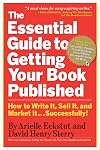
Not only is this a useful resource for first-time authors (and a reference that many are sure to go back to later on, at that), but it is also a humorous, light read. This writing style guarantees that readers will want to read the whole book and not just skim it for certain information & miss half the great advice.
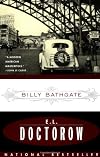
Billy Bathgate features Doctorow's distinctive narrative style at its best, plus a riveting plot and a thought-provoking ending.
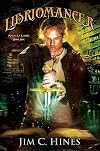
What if you could reach into your favorite novel and pull out a magic sword, or a laser gun, or a spider? Isaac, the protagonist in Libriomancer, can do all that and more through the magic of believing in the power of books. But can he stop magical chaos from breaking through into everyday reality? Or will vampires, self-serving sorcerers, and character-possessed libriomancers prevail?
Readers of Piers Anthony's Xanth novels or Terry Brooks' "Magic Kingdom of Landover" series will enjoy the light, humorous fantasy of Libriomancer. The concept is similar to Inkheart by Cornelia Funke, in which characters are read out of (and into) books, but it is not as compelling emotionally, nor as linguistically well-crafted. The author feels the need to stop for explanations of how his character's magic works so often that the flow of the story is sometimes lost at the very height of the action.
This is a book for geeks, pure and simple. From Tolkien to Adams, nearly every fandom imaginable gets a shout-out here. Anyone who hates Twilight will cheer to see Isaac take on the sparkly vampires in the opening scenes, as well. And even fans of Twilight will admit it's amusing that Hines' characters credit Meyer with the existence of new species of vampire.
Libriomancer is the first in the Magic Ex Libris series, with book two, Codex Born, coming soon.
Readers of Piers Anthony's Xanth novels or Terry Brooks' "Magic Kingdom of Landover" series will enjoy the light, humorous fantasy of Libriomancer. The concept is similar to Inkheart by Cornelia Funke, in which characters are read out of (and into) books, but it is not as compelling emotionally, nor as linguistically well-crafted. The author feels the need to stop for explanations of how his character's magic works so often that the flow of the story is sometimes lost at the very height of the action.
This is a book for geeks, pure and simple. From Tolkien to Adams, nearly every fandom imaginable gets a shout-out here. Anyone who hates Twilight will cheer to see Isaac take on the sparkly vampires in the opening scenes, as well. And even fans of Twilight will admit it's amusing that Hines' characters credit Meyer with the existence of new species of vampire.
Libriomancer is the first in the Magic Ex Libris series, with book two, Codex Born, coming soon.
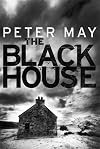
Peter May does an excellent job of weaving together plot lines past and present that hold clues to the mystery of The Bleak House, and the descriptive detail brings the setting of the remote island community to life. The story holds little true suspense, and the actual investigation slips from the center of the narrative, being displaced by the interpersonal relationships among the detective and his childhood acquaintances. Worse, the plot device of memory loss and the book's final revelations feel forced and unrealistic, leaving the reader wanting for a gutsier crime story. Fans of location crime drama with strong character development should try The Ice Princess by Camilla Lackberg.