100 Years of Valour: A Centennial Celebration of The Canadian Scottish Regiment (Princess Mary's) (From the producers of THE PIPES OF WAR film series) by Ian S. Williams Williams, Paul Ferguson Casey G.

Casey Williams is an international award-winning filmmaker. He is also a noted screenwriter, producer, and director. Casey is a truly versatile filmmaker with credits that range from animation, cinematography, film editing, writing, directing and producing. He is an international consultant on editing theory and screenwriting technique. He has been the subject of a documentary film produced by NHK in Japan and is the subject of a textbook used by film students in India. His advances in film editing theory are used worldwide. It was in his hometown theater, during Saturday matinees, that he first fell in love with movies and knew that he had to be a part of the film business. After earning a degree in psychology and spending time in Asia where he learned to speak Chinese, he became a consultant to film companies seeking permission to film in Mainland China. It was through this channel that he entered filmmaking. He produced travel promotional and educational documentaries for such notable clients as United Airlines, Korean Airlines, Hemphill Harris and Hoffman Travel, before returning to school to work on an MFA in Film Production. He was a founding member of the Utah Film Front, served as the Associate Director of the Utah Film and Video Center for a number of years, and established the UFVC Outdoor Cinema Series. He was Producer and Director of “Art Works For Kids,” a pilot program used by Salt Lake City School District, Central City Community Council, and Lincoln show more Elementary School. The program was successful in restoring discipline, uniting gangs, and developing community pride. He is member of the Artist Resource Center for the Utah Arts Council, Screenwriting and Media Arts Workshops; and serves on the Utah Arts Council Artist Grant Board. He has been a guest lecturer at Columbia University and Brigham Young University and has taught film theory and production at the University of Utah, Weber State University, Neumont University, and Poitiers Film School in France, and is a Lifelong Learning Instructor for the University of Utah Division of Continuing Education Screenwriting Workshops.
Ian Williams is an acclaimed writer, producer, and director of documentary films and multimedia events. Ian began his film career by following his father with a film camera and assisting him in the production of his award winning films. Ian became fascinated with the advances in digital film production and immersed himself in the emerging technologies. From motion graphics and composting to 3D applications he proved a talent at each and is currently pioneering new techniques in the presentation of archival photographs in documentary filmmaking. After exploring film education in various venues Ian recognized what he felt was a growing problem, the wide spread loss of the basic principles that make movies timeless. Disappointed in what he found offered elsewhere, Ian returned to the source of what he calls the best cinematic education he ever received. Upon his return Ian entered into a partnership with his award winning father, Casey Williams, and became part of Paradigm MPC. In 2006, Ian produced the critically acclaimed "Pipes of War Memorial Concert" for the Salt Lake Scots Pipe Band. In addition to editing and publishing a companion booklet to the evening's entertainment, Ian wrote, produced, and directed a series of documentary shorts that bridged the musical numbers and introduced a storyline for the audience to follow. Popular columnist Robert Kirby of the Salt Lake Tribune wrote, "Exactly what appeals to me about the pipes has until recently been a complete mystery. Thanks to [Ian Williams] and the Salt Lake Scots, I think I get it now. On Saturday the Scots held their 18th annual concert. The program featured "The Pipes of War," a tribute to the bagpipes role during armed conflict. Not only was the music enjoyable, it was educational. The course of history has been changed by the blood-stirring sound of bagpipes exhorting men to press on when common sense hollered otherwise." Ian is also a published author and an award wining competitive bagpiper. It is through these combined passions that he brings a unique and deeply personal perspective to the Pipes of War project which he currently spearheads for Paradigm.
Paul was recently asked to become part of the Paradigm Motion Picture team. His interest in film was sparked at Zweibrucken, Germany when his father took him to see the James Bond Film, Goldfinger. The legacy of “film for families” was great fun for Paul and in Sardinia he recalls watching in fascination Shenandoah and 55 Days to Peking. At University the one film course available to him, transformed his interest in film when the class compared the classic films of Japan with the classic films of Australia. After 30 years in the museum and archives field Paul’s passion brings to Paradigm an interest in the development of content, an understanding of the successful use of collections and imagery and a profound interest in the relationship of the viewer to the scenes in front of them. Exhibitions are similar to film, the story leads the viewer but there still must be something worthy to see. He believes strongly in his personal motto, “To deepen not broaden.” Paul’s personal interest in military history was kindled as a youth living overseas and across Canada. He continues to travel, largely to places that have been witness to the devastation of the First and Second World Wars. These explorations have taken him to England, France, Belgium, Holland, Germany, Malta and Galipoli. He has also taken the time to study the complex network of the Canadian home front, visited with memorials across Canada, and learned from the experiences of watching visitors to the Arizona Memorial in Hawaii. It is from this gathering of experience that Paul continues along his path, recalling all the while his grandmother, whose father did not return from the First World War, how it had shaped her life and how her experience continues to inspire him. show less
Ian Williams is an acclaimed writer, producer, and director of documentary films and multimedia events. Ian began his film career by following his father with a film camera and assisting him in the production of his award winning films. Ian became fascinated with the advances in digital film production and immersed himself in the emerging technologies. From motion graphics and composting to 3D applications he proved a talent at each and is currently pioneering new techniques in the presentation of archival photographs in documentary filmmaking. After exploring film education in various venues Ian recognized what he felt was a growing problem, the wide spread loss of the basic principles that make movies timeless. Disappointed in what he found offered elsewhere, Ian returned to the source of what he calls the best cinematic education he ever received. Upon his return Ian entered into a partnership with his award winning father, Casey Williams, and became part of Paradigm MPC. In 2006, Ian produced the critically acclaimed "Pipes of War Memorial Concert" for the Salt Lake Scots Pipe Band. In addition to editing and publishing a companion booklet to the evening's entertainment, Ian wrote, produced, and directed a series of documentary shorts that bridged the musical numbers and introduced a storyline for the audience to follow. Popular columnist Robert Kirby of the Salt Lake Tribune wrote, "Exactly what appeals to me about the pipes has until recently been a complete mystery. Thanks to [Ian Williams] and the Salt Lake Scots, I think I get it now. On Saturday the Scots held their 18th annual concert. The program featured "The Pipes of War," a tribute to the bagpipes role during armed conflict. Not only was the music enjoyable, it was educational. The course of history has been changed by the blood-stirring sound of bagpipes exhorting men to press on when common sense hollered otherwise." Ian is also a published author and an award wining competitive bagpiper. It is through these combined passions that he brings a unique and deeply personal perspective to the Pipes of War project which he currently spearheads for Paradigm.
Paul was recently asked to become part of the Paradigm Motion Picture team. His interest in film was sparked at Zweibrucken, Germany when his father took him to see the James Bond Film, Goldfinger. The legacy of “film for families” was great fun for Paul and in Sardinia he recalls watching in fascination Shenandoah and 55 Days to Peking. At University the one film course available to him, transformed his interest in film when the class compared the classic films of Japan with the classic films of Australia. After 30 years in the museum and archives field Paul’s passion brings to Paradigm an interest in the development of content, an understanding of the successful use of collections and imagery and a profound interest in the relationship of the viewer to the scenes in front of them. Exhibitions are similar to film, the story leads the viewer but there still must be something worthy to see. He believes strongly in his personal motto, “To deepen not broaden.” Paul’s personal interest in military history was kindled as a youth living overseas and across Canada. He continues to travel, largely to places that have been witness to the devastation of the First and Second World Wars. These explorations have taken him to England, France, Belgium, Holland, Germany, Malta and Galipoli. He has also taken the time to study the complex network of the Canadian home front, visited with memorials across Canada, and learned from the experiences of watching visitors to the Arizona Memorial in Hawaii. It is from this gathering of experience that Paul continues along his path, recalling all the while his grandmother, whose father did not return from the First World War, how it had shaped her life and how her experience continues to inspire him. show less
The American Civil War and the Wars of the Industrial Revolution (The History of Warfare) by Brian Holden Reid
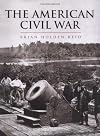
The Civil War was the bloodiest in America's history, comprising 149 engagements of importance and 2200 skirmishes. The author narrates the history of the war and also describes how such factors as generalship, staff work, organization, intelligence and logistics affect the shape and decisions of the battlefield. He looks at the strengths, and weaknesses of the opposing sides - the North's industrial strength and the South's material shortages, for example - and the effect of new weapons on tactics. He explores the crucial role of the industrial revolution on the course of 19th-century warfare, first in the Crimean War, then in Prussia's wars with Austria and France, and most dramatically in the American Civil War.