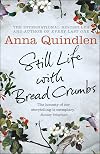
Sixty year old Rebecca Winter’s Warholian fifteen minutes of fame have elapsed and she is now struggling financially to keep her head above the proverbial water-line. With payments being made for maintenance of the New York flat, nursing home charges where her dementia suffering mother resides and rent for her father’s flat, she decides to lease her high rent New York apartment and rent a ramshackle cottage in an unspecified rural community in the New York State.
Rebecca Winter is a photographer who became well known for a series of photographs entitled The Kitchen Counter series, one of those being known as Still Life with Breadcrumbs. As Rebecca tries to engage with her new surroundings more often than not through hikes in the nearby woodland, she encounters small white crosses with various pieces of memorabilia next to them. As she begins to hunt the woodland for more of these crosses and photograph what she finds she meets Jim Bates sitting on a platform built into the branches of a tree, watching birds of prey and holding what looks like a gun.
This is not a book about a woman on the verge of a nervous breakdown. It is not a book about a woman going through a mid-life crisis. It would be very easy and very lazy to read the inside book jacket and come to either of the above conclusions but that would be doing a huge disservice to the author and this book. If the reader was to simply skim read their way through this book, that reader, though enjoying the book, would show more be missing the myriad of levels and nuances that permeate the book.
Still Life with Breadcrumbs is as elegant and intimate as an Annie Leibovitz photograph but also has the truthfulness of a Diane Arbus.
“ ...”You’re Lucky”, Rebecca had been suspicious of the sentiment, and the intervening years had proved her correct. You’re so lucky, to the couple at an anniversary party who, in private, scarcely spoke. You’re so lucky, to the young mother who heard a stirring and cry at night from the crib and swore she would lose her mind. Lucky from the outside was an illusion.”
(Page 89)
Rebecca Winter attempts to make sense of the world, to define her world, through the lens of her camera. The camera acts as a buffer to the real world beyond her aperture. When photographing the white crosses with their accompanying pieces of memorabilia, trophy, plaster cast of a handprint etc she thinks only in terms of composition, framing, and light. She doesn’t ask why the crosses and memorabilia are there or what they represent. And this thinking occasionally bleeds into her other parts of her life as well and in so doing she misses out on what life has to offer.
Anna Quindlen has an unerring ability to flesh out her characters without appearing to write very much about them. Her style of writing appears deceptively easy and with the least amount of effort. However, as one reads the words the reader finds themselves breathing the same air as the characters; one feels the characters becoming part of one’s DNA.
I will finish the review with a wonderful passage on page 104 that will help display Anna Quindlen’s wonderful prose.
“There are two kinds of men: men who want a wife who is predictable, and men who want a wife who is exotic. For some reason, Peter had thought she was the latter. But even if that had been the case, the problem inherent remains the same – once she becomes a wife, the exotic becomes familiar, and thus predictable, and thus not what was wanted at all. Those few women who stayed exotic usually were considered, after a few years, to be crazy.”
(Page 104)
Number of Pages – 252
Sex Scenes – None
Profanity – None
Genre - Fiction show less
Rebecca Winter is a photographer who became well known for a series of photographs entitled The Kitchen Counter series, one of those being known as Still Life with Breadcrumbs. As Rebecca tries to engage with her new surroundings more often than not through hikes in the nearby woodland, she encounters small white crosses with various pieces of memorabilia next to them. As she begins to hunt the woodland for more of these crosses and photograph what she finds she meets Jim Bates sitting on a platform built into the branches of a tree, watching birds of prey and holding what looks like a gun.
This is not a book about a woman on the verge of a nervous breakdown. It is not a book about a woman going through a mid-life crisis. It would be very easy and very lazy to read the inside book jacket and come to either of the above conclusions but that would be doing a huge disservice to the author and this book. If the reader was to simply skim read their way through this book, that reader, though enjoying the book, would show more be missing the myriad of levels and nuances that permeate the book.
Still Life with Breadcrumbs is as elegant and intimate as an Annie Leibovitz photograph but also has the truthfulness of a Diane Arbus.
“ ...”You’re Lucky”, Rebecca had been suspicious of the sentiment, and the intervening years had proved her correct. You’re so lucky, to the couple at an anniversary party who, in private, scarcely spoke. You’re so lucky, to the young mother who heard a stirring and cry at night from the crib and swore she would lose her mind. Lucky from the outside was an illusion.”
(Page 89)
Rebecca Winter attempts to make sense of the world, to define her world, through the lens of her camera. The camera acts as a buffer to the real world beyond her aperture. When photographing the white crosses with their accompanying pieces of memorabilia, trophy, plaster cast of a handprint etc she thinks only in terms of composition, framing, and light. She doesn’t ask why the crosses and memorabilia are there or what they represent. And this thinking occasionally bleeds into her other parts of her life as well and in so doing she misses out on what life has to offer.
Anna Quindlen has an unerring ability to flesh out her characters without appearing to write very much about them. Her style of writing appears deceptively easy and with the least amount of effort. However, as one reads the words the reader finds themselves breathing the same air as the characters; one feels the characters becoming part of one’s DNA.
I will finish the review with a wonderful passage on page 104 that will help display Anna Quindlen’s wonderful prose.
“There are two kinds of men: men who want a wife who is predictable, and men who want a wife who is exotic. For some reason, Peter had thought she was the latter. But even if that had been the case, the problem inherent remains the same – once she becomes a wife, the exotic becomes familiar, and thus predictable, and thus not what was wanted at all. Those few women who stayed exotic usually were considered, after a few years, to be crazy.”
(Page 104)
Number of Pages – 252
Sex Scenes – None
Profanity – None
Genre - Fiction show less
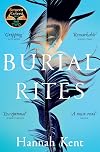
Iceland, 1828 and two men, Natan Ketilsson and Pétur Jónsson, are found dead within the burnt remains of a farm building. On closer inspection of the charred bodies it becomes obvious that they have been murdered. Fridrik Sigrdsson, Sigridur Gudmundsdóttir and Agnes Magnúsdóttir are arrested, tried and condemned to death.
While the three accused await the final judgement from the King of Denmark, Agnes Is moved from prison to stay with a District Officer, Jón Jónsson, and his family at Kornsä until the final decree as to her fate is decided by the King. Agnes asks for her spiritual needs to be administered by Assistant Reverend Thorvardur Jónsson who it appears has had no past connection with the condemned woman.
Jón Jónsson and his family, Margrét his wife and his two daughters Steina and Lauga, are of course horrified at the thought of housing a murderess but with Jón Jónsson’s status as a District Officer he has no option but to comply with the command from the District Commissioner, Björn Blöndal.
The story is related dichotomously in the first person narrative by Agnes and in a third person omniscient narrative. This method is perfect for this novel as it allows the readers to not only get inside Agnes’s mind but to also decide if what she relates to others is truthful or is of a meretricious nature. There are also an epistolary element to the novel with the inclusion of poems, letters and official documents.
The author Hannah Kent has written a show more gripping a story that makes one feel the need to voraciously devour the book in as few sittings as possible. Hannah Kent has a gripping and hypnotic style of writing that defies the fact that this is her first novel. She weaves and knits together paragraphs in a sententious manner as to be as concise and compact as the snow that falls on Kornsä farm.
“Then I understood that it was not me they stared at. I understood that these people did not see me. I was two dead men. I was a burning farm. I was a knife. I was blood.”
The author perfectly captures the Icelandic landscape and its seemingly unrelenting, devastating weather that seems hell bent on killing all living things on the island. Hannah Kent captures an austere Icelandic way of life and conveys a country and its people who are as tough, pragmatic and as primitive as the Icelandic language.
“...the thrill of escape is sucked away, like water down a geyser. I would only be trading one death sentence for another. Up in the Highlands blizzards howl like the widows of fishermen and the wind blisters the skin off your face. Winter comes like a punch in the dark. The uninhabited places are as cruel as any executioner.”
But, I have one major negative criticism of the novel and that is its rather obvious derivative storyline. It has a few similarities with Anita Shreve’s 1997 novel, The Weight of Water*, but has many, many glaring similarities to Margaret Atwood’s 1996 novel, Alias Grace*: female murderer, 19th century, based on true events, women who are more intelligent than their status implies, domestic servants, men attempting to understand the accused and in so doing become charmed by them, third person/first person narrative to name but a few.
However, the derivative nature of the novel is forgivable due to the novels exuberant, eloquent style and its ability to punch above the weight of a young first time author.
http://hannahkentauthor.com/
First Line - "They said I must die."
Memorable Line - "Memories shift like loose snow in a wind, or are a choral of ghosts all talking over one another."
Number of Pages - 355
Sex Scenes - Yes and a little graphic
Profanity - Yes
Genre - Fiction based on fact. show less
While the three accused await the final judgement from the King of Denmark, Agnes Is moved from prison to stay with a District Officer, Jón Jónsson, and his family at Kornsä until the final decree as to her fate is decided by the King. Agnes asks for her spiritual needs to be administered by Assistant Reverend Thorvardur Jónsson who it appears has had no past connection with the condemned woman.
Jón Jónsson and his family, Margrét his wife and his two daughters Steina and Lauga, are of course horrified at the thought of housing a murderess but with Jón Jónsson’s status as a District Officer he has no option but to comply with the command from the District Commissioner, Björn Blöndal.
The story is related dichotomously in the first person narrative by Agnes and in a third person omniscient narrative. This method is perfect for this novel as it allows the readers to not only get inside Agnes’s mind but to also decide if what she relates to others is truthful or is of a meretricious nature. There are also an epistolary element to the novel with the inclusion of poems, letters and official documents.
The author Hannah Kent has written a show more gripping a story that makes one feel the need to voraciously devour the book in as few sittings as possible. Hannah Kent has a gripping and hypnotic style of writing that defies the fact that this is her first novel. She weaves and knits together paragraphs in a sententious manner as to be as concise and compact as the snow that falls on Kornsä farm.
“Then I understood that it was not me they stared at. I understood that these people did not see me. I was two dead men. I was a burning farm. I was a knife. I was blood.”
The author perfectly captures the Icelandic landscape and its seemingly unrelenting, devastating weather that seems hell bent on killing all living things on the island. Hannah Kent captures an austere Icelandic way of life and conveys a country and its people who are as tough, pragmatic and as primitive as the Icelandic language.
“...the thrill of escape is sucked away, like water down a geyser. I would only be trading one death sentence for another. Up in the Highlands blizzards howl like the widows of fishermen and the wind blisters the skin off your face. Winter comes like a punch in the dark. The uninhabited places are as cruel as any executioner.”
But, I have one major negative criticism of the novel and that is its rather obvious derivative storyline. It has a few similarities with Anita Shreve’s 1997 novel, The Weight of Water*, but has many, many glaring similarities to Margaret Atwood’s 1996 novel, Alias Grace*: female murderer, 19th century, based on true events, women who are more intelligent than their status implies, domestic servants, men attempting to understand the accused and in so doing become charmed by them, third person/first person narrative to name but a few.
However, the derivative nature of the novel is forgivable due to the novels exuberant, eloquent style and its ability to punch above the weight of a young first time author.
http://hannahkentauthor.com/
First Line - "They said I must die."
Memorable Line - "Memories shift like loose snow in a wind, or are a choral of ghosts all talking over one another."
Number of Pages - 355
Sex Scenes - Yes and a little graphic
Profanity - Yes
Genre - Fiction based on fact. show less
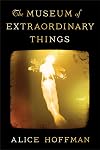
The story has two strands which will inevitably become entwined. One strand involves Coralie Sardie whose father owns the Museum of Extraordinary Things on Coney Island, New York. The museum is a mix of people who are deemed as freaks; a man completely covered in hair, a girl by the name of Malia whose arms resembled a butterfly’s wings and jars of formaldehyde containing unborn babies with deformities. Coralie thinks of herself as a freak as she has the abnormality of webbed fingers. Her father also sees his daughter as a freak and on her twelfth birthday he shows her a large tank filled with water in which he wants her to be on display as a mermaid.
The second strand is about a young man Ezekiel Cohen a young man who with his father escaped the Russian pogroms in the Ukraine. Both live in abject poverty with Ezekiel’s father working in factories while Ezekiel sits under his work table. After an attempted suicide by Ezekiel’s father, Ezekiel loses all respect for his father and leaves, finding work with Abraham Hochman who is called the seer of Rivington Street. Hochman claims to be a mind-reader and interpreter of dreams and through his supposed talent he solves crimes and finds lost children. Ezekiel changes his name to Eddie and eventually finds a talent for photography.
“After the day when my father leapt from the dock, as if his life was so worthless he was willing to cast it away, I made a vow to look for pleasure in my own life...nothing made me happy until show more I’d stood in the locust grove and watched Levy with his camera.”
After swimming further down the Hudson River than she intended, Coralie espy’s Eddie sitting fixing a meal over a bonfire on the river’s edge. She immediately feels a ‘magnetic pull’ toward Eddie and later in the story Eddie falls in love with her on first sight.
This fin de siècle novel is a tremendous tale of a New York on the cusp of becoming a modern city. The consolidation of the five boroughs to form what would become the modern day New York, the opening of the subway, the construction of magnificent buildings sat incongruously with the streets being covered with 2500 tons of manure daily from over 200,000 horses that were still being used as transportation. Central Park once a boggy area and populated by squatters now remade into an opulent playground for the rich.
Mixing factual events with fiction to bring the city to life, Alice Hoffman has created a remarkable account that not only informs but entertainments but never becomes boringly didactic. The author shows the city at its worse and its best. Its worst is the true event of the Triangle Shirtwaist Factory where girls as young as twelve worked as seamstresses. The nine storey building catches fire with doors chained and the fire escape melting. Reminiscent of an event that would happen four years after the book was published in 1997, with people jumping to their deaths from the ninth floor window ledges most of them engulfed in flames.
Eddie Cohen’s time as a photographer includes time photographing criminals being arrested and the dead bodies of gangsters for tabloid newspapers. With his bribery of local police officers and his photographing of dead criminals it is very reminiscent of the 1940s freelance photographer, Arthur ‘weegee’ Fellig.
Coralie’s story is tragic and pathetic in equal amounts. Coralie struggles to extricate herself from her life as a freak show attraction but cannot find the strength to disobey her overbearing and cruel father who is not above stitching human and animal parts together to ‘create’ a new exhibit for his museum.
The story of Eddie and Coralie is fascinating and told with great aplomb but the Romantic story arc is ridden with clichés with dialogue lumpen and bordering on the Barbara Cartland and Mills and Boon.
“Corlaie kissed him quickly, then whispered that she had given him her heart. It was not possible to live with one’s heart, yet she was smiling when she backed away.”
“The housekeeper lifted Coralie’s chin so they might look into one another’s eyes. ‘If we had no hurt and no sin to speak of, we’d be angels, and angels can’t love the way men and women do.’”
One feels that the novel has been written by two different people and I wish that the person who wrote the main story of New York, Eddie and Coralie stories (before they met) had written the whole novel as the Romantic element of the novel is at once bathetic, incongrous and detracts from what could have been a great novel. show less
The second strand is about a young man Ezekiel Cohen a young man who with his father escaped the Russian pogroms in the Ukraine. Both live in abject poverty with Ezekiel’s father working in factories while Ezekiel sits under his work table. After an attempted suicide by Ezekiel’s father, Ezekiel loses all respect for his father and leaves, finding work with Abraham Hochman who is called the seer of Rivington Street. Hochman claims to be a mind-reader and interpreter of dreams and through his supposed talent he solves crimes and finds lost children. Ezekiel changes his name to Eddie and eventually finds a talent for photography.
“After the day when my father leapt from the dock, as if his life was so worthless he was willing to cast it away, I made a vow to look for pleasure in my own life...nothing made me happy until show more I’d stood in the locust grove and watched Levy with his camera.”
After swimming further down the Hudson River than she intended, Coralie espy’s Eddie sitting fixing a meal over a bonfire on the river’s edge. She immediately feels a ‘magnetic pull’ toward Eddie and later in the story Eddie falls in love with her on first sight.
This fin de siècle novel is a tremendous tale of a New York on the cusp of becoming a modern city. The consolidation of the five boroughs to form what would become the modern day New York, the opening of the subway, the construction of magnificent buildings sat incongruously with the streets being covered with 2500 tons of manure daily from over 200,000 horses that were still being used as transportation. Central Park once a boggy area and populated by squatters now remade into an opulent playground for the rich.
Mixing factual events with fiction to bring the city to life, Alice Hoffman has created a remarkable account that not only informs but entertainments but never becomes boringly didactic. The author shows the city at its worse and its best. Its worst is the true event of the Triangle Shirtwaist Factory where girls as young as twelve worked as seamstresses. The nine storey building catches fire with doors chained and the fire escape melting. Reminiscent of an event that would happen four years after the book was published in 1997, with people jumping to their deaths from the ninth floor window ledges most of them engulfed in flames.
Eddie Cohen’s time as a photographer includes time photographing criminals being arrested and the dead bodies of gangsters for tabloid newspapers. With his bribery of local police officers and his photographing of dead criminals it is very reminiscent of the 1940s freelance photographer, Arthur ‘weegee’ Fellig.
Coralie’s story is tragic and pathetic in equal amounts. Coralie struggles to extricate herself from her life as a freak show attraction but cannot find the strength to disobey her overbearing and cruel father who is not above stitching human and animal parts together to ‘create’ a new exhibit for his museum.
The story of Eddie and Coralie is fascinating and told with great aplomb but the Romantic story arc is ridden with clichés with dialogue lumpen and bordering on the Barbara Cartland and Mills and Boon.
“Corlaie kissed him quickly, then whispered that she had given him her heart. It was not possible to live with one’s heart, yet she was smiling when she backed away.”
“The housekeeper lifted Coralie’s chin so they might look into one another’s eyes. ‘If we had no hurt and no sin to speak of, we’d be angels, and angels can’t love the way men and women do.’”
One feels that the novel has been written by two different people and I wish that the person who wrote the main story of New York, Eddie and Coralie stories (before they met) had written the whole novel as the Romantic element of the novel is at once bathetic, incongrous and detracts from what could have been a great novel. show less
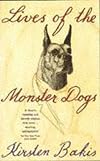
On November 7th 2008 a phone call is made to various journalists announcing that an ‘incredible monster’ would be arriving at the V.I.P. heliport in Manhattan the following day. On November 8th the helicopter lands and stepping from the helicopter dressed in a dark coloured uniform style jacket, wearing spectacles and holding a cane is a six foot tall Malamute dog standing on its hind legs. It’s reported that instead of front paws the dog has hands and that it talks. After this arrival 150 more ‘monster dogs’ appear in New York after having left a secret location in Canada some years earlier.
The novel moves between the Cleo Pira’s reminiscences of her time as the monster dog’s official biographer and the diary and papers of Ludwig von Sacher, the monster dog’s historian. It is through Ludwig that we learn the story of Augustus Rank, the man who created the monster dogs. As a child the brilliant Augustus Rank would surgically operate on small animals trying to create, ‘Frankenstein’ like, a hybrid of birds and mice; more specifically, attempting to transplant the wings of birds onto mice. At the age of thirteen he successfully removes the forelegs of a cow and reattachments them on opposite sides. This activity brings him to the attention of a Dr. Buxtorf a professor of surgery at the University of Basle. Sometime after that Rank, under the patronage of Wilhelm II, begins to work on creating an army of monster dogs.
Kirsten Bakis’s novel can be read show more as an allegory, a fable or a satire. And with all due credit to the author it works on all levels. The novel is a superb, strange, fascinating tale that can be amusing, heartbreaking and thought provoking. The novel examines the polar opposites of love and hate, fear and bravery, life and death, abandonment and cherishing and how we as animals attempt to face them all.
In less capable hands this bizarre debut novel could so easily have become a pretentious, dishonest congealed mess of a book but Kirsrten Bakis has successfully tiptoed through that particular minefield that is deeply littered with the dead, forgotten bodies of many a novel.
Honesty is what separates this book from the chaff. The character development and dialogue felt true and straight and unlike so many novels written in the past twenty years it didn’t feel like the novelist was writing the story with one eye on it being a Hollywood screenplay.
The novel moves smoothly between the gothic horror of Ludwig’s biographical telling of Augustus Rank’s tale of losing his loving mother, being abandoned by his father and his pathological surgical experiments and the modern day experiences of Cleo Pira’s encounters with the monster dogs. The author balances the two stories like a veteran funambulist, both storylines as interesting and compelling as the other.
This electrifying novel will remain wrapped in the synapses of your brain for a long time after you have read the last page. Those synaptic signals will cause you to never look at dogs in the same way again.
Originally published at http://womensprizeforfictionbookreview.wordpress.com/ show less
The novel moves between the Cleo Pira’s reminiscences of her time as the monster dog’s official biographer and the diary and papers of Ludwig von Sacher, the monster dog’s historian. It is through Ludwig that we learn the story of Augustus Rank, the man who created the monster dogs. As a child the brilliant Augustus Rank would surgically operate on small animals trying to create, ‘Frankenstein’ like, a hybrid of birds and mice; more specifically, attempting to transplant the wings of birds onto mice. At the age of thirteen he successfully removes the forelegs of a cow and reattachments them on opposite sides. This activity brings him to the attention of a Dr. Buxtorf a professor of surgery at the University of Basle. Sometime after that Rank, under the patronage of Wilhelm II, begins to work on creating an army of monster dogs.
Kirsten Bakis’s novel can be read show more as an allegory, a fable or a satire. And with all due credit to the author it works on all levels. The novel is a superb, strange, fascinating tale that can be amusing, heartbreaking and thought provoking. The novel examines the polar opposites of love and hate, fear and bravery, life and death, abandonment and cherishing and how we as animals attempt to face them all.
In less capable hands this bizarre debut novel could so easily have become a pretentious, dishonest congealed mess of a book but Kirsrten Bakis has successfully tiptoed through that particular minefield that is deeply littered with the dead, forgotten bodies of many a novel.
Honesty is what separates this book from the chaff. The character development and dialogue felt true and straight and unlike so many novels written in the past twenty years it didn’t feel like the novelist was writing the story with one eye on it being a Hollywood screenplay.
The novel moves smoothly between the gothic horror of Ludwig’s biographical telling of Augustus Rank’s tale of losing his loving mother, being abandoned by his father and his pathological surgical experiments and the modern day experiences of Cleo Pira’s encounters with the monster dogs. The author balances the two stories like a veteran funambulist, both storylines as interesting and compelling as the other.
This electrifying novel will remain wrapped in the synapses of your brain for a long time after you have read the last page. Those synaptic signals will cause you to never look at dogs in the same way again.
Originally published at http://womensprizeforfictionbookreview.wordpress.com/ show less
In 1873 two women are brutally murdered on a small island off the coast of New Hampshire. A third woman, Maren, scared, alone and covered in blood hides in a cave on the shoreline. In what becomes referred to as the ‘trial of the century’ by newspapers of the time, Louis Wagner is arrested, charged, tried and hanged for the murders. In the present day, Jean, a photojournalist, is visiting the island where the murders took place on an assignment for the magazine she works for. Her editor thinks there is a link between the 1873 murders and a famous trial in the 1990s involving “a double murder, with a blade, a famous trial, circumstantial evidence that hinges on tiny factual details.”
On the trip with Jean are her husband Thomas, her daughter Billie, her brother in law Rich and his girlfriend Adaline. Using Rich’s boat they travel to what is an archipelago of nine islands, eight at low tide. Thomas is a university professor and poet and an alcoholic. He told Jean that he loved her the day after they met but Jean feels at times that she is more of a muse to Thomas than someone he truly loves. Jean also begins to believe that her husband is having an affair with Adaline.
The novel switches between the present day and a document of 1899 written by Maren on her deathbed. The document is found by Jean in the archives of a local island library, which she steals from the library with the intention of returning it at a later date.
The novel is laden with metaphors. The sea show more of course is the novel’s strongest metaphor with its allusions to emotional undercurrents, its inherent beauty and benign nature when calm but unforgiving and treacherous as life can be when we least expect it. The weight of emotions, expectations, dreams, desires, loved one’s needs, fears and disappointments that pressurize us the deeper we enter our mortal coil.
Anita Shreve’s novel is a light book of only 246 pages but weighs heavily on the mind after reading it with its genuinely emotional writing. In less competent hands this story would have become fatuous, over-wrought and sentimental but the author steers the story away from those over populated islands and sails us toward the more treasured, resplendent islands of intelligent, empathetic, well-crafted and erudite.
My only criticism is the denouement of Maren’s document and the reason why the murderer committed the heinous crimes they did. I felt it neither rang true nor was satisfactory in its reasoning. The events that led to the murders felt contrived and lacked any narrative truth. However, Jean’s story ends truthfully and leaves one feeling battered and bruised by the storm of edifying, emotionally charged prose show less
On the trip with Jean are her husband Thomas, her daughter Billie, her brother in law Rich and his girlfriend Adaline. Using Rich’s boat they travel to what is an archipelago of nine islands, eight at low tide. Thomas is a university professor and poet and an alcoholic. He told Jean that he loved her the day after they met but Jean feels at times that she is more of a muse to Thomas than someone he truly loves. Jean also begins to believe that her husband is having an affair with Adaline.
The novel switches between the present day and a document of 1899 written by Maren on her deathbed. The document is found by Jean in the archives of a local island library, which she steals from the library with the intention of returning it at a later date.
The novel is laden with metaphors. The sea show more of course is the novel’s strongest metaphor with its allusions to emotional undercurrents, its inherent beauty and benign nature when calm but unforgiving and treacherous as life can be when we least expect it. The weight of emotions, expectations, dreams, desires, loved one’s needs, fears and disappointments that pressurize us the deeper we enter our mortal coil.
Anita Shreve’s novel is a light book of only 246 pages but weighs heavily on the mind after reading it with its genuinely emotional writing. In less competent hands this story would have become fatuous, over-wrought and sentimental but the author steers the story away from those over populated islands and sails us toward the more treasured, resplendent islands of intelligent, empathetic, well-crafted and erudite.
My only criticism is the denouement of Maren’s document and the reason why the murderer committed the heinous crimes they did. I felt it neither rang true nor was satisfactory in its reasoning. The events that led to the murders felt contrived and lacked any narrative truth. However, Jean’s story ends truthfully and leaves one feeling battered and bruised by the storm of edifying, emotionally charged prose show less
Laurence John Weller, of Winnipeg Canada, is a man who creates and designs mazes; a construction, like life, that can be confusing, deceptive, a series of dead-ends but at its centre, its heart, there can be a feeling of well-being and achievement.
The novel begins with Larry inadvertently taking another person’s coat, which looks like his own, from a café he frequents. The ‘stolen’ jacket is however not only of better quality and more expensive than Larrys but the sleeves are a few inches too long. This sums up how Larry feels about his life; other people’s lives are richer and superior to his own and the life he is leading doesn’t fit or feel comfortable.
While on honeymoon in England, Larry and his new wife Dorrie visit Hampton Court Maze. Larry deliberately loses himself in the maze and in doing so finds and discovers a love for the unicursal puzzle.
Larry’s Party is a novel about a man attempting to find the path through life of least resistance. Like the mazes he designs and creates, Larry’s life, like most other peoples, has hedges that obscure the view of the paths around you, the future. There are paths that lead to dead-ends. There are new paths, well trodden old paths and the path that will lead to the centre, achieving one’s goal. Not everyone reaches the centre of the maze. Some people get lost but will eventually find the exit. Some simply give up and head straight for the exit while some people through fear, anxiety, laziness or dread, due show more to the lack of any Ariadneal thread to guide them, will tread well worn paths until the exit appears in front of them. Of course like life a maze only has one exit.
But, Larry knows the path that leads to the centre of the mazes he creates and because of this he “sometimes…sees his future laid out with terrifying clarity. An endless struggle to remember what he already knows.”
The subject matter of novel is a path well trodden: the telling of a man’s life from the seemingly limitless possibilities of youth and no inclining of mortality, marriage, children, divorce, nearing forty and beginning to question one’s life and realising that “getting old was to witness the steady decline of limitless possibility” and then through the invisible barriers of numerical ascendency toward middle and old age.
However, Carol Shields has written a superbly profound and unpretentious novel that will particularly resonate with those of a certain age. The author’s style is as strong, fluid and elaborate as the mazes that Larry Weller designs. Carol Shields has constructed a slice of literature that shows how people are also themselves like a maze. We strive to find something within us which we will attempt to find ourselves or other people will help us look for it.
Originally posted at http://womensprizeforfictionbookreview.wordpress.com/ show less
The novel begins with Larry inadvertently taking another person’s coat, which looks like his own, from a café he frequents. The ‘stolen’ jacket is however not only of better quality and more expensive than Larrys but the sleeves are a few inches too long. This sums up how Larry feels about his life; other people’s lives are richer and superior to his own and the life he is leading doesn’t fit or feel comfortable.
While on honeymoon in England, Larry and his new wife Dorrie visit Hampton Court Maze. Larry deliberately loses himself in the maze and in doing so finds and discovers a love for the unicursal puzzle.
Larry’s Party is a novel about a man attempting to find the path through life of least resistance. Like the mazes he designs and creates, Larry’s life, like most other peoples, has hedges that obscure the view of the paths around you, the future. There are paths that lead to dead-ends. There are new paths, well trodden old paths and the path that will lead to the centre, achieving one’s goal. Not everyone reaches the centre of the maze. Some people get lost but will eventually find the exit. Some simply give up and head straight for the exit while some people through fear, anxiety, laziness or dread, due show more to the lack of any Ariadneal thread to guide them, will tread well worn paths until the exit appears in front of them. Of course like life a maze only has one exit.
But, Larry knows the path that leads to the centre of the mazes he creates and because of this he “sometimes…sees his future laid out with terrifying clarity. An endless struggle to remember what he already knows.”
The subject matter of novel is a path well trodden: the telling of a man’s life from the seemingly limitless possibilities of youth and no inclining of mortality, marriage, children, divorce, nearing forty and beginning to question one’s life and realising that “getting old was to witness the steady decline of limitless possibility” and then through the invisible barriers of numerical ascendency toward middle and old age.
However, Carol Shields has written a superbly profound and unpretentious novel that will particularly resonate with those of a certain age. The author’s style is as strong, fluid and elaborate as the mazes that Larry Weller designs. Carol Shields has constructed a slice of literature that shows how people are also themselves like a maze. We strive to find something within us which we will attempt to find ourselves or other people will help us look for it.
Originally posted at http://womensprizeforfictionbookreview.wordpress.com/ show less
This is a collection of seven short stories by Ian McEwan from 1978. The main theme that runs through the book is sex. The sexually activity is within the spectrum of kinky and depraved. However, it could also be looked upon as pornographic but without the titillation. What I mean by that is that most of the sex is suggested but not always described in great detail. But, it could be construed as pornographic simply due to whom and what is described as having the sex. There is sex between a man and a mannequin; between a woman and an ape and the wet dreams of a man that involve a pre-pubescent girl.
I tried so hard to not use the following adjectives to describe the book; ‘dark’ and ‘disturbing’ as I am sure they have been used many times to describe this set of short stories. However, it is almost impossible not to use the afore-mentioned adjectives as they perfectly describe two major aspects of the book.
I believe the book reflects Great Britain during 1977 and 1978. The country was beset with strikes, IRA bombings, political unrest, the ‘Winter of Discontent’ was just around the corner, the gaining popularity of the Conservative party, (The Thatcher era was only a year away), and women’s palpable fear of the Yorkshire Ripper. There is one story in the book of a dystopian future set in Great Britain. But attitudes to sex in the seventies were a bigger threat.
The seventies are seen by many historians as the decade that saw an explosion of promiscuity, show more abortion and pornography. The pill became widely used in the seventies and so it appeared as if everyone was having sex with anyone. Sex became recreational rather than perfunctory. But of course this sexual promiscuity had a dark (there is that word again) element; abortion, women scared to say no due to peer pressure or not wanting to appear repressed, increased illegitimacy and women losing their sense of autonomy. Many novels of the seventies depicted sexual violence such as ‘A Clockwork Orange’ by Anthony Burgess.
In Ian McEwan’s book of short stories the stories depict most of the male characters as unable to differentiate between lust and love. The male appendage for most of the male characters does most of the thinking leaving the brain in neutral like so many idling cars: the engine is running but the car is not moving.
In Between the Sheets is a perversely envisioned account of sex and in the male of the species. The stories articulate the era of the seventies and also resonate in the 21st century with the growth of the internet and continuing sexualisation of women and in particular young girls.
Originally published at http://thevoyageout-bookreviews.blogspot.co.uk/ show less
I tried so hard to not use the following adjectives to describe the book; ‘dark’ and ‘disturbing’ as I am sure they have been used many times to describe this set of short stories. However, it is almost impossible not to use the afore-mentioned adjectives as they perfectly describe two major aspects of the book.
I believe the book reflects Great Britain during 1977 and 1978. The country was beset with strikes, IRA bombings, political unrest, the ‘Winter of Discontent’ was just around the corner, the gaining popularity of the Conservative party, (The Thatcher era was only a year away), and women’s palpable fear of the Yorkshire Ripper. There is one story in the book of a dystopian future set in Great Britain. But attitudes to sex in the seventies were a bigger threat.
The seventies are seen by many historians as the decade that saw an explosion of promiscuity, show more abortion and pornography. The pill became widely used in the seventies and so it appeared as if everyone was having sex with anyone. Sex became recreational rather than perfunctory. But of course this sexual promiscuity had a dark (there is that word again) element; abortion, women scared to say no due to peer pressure or not wanting to appear repressed, increased illegitimacy and women losing their sense of autonomy. Many novels of the seventies depicted sexual violence such as ‘A Clockwork Orange’ by Anthony Burgess.
In Ian McEwan’s book of short stories the stories depict most of the male characters as unable to differentiate between lust and love. The male appendage for most of the male characters does most of the thinking leaving the brain in neutral like so many idling cars: the engine is running but the car is not moving.
In Between the Sheets is a perversely envisioned account of sex and in the male of the species. The stories articulate the era of the seventies and also resonate in the 21st century with the growth of the internet and continuing sexualisation of women and in particular young girls.
Originally published at http://thevoyageout-bookreviews.blogspot.co.uk/ show less
Accordion Crimes follows the stories of America’s many immigrants from 1890 to 1996. The novel is split into eight sections and reads like eight short stories where the only connection is a green accordion and the suffering and hardship that the immigrants each suffer; Germans, Italians and Mexicans etc.
The stories traverse America, Texas, Iowa, Florida and Louisiana to name but a few. The green accordion that connects the lives of the novel’s characters is crafted by a poor Sicilian in the last decade of the 19th century. Through the novel the accordion is stolen, lost or bought by the novel’s protagonists.
The novel’s premise is striking, applaudable and its ambition is as vast as the country in which novel is set, America. The novel attempts to show a hundred years of American history through its poorest people, through ‘foreign’ eyes if you will.
The novel begins in Italy where a Sicilian decides to emigrate to ‘La Merica’ in the hope to start a business of making and selling accordions. As an example of his craftsmanship he creates a green accordion. The accordion is an instrument one associates with the working class. Felida one of the novel’s characters goes further by stating that, “The instrument of unsuccessful men, of poor immigrants and failures.” The green colour of the instrument is significant as it relates to the nativity of its many owners and to the vast verdant landscape envisioned by immigrants who travel to America. The show more accordion is a complicated and elaborate instrument that belies its lowly ranking in music world.
Like the accordion of the novel’s title the novel is beautifully crafted and one can only admire the author’s in depth research. However, I found the novel dull, bloated and as dry as the paper it is printed on. The author details the making and workings of instruments and cars and sport equipment to the nth degree. After reading the book you will be able to build and create your own accordion and combustion engine due to the complete and minute detail written by the author on these subjects. I understand the author wanted to demonstrate the ingenuity and skills that many immigrants brought with them to their new homeland but it makes for a dry and tedious read.
I found myself having no connection, no sympathy and no empathy with any of the novel’s characters. This is not helped by the ludicrous circumstances they sometimes find themselves in but also the farcical deaths that befall many of the characters. One individual, the grandson of a German immigrant, dies when he loses his balance and falls into a hot spring in Yellowstone National Park. However, he manages to drag himself out of the spring with his flesh falling off his bones only for him to fall into another hot spring like a character from a Mack Sennett film.
Many of Ms Proulx’s references and analogies are pretentious, obscure and at times obtuse: “leaving the door ajar like Richard Widmark.” I could make no sense of this simile. Only film aficionados’ would be aware of the actor Richard Widmark and even some of those would be hard pressed to name any of his films.
One feels guilty at having to negatively criticize Annie Proulx’s novel as it is a worthy and ambitious piece of work about a country’s immigrants and their place in that country. To that end it is still relevant in the world today as we move toward the middle of the second decade of the 21st century immigration still high on the agenda of not just governments but the voters.
Originally posted at http://womensprizeforfictionbookreview.wordpress.com/ show less
The stories traverse America, Texas, Iowa, Florida and Louisiana to name but a few. The green accordion that connects the lives of the novel’s characters is crafted by a poor Sicilian in the last decade of the 19th century. Through the novel the accordion is stolen, lost or bought by the novel’s protagonists.
The novel’s premise is striking, applaudable and its ambition is as vast as the country in which novel is set, America. The novel attempts to show a hundred years of American history through its poorest people, through ‘foreign’ eyes if you will.
The novel begins in Italy where a Sicilian decides to emigrate to ‘La Merica’ in the hope to start a business of making and selling accordions. As an example of his craftsmanship he creates a green accordion. The accordion is an instrument one associates with the working class. Felida one of the novel’s characters goes further by stating that, “The instrument of unsuccessful men, of poor immigrants and failures.” The green colour of the instrument is significant as it relates to the nativity of its many owners and to the vast verdant landscape envisioned by immigrants who travel to America. The show more accordion is a complicated and elaborate instrument that belies its lowly ranking in music world.
Like the accordion of the novel’s title the novel is beautifully crafted and one can only admire the author’s in depth research. However, I found the novel dull, bloated and as dry as the paper it is printed on. The author details the making and workings of instruments and cars and sport equipment to the nth degree. After reading the book you will be able to build and create your own accordion and combustion engine due to the complete and minute detail written by the author on these subjects. I understand the author wanted to demonstrate the ingenuity and skills that many immigrants brought with them to their new homeland but it makes for a dry and tedious read.
I found myself having no connection, no sympathy and no empathy with any of the novel’s characters. This is not helped by the ludicrous circumstances they sometimes find themselves in but also the farcical deaths that befall many of the characters. One individual, the grandson of a German immigrant, dies when he loses his balance and falls into a hot spring in Yellowstone National Park. However, he manages to drag himself out of the spring with his flesh falling off his bones only for him to fall into another hot spring like a character from a Mack Sennett film.
Many of Ms Proulx’s references and analogies are pretentious, obscure and at times obtuse: “leaving the door ajar like Richard Widmark.” I could make no sense of this simile. Only film aficionados’ would be aware of the actor Richard Widmark and even some of those would be hard pressed to name any of his films.
One feels guilty at having to negatively criticize Annie Proulx’s novel as it is a worthy and ambitious piece of work about a country’s immigrants and their place in that country. To that end it is still relevant in the world today as we move toward the middle of the second decade of the 21st century immigration still high on the agenda of not just governments but the voters.
Originally posted at http://womensprizeforfictionbookreview.wordpress.com/ show less
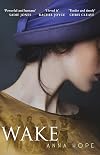
The plot is set during five days in November 1920, from 7th to the 11th, Armistice day. One storyline is the circumstances that led to the creation and interment of the Unknown Soldier in Westminster Abbey. The account is fictional but is based on actual events. The second strand to the novel is the story of three women, Ada Hart, Evelyn Montfort and Hettie Burns. All three women have been affected by the Great War either having lost someone or had a loved one return home but are mentally or physically ‘broken’.
‘Wake’ is a very competent, well written book that lovingly portrays five days in the lives of the three women and the family and friends around them. The main protagonists are well developed fully rounded characters and one gets a sense that the author has lived and breathed their lives for some time. The dialogue is character driven, each word and sentence is crafted in such a way as help one understand who the character is beyond their actions.
However, one cannot say the same for many of the secondary characters; Ada’s husband, Hettie’s friend Di and Rowan Hind. (Rowan Hind relates a harrowing tale of his time in the trenches in the fields of France and the author creates the scene so well that one can almost feel the mud underfoot. But, his character is underwritten and under utilised).
These and some other characters are one dimensional and one gets the impression that the author had spent so much time developing the main protagonists that she show more didn’t give enough time to flesh out the minor characters.
The main problem with the book is that it falls to often into a well of clichés and stereotypes and as such that it comes across like so many Romance novels. You have Evelyn who lost her first love and has withdrawn from life and love. You have Hettie the not so attractive best friend to a beautiful girl who has found a rich man. Then you have Ada who has lost her son and has also withdrawn from life. The denouement to Ada’s story is ridiculously saccharine and contrived. The words of advice she is given that change her life reads like the clichéd homilies vomited by those loathsome American life coaches one sees on TV.
One gets the impression the author wrote this only for the female reading population. Why would she have all the main characters female? There are no memorable male characters and each of these is damaged mentally or physically. What would have raised it above the norm would have been having one of three main characters male, a father who had lost his son. I am sure there must have been widowed fathers who had sons fighting in the war.
The author’s telling of the events that led to the creation of the tomb of the Unknown Soldier is sublime and there were times where I was distracted by my desire for the story to return to this strand of the novel to the detriment of the rest of the storyline.
One has to remember this is Anna Hope’s first novel and can certainly be described as a valiant attempt. But much of it is written monochromatically it lacks any subtle nuances or depth or underlying themes and because of this it is doubtful one would return to the book to re-read it.
This is an advanced copy obtained via Netgalley. show less
‘Wake’ is a very competent, well written book that lovingly portrays five days in the lives of the three women and the family and friends around them. The main protagonists are well developed fully rounded characters and one gets a sense that the author has lived and breathed their lives for some time. The dialogue is character driven, each word and sentence is crafted in such a way as help one understand who the character is beyond their actions.
However, one cannot say the same for many of the secondary characters; Ada’s husband, Hettie’s friend Di and Rowan Hind. (Rowan Hind relates a harrowing tale of his time in the trenches in the fields of France and the author creates the scene so well that one can almost feel the mud underfoot. But, his character is underwritten and under utilised).
These and some other characters are one dimensional and one gets the impression that the author had spent so much time developing the main protagonists that she show more didn’t give enough time to flesh out the minor characters.
The main problem with the book is that it falls to often into a well of clichés and stereotypes and as such that it comes across like so many Romance novels. You have Evelyn who lost her first love and has withdrawn from life and love. You have Hettie the not so attractive best friend to a beautiful girl who has found a rich man. Then you have Ada who has lost her son and has also withdrawn from life. The denouement to Ada’s story is ridiculously saccharine and contrived. The words of advice she is given that change her life reads like the clichéd homilies vomited by those loathsome American life coaches one sees on TV.
One gets the impression the author wrote this only for the female reading population. Why would she have all the main characters female? There are no memorable male characters and each of these is damaged mentally or physically. What would have raised it above the norm would have been having one of three main characters male, a father who had lost his son. I am sure there must have been widowed fathers who had sons fighting in the war.
The author’s telling of the events that led to the creation of the tomb of the Unknown Soldier is sublime and there were times where I was distracted by my desire for the story to return to this strand of the novel to the detriment of the rest of the storyline.
One has to remember this is Anna Hope’s first novel and can certainly be described as a valiant attempt. But much of it is written monochromatically it lacks any subtle nuances or depth or underlying themes and because of this it is doubtful one would return to the book to re-read it.
This is an advanced copy obtained via Netgalley. show less
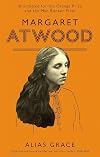
“Alias Grace is a work of fiction, although it is based on reality. Its central figure, Grace Marks, was one of the most notorious Canadian women of the 1840s, having been convicted of murder at the age of sixteen.”
Author’s Afterword.
Grace is one of nine children born into poverty in the north of Ireland. Her father was a violent hard drinking Englishman who attempted to look for work but never found any at the bottom of a beer glass.
In 1840 the family sail to Canada to hopefully begin a new life courtesy of Grace’s uncle who happily pays to remove the family out of his home. Canada in the 1840s had a population of only some two million but this was growing due mostly to emigration especially from Ireland. The family arrive in Toronto and manage to find rooms. Grace’s father makes little or no attempt to find work and eventually Grace leaves to work as a servant for a wealthy family.
She finds a good friend in Mary Whitney, a servant girl in the same household and later when Grace is fleeing the scene of the murders she uses her friend’s name as an alias.
Grace drifts from job to job and eventually finds work some miles outside of the city of Toronto for a gentleman by the name of Thomas Kinnear the man she will later be accused of having murdered.
The story starts with Grace relating her story from prison. Most of her story is being told to a young doctor, Simon Jordan, who is looking to unlock Grace’s memory as she cannot recall any details of the killing show more of Thomas Kinnear and his housekeeper, Nancy Montgomery.
The novel can be read as a straight-forward narrative about the tale of a poor Irish family who emigrate to Canada where life does not get any easier and circumstances result in Grace Marks being accused of two murders: a tale of sex, murder and mystery. Reading it at that level the novel is a likeable, well crafted story that will not disappoint.
However, this is a novel by Margaret Atwood writer of such books as ‘The Handmaids Tale and ‘The Blind Assassin’ and so Alias Grace has depth and intelligence seeping out of every page. The story is as well crafted as a piece of scrimshaw and the words seem carved on Grace’s very bones. Atwood’s novel is at once delicate and brutal, fatalistic and optimistic and elicits a feeling of having read the mind of a genius.
The novel’s tapestry is woven with the skill of Clotho and while reading one wonders which thread Atropos in the guise of Margaret Atwood will cut next. The story is believable, honest and with elements of social commentary that make one weep when realising that not enough has changed in the past 150 years where women and children are still too often determined as no more than chattels as they were in the nineteenth century.
Though the novel has a dystopian feel, within its pages there is a semblance of hope. As Margaret Atwood herself said, “In every dystopia there is a utopia.”
Originally posted at http://womensprizeforfictionbookreview.wordpress.com/ show less
Author’s Afterword.
Grace is one of nine children born into poverty in the north of Ireland. Her father was a violent hard drinking Englishman who attempted to look for work but never found any at the bottom of a beer glass.
In 1840 the family sail to Canada to hopefully begin a new life courtesy of Grace’s uncle who happily pays to remove the family out of his home. Canada in the 1840s had a population of only some two million but this was growing due mostly to emigration especially from Ireland. The family arrive in Toronto and manage to find rooms. Grace’s father makes little or no attempt to find work and eventually Grace leaves to work as a servant for a wealthy family.
She finds a good friend in Mary Whitney, a servant girl in the same household and later when Grace is fleeing the scene of the murders she uses her friend’s name as an alias.
Grace drifts from job to job and eventually finds work some miles outside of the city of Toronto for a gentleman by the name of Thomas Kinnear the man she will later be accused of having murdered.
The story starts with Grace relating her story from prison. Most of her story is being told to a young doctor, Simon Jordan, who is looking to unlock Grace’s memory as she cannot recall any details of the killing show more of Thomas Kinnear and his housekeeper, Nancy Montgomery.
The novel can be read as a straight-forward narrative about the tale of a poor Irish family who emigrate to Canada where life does not get any easier and circumstances result in Grace Marks being accused of two murders: a tale of sex, murder and mystery. Reading it at that level the novel is a likeable, well crafted story that will not disappoint.
However, this is a novel by Margaret Atwood writer of such books as ‘The Handmaids Tale and ‘The Blind Assassin’ and so Alias Grace has depth and intelligence seeping out of every page. The story is as well crafted as a piece of scrimshaw and the words seem carved on Grace’s very bones. Atwood’s novel is at once delicate and brutal, fatalistic and optimistic and elicits a feeling of having read the mind of a genius.
The novel’s tapestry is woven with the skill of Clotho and while reading one wonders which thread Atropos in the guise of Margaret Atwood will cut next. The story is believable, honest and with elements of social commentary that make one weep when realising that not enough has changed in the past 150 years where women and children are still too often determined as no more than chattels as they were in the nineteenth century.
Though the novel has a dystopian feel, within its pages there is a semblance of hope. As Margaret Atwood herself said, “In every dystopia there is a utopia.”
Originally posted at http://womensprizeforfictionbookreview.wordpress.com/ show less
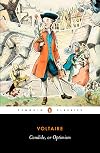
Candide is a third person narrative that can be seen as a piece of travel writing, a fable or a parable. What it most certainly is, is a satirical piece of writing that though written over 250 years ago it still has relevance today. To be more precise it is indirect satire which allows the readers to draw their own conclusions. It also allows Voltaire to disavow the words written. This is made clear by Voltaire not putting his name to the novel until some eight years later even though most readers were fully aware who had written it.
The themes of the Candide are large, the hypocrisy of religion, the corrupting power of money and the folly of optimism. Candide explores them all in detail within what should really be considered a novella.
The edition I read is part of the Penguin Classics series, translated and edited by Theo Cuffe and has an introduction by Michael Wood, a Fellow of the Royal Society of Literature. As with all the Penguin Classics series that I have read this is a superb edition. This edition includes a chronology, a map, notes on the text and names plus various appendices. Unless you have a good working knowledge of the 18th century then the notes are a must. With Candide being a satire than one needs to know the history of the period the book is set to understand what is being satirized.
In the midst of the novella is a love story; the love of Candide for Cunégonde, the Baron’s daughter. When the Baron discovers Candide’s love for his daughter he is show more driven out of the castle. While trying to make his own way in the world he meets his tutor from his days at the castle, Pangloss. Pangloss informs him that Cunégonde is dead as are everyone else at the castle after it was attacked. From there Candide and the various companions he meets on his travels encounter an egregious series of events; an earthquake, the Inquisition, murder, rape, a shipwreck and many others.
Candide fights to maintain his optimism and Pangloss tries to maintain his belief that “everything is for the best in this best of all possible worlds.” Throughout the novella Voltaire is ridiculing the cosmic complacency and optimism that is expressed by philosophers of the day.
The book is an intellectual, philosophical and religious journey through the period of the Enlightenment in what became known as the ‘long’ eighteenth century.
The novella moves a hectic pace which can leave one feeling breathless. The chapters are short and strangely each chapter has a heading which conveys the events that will occur in the chapter so ruining much of the novella’s suspense. The novel’s hectic pace was remarked on by the playwright Lillian Hellman who wrote the libretto for the operetta of the book for the stage; “the greatest piece of slap-dash ever written at the greatest speed.” show less
The themes of the Candide are large, the hypocrisy of religion, the corrupting power of money and the folly of optimism. Candide explores them all in detail within what should really be considered a novella.
The edition I read is part of the Penguin Classics series, translated and edited by Theo Cuffe and has an introduction by Michael Wood, a Fellow of the Royal Society of Literature. As with all the Penguin Classics series that I have read this is a superb edition. This edition includes a chronology, a map, notes on the text and names plus various appendices. Unless you have a good working knowledge of the 18th century then the notes are a must. With Candide being a satire than one needs to know the history of the period the book is set to understand what is being satirized.
In the midst of the novella is a love story; the love of Candide for Cunégonde, the Baron’s daughter. When the Baron discovers Candide’s love for his daughter he is show more driven out of the castle. While trying to make his own way in the world he meets his tutor from his days at the castle, Pangloss. Pangloss informs him that Cunégonde is dead as are everyone else at the castle after it was attacked. From there Candide and the various companions he meets on his travels encounter an egregious series of events; an earthquake, the Inquisition, murder, rape, a shipwreck and many others.
Candide fights to maintain his optimism and Pangloss tries to maintain his belief that “everything is for the best in this best of all possible worlds.” Throughout the novella Voltaire is ridiculing the cosmic complacency and optimism that is expressed by philosophers of the day.
The book is an intellectual, philosophical and religious journey through the period of the Enlightenment in what became known as the ‘long’ eighteenth century.
The novella moves a hectic pace which can leave one feeling breathless. The chapters are short and strangely each chapter has a heading which conveys the events that will occur in the chapter so ruining much of the novella’s suspense. The novel’s hectic pace was remarked on by the playwright Lillian Hellman who wrote the libretto for the operetta of the book for the stage; “the greatest piece of slap-dash ever written at the greatest speed.” show less
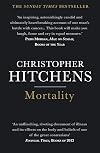
In a scene from my all time favourite film, Woody Allen’s Manhattan, Woody starts to recount those things that make life worth living. I have played this game with friends many times over the years. My list of things that make life worth living is; (family and friends are a given), Woody Allen of course, the film Manhattan, Virginia Woolf’s ‘Mrs Dalloway, Salvador Dali’s ‘Christ of St John on the Cross’, Charleston Farmhouse in Sussex, Monty Python’s ‘Life of Brian’, Morecambe and Wise, Peacock Butterflies, David Hockney’s ‘A Bigger Splash’, Hitchcock’s ‘Rear Window’, The Edinburgh Book Festival, David Sylvian, Philip Glass etc. Over the years there have been a few additions. Christopher Hitchens became one of those additions.
I have been putting off the reading of Mortality for sometime knowing full well the subject matter contained within its pages; not only the last words of a superlative orator and writer but details of his horrendous illness, oesophageal cancer. My cowardice probably also stems from the knowledge that I am less than ten years away from the age that Christopher Hitchens died, 62.
As to be expected the writing is not self-piteous, there is no element of self-aggrandizement in any of its 106 pages. Mr Hitchens style of writing makes one want to go around pulping every pencil, drain every pen and smash ones keyboard knowing that you will probably never write as well as he did. However, I am sure Christopher Hitchens would show more want you to buy new pencils, refill those pens and repair that keyboard and attempt to equal or better his writing.
In ‘Mortality’, as to be expected, religion rears its ugly head in the form of monotheists letting Mr Hitchens know that he deserves to die, that God has struck him down in vengeance. Christopher Hitchens in his usual pithy and direct manner surmised that God was rather mundane and routine in his vengeance to give him oesophageal cancer which was highly likely to occur anyway due to his heavy smoking.
My honorific review can never fully convey the extent of how wonderful the book is without falling into the quicksand of cliché. So, I will simply end this review with a direct and succinct command: READ THIS BOOK! show less
I have been putting off the reading of Mortality for sometime knowing full well the subject matter contained within its pages; not only the last words of a superlative orator and writer but details of his horrendous illness, oesophageal cancer. My cowardice probably also stems from the knowledge that I am less than ten years away from the age that Christopher Hitchens died, 62.
As to be expected the writing is not self-piteous, there is no element of self-aggrandizement in any of its 106 pages. Mr Hitchens style of writing makes one want to go around pulping every pencil, drain every pen and smash ones keyboard knowing that you will probably never write as well as he did. However, I am sure Christopher Hitchens would show more want you to buy new pencils, refill those pens and repair that keyboard and attempt to equal or better his writing.
In ‘Mortality’, as to be expected, religion rears its ugly head in the form of monotheists letting Mr Hitchens know that he deserves to die, that God has struck him down in vengeance. Christopher Hitchens in his usual pithy and direct manner surmised that God was rather mundane and routine in his vengeance to give him oesophageal cancer which was highly likely to occur anyway due to his heavy smoking.
My honorific review can never fully convey the extent of how wonderful the book is without falling into the quicksand of cliché. So, I will simply end this review with a direct and succinct command: READ THIS BOOK! show less
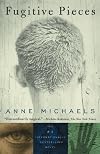
Jakob Beer is an eleven year old boy who after witnessing the death of his parents is found living within the destroyed Polish city of Biskupin by Athos Roussous, a scientist. Athos takes the boy back to an island in Greece. There on the island of Zakynthos, Athos teaches the boy about the sciences and the world while the Second World War rages on through Europe.
The second part of the book is about Ben an expert on meteorology. He meets the sixty year old Jakob at a party in Canada and this encounter changes his life forever.
It is almost impossible to review this book without using the adjective, poetic. After reading the book and then researching the author Anne Michaels it came as no surprise that she has won awards for her poetry; the Commonwealth Prize for the Americas and the Canadian Association Award to name but a few. The language of poetry seeps and bleeds through every sentence, every paragraph and every page.
"On Zakynthos sometimes the silence shimmers with the overtone of bees. Their bodies roll in the air, powdery with golden weight. The field was heavy with daisies, honeysuckle, and broom. Athos said: “Greek lamentation burns the tongue. Greek tears are ink for the dead to write their lives.”
Greece was devastated by the war and the occupation by the German forces. Nearly half a million people died during the occupation and almost all of the Jewish community were wiped out. The island of Zakynthos, where Athos takes Jakob, is symbolic of the ideals and show more the wonders of the planet that Athos teaches the young Jakob. The population of Zakynthos during WWII showed immense bravery by refusing to hand over a list of the Jewish community to the Nazis for deportation to the death camps. In fact all the Jewish people on the island survived thanks mainly to Mayor Karrer and Bishop Chrysostomos who hid all 275 Jews in rural villages.
Fugitive Pieces is a book about so many things; geology, meteorology, persecution, isolation, archaeology, ideology, inhumanity, identity etc. It weaves these subjects through the lives, loves, families and friends of Athos, Jakob and Ben. All three are all repelled by and fascinated by the world and the people within. All three believe in the need for company but would prefer to sit in their room writing and reading or walking alone through the streets at night. Jakob eschews natural and artificial light for the comfort of darkness. Ben is fascinated by the volatility and unpredictable nature of lightning and twisters.
Weather and nature are as much characters within the book as the main protagonists. They are both the enemy and ally of the main characters. They permeate and suffuse the book with their destructiveness and their beauty.
“We think of the weather as transient, changeable, and above all, ephemeral; but everywhere nature remembers. Trees, for example, carry the memory of rainfall. In their rings we read ancient weather – storms, sunlight, and temperatures, the growing seasons of centuries. A forest shares a history, which each tree remembers even after it has been felled.”
Amongst all this beautiful, profound and elegiac language lies the horror of the nature of man. The German occupying force throwing babies from hospital windows while soldiers ‘catch’ them on their bayonets while complaining about the sleeves of their uniform being soaked in blood. The people of Greece die from starvation as the German Army utilise all foodstuffs. Greeks today identify the word occupation with famine and hunger. It is due to the horrors of WWII that the Greeks today were disgusted at the notion of German Chancellor Merkel in 2011 imposing austerity measures on their country.
Fugitive Pieces is great piece of literature that is written with aplomb, intelligence and an eye for the poetic. However, it may be that very style of language that will repel as many people as it will attract. The book’s narrative is at times oblique and minimalist. There is no authorial hand-holding through the forest of complexities that the narrative follows.
This book won the Orange Prize for Fiction in 1997. Having only read four of the six shortlisted books for that year I cannot yet decide if I agree with the judges decision. show less
The second part of the book is about Ben an expert on meteorology. He meets the sixty year old Jakob at a party in Canada and this encounter changes his life forever.
It is almost impossible to review this book without using the adjective, poetic. After reading the book and then researching the author Anne Michaels it came as no surprise that she has won awards for her poetry; the Commonwealth Prize for the Americas and the Canadian Association Award to name but a few. The language of poetry seeps and bleeds through every sentence, every paragraph and every page.
"On Zakynthos sometimes the silence shimmers with the overtone of bees. Their bodies roll in the air, powdery with golden weight. The field was heavy with daisies, honeysuckle, and broom. Athos said: “Greek lamentation burns the tongue. Greek tears are ink for the dead to write their lives.”
Greece was devastated by the war and the occupation by the German forces. Nearly half a million people died during the occupation and almost all of the Jewish community were wiped out. The island of Zakynthos, where Athos takes Jakob, is symbolic of the ideals and show more the wonders of the planet that Athos teaches the young Jakob. The population of Zakynthos during WWII showed immense bravery by refusing to hand over a list of the Jewish community to the Nazis for deportation to the death camps. In fact all the Jewish people on the island survived thanks mainly to Mayor Karrer and Bishop Chrysostomos who hid all 275 Jews in rural villages.
Fugitive Pieces is a book about so many things; geology, meteorology, persecution, isolation, archaeology, ideology, inhumanity, identity etc. It weaves these subjects through the lives, loves, families and friends of Athos, Jakob and Ben. All three are all repelled by and fascinated by the world and the people within. All three believe in the need for company but would prefer to sit in their room writing and reading or walking alone through the streets at night. Jakob eschews natural and artificial light for the comfort of darkness. Ben is fascinated by the volatility and unpredictable nature of lightning and twisters.
Weather and nature are as much characters within the book as the main protagonists. They are both the enemy and ally of the main characters. They permeate and suffuse the book with their destructiveness and their beauty.
“We think of the weather as transient, changeable, and above all, ephemeral; but everywhere nature remembers. Trees, for example, carry the memory of rainfall. In their rings we read ancient weather – storms, sunlight, and temperatures, the growing seasons of centuries. A forest shares a history, which each tree remembers even after it has been felled.”
Amongst all this beautiful, profound and elegiac language lies the horror of the nature of man. The German occupying force throwing babies from hospital windows while soldiers ‘catch’ them on their bayonets while complaining about the sleeves of their uniform being soaked in blood. The people of Greece die from starvation as the German Army utilise all foodstuffs. Greeks today identify the word occupation with famine and hunger. It is due to the horrors of WWII that the Greeks today were disgusted at the notion of German Chancellor Merkel in 2011 imposing austerity measures on their country.
Fugitive Pieces is great piece of literature that is written with aplomb, intelligence and an eye for the poetic. However, it may be that very style of language that will repel as many people as it will attract. The book’s narrative is at times oblique and minimalist. There is no authorial hand-holding through the forest of complexities that the narrative follows.
This book won the Orange Prize for Fiction in 1997. Having only read four of the six shortlisted books for that year I cannot yet decide if I agree with the judges decision. show less
This book is, by all accounts, Aphra Behn’s most famous work. She wrote erotic poetry and plays but this ‘novel’ is why her name lives on in the 21st century. I placed the word novel in inverted commas as academics and scholars still argue to this day as to whether it can be described as a novel. More importantly was it the first novel in English?
Many of the afore-mentioned scholars and academics will argue that Daniel Defoe’s Robinson Crusoe (1719) was the first novel and the English writer is often referred to as the ‘father of the novel’. However, it could, and has been, argued that Oroonoko was written in a novelistic form but personally I believe it comes under the heading of ‘novella’. The sound of hairs being split can be heard all around the country.
The story is fundamentally about the African prince Oroonoko (a mis-spelling of the river Orinoco) and his wife Imoinda. Both are captured separately by the British and brought to Surinam as slaves. Oroonoko could be cruelly interpreted as a simple romance story with its theme of boy meets girl, love at first sight, boy loses girl and then boy finds girl. However, for today’s audience the story has become secondary to the themes of colonialism, racism and the innovative writing style of Aphra Behn.
Aphra Behn is credited not only with developing the pioneering female narrative but for addressing the inequality between men and women in the seventeenth century. Black people are not the only slaves in show more the book, women are also shackled by the mores of the day. Oroonoko is seen as one the literature’s first abolitionist expositions. It’s portrayal of racism and slavery is credited with aiding the cause for the abolitionists.
The racism and depiction of slavery make Oroonoko an uncomfortable read. However, coupled with the horrific descriptions of the deaths of Imoinda and Oroonoko the book becomes not only an uncomfortable read but disturbing one. However, when you re-read Oroonoko you realise how theatrical, fantastic and unrealistic many of the scenes in the book are: his killing of the tigers, his encounter with the electric eel and in particular Oroonoko’s death which has him being slowly hacked to death while he passively continues to smoke only, “at the cutting off the other arm, his head sunk, and his pipe dropped, and he gave up the ghost.”
Aphra Behn’s theatrical past is writ large throughout the book and ironically it is mostly due to Thomas Southerne’s stage adaption of Oroonoko after Behn’s death that the story became celebrated and has continued to be re-read, reinterpreted and used as a rallying point by anti colonialists, abolitionists and feminists throughout the last 400 years.
But, of course, one must put the book into context. It was written by a woman at a time when women were subjugated to man’s laws and rules. The seventeenth century was a time when women were seen as no better than the servants who worked in their household. What is more remarkable about Aphra Behn was that she was able to make a living from her writing. However, it should be remembered that many women in Britain had writings published during the seventeenth century but those names are now only remembered by academics and those studying English Literature (as I am); Lady Mary Chudleigh, Lady Jane Cavendish and Katherine Philips to name but a few.
Is this book read by anyone outside of the academic world? No, is the short answer. Sadly, its relevance is only to those who are using it for study purposes be that at school, university or as part of a thesis or book. I believe if it stopped being used a study tool at seats of learning then the book would cease to be published. Hopefully, that day never comes.
Let me leave you with words from the greatest woman writer that ever lived, Virginia Woolf,
“All women together, ought to let flowers fall upon the grave of Aphra Behn... for it was she who earned them the right to speak their minds... Behn proved that money could be made by writing at the sacrifice, perhaps, of certain agreeable qualities; and so by degrees writing became not merely a sign of folly and a distracted mind but was of practical importance.” show less
Many of the afore-mentioned scholars and academics will argue that Daniel Defoe’s Robinson Crusoe (1719) was the first novel and the English writer is often referred to as the ‘father of the novel’. However, it could, and has been, argued that Oroonoko was written in a novelistic form but personally I believe it comes under the heading of ‘novella’. The sound of hairs being split can be heard all around the country.
The story is fundamentally about the African prince Oroonoko (a mis-spelling of the river Orinoco) and his wife Imoinda. Both are captured separately by the British and brought to Surinam as slaves. Oroonoko could be cruelly interpreted as a simple romance story with its theme of boy meets girl, love at first sight, boy loses girl and then boy finds girl. However, for today’s audience the story has become secondary to the themes of colonialism, racism and the innovative writing style of Aphra Behn.
Aphra Behn is credited not only with developing the pioneering female narrative but for addressing the inequality between men and women in the seventeenth century. Black people are not the only slaves in show more the book, women are also shackled by the mores of the day. Oroonoko is seen as one the literature’s first abolitionist expositions. It’s portrayal of racism and slavery is credited with aiding the cause for the abolitionists.
The racism and depiction of slavery make Oroonoko an uncomfortable read. However, coupled with the horrific descriptions of the deaths of Imoinda and Oroonoko the book becomes not only an uncomfortable read but disturbing one. However, when you re-read Oroonoko you realise how theatrical, fantastic and unrealistic many of the scenes in the book are: his killing of the tigers, his encounter with the electric eel and in particular Oroonoko’s death which has him being slowly hacked to death while he passively continues to smoke only, “at the cutting off the other arm, his head sunk, and his pipe dropped, and he gave up the ghost.”
Aphra Behn’s theatrical past is writ large throughout the book and ironically it is mostly due to Thomas Southerne’s stage adaption of Oroonoko after Behn’s death that the story became celebrated and has continued to be re-read, reinterpreted and used as a rallying point by anti colonialists, abolitionists and feminists throughout the last 400 years.
But, of course, one must put the book into context. It was written by a woman at a time when women were subjugated to man’s laws and rules. The seventeenth century was a time when women were seen as no better than the servants who worked in their household. What is more remarkable about Aphra Behn was that she was able to make a living from her writing. However, it should be remembered that many women in Britain had writings published during the seventeenth century but those names are now only remembered by academics and those studying English Literature (as I am); Lady Mary Chudleigh, Lady Jane Cavendish and Katherine Philips to name but a few.
Is this book read by anyone outside of the academic world? No, is the short answer. Sadly, its relevance is only to those who are using it for study purposes be that at school, university or as part of a thesis or book. I believe if it stopped being used a study tool at seats of learning then the book would cease to be published. Hopefully, that day never comes.
Let me leave you with words from the greatest woman writer that ever lived, Virginia Woolf,
“All women together, ought to let flowers fall upon the grave of Aphra Behn... for it was she who earned them the right to speak their minds... Behn proved that money could be made by writing at the sacrifice, perhaps, of certain agreeable qualities; and so by degrees writing became not merely a sign of folly and a distracted mind but was of practical importance.” show less
John Sutherland, author of A Little History of Literature, takes us by the hand and leads us safely through the deep, heavily wooded forest that is the written word. As the author states in his introduction to the book, “…literature is not a little thing. There is hugely more of it than any of us will read in a lifetime.” Thankfully the author utilises a path constructed of wonderful books that make the journey a very pleasant affair.
During the author’s journey we encounter the likes of Homer, Chaucer, the Metaphysical Poets, Dr. Johnson, Jane Austen, the Romantic Poets, Kipling, Woolf and many others. John Sutherland finds the time to stop and tell us stories about Theatre in the Street, Who ‘owns’ literature, The King James Bible and Literature and the censor. It may be ‘a little history’ but the book is 284 pages long.
As with any book that crams a long history of any subject, and particularly literature, into relatively few pages there will be many people debating as to who should have been included within the author’s pages. Personally, I believe the omission of the poet Stevie Smith when discussing the the ‘voice of pain’ as an oversight. Ted Hughes believed that at the bottom of the inner most spirit of poetry is a ‘voice of pain’. Included in this discussion is the poets John Berryman, Anne Sexton. Both of these poets committed suicide and in their poetry they ‘signalled the act’. Stevie Smith is also a member of the suicide club show more that is very peculiar to poets. Personally, I believe her poetry is head and shoulders above that of John Berrymans and at least on a par with that of Anne Sexton.
I could take umbrage with Mr Sutherland over his decision not to mention or acknowledge the likes of Evelyn Waugh and E.E. Cummings. However, it would be small minded and churlish to dislike a book of this kind for not mentioning some of my favourite writers. John Sutherland’s, if I can borrow a film metaphor, cutting room floor will be covered in the blood of writers who had to be chopped from the book due to lack of space and time.
John Sutherland has written this book in his own inimitable style; witty, erudite and unpatronizing. Like so many of John Sutherland’s other books, ‘Lives of the Novelists: A History of Fiction in 294 Lives’ and ‘Curiosities of Literature: A Feast for Book Lovers’ to name but a few, he manages to write in an informative, adroit, compelling manner that never becomes tedious or pedagogic in style.
I will leave the last word to the author: “This little history is not a manual but advice along the lines of, you may find this valuable, because many others have, but at the end of the day you must decide for yourself.” show less
During the author’s journey we encounter the likes of Homer, Chaucer, the Metaphysical Poets, Dr. Johnson, Jane Austen, the Romantic Poets, Kipling, Woolf and many others. John Sutherland finds the time to stop and tell us stories about Theatre in the Street, Who ‘owns’ literature, The King James Bible and Literature and the censor. It may be ‘a little history’ but the book is 284 pages long.
As with any book that crams a long history of any subject, and particularly literature, into relatively few pages there will be many people debating as to who should have been included within the author’s pages. Personally, I believe the omission of the poet Stevie Smith when discussing the the ‘voice of pain’ as an oversight. Ted Hughes believed that at the bottom of the inner most spirit of poetry is a ‘voice of pain’. Included in this discussion is the poets John Berryman, Anne Sexton. Both of these poets committed suicide and in their poetry they ‘signalled the act’. Stevie Smith is also a member of the suicide club show more that is very peculiar to poets. Personally, I believe her poetry is head and shoulders above that of John Berrymans and at least on a par with that of Anne Sexton.
I could take umbrage with Mr Sutherland over his decision not to mention or acknowledge the likes of Evelyn Waugh and E.E. Cummings. However, it would be small minded and churlish to dislike a book of this kind for not mentioning some of my favourite writers. John Sutherland’s, if I can borrow a film metaphor, cutting room floor will be covered in the blood of writers who had to be chopped from the book due to lack of space and time.
John Sutherland has written this book in his own inimitable style; witty, erudite and unpatronizing. Like so many of John Sutherland’s other books, ‘Lives of the Novelists: A History of Fiction in 294 Lives’ and ‘Curiosities of Literature: A Feast for Book Lovers’ to name but a few, he manages to write in an informative, adroit, compelling manner that never becomes tedious or pedagogic in style.
I will leave the last word to the author: “This little history is not a manual but advice along the lines of, you may find this valuable, because many others have, but at the end of the day you must decide for yourself.” show less
Kellen Stewart is a therapist who on returning from a lengthy sojourn abroad is confronted with the death of a former lover, Bridget Donnelly. She soon learns that while she was away deliberating on her future as well as her relationship with her partner Janine, Bridget’s brother, Malcolm had also died.
Kellen is unsatisfied with the coroner’s report that determined that Bridget had committed suicide. Soon, Kellen becomes embroiled in the seedy under belly of the city of Glasgow: and Bantam hens.
Kellen Stewart becomes amateur detective and like so many literary amateur detectives before her she enlists the help of friends and proves to be smarter than the local police.
Manda Scott’s use of a lesbian protagonist was a brave move back in the mid nineties. At that time it was very difficult to get a lesbian literary lead character to be taken seriously by the mainstream public, media and major publishing houses.
The Scottish writer and internationally renowned crime writer Val McDermid’s first books based around a lesbian detective, Lindsay Gordon, proved a difficult sell. She soon realized that if she wanted to make a living as a writer she would have to change her protagonist’s sexual orientation to straight.
In the British newspaper, The Independent, Val McDermid commented on the situation;
“My first three novels, featuring the UK’s first openly lesbian detective, Lindsay Gordon, were published 20 years ago by the Women’s Press, a small feminist publishing show more house whose output went largely unreviewed by the mainstream press and was ignored by chain booksellers.
Back then, the notion that a commercial house would publish a novel that featured a lesbian protagonist was laughable. I knew that I’d never make a living as a writer if I stuck to writing about Lindsay. Luckily for me, my ambitions to spread my wings and push myself as a writer meant I embraced alternative possibilities.”
So, it is with sadness that I have to write that the book is a slightly disappointing read. In 1976, Booker Prize judge Philip Larkin was asked for his thoughts on the books that had been short-listed. Larkin remarked, ‘The books had a beginning, a muddle and an end’.
This description best sums up my thoughts of ‘Hen’s Teeth’. Many of the characters within the book are wonderfully drawn, in particular Kellen Stewart and Lee Adams but other characters are sketchily drawn; Elspeth Phillips and Janine to name but two.
This is disappointing especially when it comes to Elspeth’s character as she is a police officer and a lesbian but no mention is made of how she combines these two elements in her life. We never find out if fellow officers are aware of her sexual orientation and if they are what problems, if any, this causes. This would have made an interesting sub-plot.
Janine was Kellen’s partner for nearly four years. She was one of the reasons why Kellen decided to take a lengthy sabbatical in order to decide if the relationship was what she wanted. But, we don’t learn a lot about Janine and this I believe is a glaring omission for a character who shared the main protagonist’s life. Janine leaves Kellen a few days after her return but leaves the proverbial door open for Kellen to let Jan know what she wants from their relationship.
Apart from the above-mentioned there are several more glaring reasons for describing parts of the book as a ‘muddle. Here are a few: firstly is Bridget’s dog. The dog, Tan, is killed but some chapters later it is alive and well and lying next to the Aga range and then a few chapters further on it is dead again.
Next we have the ridiculous scenario where Lee and Kellen decide to break into Malcolm Donnelly’s workplace to retrieve information. They both dress in black with accompanying balaclavas. Both abseil from an adjacent building, over a high security fence and into the grounds of the medical building. It is never satisfactorily described as to how they achieved this feat. Lee manages to pick lock two secured doors but how this is done and what method is used is never mentioned. Then pushing incredulity to its apex two large guard dogs that patrol the ground that encompasses the building are subdued rather fortuitously as Kellen not only knows the dog’s owner but knows the safe word that will make the dogs act like puppies.
In the books of Ian Rankin or Irvine Welsh to name but two, the city of Edinburgh is written in such a way as make the Athens of the North a distinct character in its own right. Manda Scott’s novel is based in and around the City of Glasgow. However, though various locations are mentioned in the book the City of Glasgow is basically ignored and personally I think that was a missed opportunity.
As a whole the book is very well written with a mixture of pathos, drama and a dollop of humour. The conclusion and the crime’s dénouement are beautifully written and well paced and results in a very satisfactory ending to the novel.
Manda Scott proves herself adept at writing within the difficult genre of crime writing. Hen’s Teeth was I believe Manda Scott’s first novel and also the first to feature Kellen Stewart who appears in two other novels, Night Mares and Stronger than Death. As a first novel it has to be congratulated as a standout but flawed novel in the saturated market that is crime thrillers. show less
Kellen is unsatisfied with the coroner’s report that determined that Bridget had committed suicide. Soon, Kellen becomes embroiled in the seedy under belly of the city of Glasgow: and Bantam hens.
Kellen Stewart becomes amateur detective and like so many literary amateur detectives before her she enlists the help of friends and proves to be smarter than the local police.
Manda Scott’s use of a lesbian protagonist was a brave move back in the mid nineties. At that time it was very difficult to get a lesbian literary lead character to be taken seriously by the mainstream public, media and major publishing houses.
The Scottish writer and internationally renowned crime writer Val McDermid’s first books based around a lesbian detective, Lindsay Gordon, proved a difficult sell. She soon realized that if she wanted to make a living as a writer she would have to change her protagonist’s sexual orientation to straight.
In the British newspaper, The Independent, Val McDermid commented on the situation;
“My first three novels, featuring the UK’s first openly lesbian detective, Lindsay Gordon, were published 20 years ago by the Women’s Press, a small feminist publishing show more house whose output went largely unreviewed by the mainstream press and was ignored by chain booksellers.
Back then, the notion that a commercial house would publish a novel that featured a lesbian protagonist was laughable. I knew that I’d never make a living as a writer if I stuck to writing about Lindsay. Luckily for me, my ambitions to spread my wings and push myself as a writer meant I embraced alternative possibilities.”
So, it is with sadness that I have to write that the book is a slightly disappointing read. In 1976, Booker Prize judge Philip Larkin was asked for his thoughts on the books that had been short-listed. Larkin remarked, ‘The books had a beginning, a muddle and an end’.
This description best sums up my thoughts of ‘Hen’s Teeth’. Many of the characters within the book are wonderfully drawn, in particular Kellen Stewart and Lee Adams but other characters are sketchily drawn; Elspeth Phillips and Janine to name but two.
This is disappointing especially when it comes to Elspeth’s character as she is a police officer and a lesbian but no mention is made of how she combines these two elements in her life. We never find out if fellow officers are aware of her sexual orientation and if they are what problems, if any, this causes. This would have made an interesting sub-plot.
Janine was Kellen’s partner for nearly four years. She was one of the reasons why Kellen decided to take a lengthy sabbatical in order to decide if the relationship was what she wanted. But, we don’t learn a lot about Janine and this I believe is a glaring omission for a character who shared the main protagonist’s life. Janine leaves Kellen a few days after her return but leaves the proverbial door open for Kellen to let Jan know what she wants from their relationship.
Apart from the above-mentioned there are several more glaring reasons for describing parts of the book as a ‘muddle. Here are a few: firstly is Bridget’s dog. The dog, Tan, is killed but some chapters later it is alive and well and lying next to the Aga range and then a few chapters further on it is dead again.
Next we have the ridiculous scenario where Lee and Kellen decide to break into Malcolm Donnelly’s workplace to retrieve information. They both dress in black with accompanying balaclavas. Both abseil from an adjacent building, over a high security fence and into the grounds of the medical building. It is never satisfactorily described as to how they achieved this feat. Lee manages to pick lock two secured doors but how this is done and what method is used is never mentioned. Then pushing incredulity to its apex two large guard dogs that patrol the ground that encompasses the building are subdued rather fortuitously as Kellen not only knows the dog’s owner but knows the safe word that will make the dogs act like puppies.
In the books of Ian Rankin or Irvine Welsh to name but two, the city of Edinburgh is written in such a way as make the Athens of the North a distinct character in its own right. Manda Scott’s novel is based in and around the City of Glasgow. However, though various locations are mentioned in the book the City of Glasgow is basically ignored and personally I think that was a missed opportunity.
As a whole the book is very well written with a mixture of pathos, drama and a dollop of humour. The conclusion and the crime’s dénouement are beautifully written and well paced and results in a very satisfactory ending to the novel.
Manda Scott proves herself adept at writing within the difficult genre of crime writing. Hen’s Teeth was I believe Manda Scott’s first novel and also the first to feature Kellen Stewart who appears in two other novels, Night Mares and Stronger than Death. As a first novel it has to be congratulated as a standout but flawed novel in the saturated market that is crime thrillers. show less
The story is set during one week shortly before the IRA ceasefire in 1994. Three sisters, Helen, Sally and Kate relate and recollect their childhood during the 1960s and 1970s at the height of the troubles in Northern Ireland. The catalyst for these recollections is the return of the eldest sister Kate, (who now refers to herself as Cate), who abruptly leaves London where she works as a successful journalist for a glossy magazine as an event has forced her to re-evaluate her life.
The book’s chapters alternate between the return of Cate to Ireland and the three sister’s recollections of their childhood. Cate’s life changing event is not that difficult to guess and strangely it is revealed rather early on the book so breaking any sense of tension regarding that particular plotline.
The sister’s childhood is almost idyllic. Their parents own a farm an hour’s drive from Derry. This distance from the cities and towns of Northern Ireland keeps the horrors of the troubles at arm’s length as it also must have felt to those on mainland Britain. The girl’s only connection to the Irish troubles was during their visits to towns like Antrim where they would witness preparations for the Orange Walk; Union Jacks hung out of windows, Orange arches with symbols of a compass, a set square and ladder painted brightly on them.
“And yet for all this they knew that their lives, so complete in themselves were off centre in relation to the society beyond those fields and show more houses”
However, this insular life soon changed when the British troops moved into Northern Ireland in 1969. With British Army checkpoints around their county and the subsequent visits to the sister’s farm by soldiers the troubles in its many nefarious guises had intruded into the sister’s childhood.
With the atrocity that was Bloody Sunday in 1972 the troubles also came to mainland Britain with the bombing of the Aldershot Headquarters by the IRA. I mention these events as I believe that the sister’s farm may be alluding to the British mainland during the same period of time of the 1960s and 1970s.
I found the story interesting but not fascinating. Each of the sister’s characters was used as clichéd ciphers for Ireland. The eldest sister Kate loves Ireland but needs to leave its sectarian bigotry and religious intractability and becomes a success which she wouldn’t have found if she had stayed in Ireland. The middle sister, Helen becomes a lawyer and defends terrorists even though a horrific experience has befallen her family. The third sister, Sally becomes a primary school teacher like her mother. She hates and loves Ireland in equal measure but stays due to her loyalty to her mother.
The dialogue is rather lumpen and incongruous. There were times when the dialogue did not ring true especially that spoken by the sisters.
Helen’s gay friend David is a superfluous character and seems only to have been shoe-horned into the story to possibly prove how open minded Helen is.
Of all the fictional books that have been written about the troubles, Cal by Bernard Maclaverty or Gerry Seymour’s Journeyman Tailor to name but a few, One by One in the Darkness in my opinion would find it difficult to a part of the any list of the top twenty books on the subject of Northern Ireland and its conflict. show less
The book’s chapters alternate between the return of Cate to Ireland and the three sister’s recollections of their childhood. Cate’s life changing event is not that difficult to guess and strangely it is revealed rather early on the book so breaking any sense of tension regarding that particular plotline.
The sister’s childhood is almost idyllic. Their parents own a farm an hour’s drive from Derry. This distance from the cities and towns of Northern Ireland keeps the horrors of the troubles at arm’s length as it also must have felt to those on mainland Britain. The girl’s only connection to the Irish troubles was during their visits to towns like Antrim where they would witness preparations for the Orange Walk; Union Jacks hung out of windows, Orange arches with symbols of a compass, a set square and ladder painted brightly on them.
“And yet for all this they knew that their lives, so complete in themselves were off centre in relation to the society beyond those fields and show more houses”
However, this insular life soon changed when the British troops moved into Northern Ireland in 1969. With British Army checkpoints around their county and the subsequent visits to the sister’s farm by soldiers the troubles in its many nefarious guises had intruded into the sister’s childhood.
With the atrocity that was Bloody Sunday in 1972 the troubles also came to mainland Britain with the bombing of the Aldershot Headquarters by the IRA. I mention these events as I believe that the sister’s farm may be alluding to the British mainland during the same period of time of the 1960s and 1970s.
I found the story interesting but not fascinating. Each of the sister’s characters was used as clichéd ciphers for Ireland. The eldest sister Kate loves Ireland but needs to leave its sectarian bigotry and religious intractability and becomes a success which she wouldn’t have found if she had stayed in Ireland. The middle sister, Helen becomes a lawyer and defends terrorists even though a horrific experience has befallen her family. The third sister, Sally becomes a primary school teacher like her mother. She hates and loves Ireland in equal measure but stays due to her loyalty to her mother.
The dialogue is rather lumpen and incongruous. There were times when the dialogue did not ring true especially that spoken by the sisters.
Helen’s gay friend David is a superfluous character and seems only to have been shoe-horned into the story to possibly prove how open minded Helen is.
Of all the fictional books that have been written about the troubles, Cal by Bernard Maclaverty or Gerry Seymour’s Journeyman Tailor to name but a few, One by One in the Darkness in my opinion would find it difficult to a part of the any list of the top twenty books on the subject of Northern Ireland and its conflict. show less
“The Union Jack…has…become an English stereotype, a symbol that reflects English pride all under one red, white and blue (flag).”
So, hands up all those who spotted the two errors in the above quote from the first entry in the book. For all those who are unaware of the errors the following may help. The Union Jack is the British flag not the English flag. The English flag is red and white and is contained within the British along with the Irish and Scottish flags. The words English and British are not transposable. They both mean different things. All that the author has done is to insult some of his intended audience; the Scottish, Welsh and Irish readers. Not an auspicious start and it doesn’t get much better.
Apart from the fact that many of the entries have the appearance of having been cut and pasted from Wikipedia, there are many factual errors.
Michael Caine first film is stated as Zulu when in fact it was the 1956 film, A Hill in Korea.
In relation to the entry on the writing of Daffodils by William Wordsworth, the author writes that it was written in 1802. It was written between 1804 and 1807. Wordsworth was inspired to write the poem in 1802 but did not start to write it until 1804.
These are only two of the many I encountered and there may be many others that I didn’t notice.
However, put in perspective, the book is a bit of light-hearted fun and I assuming it’s not to be taken seriously. It shines through that the author had a lot of fun writing the show more book and it certainly is written with a comic tongue in cheek tone. It probably should be read in the same way.
Is one going to learn anything? Not if one has an ‘O’ level or GCSE in British history.
Many of the entries are certainly debatable as to whether they constitute the epithet of ‘proud to be British’ but the majority certainly do achieve that aim.
Enjoy the book for what it is a piece of light reading that one can dip into as they await the Sandman to arrive. show less
So, hands up all those who spotted the two errors in the above quote from the first entry in the book. For all those who are unaware of the errors the following may help. The Union Jack is the British flag not the English flag. The English flag is red and white and is contained within the British along with the Irish and Scottish flags. The words English and British are not transposable. They both mean different things. All that the author has done is to insult some of his intended audience; the Scottish, Welsh and Irish readers. Not an auspicious start and it doesn’t get much better.
Apart from the fact that many of the entries have the appearance of having been cut and pasted from Wikipedia, there are many factual errors.
Michael Caine first film is stated as Zulu when in fact it was the 1956 film, A Hill in Korea.
In relation to the entry on the writing of Daffodils by William Wordsworth, the author writes that it was written in 1802. It was written between 1804 and 1807. Wordsworth was inspired to write the poem in 1802 but did not start to write it until 1804.
These are only two of the many I encountered and there may be many others that I didn’t notice.
However, put in perspective, the book is a bit of light-hearted fun and I assuming it’s not to be taken seriously. It shines through that the author had a lot of fun writing the show more book and it certainly is written with a comic tongue in cheek tone. It probably should be read in the same way.
Is one going to learn anything? Not if one has an ‘O’ level or GCSE in British history.
Many of the entries are certainly debatable as to whether they constitute the epithet of ‘proud to be British’ but the majority certainly do achieve that aim.
Enjoy the book for what it is a piece of light reading that one can dip into as they await the Sandman to arrive. show less
This is the posthumous publication of a book written forty years ago in 1973. Janet Frame did not allow publication of this roman a clef novel as she was worried that the people of the city Menton in France, where the book is set, may have recognized themselves and taken offence.
Like Janet Frame, the novel’s protagonist Harry Gill, is awarded a fellowship. The fellowship, Janet’s and Harrys, allows them to live and work for six months in the city of Menton on the Cote d’Azur. While Janet received the Katherine Mansfield fellowship, Harry is awarded the fictitious Margaret Rose Hurndell fellowship.
In this epistolary novel Harry Gill is a self loathing, self-pitying psychosomatic novelist. He has written two historical novels which have been fairly well received but Harry now wants to write something completely different in an attempt to be taken more seriously. He is attempting to write a picaresque novel which is in complete contrast to how he perceives himself;
“dull personality, almost humdrum, a plodder from day to day”
In the memorial Room has no conventional plot line. Much of the novel is a stream of consciousness and as such could be seen by many as a difficult read. But this is not a negative criticism. Why should all novels be as dumb, asinine and empty as the Fifty Shades series of books? (see my review of Fifty Shades of Grey on this site) Janet Frame’s novel will stay in the memory long after Fifty Shades has receded to that dark space at the back show more of the memory’s filing cabinet.
Her novel is a beautiful, rich, dark essay on the human psyche. It opens the curtain of our minds to shed light on the human fear of being invisible, of no longer being noticed or having our opinions matter or being forgotten by a society that takes no interest in a person once they have hit old age.
Writers too become invisible. A writer is only visible when being read. When people stop reading a writer’s work then the author becomes invisible, they cease to exist.
Many of Menton’s inhabitants that Harry Gill encounters are elderly and on finding themselves invisible have utilised the death and memory of the writer Margaret Rose Hurndell to make themselves visible again. This is especially true of the Margaret Rose Hurndell fellowship’s principal donors Connie Watercress and Grace Armstrong who having been denied fame in their own career now bask in the reflected light and glory of Rose Hurndell’s fame.
Harry believes that his sight is degenerating to the point where he will be completely blind within five years. Harry begins to suffer debilitating headaches and so visits Dr Rumor in the city of Menton. Dr Rumor disagrees with Harry’s doctor on his diagnosis of his oncoming blindness. Dr Rumor explains that Harry “is trying to make (himself) invisible, on the childlike theory that if you can’t see, then you can’t be seen.”
The title of the book refers to the room in Menton where Harry is expected to write in. The memorial room lies beneath departed Ms Hurndell’s residence Isola Bella. It is a stone tomb like room which has no toilet or running water and little light or warmth,
“I thought, had Rose Hurndell been buried here and not in London.”
This brings us to The Memorial Room’s other main theme, one of being buried alive: buried in the shrouds of old age, illness or retirement. As these three events occur, many people dig their own graves by allowing these events to define who they are and wallowing in the preconceived injustice of it all. Using that feeling of injustice as a spade people tend to dig deeper and deeper into a permanent black hole.
Like so many of Frame’s novels, In the Memorial Room has an autobiographical undertow. Both Harry Gill and Janet Frame craved both fame and anonymity. Both wanted to communicate with the world but not in any conventional way. Both feel alone in the world and but have people looking to seek their company.
This novel will halt any chance of Janet Frame becoming invisible and hopefully will result in her being an angel at all our reading tables. show less
Like Janet Frame, the novel’s protagonist Harry Gill, is awarded a fellowship. The fellowship, Janet’s and Harrys, allows them to live and work for six months in the city of Menton on the Cote d’Azur. While Janet received the Katherine Mansfield fellowship, Harry is awarded the fictitious Margaret Rose Hurndell fellowship.
In this epistolary novel Harry Gill is a self loathing, self-pitying psychosomatic novelist. He has written two historical novels which have been fairly well received but Harry now wants to write something completely different in an attempt to be taken more seriously. He is attempting to write a picaresque novel which is in complete contrast to how he perceives himself;
“dull personality, almost humdrum, a plodder from day to day”
In the memorial Room has no conventional plot line. Much of the novel is a stream of consciousness and as such could be seen by many as a difficult read. But this is not a negative criticism. Why should all novels be as dumb, asinine and empty as the Fifty Shades series of books? (see my review of Fifty Shades of Grey on this site) Janet Frame’s novel will stay in the memory long after Fifty Shades has receded to that dark space at the back show more of the memory’s filing cabinet.
Her novel is a beautiful, rich, dark essay on the human psyche. It opens the curtain of our minds to shed light on the human fear of being invisible, of no longer being noticed or having our opinions matter or being forgotten by a society that takes no interest in a person once they have hit old age.
Writers too become invisible. A writer is only visible when being read. When people stop reading a writer’s work then the author becomes invisible, they cease to exist.
Many of Menton’s inhabitants that Harry Gill encounters are elderly and on finding themselves invisible have utilised the death and memory of the writer Margaret Rose Hurndell to make themselves visible again. This is especially true of the Margaret Rose Hurndell fellowship’s principal donors Connie Watercress and Grace Armstrong who having been denied fame in their own career now bask in the reflected light and glory of Rose Hurndell’s fame.
Harry believes that his sight is degenerating to the point where he will be completely blind within five years. Harry begins to suffer debilitating headaches and so visits Dr Rumor in the city of Menton. Dr Rumor disagrees with Harry’s doctor on his diagnosis of his oncoming blindness. Dr Rumor explains that Harry “is trying to make (himself) invisible, on the childlike theory that if you can’t see, then you can’t be seen.”
The title of the book refers to the room in Menton where Harry is expected to write in. The memorial room lies beneath departed Ms Hurndell’s residence Isola Bella. It is a stone tomb like room which has no toilet or running water and little light or warmth,
“I thought, had Rose Hurndell been buried here and not in London.”
This brings us to The Memorial Room’s other main theme, one of being buried alive: buried in the shrouds of old age, illness or retirement. As these three events occur, many people dig their own graves by allowing these events to define who they are and wallowing in the preconceived injustice of it all. Using that feeling of injustice as a spade people tend to dig deeper and deeper into a permanent black hole.
Like so many of Frame’s novels, In the Memorial Room has an autobiographical undertow. Both Harry Gill and Janet Frame craved both fame and anonymity. Both wanted to communicate with the world but not in any conventional way. Both feel alone in the world and but have people looking to seek their company.
This novel will halt any chance of Janet Frame becoming invisible and hopefully will result in her being an angel at all our reading tables. show less
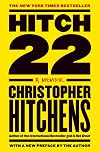
This is a memoir first published in 2010. My copy is the 2011 edition that includes a forward by Hitchens having earlier that same year been diagnosed with oesophageal cancer. He died in December 2011.
Christopher Hitchens was an author, journalist, essayist, pamphleteer and superb orator. His debating skills, honed at Oxford, were sharp, insightful and could leave his opponent feeling like they had undergone ten rounds with Cassius Clay.
To my utter shame I didn’t start taking an interest in Christopher Hitchens and his writings until around 2005. My introduction to Hitchens was through my love of the works of George Orwell. I stumbled upon Christopher Hitchens biographical essay ‘Orwell’s Victory ’, (known as ‘Why Orwell Matters’ in the USA), in a second hand bookshop. Not only was ‘Orwell’s Victory’ a superb piece of literature and a cracking read but it had the effect of wanting to know more about Mr. Hitchens.
Hitch 22 details his relationship with his parents, loving, beautiful but distant mother and uncommunicative, stoic but heroic father. Names are dropped within the book like so many autumn leaves; Salman Rushdie, James Fenton, Richard Dawkins, Martin Amis etc etc. But, this is not an attempt by Christopher Hitchens to show off or communicate to the outside world about his highly influential friends. Each name is ‘dropped’ to illustrate a point or to help frame a chapter and give it context.
There have been many superlatives used to describe show more Christopher Hitchens, erudite, witty, passionate and rhetorically astute. It is not only hard to think of new ones but it is difficult to disagree with any of them.
Hitch 22 is 422 pages of the English language in perfect harmony. His writing style is the language equivalent of the Taj Mahal or the Potala Palace in Tibet: beautifully constructed with no superfluous building materials. show less
Christopher Hitchens was an author, journalist, essayist, pamphleteer and superb orator. His debating skills, honed at Oxford, were sharp, insightful and could leave his opponent feeling like they had undergone ten rounds with Cassius Clay.
To my utter shame I didn’t start taking an interest in Christopher Hitchens and his writings until around 2005. My introduction to Hitchens was through my love of the works of George Orwell. I stumbled upon Christopher Hitchens biographical essay ‘Orwell’s Victory ’, (known as ‘Why Orwell Matters’ in the USA), in a second hand bookshop. Not only was ‘Orwell’s Victory’ a superb piece of literature and a cracking read but it had the effect of wanting to know more about Mr. Hitchens.
Hitch 22 details his relationship with his parents, loving, beautiful but distant mother and uncommunicative, stoic but heroic father. Names are dropped within the book like so many autumn leaves; Salman Rushdie, James Fenton, Richard Dawkins, Martin Amis etc etc. But, this is not an attempt by Christopher Hitchens to show off or communicate to the outside world about his highly influential friends. Each name is ‘dropped’ to illustrate a point or to help frame a chapter and give it context.
There have been many superlatives used to describe show more Christopher Hitchens, erudite, witty, passionate and rhetorically astute. It is not only hard to think of new ones but it is difficult to disagree with any of them.
Hitch 22 is 422 pages of the English language in perfect harmony. His writing style is the language equivalent of the Taj Mahal or the Potala Palace in Tibet: beautifully constructed with no superfluous building materials. show less
Cordelia Grinstead is a wife and mother to three children. Her husband Sam, a doctor, recently suffered a heart attack, (though Delia, as she is commonly known, refers to it as chest pains). At or about the same time her father died after Delia had cared for him for some time in her own home.
Her children are all teenagers and have become more independent and less reliant on their mother. Delia’s husband has become distant and less attentive. Delia has becoming unsure of her role as a mother, a wife and in the world in general.
While on the annual family holiday with her family and her sisters, Eliza and Linda and the latter’s children, Delia asks a young man who was working on the holiday home to drive her to a place she knows nothing of. She asks the young man to stop at a small town and there she begins a new life with only the possessions she is wearing and what is within her tote bag.
On the surface, The Ladder of Years appears to be a run of the mill novel about a middle aged woman going through the proverbial mid-life crisis. This appearance seems justified when you throw stroppy, mumbling, uncommunicative teenagers and an inattentive older husband in to the mix.
However, Pulitzer Prize winning novelist Anne Tyler has written a novel that defies cliché, stereotype and one’s preconceived ideas of what a woman’s mid-life crisis looks like. A clever choice on Anne Tyler’s part was to write the book in the third person. It would have been easier to have written show more the novel in the first person and allow us the reader to get a better and easier understanding of Delia’s motives and thoughts on her behaviour. But writing the novel in the third person puts the reader at a slight distance from Delia so making it harder to empathize or sympathize with her. It makes the reader have to work that bit harder in getting to understand Delia and her reasoning and in this process makes the reading of the novel that much more satisfying.
I also believe that writing in the third person allows many male readers to follow Delia’s character without feelings of being uncomfortable in their male skin than had the novel been written in the first person. It is possible that many male readers would have found it uncomfortable or off putting to follow the character had they had access to her inner thoughts and feelings. By writing in the third person male readers are allowed to keep their distance and not made to feel that they inhabit a female persona.
All the characters within The Ladder of Years are rounded three dimensional people and as a reader I felt that I knew and understood each of the novel’s inhabitants by the end of the book. This knowing and understanding is from the perspective of a friend of the family and not as a family member. By this I mean that as much as I believed I knew the character’s motives and reasons for what they did and how they lived I still couldn’t be sure I was getting the full picture. This I believe was intentional on the author’s part. I believe that Anne Tyler was trying to communicate that we never fully know someone else even when they are family. There are times in our lives when we feel like we are an outsider within our own family group looking in through a window that becomes more opaque as time moves on.
Anne Tyler’s novel is a well crafted moving and at times funny novel that will not disappoint any reader, even the male of the species.
Number of pages – 326
Sex scenes – none
Profanity – none
Genre – drama/fiction show less
Her children are all teenagers and have become more independent and less reliant on their mother. Delia’s husband has become distant and less attentive. Delia has becoming unsure of her role as a mother, a wife and in the world in general.
While on the annual family holiday with her family and her sisters, Eliza and Linda and the latter’s children, Delia asks a young man who was working on the holiday home to drive her to a place she knows nothing of. She asks the young man to stop at a small town and there she begins a new life with only the possessions she is wearing and what is within her tote bag.
On the surface, The Ladder of Years appears to be a run of the mill novel about a middle aged woman going through the proverbial mid-life crisis. This appearance seems justified when you throw stroppy, mumbling, uncommunicative teenagers and an inattentive older husband in to the mix.
However, Pulitzer Prize winning novelist Anne Tyler has written a novel that defies cliché, stereotype and one’s preconceived ideas of what a woman’s mid-life crisis looks like. A clever choice on Anne Tyler’s part was to write the book in the third person. It would have been easier to have written show more the novel in the first person and allow us the reader to get a better and easier understanding of Delia’s motives and thoughts on her behaviour. But writing the novel in the third person puts the reader at a slight distance from Delia so making it harder to empathize or sympathize with her. It makes the reader have to work that bit harder in getting to understand Delia and her reasoning and in this process makes the reading of the novel that much more satisfying.
I also believe that writing in the third person allows many male readers to follow Delia’s character without feelings of being uncomfortable in their male skin than had the novel been written in the first person. It is possible that many male readers would have found it uncomfortable or off putting to follow the character had they had access to her inner thoughts and feelings. By writing in the third person male readers are allowed to keep their distance and not made to feel that they inhabit a female persona.
All the characters within The Ladder of Years are rounded three dimensional people and as a reader I felt that I knew and understood each of the novel’s inhabitants by the end of the book. This knowing and understanding is from the perspective of a friend of the family and not as a family member. By this I mean that as much as I believed I knew the character’s motives and reasons for what they did and how they lived I still couldn’t be sure I was getting the full picture. This I believe was intentional on the author’s part. I believe that Anne Tyler was trying to communicate that we never fully know someone else even when they are family. There are times in our lives when we feel like we are an outsider within our own family group looking in through a window that becomes more opaque as time moves on.
Anne Tyler’s novel is a well crafted moving and at times funny novel that will not disappoint any reader, even the male of the species.
Number of pages – 326
Sex scenes – none
Profanity – none
Genre – drama/fiction show less
This novel is both a thriller and a love story inextricably linked to the major events that took place between 1986 and 1991: the tearing down of the Berlin Wall, the downfall of the Ceausescu and the subsequent ending of the Communist regime in Romania. In the novel’s foreground are Noah John and Lilith da Vinci, a journalist and photographer respectively, who embark on a torrid affect that will inevitably, like the times they live in, change their lives forever.
I believe that any novel’s protagonists should have at least one good virtuous characteristic, one redeemable trait that a reader can use to justify following the character’s story through the novel. But in Noah John there is nothing to hang that particular hat on. He is a weak, charmless character who commits an abominable act halfway through the book that is never fully addressed. Though this act is an allusion to what is happening and will happen in Germany it still cannot be forgiven and for me was a emotional distraction as I read the rest of the book.
Lilith da Vinci is a more redeemable character but still not that likeable. She is a strong, brave character, sexual permissive and has a belief in highlighting, through her photographs, the horrors of war and the world we live in.
The backdrop that the novel is set against and the protagonist’s part in these events is what makes the novel interesting and worthwhile reading. The novel’s allegorical structure, set as it is within the historically show more tumultuous five years that shook the world to its political and social foundations, allows the lover’s affair and characterization to reflect and imbue the time they are living through.
Many of the novel’s minor characters are poorly and lazily drawn. For instance Noah’s Scottish friend is called Mac and is a heavy drinker. The author writes some of Mac’s dialogue in the vernacular but spells the words phonetically.
The novel’s backdrop and how these world events and the reader’s knowledge of how these will affect the 1990s and the 21st century is what makes this book readable, not the main characters Noah and Lilith who at times appear nothing more than ciphers to decode a world in upheaval. Then again maybe this was the author’s intention. show less
I believe that any novel’s protagonists should have at least one good virtuous characteristic, one redeemable trait that a reader can use to justify following the character’s story through the novel. But in Noah John there is nothing to hang that particular hat on. He is a weak, charmless character who commits an abominable act halfway through the book that is never fully addressed. Though this act is an allusion to what is happening and will happen in Germany it still cannot be forgiven and for me was a emotional distraction as I read the rest of the book.
Lilith da Vinci is a more redeemable character but still not that likeable. She is a strong, brave character, sexual permissive and has a belief in highlighting, through her photographs, the horrors of war and the world we live in.
The backdrop that the novel is set against and the protagonist’s part in these events is what makes the novel interesting and worthwhile reading. The novel’s allegorical structure, set as it is within the historically show more tumultuous five years that shook the world to its political and social foundations, allows the lover’s affair and characterization to reflect and imbue the time they are living through.
Many of the novel’s minor characters are poorly and lazily drawn. For instance Noah’s Scottish friend is called Mac and is a heavy drinker. The author writes some of Mac’s dialogue in the vernacular but spells the words phonetically.
The novel’s backdrop and how these world events and the reader’s knowledge of how these will affect the 1990s and the 21st century is what makes this book readable, not the main characters Noah and Lilith who at times appear nothing more than ciphers to decode a world in upheaval. Then again maybe this was the author’s intention. show less
Longlisted for the 2013 Man Booker Prize, Colm Toibon’s novel relates the story of Jesus Christ’s crucifixion and the days afterwards through the eyes of his ‘mother’, Mary. While in hiding after the killing of her son she also tells of her view on events in the life of her son; the Wedding at Cana, the raising of Lazarus amongst others.
At approximately 30,000 words and only 104 pages long, what The Testament of Mary lacks in size it makes up for in the sheer power of its vision and imagination.
The book conveys the anger, frustration and loss that a mother feels after having lost a child. Not only that but witnessing the death of her son in such a barbaric and ritualistic way. This loss sees Mary only referring to her son as ‘him’ or ‘our son’ or ‘my son’ as she cannot bring herself to call him by the names that are used by His followers; followers who now watch over Mary and seek to protect the legacy of her son.
If you are a non-religious person like me don’t let the novel’s subject matter blind you to what is a truly stunning book. This is a novel that works on so many aesthetically designed levels that to simply categorize it as a religious novel is to miss all the other heavenly beauty that sweeps across this thought provoking novel.
Having not yet read the rest of the Man Booker longlist I won’t speculate as to whether it will take the prize but for the moment it should at least make the short list.
http://thevoyageout-bookreviews.blogspot.co.uk/
At approximately 30,000 words and only 104 pages long, what The Testament of Mary lacks in size it makes up for in the sheer power of its vision and imagination.
The book conveys the anger, frustration and loss that a mother feels after having lost a child. Not only that but witnessing the death of her son in such a barbaric and ritualistic way. This loss sees Mary only referring to her son as ‘him’ or ‘our son’ or ‘my son’ as she cannot bring herself to call him by the names that are used by His followers; followers who now watch over Mary and seek to protect the legacy of her son.
If you are a non-religious person like me don’t let the novel’s subject matter blind you to what is a truly stunning book. This is a novel that works on so many aesthetically designed levels that to simply categorize it as a religious novel is to miss all the other heavenly beauty that sweeps across this thought provoking novel.
Having not yet read the rest of the Man Booker longlist I won’t speculate as to whether it will take the prize but for the moment it should at least make the short list.
http://thevoyageout-bookreviews.blogspot.co.uk/
American Chinese Olivia Laguni finds out she has an older Chinese half sister, Kwan Li, after her father’s death bed confession to her mother. From initially being excited about the prospect of having a sister the six year olds excitement soon evaporates and turns into embarrassment and resentment of her mangled English speaking sister. This embarrassment is compounded by Kwan’s belief that she can see and talk to dead people in the World of Yin. Interwoven with Olivia’s story of her life in San Francisco are the stories told by Kwan of her former life in China.
The sisters are the narrators, with Olivia being the primary one. The main body of the novel has Olivia relating her life in San Francisco between the 1960s and the 1990s. As Olivia grows up she continues to be embarrassed by her half sister Kwan who is twelve years older than Olivia. Kwan’s broken English and her lack of knowledge of American ways creates a climate of bullying and teasing for Olivia as other children perceive Kwan to be a ‘retard’. This childhood trauma and subsequent dislike and resentment of Kwan bleeds through to Olivia’s adulthood and is exacerbated by Kwan’s interference in Olivia’s relationship with her partner Simon.
Kwan, however, unreservedly loves her little sister even when it transpires that because of Olivia, Kwan is sent to a mental hospital due to her belief that she can see dead people.
During Olivia’s childhood Kwan tells her ‘ghost stories’. Stories of the show more dead people she sees. These stories continue into adulthood and in addition Kwan recounts stories of her past lives.
Convolutedly, Kwan, Olivia and Simon visit China and in particular where Kwan grew up.
The author of bestseller The Joy Luck Club, Amy Tan, has crafted an ornate, chiaroscuro like piece of work with The Hundred Secret Senses. The novel is about America and China, life and death, cultural incongruities and the difficulty of filial devotion to one’s siblings.
However, fundamentally the novel is about relationships; the relationship between married couples, siblings, parents and their children and the most difficult relationship we all face, between the living and the dead. Amy Tan handles all these issues with adroit aplomb. show less
The sisters are the narrators, with Olivia being the primary one. The main body of the novel has Olivia relating her life in San Francisco between the 1960s and the 1990s. As Olivia grows up she continues to be embarrassed by her half sister Kwan who is twelve years older than Olivia. Kwan’s broken English and her lack of knowledge of American ways creates a climate of bullying and teasing for Olivia as other children perceive Kwan to be a ‘retard’. This childhood trauma and subsequent dislike and resentment of Kwan bleeds through to Olivia’s adulthood and is exacerbated by Kwan’s interference in Olivia’s relationship with her partner Simon.
Kwan, however, unreservedly loves her little sister even when it transpires that because of Olivia, Kwan is sent to a mental hospital due to her belief that she can see dead people.
During Olivia’s childhood Kwan tells her ‘ghost stories’. Stories of the show more dead people she sees. These stories continue into adulthood and in addition Kwan recounts stories of her past lives.
Convolutedly, Kwan, Olivia and Simon visit China and in particular where Kwan grew up.
The author of bestseller The Joy Luck Club, Amy Tan, has crafted an ornate, chiaroscuro like piece of work with The Hundred Secret Senses. The novel is about America and China, life and death, cultural incongruities and the difficulty of filial devotion to one’s siblings.
However, fundamentally the novel is about relationships; the relationship between married couples, siblings, parents and their children and the most difficult relationship we all face, between the living and the dead. Amy Tan handles all these issues with adroit aplomb. show less
“The present book is an attempt to animate certain key moments, or turning points, in Arnold’s passage from the poetic life to the prose of his later years.”
The above is a very honest statement quoted from the book’s preface. Ian Hamilton is not trying to pull over the reader’s eyes by suggesting that his book is the complete and definitive life of Matthew Arnold.
This stamp of honesty is ingrained throughout the book, within his style of writing, his objectiveness and his refraining from turning the biography into a hagiography.
Ian Hamilton has created a remarkable piece of work. It is made even more remarkable as it appears Arnold did not leave behind a bounty of diaries, letters etc from which a biography could be constructed.
Unlike some of his contemporaries, Wordsworth, Browning and Tennyson, Arnold has all but been forgotten, his poetry no longer fashionable, consigned to be a poet only enjoyed by scholars.
While Arnold’s poetry never had the emotional charge of Wordsworth or the introspective humanity of Tennyson, it did have a grace and a force of nature. While the poetry of his contemporaries had all the beauty and style of a supermodel, Arnold’s poetry was the beauty of the soul, the person within not the external superficial beauty that one could tire of looking at.
Ah, love, let us be true
To one another! for the world, which seems
To lie before us like a land of dreams,
So various, so beautiful, so new,
Hath really neither joy, nor love, nor show more light,
Nor certitude, nor peace, nor help for pain;
And we are here as on a darkling plain
Swept with confused alarms of struggle and flight,
Where ignorant armies clash by night.
Dover Beach
Ian Hamilton does a great service to the memory of Matthew Arnold with his insightful, intelligent and penetrating analysis of Arnold’s verse. Hamilton shows us the development of Arnold’s poetry and as such puts that work in context biographically and historically.
If there is one thing that a biography of a poet’s life should try to attain is to have the reader want to read or reread the poetry of the biographer’s subject.
Arnold turned his back on the world of poetry to concentrate on prose during the last twenty or so years of this life. The nineteenth century and beyond was a poorer place because of this decision.
“He thrust is gift in prison till it died” W.H. Auden. show less
The above is a very honest statement quoted from the book’s preface. Ian Hamilton is not trying to pull over the reader’s eyes by suggesting that his book is the complete and definitive life of Matthew Arnold.
This stamp of honesty is ingrained throughout the book, within his style of writing, his objectiveness and his refraining from turning the biography into a hagiography.
Ian Hamilton has created a remarkable piece of work. It is made even more remarkable as it appears Arnold did not leave behind a bounty of diaries, letters etc from which a biography could be constructed.
Unlike some of his contemporaries, Wordsworth, Browning and Tennyson, Arnold has all but been forgotten, his poetry no longer fashionable, consigned to be a poet only enjoyed by scholars.
While Arnold’s poetry never had the emotional charge of Wordsworth or the introspective humanity of Tennyson, it did have a grace and a force of nature. While the poetry of his contemporaries had all the beauty and style of a supermodel, Arnold’s poetry was the beauty of the soul, the person within not the external superficial beauty that one could tire of looking at.
Ah, love, let us be true
To one another! for the world, which seems
To lie before us like a land of dreams,
So various, so beautiful, so new,
Hath really neither joy, nor love, nor show more light,
Nor certitude, nor peace, nor help for pain;
And we are here as on a darkling plain
Swept with confused alarms of struggle and flight,
Where ignorant armies clash by night.
Dover Beach
Ian Hamilton does a great service to the memory of Matthew Arnold with his insightful, intelligent and penetrating analysis of Arnold’s verse. Hamilton shows us the development of Arnold’s poetry and as such puts that work in context biographically and historically.
If there is one thing that a biography of a poet’s life should try to attain is to have the reader want to read or reread the poetry of the biographer’s subject.
Arnold turned his back on the world of poetry to concentrate on prose during the last twenty or so years of this life. The nineteenth century and beyond was a poorer place because of this decision.
“He thrust is gift in prison till it died” W.H. Auden. show less
The day after Martin Luther King Jr is assassinated, Dora and Frannie’s father, passes away after a long illness. Shortly after, the sisters receive an invitation from their Aunt Katherine to live with her.
Living with their Aunt and her black maid Letty proves unfulfilling to the sisters. They decide to visit other relatives and this ultimately results in a road trip through America’s Southern states.
As is evident from my above rating this novella (its word count is only some 63000 words) is not something I could easily recommend.
It is an agreeable and easy read but this only damns the novella with faint praise. I found the book lacking in subtlety and depth. The motifs, allusions and symbols are writ large. The pacifist Martin Luther King Jr is killed while the next day the World War II conscientious objector father of Dora and Frannie dies. America is going through huge changes and turmoil; the Vietnam War, the anti war riots, the race riots, women’s liberation. These changes will irrevocably alter the country, politically, socially and culturally. America’s Baby Boomers were attempting to rip the country from the hands of the pre World War II old guard and pull the country into a modern world. These events are mirrored, in a smaller way of course, in the lives of the sisters. Dora is outgoing, sexually active, gregarious and believes in a brighter future. Frannie on the other hand is old fashioned, strait laced and clings to the past and its apparent certitude. show more
They drive through Texas but decide not to stop in this particular state due to the oppressive heat. Of course, even five years on the sound of bullets can still be heard reverberating around the Lone Star state.
The conclusions to the all the story threads that weave through the book are foreseeable and rather too neat for a book that uses the America in the 1960s as its backdrop. The Vietnam War raged on for another four years. Nixon became President in 1969 and his Waterloo was still four years away. The times were a changin’ but the old guard still had a grip on the political rudder.
If one was to read The Spinsters as anything other than an allegorical novel then one could find it enjoyable. The author Pagan Kennedy does have an elegant, clear writing style that throws up some wonderful images, a ‘saleslady whose hair was stiff as seven minute icing’.
Dora and Frannie’s feelings of entrapment, loneliness and isolation while caring for their father will resonant with many people in an age where one in four people in the UK care for an elderly parent. The handling of this particular issue is what would earn this novella an extra half a mark.
No’ of pages - 158
Sex scenes – none (there is some mild sexual references)
Profanity – none
Genre - drama show less
Living with their Aunt and her black maid Letty proves unfulfilling to the sisters. They decide to visit other relatives and this ultimately results in a road trip through America’s Southern states.
As is evident from my above rating this novella (its word count is only some 63000 words) is not something I could easily recommend.
It is an agreeable and easy read but this only damns the novella with faint praise. I found the book lacking in subtlety and depth. The motifs, allusions and symbols are writ large. The pacifist Martin Luther King Jr is killed while the next day the World War II conscientious objector father of Dora and Frannie dies. America is going through huge changes and turmoil; the Vietnam War, the anti war riots, the race riots, women’s liberation. These changes will irrevocably alter the country, politically, socially and culturally. America’s Baby Boomers were attempting to rip the country from the hands of the pre World War II old guard and pull the country into a modern world. These events are mirrored, in a smaller way of course, in the lives of the sisters. Dora is outgoing, sexually active, gregarious and believes in a brighter future. Frannie on the other hand is old fashioned, strait laced and clings to the past and its apparent certitude. show more
They drive through Texas but decide not to stop in this particular state due to the oppressive heat. Of course, even five years on the sound of bullets can still be heard reverberating around the Lone Star state.
The conclusions to the all the story threads that weave through the book are foreseeable and rather too neat for a book that uses the America in the 1960s as its backdrop. The Vietnam War raged on for another four years. Nixon became President in 1969 and his Waterloo was still four years away. The times were a changin’ but the old guard still had a grip on the political rudder.
If one was to read The Spinsters as anything other than an allegorical novel then one could find it enjoyable. The author Pagan Kennedy does have an elegant, clear writing style that throws up some wonderful images, a ‘saleslady whose hair was stiff as seven minute icing’.
Dora and Frannie’s feelings of entrapment, loneliness and isolation while caring for their father will resonant with many people in an age where one in four people in the UK care for an elderly parent. The handling of this particular issue is what would earn this novella an extra half a mark.
No’ of pages - 158
Sex scenes – none (there is some mild sexual references)
Profanity – none
Genre - drama show less
Julia Blackburn has written a biography or a memoir if you will about the paternal side of her family that goes back as far as her great grandfather. But this is not a conventional, genealogically straight-forward biography. The author swoops in and out of her father and grand-father’s lives through dreams and nightmares, mentally visiting rooms within a large ethereal house each connected by long white corridors. In each room she encounters a place in time inhabited by her ancestors. The author becomes a part of her ancestor’s lives as if by some form of bilocation. While in this fantastical state of bilocation she interacts most often with her grandfather (whose name we are never privy to), the dark-skinned son of a white missionary and his son, Eliel, the author’s father. On the island of Praslin, one of the smaller islands of the Seychelles in the Indian Ocean, the white missionary is busy trying to stamp out copulation while simultaneously trying to deny the colour of his own act of copulation. The Missionary’s dark-skinned wife is cursed by a witchdoctor and she and her son flee to the island of Mauritius to try and hide or outrun the witchdoctor’s curse. Julia Blackburn’s father arrives In England aged eighteen having been trained as an Anglican Priest on Mauritius but the curse appears to have followed him over the ocean.
The book is not an easy read. The subject matter is unsettling; racism, self loathing and mental illness, and the writing style has a show more surreal texture to it. However, if you want an easy read there are plenty of celebrity biographies out there to satiate your appetite.
The book is laid out in a series of short chapters with an average of five pages per chapter. It is said that we have an average of six dreams per night within an eight hour sleep. The short chapters reflect that dream state. They allow the reader to end the dream or nightmare with the close of a chapter. The short chapters allow you reflect and cogitate what you have just read before moving on to the next chapter/dream.
As with any surreal style of art, symbolism features rather heavily. There is a lot of looking out of windows, standing at windows, looking at one’s reflection in windows. There is a barely a chapter that doesn’t mention the act of shaking; the Grandfather shakes, the grandfather’s friend shakes uncontrollably, the author’s father shakes and trembles at various times through the book, Uncle Julius the missionary’s brother shakes Eliel by the shoulders when greeting him and zombies shake themselves free from the ground.
This prevalent image of shaking is not simply a symbol of the fear that the every character in the book feels quite palpably but is symbolic of one of the thematic motifs that run through the book, a curse. The grandfather states that curses are “very hard to shake off”. The curse placed on the author’s grandmother appears to follow the family down through the generations culminating in the Eliel’s mental illness in his fifties.
Here is Ms Blackburn’s strength. Her ability through her rich, layered unpretentious writing has the twenty first century reader believing in witchdoctor curses by the end of the book. Like the curse, racist attitudes rear their ugly head throughout the book. But thankfully the author never lectures or gives an opinion on said racist attitudes. She simply lays out the truth of the matter and allows the reader to find their own feelings regarding this issue. This is rendered in a beautifully, understated passage that has Eliel being handed a book by his new teacher Mr Swann. In the book are the names of local families that are black but like to be thought of as white.
This is the first book review and I have been lucky in finding such a wonderful book to kick off my blog.
Julia Blackburn’s seemingly effortless style is at times beguiling and thought provoking. In the wrong hands The Book of Colour could have quite easily have became polemical and sentimental. The author has allowed the reader a peek into her ancestor’s lives and I believe it is just that, a peek. One can assume that there is so much more behind Julia Blackburn’s biographical curtains pertaining to her family. My only criticism is that the reader is left wondering what became of some of the people within the book; Eliel’s mother who suffered because of mental illness, Evalina Larose, relative or servant, and most importantly Eliel’s father who stayed behind on the island of Praslin. I have so many questions but so few answers. However, it may well be that the author does not have all the answers. It is a small criticism over-shadowed by my admiration and recommendation. show less
The book is not an easy read. The subject matter is unsettling; racism, self loathing and mental illness, and the writing style has a show more surreal texture to it. However, if you want an easy read there are plenty of celebrity biographies out there to satiate your appetite.
The book is laid out in a series of short chapters with an average of five pages per chapter. It is said that we have an average of six dreams per night within an eight hour sleep. The short chapters reflect that dream state. They allow the reader to end the dream or nightmare with the close of a chapter. The short chapters allow you reflect and cogitate what you have just read before moving on to the next chapter/dream.
As with any surreal style of art, symbolism features rather heavily. There is a lot of looking out of windows, standing at windows, looking at one’s reflection in windows. There is a barely a chapter that doesn’t mention the act of shaking; the Grandfather shakes, the grandfather’s friend shakes uncontrollably, the author’s father shakes and trembles at various times through the book, Uncle Julius the missionary’s brother shakes Eliel by the shoulders when greeting him and zombies shake themselves free from the ground.
This prevalent image of shaking is not simply a symbol of the fear that the every character in the book feels quite palpably but is symbolic of one of the thematic motifs that run through the book, a curse. The grandfather states that curses are “very hard to shake off”. The curse placed on the author’s grandmother appears to follow the family down through the generations culminating in the Eliel’s mental illness in his fifties.
Here is Ms Blackburn’s strength. Her ability through her rich, layered unpretentious writing has the twenty first century reader believing in witchdoctor curses by the end of the book. Like the curse, racist attitudes rear their ugly head throughout the book. But thankfully the author never lectures or gives an opinion on said racist attitudes. She simply lays out the truth of the matter and allows the reader to find their own feelings regarding this issue. This is rendered in a beautifully, understated passage that has Eliel being handed a book by his new teacher Mr Swann. In the book are the names of local families that are black but like to be thought of as white.
This is the first book review and I have been lucky in finding such a wonderful book to kick off my blog.
Julia Blackburn’s seemingly effortless style is at times beguiling and thought provoking. In the wrong hands The Book of Colour could have quite easily have became polemical and sentimental. The author has allowed the reader a peek into her ancestor’s lives and I believe it is just that, a peek. One can assume that there is so much more behind Julia Blackburn’s biographical curtains pertaining to her family. My only criticism is that the reader is left wondering what became of some of the people within the book; Eliel’s mother who suffered because of mental illness, Evalina Larose, relative or servant, and most importantly Eliel’s father who stayed behind on the island of Praslin. I have so many questions but so few answers. However, it may well be that the author does not have all the answers. It is a small criticism over-shadowed by my admiration and recommendation. show less
This fin de siècle, first person, novel, is at its Austenesque heart a story of decay, hope and incestuous love.
Cathy lives in a large run down country house with her Grandfather, known locally as ‘the man from nowhere’. As Cathy looks back on past events in her life we encounter past inhabitants of the house; her brother Rob, the Irish housekeeper Kate, the mysterious Eileen and numerous servants employed from the local village.
Cathy and Rob’s mother, who was a baby when she arrived with Cathy’s grandfather at the country house, left when Cathy and Rob were very young. Their father has also ‘abandoned’ them due to his mental illness and is being treated at a sanatorium. Their grandfather has retreated into his study from which he very rarely emerges and so Rob and Cathy are largely left to their own devices apart from the able assistance and love of their housekeeper and friend, Kate.
Secrets and lies are cemented into the very brickwork and foundation of the house and its real and metaphysical decay begins to expose those two fragile elements to householders and visitors alike. These two sides of the same coin seep and bleed through the novel and their exposure is being hurried by the likes of Ms Eunice Gallagher, Cathy and Rob’s former tutor and governess.
This 1996 winner of The Orange Prize for Fiction is like the curate’s egg, excellent in parts. Helen Dunmore’s characters are wonderfully written. As you read through the novel it feels like each show more line is creating the skin and bone and organs of each character while each chapter is pumping blood through their perfectly, forming bodies. By the end of A Spell of Winter, one feels that one has not only read about the characters but has actually met them.
At times the novel does read like it is part of the Austen oeuvre. Being a lover of all things Austen, this is not a bad thing and may have been the author’s intention. One cannot read of the character Mr George Bullivant without thinking of the first line of Pride and Prejudice: ‘It is a truth universally acknowledged, that a single man in possession of a good fortune must be in want of a wife’. Mr Bullivant reminded me Mr Charles Bingley from the same novel, good natured, well mannered, kind and wealthy. His name is well chosen as it means, the good, faithful man. In fact Mr Bullivant is given one of the best lines of dialogue, ‘Thinking of people when they’re not there, it’s one of life’s great pleasures, isn’t it’.
The first line of the prologue, ‘I saw an arm fall off a man once’, sets out a major theme within the novel, decay. Decay of not only the grandfather’s house but of his mind and that of his sons. Decay in inhibitions and ultimately the morals of the two main characters, Cathy and her brother Rob.
The book’s title, A Spell of Winter, Cathy’s favourite time of the year, implies decay. And it is in that winter that Cathy can hide, physically and mentally, within its long hours of darkness.
There are times when the dialogue does not do justice to the rest of the novel. At times it reads like something from a sub romantic Barbara Cartland novel as this exchange between Mr Bullivant and Cathy attests to;
‘You’re cold,’ he said, noticing my shiver, ‘We’ll go into the house.’
‘No, I’m not cold. I like it here.’
‘You like the snow, don’t you? It suits you.’
‘Yes’
‘I always think of you outside, in the woods or in the garden.’ said Mr Bullivant.
‘Do you?’
‘Yes, why do you sound so surprised?’
The novel’s incestuous story line could be considered a brave and bold move on the author’s part or simply a contrivance to generate publicity through tabloid moral outrage. Personally, I believe the former reason. Rightly or wrongly I wondered if this was the kind of book I should be reading and enjoying but I also had the same thoughts when reading Nabakov’s Lolita.
Do I recommend this book? Yes I do. Did it deserve to win to win the 1996 Orange Prize for Fiction? Too early to say as I have yet to read four of the six books that were nominated. But of the two books that I have read from the shortlist, The Spell of Winter and Julia Blackburn's The Book of Colour, Helen Dunmore's is my favourite.
No’ of pages – 313
Profanity – none
Sex scenes – 1 (there are also some mild sexual references)
Genre – Drama/Romance show less
Cathy lives in a large run down country house with her Grandfather, known locally as ‘the man from nowhere’. As Cathy looks back on past events in her life we encounter past inhabitants of the house; her brother Rob, the Irish housekeeper Kate, the mysterious Eileen and numerous servants employed from the local village.
Cathy and Rob’s mother, who was a baby when she arrived with Cathy’s grandfather at the country house, left when Cathy and Rob were very young. Their father has also ‘abandoned’ them due to his mental illness and is being treated at a sanatorium. Their grandfather has retreated into his study from which he very rarely emerges and so Rob and Cathy are largely left to their own devices apart from the able assistance and love of their housekeeper and friend, Kate.
Secrets and lies are cemented into the very brickwork and foundation of the house and its real and metaphysical decay begins to expose those two fragile elements to householders and visitors alike. These two sides of the same coin seep and bleed through the novel and their exposure is being hurried by the likes of Ms Eunice Gallagher, Cathy and Rob’s former tutor and governess.
This 1996 winner of The Orange Prize for Fiction is like the curate’s egg, excellent in parts. Helen Dunmore’s characters are wonderfully written. As you read through the novel it feels like each show more line is creating the skin and bone and organs of each character while each chapter is pumping blood through their perfectly, forming bodies. By the end of A Spell of Winter, one feels that one has not only read about the characters but has actually met them.
At times the novel does read like it is part of the Austen oeuvre. Being a lover of all things Austen, this is not a bad thing and may have been the author’s intention. One cannot read of the character Mr George Bullivant without thinking of the first line of Pride and Prejudice: ‘It is a truth universally acknowledged, that a single man in possession of a good fortune must be in want of a wife’. Mr Bullivant reminded me Mr Charles Bingley from the same novel, good natured, well mannered, kind and wealthy. His name is well chosen as it means, the good, faithful man. In fact Mr Bullivant is given one of the best lines of dialogue, ‘Thinking of people when they’re not there, it’s one of life’s great pleasures, isn’t it’.
The first line of the prologue, ‘I saw an arm fall off a man once’, sets out a major theme within the novel, decay. Decay of not only the grandfather’s house but of his mind and that of his sons. Decay in inhibitions and ultimately the morals of the two main characters, Cathy and her brother Rob.
The book’s title, A Spell of Winter, Cathy’s favourite time of the year, implies decay. And it is in that winter that Cathy can hide, physically and mentally, within its long hours of darkness.
There are times when the dialogue does not do justice to the rest of the novel. At times it reads like something from a sub romantic Barbara Cartland novel as this exchange between Mr Bullivant and Cathy attests to;
‘You’re cold,’ he said, noticing my shiver, ‘We’ll go into the house.’
‘No, I’m not cold. I like it here.’
‘You like the snow, don’t you? It suits you.’
‘Yes’
‘I always think of you outside, in the woods or in the garden.’ said Mr Bullivant.
‘Do you?’
‘Yes, why do you sound so surprised?’
The novel’s incestuous story line could be considered a brave and bold move on the author’s part or simply a contrivance to generate publicity through tabloid moral outrage. Personally, I believe the former reason. Rightly or wrongly I wondered if this was the kind of book I should be reading and enjoying but I also had the same thoughts when reading Nabakov’s Lolita.
Do I recommend this book? Yes I do. Did it deserve to win to win the 1996 Orange Prize for Fiction? Too early to say as I have yet to read four of the six books that were nominated. But of the two books that I have read from the shortlist, The Spell of Winter and Julia Blackburn's The Book of Colour, Helen Dunmore's is my favourite.
No’ of pages – 313
Profanity – none
Sex scenes – 1 (there are also some mild sexual references)
Genre – Drama/Romance show less