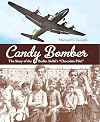
Candy Bomber: The Story of the Berlin's "Chocolate Pilot" is a great book for all ages. It tells the story of Lt. Halvorsen dropping candy and chocolate from planes to children in Berlin. I got teary eyed reading this book. It is so uplifting and makes me so proud of what was accomplished. It just shows that a small act of kindness can change people's lives and give them hope. I did have a problem with Tunnell flipping from Soviet Union to Russia. During that time it was the Soviet Union, so calling it Russia is wrong. I enjoyed the pictures especially of the handwritten letters from the children. I tried to read every message Halvorsen wrote on Mercedes letter every time they met each other. I could easily use this book in a history class. Students could find out more about Halvorsen's role in the Kosovar refugee camp in Albania and the Micronesian Christmas drops. Students could go to wigglywings.weebly.com to learn more about Halvorsen through articles, interviews, pictures, and letters from children. I also found the candy bomber on PBS's website with great resources and lesson plans. Students could also watch the PBS film, but unfortunately, it is not available online.
I had never heard of dyscalculia before reading My Thirteenth Year. After reading Samantha Abeel's memoir, I was shocked and saddened by her experiences. I have never had anxiety problems, but reading about how she would get sick every night, not sleep and not eat, was so awful. I found myself getting frustrated that she wasn't telling anyone that she couldn't understand how long 5 minutes or a week was. I know she didn't understand what was wrong and just thought she wasn't smart and something was wrong with her, but I found myself saying, "Just tell someone and they can help you!" I also got upset when she was first tested. Her parents were told she would eventually "even out" in math. Seriously?! If someone else had tested her and realized that she had dyscalculia or at least put her in special education math classes, her anxiety and stress would have been greatly reduced. I was also saddened that she isolated herself from her friends because she didn't want anyone to find out about it. The terrible experience of having to leave her friend's house to go home at night because she had an anxiety attack was so heartbreaking. Then, she got tested again and realized she should be placed in a special education class. One special education teacher said, "Why would you want to put your child in a class with those kind of kids?". There is such a stigma that comes with special education that hurts the children. No teacher should ever speak about students like that. Then she had show more to tell her other teachers about her LD. Her science teacher said she didn't look like she had a LD. I wrote in my book "What teacher/person says that?!" This book made me so sad for Samantha because so many people failed her along the way. With all the sad parts of her memoir, there are silver linings and positive moments.
I loved that she saw herself as different in a good way and meant for something special. She was right. Through the help of Mrs. Williams, she found her gift of writing poetry. She wrote a book of her poetry and traveled all over the US. She spoke to so many people who have learning disabilities and changed their lives. She makes to college and graduates with some hiccups along way, but she does it! This book is great to have students read who don't know what learning disabilities are and to break down that stigma of people with LDs. show less
I loved that she saw herself as different in a good way and meant for something special. She was right. Through the help of Mrs. Williams, she found her gift of writing poetry. She wrote a book of her poetry and traveled all over the US. She spoke to so many people who have learning disabilities and changed their lives. She makes to college and graduates with some hiccups along way, but she does it! This book is great to have students read who don't know what learning disabilities are and to break down that stigma of people with LDs. show less
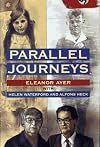
Parallel Journeys tells the stories of a Jewish woman, Helen Waterford, and a young boy, Alfons Heck, during WWII. The two never meet during the war, but meet after in the US and lecture together about their experiences. Helen's reason for lecturing about her experiences is to warn people that minor harassment and prejudice, if it is not stopped immediately, grows, and you become the perpetrator. Alfons' reason for telling people his story is so people understand that it can happen anywhere, and people are capable for truly horrible acts in any country. Eleanor Ayer uses narrative interspersed with excerpts from Alfons' two autobiographies and Helen's autobiography. This book gives readers in depth perspectives of the two lives. I will say this, people must keep an open mind when reading about Alfons. I also would have liked it if the author included more about how they met, and the struggles they went through continuing their lives after the war. I think it would have added more to the book if the author had interviewed them instead of taking excerpts from their autobiographies. The pictures are useful, but some do not correspond to the text. For example, there is of Jo Vis before he is mentioned in the text. The most fascinating part of the book was when Alfons has to come to terms with what he did and what his leaders did. I would have liked to know more about it, but I guess I should read his two autobiographies or the documentary about him. I think this book should show more be in every classroom. The stories are incredibly powerful and eye opening, and leaves a lasting impression. show less
As I read Karl and Emil, I kept asking myself "What would I do if I was orphaned with my best friend trying to survive in Vienna at the very beginning of WWII?" As young as Karl and Emil are (9 years old), they are incredibly brave. After both are orphaned, they stay with the janitor and his wife in the basement of Karl's apartment. They are forced to scrub the pavement with their hands with other Jewish people. There they meet an old man who sings a song that calms them. Unfortunately, the janitor is taken by the Nazis and the wife must leave. As she is leaving Vienna with the boys, they witness Jewish people being forced to act like animals in the park. A woman talks to the wife and says she will take the boys making it clear that the woman knows that she is on their side. The woman, Matilda, takes the boys to her house by the train tracks and signal station. Matilda lives with a man named Hans who shouts "Heil" randomly and (as she puts it) acts crazy. The man who works in the signal station comes to the house drunk and talks about stealing from Jewish shops. Karl becomes extremely ill and while he is resting, he notices Hans act normal. Matilda leaves for a few days, and upon her return, she tells the boys that Hans used to be a vaudeville actor. He has since grown out his beard as a disguise. He and Matilda have organized a group of people to work underground and distribute pamphlets printed on cigarette paper. They have a meeting with the group that night where they show more talk about Jewish people being sent away to concentration camps. The next day, Hans is taken by the Nazis after a member of their group betrays them. Matilda comes back to take the boys to her sister-in-law who works for the emigration center. The boys are told they will be sent to England. Matilda sees them before they are put on the train. She is acting like a drunkard on the streets, but she is able to smile at the boys and give each a note from Hans. Heartbreakingly, the boys get separated. Emil gets on the first train. Karl is left to wait for the next train to come in three hours.
This book is incredibly heartbreaking and suspenseful. Glatshteyn wrote Karl and Emil in 1940 and is one of the first books written about the Holocaust. Since it was written in and about the beginning of the war, I found myself so sad for the characters because they do not know what is about to happen. I wonder if he would have changed the ending of the book after knowing that this would not end quickly. This book illustrates how what happened to Jewish Europeans has an impact on everyone. Their future depended on the kindness of and relationships with non-Jewish people. Glatshteyn tells a story about friendship, loyalty, and bravery with a lasting impact long after reading. show less
This book is incredibly heartbreaking and suspenseful. Glatshteyn wrote Karl and Emil in 1940 and is one of the first books written about the Holocaust. Since it was written in and about the beginning of the war, I found myself so sad for the characters because they do not know what is about to happen. I wonder if he would have changed the ending of the book after knowing that this would not end quickly. This book illustrates how what happened to Jewish Europeans has an impact on everyone. Their future depended on the kindness of and relationships with non-Jewish people. Glatshteyn tells a story about friendship, loyalty, and bravery with a lasting impact long after reading. show less
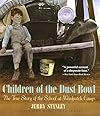
Children of the Dust Bowl gives readers an inside look at the Weedpatch Camp and school. As someone who never read The Grapes of Wrath, I appreciated the introduction because Stanley gives a brief background of what was happening during the time of the Dust Bowl and Steinbeck's novel. I also liked how he defined Okie and explained why he chose to use it in the book. If he had not, many people would be offended by the term, or some readers might not even realize that it is a derogatory term without Stanley telling them. The maps were extremely helpful and would be useful for any reader and especially necessary when Stanley talked about Route 66 and the journey these people took to California. I liked the photographs because it allowed me to see what it was actually like. The photos on pages 12 and 13 of the two families leaving for California with their cars packed seemed redundant. The pictures are basically the same with slight differences. I do think students will like the picture with the goat because they will think it is funny. The rest of the photos were very useful and interesting. I found myself examining the photos like when students were building the school on page 52. I was trying to figure out what exactly they were doing. I appreciated that every photo had a caption and were related to the page it was on. I enjoyed the quotes from people who lived during this time and at the camp. I had issues with Stanley's bibliography. I did not like the way it was show more formatted. Since it was written in paragraphs, it was easily accessible. I think an alphabetical by author bibliography would have been better. I also would have preferred Stanley to have referenced where he got the quotes of the students besides the "Odyssey Program". The book was shocking, and sad. For example, I had no idea that farmers would burn their surplus crops instead allowing the Okies to take the crops because the farmers wanted them to leave (p.26). I can't understand why people would be treated in such a way. The book was also eye opening and inspiring. I was inspired not only by Leo Hart ,who created the school for these children, but also the children inspired me. They so badly wanted to go to a school where they wouldn't be bullied that they literally help build their own school. I also found the classes offered at the school extremely interesting. I wish I could have taken a class in aircraft mechanics in an actual aircraft! This school seems like Dewey would fit right in. Students are learning skills as they build their own school. They get to drive a plane around if they do well in algebra. Talk about a great reward! As I was reading, I found many ties to immigration, which is especially relevant today with the Syrian refugee crisis and Trump's wall idea. It would be interesting to see if you could create a simulation after reading what happens to the students at the schools where they aren't wanted, so students can know what it feels like to be bullied. I'm not sure if it would work though. This could also be tied to a lesson about stereotypes ad discrimination. Everyone has experienced some form of stereotyping or discrimination. Students, if they felt comfortable, could share their experiences and compare their experiences to the children of the dust bowl. show less
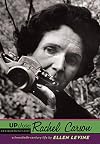
Up Close: Rachel Carson takes the reader on a journey through Rachel's life beginning with her childhood and ending with her death. As someone who knew relatively nothing about Rachel Carson, I enjoyed the book. It gives a in-depth look into her thought processes and how she came to write books about nature and then Silent Spring. This book could be used for a literature class in conjunction with her other works, history with regards to the EPA, or a science class discussing environment science. I had no idea that after publishing Silent Spring Rachel got so much criticism especially being a suspected Communist. Another aspect of the book I found interesting was the amount of sexism throughout her life. For example, when she went to college women were not meant to major in science, and most jobs in the field were given to men. It is fascinating that this woman wrote a book and changed the country. I think this is a great lesson to all students. While I did like the book, there were parts of it that could have been changed. For example, the book could have been shortened considerably if the author had not gone into so much detail about her college years. The author states repeatedly that Rachel was thinking of changing her major several times. I was more interested in the whole writing and research process of Silent Spring, but that is nitpicking. It makes sense that the book is detailed since it is called Up Close. Overall, it is a great book and could be used in several show more courses. show less
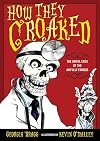
How They Croaked takes the reader into the surprising, gory and gross demise of famous people throughout history while keeping it funny. This book could be used for an introduction or in addition to other documents about any person in this book. There are a range of people who contributed to different areas like science, literature, music, and history. I think any student would really enjoy this book at any grade level. The chapters are short and have additional information about aspects related to the person such as mummification at the end of King Tut's chapter. One thing I was frustrated by was the lack of footnotes or endnotes. There are quotes that have no source defined in the text. This is probably just nitpicking, since there are sources at the end of the book for every chapter. I also noticed there were some things left unexplained such as why was poison trade a big business in Egypt. This could be corrected by having students research more about it and create an inquiry project based on information that the author expected you to know.
I think the style fit well with the book. The book had clarity. The content and ideas are logically organized. The chapters do not cover the entire lives of each person but do provide a brief introduction to the person. Then it continues with how the person died and the days or weeks leading up to the person's death including the how. The language is reader friendly for the grade levels and audience. The book also has figurative show more language like metaphors and similes such as comparing King Henry VIII to smelling like a rotten egg.
Language is also important in style. The sentences range from complex to simple. Usually the simple sentences are the comic relief. This give the reader a break from reading about the gross ways people died and brings levity to the situation. The language is vivid and precise with interesting descriptions. For example, occupations that people today would not know such as barber-surgeons is explained in the text. Through the vivd and descriptive language, you are able to sense what it would have been like for poor Beethoven sweating it with a hole in his stomach. Since the text is lighthearted for the most part, I got the sense that the authors enjoyed writing the book and were passionate about the topic (as passionate as one can be about how people died that is). Every chapter begins with a lead. My favorite is probably the beginning of Poe's chapter, "Poe attended a lot of funerals". The conclusions to chapters do not transition to the next. The authors could have tried to connect each person to the next, but there is an interesting chart at the end of the book showing how each person is connected to others in the book. The chapter titles do pique interest such as Christopher Columbus: Death by Dirt and George Washington Little Mouth of Horrors.
I would define the tone of the book as humorous. The authors delivered information in a funny way throughout the book. I see this book as the quintessential conversation starter. People can pick up the book and read a chapter and talk about it with friends. Since the tone is humorous, it allows people to talk about a subject that might otherwise be considered a downer of sorts. show less
I think the style fit well with the book. The book had clarity. The content and ideas are logically organized. The chapters do not cover the entire lives of each person but do provide a brief introduction to the person. Then it continues with how the person died and the days or weeks leading up to the person's death including the how. The language is reader friendly for the grade levels and audience. The book also has figurative show more language like metaphors and similes such as comparing King Henry VIII to smelling like a rotten egg.
Language is also important in style. The sentences range from complex to simple. Usually the simple sentences are the comic relief. This give the reader a break from reading about the gross ways people died and brings levity to the situation. The language is vivid and precise with interesting descriptions. For example, occupations that people today would not know such as barber-surgeons is explained in the text. Through the vivd and descriptive language, you are able to sense what it would have been like for poor Beethoven sweating it with a hole in his stomach. Since the text is lighthearted for the most part, I got the sense that the authors enjoyed writing the book and were passionate about the topic (as passionate as one can be about how people died that is). Every chapter begins with a lead. My favorite is probably the beginning of Poe's chapter, "Poe attended a lot of funerals". The conclusions to chapters do not transition to the next. The authors could have tried to connect each person to the next, but there is an interesting chart at the end of the book showing how each person is connected to others in the book. The chapter titles do pique interest such as Christopher Columbus: Death by Dirt and George Washington Little Mouth of Horrors.
I would define the tone of the book as humorous. The authors delivered information in a funny way throughout the book. I see this book as the quintessential conversation starter. People can pick up the book and read a chapter and talk about it with friends. Since the tone is humorous, it allows people to talk about a subject that might otherwise be considered a downer of sorts. show less
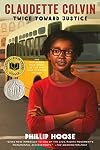
Claudette Colvin: Twice Toward Justice weaves a narrative taken from research and interviews by Phillip Hoose and direct quotes from interviews with Claudette Colvin. I greatly enjoyed this book for severe reasons. I liked how Hoose incorporated Claudette's interviews into the book. I also liked how truthful and honest she was about how she felt after her trial, during the Browder v. Gayle trial and after it all ended. As I was reading the book, I began to feel as though she were tossed aside for being a teenager and rumors of her being emotional and feisty. I was saddened for her that her name was not in the history books as it should have been from the beginning. For a history class, students could compare articles during that time that talk about how she was emotional and feisty to what actually happened and her own accounts. I think it would also be good for students to read Frank Sikora's article as well as the other writers who interviewed her before this book. I am also curious to read Hoose's books about young people making a difference and young people in US history, which could also be incorporated into a lesson about this book.
The organization of the book is chronological, for the most part. There are two parts to the book. The first part is Claudette's birth and life before she was arrested for not moving seats on the bus to the beginning of the Browder v. Gayle case, and Fred Gray deciding to have her as one of the plaintiffs. The first chapter is an show more introduction or hook for the book, which sets the tone of the book and gives some background about the Jim Crow laws and other riders who stood up to drivers. The second part of the book begins with Claudette's day in court to testify for the Browder v. Gayle case and ends with the plaintiffs winning the case, but there still being violence and unrest in the city because this was just the beginning of the civil rights movement. The epilogue provides a wrap up of what happened to Claudette after the case. The organization made sense to me and was easy to follow and understand. show less
The organization of the book is chronological, for the most part. There are two parts to the book. The first part is Claudette's birth and life before she was arrested for not moving seats on the bus to the beginning of the Browder v. Gayle case, and Fred Gray deciding to have her as one of the plaintiffs. The first chapter is an show more introduction or hook for the book, which sets the tone of the book and gives some background about the Jim Crow laws and other riders who stood up to drivers. The second part of the book begins with Claudette's day in court to testify for the Browder v. Gayle case and ends with the plaintiffs winning the case, but there still being violence and unrest in the city because this was just the beginning of the civil rights movement. The epilogue provides a wrap up of what happened to Claudette after the case. The organization made sense to me and was easy to follow and understand. show less
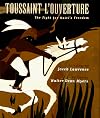
Toussainy L'Ouverture: The Fight for Haiti'e Freedom combines beautiful paintings with the incredible biography of a man fighting for freedom. This book would be great for an art and history class. Students of both classes could take a field trip to the Amistad Research Center and see the actual paintings. Students could continue to explore how this event inspired others to fight for their freedom. The book also mentions how he was inspired by the American and French revolutions, which students could explore more. This book shows how events are connected. The only problem I had was some of the paintings did not seem to match the text. I would have appreciated it if the titles of the paintings were included. As far as organization, the book begins with an introduction or hook about L'Ouverture fighting for the freedom of his people. The rest of the book is organized chronologically beginning with Christopher Columbus landing on the island and the splitting of the island between France and Spain. Then it jumps to the birth of L'Ouverture and goes beyond his death to the independence of Haiti and Dessalines as the leader of Haiti.
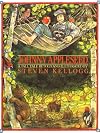
Johnny Appleseed: A Tall Tale not only has a great story about the man behind the myth, but also fantastic illustrations. I picked this book, and then when I turned to the first page, I realized I had read this when I was a child! The illustrations are beautiful and are just as important as the text. I appreciate that the author and illustrator state that people made up stories and embellished stories about Johnny Appleseed. He does mention in the author's note where he got his information from, which I think is important. I did read it with skeptical eye because it is hard to tell what is made up or embellished and what is the truth. For example, in the illustrations, he never wears any shoes. I am not sure if that truly happened or not. This could be used in a history class where students learn more about other real men and myths about them such as Paul Bunyan or Buffalo Bill. I would also like to know more about his relationship with Native Americans. Did he really get along with them? Why? Was it because he respected animals and nature like them? What happened during the War of 1812? Was he still friendly with the Native Americans? Students could try to answer all these questions.
A Picture Book of George Washington Carver (Picture Book Biography) (Picture Book Biographies) by David A. Adler
A Picture Book of George Washington Carver had many facts about Carver's life and his work. I did not know that he was an artist and was called the Black Leonardo. I also did not know that Edison tried to get him to work with him. This book could be used in an art class. Students could read this and then view his paintings or try to use vegetable, magnolias and clay as he did. History students could learn more about his work with Booker T. Washington as well as what it was like being the first African American at Simpson College. In the Author's Note, it mentions his beliefs more align with Washington's than W.E.B. Du Bois. Students could compare and contrast their beliefs of race problems. Science students could learn more about his 300 by-products of peanuts and 100 products of sweet potatoes.
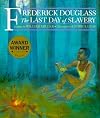
Where was Fredrick Douglass born? What books did he like to read? How did he learn to read? Did he teach himself? What else did he do with his life? Frederick Douglass: The Last Day of Slavery disappointed me. I could not tell what was fact and what was fictionalized. The title also does not fit the book. It is not about Frederick Douglass's last day as a slave. I did not know there was someone called a breaker to break the spirit of slaves. This book could be used as an introduction to Frederick Douglass, but students will need more information about him than this book gives to fully understand what he did for African Americans.
A Picture Book of Jackie Robinson (Picture Book Biography) (Picture Book Biographies) by David A. Adler
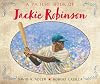
A Picture Book of Jackie Robinson is a good introduction his life. I would have liked it more if it mentioned how the players on his own team felt about him as well as what African American fans of baseball thought. The book does mention that he is not the first African American baseball player to play on a white team. Students in a history class could then research Bud Fowler. I was confused when it said Robinson spoke to Joe Louis, and then a few days later African Americans were admitted to officer candidate school. I am not sure if that means Joe Louis talked to someone to make this happen after Jackie told him about the problem. I am also confused as to why he was court martialed for not moving to the back of the bus if separate seating was not allowed on an army bus anymore. He was found innocent at the trial, but shouldn't the bus driver have gotten in trouble and not him? Overall, this book is a good biography of Jackie Robinson's life, but there are parts that are missing and confusing.
If you are looking for a book about a woman who saved lives during WWII, then this is one of them. Irena Sendler and the Children of the Warsaw Ghetto is a great book for students in history classes because it gives great detail of her rescue of about 400 Jewish children. This book could be used as a way to show girls that women can do extraordinary things just like men during war. The author uses several sources such as books, articles, videos and interviews. It is mentioned that the zoo in Warsaw was abandoned during the occupation, so people who hide Jewish families there. It would be interesting to have students find out more about such efforts during war. There is a brief description of the torture Sendler went through when she was imprisoned, so teachers should be aware of that before reading to students.
Sugar Changed the World is a great book for any grade level. I learned so much from reading this. For example, I did not know that after slaves were freed, Indians were sent from India to work on the sugar plantations as indentured servants. It was amazing to see how such a simple thing we take for granted today has played a part in changing the world.
I believe the book is accurate. The authors have impressive qualifications. Marc Aronson has a doctorate in American history and has won awards for his books. Marina Budhos is an associate professor of English at William Patterson University. She has also written books for teenagers and won awards. She was also a Fulbright Scholar in India. Their scholarship is also evident in the book. The authors provide a detailed bibliography as well as notes at the end of the book. They also provide a section of the book about how they wrote the book. They also provide a prologue that explains why each author wanted to write a book about sugar. The pictures are relevant to the text on the page and have explanations for each picture as well as citations. The only thing missing is there are no numbers in the text to relate to the notes in the back of the book. I noticed no blurring of fact and opinion. Everything is clearly stated as either fact or opinion, and I found little opinion in the text. I also did not see any generalization, sensationalism, or stereotyping. When the authors wrote about slavery, they acknowledged that some show more owners were not as brutal as others, but the norm was brutality. There is no anthropomorphism because there are no illustrations only pictures. The authors did not use teleology in explaining scientific processes either. This book is also current because it was published in 2010. Overall, I believe this book meets the criteria for accuracy for evaluating nonfiction. show less
I believe the book is accurate. The authors have impressive qualifications. Marc Aronson has a doctorate in American history and has won awards for his books. Marina Budhos is an associate professor of English at William Patterson University. She has also written books for teenagers and won awards. She was also a Fulbright Scholar in India. Their scholarship is also evident in the book. The authors provide a detailed bibliography as well as notes at the end of the book. They also provide a section of the book about how they wrote the book. They also provide a prologue that explains why each author wanted to write a book about sugar. The pictures are relevant to the text on the page and have explanations for each picture as well as citations. The only thing missing is there are no numbers in the text to relate to the notes in the back of the book. I noticed no blurring of fact and opinion. Everything is clearly stated as either fact or opinion, and I found little opinion in the text. I also did not see any generalization, sensationalism, or stereotyping. When the authors wrote about slavery, they acknowledged that some show more owners were not as brutal as others, but the norm was brutality. There is no anthropomorphism because there are no illustrations only pictures. The authors did not use teleology in explaining scientific processes either. This book is also current because it was published in 2010. Overall, I believe this book meets the criteria for accuracy for evaluating nonfiction. show less
My Name is Truth tells the journey of Sojourner from her life as a slave Isabella to her chosen name Sojourner preaching about antislavery and women's rights. This book could be used for a history class. Students could research more about her life and what she did for African Americans as well as women. Students could learn more about how she used the court system to get her son back, which, according to the author's note, was unheard of at the time. It would also be interesting for students to read the Francis Gage "Ain't I a Woman" speech and compare it to how she actually spoke. Teachers could use that as a lesson on questioning the author before you read the literature. It mentions she went to New York City, but does not talk about what happened there. Students could research more about that. I was hoping it would talk more about that in the author's note, but it did not. I did not like how this book was written. There is hardly any punctuation, so I would get confused while reading it.
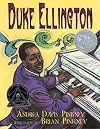
Duke Ellington: The Piano Prince and his Orchestra is about Duke's journey from playing in pool halls and cabarets to playing at Carnegie Hall. The book also mentions his soloists who played in his orchestra. I would liked to have more information about his journey more. It mentions popular songs and his suite Black, Brown and Beige about African American pride, but I would have liked it better if there was more information about him. This just seism to introduce him to the reader. This could be used in a music or history class. Students could listen to Black, Brown and Beige and research the how his orchestra playing his suite at Carnegie Hall was different from other jazz musicians playing there. I also did not know that he composed thousands of compositions including musicals and ballets.
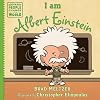
I am Albert Einstein talks about how he struggled when he was younger not only with speaking but also with school from boredom. I did not know that he failed some classes, or that his teacher told him he would amount to nothing. I think this is a great book for history and science classes. It is also a great book for all students because the lesson from it inspires students to keep questioning and keep being curious. Students could try to create the structures that Einstein created when he was younger in science classes. This could also be paired with How They Croaked chapter about Albert Einstein.
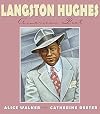
As someone who has read very little of Langston Hughes works, I was curious to know more about his life. This book goes into his childhood and his relationship with his father and his views on African American people. It also goes into Hughes' search for his place in the world. He travels to Africa because he wanted to be around Africans and learn more about his culture and where he is from. He was a champion for African Americans unlike his father who specifically did not like poor African Americans. I think the theme of the book is look beyond race, gender, class, etc. There are good people from every walks of life. How much money you have or the color skin does not define you or make you less than other people. This book could be used in an English class as an introduction to his poems. It could also be used for a history class to discuss the treatment of African Americans during that time as well as women and poor people. I think it would be an interesting topic of discussion to talk about Hughes' father's opinions on poor African Americans. I thoroughly enjoyed reading this book and liked that it included two of his poems.
A Picture Book of Thomas Alva Edison (Picture Book Biography) (Picture Book Biographies) by David A. Adler
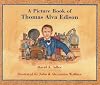
Most people already know who Thomas Edison is, but this book shows readers what his childhood was like and other not as known inventions. This book could be used for a history class where students could then research other of his inventions that less well known. A science could use this book to introduce electricity and learn what today's lightbulbs are made of and what the difference are between lightbulbs. I appreciated the part where Thomas Edison could not pay attention in class. I think many students could relate to that. I think students will also appreciate how Edison failed at things when he was younger as well as when he was older. For example, I had no idea he did experiments on the baggage car of a train he worked on and caught it on fire. I also did not know that he had basically thousands of theories about electricity. I think the theme of this book is keep trying. Edison failed many times in his experiments, but that never stopped him. The only thing I would change is to have more about his thought process for his inventions and other not well known inventions.
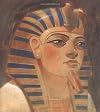
Hatshepsut is a book about the reign for Hatshepsut as pharaoh. I had no idea there was a woman who named herself pharaoh. I appreciated the pronunciations of Egyptian names and places, but there were several words that were not given pronunciations that were hard to pronounce. Some words were also not defined in the text, while others were. This book could be used as an example of a powerful woman when women were not allowed or expected to have such roles. Students could then research other powerful women before their time. Students could also research more Egyptian life like burials, gods, and monuments. This could also be used as an interesting introduction to feminism. I think this book could be used to start a conversation about the rights of women during that time. Some of the information is contradictory, which is to be expected since not much is known. I think the theme of this book is that it does not matter if you are a woman or a man. You can still be whatever you want to be.
Worst of Friends: Thomas Jefferson, John Adams and the True Story of an American Feud by Suzanne Tripp Jurmain
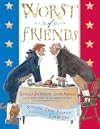
Worst of Friends tells the story of Thomas Jefferson and John Adams becoming enemies after disagreeing about how they think America's government should be run. This books could easily be used as an introduction to the difference between Republicans and Federalists. Students could decide what they would be. Students could also research more about what each president did because the book does not go into detail besides what they did together for independence. I think the theme of this book is while people may have different opinions, it does not mean that anyone is more wrong than the other. People can still be friends while not agreeing on everything as long as they respect each other's opinions. Although this book seems to be more about respecting others opinions, I would have liked more information about what each president did during his presidency. The book also glosses over what they did besides begin presidents like ambassadors. Overall, I enjoyed the book and illustrations. This would be an excellent book to introduce these men to a class as well as the Republicans and Federalists.
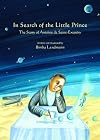
I am biased when it comes to The Little Prince, so I loved this book about Antoine de Saint-Exupery. It begins with his childhood, and his dermas of going to far away lands. Readers find out what inspired to write The Little Prince. For example, I did not know that his wife was the rose in Little Prince. The first pages also have pictures of Antoine from childhood and adulthood. This books could be used as a way to get students to learn more about World Wars I and II as well as learn about the use of planes in the wars and planes used for mail. This book could also be used as an introduction to reading Little Prince or one of his other books that are also mentioned in the book. i think the theme is to follow your dreams, and the most important things are not material objects like money but rather love. I like the illustrations. There are a couple words that students will have to look up, but it is well written. Overall, I would recommend this to any English or history class, or anyone who enjoys Little Prince.
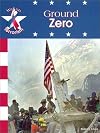
Ground Zero discusses the timeline of when the buildings were hit, the structural damage of the buildings, the rescue efforts, and the response of people from around the world. It does not go into detail about who the terrorists were, but this book was published only a year after. It also gives a timeline of the day and how the buildings were constructed to explain the damage. I think this is a good book to introduce students to what happened on 9/11 especially younger students. The book would be good for a history class. Students could read the book and then interview family or friends about that day. While this is a good book for an introduction of 9/11, I would have preferred a more updated book.
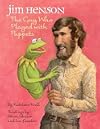
As someone who grew up on Sesame Street and still loves the Muppets, I enjoyed this short book about all that inspired Jim Henson and all that he accomplished. The book goes into how his childhood of using his imagination inspired him to think outside the box. It also discusses Jim majoring in home economics as one of six men. The theme of this book is while some people might think what you are doing is useless, you should always trust yourself. One person can make difference and change the world. Jim Henson will live through his many great works. This book could be used in an art class or history class. Students could be challenged to come up with a their own muppet and create a short skit that teaches students about a lesson like Sesame Street. Students could pick a topic on history or any subject. I would have preferred if the book had some pictures from real life. It would have been interesting to see Jim Henson working the muppets instead of illustrations.
This picture book about Patrick Henry discusses how he came from a modest background and failed several times, but he became an important and influential figure in American history and is a founding father. The theme of the book is one person can make a difference in the course of history. Patrick Henry not only spoke out against the King of England in his first court case, bot he also warned against the Constitution not giving enough rights to the people. Therefore, the Bill of Rights was established to give more rights to the people. This book would fit well into a lesson about the American Revolution. I appreciate the author's note at the end of the book about Patrick Henry speaking out against slavery while he owned more than sixty. I think it is important for readers to understand that people are not perfect.
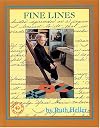
Fine Lines is about the author and illustrator of children's books, Ruth Heller. The book includes pictures of Ruth, her family, and her illustrations. Before reading Ruth's book, I did not know who she was, but I recognized one of her books, Beyond the Mask, which is a bout prepositions. The themes I found are never give up on your dream, keep trying, and you can find inspiration in unlikely places. Ruth tried to get her first children's book published, but no one would publish it. She went to Yaddo and rewrote the story and was published. When she wrote her children's books, she took inspiration from unlikely places such as Marid Gras in New Orleans for her book about prepositions. This book could be used for an English or art class. For example, students could try to create a book about a grammar topic using Ruth's books as inspiration. I enjoyed the book, but I did find that the writing was very simple and short.
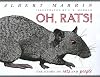
Oh, Rats! describes where rats come from, their ways, how humans treat them including how to eat them, the diseases rats bring, the annoyances rats cause, how to get rid of rats, and ways rats have actually helped people. This book teaches readers to not only not judge a book by its cover, but also things become less scary the more you know about it. I learned that rats find land mines due to their great sense of smell. Also surprisingly, while rats do carry disease, they are actually cleanly creatures. This book could be used for any science or social studies class. Students could pick a topic they found interesting such as atomic bomb testing, bubonic plague, or "roborats" from the book. I also enjoyed the side notes on some pages, such as a passage about rats surviving a testing of the atomic bomb on the island of Engebi in their deep burrows.