New Left Review No 238. David Fernbach:‘Rosa Luxemburg's Political Heir: An Appreciation of Paul Levi’ by Robin Blackburn

CONTENTS
David Fernbach: Rosa Luxemburg's Political Heir: An Appreciation of Paul Levi
Slavoj Zizek: When the Party Commits Suicide
Patrick O'Brien: Imperialism and the Rise and Decline of the British Economy, 1688-1989
Jeffrey St. Clair: Seattle Diary: It's a Gas, Gas, Gas
Manuel Riesco: Chile, A Quarter of a Century on
BOOK REVIEWS
Linda Weiss: Managed Openness: Beyond Neoliberal Globalism
John Roberts: Dogme 95
Michael Chanan: Play It Again, or, Old-Time Cuban Music on the Screen
David Fernbach: Rosa Luxemburg's Political Heir: An Appreciation of Paul Levi
Slavoj Zizek: When the Party Commits Suicide
Patrick O'Brien: Imperialism and the Rise and Decline of the British Economy, 1688-1989
Jeffrey St. Clair: Seattle Diary: It's a Gas, Gas, Gas
Manuel Riesco: Chile, A Quarter of a Century on
BOOK REVIEWS
Linda Weiss: Managed Openness: Beyond Neoliberal Globalism
John Roberts: Dogme 95
Michael Chanan: Play It Again, or, Old-Time Cuban Music on the Screen

Mike Davis: The Left and the Democratic Party
Andrew Glyn: Tackling the City
Frigga Haug: German Feminism Today
Michael Rustin: Local Industrial Strategies
James Dunkerley: The Bolivian Crisis
Christopher Hill: Theories of Bourgeois Revolution
Felicity Edholm: Class and Impressionism
Andrew Glyn: Tackling the City
Frigga Haug: German Feminism Today
Michael Rustin: Local Industrial Strategies
James Dunkerley: The Bolivian Crisis
Christopher Hill: Theories of Bourgeois Revolution
Felicity Edholm: Class and Impressionism

CONTENTS
James Petras: The Contradictions of Greek Socialism
Stephen Gundle: The PCI and the Historic Compromise
Tobias Abse: A Reply to Gundle
Norman Geras: Post-Marxism?
Astrid von Kotze: Workers' Theatre in South Africa
David Ransom: Uruguay after the Dictatorship
Gavin Kitching: A Reply to Ellen Meiksins Wood
BOOK REVIEWS
Tamara Deutscher: War and Peace in Stalin's Russia
Kate Soper: Marxism and Morality
James Petras: The Contradictions of Greek Socialism
Stephen Gundle: The PCI and the Historic Compromise
Tobias Abse: A Reply to Gundle
Norman Geras: Post-Marxism?
Astrid von Kotze: Workers' Theatre in South Africa
David Ransom: Uruguay after the Dictatorship
Gavin Kitching: A Reply to Ellen Meiksins Wood
BOOK REVIEWS
Tamara Deutscher: War and Peace in Stalin's Russia
Kate Soper: Marxism and Morality

CONTENTS
Fred Halliday: Cold War in the Caribbean
Ernest Mandel: The Threat of War and the Struggle for Socialism
Heather Jon Maroney: Feminism at Work
Riccardo Parboni: Reflections on Williamsburg
Satyajit Ray: The Education of a Film-Maker
Micaela di Leonardo, John Willoughby: Marxism and Demography: A Response
Fred Halliday: Cold War in the Caribbean
Ernest Mandel: The Threat of War and the Struggle for Socialism
Heather Jon Maroney: Feminism at Work
Riccardo Parboni: Reflections on Williamsburg
Satyajit Ray: The Education of a Film-Maker
Micaela di Leonardo, John Willoughby: Marxism and Demography: A Response
New Left Review. No. 134 (July-August 1982): Iron Britannia. War Over the Falklands by Perry Anderson

WAR OVER THE FALKLANDS
Thatcher's Armada, Parlament's War
The Impasse of Churchillism
Conflicts in the Third World
The Fatal Dementia of National Pride
Thatcher's Armada, Parlament's War
The Impasse of Churchillism
Conflicts in the Third World
The Fatal Dementia of National Pride

CONTENTS
George Black: Central America: Crisis in the Backyard
Michele Barrett, Mary McIntosh: Narcissism and the Family: A Critique of Lasch
David Coates: Space and Agency in the Transition to Socialism
Terry Eagleton: Wittgenstein's Friends
BOOK REVIEWS
Jeff Frieden: 'The Dollar and Its Rivals'
George Black: Central America: Crisis in the Backyard
Michele Barrett, Mary McIntosh: Narcissism and the Family: A Critique of Lasch
David Coates: Space and Agency in the Transition to Socialism
Terry Eagleton: Wittgenstein's Friends
BOOK REVIEWS
Jeff Frieden: 'The Dollar and Its Rivals'

CONTENTS
Alan Wolfe: Sociology, Liberalism and the Radical Right
Mike Davis: The New Right's Road to Power
Susan Buck-Morss: Walter Benjamin--Revolutionary Writer (I)
Fitzroy Ambursley: Jamaica: The Demise of 'Democratic Socialism'
Geoff Hodgson: Corporatism and Class Struggle
BOOK REVIEWS
James Hinton: Roots of British Communism
Francis Cripps: The British Crisis--Can the Left Win?
Alan Wolfe: Sociology, Liberalism and the Radical Right
Mike Davis: The New Right's Road to Power
Susan Buck-Morss: Walter Benjamin--Revolutionary Writer (I)
Fitzroy Ambursley: Jamaica: The Demise of 'Democratic Socialism'
Geoff Hodgson: Corporatism and Class Struggle
BOOK REVIEWS
James Hinton: Roots of British Communism
Francis Cripps: The British Crisis--Can the Left Win?

CONTENTS
Roy Medvedev, Zhores Medvedev: The USSR and the Arms Race
Domenico Mario Nuti: Poland: Economic Collapse and Socialist Renewal
Tom Nairn: The Crisis of the British State
Atilio A. Boron: Latin America: Between Hobbes and Friedman
Tim Wohlforth: Transition to the Transition
Ken Worpole: Expressionism and Working-Class Fiction
Roy Medvedev, Zhores Medvedev: The USSR and the Arms Race
Domenico Mario Nuti: Poland: Economic Collapse and Socialist Renewal
Tom Nairn: The Crisis of the British State
Atilio A. Boron: Latin America: Between Hobbes and Friedman
Tim Wohlforth: Transition to the Transition
Ken Worpole: Expressionism and Working-Class Fiction

CONTENTS
Harald Jung: Class Struggles in El Salvador
Adam Przeworski: Social Democracy as a Historical Phenomenon
Gregor Benton: China's Oppositions
BOOK REVIEWS
Elizabeth Wilson: Marxism and the 'Welfare State'
John Goode: The Moment of 'Scrutiny'
Harald Jung: Class Struggles in El Salvador
Adam Przeworski: Social Democracy as a Historical Phenomenon
Gregor Benton: China's Oppositions
BOOK REVIEWS
Elizabeth Wilson: Marxism and the 'Welfare State'
John Goode: The Moment of 'Scrutiny'

CONTENT
New Left Review: Herbert Marcuse
Zhores Medvedev: Russia under Brezhnev
H. Orlando Patterson: Slavery in Human History
Harald Jung: The Fall of Somoza
David Forgács: Della Volpe’s Aesthetics
New Left Review: Herbert Marcuse
Zhores Medvedev: Russia under Brezhnev
H. Orlando Patterson: Slavery in Human History
Harald Jung: The Fall of Somoza
David Forgács: Della Volpe’s Aesthetics
New Left Review (January-April 1979): Class Rule in Latin America (Double Issue) (113-114) by Perry Anderson

CONTENTS
Norman Geras: Literature of Revolution
Tom Nairn: The Future of Britain's Crisis
Göran Therborn: The Travail of Latin American Democracy
Arghiri Emmanuel: The State and the Transition to Socialism
Galvano Della Volpe: Settling Accounts with the Russian Formalists
Christopher Middleton: The Sexual Division of Labour in Feudal England
Norman Geras: Literature of Revolution
Tom Nairn: The Future of Britain's Crisis
Göran Therborn: The Travail of Latin American Democracy
Arghiri Emmanuel: The State and the Transition to Socialism
Galvano Della Volpe: Settling Accounts with the Russian Formalists
Christopher Middleton: The Sexual Division of Labour in Feudal England

Fernando Claudin: Spain--The Untimely Revolution
New Left Review: Introduction to Mannoni
Octave Mannoni: Itard and his Savage
Herbert Marcuse: Art as Form of Reality
Hamza Alavi: The State in Post-Colonial Societies: Pakistan and Bangladesh
Fernando Henrique Cardoso: Dependent Capitalist Development in Latin America
Johann P. Arnason: Communication on Iceland
BOOK REVIEWS
Claude Cockburn: Appeasement's Epigones
New Left Review: Introduction to Mannoni
Octave Mannoni: Itard and his Savage
Herbert Marcuse: Art as Form of Reality
Hamza Alavi: The State in Post-Colonial Societies: Pakistan and Bangladesh
Fernando Henrique Cardoso: Dependent Capitalist Development in Latin America
Johann P. Arnason: Communication on Iceland
BOOK REVIEWS
Claude Cockburn: Appeasement's Epigones

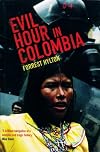
Colombia is the least understood of Latin American countries. This book explores its history of 150 years of political conflict, characterized by radical-popular mobilization and reactionary repression. It shows how patterns of political conflict after 1848 explain the war destroying Colombian lives, property, communities and territory.
Jallalla : the Democracy Center Magazine : the power of citizens (issue 2, January 2008) by Jim Shultz

Rewriting Bolivia's constitution
Right to food and nutrition watch : who decides about global food and nutrition? Strategies to regain control. by Lea Winter

The right to dedice and to control which food to have is inherent to the human right to food.
Observatorio del derecho a la alimentacion y a la nutricion : quien decide sobre la alimentacion y nutricion a nivel mundial? estrategias para recuperar el control by Lea Winter

Who decides about global food and nutrition? Strategies to regais control.
The right to dedice and to control which food to have is inherent to the human right to food.
The right to dedice and to control which food to have is inherent to the human right to food.

The trade in natural resources has had different expressions through history. However, starting from the XX century, natural resources and their exploitation have taken a very particular turn, as it became a key element within the economic dynamic of dominant classes and foreign colonizers as well. The discourse assumed by these groups is the result of an obsessive focus on the economy that aims at maintaning "control" over resources.
Dispatches From The Developing World Winning and Selected Articles from the Concern Writing Competition 2011 by Concern

annual writing competition, which offers students the opportunity to write about global issues that directly impact on the lives of the world's poorest people.

The president of the U.S. is a busy man, but in this book students from around the world have been given the chance to offer him advice on critical issues facing the globe today. Some help him undestand the life of a child who goes to work instad of school; others describe how climate change affecting people in developing countries; and others advise him on how to tackle world hunger to improve the lives of millions of people wolrdwide.

Transcribed from the original edition of 1656 which was translated, with an Epistolary Dedication to Oliver Cromwell, by John Phillips. Now Published with a new Historical Introduction by Colin Steele of the Bodleian Library, Oxford University.
Primero la comida : ingredientes para el debate sobre soberanía, seguridad y autonomía alimentaria en Colombia by Tatiana Roa Avendaño

Este libro se ofrece como una invitacion a recorrer un camino que conduza desde la comida, hasta la reconfiguracion de los espacios del a politica; desde lo domestico, a la redefinicion de lo publico, lo politico y lo cultural; desde la mesa, hacia la recomposicion de los sistemas deliberativos y de construccion de consensos de equidad; y desde la alimentacion, al replanteamiento de las agendas politas actuales, en aras de la vida, la justicia, la sustentabilidad, el buen vivir y la paz.

This series presents the mythology of the world's peoples-a subject of vast range and diversity.

Este libro se propone dilucidar las complejas relaciones entre medio ambiente, conflictos sociales, guerra y paz en Colombia.

La poblacion Colombiana sopesa la conveniencia de intensifiar las actividades extractivas en su pais, uno de los mas biodiversos del mundo. No la convencen los argumentos de las empresas y el Estado sobre los beneficios de la mineria, pues ve la amenaza que se cierne sobre sus aguas, su soberania alimentaria y su cultura. Este documento quiere aportar a los esfuerzos de defensa territorial, en los que se alientan relaciones solidarias entre los seres los humanos y la naturaleza, unica garantia de la continuidad de la vida.

The Zapatista Army emerged from the jungle on New Year's Day, 1994, and provoked a national crisis in Mexico. At a demonstration in Mexico City, over one hundred thousand people marched together and shouted, First World, HA HA HA -- a defiant declaration of solidarity with the rebels, an insurgent army of indigenous campesinos who have challenged the direction Mexico's future.

Escrito en los inicios de la etapa final de amplia madurez poetica nerudiana, Plenos Poderes se nos presenta a la vez como una sintesis del amplio registro de temas y maneras de su obra realizada hasta entonces y como un esbozo extremadamente revelador de los rasgos peculiares, con frecuencia de singularisima novedad que se incorporarian a la diccion del poeta en los anhos posteriores.

In this powerfully affecting memoir, Joan Jara, English wife of the legendary Chilean folksinger Victor JAra, who was murdered by the military 1973, vividly describes their meeting and life together. She relives the tumultuous years during which they worked in what became the popular son movement and the euphoria they shared as part of the massive social upheaval that brought Salvador Allende to power. As Victor´s compañera and herself a participant of struggle, Joan Jara writes with a fierce, partisan passion and with extraordinary courage. It is a story as full hope and music and joy and laughter as of bitter disappointment and agony. But most of all it is a love story written with a shining honesty, warmth and directness, as life-giving as Victor Jara´s own Beautiful songs.
Afar I see the day is coming : Wales, Nicaragua and the future of internationalism : Rwy'n gweld o bell ydydd yn dodCymru, Nicaragua a dyfodol rhyngwladoldeb by Ben Gregory

International solidarity between Nicaragua and Wales
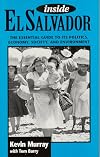
Inside El Salvador usefully traces the trajectory of political, economic, and social trends from the historical roots, through the years of conflict and into their manifestation in the post-conflict period. From its post-war vantage point, it sheds new light on aspects of the conflict years and highlights the challenges and the complexities of the transition from world to peace.