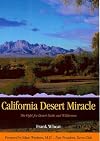
Chapters on a selection of volunteers who worked 10 years to secure passage of a parks and wilderness legislation. The miracle is that it actually passed just before a major change in party control of Congress . ( full disclosure.. I am in the book,
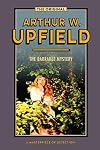
It is accessible online, for free. A century ago when Australia was being populated by immigrants and exiles from the British Isles author Arthur Upfield arrived to weave tales of murder, vice, and other mysteries. What Upfield exploited was the voracious thirst for content by newspapers throughout the continent. As far as I can tell most if not all his works first appeared in serial form. Barrakee shows up in at least six newspapers. You can access them by visiting TROVE , a special searchable collection of Aussie publications within the National Library of Australia. If you wonder what it was like to anxiously grab the paper each day for the next bit of a tale, Upfields collection is worth reading for Australian geography and climate alone.
California Desert Miracle: The Fight for Desert Parks and Wilderness (Sunbelt Natural History Guides) by Frank Wheat
Full Disclosure: I am one of the activists in this book. Of course I like it. I knew he wanted to do the book... it has a humdinger of a cliff to fall off in real life, and he captured it in style. The miracle is also that Frank was able to finish the book, so the title fits in many ways. Frank organized the book around the higher profile leaders of the campaign, as Chapters. He covers most of the leaders of the campaign for the CDPA (California Desert Protection Act). His interview with me was brief, and he was ill at the time, so he doesn't have as much detail on me as some of the others. What I learned from reading the book myself was how active Frank himself was. He described his numerous solo visits to Washington DC to meet with friends and fellow attorneys. You don't have to remind a retired attorney to be careful of facts, and I trust his chronicle as far as it goes and as far as I know. Another activist mentioned in the book told me once that if I knew everything that was going on, that there wasn't enough happening. Well I didn't know what Frank was doing... he modestly refrained from identifying himself as the "and friends." It reminds one of how a the "loss of a nail" can actually make or topple a plan that was 15 years in the making. Frank's visits to WDC were not just Desert centered. He maintained friendships from the days when he wrote "The Wheat Report." for the Securities and Exchange Commission in 1968. They returned the courtesy by attending his funeral show more barely a week after a day he spent signing his newly published book. We owe him for documenting the years of struggle. show less
I assumed, wrongly, that the current group is 'smarter' because of their access to smart-technology. Once I got my head around that error, the rest was obvious. School administrators were dropping metal shop, electrical, auto, drafting, math-for-life, music, cooking, in 1970's, so its not a surprise that there is no shared knowledge of career ladders in these fields. As one of the few who crossed from teaching Calculus, and Beginning Drafting, with stops at CAD, and Math for Life, the cross-over theme needs to be to "keep learning all your life"-- experimenting. Read "What Color is your Parachute?" when confused about what to do next. The book reads like an info-mercial for the author's materials. Can't recommend them, since I haven't see them.
 This review was written for LibraryThing Early Reviewers.
Creepy story..Detective Bonaparte "Bony" is quite unique. Nature is an essential character in the story, and Upfield's descriptions are wonderful. More fun to read than the book since each newspaper installment includes illustrations. I've compared it to the hardcover, and in this case they are identical.
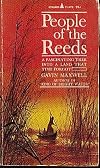
An eye-opener... with its setting along the Tigris and Euphrates Rivers, .. and my dim memory of the book 45 years later... I recall wondering what happened to these peoples during the Gulf War. Finally,.. over a decade after the end of active fighting, someone looked them up and found a few remnants to assemble into a television show. Fascinating story of these "water people" in the middle of a desert.
Decades ago I read "The Keys to the Kingdom", and knew of this book, but only read it in 2018. I found the class system dreary, and the attitude of the principal doctor toward his wife to be demeaning, and only rarely did Cronin recognize his character's blind spot in this area. Watching the downfall of a character is never fun, but I felt no sense of hopefulness that he would climb out of his hole. The magazine format, with its color illustrations and synopsis kept me going.

The text is identical to "The Bone is Pointed", but more fun to read because each installment is illustrated. Also, the newspaper prints a summary of previous action for those who missed a prior installment.
The Royal School of Needlework Book of Embroidery: A Guide To Essential Stitches, Techniques And Projects (Royal School of Needlework Guides) by Royal School of Needlework
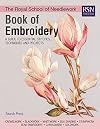
Very much a classic. Particularly good at blending and shading techniques, as seen on the cover.
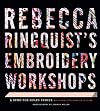
In the 25 or so pages on tools and materials, you get the impression that she is indeed speaking to you—answering your questions, and advising you on choices, but leaving the decision to you, Then follows the workshops -- small projects, where you can take inspiration from photos, fabric, nature, and how to move from the image to stitch selection, color effects and affects. Her choices of projects, and her personal style is not mine, but it is a strong basis to start from, and a big help when it comes to finishing any embroidered item.
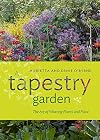
A Tapestry Garden should become a classic. Like an echo of Aldo Leopold, a depleted patch in Oregon received loving attention, and became a laboratory. In the beginning, you are caught up in the authors' story -- what came before, how did the O'Byrne's get there, when did they meet, and what has happened since? In the narration of the human story some simple themes and gardening principles arise -- not every plant makes it, its ok to fail, and experiment.
Many key principles of designing a landscape are tucked in between the lines of lovely prose, or illustrated in the amazing photos: the different effects of a straight lane lined with poplars, versus a curved path where you can't see the end; and the role of open water whether a stream or a pond; views from both inside the garden and windows are important.
While the scientific names of plants are there, they don't dominate, but are guideposts into further research when you need them. But most especially, this is a book that includes the role of TIME in developing your outdoor living space. From a depleted topsoil that needed help getting healthy by composting, turning, adding mulch, and infusions of bacteria, fungi, bugs, worms-- now its a healthy plot that will take care of a pile of leaves by itself. Several groups of plants received special attention, my favorite was the "Jack-in-the-pulpit" grouping. Read and enjoy the O'Byrne's garden and imagine your own -- even if you no longer have or want one, or are stuck show more indoors on a blustery winter day. show less
Many key principles of designing a landscape are tucked in between the lines of lovely prose, or illustrated in the amazing photos: the different effects of a straight lane lined with poplars, versus a curved path where you can't see the end; and the role of open water whether a stream or a pond; views from both inside the garden and windows are important.
While the scientific names of plants are there, they don't dominate, but are guideposts into further research when you need them. But most especially, this is a book that includes the role of TIME in developing your outdoor living space. From a depleted topsoil that needed help getting healthy by composting, turning, adding mulch, and infusions of bacteria, fungi, bugs, worms-- now its a healthy plot that will take care of a pile of leaves by itself. Several groups of plants received special attention, my favorite was the "Jack-in-the-pulpit" grouping. Read and enjoy the O'Byrne's garden and imagine your own -- even if you no longer have or want one, or are stuck show more indoors on a blustery winter day. show less
This review was written for LibraryThing Early Reviewers.The newspaper treatment involves a daily "recap" of the story up to that point that wasn't written by Upfield, since it totally ignores the settings -- Perhaps the paperback included a map. I had to draw my own to keep track of where the two locations were. Once again the setting is key. This time the weather is featured... wind, rain, and camping out without shelter. The third "Bony" book I've read, and the character still can surprise me. More historical fiction, with a murder thrown in, and this time, a romance as well.

Upfield is superb at describing a setting, -- so much so that you can feel the fish nibbling at your legs and feet as you wade across the thigh-deep lake, and smell the dry mouldering carcasses of the cormorants. It is about the LAKE... not the deaths of two people... but also about the deaths of the birds, rodents, fish, and other critters who cannot escape their fates as the water disappears. I prefer this fictionalized description to the dry scientific analysis, since it engages your emotions immediately. This was my second "Bony" story. His plots are often slow to develop; in this case plot speed matched the lake... slow, until the last few days! Second only to settings are the memorable characters and their quirks that bring them alive. I read this the same way Australians did in the 1950's... serialized in a daily newspaper... with all the social attitudes and language of the day intact, and not "updated" to reflect today's attitudes.

Before finding the novel, I found a non-fiction article in a newspaper written by Upfield, where he is describing "The Walls of China" -- drawn by the headline oxymoron, I loved his portrayal. The piece mentioned that it was the setting for one of his mysteries, and that it was serialized in a newspaper. This was my first Upfield book, and I came to the story not knowing Upfield's well developed back-story for his detective. I loved the characters, the procedures, the easy way he can gracefully paint a million dollar portrait of an essentially 'barren" desert. His descriptions are as eloquent as some of the more famous USA writers describing the Southwest deserts. As a mystery, it is a bit slow, but for a non-Australian, it gives you time to adjust to the different seasons, weather patterns, cultures -- both European and Aboriginal. I'll be reading more of his works from the Australian Library digital files.
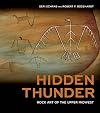
Artist Schrab, and archaeologist Boszhardt, have collaborated in presenting a wonderful volume revealing the remains and status of 20 well- known rock art sites in southwestern Wisconsin. Through their presentations, they have inspired Native Americans and others visiting the old remaining cliffs and rock surfaces to discover hundreds more. The documentation moves forward. The sensitive treatment of the sites, the respect for the views and perspectives of descendants of the creators of the art, imbues this volume with an almost spiritual feel. The selected works by Schrab can evoke the original visions, as she shows us what the site must have looked like before it was criss crossed with graffiti, or scraped away by deliberate defacement.
This review was written for LibraryThing Early Reviewers.
The massive string of life experiences and actions reached some sort of nadir when I learned that Donald Trump withdrew medical coverage for his deceased brother's grandson... and did it out of revenge. The volume is built on facts, not rhetoric, or fable nor political posturing. It is absolutely stunningly researched -- a rare contrast to the posturing seen on television.

Twenty-six different designs are presented in charts and illustrated with color photos of finished pieces used for pillows, frames, wall hangings, table settings, and bands and panels used on garments or other clothing and costume. Designs are predominantly geometric, or floral in nature.

Catalog of pre-painted designs in crewel, needlepoint, and others where the design is already completed, waiting for background. Tapestry and crewel yarn, needlepoint canvas, needles, etc. other Elsa Williams books, Doris Drake Designs books, and finishing services also available. About half the pages are devoted to crewel patterns and half to needlepoint. Eight pages are devoted to instruction in basic crewel and needlepoint stitches, and historical information.
Beginners Crewel Embroidery by Erica Wilson [Transfer patterns & complete instructions included for 5 easy projects] by Erica Wilson
The 5 projects: Round Tulip Pillow, Book Mark; Wedding Sampler; Blue Jean Jacket; Jacobean Pillow. They are the last five pagesand include a crewel design for each. The rest of the book is devoted to a stitch catalog and instructions on finishing. Examples; mounting in a frame, or unframed, and boxed pillow or knife edge

This is a "project" book, full of ideas and details on how to make that clutch purse, or butterfly necklace on the cover, weaving ribbons, making a vest, running ribbon through your knit cables, or decorating a ready-made blouse or sweatshirt. Perfect for the current look-back at the styles of the 1970's. Chapters on jewelry, clothing, handbags, belts and collars, and one with "Quick and Easy" projects. Beads, Color and Bling are the order of the day.

The first half of the book is great for beginners. It will help you choose frames, needles, thread, fabrics, and get you started on selecting a design. It also includes "inspirational" page showing classic uses of crewel work in upholstery, wall hanging, screen panels, and sources of designs. The second half is non-stop stitches, with a few asides into samples of stitches. Nicely written and helpful. A classic.

I've followed the various permutations of industrialization of the desert since the 1970's. In 40 years of watching I've seen enormous mistakes made as the US struggles toward sustainable energy production. The practical experience gained by the author in adding solar panels and buying an electric vehicle is useful for a homeowner. However, I was less confident of his selections of winners and losers in his review of companies interested in mega-scale projects that cover more desert land. Warburg did a credible job of complicated systemic and policy problems and prospects in the US vs. China and the world in photovoltaic solar panels, but those industry decisions were not made with the long term interests of the employees at the front. Of course he found some "Homers" to quote in Nevada, and dismissed impacts under long distance transmission lines by offering them up for more solar panels. He has no matching understanding of the impacts to human and natural world interactions of the energy selection decisions. The list of fundamental questions about energy futures and climate change, in a chapter on "Disrupting the Untility Status Quo," is commendiable. To appreciate the current confused state of affairs, this chapter should be required reading for all existing and former rate payers.
This review was written for LibraryThing Early Reviewers.
Quilting makes it into the 20th Century. No traditional settings, no traditional patterns, no reliance on the tried and true. Michael James starts over from scratch, using color, and abstraction... forget symmetry. Michael takes the freedom of an art class and treats fabric as just another medium for expressing an artistic idea -- an alternative to oil, pencil, watercolor. While Crazy Quilts had a brief period of popularity in the early 20th Century, the quilting world is still experimenting with design ideas introduced by James... landscapes, color play, textured work, and alternative uses, like wearables, bags, wall hangings.
Landscape Design in Japan - Current Issues and Some Ideas (Process: Architecture 46) by Bunji Murotani

Bi-lingual text. From concept drawings to construction plans and photos of the built project. Not all projects get equal treatment, but there are a variety of scales -- from a small pier to a massive commercial amusement park-- and there is discussion of issues. For example, in "recreation", there is a study from a group of designers who watched children interacting with the equipment and designed activity points, and discussion of observations. All projects are in Japan.
Illustration and Perspective in Pantone Colors: Perfection Presentation : Illustration and Perspective (Illustration and Perspective, No 3) by Eiji Mitooka

Late 20th Century style Landscape Architecture presentation drawings using computer graphics, including computer generated perspective drawings. 99% of the book is in Japanese, and illustrations nearly all depict Japanese buildings, either built or planned. Twenty-seven are in color. This is more of a reference book than either a guide to the style or information on how the drawings were generated. Limited appeal due to language limitations.
Foolproof Crazy Quilting: Visual Guide_25 Stitch Maps • 100 Embroidery & Embellishment Stitches by Jennifer Clouston
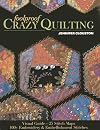
An inviting mix of old and new traditions, designs and materials. As seen on the cover, the emphasis is on hexagons that are covered with a patchwork of fabrics, and the patches and seams embellished with traditional threads and embroidery, but also silk ribbon stitches in various widths, buttons, and beads. The hexagons are easily assembled into a quilt top, and the black edging gives the patches a stained glass look. Unfortunately, although laces are mentioned as suitable for embellishing, there are no examples of their use. The embroidery work is outstanding, The stitch maps for each hexagon reference the appropriate instruction page for each detail.

In the 1960's when I first visited "The Rez", I was immediately taken by his distinctive style -- skim a trading post offerings and you're immediately drawn to his work. It was only many decades later that I picked up this volume, with some of his works included, and learned about Yazz, the artist.
We meet the artist Beatien Yazz first through the eyes of Sallie Wagner, a white woman and proprietor of the trading post near his birthplace. She saw his first drawings when he was a young child. We follow his triumphs and problems, his experiences in various schools, WWII, and the development of his character. The second portion of the book is given over to J.J. Brody's careful analysis of the work, comparing his work in different periods, and influences of various schools and other artists. He is not a "fan", but an art critic, and some of his interpretations seem harsh, but understandable. The final bit is in the artist's own words. As a taciturn man, the narrative is brief, and restrained, in Navajo style, but he gives credence to the stories told in the first sections.
We meet the artist Beatien Yazz first through the eyes of Sallie Wagner, a white woman and proprietor of the trading post near his birthplace. She saw his first drawings when he was a young child. We follow his triumphs and problems, his experiences in various schools, WWII, and the development of his character. The second portion of the book is given over to J.J. Brody's careful analysis of the work, comparing his work in different periods, and influences of various schools and other artists. He is not a "fan", but an art critic, and some of his interpretations seem harsh, but understandable. The final bit is in the artist's own words. As a taciturn man, the narrative is brief, and restrained, in Navajo style, but he gives credence to the stories told in the first sections.
Highly localized guidebook and workbook, to southeastern Wisconsin, near Milwaukee. Activities, directions to nearly 100 locations worth visiting, including state and local parks, refuges, gardens, zoo ; coupons, questions to answer after a visit, links to websites. Sierra Club award winner. Written and assembled by volunteers.
Plants, wildlife, geography, geology, and ecological principles are among the topics covered.
Plants, wildlife, geography, geology, and ecological principles are among the topics covered.
The Great Suppression: Voting Rights, Corporate Cash, and the Conservative Assault on Democracy by Zachary Roth
The Great Suppression is a fast and easy read, and so packed with information that I'm keeping it handy so I can look up things again. I missed the index immediately, which is not available in this "uncorrected proof" edition. About half of the book refers to actions and stories that I had never heard of. Why not? I can't watch Bill Moyers all the time to keep up on what's happening, and a one hour program can't keep up either. Zachary Roth has done the research and dug up all the stories for us that document the massive and long term planning of the conservatives, showing how the liberals were losing ground even as they celebrated their perceived gains. A painful book for any advocate of democracy to read. He takes up the three branches of government and shows how they have been undermined in order to fit the conservative mind set. I suppose I have a bias toward journalists and like their style of writing. They TRY to get themselves out of the story. That's unfortunate in this case, because there is a missing chapter -- the one on how the 4th Estate -- the newspapers and news sources -- was also targeted, and why I would have seen many of these stories in an earlier era when newspapers and news on television actually contained news. I can only hope Roth will write a sequel with the tales of how access to information critical to decisions was lost.
This review was written for LibraryThing Early Reviewers.