
Ben went to the park and fed a duck some bread. The duck decided to follow Ben, even to his home. Duck did the same things as Ben, including eating spaghetti for tea.
Acton has used short sentences that used repetition that would allow for prediction of the text for young readers. She has effectively used a limited pallet of colours and the white space of the page in a minimalist way.
Audience: 2 - 5
Acton has used short sentences that used repetition that would allow for prediction of the text for young readers. She has effectively used a limited pallet of colours and the white space of the page in a minimalist way.
Audience: 2 - 5
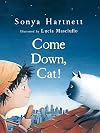
As night time approached Nicholas was worried about his cat on the roof who didn't want to come down. Cat was brave. Cat wasn't scared of things that came out at night time. Cat was afraid of rain though. Cat thought Nicholas was brave because he came outside in the rain to rescue cat.
Hartnett and Masciullo's collaboration in this story complement each other. The words and illustrations paint a story that introduces the characters. Cat's voice of 'marl' fits the cats that I know better than meow would. Hartnett use of short sentences and beautifully selected words create a great mood. Masciullo's illustrations showing darkness using shades of blue and purple worked well placed next to the wonderful warm yellows of the light, reaching into the darkness. The illustrations of bats and owls helped to decipher the text 'The ghosts fled home to their dry roosts, the monster to their warm caves.'
Hartnett and Masciullo's collaboration in this story complement each other. The words and illustrations paint a story that introduces the characters. Cat's voice of 'marl' fits the cats that I know better than meow would. Hartnett use of short sentences and beautifully selected words create a great mood. Masciullo's illustrations showing darkness using shades of blue and purple worked well placed next to the wonderful warm yellows of the light, reaching into the darkness. The illustrations of bats and owls helped to decipher the text 'The ghosts fled home to their dry roosts, the monster to their warm caves.'
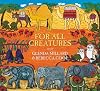
The text and the illustrations are thought provoking and playful. The text with it's alliteration in describing the animals, environment and characteristics is delightful. 'For jacks and jennie. For hees and haws and hooves, strength and service and humility, we are thankful.' The repetition
gives a reflective qualities. The illustrations are of mixed medium of acrylic paint and fabric collage. The style to reminiscent to their previous book Isabella Garden.
Audience: 7+
gives a reflective qualities. The illustrations are of mixed medium of acrylic paint and fabric collage. The style to reminiscent to their previous book Isabella Garden.
Audience: 7+
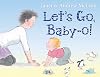
The mother and baby dance together singing 'Let's go, baby-o, you and me...Look out the window, What can you see?' Where the baby tells us something that it saw out the window.
A book of rhyme & repetition, movement, and observation. Young children will want to join in both dancing and singing. The illustrations of the view out the window will encourage the readers into discussing the many little sub stories happening out the window. The illustrator has used a soft pallet of water colour paints with ink outlines, giving an inviting and cool spring feeling.
Audience: 2 - 7
A book of rhyme & repetition, movement, and observation. Young children will want to join in both dancing and singing. The illustrations of the view out the window will encourage the readers into discussing the many little sub stories happening out the window. The illustrator has used a soft pallet of water colour paints with ink outlines, giving an inviting and cool spring feeling.
Audience: 2 - 7
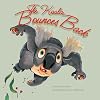
This is a story about how the Karri the koala saves the other bush animals from the house cats that have been dumped in the bush. Karri tells the cats that fighting doesn't solve problems. Karri negotiates with the cats that if the cats win they can stay and if they loose they will find another home.
The main theme of the story about the conflict between the native animals and dumped cats is an important one. So too is the moral of not fighting to solve problems. However the story simplified into a neat package of a hero koala was not believable.
The main theme of the story about the conflict between the native animals and dumped cats is an important one. So too is the moral of not fighting to solve problems. However the story simplified into a neat package of a hero koala was not believable.
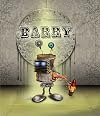
Barry was left on Earth by other aliens in 1952, when he fell behind a sofa. Aliens being scared of cockroaches would not retrieve him.Barry controlled the world and caused many natural disasters as well as distortions of reality. One day Barry is retrieved from the sofa by a man who puts Barry into a plastic box where he could see the t.v. What would Barry do to correct the things wrong with the Earth?
I very different story idea about an alien stuck behind a sofa who causes all the environmental and political problems on Earth.
Thompson's illustrations of mixed media are as usual very interesting and engaging to look at. They are busy distortions of reality.
Audience: 8 - 12
I very different story idea about an alien stuck behind a sofa who causes all the environmental and political problems on Earth.
Thompson's illustrations of mixed media are as usual very interesting and engaging to look at. They are busy distortions of reality.
Audience: 8 - 12
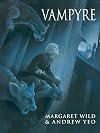
This story is about a vampyre who grows up in a life of darkness. Darkness in more than one way. There is the physical darkness of doing activities in the moonlight and hiding from the authorities. Then there is the darkness of the existence of an adult who must attack and kill. Plus the darkness on the heart of arguing with family to follow your own heart - to go towards the light.
I wonder if the word vampyre is using a double meaning. Not only a vampire who sucks the blood of people but of someone who is preys cruelly on others; an extortionist.
The design of the book is lovely. The text colour of silver gives the book a richness like gold leaf text in a Illuminative Book from medieval times. The high quality is further supported by the glossy pages.
The illustrations by Yeo using acrylic, set in the darkness of the shadows has a luminosity by using tones of yellow and blue, while on a black background.
The only problem I have with the story is that we tend believe from literature that vampires do not age. Yet this boy is shown in the illustrations as a vampire as a child and an adult.
Audience: Upper Primary and Secondary
I wonder if the word vampyre is using a double meaning. Not only a vampire who sucks the blood of people but of someone who is preys cruelly on others; an extortionist.
The design of the book is lovely. The text colour of silver gives the book a richness like gold leaf text in a Illuminative Book from medieval times. The high quality is further supported by the glossy pages.
The illustrations by Yeo using acrylic, set in the darkness of the shadows has a luminosity by using tones of yellow and blue, while on a black background.
The only problem I have with the story is that we tend believe from literature that vampires do not age. Yet this boy is shown in the illustrations as a vampire as a child and an adult.
Audience: Upper Primary and Secondary
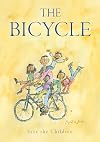
A thought provoking story. Using the mixture of quotes from children in Cambodia, authors and famous people from different ears brings to mind the importance the transport we call a bike.
Growing up in a first world country it is a part of childhood to learn to ride a bike as a skill for leisure. Going to primary school I either walked or rode my bike. The bike was the preferred transport as it was so much quicker. As a teenager I rode my bike to visit friends. I have taken for granted the importance of bikes for other people around the world as a form of transport. Thank you to Colin Thompson and Save the Children Fund for highlighting the importance of being able to ride a bike and own a bike, to further a child's education beyond primary school.
The illustrations of 15 artists are all wonderful, showcasing their own original style of art. Some illustrations are water colour and pencil, multi-mediums, fibre to 3D. At the end of the book the illustrations are shown next the artist, with a short biography.
Audience: Primary school
Growing up in a first world country it is a part of childhood to learn to ride a bike as a skill for leisure. Going to primary school I either walked or rode my bike. The bike was the preferred transport as it was so much quicker. As a teenager I rode my bike to visit friends. I have taken for granted the importance of bikes for other people around the world as a form of transport. Thank you to Colin Thompson and Save the Children Fund for highlighting the importance of being able to ride a bike and own a bike, to further a child's education beyond primary school.
The illustrations of 15 artists are all wonderful, showcasing their own original style of art. Some illustrations are water colour and pencil, multi-mediums, fibre to 3D. At the end of the book the illustrations are shown next the artist, with a short biography.
Audience: Primary school
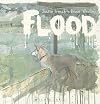
The first thing that I love about the book is the running of the water colour paint on the front cover, like rain.
Wow! What a moving story French has written and the illustrations by Whatley are specular. I got goose bumps on my arms and tears in my eyes.
The protagonist of the dog is a wonderful avenue of story telling. Words and images that came from news reports of the floods were intertwined into the story beautifully.
No imprint page at the front of the book and the use of only one title page that takes the reader straight into the story was a fantastic design feature. The ink on watercolour were visually emotive.
Highly recommended.
Audience: Primary School
Wow! What a moving story French has written and the illustrations by Whatley are specular. I got goose bumps on my arms and tears in my eyes.
The protagonist of the dog is a wonderful avenue of story telling. Words and images that came from news reports of the floods were intertwined into the story beautifully.
No imprint page at the front of the book and the use of only one title page that takes the reader straight into the story was a fantastic design feature. The ink on watercolour were visually emotive.
Highly recommended.
Audience: Primary School
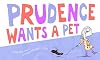
Prudence's parents tell her many reasons why she can't have a pet. Prudence tries out inanimate objects as pets; a branch, a twig, a shoe, and a tyre. She tries out some living things; her baby brother as well as sea friends (sea monkeys), which she is disappointed with.
I found the number of sequences of the different pets a little long, as a reader I have already got the idea of what is going on.
The illustrations support the text and Stephen Michael King does not disappoint with his wonderful illustrations especially Prudence' s eye popping out, big and round when she sees something that takes her interest.
I am concerned about the parents final decision to get a pet for Prudence. I am also concerned that Prudence's want turns into a need. Pets are expensive and they need room, both of these answers to Prudence from her parents were very valid as to why she couldn't have a pet. This story could potentially led to another pet present that could end up at the RSPCA.
Audience: 5 - 10
I found the number of sequences of the different pets a little long, as a reader I have already got the idea of what is going on.
The illustrations support the text and Stephen Michael King does not disappoint with his wonderful illustrations especially Prudence' s eye popping out, big and round when she sees something that takes her interest.
I am concerned about the parents final decision to get a pet for Prudence. I am also concerned that Prudence's want turns into a need. Pets are expensive and they need room, both of these answers to Prudence from her parents were very valid as to why she couldn't have a pet. This story could potentially led to another pet present that could end up at the RSPCA.
Audience: 5 - 10
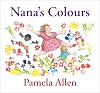
Allen has used black and white line drawings for the illustrations with stamped colours to create the bouquet of flowers. The words for the colours are the same text colour as the word describes.
The pages are extremely thick which is suitable for the intended audience.
This story would be suitable for a child with an extremely short attention span.
Audience: 0 - 3
The pages are extremely thick which is suitable for the intended audience.
This story would be suitable for a child with an extremely short attention span.
Audience: 0 - 3
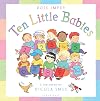
The design of the book is lovely. It has a special 'soft' hard cover and thick pages suitable for smaller readers.The endpapers are a wonderful pastel patchwork. The use of pastel colours and white background make it uncompleted and attractive. The illustration on the front cover makes it clear that it is some kind of counting book.
The rythum of the story reminds the reader of the song 'Ten green bottles sitting on the wall'. The text is repetitious.The illustrations add to the text, with the potential of stimulating converstaion about the pictures and what the babies are doing.
This will be a delight for readers to share with younger children.
Audience: 0 - 7
The rythum of the story reminds the reader of the song 'Ten green bottles sitting on the wall'. The text is repetitious.The illustrations add to the text, with the potential of stimulating converstaion about the pictures and what the babies are doing.
This will be a delight for readers to share with younger children.
Audience: 0 - 7
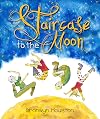
Rosie and her Grandfather take a night time adventure past the giant bob trees, frangipani trees, through the mangroves, and over the mudflats to the reach the staircase to the moon.
This book was inspired by the illusion of golden staircase of the moonlight on the mudflats at low tide in Broome, Western Australia.
while I liked the idea of the story it didn't quite build up the excitement level for me, and one of the illustrations didn't match the storyline.
Audience: 5 - 8
This book was inspired by the illusion of golden staircase of the moonlight on the mudflats at low tide in Broome, Western Australia.
while I liked the idea of the story it didn't quite build up the excitement level for me, and one of the illustrations didn't match the storyline.
Audience: 5 - 8
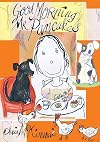
Bee is getting her pets organised for when she is on holidays. We learn that Bee has gone to an island that has bush turkeys, crabs and ocean animals. While on holidays Bee can relax, eat and swim. The text uses many different fonts. It is a story that need to read serveral times to understand all the links.
The unique child like style of Chris McKimmie, who has also incorporated illustration both child and adult family members.
McKimmie uses: collage, acrylic paint, watercolours, coloured pencil, ink and pencil.
The unique child like style of Chris McKimmie, who has also incorporated illustration both child and adult family members.
McKimmie uses: collage, acrylic paint, watercolours, coloured pencil, ink and pencil.
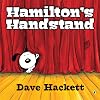
Holly enters her dog Hamilton in a talent show to do a handstand. While Hamilton does not perform the trick, Holly tells everyone how wonderful he is. This is a lovely story about the love between a little girl and her dog. Holly's faith and love in unwavering. The illustrations are cartoon in style, with characters with emphasised facial expressions. The end of the story gave me a giggle.
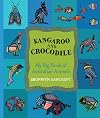
Bancroft has masterfully illustrated Australian Animals using the bright acrylic colour and style of modern Aboriginal painting. The text is limited to the name of the animal, but a glossary of all the animals is included.
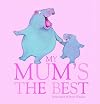
A story about what Mums do their children, using animals to illustrate the actions. Text on one page with the illustration on the other. Illustrations have no background, it shows the actions in a humorous light. A delightful story to share with a young child.
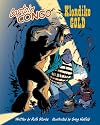
Another adventure, mystery with Captain Congo and Pug. Someone is scaring miners at Klondike Creek and Captain Congo is there to solve the mystery. These stories are a cross between Tin Tin and Scooby Doo, with a bit of history thrown in.

Freddy and his teddy went out in the rain, was struck by lightening and was transported to an island of Alphabet Monsters. Here Freddy met monster A who had lost his teddy. Freddy and A go through the events of the day to work out where A's teddy might be. Each monster was named a letter of the alphabet and was linked to words that began with that letter.
Kennett's illustrations are detailed and colourful and support the rhyming text. Readers will enjoy looking at what each monster is doing.
Kennett's illustrations are detailed and colourful and support the rhyming text. Readers will enjoy looking at what each monster is doing.
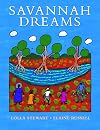
Each day Savannah and her family gathered food. The book uses repetition to tell the story and promotes prediction. It tells the days of the week and how much food the family collects/hunts (father 5, mother 4, sister 3, brother 2)and where they go to get the food: creek, bush, mangroves, billabong, tidal river, the ridge outside the community, community store and beach. Savannah finds parts that will make a Barramundi spirit.
The illustrations show the different types of ecosystems that the family get their food from and how much, readers can count 1:1 correspondence. Russell's illustrations are painted in acrylic paints using a simplistic child like style.
The illustrations show the different types of ecosystems that the family get their food from and how much, readers can count 1:1 correspondence. Russell's illustrations are painted in acrylic paints using a simplistic child like style.
A lovely story about a Zebra going on camp. Zou is unshore about going away from his mum and dad. Zou's parent give him a box of kisses to comfort him. A little Zebra is so distressed that no-one can comfort him, Zou shares a lollykiss and soon everyone wants one.

A funny story about an expedition that Robert and Will had (loose parallels to Robert O'Hara Burke and William John Wills). The text is cleverly written to sound like a real adventure story that was fraught with perils. The illustrations show that these perils were the hardship of crossing the playground between home and grandma's house.

Fox delights with another Ella Kazoo book this time using lots of different words for sleep: kip, rest, nap, and zeds. Rhyming creates a wonderful pace. Readers need to look at the illustrations carefully to see Ella's fantastic imagination. A great read aloud for pre and younger readers. I still love the texture of Ella's hair.
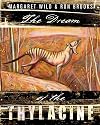
Margaret Wild uses words to create feelings of: isolation, wanting and sadness. The different sized font emphasises what the Thylacine is doing while impression '...in cage of twisty wire, cold...' Wild skillfully uses both repetition, verbs and adjective to explain the last moments of the Thylacine's life. The photos of the last know Thylacine remind me of the BBC footage of the Thylacine pacing in a cage and dying.
Ron Brooks use of the montage of captivity interspersed with images of the Thylacine in the wild is haunting.
Ron Brooks use of the montage of captivity interspersed with images of the Thylacine in the wild is haunting.

The Tiger is a metaphor for Damon's life. Damon is like a bored tiger in a cage, life is always the same. Crew uses surrealism to show that imagination and creativity can awaken Damon's life. I wondered when Damon is on the Zebra crossing if it represents his parents letting go, Damon finding out what posses his current interests (gaming is only a half life) is boring and when he awakens with imagination he will be possessed by something new?

Ben and Gracie's visit intertwines a story through eight of Frederick McCubbin's paintings. Mark Wilson's interpretations of McCubbin's paintings are exquisitely brought to life through the vibrant colours and the canvas texture backgrounds. The addition of sketches demonstrates the process an artist goes through to make a painting. The McCubbinest end pages is a tactile 3D image.

Home alone are three children having lots of fun until the three aunties knock at the door. Each no nonsense aunties leaves as horrible things happen to them. Finally the fun loving auntie arrives at the door. Bland masters the rhyming story again. Pack with detail the illustrations are funny and intricate. Bare bottoms and a baked bean coated auntie will delight readers. I love the alligator bag of auntie number two.
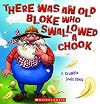
An Australian version of the rhyme 'I know an old lady that swallowed a fly.' The text uses the dry Australian humour. There is a lot of extra activity in the illustrations e.g. galahs' with special hair dos, fossils. Find the chook' s run away egg in the illustrations (except the ones from inside the old bloke).

As the storm approaches and the children go inside, Tobias Blow a fairy with an impish smile scatters treasures for the children to find in the morning.
The illustrations show smiling Tobias in many dance poses as he flies across the sky and landscape.
The illustrations show smiling Tobias in many dance poses as he flies across the sky and landscape.
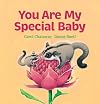
This story is about mothers and their babies and how these babies are special to them. The illustrations show Australian animals or those that inhabit the Australian coastlines. The animals are listed on the imprint page at the back of the book.
The print is large and the sentences are spread over more than one page. The language used has a touching, quite mood that is supported by the pastel pink and blue backgrounds used in the double page spread illustrations. The readers focus on the adult and baby animal in the illustrations this is achieved through the minimalist additions to the environment e.g. a tree branch, bare earth or simple horizon. A bedtime or quite time story.
The print is large and the sentences are spread over more than one page. The language used has a touching, quite mood that is supported by the pastel pink and blue backgrounds used in the double page spread illustrations. The readers focus on the adult and baby animal in the illustrations this is achieved through the minimalist additions to the environment e.g. a tree branch, bare earth or simple horizon. A bedtime or quite time story.