John Drane's Introducing the New Testament is impressive for what it is and isn't. Drane has managed to combine the readability of the more narrative New Testament Histories with the scholarly depth of an Introduction to the New Testament. And instead of ending up with the weakness of both, he merged their respective strengths. As a result, Introducing the New Testament is highly readable and very informative, even as to issues such as the Synoptic Problem and the dating and authorship of the Gospels and other New Testament documents.
As with a New Testament History, Drane opens up by providing background material on the broader world out of which Christianity grew, including the Greek heritage, the mystery religions, Judaism, and Palestine. He then narrates through Jesus' birth and early years, his ministry, his death, and the resurrection. There is an excellent side discussion on dating Jesus' birth.
In the next section, Drane spends more time exploring Jesus' precise message. The focus of the discussion is, appropriately, Jesus' declaration of the Kingdom of God. After this able discussion, Drane moves on to focusing on the four gospels themselves. I was impressed with the sophistication of many of his points regarding authorship, dating, and historicity. Though not presented with the footnotes and scholarly references that an Introduction would, it is obvious that Drane is conversant with a wide range of opinions and is writing from a high level of knowledge and show more understanding. One of the outstanding features of this section is his side discussion on "Identifying the authentic words of Jesus." Therein he identifies the main criteria of testing the historicity of Jesus's sayings, and identifies the problems and limitations with such an endeavor. According to Drane, the entire enterprise is premised on the problematic assumption that there was a high level of creativity in the early Church.
Drane next moves on to the spread of Christianity throughout the Roman world, including an excellent treatment of the dating of Acts. He also covers Paul the Apostle's activities, with solid discussions of each of his letters. There is a helpful discussion of the early church's recognition of the New Testament and first-rate discussions of the remaining books of the Bible (especially James and Hebrews).
Though the serious scholar may miss the footnotes and citations that commentaries and New Testament Introductions provide, the beauty of this book is that it delivers much the same sophistication and information of those works to the layperson. And it does so in an entertaining manner that does not get stale or tedious. show less
As with a New Testament History, Drane opens up by providing background material on the broader world out of which Christianity grew, including the Greek heritage, the mystery religions, Judaism, and Palestine. He then narrates through Jesus' birth and early years, his ministry, his death, and the resurrection. There is an excellent side discussion on dating Jesus' birth.
In the next section, Drane spends more time exploring Jesus' precise message. The focus of the discussion is, appropriately, Jesus' declaration of the Kingdom of God. After this able discussion, Drane moves on to focusing on the four gospels themselves. I was impressed with the sophistication of many of his points regarding authorship, dating, and historicity. Though not presented with the footnotes and scholarly references that an Introduction would, it is obvious that Drane is conversant with a wide range of opinions and is writing from a high level of knowledge and show more understanding. One of the outstanding features of this section is his side discussion on "Identifying the authentic words of Jesus." Therein he identifies the main criteria of testing the historicity of Jesus's sayings, and identifies the problems and limitations with such an endeavor. According to Drane, the entire enterprise is premised on the problematic assumption that there was a high level of creativity in the early Church.
Drane next moves on to the spread of Christianity throughout the Roman world, including an excellent treatment of the dating of Acts. He also covers Paul the Apostle's activities, with solid discussions of each of his letters. There is a helpful discussion of the early church's recognition of the New Testament and first-rate discussions of the remaining books of the Bible (especially James and Hebrews).
Though the serious scholar may miss the footnotes and citations that commentaries and New Testament Introductions provide, the beauty of this book is that it delivers much the same sophistication and information of those works to the layperson. And it does so in an entertaining manner that does not get stale or tedious. show less
Bock is a respected, conservative New Testament scholar. In Studying the Historical Jesus, he offers one of the most accessible introductions to the study of the "Historical" Jesus. If you have simply read your New Testament your entire life and are now curious about its background, origins, and the history behind it. Or if you have had little exposure to the New Testament and wonder what it is all about, historically speaking. This book delivers.
The Introduction opens with brief discussions of sources relevant to the study of the historical Jesus, including the Old Testament, the Apocrypha, the Pseudepigrapha, the Dead Sea Scrolls, Philo, and Josephus. Each is only a few paragraphs long but explains well the source and its relevance to studying Jesus. The main event of the Introduction, however, is his run down on each of the Canonical Gospels. Bock delivers solid discussions of each, including their structure, unique emphasis, authorship, and date. Not surprisingly, Bock's conclusions are traditional.
Bock also delivers a chapter on the Nonbiblical evidence for Jesus, ably covering the "usual suspects" of Josephus, Thallus, Tacitus, and company. Next there is an informative discussion about the chronology of Jesus' life. Bock nondogmatically discusses the various alternatives about when Jesus was born, how long his ministry was, and the date of his death. Thereafter, Bock delivers a helpful general history of the Greek and Roman empires, and then a more focused show more discussion on the geography, population, and culture of first century Palestine.
In Part 2 of his book, Bock moves into a more argumentative tone as he discusses and criticizes the search for the "historical Jesus." There is a helpful history highlighting the key players and their theories in the three "quests" for the historical Jesus. Bock then summarizes five systemic problems in historical Jesus research, including an undue skepticism of narratives or sayings that are similar to Old Testament narratives and sayings, and inadequate historical attention being given to Luke's special material, Matthew's special material, and the Gospel of John. The criticisms are well taken and receive insufficient consideration in most New Testament research.
Next Bock devotes chapters to several methods of historical inquiry as applied to the New Testament: Historical Criticism, Source Criticism, Form Criticism, Redaction Criticism, Tradition Criticism, and Narrative Criticism and Gospel Genre. The discussions are well done, defining each as well as emphasizing the strengths and weaknesses inherent to each disciple. Bock is no reactionary. He sees a role for each in researching and understanding the New Testament and Jesus, but appropriately chides much modern "historical Jesus" studies as overly skeptical.
In sum, Bock has delivered an excellent resource for those interested in looking into the unfamiliar ground of New Testament criticism or studying the "historical" Jesus. Indeed, this would be one of the first books I would recommend to any such person. show less
The Introduction opens with brief discussions of sources relevant to the study of the historical Jesus, including the Old Testament, the Apocrypha, the Pseudepigrapha, the Dead Sea Scrolls, Philo, and Josephus. Each is only a few paragraphs long but explains well the source and its relevance to studying Jesus. The main event of the Introduction, however, is his run down on each of the Canonical Gospels. Bock delivers solid discussions of each, including their structure, unique emphasis, authorship, and date. Not surprisingly, Bock's conclusions are traditional.
Bock also delivers a chapter on the Nonbiblical evidence for Jesus, ably covering the "usual suspects" of Josephus, Thallus, Tacitus, and company. Next there is an informative discussion about the chronology of Jesus' life. Bock nondogmatically discusses the various alternatives about when Jesus was born, how long his ministry was, and the date of his death. Thereafter, Bock delivers a helpful general history of the Greek and Roman empires, and then a more focused show more discussion on the geography, population, and culture of first century Palestine.
In Part 2 of his book, Bock moves into a more argumentative tone as he discusses and criticizes the search for the "historical Jesus." There is a helpful history highlighting the key players and their theories in the three "quests" for the historical Jesus. Bock then summarizes five systemic problems in historical Jesus research, including an undue skepticism of narratives or sayings that are similar to Old Testament narratives and sayings, and inadequate historical attention being given to Luke's special material, Matthew's special material, and the Gospel of John. The criticisms are well taken and receive insufficient consideration in most New Testament research.
Next Bock devotes chapters to several methods of historical inquiry as applied to the New Testament: Historical Criticism, Source Criticism, Form Criticism, Redaction Criticism, Tradition Criticism, and Narrative Criticism and Gospel Genre. The discussions are well done, defining each as well as emphasizing the strengths and weaknesses inherent to each disciple. Bock is no reactionary. He sees a role for each in researching and understanding the New Testament and Jesus, but appropriately chides much modern "historical Jesus" studies as overly skeptical.
In sum, Bock has delivered an excellent resource for those interested in looking into the unfamiliar ground of New Testament criticism or studying the "historical" Jesus. Indeed, this would be one of the first books I would recommend to any such person. show less
Abortion and the Early Church: Christian, Jewish and Pagan Attitudes in the Greco-Roman World by Michael J. Gorman
Though weighing in at a mere 101 pages of text, Abortion & the Early Church is an excellent overview on early Christianity's attitudes on that subject. Gorman examines the Pagan, Jewish, and Christian attitudes on abortion, spending more chapters breaking down Christian attitudes into the first three centuries and the fourth and fifth centuries. He then wraps up with two final paragraphs. One that rounds off the discussion of where Christian attitudes about abortion came from. Gorman concludes that Christian attitudes were heavily influenced by its Jewish history, but given Jesus' teachings on love and peace turned out to be more adamantly anti-abortion than the Jews. I suspect there is merit to this argument, but also think that much of Christianity's strong anti-abortion stance was due to its direct encounter with the pagan world. Even Jews in the diaspora tended to have their own communities and live amongst themselves. But many Christians were not only converted pagans, they were intent on spreading their own religion even deeper into Roman society. Such clashes tend to sharpen differences.
Up until this point, I benefitted from every part of the book -- even if I was not convinced on every point. Gorman does a good job of providing primary sources about pagan, Christian, and Jewish attitudes on abortion. He also does a good job of explaining those sources and spends much good analysis not only on what the attitudes on abortion were, but what the core of the issue show more really was. For example, was abortion criticized because it was an impediment to procreation, a means of covering up sexual immorality, a threat to the woman's life as well, or as the killing of a human life? (for Christians it seems all of these were mentioned, but the driving concern was the humanity of the fetus). Nevertheless, Gorman lost a star because his final chapter swerves into very 80s territory as he launches an assault on those pro-life Christians who are pro-strong national defense, pro-capital punishment, and not strong enough on the issue of gun control. Up to this point, his discussion was unemotional, logical, even systematic. Not so here. He comes across as a man struggling to reconcile his personal liberal political beliefs with his strong pro-life beliefs. His solution it to blast both sides. Beyond its obvious tangential nature, this diabtribe is out of place because it -- unlike his excellent discussion of early Christian views on abortion -- is built not on Christian history but on his own emotional biases.
Nevertheless, on the issue of abortion, this is one of the best values out there for understanding what the Church has believed on this subject -- it was immoral. And perhaps more importantly, why it believed what it did -- it was the taking of an innocent human life. show less
Up until this point, I benefitted from every part of the book -- even if I was not convinced on every point. Gorman does a good job of providing primary sources about pagan, Christian, and Jewish attitudes on abortion. He also does a good job of explaining those sources and spends much good analysis not only on what the attitudes on abortion were, but what the core of the issue show more really was. For example, was abortion criticized because it was an impediment to procreation, a means of covering up sexual immorality, a threat to the woman's life as well, or as the killing of a human life? (for Christians it seems all of these were mentioned, but the driving concern was the humanity of the fetus). Nevertheless, Gorman lost a star because his final chapter swerves into very 80s territory as he launches an assault on those pro-life Christians who are pro-strong national defense, pro-capital punishment, and not strong enough on the issue of gun control. Up to this point, his discussion was unemotional, logical, even systematic. Not so here. He comes across as a man struggling to reconcile his personal liberal political beliefs with his strong pro-life beliefs. His solution it to blast both sides. Beyond its obvious tangential nature, this diabtribe is out of place because it -- unlike his excellent discussion of early Christian views on abortion -- is built not on Christian history but on his own emotional biases.
Nevertheless, on the issue of abortion, this is one of the best values out there for understanding what the Church has believed on this subject -- it was immoral. And perhaps more importantly, why it believed what it did -- it was the taking of an innocent human life. show less
I am literally a child of the Shepherding Movement, with my family joining while I was quite young. On balance, my experience was very positive, yet I know of others who believe their experiences were different. So when Professor Moore's book came out, I was interested to see how the overall, wider movement was evaluated.
Professor Moore promises a fair and balanced look at this controversial movement. In my opinion, he delivers. He concisely lays out the history of the movement from beginning to end. Writing with a historian's eye, Moore places the rise of the Shepherding Movement in its context. The Charismatic Renewal was sweeping the nation, but many of its leaders and participants were unaccountable, unattached, and simply drifting from one meeting to the next. To foster accountability and maturity, leaders like Bob Mumford and Charles Simpson began teaching about spiritual authority and covenantal relationships. Eventually, five leaders came together to emphasize these and other teachings (the so-called "Ft. Lauderdale Five"). Moore leaves no doubt that the Shepherding Movement arose in response to a real need and with the best of intentions.
Unfortunately, many of the critics also thought they were acting with the best of intentions, though a few - such as Pat Robertson - come across as self-appointed judges who felt little need to actually engage the leaders of the Shepherding movement with their concerns. Others come across concerned about losing their own turf or show more financial contributions to the Shepherding Movement. Jack Hayford comes across as someone concerned, but believing the best about those with whom he disagreed and attempting to engage them in direct dialogue. Indeed, it is to Moore's credit that both Charles Simpson and Jack Hayford endorse his book.
I was impressed with the openness of leaders like Simpson and Mumford, who not only granted Moore several interviews but also turned over their private correspondence to him - a treasure of primary data that any historian would love to have. Moore puts it to good use, following the movement from its inception to the dissolving of the "Ft. Laurderdale Five," then tracking the individual men in their ministries after the fact. Moore also reminds us of the benefits this movement had on the broader Christian Renewal: Hosanna/Integrity Music; the emphasis on Covenant in understanding God; the idea of spiritual mentoring; and, the emphasis on home groups and cell groups.
I have always considered myself fortunate to have been involved in the Charles Simpson sphere of the Shepherding Movement. After reading this fine book, that belief is reinforced. Professor Moore deserves much credit for this concise and fair history of an influential movement within the Charismatic Renewal. show less
Professor Moore promises a fair and balanced look at this controversial movement. In my opinion, he delivers. He concisely lays out the history of the movement from beginning to end. Writing with a historian's eye, Moore places the rise of the Shepherding Movement in its context. The Charismatic Renewal was sweeping the nation, but many of its leaders and participants were unaccountable, unattached, and simply drifting from one meeting to the next. To foster accountability and maturity, leaders like Bob Mumford and Charles Simpson began teaching about spiritual authority and covenantal relationships. Eventually, five leaders came together to emphasize these and other teachings (the so-called "Ft. Lauderdale Five"). Moore leaves no doubt that the Shepherding Movement arose in response to a real need and with the best of intentions.
Unfortunately, many of the critics also thought they were acting with the best of intentions, though a few - such as Pat Robertson - come across as self-appointed judges who felt little need to actually engage the leaders of the Shepherding movement with their concerns. Others come across concerned about losing their own turf or show more financial contributions to the Shepherding Movement. Jack Hayford comes across as someone concerned, but believing the best about those with whom he disagreed and attempting to engage them in direct dialogue. Indeed, it is to Moore's credit that both Charles Simpson and Jack Hayford endorse his book.
I was impressed with the openness of leaders like Simpson and Mumford, who not only granted Moore several interviews but also turned over their private correspondence to him - a treasure of primary data that any historian would love to have. Moore puts it to good use, following the movement from its inception to the dissolving of the "Ft. Laurderdale Five," then tracking the individual men in their ministries after the fact. Moore also reminds us of the benefits this movement had on the broader Christian Renewal: Hosanna/Integrity Music; the emphasis on Covenant in understanding God; the idea of spiritual mentoring; and, the emphasis on home groups and cell groups.
I have always considered myself fortunate to have been involved in the Charles Simpson sphere of the Shepherding Movement. After reading this fine book, that belief is reinforced. Professor Moore deserves much credit for this concise and fair history of an influential movement within the Charismatic Renewal. show less
The Jesus Puzzle: Did Christianity Begin with a Mythical Christ? Challenging the Existence of an Historical Jesus by Earl Doherty
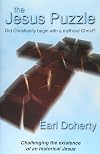
Though dead among scholarly circles - even among moderate and liberal ones - the idea that Jesus never existed has visceral appeal to many with negative attitudes towards Christianity. This book is not a serious academic work (it's published by the "Canadian Humanist Publications", whose bias is obvious and shared by the author), but it distinguishes itself from similar efforts by laypersons in its expansive scope. Rather than skirt the Pauline references to Jesus' human life, it embraces them and claims they support the notion that Jesus never existed. Rather than accept the consensus among historians and New Testament scholars that Josephus referred to Jesus on two occasions in Antiquities, the book rejects the idea that either reference is valid. The book's use of purported Middle Platonism to undercut seeming references to Jesus' human life in Paul's letters and Hebrews is especially clever (not the least because so few readers will have any understanding of what Middle Platonism is).
On style, the writing is uneven and at points amateurish and simplistic. The chapter titles and subheadings are often of no help in understanding what any particular chapter or section is about. There is no scripture or ancient writings index, though some of these are in the general index. The use of endnotes instead of footnotes (or even endnotes at the end of each chapter rather than lumped together at the end of the book) is particularly unhelpful because so much of the argument rest show more on the supporting references or discussion. And as I learned, checking Doherty's endnotes is vital given how unsupported many of his key arguments turn out to be.
But, what about the substance? Space constraints obviously limit, but I will comment on some of Doherty's central points.
Doherty's attempt to explain away references to Jesus' human life in Paul's letters (and Hebrews) is ambitious but unconvincing. As the book goes through these passages, it becomes clear that time and again he resorts to unsupported translations, far fetched interpretations, misrepresentations of Middle Platonism, and creative - to say the least - use of secondary sources in order to support his theory. This foundation is shaky and gets weaker the more closely it is examined. One example which taught me to check the endnotes closely was the book's assertion that the phrase "according to the scriptures" in 1 Cor. 15 when referring to Jesus' death, burial, and resurrection had nothing to do with fulfilled prophecy but meant instead that Paul had learned about these things from the Old Testament - not James and Peter and the other Christians. The support for this interpretation? It is not in the text and the reader is referred to an endnote. To my surprise, the endnote does not refer to Paul's use of the phrase elsewhere. Nor does he refer to another NT writer's use of the phrase. Or to any Greek Lexicon. Or to any other Greek writer using the term as Doherty claims Paul uses it. All that Doherty refers to is an extraordinarily anachronistic modern day example of reading a newspaper. I was genuinely surprised at how weak and anachronistic the support was for such a crucial point.
The rest of the book's explanations for the troubling Pauline and Hebrew references to a human Jesus are no more convincing and are ad hoc. Rarely does Doherty conduct any sort of meaninful textual discussion of how Paul uses these phrases elsewhere in his writings. This is especially true of his attempt to dismiss Paul's statement that Jesus was "born of a descendant of David according to the flesh" in Romans.
Another problem throughout Doherty's book is his use of secondary sources. Often they are quoted so selectively that they are offered to support points that the source's author would denounce in the strongest terms - as is the case with his use of C.K. Barrett's fine commentary on Romans (while trying to dismiss Rom. 1:1-4 as a reference to Jesus' becoming human).
Regarding other issues, Doherty relies on theories that have already been debunked, such as his attempt to dismiss Acts as a source for early Christian history by referring to V. Robbins' oft-refuted theory about the we passages, or his insistence that neither of the references to Jesus in Josephus are authentic (despite overwhelming contrary opinion and evidence). A continuing flaw in Doherty's argument is his rush to explain things in terms of Middle Platonism, while ignoring obvious Jewish influence, parallels, and beliefs. Finally, the dismissive classification of the Gospels as midrash is so brief and so uninformed that it is of almost no worth (and his radically late dating of them unsupported by the evidence)
This may be the best presentation of the Jesus Myth argument in print. Nevertheless, any informed and rational investigation into it will lead the reasonable person to conclude that if this is the best that the Jesus Myth has to offer, there is little to commend the theory. show less
On style, the writing is uneven and at points amateurish and simplistic. The chapter titles and subheadings are often of no help in understanding what any particular chapter or section is about. There is no scripture or ancient writings index, though some of these are in the general index. The use of endnotes instead of footnotes (or even endnotes at the end of each chapter rather than lumped together at the end of the book) is particularly unhelpful because so much of the argument rest show more on the supporting references or discussion. And as I learned, checking Doherty's endnotes is vital given how unsupported many of his key arguments turn out to be.
But, what about the substance? Space constraints obviously limit, but I will comment on some of Doherty's central points.
Doherty's attempt to explain away references to Jesus' human life in Paul's letters (and Hebrews) is ambitious but unconvincing. As the book goes through these passages, it becomes clear that time and again he resorts to unsupported translations, far fetched interpretations, misrepresentations of Middle Platonism, and creative - to say the least - use of secondary sources in order to support his theory. This foundation is shaky and gets weaker the more closely it is examined. One example which taught me to check the endnotes closely was the book's assertion that the phrase "according to the scriptures" in 1 Cor. 15 when referring to Jesus' death, burial, and resurrection had nothing to do with fulfilled prophecy but meant instead that Paul had learned about these things from the Old Testament - not James and Peter and the other Christians. The support for this interpretation? It is not in the text and the reader is referred to an endnote. To my surprise, the endnote does not refer to Paul's use of the phrase elsewhere. Nor does he refer to another NT writer's use of the phrase. Or to any Greek Lexicon. Or to any other Greek writer using the term as Doherty claims Paul uses it. All that Doherty refers to is an extraordinarily anachronistic modern day example of reading a newspaper. I was genuinely surprised at how weak and anachronistic the support was for such a crucial point.
The rest of the book's explanations for the troubling Pauline and Hebrew references to a human Jesus are no more convincing and are ad hoc. Rarely does Doherty conduct any sort of meaninful textual discussion of how Paul uses these phrases elsewhere in his writings. This is especially true of his attempt to dismiss Paul's statement that Jesus was "born of a descendant of David according to the flesh" in Romans.
Another problem throughout Doherty's book is his use of secondary sources. Often they are quoted so selectively that they are offered to support points that the source's author would denounce in the strongest terms - as is the case with his use of C.K. Barrett's fine commentary on Romans (while trying to dismiss Rom. 1:1-4 as a reference to Jesus' becoming human).
Regarding other issues, Doherty relies on theories that have already been debunked, such as his attempt to dismiss Acts as a source for early Christian history by referring to V. Robbins' oft-refuted theory about the we passages, or his insistence that neither of the references to Jesus in Josephus are authentic (despite overwhelming contrary opinion and evidence). A continuing flaw in Doherty's argument is his rush to explain things in terms of Middle Platonism, while ignoring obvious Jewish influence, parallels, and beliefs. Finally, the dismissive classification of the Gospels as midrash is so brief and so uninformed that it is of almost no worth (and his radically late dating of them unsupported by the evidence)
This may be the best presentation of the Jesus Myth argument in print. Nevertheless, any informed and rational investigation into it will lead the reasonable person to conclude that if this is the best that the Jesus Myth has to offer, there is little to commend the theory. show less
Influence of the Gospel of Saint Matthew on Christina Literature Before Saint Irenaeus: The First Ecclesiastical Wr by Edouard Massaux
This book, the second of a series of three, is deceptively named. Although the title mentions only the Gospel of Matthew, Massaux actually discusses each New Testament book and how it was used by various early Christian writers (such as the Letter of Polycarp).
Although I have seen lists of supposed allussions to the NT by Apostolic Fathers, Massaux goes into much more detail. He ably and soberly sorts through the possible New Testament allusions and quotes. He organizes his material by devoting a chapter to each Apostolic Father and sections within each chapter to pariticular writings. Then there are subsections devoted to how the particular Apostolic Father's writing uses each New Testament book. There is also a very helpful scripture index at the end, which allows you to research particular verses and how they were used by all of the Apostolic Fathers.
This is not light reading. The translation of the French is pretty good, but not always lucid. And much of the discussion is about the use of particular greek phrases. Even so, laypersons can manage and benefit from the material.
If you are looking to discover which New Testament books were used by which Apostolic Fathers, this book is invaluable.
Although I have seen lists of supposed allussions to the NT by Apostolic Fathers, Massaux goes into much more detail. He ably and soberly sorts through the possible New Testament allusions and quotes. He organizes his material by devoting a chapter to each Apostolic Father and sections within each chapter to pariticular writings. Then there are subsections devoted to how the particular Apostolic Father's writing uses each New Testament book. There is also a very helpful scripture index at the end, which allows you to research particular verses and how they were used by all of the Apostolic Fathers.
This is not light reading. The translation of the French is pretty good, but not always lucid. And much of the discussion is about the use of particular greek phrases. Even so, laypersons can manage and benefit from the material.
If you are looking to discover which New Testament books were used by which Apostolic Fathers, this book is invaluable.
Paul and First-Century Letter Writing: Secretaries, Composition and Collection by E. Randolph Richards
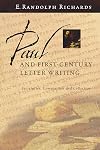
Paul and First Century Letter Writing is a valuable contribution to any study of Paul the apostle. Because so much of what we know about Paul we learn from his letters, understanding the practice of letter writing in his culture is vital to understanding Paul. This is not only true for understanding the meaning of his letters, but also for the issues that bother some academics-did Paul write Ephesians? Is 2 Corinthians one letter? Or two or three combined into one?
Though commentaries on Pauline letters or biographies of Paul may discuss aspects of these issues, full treatments of the issue of ancient letter writing and its implications for the study of Paul's letters are harder to find. Here, Richards offers just such a book. He describes the materials involved in drafting letters, how ancient letter writers used sources, the procedure of letter writing, the time involved, the use of secretaries, the detection of interpolations, the use of letter carriers, and the distances and means of travel of those carriers. Richards then draws out the practical effect of this knowledge. For example, he explains why letter writing was so expensive and does a convincing job of determining the cost in present-value dollars. He also explains the significance of co-authorship on Paul's letters. Though many of Paul's letters were co-authored, many scholars seem to all but ignore this fact in their study of the theology and language of Paul's letters. This is a mistake. A co-author of a show more letter would have had a substantial impact on the content and theme of "Paul's" letters. The use of different secretaries and even letter carriers too may have affected the content of Paul's letters, though to a lesser degree.
In support of his conclusions, Richards draws on a vast amount of first-century writings, including many non-Christian letters from the ancient Mediterranean. This is a welcome use of sources and counters any suspicion that Richards is simply striving to reach a particular result. He also gives a good account of prior efforts to gauge the impact of ancient letter writing.
Finally, the book is well written. Richards writes clearly and simply. He also does a surprisingly good job of placing the read back in Paul's time, on the streets of ancient Greek cities, or in courtyard of a middle-class apartment. Furthermore, the book is well organized. He builds his case in each section and makes his argument. He then ends each section with a clear statement of his conclusion. You may not agree with his conclusions, but you can see how he reached them.
I highly recommend this book for anyone interested in better understanding Paul and his letters. show less
Though commentaries on Pauline letters or biographies of Paul may discuss aspects of these issues, full treatments of the issue of ancient letter writing and its implications for the study of Paul's letters are harder to find. Here, Richards offers just such a book. He describes the materials involved in drafting letters, how ancient letter writers used sources, the procedure of letter writing, the time involved, the use of secretaries, the detection of interpolations, the use of letter carriers, and the distances and means of travel of those carriers. Richards then draws out the practical effect of this knowledge. For example, he explains why letter writing was so expensive and does a convincing job of determining the cost in present-value dollars. He also explains the significance of co-authorship on Paul's letters. Though many of Paul's letters were co-authored, many scholars seem to all but ignore this fact in their study of the theology and language of Paul's letters. This is a mistake. A co-author of a show more letter would have had a substantial impact on the content and theme of "Paul's" letters. The use of different secretaries and even letter carriers too may have affected the content of Paul's letters, though to a lesser degree.
In support of his conclusions, Richards draws on a vast amount of first-century writings, including many non-Christian letters from the ancient Mediterranean. This is a welcome use of sources and counters any suspicion that Richards is simply striving to reach a particular result. He also gives a good account of prior efforts to gauge the impact of ancient letter writing.
Finally, the book is well written. Richards writes clearly and simply. He also does a surprisingly good job of placing the read back in Paul's time, on the streets of ancient Greek cities, or in courtyard of a middle-class apartment. Furthermore, the book is well organized. He builds his case in each section and makes his argument. He then ends each section with a clear statement of his conclusion. You may not agree with his conclusions, but you can see how he reached them.
I highly recommend this book for anyone interested in better understanding Paul and his letters. show less
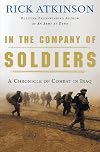
I agree with the reviewer who said this is more aptly titled, "In the Company of Generals," though I would add "and Colonels." Unlike Thunder Run or The March Up, few battles are narrated from the perspective of the soldier actually doing the fighting. This is not a criticism of the book, just a notice to the prospective reader. What Atkinson does well is write about the Commanders of the 101st Airborne, and their travels, travels, and accomplishments from preparing for war through the Gulf War itself.
The sheer logistical nightmare of preparing for a war thousands of miles from one's base is captured in the big picture and through anecdotes, such as the vigorous disagreement about whether to tape or paint helicopter blades to protect them from the sand. After heated discussion and much agonizing, it was discovered there was no tape. Paint would have to suffice. By spending time with the Commanding General of the 101, as well as his logistics and other officers, Atkinson does an excellent job of conveying the size of the logistical challenge faced by the 101st (and, no doubt, other U.S. divisions) and the magnitude of the accomplishment in meeting it.
As the war itself unfolds, Atkinson does a decent job of helping us understand how the 101st' mission changes to meet the realities of combat. The reader may be (as I was) distracted by continuous petty attacks on President Bush, Secretary Rumsfeld, and even Fox News. They are so ancillary to his point that they serve no show more purpose other to offend, or at the very least distract. Though Atkinson may try to place them in a bigger context, it's pretty transparent he is searching for his own voice among the facts at his disposal (like when he singles out a negative comment written in a bathroom stall about President Bush as somehow representative of troop morale and opinions on the war).
Overall, an excellent discussion about preparing for war, a good discussion of the 101st' role in that war as seen from its Commanders, but distracting and petty political potshots taken throughout. show less
The sheer logistical nightmare of preparing for a war thousands of miles from one's base is captured in the big picture and through anecdotes, such as the vigorous disagreement about whether to tape or paint helicopter blades to protect them from the sand. After heated discussion and much agonizing, it was discovered there was no tape. Paint would have to suffice. By spending time with the Commanding General of the 101, as well as his logistics and other officers, Atkinson does an excellent job of conveying the size of the logistical challenge faced by the 101st (and, no doubt, other U.S. divisions) and the magnitude of the accomplishment in meeting it.
As the war itself unfolds, Atkinson does a decent job of helping us understand how the 101st' mission changes to meet the realities of combat. The reader may be (as I was) distracted by continuous petty attacks on President Bush, Secretary Rumsfeld, and even Fox News. They are so ancillary to his point that they serve no show more purpose other to offend, or at the very least distract. Though Atkinson may try to place them in a bigger context, it's pretty transparent he is searching for his own voice among the facts at his disposal (like when he singles out a negative comment written in a bathroom stall about President Bush as somehow representative of troop morale and opinions on the war).
Overall, an excellent discussion about preparing for war, a good discussion of the 101st' role in that war as seen from its Commanders, but distracting and petty political potshots taken throughout. show less
The Gospel Hoax is packed with analysis supporting its central conclusion - that the "discoverer" of the Secret Gospel of Mark (SGM), Morton Smith, actually forged the document as a hoax on the academic community. SGM stirred controversy because it purports to be an early, secret, version of the Gospel of Mark meant for advanced initiates that includes passages suggesting a more magic-oriented, homoerotic Jesus. Questions about its authenticity have been raised from the beginning, but could not be answered because the manuscript itself was - suspiciously to some - lost before any tests could be run. Only Smith's description and a set of photographs he took remain.
Carlson seeks to break the logjam on the question of authenticity by examining a number of aspects of SGM, Mr. Smith, and the circumstances of the discovery. In so doing, Carlson attempts to do more than simply settle the issue, he also offers guidance on how to detect other academic frauds. He is successful on both counts, though I have some reservations that I will mention below.
First, he convincingly demonstrates that the SGM manuscript (a supposed 17th century writing referring to the SGM) is a modern forgery and not an older writing recording an ancient letter. The most convincing argument raised by Carlson is the handwriting analysis, which reveals the SGM manuscript to be forged and raises further suspicions about Smith's role in the discovery. Other arguments raised by Carlson, which he takes to be hints show more from Smith about his role in the hoax, are interesting but apart from other evidence would not be necessarily persuasive.
Next, Carlson questions the authenticity of the supposed letter by Clement. Relying on linguistic comparisons between the letter and Clement's other writings, Carlson concludes it is too good to be true, i.e., it is too much in accord with Clement's style to be from Clement. He is openly indebted to the analysis of another and I would want to spend more time researching the issue to trust a determination about a writing being too much like an author's style to be by that author. Carlson also finds additional hints from Smith suggesting admissions of a hoax which are again intriguing, but are better evidence of the identity of the hoaxer once one is convinced of the case in chief. On firmer ground is the argument that Smith would have possessed sufficient knowledge of Clement's writings and linguistic ability to pull off the hoax himself -- which some defenders of SGM have denied.
The following chapter targets the fragments of the supposed SGM itself and concludes that they are products of the 20th century around the time of the late fifties. The focus on homoerotic portrayals, Carlson argues, would have been meaningless if written in the first or second centuries, but were particularly appropriate for the time period and circumstances in which Smith lived and worked. I did not find the 20th-century marks as "uncanny" as Carlson, but it is an interesting point. More discussion of attitudes in the first and second centuries would have helped. Additionally, I fear that such a criteria may be overly subjective and would require getting into not just the time period of the suspected hoaxer, but would require a deeper examination of that person's mind and personal circumstances than we are likely to be able to achieve in many cases.
Carlson's wrap-up is convincing in its conclusion that SGM is a modern hoax perpetrated by Morton Smith. It is also valuable in that it offers approaches and criteria for the uncovering of other academic hoaxes. Though I was not as persuaded as he as to the efficacy of some of those tools, the discussion itself is valuable and The Gospel Hoax effectively offers future debunkers much with which to work. Those are minor quibbles and go, as we lawyers sometimes say, to the weight of some of the evidence rather than its admissibility. Well-written, well-researched, and well-done. show less
Carlson seeks to break the logjam on the question of authenticity by examining a number of aspects of SGM, Mr. Smith, and the circumstances of the discovery. In so doing, Carlson attempts to do more than simply settle the issue, he also offers guidance on how to detect other academic frauds. He is successful on both counts, though I have some reservations that I will mention below.
First, he convincingly demonstrates that the SGM manuscript (a supposed 17th century writing referring to the SGM) is a modern forgery and not an older writing recording an ancient letter. The most convincing argument raised by Carlson is the handwriting analysis, which reveals the SGM manuscript to be forged and raises further suspicions about Smith's role in the discovery. Other arguments raised by Carlson, which he takes to be hints show more from Smith about his role in the hoax, are interesting but apart from other evidence would not be necessarily persuasive.
Next, Carlson questions the authenticity of the supposed letter by Clement. Relying on linguistic comparisons between the letter and Clement's other writings, Carlson concludes it is too good to be true, i.e., it is too much in accord with Clement's style to be from Clement. He is openly indebted to the analysis of another and I would want to spend more time researching the issue to trust a determination about a writing being too much like an author's style to be by that author. Carlson also finds additional hints from Smith suggesting admissions of a hoax which are again intriguing, but are better evidence of the identity of the hoaxer once one is convinced of the case in chief. On firmer ground is the argument that Smith would have possessed sufficient knowledge of Clement's writings and linguistic ability to pull off the hoax himself -- which some defenders of SGM have denied.
The following chapter targets the fragments of the supposed SGM itself and concludes that they are products of the 20th century around the time of the late fifties. The focus on homoerotic portrayals, Carlson argues, would have been meaningless if written in the first or second centuries, but were particularly appropriate for the time period and circumstances in which Smith lived and worked. I did not find the 20th-century marks as "uncanny" as Carlson, but it is an interesting point. More discussion of attitudes in the first and second centuries would have helped. Additionally, I fear that such a criteria may be overly subjective and would require getting into not just the time period of the suspected hoaxer, but would require a deeper examination of that person's mind and personal circumstances than we are likely to be able to achieve in many cases.
Carlson's wrap-up is convincing in its conclusion that SGM is a modern hoax perpetrated by Morton Smith. It is also valuable in that it offers approaches and criteria for the uncovering of other academic hoaxes. Though I was not as persuaded as he as to the efficacy of some of those tools, the discussion itself is valuable and The Gospel Hoax effectively offers future debunkers much with which to work. Those are minor quibbles and go, as we lawyers sometimes say, to the weight of some of the evidence rather than its admissibility. Well-written, well-researched, and well-done. show less
I was looking for a concise introduction into the genre of ancient novels and had been disappointed by other books on this topic. Then I picked up Niklas Holzberg's The Ancient Novel: An Introduction and found exactly the kind of introduction for which I was looking.
Holzberg introduces the genre clearly in just over 100-pages. He begins by defining the genre and discussing related literary works. Then, he moves through the different "periods" of ancient novel writing by examining the principal novels from each. For being such a short book, Holzberg gives you enough information about each novel to give you a feel for the work and how it fits into the history and development of the genre.
The book is a translation from German. But, unlike some translations of academic books, this one reads very well.
There is also an excellent bibliography of primary and secondary sources, including references to works about the genre as a whole as well as about each of the leading novels themselves.
My only quibble with the book is its abrupt ending. There is no conclusion per se as he ends the book with a discussion of a later ancient novel. After fitting so much clear and helpful analysis into such a small package, I was hoping for an excellent conclusion that brought it all together.
Holzberg introduces the genre clearly in just over 100-pages. He begins by defining the genre and discussing related literary works. Then, he moves through the different "periods" of ancient novel writing by examining the principal novels from each. For being such a short book, Holzberg gives you enough information about each novel to give you a feel for the work and how it fits into the history and development of the genre.
The book is a translation from German. But, unlike some translations of academic books, this one reads very well.
There is also an excellent bibliography of primary and secondary sources, including references to works about the genre as a whole as well as about each of the leading novels themselves.
My only quibble with the book is its abrupt ending. There is no conclusion per se as he ends the book with a discussion of a later ancient novel. After fitting so much clear and helpful analysis into such a small package, I was hoping for an excellent conclusion that brought it all together.
Reinventing Jesus: What the Da Vinci Code And Other Novel Speculations Don't Tell You by J. Ed Komoszewski
In some ways the title is unfortunate, because Reinventing Jesus is so much more than another response to The Da Vinci Code (as good as some of those are). What this book provides is excellent scholarship on a number of issues that have been inadequately addressed, if addressed at all, by traditional apologists. The authors have actually lowered themselves to address arguments and theories that academics rarely encounter in scholarly circles. As noted in Reinventing Jesus, much of said sludge has flowed forth as a result of -- in the author's words -- "ready access to unfiltered information via the Internet and the influential power of this medium. The result is junk food for the mind--a pseudointellectual meal that is as easy to swallow as it is devoid of substance." Id. at 221-22. In response, Reinventing Jesus provides rebuttals to arguments propounded by the likes of Internet Infidels, Robert M. Price, and even, yes, Earl Doherty (though not yet his Jesus Myth stuff).
In my opinion, the best part of the book is a superb discussion of the textual transmission of the New Testament. There is the usual stuff we see from apologists like Josh McDowell about the wealth of manuscript evidence comparative to other ancient writings, but there is a lot more. Reinventing Jesus breaks down the information into greater detail, explaining the manuscript evidence more deeply, the nature of the disagreements in the traditions, the types of traditions and their origins. The result is a show more powerful case for accuracy of our modern translations. All this is written for the layperson, but the authors apparently believe that the layperson can handle a lot more (intellectually and spiritually) than is typically assumed. This targeting of the well-informed layperson is a hallmark of the entire book, resulting in more information and deeper analysis than the typical apologetic provides.
The discussion of the origins of the NT Canon is also excellent, once again giving layreaders more information than they may be expecting. Reinventing Jesus goes through the criteria by which the books of the NT were chosen and is candid about which books were quickly accepted as well as those which where not. The authors also discuss those who made the decisions and when the decisions were made. Special attention is given to the last books to be accepted. In this section, as well as throughout the book, the authors attempt to come up with examples and metaphors from sports, work, pop culture, or everyday life. Most of these examples are well made and a feature employed throughout the book.
Another very effective set of chapters addresses what the authors call "Parallelomania." Here the authors take on an argument that even many of the online-skeptics have abandoned; namely that Christianity was merely a myth based on pre-existing pagan myths. It is good that they do such an excellent job of debunking all of the supposed "parallels" because too many of the underinformed on the internet are still being taken in. Reinventing Jesus is successful in showing that the core doctrines of Christianity originated out of Judaism and the events in the life of Jesus and his apostles. The supposed "parallels" between Christianity and the pagan religions are either based on word games (describing very different beliefs as if they were the same), misunderstandings of the evidence, are the result of pagan copying of the more successful Christian belief system, or are the result of some Christian copying of pagan beliefs in the third and fourth centuries (after the core NT beliefs were already well-established). There are several online responses to parallelomania, but this chapter exceeds most of them in its breadth, depth, and readability.
The chapter on the Council of Nicea is quite good. There are also chapters about the accuracy of the NT, oral tradition, and authorship of NT documents that are solid discussions, though not the best available. Still, they add to the value of the book and fill out the complete picture that the authors are trying to impart.
As for other features, there is a helpful list of Suggested Reading for each part of the book, as well as a scripture index and subject index. My only real complaint about the book is that it uses book endnotes, rather than footnotes or chapter endnotes.
On a whole, Reinventing Jesus would be an excellent addition to any apologist's or pastor's library. In fact, it is so effective and readable, it would be a good buy for any Christian wanting to better understand the history of their faith (as all should). It is a big step above Josh McDowell's helpful though basic historical apologetic books. It effectively engages some of the most recent skeptical arguments that having been spreading with the help of the internet. Finally, it trusts laypersons to sort through the good and the bad in the historical evidence while maintaining a very readable presentation. show less
In my opinion, the best part of the book is a superb discussion of the textual transmission of the New Testament. There is the usual stuff we see from apologists like Josh McDowell about the wealth of manuscript evidence comparative to other ancient writings, but there is a lot more. Reinventing Jesus breaks down the information into greater detail, explaining the manuscript evidence more deeply, the nature of the disagreements in the traditions, the types of traditions and their origins. The result is a show more powerful case for accuracy of our modern translations. All this is written for the layperson, but the authors apparently believe that the layperson can handle a lot more (intellectually and spiritually) than is typically assumed. This targeting of the well-informed layperson is a hallmark of the entire book, resulting in more information and deeper analysis than the typical apologetic provides.
The discussion of the origins of the NT Canon is also excellent, once again giving layreaders more information than they may be expecting. Reinventing Jesus goes through the criteria by which the books of the NT were chosen and is candid about which books were quickly accepted as well as those which where not. The authors also discuss those who made the decisions and when the decisions were made. Special attention is given to the last books to be accepted. In this section, as well as throughout the book, the authors attempt to come up with examples and metaphors from sports, work, pop culture, or everyday life. Most of these examples are well made and a feature employed throughout the book.
Another very effective set of chapters addresses what the authors call "Parallelomania." Here the authors take on an argument that even many of the online-skeptics have abandoned; namely that Christianity was merely a myth based on pre-existing pagan myths. It is good that they do such an excellent job of debunking all of the supposed "parallels" because too many of the underinformed on the internet are still being taken in. Reinventing Jesus is successful in showing that the core doctrines of Christianity originated out of Judaism and the events in the life of Jesus and his apostles. The supposed "parallels" between Christianity and the pagan religions are either based on word games (describing very different beliefs as if they were the same), misunderstandings of the evidence, are the result of pagan copying of the more successful Christian belief system, or are the result of some Christian copying of pagan beliefs in the third and fourth centuries (after the core NT beliefs were already well-established). There are several online responses to parallelomania, but this chapter exceeds most of them in its breadth, depth, and readability.
The chapter on the Council of Nicea is quite good. There are also chapters about the accuracy of the NT, oral tradition, and authorship of NT documents that are solid discussions, though not the best available. Still, they add to the value of the book and fill out the complete picture that the authors are trying to impart.
As for other features, there is a helpful list of Suggested Reading for each part of the book, as well as a scripture index and subject index. My only real complaint about the book is that it uses book endnotes, rather than footnotes or chapter endnotes.
On a whole, Reinventing Jesus would be an excellent addition to any apologist's or pastor's library. In fact, it is so effective and readable, it would be a good buy for any Christian wanting to better understand the history of their faith (as all should). It is a big step above Josh McDowell's helpful though basic historical apologetic books. It effectively engages some of the most recent skeptical arguments that having been spreading with the help of the internet. Finally, it trusts laypersons to sort through the good and the bad in the historical evidence while maintaining a very readable presentation. show less
The Crusades is informative, but not an easy read. In my opinion, the author includes too many issues of questionable relevance, such as descriptions of efforts to defeat pagan tribes in Europe. There is also a chapter of women in the Crusades, but it is awkwardly placed and raises the question of why other social aspects of the Crusades or the Middle East were not explored, such as discussions of social issues like economics, politics, theology, slavery, and family. He also opted at times a topical rather than chronological approach to his material.
Putting aside these issues, all of the crusades are covered, including several minor ones. The causes, major players, goals, and results, of each crusade are explained. Indeed, the book did a good job of exploring the motives of the Crusades. After reading this book, I better appreciated the mindset of Christendom at the time and that many, probably most, of the Crusaders were moved profoundly to "take the Cross" for religious reasons. Sometimes its hard for modern readers to understand the motivations of ancient peopls. Hindley bridges this gap better than most.
When it comes to balance, the Crusades is an unflinchingly candid account. The warts of Christians and Muslims are presented, though more time is spent on the Christian ones (probably due to the author's access to sources and his audience). The fairness of the treatment and (usually) nonjudgmental discussion of the motivations and actions of the participants kept me show more reading despite my stylistic issues.
The Crusades is a handy account. But better organization would have moved this book up at least another star. show less
Putting aside these issues, all of the crusades are covered, including several minor ones. The causes, major players, goals, and results, of each crusade are explained. Indeed, the book did a good job of exploring the motives of the Crusades. After reading this book, I better appreciated the mindset of Christendom at the time and that many, probably most, of the Crusaders were moved profoundly to "take the Cross" for religious reasons. Sometimes its hard for modern readers to understand the motivations of ancient peopls. Hindley bridges this gap better than most.
When it comes to balance, the Crusades is an unflinchingly candid account. The warts of Christians and Muslims are presented, though more time is spent on the Christian ones (probably due to the author's access to sources and his audience). The fairness of the treatment and (usually) nonjudgmental discussion of the motivations and actions of the participants kept me show more reading despite my stylistic issues.
The Crusades is a handy account. But better organization would have moved this book up at least another star. show less
So you decide you want to buy some commentaries. But which ones? The choices can be dizzying. Some focus on theology, others on the Greek, others on the cultural context. Some are for profesionals, some for bible students, some for laypersons. And with many commentaries running upwards of $40 or more, you have to be selective.
D.A. Carson's New Testament Commentary Survey is a useful tool for cutting through the commentary clutter. Carson is the well-respected research professor of New Testament at Trinity Evangelical Divinity School and co-author of probably the most popular introduction to the New Testament. In NTCS, he goes through every book in the New Testament and discusses all of the respective serious commentaries. He is candid about what he sees as the qualities and inadequacies of each. He describes their strengths in different areas, such as exegesis, theology, and cultural understanding. He evaluates their usefulness to different audiences, such as bible students, pastors, interested laypersons. The analysis is interesting and well written. The book is an easy read and avoids being dry or boring.
In addition to discussing the commentaries for each book of the New Testament, Carson discusses books that are not technically commentaries (in that they do not provide verse-by-verse discussion), but which focus on aspects of specific NT books. Carson also mentions the prices of each book discussed. Finally, there is a helpful "best buys" guide in the back that offers show more his admittedly subjective opinion on what the best values are for the "theological student" and "well-trained preacher."
I would have added another star if the there was a more systematic approach to grading the commentaries in different areas (theology, exegesis, etc.) and for level of skill targetted (academics/those proficient in Greek, laypersons, pastors, theology students, etc.). But even without this the survey is very useful. show less
D.A. Carson's New Testament Commentary Survey is a useful tool for cutting through the commentary clutter. Carson is the well-respected research professor of New Testament at Trinity Evangelical Divinity School and co-author of probably the most popular introduction to the New Testament. In NTCS, he goes through every book in the New Testament and discusses all of the respective serious commentaries. He is candid about what he sees as the qualities and inadequacies of each. He describes their strengths in different areas, such as exegesis, theology, and cultural understanding. He evaluates their usefulness to different audiences, such as bible students, pastors, interested laypersons. The analysis is interesting and well written. The book is an easy read and avoids being dry or boring.
In addition to discussing the commentaries for each book of the New Testament, Carson discusses books that are not technically commentaries (in that they do not provide verse-by-verse discussion), but which focus on aspects of specific NT books. Carson also mentions the prices of each book discussed. Finally, there is a helpful "best buys" guide in the back that offers show more his admittedly subjective opinion on what the best values are for the "theological student" and "well-trained preacher."
I would have added another star if the there was a more systematic approach to grading the commentaries in different areas (theology, exegesis, etc.) and for level of skill targetted (academics/those proficient in Greek, laypersons, pastors, theology students, etc.). But even without this the survey is very useful. show less
In the Death of Death, Conservative Jewish theologian Neil Gillman writes a history of the development of Jewish views about the afterlife. He begins by explaining that what Orthodox Jews consider history is in fact simply "myth." Gillman is quite clear that he does not believe that God revealed His word to His special people, but that Judaism is rather the result of some men grasping to understand God. He affirms belief in God and believes that God has sown knowledge of Himself throughout his creation, but to believe that God has revealed Himself to man is to engage in idolatry. This position is much more assumed than demonstrated.
Most of the rest of the book is a much more straightforward presentation of the history of Jewish views on the afterlife. Like most scholars, Gillman finds little evidence of firm views on any kind of afterlife in the earlier books of the Old Testament. His review of the relevant passages is informative as he traces an increased concern for the afterlife, culminating in the affirmation of bodily resurrection. Although Gillman entertains the possibility that foreign influence was at least partly responsible for the development of resurrection belief, he seems to lean towards it being a natural outgrowth of core Jewish belief.
As we move beyond the Old Testament, Gillman continues tracing Jewish beliefs, noting the introduction of the concept of the immortality of the spirit. His use of sources is somewhat less helpful here. Although Jewish show more sources are reviewed proficiently, he gives insufficient attention to first century Christian sources. While lamenting a lack of sources about the Pharisees - and dismissing the Torah as a credible source for their beliefs - he gives short shrift to valuable Christian sources from the time period, such as Paul's letters and Acts.
Gillman then charts the "Canonization" of bodily resurrection in Jewish thought through the Talmud and into the Middle Ages. He spends an entire chapter on Maimonides, a Jewish philosopher whom he credits with moving Judaism away from bodily resurrection to an emphasis on spiritual resurrection. Thereafter, he discusses the mystics, who also played a role in spiritualizing Jewish afterlife belief. Add in the Enlightenment and Jewish intellectual, though not religious, assimilation into modern Europe, and the Reform and Conservative Judaism of the 19th century has largely abandoned bodily resurrection, once the cornerstone of its faith, in favor of spiritual immortality, the hallmark of Judaism's long-time competitor, Greek philosophy. Little space is given to the Orthodox.
But Gillman's book is not just about history, it is about the present. He sees a return to an emphasis on bodily resurrection in Reform and Conservative Judaism, though still couched in terms such as "symbol" and "myth." The return to an emphasis on bodily resurrection is explained well as a return to Judaism's emphasis on God's concern for the present life and his power to shape our futures. But as with the author's own apparent re-embrace of bodily resurrection, it is unclear just what is meant. It is accepted, but only as "myth" and "symbol." To Gilman, to believe it is literally true is to "trivialize" God. This assertion, like the one that to believe God revealed His word to Moses is to engage in anti-Jewish idolatry, are disappointingly conclusory. It comes across more as one mired in quasi-naturalistic assumptions than a rigorous theological or even philosophical conclusion.
The history in the book, with the exception of neglecting Christian sources and the knowledge they can shed on Second Temple Jewish afterlife beliefs, is well presented. Gillman ably covers 3,000 years of Jewish attitudes on the afterlife. Also well presented is the reasoning behind certain shifts in beliefs and the leading thinkers behind those shifts. The book, however, is steeped in the author's less-than-adequately-explained use of terms such as "symbol" and "myth" and "literal," that left this reader at times wondering just what it is that was really believed. Put another way, what do you really believe if you say you believe in bodily resurrection but only as a "symbol" and not as a "literal" redemption? In what way does that give hope and affirm God's goodness and value for the present human condition? There may be answers to these questions but I did not find them in this book. show less
Most of the rest of the book is a much more straightforward presentation of the history of Jewish views on the afterlife. Like most scholars, Gillman finds little evidence of firm views on any kind of afterlife in the earlier books of the Old Testament. His review of the relevant passages is informative as he traces an increased concern for the afterlife, culminating in the affirmation of bodily resurrection. Although Gillman entertains the possibility that foreign influence was at least partly responsible for the development of resurrection belief, he seems to lean towards it being a natural outgrowth of core Jewish belief.
As we move beyond the Old Testament, Gillman continues tracing Jewish beliefs, noting the introduction of the concept of the immortality of the spirit. His use of sources is somewhat less helpful here. Although Jewish show more sources are reviewed proficiently, he gives insufficient attention to first century Christian sources. While lamenting a lack of sources about the Pharisees - and dismissing the Torah as a credible source for their beliefs - he gives short shrift to valuable Christian sources from the time period, such as Paul's letters and Acts.
Gillman then charts the "Canonization" of bodily resurrection in Jewish thought through the Talmud and into the Middle Ages. He spends an entire chapter on Maimonides, a Jewish philosopher whom he credits with moving Judaism away from bodily resurrection to an emphasis on spiritual resurrection. Thereafter, he discusses the mystics, who also played a role in spiritualizing Jewish afterlife belief. Add in the Enlightenment and Jewish intellectual, though not religious, assimilation into modern Europe, and the Reform and Conservative Judaism of the 19th century has largely abandoned bodily resurrection, once the cornerstone of its faith, in favor of spiritual immortality, the hallmark of Judaism's long-time competitor, Greek philosophy. Little space is given to the Orthodox.
But Gillman's book is not just about history, it is about the present. He sees a return to an emphasis on bodily resurrection in Reform and Conservative Judaism, though still couched in terms such as "symbol" and "myth." The return to an emphasis on bodily resurrection is explained well as a return to Judaism's emphasis on God's concern for the present life and his power to shape our futures. But as with the author's own apparent re-embrace of bodily resurrection, it is unclear just what is meant. It is accepted, but only as "myth" and "symbol." To Gilman, to believe it is literally true is to "trivialize" God. This assertion, like the one that to believe God revealed His word to Moses is to engage in anti-Jewish idolatry, are disappointingly conclusory. It comes across more as one mired in quasi-naturalistic assumptions than a rigorous theological or even philosophical conclusion.
The history in the book, with the exception of neglecting Christian sources and the knowledge they can shed on Second Temple Jewish afterlife beliefs, is well presented. Gillman ably covers 3,000 years of Jewish attitudes on the afterlife. Also well presented is the reasoning behind certain shifts in beliefs and the leading thinkers behind those shifts. The book, however, is steeped in the author's less-than-adequately-explained use of terms such as "symbol" and "myth" and "literal," that left this reader at times wondering just what it is that was really believed. Put another way, what do you really believe if you say you believe in bodily resurrection but only as a "symbol" and not as a "literal" redemption? In what way does that give hope and affirm God's goodness and value for the present human condition? There may be answers to these questions but I did not find them in this book. show less
Jesus' Resurrection: Fact or Figment?: A Debate Between William Lane Craig and Gerd Ludemann by Paul Copan
This book is the written presentation of a live debate between two leading scholars on the resurrection, William L. Craig and Gerd Ludemann. I enjoy these kinds of presentations because they are a good way of getting to the heart of the issue and seeing the best evidence and counter-arguments both sides can marshal. Craig and Ludemann were given opening statements, two rebuttals apiece, and closing arguments.
In my opinion, Craig was the clear winner of the debate both in terms of substance and technique. He is practiced in formal discourse and lays out his argument clearly and succinctly. Ludemann, as fine a scholar as he is, was not up to the challenge. He truly seemed unaware that proponents of the resurrection could actually formulate sophisticated arguments in favor of their position and so was unprepared to respond to them. I am not alone in this assessment, as I have seen several skeptics express their disappointment in Ludemann’s performance, going so far as to dismiss the entire debate as merely the result of Craig’s superior and practiced technique.
Added bonuses to this debate are the responses provided by Stephen Davis, Michael Goulder, Robert Gundry, and Roy Hoover. In my opinion, Robert Gundry’s is the most worthwhile as he examines the strengths and weaknesses of Craig’s arguments, resulting in an even more powerful case for the resurrection being made by this book.
In my opinion, Craig was the clear winner of the debate both in terms of substance and technique. He is practiced in formal discourse and lays out his argument clearly and succinctly. Ludemann, as fine a scholar as he is, was not up to the challenge. He truly seemed unaware that proponents of the resurrection could actually formulate sophisticated arguments in favor of their position and so was unprepared to respond to them. I am not alone in this assessment, as I have seen several skeptics express their disappointment in Ludemann’s performance, going so far as to dismiss the entire debate as merely the result of Craig’s superior and practiced technique.
Added bonuses to this debate are the responses provided by Stephen Davis, Michael Goulder, Robert Gundry, and Roy Hoover. In my opinion, Robert Gundry’s is the most worthwhile as he examines the strengths and weaknesses of Craig’s arguments, resulting in an even more powerful case for the resurrection being made by this book.
A collection of essays contributed by participants in a “Resurrection Summit” that was held in New York, Easter 1996. The contributors are top scholars with reputations for their work on the topic of resurrection. Many of the essays include thoughtful responses from other scholars. These responses are sometimes critical and sometimes complimentary. I enjoyed reading thoughtful evaluations of the thoughtful arguments that I had just finished reading.
Space precludes a review of every chapter, but I will discuss some of the ones I found most interesting. In Chapter 2, O’Collins helpfully provides an overview of the scholarly debate on various issues related to the resurrection, such as what the early Christians meant by the proclamation of the resurrection, the nature of the resurrection appearances, the empty tomb, and the nature of “Easter faith.” O’Collins does a good job of summarizing the positions of various scholars and, often, providing quick responses to their claims. He is particularly effective in reducing the arguments by some scholars that the early Christians meant by their resurrection proclamation about Jesus something other than that Jesus had been raised from the dead (such as they were simply saying they believed in the continuing sense of empowerment Jesus brought them). He also discusses reaction to his theory that the resurrection appearances, though very real, were a “graced seeing” that would not have been visible to those that were show more not granted eyes to see; as well as reducing the theory that the resurrection appearances were in fact something akin to near-death experiences. Thereafter, O’Collins spends some time refuting Yarbro Collins’ argument that the empty tomb narrative in the Gospel of Mark is not meant to be literal but is only a vivid way of describing the early Christian proclamation of resurrection. The rest of the chapter moves along just as briskly and is worth the effort. O’Collins educates his readers as to a diversity of theories, some far-fetched, while also providing persuasive critiques.
Stephen Davis in Chapter 6 explores three different explanations for the resurrection appearances. First, that they were seen by “normal vision,” by which he means that what they saw was really there disturbing and reflecting photons of life. Second, that they were the result of “subjective vision,” by which he means that what they saw was not really there and was merely the product of their own minds. Third, and perhaps the one least familiar to readers, is that they were result of “objective vision,” by which mean means that what they saw was really there but visible only to those to whom God had granted eyes to see. This is the position of O’Collins referenced above. In my opinion, Davis persuasively argues that what is described in the New Testament was seen by “normal vision” and then considers the implications of that conclusion.
Finally, in Chapter 7, William Alston explores the question, “What can we learn from the Gospels about what really happened on and just after the first easter?” Alston takes direct aim at and makes persuasive points against a book I have reviewed, The Formation of the Resurrection Narratives. Philosopher Richard Swinburne makes his case for the resurrection in Chapter 8 and William L. Craig takes on John D. Crossan’s views of the resurrection in Chapter 10.
This book would be a valuable addition to anyone’s library on the resurrection. But it is especially helpful if you are just getting your feet wet, as it gives you access to the theories and arguments of many leaders in the field. show less
Space precludes a review of every chapter, but I will discuss some of the ones I found most interesting. In Chapter 2, O’Collins helpfully provides an overview of the scholarly debate on various issues related to the resurrection, such as what the early Christians meant by the proclamation of the resurrection, the nature of the resurrection appearances, the empty tomb, and the nature of “Easter faith.” O’Collins does a good job of summarizing the positions of various scholars and, often, providing quick responses to their claims. He is particularly effective in reducing the arguments by some scholars that the early Christians meant by their resurrection proclamation about Jesus something other than that Jesus had been raised from the dead (such as they were simply saying they believed in the continuing sense of empowerment Jesus brought them). He also discusses reaction to his theory that the resurrection appearances, though very real, were a “graced seeing” that would not have been visible to those that were show more not granted eyes to see; as well as reducing the theory that the resurrection appearances were in fact something akin to near-death experiences. Thereafter, O’Collins spends some time refuting Yarbro Collins’ argument that the empty tomb narrative in the Gospel of Mark is not meant to be literal but is only a vivid way of describing the early Christian proclamation of resurrection. The rest of the chapter moves along just as briskly and is worth the effort. O’Collins educates his readers as to a diversity of theories, some far-fetched, while also providing persuasive critiques.
Stephen Davis in Chapter 6 explores three different explanations for the resurrection appearances. First, that they were seen by “normal vision,” by which he means that what they saw was really there disturbing and reflecting photons of life. Second, that they were the result of “subjective vision,” by which he means that what they saw was not really there and was merely the product of their own minds. Third, and perhaps the one least familiar to readers, is that they were result of “objective vision,” by which mean means that what they saw was really there but visible only to those to whom God had granted eyes to see. This is the position of O’Collins referenced above. In my opinion, Davis persuasively argues that what is described in the New Testament was seen by “normal vision” and then considers the implications of that conclusion.
Finally, in Chapter 7, William Alston explores the question, “What can we learn from the Gospels about what really happened on and just after the first easter?” Alston takes direct aim at and makes persuasive points against a book I have reviewed, The Formation of the Resurrection Narratives. Philosopher Richard Swinburne makes his case for the resurrection in Chapter 8 and William L. Craig takes on John D. Crossan’s views of the resurrection in Chapter 10.
This book would be a valuable addition to anyone’s library on the resurrection. But it is especially helpful if you are just getting your feet wet, as it gives you access to the theories and arguments of many leaders in the field. show less
In a field crowded by apologists, historians, and New Testament scholars, Stephen T. Davis may seem a bit out of place writing about the historicity of the resurrection of Jesus. He is, afterall, a professor of philosophy. As it turns out, his background in philosophy makes for a very gratifying book about the resurrection of Jesus (and the general resurrection of Christians).
Davis covers a lot of ground. In Davis' own words, the book is "a somewhat eccentric mixture of philosophy, Christian theology, New Testament scholarship, and perhaps even preaching." He covers a lot of ground, but largely maintains its cohesiveness. Though the structure is abrupt at one place, Risen Indeed effectively brings together the philosophy, theology, and apologetics related to the resurrection of Jesus.
In his first Chapter, Davis effectively engages the arguments of David Hume and Anthony Flew, which object on philosophical grounds to the possibility of evidencing miracles. To his credit, Davis takes them more seriously than do most apologetics for the resurrection. Additionally, Risen Indeed clearly makes important distinctions, such as the difference between "soft apologetics" and "hard apologetics", and the difference between a "soft miracle" and a "hard miracle." Davis concludes the chapter by noting that belief and denial of the resurrection of Jesus can be rational -- depending on the philosophical predisposition of the reader towards the possibility of a miracle. This sifting through show more the issues is very helpful in setting up the rest of Davis' "soft apologetic" for the resurrection.
Chapters Two and Three also plow the ground for further discussion. In a common-sense manner, Davis reduces the argument that we cannot examine the historicity of the resurrection because it is an event "outside of history" or "beyond historical inquiry." Such arguments in my opinion are simply dodges by historians afraid of upsetting the religious or the religious afraid of being proved wrong by the historians. As Davis shows, the resurrection -- if it happened -- is a historical event that happened within time and space. As a proposition, it is possible to investigate it in a historical manner.
Davis moves into the actual apologetic for Jesus' resurrection in Chapter Four--Resurrection and the Empty Tomb. He begins by responding to common objections against its historicity and concludes by arguing for the reliability of the New Testament accounts and noting the difficulty the early Jerusalem Church would have had in proclaiming his resurrection had the tomb not been empty. Both arguments are well made, but relatively brief. For fuller defenses of the empty tomb the reader should take note of Davis' references.
The book then shifts gears. Rather than proceed directly to the resurrection appearances or further evidence of Jesus' resurrection, Davis discusses basic Christian theology about the implications of Jesus' resurrection to the coming resurrection of Christians -- which, he argues, will be a similar, bodily resurrection. The theology is sound, but makes a somewhat abrupt appearance. Such considerations proceed for three chapters before we return to the direct apologetic for Jesus' resurrection. Though a little out of place in sequence, these chapters are valuable discussions of resurrection theology. Probably more interesting, however, to Christians than others.
Chapter Nine discusses the role of the resurrection in apologetics. It reiterates some points earlier made, and delves into the question of Jesus' resurrection appearances and possible alternative explanations of the resurrection. Davis' discussion is well done and effectively engages contrary views. But again, this is not a work of New Testament criticism and consultation with more detailed sources will be helpful (such as N.T. Wright's The Resurrection of the Son of God).
Overall, this is an excellent book. I would recommend it for anyone who is interested in understanding the nature of the reported resurrection of Jesus, the expected general resurrection of Christians, and the apologetics related to those events. It better sets the philosophical stage for such explorations than any book I have read. show less
Davis covers a lot of ground. In Davis' own words, the book is "a somewhat eccentric mixture of philosophy, Christian theology, New Testament scholarship, and perhaps even preaching." He covers a lot of ground, but largely maintains its cohesiveness. Though the structure is abrupt at one place, Risen Indeed effectively brings together the philosophy, theology, and apologetics related to the resurrection of Jesus.
In his first Chapter, Davis effectively engages the arguments of David Hume and Anthony Flew, which object on philosophical grounds to the possibility of evidencing miracles. To his credit, Davis takes them more seriously than do most apologetics for the resurrection. Additionally, Risen Indeed clearly makes important distinctions, such as the difference between "soft apologetics" and "hard apologetics", and the difference between a "soft miracle" and a "hard miracle." Davis concludes the chapter by noting that belief and denial of the resurrection of Jesus can be rational -- depending on the philosophical predisposition of the reader towards the possibility of a miracle. This sifting through show more the issues is very helpful in setting up the rest of Davis' "soft apologetic" for the resurrection.
Chapters Two and Three also plow the ground for further discussion. In a common-sense manner, Davis reduces the argument that we cannot examine the historicity of the resurrection because it is an event "outside of history" or "beyond historical inquiry." Such arguments in my opinion are simply dodges by historians afraid of upsetting the religious or the religious afraid of being proved wrong by the historians. As Davis shows, the resurrection -- if it happened -- is a historical event that happened within time and space. As a proposition, it is possible to investigate it in a historical manner.
Davis moves into the actual apologetic for Jesus' resurrection in Chapter Four--Resurrection and the Empty Tomb. He begins by responding to common objections against its historicity and concludes by arguing for the reliability of the New Testament accounts and noting the difficulty the early Jerusalem Church would have had in proclaiming his resurrection had the tomb not been empty. Both arguments are well made, but relatively brief. For fuller defenses of the empty tomb the reader should take note of Davis' references.
The book then shifts gears. Rather than proceed directly to the resurrection appearances or further evidence of Jesus' resurrection, Davis discusses basic Christian theology about the implications of Jesus' resurrection to the coming resurrection of Christians -- which, he argues, will be a similar, bodily resurrection. The theology is sound, but makes a somewhat abrupt appearance. Such considerations proceed for three chapters before we return to the direct apologetic for Jesus' resurrection. Though a little out of place in sequence, these chapters are valuable discussions of resurrection theology. Probably more interesting, however, to Christians than others.
Chapter Nine discusses the role of the resurrection in apologetics. It reiterates some points earlier made, and delves into the question of Jesus' resurrection appearances and possible alternative explanations of the resurrection. Davis' discussion is well done and effectively engages contrary views. But again, this is not a work of New Testament criticism and consultation with more detailed sources will be helpful (such as N.T. Wright's The Resurrection of the Son of God).
Overall, this is an excellent book. I would recommend it for anyone who is interested in understanding the nature of the reported resurrection of Jesus, the expected general resurrection of Christians, and the apologetics related to those events. It better sets the philosophical stage for such explorations than any book I have read. show less
William L. Craig is perhaps the best-known apologist for the resurrection of Jesus. He set out his argument in detail in a book that unfortunately now costs well over $100. He has contributed articles on the resurrection to books like In Defense of Miracles and Jesus Under Fire. One of his debates on the resurrection has been converted into a book, Jesus' Resurrection. What has been missing, and what this book provides, is a single volume treatment of Craig's argument for the historicity of Jesus. The book is written for the layperson and weighs in at about 150 pages with relatively few references. As a popularization of Craig's argument, it is success.
Craig begins with an introduction to the issues and a refutation of some popular counter theories, such as the apparent-death theory and the wrong-tomb theory. It seems odd placement given that he has not stated his case-in-chief, but Craig discusses them in terms of historical approaches to the resurrection. On one hand it adds some interesting historical context, but it still seems a little out of place.
The meat of the book is in the next two chapters, on the Empty Tomb and the Appearances of Jesus. Craig offers ten points supporting the historical fact of the empty tomb, beginning with "The historical reliability of the account of Jesus' burial supports the empty tomb" to "The fact that Jesus' tomb was not venerated as a shrine indicates that the tomb was empty." Most of the arguments are persuasively presented, though I show more wish all apologists would leave the Shroud aside. But in the end, Craig adequately explains the reasons that most scholars, from diverse backgrounds, accept the empty tomb as historical fact.
The section on the Appearances of Jesus begins by demonstrating their historicity and then examines their explanations. He first shows that Peter, the Twelve, the five hundred, James, the apostles, and Paul did indeed experience appearances by Jesus. Craig then moves through the potential explanations and concludes that the best explanation for these appearances is that they were indeed real events, interactions with a living and breathing restored Jesus.
Craig caps off his argument with a discussion about the resurrection's role as the best explanation for the Origin of the Christian Faith itself. He then concludes with a scholarly alter call, explaining the meaning of the resurrection of Jesus as the way to reconcile ourselves to God and gain forgiveness of our sins.
This book is typical of Craig. He moves through the material very methodically, laying out his arguments in an informed and convincing manner--step by step. He covers aspects of the argument in other publications in more depth or with more references, but The Son Rises is beneficial in that it brings the core of his argument, and the significance of his conclusion, together in one small book. show less
Craig begins with an introduction to the issues and a refutation of some popular counter theories, such as the apparent-death theory and the wrong-tomb theory. It seems odd placement given that he has not stated his case-in-chief, but Craig discusses them in terms of historical approaches to the resurrection. On one hand it adds some interesting historical context, but it still seems a little out of place.
The meat of the book is in the next two chapters, on the Empty Tomb and the Appearances of Jesus. Craig offers ten points supporting the historical fact of the empty tomb, beginning with "The historical reliability of the account of Jesus' burial supports the empty tomb" to "The fact that Jesus' tomb was not venerated as a shrine indicates that the tomb was empty." Most of the arguments are persuasively presented, though I show more wish all apologists would leave the Shroud aside. But in the end, Craig adequately explains the reasons that most scholars, from diverse backgrounds, accept the empty tomb as historical fact.
The section on the Appearances of Jesus begins by demonstrating their historicity and then examines their explanations. He first shows that Peter, the Twelve, the five hundred, James, the apostles, and Paul did indeed experience appearances by Jesus. Craig then moves through the potential explanations and concludes that the best explanation for these appearances is that they were indeed real events, interactions with a living and breathing restored Jesus.
Craig caps off his argument with a discussion about the resurrection's role as the best explanation for the Origin of the Christian Faith itself. He then concludes with a scholarly alter call, explaining the meaning of the resurrection of Jesus as the way to reconcile ourselves to God and gain forgiveness of our sins.
This book is typical of Craig. He moves through the material very methodically, laying out his arguments in an informed and convincing manner--step by step. He covers aspects of the argument in other publications in more depth or with more references, but The Son Rises is beneficial in that it brings the core of his argument, and the significance of his conclusion, together in one small book. show less
This book is one of the most significant contributions to resurrection studies of the modern era. It is the third installment of the series, Christian Origins and the Question of God, by N.T. Wright, Anglican Bishop of Durham.
Wright begins, as he usually does, by explaining his methodology and presuppositions. This discussion alerts the reader to the points Wright will be addressing and how he will set about evaluating them. The beginning, therefore, is a welcome feature because many scholars do not spare sufficient time to expressly discuss these issues.
Next, Wright provides in-depth discussions of beliefs about the after life among ancient pagans, in the Old Testament, and in post-Biblical Judaism. Because few treatments on the resurrection provide this kind of research, I found this one of the most informative parts of the book. Wright convincingly shows that, despite possessing a variety of views on the after life, the ancient pagans simply did not have a belief comparable to bodily resurrection. Although Wright shares the opinion of many scholars that the Old Testament reveals little concern with the idea of life after death until its later books, he concludes that the later focus on resurrection is a natural extension of Israel’s belief in the faithfulness of an all-powerful God. In post-Biblical Judaism, which became Second-Temple Judaism by the time of Jesus, Wright demonstrates that despite a variety of Jewish beliefs about the after-life, the most common and show more vital was that of bodily resurrection.
After discussing the variety of after-life beliefs in the ancient world, Wright begins focusing on early Christian beliefs. Beginning with Paul, he explores in detail Paul’s beliefs about the resurrection in his letters and as related to his conversion. Wright is a Pauline specialist and his familiarity with the subject is revealed over these three chapters, bringing out excellent points in passage-by-passage discussions. Thereafter, Wright moves through the Gospels and then the rest of the New Testament, exploring the kind of resurrection belief they articulate and how they fit into the broader context of after-life beliefs of the time. And although you might think Wright would stop here, he proceeds to discuss the resurrection views of later Christian writers from 1 Clement and Ignatius, through the Apocrypha, the Apologists such as Justin Martyr and Theophilus, early Syrian Christianity, and finally the Gnostic texts.
The value of Wright’s exploration of early Christian resurrection belief goes beyond providing excellent exegesis for its own sake. Wright shows that, in contrast to the varied understanding of after-life belief in paganism and even in Judaism, early Christians attached themselves solidly to one point of the Jewish scale of after-life belief: bodily resurrection. But, as Wright points out, early Christian belief about the resurrection redefined many Jewish points in ways not anticipated therein and which did not develop within Judaism thereafter. These include 1) the splitting of the resurrection into two, with Jesus resurrected as the “first fruits” and the general resurrection to come later; 2) that Jesus’ resurrection somehow inaugurated the Kingdom of God but without a corresponding temporal authority; 3) that the resurrected Jesus was the messiah despite the fact that resurrection was not previously believed to be evidence of being the messiah; and 4) that the resurrected Jesus was the messiah despite being killed by pagan authorities. Other messianic claimants who were killed by the pagans were abandoned by their followers.
It is not until page 587 that Wright truly dives into the question of the resurrection of Jesus and history. Taking all that he has explored until now, Wright moves through the resurrection narratives with an informed historian’s eye. He provides valuable discussions of the origins of the resurrection narratives, as well as gospel-by-gospel discussions of the resurrection that brings out the contributions of each narrative to the study. Wright explores marks of historicity, such as the lack of “biblical adornment” that are more common in the Passion Narratives and the presence of women as important witnesses.
Finally, after presenting us with so much information and analysis, Wright assesses the central question of the best explanation for all of the evidence he has considered. He presents it in seven steps:
1. Second-Temple Judaism supplied the concept of the resurrection, but the early Christian view of it mutated it in ways that cannot be explained as a spontaneous development of Jewish thought. The consistent early Christian answer explaining these mutations is that they were prompted by Jesus’ tomb being empty and his resurrection appearances.
2. Neither the empty tomb standing along nor the resurrection appearances standing alone would have been sufficient to generate the early Christian belief in the resurrection. The empty tomb might be a mystery, but it would be a sad one. The resurrection appearances would be dismissed or classified as visions or hallucinations.
3. The empty tomb and the resurrection appearances taken together would explain the emergence of the early Christian belief in the resurrection.
4. Second-Temple Judaism’s definition of resurrection makes it impossible to conceive of that belief emerging without the body literally having gone missing and that person being found alive again after death.
5. The other explanations offered by early Christian opponents and later academics are insufficient to explain the early Christian belief in the resurrection.
6. In light of 1-5, it is highly probable that Jesus’ tomb was found empty on the third day and his disciples did encounter Jesus again as being really alive.
7. The best explanation for the early Christian belief in the empty tomb and having experienced Jesus alive and well again is that he was indeed bodily resurrected from the dead.
Wright spends the rest of the book elaborating on these points, especially point 7. I find him convincing in most of his argument. However, while I agree with him that the early Christian belief in the empty tomb is valuable evidence for the resurrection of Jesus, I am not as sure that the kinds of resurrection appearances reported in the Gospels would not be a sufficient cause for belief in Jesus’ resurrection, so long as Jesus’ body was indeed missing. Since this adds even more credence to the empty tomb accounts, the difference is not significant and circles back into belief in the empty tomb.
In summary, Wright’s work is a masterpiece of research and analysis. To those interested in ancient beliefs about the after life in general and the resurrection of Jesus in particular, this book is indispensable. show less
Wright begins, as he usually does, by explaining his methodology and presuppositions. This discussion alerts the reader to the points Wright will be addressing and how he will set about evaluating them. The beginning, therefore, is a welcome feature because many scholars do not spare sufficient time to expressly discuss these issues.
Next, Wright provides in-depth discussions of beliefs about the after life among ancient pagans, in the Old Testament, and in post-Biblical Judaism. Because few treatments on the resurrection provide this kind of research, I found this one of the most informative parts of the book. Wright convincingly shows that, despite possessing a variety of views on the after life, the ancient pagans simply did not have a belief comparable to bodily resurrection. Although Wright shares the opinion of many scholars that the Old Testament reveals little concern with the idea of life after death until its later books, he concludes that the later focus on resurrection is a natural extension of Israel’s belief in the faithfulness of an all-powerful God. In post-Biblical Judaism, which became Second-Temple Judaism by the time of Jesus, Wright demonstrates that despite a variety of Jewish beliefs about the after-life, the most common and show more vital was that of bodily resurrection.
After discussing the variety of after-life beliefs in the ancient world, Wright begins focusing on early Christian beliefs. Beginning with Paul, he explores in detail Paul’s beliefs about the resurrection in his letters and as related to his conversion. Wright is a Pauline specialist and his familiarity with the subject is revealed over these three chapters, bringing out excellent points in passage-by-passage discussions. Thereafter, Wright moves through the Gospels and then the rest of the New Testament, exploring the kind of resurrection belief they articulate and how they fit into the broader context of after-life beliefs of the time. And although you might think Wright would stop here, he proceeds to discuss the resurrection views of later Christian writers from 1 Clement and Ignatius, through the Apocrypha, the Apologists such as Justin Martyr and Theophilus, early Syrian Christianity, and finally the Gnostic texts.
The value of Wright’s exploration of early Christian resurrection belief goes beyond providing excellent exegesis for its own sake. Wright shows that, in contrast to the varied understanding of after-life belief in paganism and even in Judaism, early Christians attached themselves solidly to one point of the Jewish scale of after-life belief: bodily resurrection. But, as Wright points out, early Christian belief about the resurrection redefined many Jewish points in ways not anticipated therein and which did not develop within Judaism thereafter. These include 1) the splitting of the resurrection into two, with Jesus resurrected as the “first fruits” and the general resurrection to come later; 2) that Jesus’ resurrection somehow inaugurated the Kingdom of God but without a corresponding temporal authority; 3) that the resurrected Jesus was the messiah despite the fact that resurrection was not previously believed to be evidence of being the messiah; and 4) that the resurrected Jesus was the messiah despite being killed by pagan authorities. Other messianic claimants who were killed by the pagans were abandoned by their followers.
It is not until page 587 that Wright truly dives into the question of the resurrection of Jesus and history. Taking all that he has explored until now, Wright moves through the resurrection narratives with an informed historian’s eye. He provides valuable discussions of the origins of the resurrection narratives, as well as gospel-by-gospel discussions of the resurrection that brings out the contributions of each narrative to the study. Wright explores marks of historicity, such as the lack of “biblical adornment” that are more common in the Passion Narratives and the presence of women as important witnesses.
Finally, after presenting us with so much information and analysis, Wright assesses the central question of the best explanation for all of the evidence he has considered. He presents it in seven steps:
1. Second-Temple Judaism supplied the concept of the resurrection, but the early Christian view of it mutated it in ways that cannot be explained as a spontaneous development of Jewish thought. The consistent early Christian answer explaining these mutations is that they were prompted by Jesus’ tomb being empty and his resurrection appearances.
2. Neither the empty tomb standing along nor the resurrection appearances standing alone would have been sufficient to generate the early Christian belief in the resurrection. The empty tomb might be a mystery, but it would be a sad one. The resurrection appearances would be dismissed or classified as visions or hallucinations.
3. The empty tomb and the resurrection appearances taken together would explain the emergence of the early Christian belief in the resurrection.
4. Second-Temple Judaism’s definition of resurrection makes it impossible to conceive of that belief emerging without the body literally having gone missing and that person being found alive again after death.
5. The other explanations offered by early Christian opponents and later academics are insufficient to explain the early Christian belief in the resurrection.
6. In light of 1-5, it is highly probable that Jesus’ tomb was found empty on the third day and his disciples did encounter Jesus again as being really alive.
7. The best explanation for the early Christian belief in the empty tomb and having experienced Jesus alive and well again is that he was indeed bodily resurrected from the dead.
Wright spends the rest of the book elaborating on these points, especially point 7. I find him convincing in most of his argument. However, while I agree with him that the early Christian belief in the empty tomb is valuable evidence for the resurrection of Jesus, I am not as sure that the kinds of resurrection appearances reported in the Gospels would not be a sufficient cause for belief in Jesus’ resurrection, so long as Jesus’ body was indeed missing. Since this adds even more credence to the empty tomb accounts, the difference is not significant and circles back into belief in the empty tomb.
In summary, Wright’s work is a masterpiece of research and analysis. To those interested in ancient beliefs about the after life in general and the resurrection of Jesus in particular, this book is indispensable. show less

Dr. Lapide is an Orthodox Jew, a theologian, a specialist in New Testament studies, and says "I accept the resurrection of Jesus not as an invention of the community of disciples, but as a historical event." To him, it is Christian claims about Jesus as the messiah rather than about the resurrection, that is the key divide between Christianity and Judaism.
This thoughtful book is a combination of history, theology, and philosophy. Lapide, in my opinion, too easily accepts the claims of some scholars who argue that Paul was ignorant of an empty tomb, the resurrection accounts in the gospels are hopelessly contradictory, and show the reflections and concerns of the early Christian community rather than the history of the event. But Lapide himself believes that too much weight has been given to these objections, and holds that once the narratives and reports are understood in their Jewish context, they are of sufficient worth to prove that Jesus was indeed raised bodily from the dead by God.
Lapide is impressed with how Jewish the resurrection accounts are insists on their being understood in that context. He vividly describes the development of the concept of resurrection in Jewish thought, explaining how Jewish resurrection belief developed as a result of its faith in a righteous God that would not let the evil on earth have the last victory. The rest of the discussion of Jewish attitudes on the resurrection, and a chapter on the Passover meal, is also valuable though not as show more uncommon today as when he wrote this book.
Lapide accepts the truth of much of the resurrection narratives because of the candidness with which they portray the failings and faithlessness of those who were to later be leaders in the young Christian movement. Lapide is also impressed with the prominence given to witnesses as to the empty tomb and the resurrection. He provides a Jewish perspective and Jewish references about the lack of value the Jews of the time would have placed on the word of women witnesses. Especially in such a stressful time as grieving for a loved one. Other chapters provide additional reasons for accepting the historicity of Jesus’ resurrection and the significance of that resurrection.
Though an able scholar, this small book is more and less than the usual academic treatment of the issue. It is unrepentantly a Jewish examination of the history and nature of the resurrection. As such it is a valuable contribution not only to the study of the resurrection, but to dialogue between Jews and Christians. show less
This thoughtful book is a combination of history, theology, and philosophy. Lapide, in my opinion, too easily accepts the claims of some scholars who argue that Paul was ignorant of an empty tomb, the resurrection accounts in the gospels are hopelessly contradictory, and show the reflections and concerns of the early Christian community rather than the history of the event. But Lapide himself believes that too much weight has been given to these objections, and holds that once the narratives and reports are understood in their Jewish context, they are of sufficient worth to prove that Jesus was indeed raised bodily from the dead by God.
Lapide is impressed with how Jewish the resurrection accounts are insists on their being understood in that context. He vividly describes the development of the concept of resurrection in Jewish thought, explaining how Jewish resurrection belief developed as a result of its faith in a righteous God that would not let the evil on earth have the last victory. The rest of the discussion of Jewish attitudes on the resurrection, and a chapter on the Passover meal, is also valuable though not as show more uncommon today as when he wrote this book.
Lapide accepts the truth of much of the resurrection narratives because of the candidness with which they portray the failings and faithlessness of those who were to later be leaders in the young Christian movement. Lapide is also impressed with the prominence given to witnesses as to the empty tomb and the resurrection. He provides a Jewish perspective and Jewish references about the lack of value the Jews of the time would have placed on the word of women witnesses. Especially in such a stressful time as grieving for a loved one. Other chapters provide additional reasons for accepting the historicity of Jesus’ resurrection and the significance of that resurrection.
Though an able scholar, this small book is more and less than the usual academic treatment of the issue. It is unrepentantly a Jewish examination of the history and nature of the resurrection. As such it is a valuable contribution not only to the study of the resurrection, but to dialogue between Jews and Christians. show less
After reading The Resurrection by Norman Perrin, I can definitely say that he knows a lot. A lot about Greek literature and a lot about these gospels. He especially knows a lot about how the synoptic gospels differ from each other. And that is the focus of his book. Perrin attempts to understand how each views the resurrection of Jesus by focusing on how they differ from each other. Unfortunately, due to the substantive and methodological problems in his analysis, Perrin usually ends up engaging in undue speculation (however well informed) or stating the obvious.
First, by building his case on how much the synoptic gospels differ instead of how each presents the resurrection as a whole, Perrin skews his analysis to highlight the different emphasis. This problem is highlighted by the length of the book--which weighs in at 84 pages of text and only refers to six sources (2 of which are other works by Perrin).
Second, Perrin does not include any discussion of the Gospel of John. To his credit, Perrin is frank about this and explains that it is because he lacks the requisite expertise. Even so, if the focus is on how different Christian authors, and presumably communities, viewed and retold the story of the resurrection, any analysis that simply ignores the Gospel of John is denying itself an important part of the picture.
Third, Perrin does not give much time to discussing the earliest presentation of the resurrection in the letters of Paul, except for a few pages in his show more conclusion. Even then he does not really work them into the picture of understanding the gospels in light of how the earliest Christian writings and formula understood the resurrection. Again, this seems to be denying the analysis much needed data.
Fourth, because Perrin starts with the Gospel of Mark and focuses on how Matthew and Luke differ from Mark, his analysis can only be as good as his conclusions regarding Mark. And here it appears there are significant flaws. Though Perrin concedes much of the argument that the original version of Mark did not end at 16:8 is strong, he nevertheless concludes that it did indeed end there. Additionally, Perrin argues that Mark envisions no resurrection appearances at all! Even though Perrin concedes that Mark's readers were aware of stories of such appearances. What about Mark's statement that Jesus will meet his followers in Galilee? Perrin does not think this refers to Jesus appearing to the disciples there (as Matthew reports). Rather, to Perrin "Galilee" is code word for the mission to the gentile nations. This all seems rather unlikely, especially if we give any place to Paul's letters in the analysis. These, in my opinion, foundational errors set the entire program off on the wrong foot--no matter how intelligent or informed the rest of Perrin's discussion.
All in all, Perrin's book does a good job of pointing out differences between the synoptic gospels and their treatment of the resurrection. The analysis of the significance of those differences rests on some assumptions/conclusions that prove to be unpersuasive. And much data -- such as Paul's letters and the Gospel of John -- are sacrificed to the further detriment of the enterprise. Still, the price is right and informed speculation can be helpful in trying to sort out the gospels and the resurrection. Just recognize the limitations of this particular analysis. show less
First, by building his case on how much the synoptic gospels differ instead of how each presents the resurrection as a whole, Perrin skews his analysis to highlight the different emphasis. This problem is highlighted by the length of the book--which weighs in at 84 pages of text and only refers to six sources (2 of which are other works by Perrin).
Second, Perrin does not include any discussion of the Gospel of John. To his credit, Perrin is frank about this and explains that it is because he lacks the requisite expertise. Even so, if the focus is on how different Christian authors, and presumably communities, viewed and retold the story of the resurrection, any analysis that simply ignores the Gospel of John is denying itself an important part of the picture.
Third, Perrin does not give much time to discussing the earliest presentation of the resurrection in the letters of Paul, except for a few pages in his show more conclusion. Even then he does not really work them into the picture of understanding the gospels in light of how the earliest Christian writings and formula understood the resurrection. Again, this seems to be denying the analysis much needed data.
Fourth, because Perrin starts with the Gospel of Mark and focuses on how Matthew and Luke differ from Mark, his analysis can only be as good as his conclusions regarding Mark. And here it appears there are significant flaws. Though Perrin concedes much of the argument that the original version of Mark did not end at 16:8 is strong, he nevertheless concludes that it did indeed end there. Additionally, Perrin argues that Mark envisions no resurrection appearances at all! Even though Perrin concedes that Mark's readers were aware of stories of such appearances. What about Mark's statement that Jesus will meet his followers in Galilee? Perrin does not think this refers to Jesus appearing to the disciples there (as Matthew reports). Rather, to Perrin "Galilee" is code word for the mission to the gentile nations. This all seems rather unlikely, especially if we give any place to Paul's letters in the analysis. These, in my opinion, foundational errors set the entire program off on the wrong foot--no matter how intelligent or informed the rest of Perrin's discussion.
All in all, Perrin's book does a good job of pointing out differences between the synoptic gospels and their treatment of the resurrection. The analysis of the significance of those differences rests on some assumptions/conclusions that prove to be unpersuasive. And much data -- such as Paul's letters and the Gospel of John -- are sacrificed to the further detriment of the enterprise. Still, the price is right and informed speculation can be helpful in trying to sort out the gospels and the resurrection. Just recognize the limitations of this particular analysis. show less

Written by respected New Testament scholar George Eldon Ladd, I Believe in the Resurrection of Jesus weighs in at just over 150 pages and is unusual in that it provides an unabashed historical argument for the bodily resurrection of Jesus. For those who have trudged through weighty tomes devoted to the resurrection, the brevity of Ladd’s arguments will be a nice respite. But despite its length, I Believe delivers an informed and beneficial argument for the historical resurrection of Jesus.
Ladd begins by discussing the relationship between history and faith. He argues that certain matters related to faith, such as Jesus’ death, can be established by historical evidence. That Jesus died “for our sins,” however, is not penetrable by historical evidence. But what about the resurrection? If one rejects history as being merely the search for the best naturalistic explanation and instead looks for the best explanation possible, Ladd believes the resurrection is that explanation. He concedes this may not convince those who reject the existence of God or who insist on the best naturalistic explanation, but rightly recognizes that simply assuming naturalism is not he same as demonstrating it. Thus, in his own words, “[i]t is our purpose to establish the thesis that the bodily resurrection of Christ is the only adequate explanation to account for the resurrection faith and the admitted ‘historical facts.’”
The next chapter deals with the centrality of the resurrection show more to the New Testament message and is thankfully short. Perhaps this issue was more contentious in the 70s, but it seems unnecessary today. In any event, Ladd moves on to the best part of the book, which is several chapters examining beliefs about the after-life and resurrection in the Old Testament and ancient Judaism, as well as a chapter about messianic expectations and how they related, if at all, to resurrection belief. N.T. Wright’s The Resurrection of the Son of God covers some of the same ground in much more detail and reaches some of the same conclusions, most notably that the resurrection belief of Jesus’ disciples cannot be explained as simply outgrowths of the beliefs of their times. Something much more concrete is needed to explain the origins of Christian faith in the resurrection. Though obviously much shorter than Wright’s book, Ladd presents it well and with quick but informative references to primary sources.
Next, Ladd spends two chapters on the gospels, one on the Nature of the Gospels and the other on the Witness of the Gospels. The Nature of the Gospels is a short chapter that sets forth Ladd’s generally conservative conclusions on the dates and trustworthiness of the Gospels. It is too short to change minds, but lays the foundation for his evaluation of the Witness of the Gospels. The chapter on the Witness of the Gospels is a good one, though not nearly long enough to be a full historical-critical evaluation of them. Nevertheless, Ladd scores points by his straightforward grappling with the tension between the accounts of the empty tomb and resurrection appearances. In a rare but laudable move for a New Testament scholar, Ladd lays out his own harmonization (and it’s a pretty good one). He also is impressed by the Gospels’ failure to actually narrate any sort of resurrection, such as is found in the legendary Gospel of Peter. Other indications of reliability lead Ladd to conclude that seven historical facts may be gleaned from the gospels and related studies:
1. Jesus was dead and buried.
2. The disciples were not prepared for his death; they were overcome with confusion.
3. The tomb was found on Easter morning to be empty.
4. The empty tomb was not itself a proof of the resurrection. Mary thought the body has been stolen.
5. The disciples encountered certain experiences which they took to be appearances of Jesus risen from the dead. In the last analysis, it does not really matter where or to whom these appearances occurred.
6. Contemporary Judaism had no concept of a dying and rising Messiah.
7. The disciples proclaimed the resurrection of Jesus in Jerusalem, near where he had been buried.
In an unorthodox move, Ladd only turns to the writings of Paul after discussing the Gospels. Once there, he first focuses on 1 Cor. 15 as “the most striking and important account of the resurrection appearances in the New Testament." As Ladd demonstrates, this is an early tradition pre-dating Paul and attests to the bodily nature of the resurrection (though with the transformation of the body). He goes on to refute the notion, still advanced by some today, that Paul considered his transformational encounter with Jesus to be a merely visionary event. Ladd points out that Paul himself discussed visionary encounters with God but always distinguished them from his encounter with the risen Jesus. All told, this chapter is an excellent examination of Paul’s understand of the resurrection.
Ladd’s next chapter, “’Historical’ Explanations,” brings it all home and wraps up the historical inquiry. The historian, he argues, has to cope with the facts established by the evidence and determine the best explanation for it. The evidence according to Ladd is as follows:
* a dying and rising Messiah was utterly unexpected;
* Jesus was dead;
* Jesus was buried;
* the disciples were disheartened and discouraged;
* on Easter Sunday the tomb was found empty;
* the fact of the undisturbed grave clothes;
* the disciples had certain experiences which they interpreted in terms of the person of Jesus, thus giving rise to the resurrection faith;
* the rise of the new movement based on the belief that Jesus was alive; and,
* the conversion of Paul.
Continuing his search for the best explanation for these historical facts, Ladd goes through the usual suspects of secular explanations, such as the stolen body theory, the swoon theory, and the wrong tomb theory. He finds them unpersuasive, though admittedly spends only a few paragraphs on each. As the title suggests, Ladd concludes that “Only the ‘hypothesis’ of actual bodily resurrection adequately explains the known historical facts. The only reason for not accepting the ‘biblical hypothesis’ is the conviction that it cannot be true.”
Ladd concludes with a short chapter entitled, “Does it Matter?” There seem to be many answers to that question, but Ladd focuses on how the resurrection of Jesus provides us with evidential support for the after-life in general and the Christian doctrine of the resurrection in particular.
I Believe in the Resurrection of Jesus is an excellent argument for the resurrection whose short length belies its value and persuasiveness. It is widely available for a reasonable price and is a worthy addition to any library. show less
Ladd begins by discussing the relationship between history and faith. He argues that certain matters related to faith, such as Jesus’ death, can be established by historical evidence. That Jesus died “for our sins,” however, is not penetrable by historical evidence. But what about the resurrection? If one rejects history as being merely the search for the best naturalistic explanation and instead looks for the best explanation possible, Ladd believes the resurrection is that explanation. He concedes this may not convince those who reject the existence of God or who insist on the best naturalistic explanation, but rightly recognizes that simply assuming naturalism is not he same as demonstrating it. Thus, in his own words, “[i]t is our purpose to establish the thesis that the bodily resurrection of Christ is the only adequate explanation to account for the resurrection faith and the admitted ‘historical facts.’”
The next chapter deals with the centrality of the resurrection show more to the New Testament message and is thankfully short. Perhaps this issue was more contentious in the 70s, but it seems unnecessary today. In any event, Ladd moves on to the best part of the book, which is several chapters examining beliefs about the after-life and resurrection in the Old Testament and ancient Judaism, as well as a chapter about messianic expectations and how they related, if at all, to resurrection belief. N.T. Wright’s The Resurrection of the Son of God covers some of the same ground in much more detail and reaches some of the same conclusions, most notably that the resurrection belief of Jesus’ disciples cannot be explained as simply outgrowths of the beliefs of their times. Something much more concrete is needed to explain the origins of Christian faith in the resurrection. Though obviously much shorter than Wright’s book, Ladd presents it well and with quick but informative references to primary sources.
Next, Ladd spends two chapters on the gospels, one on the Nature of the Gospels and the other on the Witness of the Gospels. The Nature of the Gospels is a short chapter that sets forth Ladd’s generally conservative conclusions on the dates and trustworthiness of the Gospels. It is too short to change minds, but lays the foundation for his evaluation of the Witness of the Gospels. The chapter on the Witness of the Gospels is a good one, though not nearly long enough to be a full historical-critical evaluation of them. Nevertheless, Ladd scores points by his straightforward grappling with the tension between the accounts of the empty tomb and resurrection appearances. In a rare but laudable move for a New Testament scholar, Ladd lays out his own harmonization (and it’s a pretty good one). He also is impressed by the Gospels’ failure to actually narrate any sort of resurrection, such as is found in the legendary Gospel of Peter. Other indications of reliability lead Ladd to conclude that seven historical facts may be gleaned from the gospels and related studies:
1. Jesus was dead and buried.
2. The disciples were not prepared for his death; they were overcome with confusion.
3. The tomb was found on Easter morning to be empty.
4. The empty tomb was not itself a proof of the resurrection. Mary thought the body has been stolen.
5. The disciples encountered certain experiences which they took to be appearances of Jesus risen from the dead. In the last analysis, it does not really matter where or to whom these appearances occurred.
6. Contemporary Judaism had no concept of a dying and rising Messiah.
7. The disciples proclaimed the resurrection of Jesus in Jerusalem, near where he had been buried.
In an unorthodox move, Ladd only turns to the writings of Paul after discussing the Gospels. Once there, he first focuses on 1 Cor. 15 as “the most striking and important account of the resurrection appearances in the New Testament." As Ladd demonstrates, this is an early tradition pre-dating Paul and attests to the bodily nature of the resurrection (though with the transformation of the body). He goes on to refute the notion, still advanced by some today, that Paul considered his transformational encounter with Jesus to be a merely visionary event. Ladd points out that Paul himself discussed visionary encounters with God but always distinguished them from his encounter with the risen Jesus. All told, this chapter is an excellent examination of Paul’s understand of the resurrection.
Ladd’s next chapter, “’Historical’ Explanations,” brings it all home and wraps up the historical inquiry. The historian, he argues, has to cope with the facts established by the evidence and determine the best explanation for it. The evidence according to Ladd is as follows:
* a dying and rising Messiah was utterly unexpected;
* Jesus was dead;
* Jesus was buried;
* the disciples were disheartened and discouraged;
* on Easter Sunday the tomb was found empty;
* the fact of the undisturbed grave clothes;
* the disciples had certain experiences which they interpreted in terms of the person of Jesus, thus giving rise to the resurrection faith;
* the rise of the new movement based on the belief that Jesus was alive; and,
* the conversion of Paul.
Continuing his search for the best explanation for these historical facts, Ladd goes through the usual suspects of secular explanations, such as the stolen body theory, the swoon theory, and the wrong tomb theory. He finds them unpersuasive, though admittedly spends only a few paragraphs on each. As the title suggests, Ladd concludes that “Only the ‘hypothesis’ of actual bodily resurrection adequately explains the known historical facts. The only reason for not accepting the ‘biblical hypothesis’ is the conviction that it cannot be true.”
Ladd concludes with a short chapter entitled, “Does it Matter?” There seem to be many answers to that question, but Ladd focuses on how the resurrection of Jesus provides us with evidential support for the after-life in general and the Christian doctrine of the resurrection in particular.
I Believe in the Resurrection of Jesus is an excellent argument for the resurrection whose short length belies its value and persuasiveness. It is widely available for a reasonable price and is a worthy addition to any library. show less

The strength of this work is that it covers all of the New Testament sources of the resurrection narratives, meaning Paul's letters as well as the canonical Gospels. There is also an appendix that discusses the resurrection appearances in some of the apocryphal gospels. Fuller is obviously competent and familiar with the material. He finds redactions, exaggerations, conflations, and invention at every turn. In fairness, though, he also reaches conclusions more traditional, such that Luke had an independent source beyond Mark, that the Emmaus Road Story is based on earlier tradition, and that at least the report of the empty tomb by a women or women is historical.
The greatest weakness of this book is the leaps that Fuller takes to reach conclusions that will appear to the reader as speculative, at best. The book has less than 200 pages of text. There are sentences that should be paragraphs and paragraphs that should be chapters and chapters that could easily be books. As a point of comparison, Raymond Brown takes 1500 pages and two volumes to cover the death and burial of Jesus. This does not mean that Fuller is always wrong, just that he often provides insufficient information and discussion for us to form an opinion one way or the other.
One example is Fuller's conclusion that the "third day" reference in 1 Corinthians 15 "is not a chronological datum, but a dogmatic assertion." Why the disciples would have found "on the third day" to be dogmatically necessary is gleaned show more from much later apocalyptic writings in the Talmud. But not only are these sources much later than the resurrection narratives, they are not discussed or even cited (Fuller provides a secondary reference). Nevertheless, Fuller assumes that these apocalyptic beliefs about the significance of the "third day" must have been powerfully active during the time of Jesus. So powerful that the early Christians had to invent a reference to "on the third day" to meet that expectation. But apparently not powerful enough to have left any contemporary evidence of its existence. This seems unlikely and needs much more evidence than is cited.
I do not mean to impugn Fuller. After sweeping away the possibility that there was a historical event that prompted the tradition, he had little choice but to come up with an alternative--no matter how unsupported. Of course, his discussion of why there could not have been a historical prompting for the tradition rests on his assumption that early Christians would not have seen the discovery of the empty tomb and the beginning of the resurrection appearances as indicating the day Jesus was resurrected. I disagree and think at the very least the point merits much further attention. Certainly it would be reasonable for the apostles to conclude that Jesus' resurrection occurred within the same time frame as the empty tomb being discovered and the beginning of the resurrection appearances. Fuller also ignores the reports that Jesus referred to the destruction of the temple and its being rebuilt in three days. This tradition is attested by two traditions (Jn. 2:19 and Mark 14:58; 15:29) so it is not so easily dismissed.
In addition to a simple lack of sufficient discussion, part of the problem seems to be Fuller's apparent assumption that any tension between the accounts can only be explained by authorial redaction. He also sometimes views the literary evidence as a closed universe. For example, because Paul only lists resurrection appearances without supplying narratives, Fuller appears to conclude that the narratives later grew out of the lists. I find this rather unlikely. Some of the appearances in Paul never found there way into a narrative and other narratives, though existing before the gospels, have no detectable source in the list. Additionally, Paul is expressing a creedal statement, useful in preaching and in letter writing. But it seems more likely that the list was distilled from known stories about the resurrection appearances. After all, the leaders of the church had actually experienced these appearances themselves (Peter, James, Paul, the Twelve, and the Apostles). Not nearly enough attention is given to the dynamic of how these witnesses would have shaped the development of the narrative traditions. Paul lived at least as late as 62 CE. James too lived into the 60s. Though we have less information about Peter, he too seems to have lived into the 60s. (Not to mention the Twelve and the other apostles). All of them were continuously active in the church as leaders of the young movement. Would they have really left such little imprint on gospels written only 5-15 years later? I am skeptical. But again, the issue deserves much more attention than it gets.
Overall, an informative read with some insights and good discussion. But ultimately this book is more useful for pointing out the issues than resolving them. show less
The greatest weakness of this book is the leaps that Fuller takes to reach conclusions that will appear to the reader as speculative, at best. The book has less than 200 pages of text. There are sentences that should be paragraphs and paragraphs that should be chapters and chapters that could easily be books. As a point of comparison, Raymond Brown takes 1500 pages and two volumes to cover the death and burial of Jesus. This does not mean that Fuller is always wrong, just that he often provides insufficient information and discussion for us to form an opinion one way or the other.
One example is Fuller's conclusion that the "third day" reference in 1 Corinthians 15 "is not a chronological datum, but a dogmatic assertion." Why the disciples would have found "on the third day" to be dogmatically necessary is gleaned show more from much later apocalyptic writings in the Talmud. But not only are these sources much later than the resurrection narratives, they are not discussed or even cited (Fuller provides a secondary reference). Nevertheless, Fuller assumes that these apocalyptic beliefs about the significance of the "third day" must have been powerfully active during the time of Jesus. So powerful that the early Christians had to invent a reference to "on the third day" to meet that expectation. But apparently not powerful enough to have left any contemporary evidence of its existence. This seems unlikely and needs much more evidence than is cited.
I do not mean to impugn Fuller. After sweeping away the possibility that there was a historical event that prompted the tradition, he had little choice but to come up with an alternative--no matter how unsupported. Of course, his discussion of why there could not have been a historical prompting for the tradition rests on his assumption that early Christians would not have seen the discovery of the empty tomb and the beginning of the resurrection appearances as indicating the day Jesus was resurrected. I disagree and think at the very least the point merits much further attention. Certainly it would be reasonable for the apostles to conclude that Jesus' resurrection occurred within the same time frame as the empty tomb being discovered and the beginning of the resurrection appearances. Fuller also ignores the reports that Jesus referred to the destruction of the temple and its being rebuilt in three days. This tradition is attested by two traditions (Jn. 2:19 and Mark 14:58; 15:29) so it is not so easily dismissed.
In addition to a simple lack of sufficient discussion, part of the problem seems to be Fuller's apparent assumption that any tension between the accounts can only be explained by authorial redaction. He also sometimes views the literary evidence as a closed universe. For example, because Paul only lists resurrection appearances without supplying narratives, Fuller appears to conclude that the narratives later grew out of the lists. I find this rather unlikely. Some of the appearances in Paul never found there way into a narrative and other narratives, though existing before the gospels, have no detectable source in the list. Additionally, Paul is expressing a creedal statement, useful in preaching and in letter writing. But it seems more likely that the list was distilled from known stories about the resurrection appearances. After all, the leaders of the church had actually experienced these appearances themselves (Peter, James, Paul, the Twelve, and the Apostles). Not nearly enough attention is given to the dynamic of how these witnesses would have shaped the development of the narrative traditions. Paul lived at least as late as 62 CE. James too lived into the 60s. Though we have less information about Peter, he too seems to have lived into the 60s. (Not to mention the Twelve and the other apostles). All of them were continuously active in the church as leaders of the young movement. Would they have really left such little imprint on gospels written only 5-15 years later? I am skeptical. But again, the issue deserves much more attention than it gets.
Overall, an informative read with some insights and good discussion. But ultimately this book is more useful for pointing out the issues than resolving them. show less
I am not a fan of much popular apologetics -- especially on the resurrection. But when I saw that this book was 384 pages long, I thought it was perhaps an exception and would cover the issue in more detail than others. I was wrong. So why do I still rank this book so high? Because it effectively does what it sets out to do.
This book effectively equips Christians to witness to their friends, neighbors, and families using the historical evidence for the resurrection of Jesus. Habermas and Licona begin with a discussion about the importance of the resurrection of Jesus to Christianity. Though this seems obvious, the discussion is helpful because it wisely recommends focusing on the resurrection without getting bogged down in, presumably, issues such as inerrancy and a complete harmonization of the resurrection narratives. This is a common failing of Christians trying to share their faith. The authors' emphasis on keeping the eye on the ball extends throughout the book.
After the opening chapter, the book turns to the core of the issue, the historical evidence for the resurrection of Jesus. The strength of this section is that it distills down, accurately, a high level of scholarship on the issue. Habermas and Licona present five "minimal facts." That is, they focus on five historical facts that are accepted by most scholars:
1) Jesus' death by crucifixion;
2) Jesus' disciples believed that he rose and appeared to them;
3) Paul, a persecutor of the church, has suddenly changed show more to faith in Jesus;
4) James, skeptical of Jesus during his ministry, was suddenly changed to faith in Jesus; and,
5) The tomb of Jesus was empty.
No. 4 is perhaps more disputed than Habermas and Licona discuss (and by far the least important of the five), but the rest of the discussion accurately represents the state of historical scholarship. Although their discussion will not supplant the more probing discussions of N.T. Wright or William L. Craig, it will equip the reader to accurately present to their friends, neighbors, and family the persuasive historical evidence for the resurrection of Jesus. They fit their "minimal facts" together effectively to present a strong case for the resurrection of Jesus.
Most of the rest of the book deals with various objections to the resurrection. This includes the usual suspects, such as the hallucination theory or the forgotten grave site. But it also includes others that scholars tend to ignore but which actually pop up in real conversation, such as whether Jesus could have been an alien (don't laugh, I've heard that one) and how do we know that even if there was a resurrection that God had anything to do with it. Their response effectively focuses on the context of Jesus' ministry and claims that he made about himself.
There are a few sections that appear out of place, such as the discussion of near death experiences and even the section about the existence of God. But the book closes with its strength; which is a helpful discussion about how to take the knowledge conveyed and use it to convince others that Jesus is resurrected from the dead.
Christians wishing to share effectively the core of their faith with those they care about will find this book very helpful. And for that reason, I recommend it. show less
This book effectively equips Christians to witness to their friends, neighbors, and families using the historical evidence for the resurrection of Jesus. Habermas and Licona begin with a discussion about the importance of the resurrection of Jesus to Christianity. Though this seems obvious, the discussion is helpful because it wisely recommends focusing on the resurrection without getting bogged down in, presumably, issues such as inerrancy and a complete harmonization of the resurrection narratives. This is a common failing of Christians trying to share their faith. The authors' emphasis on keeping the eye on the ball extends throughout the book.
After the opening chapter, the book turns to the core of the issue, the historical evidence for the resurrection of Jesus. The strength of this section is that it distills down, accurately, a high level of scholarship on the issue. Habermas and Licona present five "minimal facts." That is, they focus on five historical facts that are accepted by most scholars:
1) Jesus' death by crucifixion;
2) Jesus' disciples believed that he rose and appeared to them;
3) Paul, a persecutor of the church, has suddenly changed show more to faith in Jesus;
4) James, skeptical of Jesus during his ministry, was suddenly changed to faith in Jesus; and,
5) The tomb of Jesus was empty.
No. 4 is perhaps more disputed than Habermas and Licona discuss (and by far the least important of the five), but the rest of the discussion accurately represents the state of historical scholarship. Although their discussion will not supplant the more probing discussions of N.T. Wright or William L. Craig, it will equip the reader to accurately present to their friends, neighbors, and family the persuasive historical evidence for the resurrection of Jesus. They fit their "minimal facts" together effectively to present a strong case for the resurrection of Jesus.
Most of the rest of the book deals with various objections to the resurrection. This includes the usual suspects, such as the hallucination theory or the forgotten grave site. But it also includes others that scholars tend to ignore but which actually pop up in real conversation, such as whether Jesus could have been an alien (don't laugh, I've heard that one) and how do we know that even if there was a resurrection that God had anything to do with it. Their response effectively focuses on the context of Jesus' ministry and claims that he made about himself.
There are a few sections that appear out of place, such as the discussion of near death experiences and even the section about the existence of God. But the book closes with its strength; which is a helpful discussion about how to take the knowledge conveyed and use it to convince others that Jesus is resurrected from the dead.
Christians wishing to share effectively the core of their faith with those they care about will find this book very helpful. And for that reason, I recommend it. show less
Assessing the New Testament Evidence for the Historicity of the Resurrection of Jesus (Studies in the Bible and Ear by William Lane Craig
William L. Craig is probably the leading Christian apologist for the historicity of the resurrection. He has several popular treatments available, the most recent being The Son Rises. Although I have benefited from these treatments, I wanted to see the more detailed and in-depth research behind these popularizations. So I forked over the money and bought it. Did it live up to my hopes and the price I paid? Yes. Worth every penny.
This book is, in essence, a passage-by-passage discussion of the historicity of the New Testament passages dealing with Jesus' resurrection. Craig has spent a great deal of time conducting research in Europe and it shows. At over 400 pages, Craig uses every bit of space to cram in informed discussion. He interacts with a tremendous amount of European and U.S. research, from all sides of the discussion. You would be hard pressed to find so much ground covered with so much familiarity.
After a brief preface, Craig spends about 150 pages dealing with the Pauline evidence for the resurrection. He makes a compelling case for the early origins of Paul's formulaic recitation of the 1 Cor. 15 tradition about the death, burial, resurrection and appearances of Jesus to various witnesses. There is also a convincing and thorough examination of the nature of Jesus' resurrection body in Paul's letters--a physical resurrected body. This discussion should be enough to drive a steak through the heart of the lingering skepticism that clings to the belief that Paul show more believed only in a "spiritual" resurrection (which is, a Craig shows, a contradiction in terms).
After wrapping up the Pauline evidence, Craig turns to the Gospels and continues his methodical, passage-by-passage discussion of the evidence. As with the rest of the book, you will be hard pressed to find one scholar who engages so many different theories and approaches in one book. Finally, Craig wraps it up and makes his case for the resurrection. Those who have read one of Craig's popular books or even heard him in a debate will immediately see the origins of those treatments. It was nice to see how well the research and background supporting the final argument actually fit together. show less
This book is, in essence, a passage-by-passage discussion of the historicity of the New Testament passages dealing with Jesus' resurrection. Craig has spent a great deal of time conducting research in Europe and it shows. At over 400 pages, Craig uses every bit of space to cram in informed discussion. He interacts with a tremendous amount of European and U.S. research, from all sides of the discussion. You would be hard pressed to find so much ground covered with so much familiarity.
After a brief preface, Craig spends about 150 pages dealing with the Pauline evidence for the resurrection. He makes a compelling case for the early origins of Paul's formulaic recitation of the 1 Cor. 15 tradition about the death, burial, resurrection and appearances of Jesus to various witnesses. There is also a convincing and thorough examination of the nature of Jesus' resurrection body in Paul's letters--a physical resurrected body. This discussion should be enough to drive a steak through the heart of the lingering skepticism that clings to the belief that Paul show more believed only in a "spiritual" resurrection (which is, a Craig shows, a contradiction in terms).
After wrapping up the Pauline evidence, Craig turns to the Gospels and continues his methodical, passage-by-passage discussion of the evidence. As with the rest of the book, you will be hard pressed to find one scholar who engages so many different theories and approaches in one book. Finally, Craig wraps it up and makes his case for the resurrection. Those who have read one of Craig's popular books or even heard him in a debate will immediately see the origins of those treatments. It was nice to see how well the research and background supporting the final argument actually fit together. show less