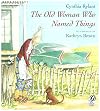
An old woman who has outlived all her friends keeps from being lonely by naming the things in her life she'll never outlive like her house and her bed. When she meets a puppy the woman refuses to name it, afraid it won't outlive her. The woman doesn't realize she is lonely until she finally meets the puppy who needs someone to love. The story and it's ending is so sweet - showing students the importance of love and companionship. In the classroom it could be used to discuss anticipation throughout books and how it impacts the power of the ending.
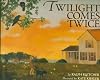
The free verse text in this story shows the transition from day to night and from night to day. The simple text and illustrations reveals the magic in these everday moments. It is a wonderful way to show students the power of descriptive writings.
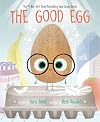
The good egg has been good for as long as he remembers. When the other eggs in his carton are rotten, he always does what is good and right. One day he decided enough is enough and he begin to crack from the pressure of always having to be perfect all the time. This is a good follow up to the book The Bad Seed and could be used in the classroom to talk about the balance of being well behaved but also not having to be perfect all the time.
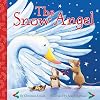
On Christmas morning siblings Daisy and Sam are playing inthe snow when they see someting soar through the sky. Thinking it is a snow angel, they are sad when they see it swoop, flutter, and fall to the ground. In the spirit of Christmas, the mice do all they can to help the snow angel by sharing with it their own Christmas gifts. When the Snow Angel is stronger again it leaves them with a gift themselves. This was a beautiful Christmas book that can be used in the classroom around the Christmas season to discuss the importance of good deeds. It could also be used to teach cause and effect.
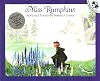
Alice Rumphius longed to travel the world, live in a house by the sea, and do something to make the world more beautiful. The countless lupines that bloom along the coast of Maine are the legacy of the real Miss Rumphius, the Lupine Lady, who scattered lupine seeds everywhere she went. Anothe book fitting for Earth Day, Miss Rumphious is a classic children's book. In the classroom this book could also be used to discuss making an impact as well as the literary elements of sequencing and even creating a story map.
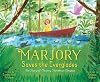
Marjory Douglas was a journalist who saved the Folrida Everglades from development and ruin. When she returned to Florida after World War I, Marjory didn't plan about writing about the Florida Everglades, however she realized the Everglades she remembered was starting to diasppear. Marjory didn't want to sit back and watch her home be destroyed and realzied she had to do something. As a result of her work, part of the Everglades became a national park and the first park not created for sightseeing, but rather for the benefit of animals and plants. Without her work, the Everglades would have been destroyed instead of becoming the protected wildlife reserve it is today. In the classroom I could use this book around Earth Day to talk about the importance of conversation and taking care of the planet. It could also be used during Women's History Month to discuss and important woman and the differnce she made in the world.
Although this book is a novel suitable for upper grades, I love this book and wanted to include it in this library. A terrible accident forces a family who was once divided to come together and make decisions. Three siblings, Cara, Luke, and Edward all have secrets that come to light. Their mother, Georgie, was never able to deal with her ex-husband and now his fate hangs in the balance and in the hands of the children. While dealing with conflicting motivations and emotions the family has a heavy decision to make. This book was extremely heavy to read and would be hard for any grade level below 5th grade to read and truly appreciate. However, for 5th and 6th graders this book could be a wonderful way to discuss family ties, actions and thier consequences, and how to deal with tragedy.
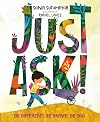
It can be hard for students to feel different from their peers. In the book Just Ask, US Supreme Court Justice Sonia Sotomayor celebrates the different avilities that people have! She uses her own experience as a child with diabetes to write about children with all sorts of challenges, how they use their differneces to be amazing. In the book the children work together in order to build a community garden. All while asking each other questions. This book encourages children that when they come across someone who is different than them and they aren't sure why, to just ask! I thought that this was an amazing book to celebrate the differences of others and encourage students that it is ok to ask others questions. In the classroom I would read this book to engage students in a conversation about individual differences and how to approach them in the classroom.
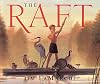
Nicky isn't happy to be spending his summer with his grandmother in the Wisconsion woods. He'd rather be spending his time in the city with his friends. He hates the woods and the chores that are given to him. One day a raft appears on the river and changes everything. As he expolres the river, the raft works it's magic and opens Nicky up to the wonders around him. He begins to realize the beauty of the things around him including the nature and animals, his grandmother, and his own talent. This book, with it's amazing pictures and beautiful storyline, is a wonderful addition to a classroom and could be used to teach about the importance of nature. In the classroom it could be read around Earth Day.
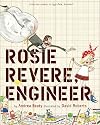
Rosie is quiet druing the days, but at night she is an inventor of many little gadgets while she dreams of becoming a great engineer. Her great-great-aunt, Rosie the Riveter, comes for a visist and mentions an unfinished goal of hers, to fly. Rosie begins working on a contraption to make her aunt's dream come true. When her contraption doesn't work she thinks it is a failure, but he aunt assures her that it is a success and will only be a failure if she gives up. In the classroom I would use this book to teach students the value of persisting. It could aso be incorporated into a STEM lesson.
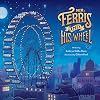
This books shows how the American inventor George Ferris worked to defy all the odds and harness his creative visison and mind for detail in order to invent the Ferris Wheel. This book is fun while being factfilled. Taking readers to the 1893 World's Fair where George Ferris and his Ferris Wheel lifted passengers and took them on a ride for the first time. I thought his book was extremely interesting and well written, shining a light onto the invention process of one of the most popular amusement park rides. As a teacher I would use this to incorporate into a STEM lesson where I would give students tools that the would need to investigate with and create a rotating wheel. This is a fun way to support STEM activities in the classroom.
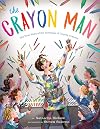
This biography tells the true story of an inventor who loved different colors found in nature so much that he worked hard to invent something that would bring the outside world to children - a crayon! Although it is a biography, it follows the story of the crayons more than the story of the inventor. Regardless, this story uses bright illustrations to highlight the informative text and tell the story of the crayon. In the classroom I would use this to help students brainstorm ways that they solved everyday problems to make things better. This would encourage to think about inventions and how they themselves can be inventors.
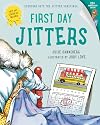
Sarah Jane is scared to begin at a new school where she doesn't know anybody and nobody knows her. She;s sure its going to be awful. It takes a lot of encouragement from Mrs. Hartwell, but Sarah Jane reluctantly goes to school. As soon as she gets there she is befriended by her teacher Mrs. Burton, who helps ease her first day jitters and help her transition to her new school. I would use this book in the classroom to read on the first day of school and help ease any first day jitters in my students.
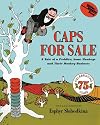
A peddler is trying to sell his caps, but he must outwit a group of mischievous monkeys in order to do so! Caps for Sale is a easy to read book that can be used to teach repetition, patterns, and even colors. This is a good book for early readers as it is filled with simple text while incorporating a good storyline and humor. The set problem and resolution is good for beginning readers who are learning about elements of a story.
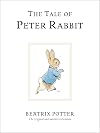
Peter Rabbit lives with his family under the roots of a tree. Peter and his sisters are allowed to play whereever they want besides Mr. McGregor's garden. Peter knows better but as soon as he can he goes to the garden. Peter's disobedience gets him into lots of trouble as he must try to escape the garden and get back home safely. This is a classic children'ts picture book with beautiful illustrations that will captivate the reader. This could be used to teach students the importance of following directions and not disobeying. It could also be used to talk about gardens and types of soil in science class. While not a direct tie, it is a good way to incorporate literature into science.
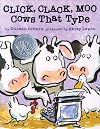
Farmer Brown has a problem, his cows like to type! They spend all day typing. His problems really begin when his cows start leaving him notes! The cows go on strike and demand better things from the Farmer. Eventually, with the help of Duck as a diplomat, their demands are met and they get back to work. Another one of my childhood favorites, this book could be used to teach students about the impact that persuasive writing can make!
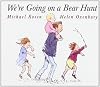
A family and their dog head out to go on a bear hunt. The spend the day in nature, lighthearted and pretending to go on a bear hunt. As the day continues they are caught in a blinding snowstorm. They end up in the bears cave and must run back home to safety! The book uses a lot of repetition and could be used in Language Arts or Dramatic Play to encourage students to develop creative-thinking and dramatization skills to extend the story. The book could also be used to teach students about repetition and how it is used to enhance stories.
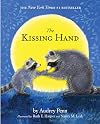
The Kissing Hand was one of my favorite books when I was a child. It follows the stroy of Chester Racoon who does not want to go to school and be away from his mother. To help him stop worrying, his mother, Mrs. Raccoon, shares a family secret called the Kissing Hand. This helps give Chester reassurance of her and her love anytime that he is scared without her. This book could be used in the classroom to help ease students' fears who may be dealing with separation anxiety and can be read on the first day of school. The book could also be used to teach children about feelings and how to express their feelings.
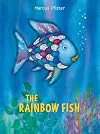
The Rainbow fish is a classic children's picture book. The illustrations are beautiful and glistening that will draw readers into the story. The Rainbow Fish is a simple story about a fish who has to learn to make friends by sharing his most prized posessions. In the classroom I would use this book to teach cause and effect.
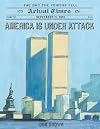
This book is a picture book that describes the tragedy of September 11. This well written book is sensitive to what occured and explains it in a way that makes it accessible for young readers who are too young or weren't alive on the day. In the classroom I would use this book to discuss with students the tragedy of September 11, 2001.
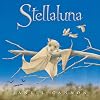
Stellaluna is the story of a lost bat who finally finds her way home to her family and friends. This book could be used in the classroom to tie into science and teach students about bats and how they use echolocation.
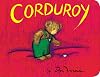
Corduroy the stuffed bear is locked in a department store at night. He loses his button and goes on an adventure throughout the store looking for it. The night watchman ends up hearing him and putting him back on the shelf. The next day a little girl takes him home and becomes his friend! In the classroom this story could be used show how inanimate objects can be brought to life.
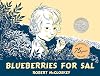
Sal and her mother are picking blueberries for the winter and meet a mother cub and her bear. the cub and Sal get mixed up and begin following the wrong mother. Will they discover before they follow the wrong mother home? This story could be used in a seasonal discussion or when talking about how different animals prepare for the winter. It could be a way to tie in science into the reading classroom
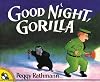
This book is about bedtime at the zoo and all the animals are going to sleep. As the zookeeper goes to put all the animals to bed, one mischievous little animal is causing problems! I would use this book to demonstrate to students that illustrations can be used to protray parts of the storyline not described by the text. This is important in showing students the importance of illustrations and the difference they can make.
Amos McGee is a zookeeper who always has fun with his animal friends. One day he wakes up sniffling and sneezing and must take a sick day. Even though he didn't make it to the zoo that day, he receives some unexpected guests when the animals show up to visit him! In the classroom I would use this book to show students how illustrations and small details can be used to support details of the text.
Pinkalicious loves all things pink from fairy dresses to cotton candy to bubblegum. Her parents warn her not to eat too many pink cupcakes, but she keeps eating them. She eats so many she turns herself pink! The story follows Pinkalicious as she tries to figure out how to no longer be pink. In the classroom I would use this book to show students how puns and fake rhyming words can be used to add to the story.
This book tells the cute story of Harold and his purple crayon. As Harold draws using his purple crayon, he is taken to all of the different locations and is transported by his imagination. This is such a cute story of a little boy and his imagination. I love how the vivid drawings really come to life in a very simple way. In my classroom I think it would be good to show students how they can really run with their imagination while writing. This simple story would be good as just an icebreaker, discussion starter, or time filler in the classroom.
This book follows the story of Alexander, a boy who knew it was going to be a bad day when he woke up with gum in his hair. His day only got worse when his firend deserts him, theres no dessert in his lunch bag, and there were lima beans for dinner, and more! This story teaches students how to deal with a bad day and can be used to teach the order of words. The repetition in the sentences helps with this.
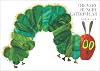
The Caterpiller is hungry, very hungry. On day he ate an apple, the next he ate three plums, and he was still hungry! When he was finally full he made a cocoon and went to sleep, a few weeks later he woke up and transformed into a butterfly. This interactive story is a classic with beautiful illustrations. It would be good to use in a science classroom to teach the process of metamorphosis.
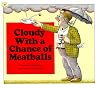
This story tells the story of a Grandfather telling his grandshildren a story. In the little town of Chewandswallow food falls from the sky and gives people everything they need. Everything was going well until too much food starts falling from the sky. The people of Chewandswallow use thier ingenuity to escape the town and the food falling from the sky. The creativity and excitement of the story combined with rich illustrations are wonderful to engage students in the story. A creative way to use this in the classroom would be to have students write a story surrounding food and illustrate it. This would be good for students who show interest in culinary arts.