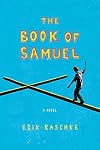
Samuel Gerard is growing up in Denver in the 1980s. His mom is skeptical about religion, while his dad rigorously studies the Bible and attempts to share it with others. One day Dad leaves, and Samuel is left to find his way between these two extreme approaches to religion. Meanwhile, he and his best friends have a growing beef with some Mexican kids who have started using their bike jumps. While all of this sounds heavy, Raschke skillfully shows how Samuel navigates social and emotional challenges while maintaining a normal junior-high existence filled with hijinks and shenanigans. He also demonstrates that although it's not easy to find peace with oneself, or with the world around you, the effort and discipline required will help Samuel grow into a stronger, kinder man. Erik Raschke and I both graduated from Earlham College, a small liberal arts school affiliated with the Religious Society of Friends, or Quakers. Quakers believe in nonviolence and peaceful conflict resolution. I think Raschke has done a great job of showing how, although it can be hard to be a peacemaker, all of us can and must do so.
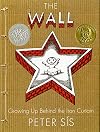
Sis delivers a richly illustrated account of his childhood in Communist-era Prague. Black, white, and grey drawings depict the bleakness of childhood in a Communist country. Often red is the only visible color, with the exception of young Peter's drawings-- and the snatches of Western pop culture that filter through the Iron Curtain, giving young Czechs hope for freedom and a better life. Simple text at the bottom of each page recounts the basic events of Sis' life, while sidebars and insets place these happenings in their broader cultural and political contexts. This book will appeal to older elementary and middle school students who are curious about history and world culturals. The book's striking illustrations may also attract reluctant readers who otherwise might not pursue such interests.
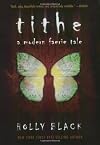
Holly Black gets faeries right in this clever, original retelling of the Tam Lin legend. Faeries are not cute, pink, and harmless; they are sly and mischievous at best, evil and murderous at worst.
Kaye Fierch has long had faerie friends, but at age 16 she discovers that she herself is a pixie. She also meets a dashing, dangerous faery knight called Roiben. Kaye's relationship with Roiben leads her through Faeryland's frightful Unseelie Court, where she narrowly escapes becoming the sacrifice which binds the solitary fey to obey the Unseelie Queen. In "Tithe," Black has created an atmospheric, suspenseful adventure which will appeal to disaffected teens and the adults who remember those days.
Learn more about Holly Black at www.blackholly.com
Kaye Fierch has long had faerie friends, but at age 16 she discovers that she herself is a pixie. She also meets a dashing, dangerous faery knight called Roiben. Kaye's relationship with Roiben leads her through Faeryland's frightful Unseelie Court, where she narrowly escapes becoming the sacrifice which binds the solitary fey to obey the Unseelie Queen. In "Tithe," Black has created an atmospheric, suspenseful adventure which will appeal to disaffected teens and the adults who remember those days.
Learn more about Holly Black at www.blackholly.com
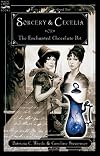
Imagine that Jane Austen included magic and mystery in her elegant, witty novels, and you've got Sorcery and Cecelia. This delightful book recounts the adventures of two cousins who stumble into a battle among rival wizards in 19th-century England. Fresh, funny, and original.
Leaving Microsoft to Change the World: An Entrepreneur's Odyssey to Educate the World's Children by John Wood
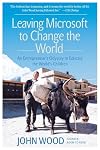
A successful software executive leaves his lucrative career to build libraries and schools in the developing world. John Wood used his savings and management skills to create Room to Read, a foundation that supports his literacy-building efforts. He explains in dynamic and inspiring prose how his risks paid off to benefit some of the world's neediest children. Visit the foundation's web site at www.roomtoread.org for more information, and to support his work.
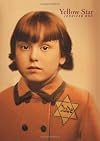
Based on the memories of Roy's aunt, one of the few children to survive the Lodz Ghetto. It's heartbreaking and horrifying, but bears witness to an important chapter in history from a child's point of view. Roy uses free verse to capture a child's impressions of life in unspeakable circumstances.
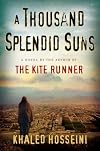
I just finished this novel, the second by the author of the popular and acclaimed book "The Kite Runner." Like that previous book, "A Thousand Splendid Suns" describes how individual Afghans have endured their nation's heartbreaking recent history. Although it specifically details the barbaric, cruel, and unholy abuses to which the Taliban subjects Afghan women, it also examines how fundamentalist interpretations of religion restrict women's lives and choices.
You might wonder why I recommend a book that I've described with such grim adjectives. First of all, we need to understand the countries where our troops are fighting. Second, this book depicts the Afghans as real people who have been through hell, but who work to improve their lot in life. Ultimately, it's about survival, endurance, and hope, and goodness knows the world could use some hope right now.
Finally, this is a book that helps us lucky Americans put our own problems in perspective. Next time I complain about traffic, I will be grateful that I can drive around without being bombed to hell by the Soviets, the Mujahideen, or the Taliban. Then I will be grateful that I can drive and go to school, and that I don't have to wear a burqa.
As usual, I can't do this book justice, so please read it.
You might wonder why I recommend a book that I've described with such grim adjectives. First of all, we need to understand the countries where our troops are fighting. Second, this book depicts the Afghans as real people who have been through hell, but who work to improve their lot in life. Ultimately, it's about survival, endurance, and hope, and goodness knows the world could use some hope right now.
Finally, this is a book that helps us lucky Americans put our own problems in perspective. Next time I complain about traffic, I will be grateful that I can drive around without being bombed to hell by the Soviets, the Mujahideen, or the Taliban. Then I will be grateful that I can drive and go to school, and that I don't have to wear a burqa.
As usual, I can't do this book justice, so please read it.
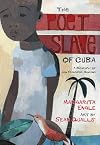
Juan Francisco Manzano was a real historical figure, and Margarita Engle deftly uses poetry to suggest what his internal life must have been like. The collected poems tell his story from his perspective, as well as those of his family and his cruel owner. Readers will be struck by Manzano's ability to overcome the brutality of slavery, and to maintain his dignity in such harsh circumstances.
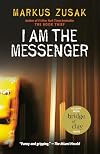
When 19-year-old Ed Kennedy unwittingly foils a bank robbery, he becomes a local celebrity. Soon after, he begins receiving mysterious messages on playing cards. The messages instruct him to help others, and Ed gains confidence and a sense of responsibility by following these orders. This lyrical meditation on community, responsibility toward others, and friendship was a 2006 Printz Honor Book for outstanding young adult fiction. But readers of all ages will come away with a stronger sense of our connection to others. Zusak is an exciting young writer with a strong moral compass and a bright future.
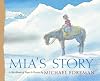
Based on a true story about a family the author met while traveling in Chile. Mia's village is in the garbage dump outside the capital city of Santiago. Her family is poor but proud and loving, and Forman depicts their lives with sensitivity and hope. Despite the picture book format, this subject probably would be inappropriate for preschool storytime. However, it would be a wonderful addition to elementary classrooms where other cultures are studied. And parents can use it at home to present life in other cultures, as well as social issues such as poverty.
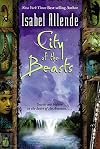
The Queen of Latin American literature kicks off a compelling action-adventure series for middle-school boys and girls. Alexander and his fearless grandmother search the Amazon rain forest for a mysterious race of creatures. With the help of a local girl named Nadia, and an indigenous tribe, Alexander finds the Beasts and protects them from outsiders who would destroy their jungle home. Environmental and social justice themes enrich this cracking good action tale.
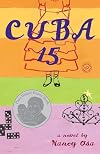
A funny teen novel about an ethnically mixed family. Violet's dad is Cuban, her mom is Polish, but she feels 100% American. When Violet's Cuban grandparents insist she have a quinceanera, a Hispanic girl's coming-of-age party, she resists at first. But eventually the experience of planning her "quince" motivates Violet to learn more about life and music in Cuba, create a hilarious speech-team routine about her "loco family", and have her quince on her terms. This book explore American cultural identities without taking the topic too seriously.
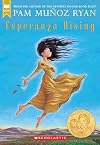
This charming novel is based on Munoz Ryan's own family history. When Esperanza's family loses their ranch and their fortune in Mexico, they move north to California to eke out a living as migrant farm workers during the Great Depression. Yes, they have hard times, but the family is determined to make it no matter what. Esperanza's name means "hope" in Spanish, and this book is about staying hopeful in hard times.
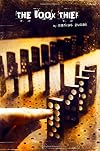
Although she struggles to learn to read, Liesel Meminger steals books. She steals them from Nazi bonfires and from the mayor's library. Then she shares them with her foster parents and the Jewish man they hide in their basement. A truly original World War II story, THE BOOK THIEF is about the power of words. Zusak's words depict the horrors of Nazi Germany, but they also demonstrate how words can provide courage and hope in the most frightening times.
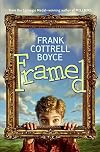
A charming and delightful novel that takes joy in children's criminal schemes! Britain's National Gallery must store its priceless art collection in an abandoned Welsh slate quarry to protect it from flooding. Young Dylan is working hard to save his family's service station from financial ruin when the gallery director mistakes him for an aficionado of Italian Renaissance art, and invites him to visit the collection. Although Dylan named his chickens after Teenage Mutant Ninja Turtles, not painters, he muddles through a series of conversations about art. Meanwhile, his sister Minnie plots to steal a painting, and the whole town of Manod is turned upside down by art. The wacky characters would be utterly charming, even if they weren't Welsh.