
Elegant, feminine, post-modern and wistfully beautiful.
Have started Rerereading. Sort of book, in the current climate you have to reread and reappraise every two years or so.
In two words, Not bad.Paul Theroux’s latest novel, is actually a compilation of three novellas- each, a story at the Indo-american interface set in contemporary times. The first is rather a weak story of an American couple holidaying in an Indian spa; the second , perhaps the most intense of the three is a story of an American businessman forced to visit India because of his work and the last is about a young American backpacker. Interestingly, all the characters come to India with their own ideas, but find themselves drifting into first, and later, sucked by something inexplicable that would change them and their idea of India forever. The common pivotal motif in all the stories is sex, which takes different forms in different stories: an one-off, an affair/arrangement, a rape. In themselves, the stories are unremarkable but Paul must be credited for his efforts to break the stereotype of the Western impression of India; thankfully he doesnt hover around identity, diaspora, generation gap, new-found feminism, secularism etc which could be safely trusted(to be overdone) with the Indian writers. The stories, though built in rich and easily flowing prose lack a definitive identity, a not so surprising relevation when one looks too long at India. Perhaps, that is the reason why the book carries three novellas instead of a single novel.

It is of course an irony to review a wabi sabi book. But then I thought I could.
I thought the choices werent equitable- some genres being neglected, and a slight overemphasis on jazz and blues, may be of author's own taste. So if you are well acquainted with Jazz you would want to skip this but if you are looking for a decent list of great Jazz recordings, along with a few other greats this would do it.

Amidst all the post modernism floating about , it is nice to see Europe still finding room to explore the fundamental unit of human life ie the relationship between two human beings.The content has been done with a million times, yet the charecters are fresh. And by that I do not mean they are rib-tickingly funny or unpretentiously perverse( sadly in my experience , when people use the word fresh for a character has been either of the two)The other recent European book I can think of , which also explores very unique relationship between two people as a unit is L'Élégance du hérisson by Muriel barbery . Curiously both Muriel barbery and Bernhard schlink are not writers per se , both of them being professors of philosophy and law respectively.So the good thing about The reader is, translated from a different language, the writing is unique. You don’t get creative writing workshop manufactured sentences, which is welcome bonus if you are ODing on contemporary American prose. It is easy and light read in terms of flow, so guess what ? you could finish it off in a bath or have it read to you. As regards the content, i guess it has been done with many a times. And , in my edition, Schlink has put in a few questions at the end , which clearly defines the purpose of the book. I guess, the answers are to be found for oneself.But I think the best advantage of the book is to read it before watching the movie and if you are a cinema enthusiast like I am, you can make a movie show more for yourself imagining all the settings described like eg the triumphal parade of brown, yellow, orange, tawny red and chestnut trees between New York and Boston, or the fire that destroyed the church.. first the steeple burned, then the roof; then the blazing rafters collapsed into the nave and the pews caught fire .... and see how much the actual movie fits into the auteur within you. show less
I always find it difficult to talk about the books I really like. Especially so if it is a Naipaul book. I read The Bend again this year and found it much more ensorcelling than first time around . I guess what is so appealing about the book is its sense of diligence, a discipline which attempts to faithfully reflect the emerging world in Africa, as it is. No more no less. Perhaps, this is why, even after half a century and million more theses written on Africa, it still reflects the essence of Africa as none of them do.I suppose most paperback readers find it inane or even boring. But, bear in mind it's not a transit read. It's not a fiction of plot or story. It is a narrative of reality. And like all realities that are known to man, has no beginning or ending. It is a snapshot of a typical third world problem ie a recently independent state or culture desparately trying to hold onto something as its own in the wake of emerging post-modernism. But it never has or had anything of its own, anything that would give it an identity in the contemporary world apart from the history of having been a colony. Therefore it tries to manufacture a past – leaders, tribes, dances, cameraderie. Oh! the vanities, the denials, the insecurities, amidst all that is forming and unforming, changing choices, conflicting values. But it is what it is. Then there is the beauty of Naipaul prose. God! How it flows. Delicate, sublime, perfect yet letting the reader to make his own mind without show more patronizing or simplifying the sentiment. What I found most incredible in the book is the style used to pastiche the complex reality, so unhurriedly, so gracefully; as the book moves forward, it feels like a wave slowly falling and receding on a shore – adding something to the before, yet taking away something after; letting all the voices to speak on their own terms, to express their own realities to ultimately add up a grand reality that none of them can access in toto. Here is a wonderful instance – Indar is so ashamed of his third world identity that he desparately wants to trample his own past… ‘It isn’t easy to turn your back on the past. It isn’t something you can decide to do just like that. It is something you arm yourself for, or grief will ambush and destroy you. And Raymond with his first world citizenship, so much yearns for the True Africa that his own past has no bearing on his personal life. This leads to his wife's discontent and her confusion. Here's Raymond musing on Africa.. I was sitting in my room and thinking with sadness about all the things that have gone unrecorded. Do you think we can ever get to know the truth about what has happened in Africa in the last hundred or even fifty years? All the wars, all the rebellions, all the leaders, all the defeats?It doesn’t occur to you when you are reading it but as you move along, as the impressions of their characters are better formed , suddenly, somewhere in the next chapter perhaps, it occurs to you , that these two completely different men from completely different worlds are so unknowingly seeking each other’s past. They are only allowed to seek, ...Indar seducing Yvette or Raymond wanting to be Mommsen of Africa .., but never find. But they cant give up. Hence the world is what it is, always in movement. show less
Fancy blonde girl from down under goes to India ,finds filth, god and diarrhoea;Really now, both the Ozzies and Indians alike,We all should get a life.
Have to say one of the brilliant books I've read this year; yes I even liked it more than the celebrated Patrick French Biography. This is a compilation of all the interviews of Naipaul from sixties to nineties. Bought it for £16 and thought it was worth every single shekel. Reading these interviews and the insights made me want to run and grab the next available person while screaming 'This is it'. This is one-man-clinical-precision-scrutinizing-machine having all the cultures and countries of the postwar world for breakfast, one at a time. Absolutely brilliant, loved the James Atlas interview for Vanity Fair in 1987, and many more wonderful ones. There was also an average one from 1965 by Derek Walcott, who pretends to catch the thoughts of Vidia while they are clearly sailing way past his head. In one question he even tries to put his own words, his own second rate understanding of the world unto Vidia and deserves what he gets.Here's the question:Walcott: Do you think that having lived in Trinidad, in a multi-racial society, has helped you to achieve a more balanced perception? For example, a writer brought up in Trinidad does not have the same racial belligerence as a Jamaican writer.the societies are different. In your work there a very delicate sense of humour. One finds this in Selvon also. Do you see your ability to laugh at certain situations, not with mockery necessarily, as part of having been brought up in Trinidad?Vidia: I really don't know . . .

Easy read, good primer to South Asian History. Better done with the eponymous BBC documentary. Skip if acquainted with the subject.


This is an one night stand with Agatha Christie. Quick tick the box read.
Minimal and absurdly insightful. Simenon's psychological stories are the find of the year.
An Utterly Impartial History of Britain or 2000 Years of Upper-class Idiots in Charge by John O'Farrell

Never has been witch burning made so irresistible.


Usually I manage to resist reading a review before I read any book. But, when it is reviewed as the main article at the London Review of Books, it becomes incredibly hard to ignore. And impossible, either due to the reaction to it or because of my admiration for the writer, if it is a Naipaul book. Through such travails of reading the book after having read about it, and, amidst reverberating echoes of such canon-shots booming between the pages, I finished Naipaul's latest book Writer’s people -Ways of looking and Feeling, last week.
The book deals with one of the expansive and original subjects one can read about in the post-modern world. Naipaul typically, with no allegiance to anyone and no belongingness anywhere writes about writing and the writers - whom he had read or come across in his lifetime; and how, with their ways of looking and seeing, they helped to shape his own way of seeing.
Admittedly, the book is quite airily written and lacks the eye for detail that one usually associates with Naipaul. Given the vastness of the domain chosen for the book, it is at best a selective summary. It is fragmented, flaky and even in the best of its pieces surprisingly incomplete. Also, I must add, for anyone who has keenly followed Naipaul’s works, it would not be a subject entirely unfamiliar. At least I wasn't when I read the book.
Though there are liberal transplants of sentiments from his earlier books ( we all know about the influence of Huxley’s Jesting Pilate and show more Vidia's positive takes on Gandhi and RK Narayan) The Writer's People book doesn’t fail to give you a clearer understanding of his perspective. Yet, somewhere while translating the cynicism into criticism, in a passage here and there, one finds his shameless malice unmasking itself . Many pages on Anthony Powell have little relevance and is presumably prompted by his personal differences that was between them. The chapter was, as Naipaul claims himself at the very beginning - difficult to write - making the reader who has read it wonder, what exactly was the need to go through such hardship? More so, at a premise when it is least pertinent? Difficulty or malice, whatever it is, the sentiment has been given the treatment it deserves by many a critics. However, that shouldn’t let us overlook other segments of the book: there are wonderful observations and assertive judgements on others which, as hard as they are to digest, cannot be reasonably refuted: The takes on Vinoba Bhave and Flaubert for instance. I haven’t read any Salvon so I cant make a valid personal judgement. And the well-known Walcott-Naipaul bitching duel that's been running on for a while also finds it's share in the book. Pity really.
In all, personally the book was a welcome, coming during the hackneys and baloneys I have been letting myself read over the last few months. From a larger view, it wasn't an incredibly outstanding book but neither was it a dull put-aside. Which other writer would research to tell you that an Indian Bullock-cart did 24 miles a day in 1890s? And going back to the reviews, after having read the book was - sort of irony of relevance – because the book is all about ways of looking.
It’s always amazing to see how reviews on Naipaul often aid to propagate their own perception of him; the most commonest transference that goes into his reviews are that he is an arrogant, provocative prude who defines himself by criticism. But readers, who are able not to let themselves carried away by their own prejudices and loyalties often, if not eventually, bring themselves to admire his work - fiction and otherwise. But, for almost repeating his own old material and the apparent offence he has wrapped it in, I am not sure if that would happen with this book. show less
The book deals with one of the expansive and original subjects one can read about in the post-modern world. Naipaul typically, with no allegiance to anyone and no belongingness anywhere writes about writing and the writers - whom he had read or come across in his lifetime; and how, with their ways of looking and seeing, they helped to shape his own way of seeing.
Admittedly, the book is quite airily written and lacks the eye for detail that one usually associates with Naipaul. Given the vastness of the domain chosen for the book, it is at best a selective summary. It is fragmented, flaky and even in the best of its pieces surprisingly incomplete. Also, I must add, for anyone who has keenly followed Naipaul’s works, it would not be a subject entirely unfamiliar. At least I wasn't when I read the book.
Though there are liberal transplants of sentiments from his earlier books ( we all know about the influence of Huxley’s Jesting Pilate and show more Vidia's positive takes on Gandhi and RK Narayan) The Writer's People book doesn’t fail to give you a clearer understanding of his perspective. Yet, somewhere while translating the cynicism into criticism, in a passage here and there, one finds his shameless malice unmasking itself . Many pages on Anthony Powell have little relevance and is presumably prompted by his personal differences that was between them. The chapter was, as Naipaul claims himself at the very beginning - difficult to write - making the reader who has read it wonder, what exactly was the need to go through such hardship? More so, at a premise when it is least pertinent? Difficulty or malice, whatever it is, the sentiment has been given the treatment it deserves by many a critics. However, that shouldn’t let us overlook other segments of the book: there are wonderful observations and assertive judgements on others which, as hard as they are to digest, cannot be reasonably refuted: The takes on Vinoba Bhave and Flaubert for instance. I haven’t read any Salvon so I cant make a valid personal judgement. And the well-known Walcott-Naipaul bitching duel that's been running on for a while also finds it's share in the book. Pity really.
In all, personally the book was a welcome, coming during the hackneys and baloneys I have been letting myself read over the last few months. From a larger view, it wasn't an incredibly outstanding book but neither was it a dull put-aside. Which other writer would research to tell you that an Indian Bullock-cart did 24 miles a day in 1890s? And going back to the reviews, after having read the book was - sort of irony of relevance – because the book is all about ways of looking.
It’s always amazing to see how reviews on Naipaul often aid to propagate their own perception of him; the most commonest transference that goes into his reviews are that he is an arrogant, provocative prude who defines himself by criticism. But readers, who are able not to let themselves carried away by their own prejudices and loyalties often, if not eventually, bring themselves to admire his work - fiction and otherwise. But, for almost repeating his own old material and the apparent offence he has wrapped it in, I am not sure if that would happen with this book. show less

On Chesil Beach is what I would call ‘a product of contemporary British establishment’. It is staid, refined and delicately crafted but like most such establishment books has nothing to offer- either in reading experience or in worldly insight.
Clearly Ian McEwan has tried to thickly pad what was or could be only an average short story into a novel. He uses a lot of Victorian Englishness for the purpose- how rhythmically he stirred the tea / how the rustle of the leaves reminded her of Schumann etc, which only further add to the disappointment.
The story is simple: Edward and Florence, two virgin newly- weds are on their honeymoon in a hotel on the Dorset coast and struggle to consummate their marriage. For the first few pages, you feel for them but half-way through when the book becomes hopelessly stuck in its grande neurosis you just wish Ian McEwan lets them get abducted by aliens( For Heaven’s sake it is set in 1962?). Sadly he goes on and on and on turning them into caricatures.
That this book was shortlisted for a recent Booker only speaks for the rockbottom-state of the Booker these days. I thought, at least it was an interesting subject ie to explore a complex and incongrous relationship but again the book lets you down miserably being unable to reflect the layers of the relationship between the main charecters or its rather sequestered form. I would be better doing a Tomas and Tereza again.
Clearly Ian McEwan has tried to thickly pad what was or could be only an average short story into a novel. He uses a lot of Victorian Englishness for the purpose- how rhythmically he stirred the tea / how the rustle of the leaves reminded her of Schumann etc, which only further add to the disappointment.
The story is simple: Edward and Florence, two virgin newly- weds are on their honeymoon in a hotel on the Dorset coast and struggle to consummate their marriage. For the first few pages, you feel for them but half-way through when the book becomes hopelessly stuck in its grande neurosis you just wish Ian McEwan lets them get abducted by aliens( For Heaven’s sake it is set in 1962?). Sadly he goes on and on and on turning them into caricatures.
That this book was shortlisted for a recent Booker only speaks for the rockbottom-state of the Booker these days. I thought, at least it was an interesting subject ie to explore a complex and incongrous relationship but again the book lets you down miserably being unable to reflect the layers of the relationship between the main charecters or its rather sequestered form. I would be better doing a Tomas and Tereza again.
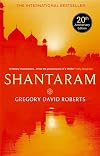
The print of the book is so depressing, so have kept it aside till the bitterness gives away.
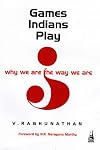
Written by V Raghunathan (not N), a renowned academician in management, I picked up the book for the cleverly parodied title and the concluding sentence in author’s biography that said To relax, he fixes mechanical clocks.
The book unfortunately wasn’t as wacko; it tries to explain the behaviour and underlying self-interested reasoning of the average Indian psyche ( which is many millions in number) using the tenets of game theory esp. Prisoner’s dilemma ( PD).
But, the book is conflated to an extent by not restricting itself to description of behavioural sciences; often it is unable to resist passing social judgements, which I thought was beyond the purview of the book and diluted its original content. Also, the book overlooks complex social variables which have a huge influence on Indian behaviour, in which the locus of control is external.
It would all be mildly exciting if you are new to game theory and its day to day application and are inclined to know more, if not, it can be hopelessly repetitive and at times boring!
The book unfortunately wasn’t as wacko; it tries to explain the behaviour and underlying self-interested reasoning of the average Indian psyche ( which is many millions in number) using the tenets of game theory esp. Prisoner’s dilemma ( PD).
But, the book is conflated to an extent by not restricting itself to description of behavioural sciences; often it is unable to resist passing social judgements, which I thought was beyond the purview of the book and diluted its original content. Also, the book overlooks complex social variables which have a huge influence on Indian behaviour, in which the locus of control is external.
It would all be mildly exciting if you are new to game theory and its day to day application and are inclined to know more, if not, it can be hopelessly repetitive and at times boring!
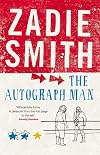
I am sure for all of us there would be a book reading which would feel like we are reading our own life and its happenings; what we think, feel, and live etc.
Well, this is my book.
Was rather, it depicts a segment of my life almost biographically.
Well, this is my book.
Was rather, it depicts a segment of my life almost biographically.

The master of all the books!
Freud described Nietzsche as the only man who knew his mind. Although both were quite mad there is no doubt about the veracity of the statement and this book just proves it. Written by an old, less passionate Nietzsche it dissects the human understanding and life with incredible precision. Mostly assorted in metaphysical aphorisms, it’s a summary of his pitiless quasi-objective observations. The question simply is.. Are you up to it..?
Daring in attack and assertive in defense this book’s only misgiving lies in the demand to be acquainted with the ideology of his earlier works. Although that makes it a lot skewed it’s nevertheless a charming read.
The following excerpts must define what laconism is.
From apophthegms and interludes:
*The belly is the reason why man does not so readily take himself for a god.
* Dreadful experiences raise the question whether he who also experiences them is not something dreadful also.
*A nation is a detour of nature to arrive at six or seven great men.-yes, and then to get round them.(Hegel in one line)
*We are most dishonourable towards our god he is not permitted to sin.
From what is noble:
Every deep thinker is more afraid of being understood than of being misunderstood .The latter perhaps wounds his vanity; but the former wounds his heart, his sympathy, which always says: Ah why would you also have as hard a time of it as I have?
As I type this, I’m filled with memories where friends at college debated these show more passages all through night. For the treasure of insight it beholds it’s definitely worth it, that, if you look- beyond the Nazi interpretation and a few later passages on feminism with comical indignation. If you have lived your prides, prejudices, convictions, defeats, victories, sit and read Beyond good and evil in one piece. show less
Freud described Nietzsche as the only man who knew his mind. Although both were quite mad there is no doubt about the veracity of the statement and this book just proves it. Written by an old, less passionate Nietzsche it dissects the human understanding and life with incredible precision. Mostly assorted in metaphysical aphorisms, it’s a summary of his pitiless quasi-objective observations. The question simply is.. Are you up to it..?
Daring in attack and assertive in defense this book’s only misgiving lies in the demand to be acquainted with the ideology of his earlier works. Although that makes it a lot skewed it’s nevertheless a charming read.
The following excerpts must define what laconism is.
From apophthegms and interludes:
*The belly is the reason why man does not so readily take himself for a god.
* Dreadful experiences raise the question whether he who also experiences them is not something dreadful also.
*A nation is a detour of nature to arrive at six or seven great men.-yes, and then to get round them.(Hegel in one line)
*We are most dishonourable towards our god he is not permitted to sin.
From what is noble:
Every deep thinker is more afraid of being understood than of being misunderstood .The latter perhaps wounds his vanity; but the former wounds his heart, his sympathy, which always says: Ah why would you also have as hard a time of it as I have?
As I type this, I’m filled with memories where friends at college debated these show more passages all through night. For the treasure of insight it beholds it’s definitely worth it, that, if you look- beyond the Nazi interpretation and a few later passages on feminism with comical indignation. If you have lived your prides, prejudices, convictions, defeats, victories, sit and read Beyond good and evil in one piece. show less

Ah! Those were the days when for every two Agatha Christie we did one Colin Forbes. The Writer who helped a teenager to build a Europe, in his mind. Thank you.
Mom had tickets and wanted me to go with her to watch a young lad play cricket , who would later on go on to be The Wall. I had been doing Madame Agatha Christie almost alphabetically and wanted something lighter, cosier for the Sunday. So refused the cricket invite and picked this book up .
To save the long trauma, It was awful and made me sick. The story and the narration, if one can actually find them in it. This was the first book I abandoned in my life and I cant put into words how guilty I felt. Moreover I could never forgive myself for having missed the cricket for this trash.
This was more than a decade back. I have never even dared to try her again. And even now, I think I cant ever bring myself to read a Shobha De book, yes, for the book’s credit, I must say, I am yet to find a worser book published.
To save the long trauma, It was awful and made me sick. The story and the narration, if one can actually find them in it. This was the first book I abandoned in my life and I cant put into words how guilty I felt. Moreover I could never forgive myself for having missed the cricket for this trash.
This was more than a decade back. I have never even dared to try her again. And even now, I think I cant ever bring myself to read a Shobha De book, yes, for the book’s credit, I must say, I am yet to find a worser book published.
Fountainhead is the evidence why women should stay away from Philosophy. They confuse it to romance.
The identity of the book lies in its growth; Eight years in the service, beloved August, has grown into a well rounded Sri Augustya Sen saab; the confusion has given way to charming cynicism which helps him to keep his nose just above the waters and take one day at a time , literally. Unlike English, August, the narrative voice isn’t primarily singular, but fragmented making Augustya an obscure cog in a massive juggernaut of a fleet that is the Indian bureaucracy.
It is easy to see why the book has been unpopular, or rather, not as popular as its prequel; it lacks a centre, the narration is diffuse while the characters conveniently drift in and out. But still, the book is absolutely brilliant for Chatterjee remains faithful to one of the most complicated subjects that can ever hoped to be captured in any language, let alone English ie the behemoth of governance in India. If English, August was a delicate outside-in peep into the Indian bureaucracy through the august eyes of English , Mammaries is a vast chronicle of the functioning of Indian bureaucracy and its hilarious yet inevitable association with the Indian politics. All of course captured in Chatterjee’s brilliant prose alternating between slapstick and satire.
Had I read this book a bit earlier or even later, I would have missed the grand joke that runs through page after page in the book. Clearly one should have a useless drain for a mind to appreciate the beauty of this book, well, thankfully I have.
It is easy to see why the book has been unpopular, or rather, not as popular as its prequel; it lacks a centre, the narration is diffuse while the characters conveniently drift in and out. But still, the book is absolutely brilliant for Chatterjee remains faithful to one of the most complicated subjects that can ever hoped to be captured in any language, let alone English ie the behemoth of governance in India. If English, August was a delicate outside-in peep into the Indian bureaucracy through the august eyes of English , Mammaries is a vast chronicle of the functioning of Indian bureaucracy and its hilarious yet inevitable association with the Indian politics. All of course captured in Chatterjee’s brilliant prose alternating between slapstick and satire.
Had I read this book a bit earlier or even later, I would have missed the grand joke that runs through page after page in the book. Clearly one should have a useless drain for a mind to appreciate the beauty of this book, well, thankfully I have.
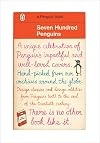
Seven Hundred Penguins is more of a collectors book than reader's. In fact there isnt any reading; between its covers you will find around 700 odd famous penguin covers from over a period of time from around the globe. It is worth buying if you are a book cover/first edition fanatic, for as the book claims - There is no other book like it.
PS Would also make an interesting gift.
PS Would also make an interesting gift.
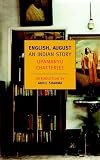
Actually a revisit; I am reading now with a friend, travelling across India ( Ah!! joy of reading aloud a passage on an Indian beach);
Had read it first time when I was a spring-chicken, hardly grasped its essence; Now having met so many Shrivatsavs, Kumars, Bhatias, Sathes, Mrs Rajans, even Vasanth, why even that bastard Tamse, I feel at home here, It is like returning to a childhood lover who has grown more gorgeous, on whose sweet shapely belly you can lay your head and wonder ... Why, The mind is so restless...Oh Krishna?
Had read it first time when I was a spring-chicken, hardly grasped its essence; Now having met so many Shrivatsavs, Kumars, Bhatias, Sathes, Mrs Rajans, even Vasanth, why even that bastard Tamse, I feel at home here, It is like returning to a childhood lover who has grown more gorgeous, on whose sweet shapely belly you can lay your head and wonder ... Why, The mind is so restless...Oh Krishna?

Rereading, actually. Just to place Salter correctly in the hierarchy of american prose. Between Bellow and Mailer?