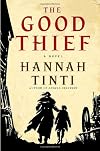
The Good Thief by Hannah Tinti is a contemporary novel that has the feel of a classic. Set in 19th century New England, it is reminiscent of Mark Twain and Dickens. It is the story of an orphan boy, the very likeable 12 year old Ren, who is missing a hand but doesn’t know why. Left at St. Anthony’s Orphanage for Boys as a baby, he longs for a family but knows nothing of his past.
Told by the monks that he is unadoptable due to his disability, it comes as quite a shock to Ren when Benjamin Nab appears claiming to be his brother. The orphanage is quick to release Ren after hearing Benjamin’s convincing tale, and the two hit the road on an adventure filled with scams, hustlers, and grave robbers.
Ren, having never been outside the walls of the orphanage, is both fascinated and leery of Benjamin and his partner in crime, the heavy drinking Tom. Benjamin is full of fantastical stories that become less and less believable and soon Ren fears he is not who he claims to be, but by this time he has already been sucked in. Benjamin’s past eventually catches up with him and by the end Ren must decide who he can trust.
Full of wit, humor, and memorable characters, this is a great book with an authentic feel and a fast moving plot. The subject matter sounds dark, but it doesn’t feel that way at all. In fact, it is surprisingly lighthearted. I was fully engrossed in this world of outcasts populated with a dwarf living on the roof, a doctor who buys recently deceased bodies, show more Ren-the religious crippled orphan boy with a good heart, the cruel owner of a mousetrap factory, a violent giant with a soft spot for Ren, a hard of hearing widowed landlady, and Benjamin, the tall-tale spinning con man.
This book is really different from anything else I’ve read this year and was a welcome change of pace. I thoroughly enjoyed it and would highly recommend it to anyone 14 years and up. show less
Told by the monks that he is unadoptable due to his disability, it comes as quite a shock to Ren when Benjamin Nab appears claiming to be his brother. The orphanage is quick to release Ren after hearing Benjamin’s convincing tale, and the two hit the road on an adventure filled with scams, hustlers, and grave robbers.
Ren, having never been outside the walls of the orphanage, is both fascinated and leery of Benjamin and his partner in crime, the heavy drinking Tom. Benjamin is full of fantastical stories that become less and less believable and soon Ren fears he is not who he claims to be, but by this time he has already been sucked in. Benjamin’s past eventually catches up with him and by the end Ren must decide who he can trust.
Full of wit, humor, and memorable characters, this is a great book with an authentic feel and a fast moving plot. The subject matter sounds dark, but it doesn’t feel that way at all. In fact, it is surprisingly lighthearted. I was fully engrossed in this world of outcasts populated with a dwarf living on the roof, a doctor who buys recently deceased bodies, show more Ren-the religious crippled orphan boy with a good heart, the cruel owner of a mousetrap factory, a violent giant with a soft spot for Ren, a hard of hearing widowed landlady, and Benjamin, the tall-tale spinning con man.
This book is really different from anything else I’ve read this year and was a welcome change of pace. I thoroughly enjoyed it and would highly recommend it to anyone 14 years and up. show less
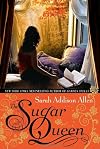
The Sugar Queen by Sarah Addison Allen is the magical follow up to 2007’s Garden Spells. It’s sweet but not sappy, nutty but not ‘chock full of nuts’. It’s like the perfect dessert.
Josey Cirrini, sheltered rich girl in a North Carolina resort town, lives alone with her overbearing mother and a housekeeper. At 27 she has no friends, no social life, and is busy doing her mother’s bidding in an effort to atone for the horrible way she behaved as a child. Everyone in town knows who she is because her late father built the ski resort that lifted the town out of poverty. She is secretly in love with the mailman and meets him on the porch each day but does nothing more than say hello. She’s living a small little life, driving her elderly mother to her various appointments and social events, and living for the moments alone when she can indulge her massive sweet tooth and gorge on mallomars or oatmeal pies from the secret stash in her closet.
Enter Della Lee, one of the eccentric townfolk who is a bit rough around the edges. She shows up one morning in Josey’s closet and won’t budge. Della Lee threatens to make Josey’s secret public, so Josey begrudgingly allows her to stay. Della Lee takes up residence in the closet and soon she is nudging Josey out into the world to make friends and have a life.
As in Garden Spells, magical things are happening all over town. One character, Chloe, Josey’s first real friend, has an interesting relationship with books. They show more appear out of nowhere and are the exact books she needs at the moment they appear. One rather persistent book, Finding Forgiveness, makes its first appearance on page 36 and continues to appear throughout the story.
“She accepted it from then on. Books liked her. Books wanted to look after her.
She slowly picked the book up from the apartment floor. It was titled Finding Forgiveness.
She stared at it a long time, a feeling bubbling inside her. It took a few moments for her to realize it was anger. Books were good for a story or to teach a card trick or two, but what were they really? Just paper and string and glue. They evoked emotions and that was why people felt a connection with them. But they had no emotions themselves. They didn’t know betrayal. They didn’t know hurt.
What in the hell did they know about forgiveness?”
The Sugar Queen is a bit predictable, but I can overlook that because it has something to say about relationships and forgiveness, and it says it in a rather beguiling way. Like the perfect dessert, the book has a satisfying ending. I would recommend it to anyone who enjoys magical realism. show less
Josey Cirrini, sheltered rich girl in a North Carolina resort town, lives alone with her overbearing mother and a housekeeper. At 27 she has no friends, no social life, and is busy doing her mother’s bidding in an effort to atone for the horrible way she behaved as a child. Everyone in town knows who she is because her late father built the ski resort that lifted the town out of poverty. She is secretly in love with the mailman and meets him on the porch each day but does nothing more than say hello. She’s living a small little life, driving her elderly mother to her various appointments and social events, and living for the moments alone when she can indulge her massive sweet tooth and gorge on mallomars or oatmeal pies from the secret stash in her closet.
Enter Della Lee, one of the eccentric townfolk who is a bit rough around the edges. She shows up one morning in Josey’s closet and won’t budge. Della Lee threatens to make Josey’s secret public, so Josey begrudgingly allows her to stay. Della Lee takes up residence in the closet and soon she is nudging Josey out into the world to make friends and have a life.
As in Garden Spells, magical things are happening all over town. One character, Chloe, Josey’s first real friend, has an interesting relationship with books. They show more appear out of nowhere and are the exact books she needs at the moment they appear. One rather persistent book, Finding Forgiveness, makes its first appearance on page 36 and continues to appear throughout the story.
“She accepted it from then on. Books liked her. Books wanted to look after her.
She slowly picked the book up from the apartment floor. It was titled Finding Forgiveness.
She stared at it a long time, a feeling bubbling inside her. It took a few moments for her to realize it was anger. Books were good for a story or to teach a card trick or two, but what were they really? Just paper and string and glue. They evoked emotions and that was why people felt a connection with them. But they had no emotions themselves. They didn’t know betrayal. They didn’t know hurt.
What in the hell did they know about forgiveness?”
The Sugar Queen is a bit predictable, but I can overlook that because it has something to say about relationships and forgiveness, and it says it in a rather beguiling way. Like the perfect dessert, the book has a satisfying ending. I would recommend it to anyone who enjoys magical realism. show less
 This review was written for LibraryThing Early Reviewers.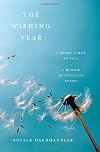
The Wishing Year by Noelle Oxenhandler is the non fictional account of an experiment in desire. Oxenhandler takes one year to explore the act of wishing- think birthday candles, genies in a bottle, a wishing well. She focuses her desires on 3 very different wishes- a house (after years of house rental), a man (after the end of a long marriage), and spiritual healing (after a painful separation from her spiritual community). She decides to try “putting it out there” to see what happens.
She doesn’t flee the country in pursuit of these things, a la Elizabeth Gilbert in Eat, Pray, Love. Instead she attempts, through the mysterious power of wishful thinking, to attract the things she desires into her life rather than actively seeking them out.
In the introduction she defines what she means by “wish”- a desire that takes aim, or hope with a point- not unlike an arrow. Her year of wishing begins on New Years Day, and her fairy godmother-like friend Carole is her mentor in this endeavor. The book is laid out month by month, January to December.
Does she really believe in getting what she wants through wishing? From the beginning she has to perform “a willing suspension of disbelief” and asks herself, “If I acted as though this were true [that wishing can make things happen], would it bring about a positive change in my life?”
A spiritual person, she is conflicted over what is ok to wish for- her Catholic upbringing and her study of Zen Buddhism as a young adult show more makes it difficult and somewhat guilt laden for her to ask for material things. Through her research into the ancient human art of wishing, she soon tweaks her way of thinking and chooses to be open to the blessings of the universe. When she wishes in the mode of the ancestors, she says, she adopts “an attitude that is both confident and humble. I commit to doing everything within my human power to make something happen-while also recognizing that my human power is limited.” Wishing, apparently, takes over when human knowledge and effort can carry you no further.
Do wishes attract allies and abundance? Or do wishes make us vulnerable to disappointment? That is the experiment behind The Wishing Year, an experiment that surpasses Oxenhandler’s expectations, and a book that surpassed mine. I found it inspiring and would recommend it to anyone who has ever wished upon a star. show less
She doesn’t flee the country in pursuit of these things, a la Elizabeth Gilbert in Eat, Pray, Love. Instead she attempts, through the mysterious power of wishful thinking, to attract the things she desires into her life rather than actively seeking them out.
In the introduction she defines what she means by “wish”- a desire that takes aim, or hope with a point- not unlike an arrow. Her year of wishing begins on New Years Day, and her fairy godmother-like friend Carole is her mentor in this endeavor. The book is laid out month by month, January to December.
Does she really believe in getting what she wants through wishing? From the beginning she has to perform “a willing suspension of disbelief” and asks herself, “If I acted as though this were true [that wishing can make things happen], would it bring about a positive change in my life?”
A spiritual person, she is conflicted over what is ok to wish for- her Catholic upbringing and her study of Zen Buddhism as a young adult show more makes it difficult and somewhat guilt laden for her to ask for material things. Through her research into the ancient human art of wishing, she soon tweaks her way of thinking and chooses to be open to the blessings of the universe. When she wishes in the mode of the ancestors, she says, she adopts “an attitude that is both confident and humble. I commit to doing everything within my human power to make something happen-while also recognizing that my human power is limited.” Wishing, apparently, takes over when human knowledge and effort can carry you no further.
Do wishes attract allies and abundance? Or do wishes make us vulnerable to disappointment? That is the experiment behind The Wishing Year, an experiment that surpasses Oxenhandler’s expectations, and a book that surpassed mine. I found it inspiring and would recommend it to anyone who has ever wished upon a star. show less
This review was written for LibraryThing Early Reviewers.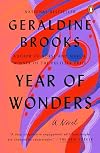
Year of Wonders by Geraldine Brooks is the fictional account of an 18 year old widow with two young boys set against the larger backdrop of the true story of the plague in a remote village in Derbyshire in 1665-1666.
Anna, a servant to the town minister Michael Mompellion, is alone with her boys after her young husband dies in a mining accident. The bubonic plague arrives in the village with a tailor from London, who Anna has taken in as a boarder. In horrifying detail we watch as the disease spreads from Anna’s cottage to her neighbors’ homes and the greater community.
In the early weeks of the plague, the minister gathers his flock together and has them take the Sunday Oath, in which they will voluntarily seal off their town’s borders to allow the plague to run it’s course without anyone entering or exiting their village. Anna forges an unlikely friendship with the minister’s wife Elinor, together becoming well versed in the use of herbs to comfort and alleviate pain. She tends to the sick even as she grieves for the dead. Miraculously she survives the year that claims 1/3rd of the town’s population. Her perseverance in the face of death is truly inspiring.
Year of Wonders made me wonder- how much can one person take? Clearly, as the saying goes, that which does not kill us makes us stronger. This novel speaks to the indomitable human spirit. It made me grateful for things like hand sanitizer and antibiotics. It made me appreciate the blessings of hot running show more water and flush toilets. It made me worry more than I already do about asian bird flu, mad cow disease and deadly SARS. But for all the horrifying and grim detail of this book, it is absolutely wonderful and one I cannot recommend highly enough. Geraldine Brooks has done an exceptional job of blending historical fact with fiction. She is a magnificent storyteller.
Ms. Brooks is the Pulitzer Prize winning author of March, about the absent father in Louisa May Alcott’s Little Women. Her most recent novel, People of the Book, was released in January. show less
Anna, a servant to the town minister Michael Mompellion, is alone with her boys after her young husband dies in a mining accident. The bubonic plague arrives in the village with a tailor from London, who Anna has taken in as a boarder. In horrifying detail we watch as the disease spreads from Anna’s cottage to her neighbors’ homes and the greater community.
In the early weeks of the plague, the minister gathers his flock together and has them take the Sunday Oath, in which they will voluntarily seal off their town’s borders to allow the plague to run it’s course without anyone entering or exiting their village. Anna forges an unlikely friendship with the minister’s wife Elinor, together becoming well versed in the use of herbs to comfort and alleviate pain. She tends to the sick even as she grieves for the dead. Miraculously she survives the year that claims 1/3rd of the town’s population. Her perseverance in the face of death is truly inspiring.
Year of Wonders made me wonder- how much can one person take? Clearly, as the saying goes, that which does not kill us makes us stronger. This novel speaks to the indomitable human spirit. It made me grateful for things like hand sanitizer and antibiotics. It made me appreciate the blessings of hot running show more water and flush toilets. It made me worry more than I already do about asian bird flu, mad cow disease and deadly SARS. But for all the horrifying and grim detail of this book, it is absolutely wonderful and one I cannot recommend highly enough. Geraldine Brooks has done an exceptional job of blending historical fact with fiction. She is a magnificent storyteller.
Ms. Brooks is the Pulitzer Prize winning author of March, about the absent father in Louisa May Alcott’s Little Women. Her most recent novel, People of the Book, was released in January. show less
When my kids were very small, I would find myself with little snippets of time, perhaps while waiting at the pediatrician’s office, or watching a toddler gymnastics class, or while the kids were napping. I found I could read short stories in a single sitting, and there was something really satisfying about that, unlike a novel, where it might be days until my next opportunity to sit down with my book, and I would need to go back and reread to figure out where I was.
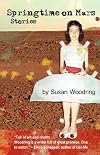
Springtime on Mars by Susan Woodring is a short story collection filled with intensely personal domestic situations of quiet desperation. There are 11 stories, set in the 1950’s until the present day, loosely connected by recurrent themes of science and technology, marriage and relationships, love and loss.
Charming, deceptively simple, and utterly American, many of these tales depict the country at the brink of change and huge scientific advances. Others show the struggle between faith in God and faith in science. Ranging from the introduction of the television into our living rooms, to the Kennedy assassination, to the explosion of the space shuttle Challenger, Springtime on Mars holds up a mirror and shows us not only who we were, but who we are.
In Zenith, 1954, Reverend Joe and his wife Marianne, pregnant with twins, are given a welcoming gift by their congregation:
“I knew Frank did not hold to the elders’ decision to gift us with a television set, a worthless diversion that not only inspired show more rampant idleness, but also one that was relatively new- the whole thing could turn out to be nothing more than a Hollywood fad.”
Woodring breathes life into her characters so quickly- within a few short paragraphs you fully grasp who they are. In the story Inertia, Lizzie’s mother sends her to the basement for a jar of preserves and some beans. She’s reluctant to go, and when she gets there, we understand why:
“The shelves on the far wall held my grandmother’s canning efforts: tomatoes, okra, peppers, and preserves: strawberry, pear, and rhubarb-strawberry. There were empty spaces now, as there always were this late in summer, but since my grandmother had passed away last winter, the holes were unsettling. My mother had promised to keep the garden up, but she’d tended only to her bees…”
Later, Lizzie’s father attempts to explain her mother’s grief over her grandmother to Lizzie this way:
“He assured me my mother’s need to tend to them {the bees} would pass, the same as people’s need to watch the skies for news from other worlds. He taught math at the junior college and this seemed to give him an insight into why people believed what they believed. It’s all, he said, an irrational desire to control the uncontrollable. I wanted him to think I had a scientific mind like his, so I nodded and told him I understood, though I didn’t.”
I was perhaps most touched and completely caught off guard by the story Beautiful, in which a father is staying in a hotel, apart from his family, on an extended business trip. His wife and daughters come down for a visit, but there are huge walls of silence and misunderstanding. He realizes his 13 year old didn’t want to make the trip; she seems embarrassed and unsure of how to act around her dad. He then remembers how it used to be:
“When she was little, though, she used to cup his face in her hands and draw it very close to her own. Listen, she would say. There’s a crisis on planet Gimbel and we have to go there now. “
Throughout that story, I was rooting for the dad so much. I kept thinking, Do something! You’re going to lose your family! The relief I felt when he finally took some action to connect with his kids is hard to describe. I got so choked up and was surprised at how much it affected me.
Susan Woodring has a unique voice and a disarming style. Many short story collections are woefully uneven, but that is not the case here. I found real moments of charm and humor in every single story. I enjoyed this book so much and enthusiastically recommend it. show less
Springtime on Mars by Susan Woodring is a short story collection filled with intensely personal domestic situations of quiet desperation. There are 11 stories, set in the 1950’s until the present day, loosely connected by recurrent themes of science and technology, marriage and relationships, love and loss.
Charming, deceptively simple, and utterly American, many of these tales depict the country at the brink of change and huge scientific advances. Others show the struggle between faith in God and faith in science. Ranging from the introduction of the television into our living rooms, to the Kennedy assassination, to the explosion of the space shuttle Challenger, Springtime on Mars holds up a mirror and shows us not only who we were, but who we are.
In Zenith, 1954, Reverend Joe and his wife Marianne, pregnant with twins, are given a welcoming gift by their congregation:
“I knew Frank did not hold to the elders’ decision to gift us with a television set, a worthless diversion that not only inspired show more rampant idleness, but also one that was relatively new- the whole thing could turn out to be nothing more than a Hollywood fad.”
Woodring breathes life into her characters so quickly- within a few short paragraphs you fully grasp who they are. In the story Inertia, Lizzie’s mother sends her to the basement for a jar of preserves and some beans. She’s reluctant to go, and when she gets there, we understand why:
“The shelves on the far wall held my grandmother’s canning efforts: tomatoes, okra, peppers, and preserves: strawberry, pear, and rhubarb-strawberry. There were empty spaces now, as there always were this late in summer, but since my grandmother had passed away last winter, the holes were unsettling. My mother had promised to keep the garden up, but she’d tended only to her bees…”
Later, Lizzie’s father attempts to explain her mother’s grief over her grandmother to Lizzie this way:
“He assured me my mother’s need to tend to them {the bees} would pass, the same as people’s need to watch the skies for news from other worlds. He taught math at the junior college and this seemed to give him an insight into why people believed what they believed. It’s all, he said, an irrational desire to control the uncontrollable. I wanted him to think I had a scientific mind like his, so I nodded and told him I understood, though I didn’t.”
I was perhaps most touched and completely caught off guard by the story Beautiful, in which a father is staying in a hotel, apart from his family, on an extended business trip. His wife and daughters come down for a visit, but there are huge walls of silence and misunderstanding. He realizes his 13 year old didn’t want to make the trip; she seems embarrassed and unsure of how to act around her dad. He then remembers how it used to be:
“When she was little, though, she used to cup his face in her hands and draw it very close to her own. Listen, she would say. There’s a crisis on planet Gimbel and we have to go there now. “
Throughout that story, I was rooting for the dad so much. I kept thinking, Do something! You’re going to lose your family! The relief I felt when he finally took some action to connect with his kids is hard to describe. I got so choked up and was surprised at how much it affected me.
Susan Woodring has a unique voice and a disarming style. Many short story collections are woefully uneven, but that is not the case here. I found real moments of charm and humor in every single story. I enjoyed this book so much and enthusiastically recommend it. show less
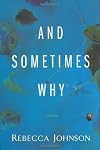
And Sometimes Why is a gripping tale of what happens to a family after a tragic accident puts their lives into a state of suspended animation. Watching this family fall apart reminded me in many ways of Jacqueline Michard’s The Deep End of the Ocean because in both cases, the parents are left to deal with a child who is not dead, but is in every other way gone.
Each family member comes to terms with the tragedy differently and in their own time. The grieving parents’ relationship is torn apart as they disagree over their daughter’s care. The distraught sister is the one who asks the hard questions and is the most realistic. She moves from the family home in California to Alaska with her boyfriend. One day on a walk she encounters a fox in a trap, still alive but suffering. She decides to put it out of it’s misery with her own hands. Afterwards.. “Each time she glanced down at the body.. she felt her horror fade a tiny bit. A body without life was an empty container. Nothing to be afraid of. Nothing to weep over.”
Ms. Johnson has done a great job of making her characters believable. They seem so real to me. It is a heartbreaking and compelling story, and so well written that it’s hard to believe it’s a first novel.
A book club would find much to discuss from And Sometimes Why. The ending is open ended and I find myself wondering what the characters would do next. This is a remarkable book and one I would highly recommend.
Each family member comes to terms with the tragedy differently and in their own time. The grieving parents’ relationship is torn apart as they disagree over their daughter’s care. The distraught sister is the one who asks the hard questions and is the most realistic. She moves from the family home in California to Alaska with her boyfriend. One day on a walk she encounters a fox in a trap, still alive but suffering. She decides to put it out of it’s misery with her own hands. Afterwards.. “Each time she glanced down at the body.. she felt her horror fade a tiny bit. A body without life was an empty container. Nothing to be afraid of. Nothing to weep over.”
Ms. Johnson has done a great job of making her characters believable. They seem so real to me. It is a heartbreaking and compelling story, and so well written that it’s hard to believe it’s a first novel.
A book club would find much to discuss from And Sometimes Why. The ending is open ended and I find myself wondering what the characters would do next. This is a remarkable book and one I would highly recommend.

Crossing to Safety, by the late Wallace Stegner, is an eloquent novel that explores the complicated nature of long term friendship. The Langs (Sid and Charity) and the Morgans (Larry and Sally) meet and embark on a 40 year friendship that is sustained through births, illnesses, job loss, cross country moves, career success, envy, generosity, thwarted ambition, and failure.
The story is told from the perspective of Larry Morgan, who, of the two men, is the more accomplished author, but the less financially stable. The couples meet when Larry and Sid, working together at a Wisconsin university, attend a party with their wives. The wives, both pregnant and due around the same time, are immediately taken with each other. The husbands also have much in common and have great respect for each other. The relationship of the foursome deepens over time and becomes more like family than merely friendly.
Crossing to Safety is honest and human. It unfolds slowly, meandering through reminiscences and meditations on what it means to be a writer, the power of friendship, the depths of love and marriage, and the realization that even your closest friends and loved ones are ultimately unknowable. No one, not even a very close friend, can ever know what truly goes on inside another person’s marriage.
The title of the book comes from the following quote by Robert Frost:
“I could give all to Time except-except
What I myself have held. But why declare
The things forbidden that while the Customs show more slept
I have crossed to Safety with? For I am There
And what I would not part with I have kept.”
I’m not a poet and I’m not sure how to analyze that, but I think crossing to safety as stated here refers to what remains of a relationship after it is over, after death.
Wallace Stegner’s Angle of Repose won the Pulitzer Prize for Fiction in 1972. Crossing to Safety was Stegner’s final novel before his death in 1993.
I enjoyed Crossing to Safety. It is a quiet novel with no great dramatic action, no affairs between the couples or big plot twists. It is simply an extremely well-written, mature and beautiful tribute to enduring friendship. show less
The story is told from the perspective of Larry Morgan, who, of the two men, is the more accomplished author, but the less financially stable. The couples meet when Larry and Sid, working together at a Wisconsin university, attend a party with their wives. The wives, both pregnant and due around the same time, are immediately taken with each other. The husbands also have much in common and have great respect for each other. The relationship of the foursome deepens over time and becomes more like family than merely friendly.
Crossing to Safety is honest and human. It unfolds slowly, meandering through reminiscences and meditations on what it means to be a writer, the power of friendship, the depths of love and marriage, and the realization that even your closest friends and loved ones are ultimately unknowable. No one, not even a very close friend, can ever know what truly goes on inside another person’s marriage.
The title of the book comes from the following quote by Robert Frost:
“I could give all to Time except-except
What I myself have held. But why declare
The things forbidden that while the Customs show more slept
I have crossed to Safety with? For I am There
And what I would not part with I have kept.”
I’m not a poet and I’m not sure how to analyze that, but I think crossing to safety as stated here refers to what remains of a relationship after it is over, after death.
Wallace Stegner’s Angle of Repose won the Pulitzer Prize for Fiction in 1972. Crossing to Safety was Stegner’s final novel before his death in 1993.
I enjoyed Crossing to Safety. It is a quiet novel with no great dramatic action, no affairs between the couples or big plot twists. It is simply an extremely well-written, mature and beautiful tribute to enduring friendship. show less
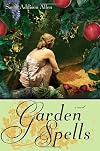
Garden Spells by Sarah Addison Allen is an enchanting little book. It is the story of two sisters, Claire and Sydney Waverly, who have been estranged for many years. Claire is living in the family home in Bascom, North Carolina, when Sydney arrives with her daughter Bay in tow. Sydney is running from Bay’s abusive father and has nowhere else to go. Claire, a caterer, has trouble getting close to people for fear they will leave.
The Waverly’s have a reputation around town for being different. They possess special gifts. Bay has an uncanny ability to know where things belong, from forks to people. Evanelle, an elderly cousin, is compelled to give people things that they will need in the future; things that will alter the course of their lives (although she never knows how they will be used when she gives them).
Claire’s gift is her very special culinary skills. She uses edible flowers and herbs from her garden in her cooking, which can make people remember or forget, fall in or out of love, and any number of other mystical things as she sees fit. Sydney is determined NOT to be special as only a Waverly can be, but soon it’s clear that she is gifted as well. And then there’s the Waverly apple tree, which has it’s own brand of magic.
I was captivated by Garden Spells. It is romantic and sweet and the story flows nicely. I would recommend it to anyone who enjoys fantasy or magical fiction. Is magical fiction an actual genre? If not, it should be.
The Waverly’s have a reputation around town for being different. They possess special gifts. Bay has an uncanny ability to know where things belong, from forks to people. Evanelle, an elderly cousin, is compelled to give people things that they will need in the future; things that will alter the course of their lives (although she never knows how they will be used when she gives them).
Claire’s gift is her very special culinary skills. She uses edible flowers and herbs from her garden in her cooking, which can make people remember or forget, fall in or out of love, and any number of other mystical things as she sees fit. Sydney is determined NOT to be special as only a Waverly can be, but soon it’s clear that she is gifted as well. And then there’s the Waverly apple tree, which has it’s own brand of magic.
I was captivated by Garden Spells. It is romantic and sweet and the story flows nicely. I would recommend it to anyone who enjoys fantasy or magical fiction. Is magical fiction an actual genre? If not, it should be.