
For my summer reading assignment I read a novel called The Curious Incident of the Dog in the Nighttime by Mark Haddon. My mom recommended this book to me because it was about an autistic teenager, and that I could relate to the book because my 18 year old brother is autistic. I found that that was a good enough reason to give the novel a try, and when I finished reading it, I made sure to thank my mom for recommending it.
A lot of factors go into deciding if I am going to like a book. The first of these factors is readability. I found The Curious Incident to be an easy to read, yet interesting book. It was a rather short book of only 220 pages, also having very short chapters. But that’s not why it was so readable. The main reason was that the book seemed to be written for a young adult. Seeing that it was my mom who had previously read it and recommended it to me, it is obviously a fine read for all ages. But Mark Haddon did a good job of fitting a lot of details and ideas without using unnecessary sentences and wording. He also did a good job of seamlessly blending the thoughts of the autistic 15 year old with the actual story itself. This does a good job of giving the reader some insight into how an autistic person would assess a situation and go about completing a task. The only problem I had with The Curious Incident was that instead for spelling out the word, “okay”, Haddon used the abbreviation, “OK”. I’m not sure whether it is different because Haddon show more is a british author, or not; and thiswas only a minor annoyance that didn’t get in the way too often.
Mark Haddon did a great job not only telling a great story, but telling it in the eyes of an autistic. It was apparent that he knew how the mind of an autistic teenager functions, which leads me to believe that he may have personal experiences with these people. He did a good job of explaining how tough it can be for the parents of special needs children; and how they don’t always know exactly what to do when the child starts screaming in public. I think there is a chance he may have grown up in an environment similar to the one in the book, because of how graphic and sad the household was. It seemed in every chapter there was some cursing and hitting going on between the father and the son. Reading The Curious Incident has really made me appreciate that my household wasn’t so disfunctional.
Overall, I would have to say that The Curious Incident of the Dog in the Night Time is great book, that I could recommend to anybody. It does a really nice job of explaining how things can be different for an autistic person, as well as how hard it can be to live with one. It is a truly honest book from start to finish. show less
A lot of factors go into deciding if I am going to like a book. The first of these factors is readability. I found The Curious Incident to be an easy to read, yet interesting book. It was a rather short book of only 220 pages, also having very short chapters. But that’s not why it was so readable. The main reason was that the book seemed to be written for a young adult. Seeing that it was my mom who had previously read it and recommended it to me, it is obviously a fine read for all ages. But Mark Haddon did a good job of fitting a lot of details and ideas without using unnecessary sentences and wording. He also did a good job of seamlessly blending the thoughts of the autistic 15 year old with the actual story itself. This does a good job of giving the reader some insight into how an autistic person would assess a situation and go about completing a task. The only problem I had with The Curious Incident was that instead for spelling out the word, “okay”, Haddon used the abbreviation, “OK”. I’m not sure whether it is different because Haddon show more is a british author, or not; and thiswas only a minor annoyance that didn’t get in the way too often.
Mark Haddon did a great job not only telling a great story, but telling it in the eyes of an autistic. It was apparent that he knew how the mind of an autistic teenager functions, which leads me to believe that he may have personal experiences with these people. He did a good job of explaining how tough it can be for the parents of special needs children; and how they don’t always know exactly what to do when the child starts screaming in public. I think there is a chance he may have grown up in an environment similar to the one in the book, because of how graphic and sad the household was. It seemed in every chapter there was some cursing and hitting going on between the father and the son. Reading The Curious Incident has really made me appreciate that my household wasn’t so disfunctional.
Overall, I would have to say that The Curious Incident of the Dog in the Night Time is great book, that I could recommend to anybody. It does a really nice job of explaining how things can be different for an autistic person, as well as how hard it can be to live with one. It is a truly honest book from start to finish. show less
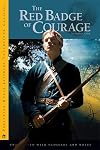
Some Call it a Classic, but I’m not Sure Why
When I chose to read The Red Badge of Courage I had certain expectations for the book. Being regarded as a classic I assumed there would be epic struggles throughout the book, focusing on soldiers of different ranks and authority as they fought and died with honor and dignity. I also thought that the book would be easy to read and comprehend, since it isn’t a very long book. Because it was such a short book I also figured that it would immediately jump into the action and grab me making me want to read more and more. After I started reading it though, I knew I was in for a much different experience.
If I had made a smart decision I would have stopped reading The Red Badge of Courage and picked up another book after the first couple chapters. The way they were written made important features to the story seem confusing and uninteresting by using strange narrative choices and unrecognizable terminology (to me at least). I kept on reading because I knew it was a classic, so I figured that the story was going to get better. To my disappointment as the story went on, the action became more abundant, but the way it was portrayed was unchanging. Although these complaints are probably just my feelings caused from not being exposed to this type of literature, I suspect that I am not the only individual who had trouble reading this book.
Another reason I found this book hard to read is the dialogue. Most of the conversations consist of show more dialogue such as, “Well, he was a reg’lar jim-dandy fer nerve, wa’n’t he?”. This is interesting at first, but about halfway through I was tired of it. I think that the book would have been better if the strange talking was just toned down a bit.
I enjoyed the characters in this book for the most part, but only a couple of them were memorable. The author of The Red Badge of Courage, Stephen Crane, portrays the characters in a strange way. For instance, Henry Fleming, the main character, is often referred to as, “The Youth”, and is rarely referred to by his actual name. this let me connect to him in a different way, but it takes so long for him to introduce his name that it became annoying. He also did the same thing with all the other characters in the book, referring to people as “The Wounded Soldier”, and “The Lieutenant”. One of the things I truly admired about this book was the character progression throughout the story. I liked the way “The Youth” became stronger and more courageous from battle to battle and how his views changed about his fellow soldiers.
Overall I was not very fond of The Red Badge of Courage mainly because it was tough to read. All the strange narrative and dialogue choices made me have to read certain parts two or three times before I truly understood what was going on. I didn’t necessarily have a problem with the events that took place in the story, in fact I found them to be a bit interesting, I just did not like the way the book was written. Looking back now, I can understand why others may have liked this book, but it just wasn’t for me. show less
When I chose to read The Red Badge of Courage I had certain expectations for the book. Being regarded as a classic I assumed there would be epic struggles throughout the book, focusing on soldiers of different ranks and authority as they fought and died with honor and dignity. I also thought that the book would be easy to read and comprehend, since it isn’t a very long book. Because it was such a short book I also figured that it would immediately jump into the action and grab me making me want to read more and more. After I started reading it though, I knew I was in for a much different experience.
If I had made a smart decision I would have stopped reading The Red Badge of Courage and picked up another book after the first couple chapters. The way they were written made important features to the story seem confusing and uninteresting by using strange narrative choices and unrecognizable terminology (to me at least). I kept on reading because I knew it was a classic, so I figured that the story was going to get better. To my disappointment as the story went on, the action became more abundant, but the way it was portrayed was unchanging. Although these complaints are probably just my feelings caused from not being exposed to this type of literature, I suspect that I am not the only individual who had trouble reading this book.
Another reason I found this book hard to read is the dialogue. Most of the conversations consist of show more dialogue such as, “Well, he was a reg’lar jim-dandy fer nerve, wa’n’t he?”. This is interesting at first, but about halfway through I was tired of it. I think that the book would have been better if the strange talking was just toned down a bit.
I enjoyed the characters in this book for the most part, but only a couple of them were memorable. The author of The Red Badge of Courage, Stephen Crane, portrays the characters in a strange way. For instance, Henry Fleming, the main character, is often referred to as, “The Youth”, and is rarely referred to by his actual name. this let me connect to him in a different way, but it takes so long for him to introduce his name that it became annoying. He also did the same thing with all the other characters in the book, referring to people as “The Wounded Soldier”, and “The Lieutenant”. One of the things I truly admired about this book was the character progression throughout the story. I liked the way “The Youth” became stronger and more courageous from battle to battle and how his views changed about his fellow soldiers.
Overall I was not very fond of The Red Badge of Courage mainly because it was tough to read. All the strange narrative and dialogue choices made me have to read certain parts two or three times before I truly understood what was going on. I didn’t necessarily have a problem with the events that took place in the story, in fact I found them to be a bit interesting, I just did not like the way the book was written. Looking back now, I can understand why others may have liked this book, but it just wasn’t for me. show less