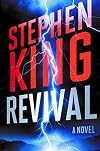
I feel I need to speak up for the sake of readers who are buying the whole "Stephen King's best book in 30 years" hype. Those who claim that this is old-style King need to go back and re-read his early works. Heck! You could even read more recent works and come closer than this. "Duma Key" was a hundred times better. While I didn't particularly care for "Under the Dome" (too close to The Stand) it was at least 10 times better. If you've never read anything by Stephen King, please, for the love of Mike, don't start with this one.
The writing wasn't brilliant, but it was functional; at least it didn't get in the way of the story. His characterization was solid, as usual--good people are great, bad people are awful. Death, in all its gory glory, was treated with the same attention to detail as always. King's sense of setting and era was (also as usual) spot on. He wrote about the life of an addict as someone who'd been there and that was probably some of the best writing. And I enjoyed his take on the life of a musician.
I was frustrated with the pacing, but was willing to hang around and wait, even when it got to 80% and nothing major had happened. King's never let me down. And, to be honest, with you, I was braced for the typical final chapters of a King novel in which all hell breaks loose and some of it is over-the-top (bordering on silly) and some of it is terrifying. But King's final ending, the wrap up--has always been spot-on. He's always gotten that right. I usually show more walked away with the distinct sense that I'd just witnessed something great.
But this time? What on earth was that? And--more importantly--why was it that? I can't work out how a plot like this one arrived in an editor or agent's inbox without someone somewhere asking him that question.
Anyway, I had this one on a list of things I was going to get for a couple of people for Christmas, but there is no way I can do this now. I will wait for the next one. I still believe he's got some great stories to tell--but this one wasn't one of them. show less
The writing wasn't brilliant, but it was functional; at least it didn't get in the way of the story. His characterization was solid, as usual--good people are great, bad people are awful. Death, in all its gory glory, was treated with the same attention to detail as always. King's sense of setting and era was (also as usual) spot on. He wrote about the life of an addict as someone who'd been there and that was probably some of the best writing. And I enjoyed his take on the life of a musician.
I was frustrated with the pacing, but was willing to hang around and wait, even when it got to 80% and nothing major had happened. King's never let me down. And, to be honest, with you, I was braced for the typical final chapters of a King novel in which all hell breaks loose and some of it is over-the-top (bordering on silly) and some of it is terrifying. But King's final ending, the wrap up--has always been spot-on. He's always gotten that right. I usually show more walked away with the distinct sense that I'd just witnessed something great.
But this time? What on earth was that? And--more importantly--why was it that? I can't work out how a plot like this one arrived in an editor or agent's inbox without someone somewhere asking him that question.
Anyway, I had this one on a list of things I was going to get for a couple of people for Christmas, but there is no way I can do this now. I will wait for the next one. I still believe he's got some great stories to tell--but this one wasn't one of them. show less
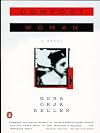
A masterful story that explores a truly dark moment in Japanese/Korean history, mother-daughter relationships, cultural clashes, and generation gaps. Not for the faint of heart, Comfort Woman spares the reader nothing in the way of graphic, but important details as it relays the story of Akiko and Rebecca in their separate and intertwined journeys.
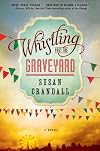
One of the better books I've read of late. In fact, I put a bleak piece of literary fiction down in favor of this one and didn't bother to return. I never do that, but I just couldn't take it anymore. Starla's voice called out to me from the window of that rattly old pick-up truck and I answered.
Susan Crandall did herself proud with this one. Her use of the biased narrator was masterful and the clues she dropped to let the reader know that "all was not as Starla believed" were well-placed. Eula was three-dimensional--broken and initially seems to be beyond repair, but it doesn't take long for the reader to recognize her strength of character as well.
All in all, a fine read.
Susan Crandall did herself proud with this one. Her use of the biased narrator was masterful and the clues she dropped to let the reader know that "all was not as Starla believed" were well-placed. Eula was three-dimensional--broken and initially seems to be beyond repair, but it doesn't take long for the reader to recognize her strength of character as well.
All in all, a fine read.
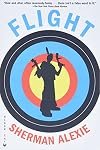
I read this novella for a college class and, though the language in it is simple, and the voice that of a fifteen year old boy, I rate it among the two best we've read this semester (the other is a novel by Toni Morrison). The character world hops through time and each lifetime he lands in is distinct from the others and provides both the character and the reader with more vital information about his own life and it all culminates in a fine ending.

A professor recommended this author's work to me and, for the most part, it lived up to my expectations. "Reeling" is pure genius, "The Vampire in the Lemon Grove" was quite good, but "The New Veterans" was probably her crowning achievement. The other stories in the collection either didn't appeal to me or simply fell flat at the end. Her writing is superb and regardless of which you prefer, if you're in it for the pleasure of experiencing beautiful (or startling as the case may be) prose, you won't be disappointed.

It's hard to go wrong with Faulkner. This book is no different.
This is probably my favorite Toni Morrison story yet. She possesses a remarkable gift for leaving the reader with question--"Did what I think happened--really happened? Or am I reading into the scene?" She is the mistress of streaming consciousness and magical realism.
An unexpectedly excited, fun read. Who knew our "dumb white husbands" from such books as "Dumb White Husbands vs Halloween" had it in them to not only survive a zombie apocalypse, much less fight their way across the countryside in search of their families?
This isn't the Shining. It's best to understand that going into it. The author has evolved, changed, maybe even softened a bit since he wrote that book. But it is every bit as good and there are times when it's even excellent; when Stephen reminds the reader that he's not just a talented storyteller--but a gifted writer as well.
We reunite with a now grown up Danny, we hear about where he's been and what he's been doing and an awful lot of it isn't very admirable. But beneath it all, we find the compassionate five year old we all loved still lurking. He just needs a helping hand and a mission.
Enter Abra. Like Danny did when he was young, this girl Shines. To quote Danny, "On the outside she might look like a typical thirteen year old. But on the inside, she's a viking."
The True Knot, a group of spiritual vampires, kidnaps children and does terrible things to them before killing them. They want Abra. And they'll stop at nothing to get her.
Abra and Danny have other ideas.
We reunite with a now grown up Danny, we hear about where he's been and what he's been doing and an awful lot of it isn't very admirable. But beneath it all, we find the compassionate five year old we all loved still lurking. He just needs a helping hand and a mission.
Enter Abra. Like Danny did when he was young, this girl Shines. To quote Danny, "On the outside she might look like a typical thirteen year old. But on the inside, she's a viking."
The True Knot, a group of spiritual vampires, kidnaps children and does terrible things to them before killing them. They want Abra. And they'll stop at nothing to get her.
Abra and Danny have other ideas.
Sometimes Dean Koontz has a little trouble getting out of his own way as a writer and such is the case with this installment in the Odd Thomas series. Oddie has always been a mouthpiece for Koontz's own opinions, and this didn't bother me as long as it was secondary to the story. A stray comment here and there, a bit of conversation with another character, and so on--it was there, but it was part of our quirky, thoughtful Oddie--and it integrated well with what was happening in the storyline.
Not so this time around. Entire pages were dedicated to Koontz "holding forth" on the government and the state of the world by way of Oddie and other characters--pages that contributed nothing to the plot, nothing to character development, and only served as an impetus to skim the text and skip forward. I go to church on Sunday for sermons, I read my Bible when I want to understand universal truths, I pray when I want to talk to God, and I read the news when I need to know that our government is up to no good. But I read the Odd Thomas series because it's funny and profound and because--when he's doing his job--Koontz is the master of the well-turned phrase and he knows how to deliver the rising action.
The ending is the only thing that saved this story from failing completely and I almost didn't bother to finish it. This is why it's got three stars instead of one. If the rest of the story had delivered the way the ending did, I'd have no complaints.
I am questioning whether or not I show more will bother with the last book in the series. I know I won't recommend this one. Maybe Odd Thomas has taken us as far as he can.
It's a shame really. I'ts been a good run show less
Not so this time around. Entire pages were dedicated to Koontz "holding forth" on the government and the state of the world by way of Oddie and other characters--pages that contributed nothing to the plot, nothing to character development, and only served as an impetus to skim the text and skip forward. I go to church on Sunday for sermons, I read my Bible when I want to understand universal truths, I pray when I want to talk to God, and I read the news when I need to know that our government is up to no good. But I read the Odd Thomas series because it's funny and profound and because--when he's doing his job--Koontz is the master of the well-turned phrase and he knows how to deliver the rising action.
The ending is the only thing that saved this story from failing completely and I almost didn't bother to finish it. This is why it's got three stars instead of one. If the rest of the story had delivered the way the ending did, I'd have no complaints.
I am questioning whether or not I show more will bother with the last book in the series. I know I won't recommend this one. Maybe Odd Thomas has taken us as far as he can.
It's a shame really. I'ts been a good run show less
An excellent book about prejudice and racial inequality and how it shapes us.
Paul Gustavson is at one of those crossroads we all face from time to time in which we get to choose to make changes and become happier or continue suffering from the consequences of our own actions (or inaction as the case may be). He's got a girlfriend he's afraid to ask more from (even though she's seeing someone else), a family he's estranged from (and doesn't want to be), and comforts himself by drinking too much and eating too much junk food. But that's okay, because he's also got Stella. His dog. Who gives him advice (really good advice--the kind you can take with you when you finish the book).
One of the things I love about this book is that Paul treats Stella's ability to talk to him like it's a matter of fact. He's not shocked by it, doesn't over analyze it, or profit from it. Stella just talks. And he just listens. What's more, no one else knows that she can talk and Paul doesn't try to tell them about it. In my estimation this is the best way to handle something this extraordinary.
The other thing I appreciate about it is the love that permeates it and how all the characters in it seem to be reaching for it, they just don't always know how to attain it.
This book also contains one of my all-time favorite quotes (slightly modified here as I had to trim it so it would fit on the back of my kindle cover). "The miracle was how love stayed, enduring and steadfast, loyal as the gentle beast who, ever at his side asked only to be included, fed, walked; giving in show more return more love than could be reasonably asked for, logically expected or credibly deserved."
show less
One of the things I love about this book is that Paul treats Stella's ability to talk to him like it's a matter of fact. He's not shocked by it, doesn't over analyze it, or profit from it. Stella just talks. And he just listens. What's more, no one else knows that she can talk and Paul doesn't try to tell them about it. In my estimation this is the best way to handle something this extraordinary.
The other thing I appreciate about it is the love that permeates it and how all the characters in it seem to be reaching for it, they just don't always know how to attain it.
This book also contains one of my all-time favorite quotes (slightly modified here as I had to trim it so it would fit on the back of my kindle cover). "The miracle was how love stayed, enduring and steadfast, loyal as the gentle beast who, ever at his side asked only to be included, fed, walked; giving in show more return more love than could be reasonably asked for, logically expected or credibly deserved."
show less