rounded up from 3.5
I loved the idea of juxtaposing the stories of a contemporary entrepreneur, the late XIX century historian and Maimonides. But the author failed to deliver on this ambitious plan: the line of Josie Ashkenazi, the software prodigy, is well developed and captivatingly presented. The historian Solomon Schechter only appears few times, his line is not as prominent, not as well developed and the apropos link to Josie's is underdeveloped. Maimonides himself only appears once and it's more of an illustration and not a plot development.
This is well compensated by the fully developed story of Josie, her choices and mistakes, her family and her quest for memory conservation.
I loved the idea of juxtaposing the stories of a contemporary entrepreneur, the late XIX century historian and Maimonides. But the author failed to deliver on this ambitious plan: the line of Josie Ashkenazi, the software prodigy, is well developed and captivatingly presented. The historian Solomon Schechter only appears few times, his line is not as prominent, not as well developed and the apropos link to Josie's is underdeveloped. Maimonides himself only appears once and it's more of an illustration and not a plot development.
This is well compensated by the fully developed story of Josie, her choices and mistakes, her family and her quest for memory conservation.
Rounded up from 3.5
Somewhat repetitive in terms of the plot movement and the character. I was hoping to see more of the personality development for Murderbot himself and not just another adventure of his.
Somewhat repetitive in terms of the plot movement and the character. I was hoping to see more of the personality development for Murderbot himself and not just another adventure of his.

DNF
Started reading for the book club and dropped after about reading a third of it. The narration is repetitive, there are no new ideas or plot movements compared to the first book, the focus on violence is excessive and the characters are falling flat.
Started reading for the book club and dropped after about reading a third of it. The narration is repetitive, there are no new ideas or plot movements compared to the first book, the focus on violence is excessive and the characters are falling flat.
This is the second book in the series, so the world building gets extended and elaborated, but it is mainly done to support the plot development. Recurrent secondary characters get more details and depth as well.
The story continues to be split between the past and the present, and to my taste the past line is more interesting. The conflict in this installment and the evil in the present is somewhat weak and predictable, less interesting compared to the first book. Still, it is solid and well told, so I'll continue with the series when the third book is published
The story continues to be split between the past and the present, and to my taste the past line is more interesting. The conflict in this installment and the evil in the present is somewhat weak and predictable, less interesting compared to the first book. Still, it is solid and well told, so I'll continue with the series when the third book is published
A spaceship lands at Midwich, England for a day and in few weeks all the women of childbearing age discover they're pregnant. The children are born within days of each other and soon enough it is clear, that they're not entirely human and have supernatural mental capacities.
As the story is told by a man, who was not there for the ship landing and left the village shortly after the children's first birthdays, we do not know what have happened there for the 8 years the narrator was absent. But he's back for the grand finale and all the related discussions.
The book is very well written in terms of the plot development, the characters and the language. The way author looks at the women in the described situation is refreshingly modern and points out all the blind spots of any patriarchal society. It also sheds a critical light on any governmental strategy during the Cold war and inadvertently poses a question of what kind of people are we if any first contact with extraterrestrial civilization is described as a way to a conflict.
As the story is told by a man, who was not there for the ship landing and left the village shortly after the children's first birthdays, we do not know what have happened there for the 8 years the narrator was absent. But he's back for the grand finale and all the related discussions.
The book is very well written in terms of the plot development, the characters and the language. The way author looks at the women in the described situation is refreshingly modern and points out all the blind spots of any patriarchal society. It also sheds a critical light on any governmental strategy during the Cold war and inadvertently poses a question of what kind of people are we if any first contact with extraterrestrial civilization is described as a way to a conflict.
re-read
I've read this collection of stories as a young adult back in Soviet Union and only re-reading it today I understand how I did not understood it at all.
Back in the day I've missed all the links to the Jewish culture, all the references to Torah, but also all the historical references to Pale of Settlements, the limitations on Jews getting education, owning land or being a professional.
These stories of Tevye, a poor and hardworking Jew, a father of six daughters, whom he hopes to marry well full of both humor and sadness, they're both hopeless and full of hope. And now I understand that this is how my great grandparents lived.
I've read this collection of stories as a young adult back in Soviet Union and only re-reading it today I understand how I did not understood it at all.
Back in the day I've missed all the links to the Jewish culture, all the references to Torah, but also all the historical references to Pale of Settlements, the limitations on Jews getting education, owning land or being a professional.
These stories of Tevye, a poor and hardworking Jew, a father of six daughters, whom he hopes to marry well full of both humor and sadness, they're both hopeless and full of hope. And now I understand that this is how my great grandparents lived.
I think this book is the real disappointment of the series. A story that started with love and suspense, a conflict to resolve and a discovery to make is brought to a messy finale with unclear logic, too complicated plot that lacks consistency and a platitude for a moral.
A mix of historical fiction, mystery, detective story and a bit of a love story as well, the book takes place in post WWI London. Saffron Everleigh, a young biologist, inserts herself into a poisoning investigation and drags her colleague Alexander Ashton into it.
Though the story is light, often funny and fast pacing, it has enough depth to shed light on some serious subjects. Saffron's struggles as a single female academic in all-male department are exacerbated by the fact that her boss sexually harrasses her both on and off page. Often enough she's not taken seriously as a scientist and her family dismisses her desire to make an academic career. Alexander Ashton becomes her romantic interest mainly because he neither dismisses her nor sees her only as a potential flirt. Through Alexander's story the horrors of the war and the ways veterans coped with the shell shock are introduced. It's also very nice that the book ends with the mystery resolution and not with a wedding or at least a proposal. The love story progresses in a realistic way and probably will develop along the series.
The plot is not very complicated and the mystery resolution is somewhat expected. Apart from couple of scenes where secondary characters get some dimensions, they're mostly flat and not well developed. But these are rather insignificant drawbacks for an overall enjoyable read.
Though the story is light, often funny and fast pacing, it has enough depth to shed light on some serious subjects. Saffron's struggles as a single female academic in all-male department are exacerbated by the fact that her boss sexually harrasses her both on and off page. Often enough she's not taken seriously as a scientist and her family dismisses her desire to make an academic career. Alexander Ashton becomes her romantic interest mainly because he neither dismisses her nor sees her only as a potential flirt. Through Alexander's story the horrors of the war and the ways veterans coped with the shell shock are introduced. It's also very nice that the book ends with the mystery resolution and not with a wedding or at least a proposal. The love story progresses in a realistic way and probably will develop along the series.
The plot is not very complicated and the mystery resolution is somewhat expected. Apart from couple of scenes where secondary characters get some dimensions, they're mostly flat and not well developed. But these are rather insignificant drawbacks for an overall enjoyable read.
Azar Nafisi starts this autobiography by describing the private literature course that she taught at her home for two years prior to leaving (or escaping) the Islamic Republic of Iran. But soon enough she delves into her interpretation of the greatest works of modern literature through her experience of living through the Islamic Revolution and its aftermath and teaching literature under the censorship of Ayatollahs regime.
Nafisi's love of literature is apparent, she knows it and she loves teaching it. And yet, the struggle of living as a woman under the religious dictate is great and at some point becomes unbearable. Even the subversiveness of Nabokov's [b:Lolita|38526859|Lolita|Nabokov Vladimir|https://i.gr-assets.com/images/S/compressed.photo.goodreads.com/books/1518560072l/38526859._SX50_.jpg|1268631] is no longer enough
Nafisi's love of literature is apparent, she knows it and she loves teaching it. And yet, the struggle of living as a woman under the religious dictate is great and at some point becomes unbearable. Even the subversiveness of Nabokov's [b:Lolita|38526859|Lolita|Nabokov Vladimir|https://i.gr-assets.com/images/S/compressed.photo.goodreads.com/books/1518560072l/38526859._SX50_.jpg|1268631] is no longer enough
rounded from 4.5
I'm not sure whether it's me not being focused enough on the audiobook or were there too many technical details that were unnecessary for the smooth plot development. Well, I felt a bit overwhelmed by the technicalities. But I loved the intrigue, the inner struggle of the protagonist and the hopeful ending - there is a very interesting future ahead for Murderbot and some other security units. Fingers crossed this is not the last book of the series
I'm not sure whether it's me not being focused enough on the audiobook or were there too many technical details that were unnecessary for the smooth plot development. Well, I felt a bit overwhelmed by the technicalities. But I loved the intrigue, the inner struggle of the protagonist and the hopeful ending - there is a very interesting future ahead for Murderbot and some other security units. Fingers crossed this is not the last book of the series
If All the Seas Were Ink : Memoirs of Jozef Gross, a Schindler’s List Survivor. by Jozef And Blay Gross, Anna

Rounded from 4.5
A woman moves to Israel as a young wife, but divorces soon after and ends up with a complete sense of insecurity, loneliness and fear that she'll never have another chance to become a wife and a mother. She rediscovers herself through a very structured religious practice - the study of Talmud. It's a very personal and captivating narrative that links Ilana's personal experiences and various events to the Talmudic texts.
It's interesting how Ilana moves from something that happened to her to a piece she learnt that day on the daily page of Talmud and how she compares herself, her actions and her decisions to ones of the talmudic sages.
For me it was also an opportunity to read about an entirely different Aliya (move to Israel), which I made at a younger age and from entirely different country. Some experiences were almost the same while others were very different.
Though sometimes it feels that the Talmudic stories take center stage, the book is captivating and easy to read.
A woman moves to Israel as a young wife, but divorces soon after and ends up with a complete sense of insecurity, loneliness and fear that she'll never have another chance to become a wife and a mother. She rediscovers herself through a very structured religious practice - the study of Talmud. It's a very personal and captivating narrative that links Ilana's personal experiences and various events to the Talmudic texts.
It's interesting how Ilana moves from something that happened to her to a piece she learnt that day on the daily page of Talmud and how she compares herself, her actions and her decisions to ones of the talmudic sages.
For me it was also an opportunity to read about an entirely different Aliya (move to Israel), which I made at a younger age and from entirely different country. Some experiences were almost the same while others were very different.
Though sometimes it feels that the Talmudic stories take center stage, the book is captivating and easy to read.
This is a somewhat dark urban fantasy story, where protagonists are London police officers, who discover the magic presence by a chancy turn in their investigation. With this discovery they have to embrace change and reconsider their understanding of memory and magic's reliance on it.
The story is interesting, the plot unfolds rather fast, but sometimes the scenes are so very complicated, that you have to go few paragraphs back to understand who did what.
The story is interesting, the plot unfolds rather fast, but sometimes the scenes are so very complicated, that you have to go few paragraphs back to understand who did what.
This collection of short stories is very uneven: some stories are fascinating and engaging, and some are at the very least boring. I think the best part is the introduction, where Geiman discussed how the idea of trigger warning crossed from the Internet to the world of things and how that might change our approach to art
Rounded up from 4.5
This is a coming-of-age story that takes in Roman Republic but with magic. The book is fast pacing, the main character - Vis is well written and his inner thoughts, decisions and development make a lot of sense. The worldbuilding is good and the premises are unusual enough to make it interesting, and Ilsington seem to be able to avoid looking like the replica of any other fantasy Bildungsroman published.
It successfully rises questions of loyalty, personal and collective responsibility and trust.
There are some inner logic gaps, especially the sheer luck that Vis has. The secondary characters vary: some are sketched better than the others, but given that this is a first person story, this is not a significant problem. The story pace is a bit uneven, though mainly fast.
I think it is written better than [b:Red Rising|15839976|Red Rising (Red Rising Saga, #1)|Pierce Brown|https://i.gr-assets.com/images/S/compressed.photo.goodreads.com/books/1461354651l/15839976._SY75_.jpg|21580644] that I've read recently.
Waiting for the second book being published later this year.
This is a coming-of-age story that takes in Roman Republic but with magic. The book is fast pacing, the main character - Vis is well written and his inner thoughts, decisions and development make a lot of sense. The worldbuilding is good and the premises are unusual enough to make it interesting, and Ilsington seem to be able to avoid looking like the replica of any other fantasy Bildungsroman published.
It successfully rises questions of loyalty, personal and collective responsibility and trust.
There are some inner logic gaps, especially the sheer luck that Vis has. The secondary characters vary: some are sketched better than the others, but given that this is a first person story, this is not a significant problem. The story pace is a bit uneven, though mainly fast.
I think it is written better than [b:Red Rising|15839976|Red Rising (Red Rising Saga, #1)|Pierce Brown|https://i.gr-assets.com/images/S/compressed.photo.goodreads.com/books/1461354651l/15839976._SY75_.jpg|21580644] that I've read recently.
Waiting for the second book being published later this year.
This is a very easy read (listen) with a Murderbot aka rogue security android becoming more and more a very decent human

A fascinating retelling of the life of Court Jew for one of German dukes in 17 century - Joseph Süß Oppenheimer. A fast and very dramatic story that describes court intrigues, financial schemes and personal life of the duke, his entourage and his personal Jew that ends in tragedy for all involved.
Consider Phlebas: A space opera of stunning power and awesome imagination from the modern master of SF (Culture series Book 1) by Iain M. Banks

Definitely not my cup of tea - had to read it for the book club and dropped it after four chapters.
The storyline is boring, the characters are flat, and there are too many unnecessary awful disgusting descriptions that do not advance the plot in any way.
The storyline is boring, the characters are flat, and there are too many unnecessary awful disgusting descriptions that do not advance the plot in any way.
Two stories are told: Lily's - a schoolgirl in the tiny town of Froid, Montana in mid 1980s and the story of her neighbour Odile's - but not the current one, the story of her youth in Nazi occupied Paris (the story that actually brought her to Montana as it turns out).
In the first glance Odile's story is more dramatic, richer with the events and the narrative turns and twists. Odile, a daughter of a police commissaire and of a housewife, gets a job at an American Library in Paris despite some resistance from her father's side, who prefers her to find a husband and stay home. She meets interesting people (some real historical figures there), makes friends, has a lover, helps to undermine the Nazi regime, looses her twin brother in a war and faces some deep disappointments in her loved and close ones as well as getting disappointed in her own naivete.
At the same time Lily's story is rather straightforward, even if it is somewhat tragic. She is in school, she has her best friend, her romantic crush and her parents. Her mother dies, as she neglects the symptoms of a heart disease, her father remarries, but the step-mother is actually a decent, loving person and Odile provides her with emotional support, a good advice and a safe haven when needed.
But as both stories evolve, it becomes more and more clear that there is a striking similarity between the two: the power of women and even more so the lack of power, lack of agency for women. It is amazing how men keep making the show more decisions for their wifes and grown daughters, how a romance and marriage is still considered the most important achievement for a woman and how the double standards guide the society morals. For me this was the best part of the book.
The way Odile's arrival to Montana is disappointing and I believe it to be the weakest part of the book. Somehow it shows that Odile haven't learnt from her experience and makes a huge mess of things. Odile of 1944 at the end of Paris arc is in complete dissonance with Odile of the 1980s, whereas till the very explanation of this point the older version of Odile seems to be the one who matured and gained understanding from her experience in Paris.
The sort of the happy ending for both Lily and Odile seems nice and reasonable, though there is no closure for Odile. show less
In the first glance Odile's story is more dramatic, richer with the events and the narrative turns and twists. Odile, a daughter of a police commissaire and of a housewife, gets a job at an American Library in Paris despite some resistance from her father's side, who prefers her to find a husband and stay home. She meets interesting people (some real historical figures there), makes friends, has a lover, helps to undermine the Nazi regime, looses her twin brother in a war and faces some deep disappointments in her loved and close ones as well as getting disappointed in her own naivete.
At the same time Lily's story is rather straightforward, even if it is somewhat tragic. She is in school, she has her best friend, her romantic crush and her parents. Her mother dies, as she neglects the symptoms of a heart disease, her father remarries, but the step-mother is actually a decent, loving person and Odile provides her with emotional support, a good advice and a safe haven when needed.
But as both stories evolve, it becomes more and more clear that there is a striking similarity between the two: the power of women and even more so the lack of power, lack of agency for women. It is amazing how men keep making the show more decisions for their wifes and grown daughters, how a romance and marriage is still considered the most important achievement for a woman and how the double standards guide the society morals. For me this was the best part of the book.
The way Odile's arrival to Montana is disappointing and I believe it to be the weakest part of the book. Somehow it shows that Odile haven't learnt from her experience and makes a huge mess of things. Odile of 1944 at the end of Paris arc is in complete dissonance with Odile of the 1980s, whereas till the very explanation of this point the older version of Odile seems to be the one who matured and gained understanding from her experience in Paris.
The sort of the happy ending for both Lily and Odile seems nice and reasonable, though there is no closure for Odile. show less

This is a somewhat melancholic narrative told by a mother whose grown up daughters come back home for a period of time during pandemic.
Lara, the protagonist, used to be an aspiring actress in her youth and during this time she had an affair, or maybe a summer fling with Peter Duke, who later became a famous actor. Few weeks before the beginning of the story Duke dies, so now the girls beg Lara to tell the story of the long gone time and her romance with Duke.
The narrative is mostly located in the past, describing Lara's past that accidently brought her to acting and the relationship with Duke and some other people in the summer theater group. Lara looks into her past sometimes with pleasure, sometimes with regret, but most of all with a better understanding of life. She sees Duke for what he was - self-centered and reckless with regards to other people, but beautiful and charismatic and a good actor.
Lara tells most of the story to her daughters, but not all of it - she believes that children do not need to know certain things about their parents, it won't lead to anything good. She re-evaluates some of the past events and sees more clearly how they've paved the road into her current present. And she is very happy with her present, regardless the difficulties the family faces. She is happy wit the choices she's made.
Lara, the protagonist, used to be an aspiring actress in her youth and during this time she had an affair, or maybe a summer fling with Peter Duke, who later became a famous actor. Few weeks before the beginning of the story Duke dies, so now the girls beg Lara to tell the story of the long gone time and her romance with Duke.
The narrative is mostly located in the past, describing Lara's past that accidently brought her to acting and the relationship with Duke and some other people in the summer theater group. Lara looks into her past sometimes with pleasure, sometimes with regret, but most of all with a better understanding of life. She sees Duke for what he was - self-centered and reckless with regards to other people, but beautiful and charismatic and a good actor.
Lara tells most of the story to her daughters, but not all of it - she believes that children do not need to know certain things about their parents, it won't lead to anything good. She re-evaluates some of the past events and sees more clearly how they've paved the road into her current present. And she is very happy with her present, regardless the difficulties the family faces. She is happy wit the choices she's made.
This is a very sad ending to the story that never meant to be happy.
With a technological plot twist the heroes of the first two books meet in the development of the finale. We learn more of the Silos history and reasoning for their creation and development - this is even darker then before. We also follow the advancement of Silo 18's survivors and their attempt to break out.
Though the plot developments are captivating enough, the characters, especially the female ones continue to be flat and the inner logics for motivation is missing sometimes.
At the end the villains get some sort of a punishment and the good people have some slim chance to go on. But the lesson is the grim one and the hope is almost nonexistent, which is a perfect link to the very strong first story told in [b:Wool|12287209|Wool (Wool, #1)|Hugh Howey|https://i.gr-assets.com/images/S/compressed.photo.goodreads.com/books/1327889474l/12287209._SY75_.jpg|17263666]
With a technological plot twist the heroes of the first two books meet in the development of the finale. We learn more of the Silos history and reasoning for their creation and development - this is even darker then before. We also follow the advancement of Silo 18's survivors and their attempt to break out.
Though the plot developments are captivating enough, the characters, especially the female ones continue to be flat and the inner logics for motivation is missing sometimes.
At the end the villains get some sort of a punishment and the good people have some slim chance to go on. But the lesson is the grim one and the hope is almost nonexistent, which is a perfect link to the very strong first story told in [b:Wool|12287209|Wool (Wool, #1)|Hugh Howey|https://i.gr-assets.com/images/S/compressed.photo.goodreads.com/books/1327889474l/12287209._SY75_.jpg|17263666]
Loved this story, that actually is a stand-alone prequel for the series. Thomas Nightingale has a mystery to solve in New York of the Jazz Age. Aaronovich's light and fast-pacing story is not only entertaining, it also brings to the front the racism and the homophobia of not so distant past.
3.5
In this volume Stover tries both to expand the world building and to show more depth to his heroes. I’m afraid both do not really reach the desired level. The world building is now much more detailed, but also complicated and full of mostly irrelevant details on one side and has no sufficient explanations for some technical solutions on the other.
Harry’s character development is reasonable enough, but all the others feel strained and often illogical. Female characters are flat.
The plot as such is very good and is a good continuation of both stories, the Earth and the Overworld. At the end all the loose story bits are are picked and tied together, each significant hero has a logical ending.
In this volume Stover tries both to expand the world building and to show more depth to his heroes. I’m afraid both do not really reach the desired level. The world building is now much more detailed, but also complicated and full of mostly irrelevant details on one side and has no sufficient explanations for some technical solutions on the other.
Harry’s character development is reasonable enough, but all the others feel strained and often illogical. Female characters are flat.
The plot as such is very good and is a good continuation of both stories, the Earth and the Overworld. At the end all the loose story bits are are picked and tied together, each significant hero has a logical ending.
Babel: Or the Necessity of Violence: An Arcane History of the Oxford Translators’ Revolution―An Historic Fantasy of Dark Academia, Perfect for Fans of Historical Fiction and Nineteenth Century England by R. F. Kuang
Bailed after 1/3 of the book: huge disappointment. There is an amazing world where words have power and translators are doing magic. But there is no action at all, the characters lack substance and the anti-colonial agenda is being pushed down the reader's throat with much force, but little understanding of nuances
This book is a worthy ending to the trilogy.
At the end of the second book [b:The Last Graduate|55559887|The Last Graduate (The Scholomance, #2)|Naomi Novik|https://i.gr-assets.com/images/S/compressed.photo.goodreads.com/books/1604391810l/55559887._SX50_.jpg|86327641] El is out of the Scholomance with all of her friends, but Orian chose to stay there to prevent this huge monster of a maw-mouth from leaving the school. So obviously, now El desperately wants to come back to save him. Only this is not easy, and not only because there are "technical" difficulties of the school being slowly dissipating into the void, but also because now she's a grown up in a real world of grown ups. And even the wizarding world of grown ups is far far away from the idealist ideas you held in your youth. El has more growing up to do, and more learning to do, and more self-understanding to go through. The major parts of these processes are not pleasant at all, just like the real life often is.
At the end, El does not find simple answers or easy solutions - there is a consequence to every decision made, there is a price tag that includes sacrifice. And yet the ending is optimistic, as it allows El and us a hope that we can repair what we've broke and we can do better next time.
At the end of the second book [b:The Last Graduate|55559887|The Last Graduate (The Scholomance, #2)|Naomi Novik|https://i.gr-assets.com/images/S/compressed.photo.goodreads.com/books/1604391810l/55559887._SX50_.jpg|86327641] El is out of the Scholomance with all of her friends, but Orian chose to stay there to prevent this huge monster of a maw-mouth from leaving the school. So obviously, now El desperately wants to come back to save him. Only this is not easy, and not only because there are "technical" difficulties of the school being slowly dissipating into the void, but also because now she's a grown up in a real world of grown ups. And even the wizarding world of grown ups is far far away from the idealist ideas you held in your youth. El has more growing up to do, and more learning to do, and more self-understanding to go through. The major parts of these processes are not pleasant at all, just like the real life often is.
At the end, El does not find simple answers or easy solutions - there is a consequence to every decision made, there is a price tag that includes sacrifice. And yet the ending is optimistic, as it allows El and us a hope that we can repair what we've broke and we can do better next time.
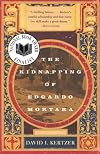
I'm sure I must have heard about this practice of abducting Jewish children from their parents when they were baptized by someone completely unrelated to them, but I completely forgot.
It is mind boggling that in the 1858 the Jews in the Papal States are still considered devoid of basic human rights and any human dignity. The story of a child taken by force from his family and not returned regardless all the international intervention in the matter is so frightening on one hand, but so very enlightening on the other. The treatment of Jews is so abominably different even in the days when some human rights become achievable for practically everyone else provides a very logical reasoning for the events of the Holocaust, that will come in less than a century.
It is mind boggling that in the 1858 the Jews in the Papal States are still considered devoid of basic human rights and any human dignity. The story of a child taken by force from his family and not returned regardless all the international intervention in the matter is so frightening on one hand, but so very enlightening on the other. The treatment of Jews is so abominably different even in the days when some human rights become achievable for practically everyone else provides a very logical reasoning for the events of the Holocaust, that will come in less than a century.

The perfect solution is found and implemented, everyone is happy and the epigraph is really sweet.
All in all the series are nice, but ...
All in all the series are nice, but ...
3.5
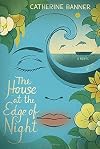
Four generations of Esposito live on a small island in an old rambling house with a bar aptly named "The House at the Edge of Night". The narrative, that mixes a family saga with some mystic notes remiscenting of Latin America's authors, is smooth, enthralling and often lulling as the sea waves around this island of Castellamare.
The book creates a warm and cosy feeling of a smal, gossiping and meddling but loving and warm Mediterranean community, the one, where the village actually raises a child. Even the often used tropes of ricotta, limoncello, the sun and the smell of bougainvillea do not annoy the reader.
Both the main heroes and the secondary characters are not very well developed, but introduced in a series of small incidents or chain of bigger events, that translate the small life of ordinary people in this distant and forgotten place. The narration style creates some sort of distance, like a faded photograph.
However, Banner takes this small life and its supposed advantages too far. None of the islanders are allowed to escape the island in any successful or meaningful way: they either stay and pass the opportunity for an entirely different life altogether or try it and come back defeated after a period of time. Thus it seems to me that Banner is enamored with the idea of simple life and simple pleasures and pushes it too strongly in the book.
Four generations of Esposito live on a small island in an old rambling house with a bar aptly named "The House at the Edge of Night". The narrative, that mixes a family saga with some mystic notes remiscenting of Latin America's authors, is smooth, enthralling and often lulling as the sea waves around this island of Castellamare.
The book creates a warm and cosy feeling of a smal, gossiping and meddling but loving and warm Mediterranean community, the one, where the village actually raises a child. Even the often used tropes of ricotta, limoncello, the sun and the smell of bougainvillea do not annoy the reader.
Both the main heroes and the secondary characters are not very well developed, but introduced in a series of small incidents or chain of bigger events, that translate the small life of ordinary people in this distant and forgotten place. The narration style creates some sort of distance, like a faded photograph.
However, Banner takes this small life and its supposed advantages too far. None of the islanders are allowed to escape the island in any successful or meaningful way: they either stay and pass the opportunity for an entirely different life altogether or try it and come back defeated after a period of time. Thus it seems to me that Banner is enamored with the idea of simple life and simple pleasures and pushes it too strongly in the book.
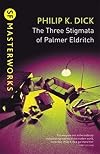
I know it's a genre classic and is appreciated by many. Despite its engaging language and pace, the narrative has numerous logical gaps, unresolved plot threads, and a murky ending. Though it explores intriguing concepts, none are fully developed. Furthermore, its misogyny, especially considering the era of its publication amidst second-wave feminism, is particularly jarring. One wonders if the author ever ventured beyond his hovel.
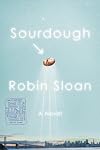
The book is kind, sweet and very touching. In the style that mixes hyper-realism, mystery and adventure Sloan tells us a story of Lois - an overworked software engineer, who suddenly discovers the magic of sourdough baking. Through the baking she gets the to change her life completely: first, her social circle, then new profession and with it some adventures, and finally she gets a better understanding of herself and what she wants to do with her life.