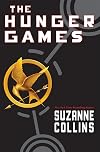
Katniss lives in a poor mining community, District 12. Each year two teens from each district must participate in the Hunger Games -- a televised survival test which pits the kids against each other. Only one of these children survives. When Katniss's beloved younger sister is chosen to go, Katniss takes her place. Having taken responsibility for her family after the death of her father, Katness is skilled in tracking, hunting and survival skills, but will it be enough in the artifical environment of the arena?
I loved this book -- much to my surprise. I had heard a lot of buzz, but wasn't expecting much; the premise sounded too much like Battle Royale, The Long Walk, etc, etc. However, this book has much more to reccommend it.
First off is the character of Katniss. She's a survivor -- but those attributes that make her strong also make her kind of unlikeable and unsympathetic. You are pulling for her to win, but more for her family back home than for herself. Katniss also grows throughout her experiences in the Capitol and at the Hunger Games, becoming more aware of the world and her role in it.
What's also appealing about this book is that Collins doesn't give us 300 pages of kids killing each other. More than half the book is devoted to the public spectcale that surrounds the Hunger Games -- which plays up the point that the games are a source of social control as much as entertainment.
Finally, Collins is simply an excellent writer, who knows when to show and when to show more tell. The wilderness survival scenes could drag, particularly for a reader like me, but she managed to keep them fresh and interesting. show less
I loved this book -- much to my surprise. I had heard a lot of buzz, but wasn't expecting much; the premise sounded too much like Battle Royale, The Long Walk, etc, etc. However, this book has much more to reccommend it.
First off is the character of Katniss. She's a survivor -- but those attributes that make her strong also make her kind of unlikeable and unsympathetic. You are pulling for her to win, but more for her family back home than for herself. Katniss also grows throughout her experiences in the Capitol and at the Hunger Games, becoming more aware of the world and her role in it.
What's also appealing about this book is that Collins doesn't give us 300 pages of kids killing each other. More than half the book is devoted to the public spectcale that surrounds the Hunger Games -- which plays up the point that the games are a source of social control as much as entertainment.
Finally, Collins is simply an excellent writer, who knows when to show and when to show more tell. The wilderness survival scenes could drag, particularly for a reader like me, but she managed to keep them fresh and interesting. show less
Jenna wakes up in an unfamilar house, with no memory of who she is. Her mother assures her that her memory will return. Jenna feels odd -- she has no memory of the accident that caused her memory loss and only limited emotional responses. However, she can recite passages of literature flawlessly and remembers historical facts effortlessly. As Jenna grows more and more restless in her isolated home, she rebels against the limitations placed upon her by her parents, and oddly combative grandmother. As Jenna learns the truth about herself, she understands that questions of identity and memory, or even life or death, are not so cut and dried.
This book does a decent job balancing three different plots -- Jenna's quest to discover the truth about herself, a love story with a local boy, and the questions raised by biotechnology. Pierson has to shoehorn that last one in with some fairly clunky exposition about the ethics agency which oversees transplants. The thing that bothered me most about this book was the pacing. We know that Jenna is not normal -- why take more than half the book to tell us how and why? After the (non)event of Jenna's nature being revealed, the book then careens into an unsatisfying ending. To my mind, the book ended just when things were getting intereresting, and tacked on a half-hearted epilogue.
Despite my complaints, this book is beautifully written. Jenna is, of course, something of a cipher, but Pearson builds in enough hints so you get the idea of show more the girl Jenna was. The love story flows naturally, and all of the supporting characters -- save one -- have important roles to play. This would be a good book for discussions. show less
This book does a decent job balancing three different plots -- Jenna's quest to discover the truth about herself, a love story with a local boy, and the questions raised by biotechnology. Pierson has to shoehorn that last one in with some fairly clunky exposition about the ethics agency which oversees transplants. The thing that bothered me most about this book was the pacing. We know that Jenna is not normal -- why take more than half the book to tell us how and why? After the (non)event of Jenna's nature being revealed, the book then careens into an unsatisfying ending. To my mind, the book ended just when things were getting intereresting, and tacked on a half-hearted epilogue.
Despite my complaints, this book is beautifully written. Jenna is, of course, something of a cipher, but Pearson builds in enough hints so you get the idea of show more the girl Jenna was. The love story flows naturally, and all of the supporting characters -- save one -- have important roles to play. This would be a good book for discussions. show less
Evie is average in the extreme. Daughter of a bombshell mother and a runaway dad, she delights in the family that is created when her mother married Joe, and amiable and fun loving guy. When Joe returns from the war, Evie is happy that her family is complete again. On an impromptu trip to Palm Beach, Evie meets Peter, a former member of Joe's unit. Peter has some sort of hold on Joe, and as Evie falls for Peter's good looks and charm, she learns that not everything is as it seems with Joe, her Mother and Peter.
This book falls into the almost but not quite category for me. Evie is an appealing protagonist, but she strikes me as hopelessly naive, which is appropriate for the book's setting. Subplots about Jews in Palm Beach and a local boy's crush on Evie verge on the superfluous. Bundell does manage to bring them back into the main narrative, but it's a reach. Over all this is a solid read, but nothing spectacular.
This book falls into the almost but not quite category for me. Evie is an appealing protagonist, but she strikes me as hopelessly naive, which is appropriate for the book's setting. Subplots about Jews in Palm Beach and a local boy's crush on Evie verge on the superfluous. Bundell does manage to bring them back into the main narrative, but it's a reach. Over all this is a solid read, but nothing spectacular.
Wesley Gibbs is one of life's loosers. Suffering from mulitple stress disorders, he has an abusive boss, a slutty girlfriend, and no way out. That is until he discovers that his father, absent since Wesley's birth, was actually a supervillian who has left Wes $50 million. The catch is, that Wesley must take up The Killer's identity, and live as a supervillian for 6 months. As Wesley agrees to the plan he is quickly stripped of empathy and learns to act without remorse or consequences. He also learns that the supervillians joined together more than 20 years ago to defeat the heroes of the world, then "re-wrote" reality to make the world forget their existence -- except for comic books, which no-one reads. Supervillians now keep to the shadows, quietly running the world, and splitting the loot. However, some villians are not content with the background, and stage a coup to reenter the limelight once more.
This book is why the term "mature readers" was invented. It is graphic in every sense of the word. Rape, murder, torture, a character made entirely of excrement -- it's all here.
This book is a challenging read. While I think I get what Millar was going for here, I'm not sure if it was entirely accomplished. In a world without heroes, there is no one to cheer for -- and exporing that world is an interesting, if uncomfortable, prospect. However, the never ending parade of atrocities on display here gets old quick, and since Wesley quickly looses any humanizing or likeable show more qualities, it's difficult to care what happens to him. This is true of all the characters and is the centrla problem with this title -- if your choice is between bad and even worse, who cares? Jones does an excellent job of illustrating this world, you can feel the dinginess of the "re-written" universe and the character designs are excellent. show less
This book is why the term "mature readers" was invented. It is graphic in every sense of the word. Rape, murder, torture, a character made entirely of excrement -- it's all here.
This book is a challenging read. While I think I get what Millar was going for here, I'm not sure if it was entirely accomplished. In a world without heroes, there is no one to cheer for -- and exporing that world is an interesting, if uncomfortable, prospect. However, the never ending parade of atrocities on display here gets old quick, and since Wesley quickly looses any humanizing or likeable show more qualities, it's difficult to care what happens to him. This is true of all the characters and is the centrla problem with this title -- if your choice is between bad and even worse, who cares? Jones does an excellent job of illustrating this world, you can feel the dinginess of the "re-written" universe and the character designs are excellent. show less
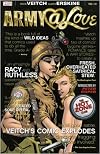
The United State's failed war in Afbaghistan continues to rage. However, to keep recruitment up, Motivation and Morale, or MoMo, sells the war to youth as a "peak life experience" -- a thrill ride for adrenline junkies. Momo sweetens the deal by arranging for bachinallial retreats for soliders. Corporate sponsors finance the war effort, while the spouses back home cope with their loved one's absence.
A mash-up of a war comic and an x-rated romance comic, with a bizzare political twist, Veitch manages to convey some wickedly clever ideas in this bizzare book. A draft that focuses on corporate middle managers, a war drone that is controlled with a Playstationesque controller, corporate logos on military hardware are a few examples. However, he gets bogged down in a strange "grifter" subplot and bizzare details that are just bizzare, like the Wiccan love charms and Secretary of Defense who collects hair clippings. I personally am not a fan of Veitch's artwork, and feel that there are many panels in this book that concentrate too much on "Look! Boobs!" than on telling a compelling story.
All in all, an engaging, but deeply flawed, series.
A mash-up of a war comic and an x-rated romance comic, with a bizzare political twist, Veitch manages to convey some wickedly clever ideas in this bizzare book. A draft that focuses on corporate middle managers, a war drone that is controlled with a Playstationesque controller, corporate logos on military hardware are a few examples. However, he gets bogged down in a strange "grifter" subplot and bizzare details that are just bizzare, like the Wiccan love charms and Secretary of Defense who collects hair clippings. I personally am not a fan of Veitch's artwork, and feel that there are many panels in this book that concentrate too much on "Look! Boobs!" than on telling a compelling story.
All in all, an engaging, but deeply flawed, series.
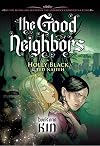
Rue, a young woman who sees strange things, is trying not to worry about her mother's disappearence, and her father's complete breakdown. However, when her father is accused of murder, and the strange things she sees start taking back, she can no longer deny her heritage.
I really wanted to like this book more than I did. I think the problem, for me, was in Naifeh's artwork. His extensive use of greyscale gives the book atmosphere, and makes it incredibly difficult to tell what's going on. His character designs are all very similar, tall and angular, which served to muddy the plot.
Black does dark faerie very well, and I was a little disappointed in this iteration of it. For all the dark warnings and forboding, there is very little payoff. However, this is the first volume in a series, and things might pick up later.
I really wanted to like this book more than I did. I think the problem, for me, was in Naifeh's artwork. His extensive use of greyscale gives the book atmosphere, and makes it incredibly difficult to tell what's going on. His character designs are all very similar, tall and angular, which served to muddy the plot.
Black does dark faerie very well, and I was a little disappointed in this iteration of it. For all the dark warnings and forboding, there is very little payoff. However, this is the first volume in a series, and things might pick up later.
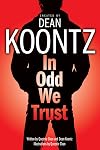
Odd Thomas, who makes the worlds greatest pancakes, and has the ability to see ghosts, is drawn into the murder investigation of a young boy.
I liked this book much more than I expected to. I have not read any of Koontz's Odd Thomas books previously, and I think that worked against me fully appreciating this book. However, Chan's clean artwork went a long way to making the characters familiar and accessable. I do think the "mystery" at the heart of this book could have been fleshed out a little more, it was still a fun, quick read.
I liked this book much more than I expected to. I have not read any of Koontz's Odd Thomas books previously, and I think that worked against me fully appreciating this book. However, Chan's clean artwork went a long way to making the characters familiar and accessable. I do think the "mystery" at the heart of this book could have been fleshed out a little more, it was still a fun, quick read.
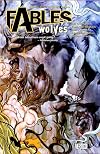
Oh! Bigby! I'm so happy to see you again!
My love for Bigby Wolf, the former sheriff of Fabletown is almost absolute. In the world of comic book crushes, Bigby is only second to Nightwing and Christian Walker. So any book that focuses on him is going to be A-O.K. with me.
I do want to praise Willingham and company for the elegant way that Bigby returns to Fabletown. It manages to incorporate a trip back to the Homelands, Bigby doing what Bigby does best and the sentimental reunion with Snow, all without breaking the previously established laws of Fabletown.
I also enjoyed the Secret-Agent Cinderella at the end of this volume. The Giant Kingdoms are a trip, and watching Cindy manuever in this environment is wonderful.
My love for Bigby Wolf, the former sheriff of Fabletown is almost absolute. In the world of comic book crushes, Bigby is only second to Nightwing and Christian Walker. So any book that focuses on him is going to be A-O.K. with me.
I do want to praise Willingham and company for the elegant way that Bigby returns to Fabletown. It manages to incorporate a trip back to the Homelands, Bigby doing what Bigby does best and the sentimental reunion with Snow, all without breaking the previously established laws of Fabletown.
I also enjoyed the Secret-Agent Cinderella at the end of this volume. The Giant Kingdoms are a trip, and watching Cindy manuever in this environment is wonderful.
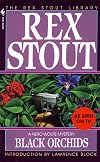
A remarkably rare black orchid at a flower show lures Nero Wolfe from his comfortable brownstone. But before the detective and his sidekick, Archie Goodwin, can stop and smell the roses, a diabolically daring murder puts a blight on the proceedings. The murderer to be weeded out is definitely not a garden-variety killer.
Wolfe must also throw his considerable weight into another thorny case, this one involving a rich society widow bedeviled by poison-pen letters -- and a poisonous plot as black as Wolfe's orchids with roots even more twisted.
Wolfe must also throw his considerable weight into another thorny case, this one involving a rich society widow bedeviled by poison-pen letters -- and a poisonous plot as black as Wolfe's orchids with roots even more twisted.
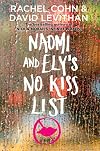
On the surface, this book seems a lot like Nick and Nora's Infinite Playlist. It has the alternating points of view, the fabulous New York lifestyle that I suspect only exists in teen novels, and two people trying to get their lives started.
That's where the similarities end however, because Ely and Naomi are childhood friends, and they created the No-Kiss list when it became clear that Ely liked some of the same boys as Naomi. However, even though Ely is gay, Naomi can't give up on the idea that one day, he'll love her the way she loves him. Their whole world comes crashing down when Ely breaks the rules and kisses Bruce the Second, Naomi's current boyfriend. Naomi has to deal with Ely's betrayal, and more importantly, come to grips with the idea that he's never going to be what she wants. Ely realizes, maybe for the first time, what it is to really fall in love.
When I started reading this book, my first reaction was, "it's not as good as Nick and Nora" -- and in a lot of ways, I still think that's true. Ely and Naomi are a lot less likable, and they have a complicated back-story that never really gets the attention it deserves. Also, aside from the two main characters there are other points of view included, and many of these characters just seem like they're along for the ride -- their contributions don't do much to move the plot along or help the reader understand the situation.
However, when I got to the end of the book, I felt like crying. Not that the ending is sad, show more necessarily, but I really felt for these two people, and what they had lost, and what they were facing in the future. Kearsten once said that nobody writes falling in love like David Levithan, and she's right; the relationship between Bruce the Second and Ely is very sweet and very fragile. Even Naomi, who I pretty much disliked on sight, turns out to be more than she seems.
So, while I wouldn't say that Naomi and Ely's No Kiss List is one of my favorite books, it is very compelling. Not as wonderful as Nick and Nora... but still good. show less
That's where the similarities end however, because Ely and Naomi are childhood friends, and they created the No-Kiss list when it became clear that Ely liked some of the same boys as Naomi. However, even though Ely is gay, Naomi can't give up on the idea that one day, he'll love her the way she loves him. Their whole world comes crashing down when Ely breaks the rules and kisses Bruce the Second, Naomi's current boyfriend. Naomi has to deal with Ely's betrayal, and more importantly, come to grips with the idea that he's never going to be what she wants. Ely realizes, maybe for the first time, what it is to really fall in love.
When I started reading this book, my first reaction was, "it's not as good as Nick and Nora" -- and in a lot of ways, I still think that's true. Ely and Naomi are a lot less likable, and they have a complicated back-story that never really gets the attention it deserves. Also, aside from the two main characters there are other points of view included, and many of these characters just seem like they're along for the ride -- their contributions don't do much to move the plot along or help the reader understand the situation.
However, when I got to the end of the book, I felt like crying. Not that the ending is sad, show more necessarily, but I really felt for these two people, and what they had lost, and what they were facing in the future. Kearsten once said that nobody writes falling in love like David Levithan, and she's right; the relationship between Bruce the Second and Ely is very sweet and very fragile. Even Naomi, who I pretty much disliked on sight, turns out to be more than she seems.
So, while I wouldn't say that Naomi and Ely's No Kiss List is one of my favorite books, it is very compelling. Not as wonderful as Nick and Nora... but still good. show less
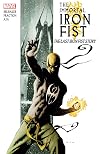
Daniel Rand, a typical Marvel billionaire, is also the immortal Iron Fist, a kung-fu super-hero. His decision not to sell technology to shady Chinese investors leads to a hostile takeover attempt and a fight with HYDRA. Meanwhile, a former Iron Fist is discovered, and travels to New York to share with Danny the secrets of their order and an upcoming battle.
This book was... O.K. I suspect if I had known more about the character to begin with, it might be more compelling. However, as it stands, this felt more than a little generic, like Brubaker and company were working from a standard superhero script. Gobs of money? Check. Daddy issues? Check. Non-specific mystical threat? Check. Overwhelming odds? Check. To be fair, the character was created in the 1970's, a time not noted for innovation in comics. The addition of a more detailed back story for the Iron Fist character was a nice touch, and Orson Randall was an interesting wrinkle. However he seemed to suffer from the same sort of PTSD that many Marvel characters struggle with.
All in all, a solid effort, but nothing really special.
This book was... O.K. I suspect if I had known more about the character to begin with, it might be more compelling. However, as it stands, this felt more than a little generic, like Brubaker and company were working from a standard superhero script. Gobs of money? Check. Daddy issues? Check. Non-specific mystical threat? Check. Overwhelming odds? Check. To be fair, the character was created in the 1970's, a time not noted for innovation in comics. The addition of a more detailed back story for the Iron Fist character was a nice touch, and Orson Randall was an interesting wrinkle. However he seemed to suffer from the same sort of PTSD that many Marvel characters struggle with.
All in all, a solid effort, but nothing really special.
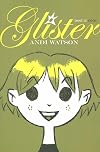
Glister Butterworth, a young girl living in the English countryside, is frequently at the center of strange happenings. One such happening is the delivery of haunted teapot, which contains the ghost of Philip Bulwark-Stratton, an infamously bad writer. Bulwark-Stratton enlists Glister to finish his last novel, an unbelievably gloomy undertaking which soon consumes Glister's life. Glister must find a way for Bulwark-Stratton to complete the novel without loosing her mind.
Watson is always charming. His adorable Glister is no exception. This book almost seems aimed at a pre-teen audience, but it's hard to imagine any pre-teens being interested in the terribly English adventures of Glister. This book would have been stronger if it had more heft, and had combined several of Glister's adventures.
Watson is always charming. His adorable Glister is no exception. This book almost seems aimed at a pre-teen audience, but it's hard to imagine any pre-teens being interested in the terribly English adventures of Glister. This book would have been stronger if it had more heft, and had combined several of Glister's adventures.
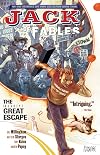
As it has many times in the past, Jack of the Tales luck has finally run out. The ne'er do well Fable, after creating his own media empire, and making himself a household name, finds his assets frozen and is ordered to run by the Fabletown sheriff, Beast. To add insult to injury, the poor (in proportion) and homeless Jack is soon seized by evil Librarians from the Golden Boughs Retirement Community, a community where imprisoned Fables are held until the Mundy world forgets about them. Jack, being Jack, has no intention of going quietly into the night, and with the help of the criminally insane Goldilocks, he plans a daring escape.
This book has evil Librarians. It gets a star just for that. However, I might have expected too much from this title. While I enjoy Jack, and it was fun to meet more Fables, I was left with to many questions at the end of this book to give it an unqualified rave. I would have liked more about the Head Librarian, Reprise, and why it was so important for him to rid the world of Fables. I'm sure that will come in later books, but a little back story would have helped this arc tremendously. Although not as rich as Fables, this book continues in that title's high standards, with complex and interesting character designs and beautiful artwork.
This book has evil Librarians. It gets a star just for that. However, I might have expected too much from this title. While I enjoy Jack, and it was fun to meet more Fables, I was left with to many questions at the end of this book to give it an unqualified rave. I would have liked more about the Head Librarian, Reprise, and why it was so important for him to rid the world of Fables. I'm sure that will come in later books, but a little back story would have helped this arc tremendously. Although not as rich as Fables, this book continues in that title's high standards, with complex and interesting character designs and beautiful artwork.
I love this book so much. I could type that sentance over and over again and that would pretty much sum up how I feel about this book.

Frank Miller. Jim Lee. Batman. What's not to love? Plenty.
If you take this book as it is presented, a serious "re-imagining" of the Batman mythos, then the whole thing is just awful. Featuring some of the most ham-handed dialog in creation, and a distinct lack of plot, this book casts Batman as such a psychotic that the Joker looks tame by comparison. He gleefully injures crooked policemen, kidnaps a traumatized boy and throws him in a cave, and nearly murders his love interest. However, Batman isn't the only one who gets a character reassignment, Wonder Woman comes off as a "femi-nazi", Hal Jordan is an idiot and Superman is a rage volcano. Miller has taken all the ticks of his Sin City characters and has grafted them on to the familiar faces of the DC universe. Miller is known for an edgier style, but this comes of as parody.
This is the second way that you can read this title -- as Miller intentionally taking superhero tropes to an extreme. However, after reading DKSB, I don't find this argument particularly compelling. Maybe Miller has gone back to the well too many times, but for me, he's just not that interesting anymore.
Jim Lee provides the artwork for Miller, and it is done in typical Lee style. Clean, fan-friendly presentation with lots of candy-bright colors and curvaceous women. While Lee always turns in quality, if repetitive, work, he was the wrong choice for this project. His character designs work against Miller's tone, no matter what his intent, and add show more to the "They're Kidding, Right?" factor this title.
Perhaps what bothers me most, about this book, and about Frank Miller's work in general, is his treatment of women. Yes, superhero females couldn't stand in normal gravity, but in recent years, most writers have at least tried to give their heroines depth and purpose. Not so with Miller -- his women are stacked and bitchy, and that's where it ends. It's tired. show less
If you take this book as it is presented, a serious "re-imagining" of the Batman mythos, then the whole thing is just awful. Featuring some of the most ham-handed dialog in creation, and a distinct lack of plot, this book casts Batman as such a psychotic that the Joker looks tame by comparison. He gleefully injures crooked policemen, kidnaps a traumatized boy and throws him in a cave, and nearly murders his love interest. However, Batman isn't the only one who gets a character reassignment, Wonder Woman comes off as a "femi-nazi", Hal Jordan is an idiot and Superman is a rage volcano. Miller has taken all the ticks of his Sin City characters and has grafted them on to the familiar faces of the DC universe. Miller is known for an edgier style, but this comes of as parody.
This is the second way that you can read this title -- as Miller intentionally taking superhero tropes to an extreme. However, after reading DKSB, I don't find this argument particularly compelling. Maybe Miller has gone back to the well too many times, but for me, he's just not that interesting anymore.
Jim Lee provides the artwork for Miller, and it is done in typical Lee style. Clean, fan-friendly presentation with lots of candy-bright colors and curvaceous women. While Lee always turns in quality, if repetitive, work, he was the wrong choice for this project. His character designs work against Miller's tone, no matter what his intent, and add show more to the "They're Kidding, Right?" factor this title.
Perhaps what bothers me most, about this book, and about Frank Miller's work in general, is his treatment of women. Yes, superhero females couldn't stand in normal gravity, but in recent years, most writers have at least tried to give their heroines depth and purpose. Not so with Miller -- his women are stacked and bitchy, and that's where it ends. It's tired. show less
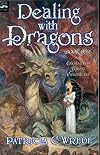
Princess Cimorene, dark haired, intellegent and headstrong, is not a proper princess. So, when her marriage to the totally proper and totally annoying Therendril is announced, she runs away, on the advice of a frog, and becomes Princess to the dragon Kazul. There she is allowed to cook, clean, read Latin and learn magic. Cimorene discovers wizards, where no wizard should be, and with the help of her friends Allinora and the witch Morwen, must foil their evil plot.
I loved this series as a pre-teen, and recently listened to the audio with my 6-year old. It holds up. Hearing it as a mom, I'm glad that there are girls like Cimorene for my daughter to hear about.
I loved this series as a pre-teen, and recently listened to the audio with my 6-year old. It holds up. Hearing it as a mom, I'm glad that there are girls like Cimorene for my daughter to hear about.
Miss Marple solves another murder in a small village. Not my favorite Miss Marple, but very good.
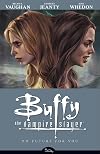
After learning that the US military -- Twilight -- has it out for Slayers, Buffy recruits Willow to secure the Slayer training facility. Meanwhile, Faith has been working in Cleaveland, monitoring the Hellmouth there. Giles offers her a chance to flee her "second-rate life" -- but, she must kill another Slayer. The two travel to England, where Twilight has convinced a "poor-little rich girl" of a Slayer that she must kill Buffy. Faith, who is struggling with her memories of her time with the Mayor, and who is still somewhat ambivlent towards Buffy, warms to the girl. However, when Buffy is summoned for a fight, Faith's presence only leads to more misunderstandings between the two. Also included in this volume is "Anywhere But Here" a stand alone story that expands on the Buffy/Willow dynamic.
I'll be honest, Faith annoys me. I was not thrilled that she was the focus of this volume. However, Vaughn is a master storyteller, and he manages to give Faith more depth and subtley than I would have thought possible. The interplay between Faith and Giles is superb, as are the subtle reminders of Giles' own reckless youth. While the denoument of this arc felt a little rushed, the resolution was satisfing, and set up the future of the pairing nicely. The standalone story is equally good, and explains some of the loose ends from the series to comic transition.
I'll be honest, Faith annoys me. I was not thrilled that she was the focus of this volume. However, Vaughn is a master storyteller, and he manages to give Faith more depth and subtley than I would have thought possible. The interplay between Faith and Giles is superb, as are the subtle reminders of Giles' own reckless youth. While the denoument of this arc felt a little rushed, the resolution was satisfing, and set up the future of the pairing nicely. The standalone story is equally good, and explains some of the loose ends from the series to comic transition.
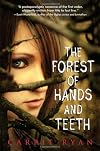
Mary's world is one of constant order and vigilance. As the Guardians patrol the fences that keep her village safe from the Unconsecrated, the Sisterhood keeps order within. Mary dreams of a world like the one's in the stories told by her mother, of oceans and life outside the Forest of Hands and Teeth. But when Mary's mother chooses to become one of the Unconsecrated, Mary is forced to join the Sisterhood, and must give up her dreams of freedom. However, Mary learns of a wider world outside her village, and of the secrets kept by the Sisterhood. When the fences fail, Mary and her family must undertake a perilous journey to seek help and a new home, guided by Mary's stories.
I enjoyed this book. I like that Ryan didn't dwell on what created the zombies, just what would happen after they were there. I did feel that the book dragged in places, that Mary's experience with the Sisterhood could have been more dramatic, and that the middle section of the book went on too long. But all in all, a well-written take on the zombie theme.
I enjoyed this book. I like that Ryan didn't dwell on what created the zombies, just what would happen after they were there. I did feel that the book dragged in places, that Mary's experience with the Sisterhood could have been more dramatic, and that the middle section of the book went on too long. But all in all, a well-written take on the zombie theme.
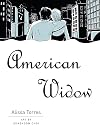
Eddie Torres had only been employed at the WTC for one day when the events of 9/11 occurred. This graphic novel recounts Alissa Torres first year of widowhood, the birth of her child, and the difficulty of being a "9/11" widow.
Lacking a narrative focus, this book is more like a collection of set pieces that provide a window into the Torres' life. While this may be an accurate depiction of Alissa Torres' mental state in the year following her husband's death, it does not make for a compelling read. The disjointed nature of the work alientates us from the emotions on display. While Choi is a masterful artist, and the book is beautifully drawn, the shifts in time and focus keep the reader from fully engaging.
Lacking a narrative focus, this book is more like a collection of set pieces that provide a window into the Torres' life. While this may be an accurate depiction of Alissa Torres' mental state in the year following her husband's death, it does not make for a compelling read. The disjointed nature of the work alientates us from the emotions on display. While Choi is a masterful artist, and the book is beautifully drawn, the shifts in time and focus keep the reader from fully engaging.
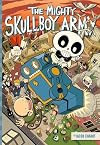
Skullboy, the evil genius head of a mighty corporation, is forced to suffer the indignaty of elementary school while he attempts to build his "Mighty Skullboy Army". So far, the army numbers only two -- Unit 1, a strangely polite robot, and Unit 2, a super-intelligent monkey. As Skullboy navagiates the treacharous waters of corporate takeovers and elementary school, he is constantly thwarted by the bumbling of his two henchman.
This book is very, very cute and very, very boy-friendly. The monkey alone would have been adorable, but add in a robot and a classmate named Booger Ralph, and you've got a guarenteed hit. The artwork is very clean, and will appeal to boys who have grown up on Pokemon and Dragonball. Not a lot makes sense here, and not a lot has too -- the fun is in taking a seemingly simple situation and watching it go off the rails.
This book is very, very cute and very, very boy-friendly. The monkey alone would have been adorable, but add in a robot and a classmate named Booger Ralph, and you've got a guarenteed hit. The artwork is very clean, and will appeal to boys who have grown up on Pokemon and Dragonball. Not a lot makes sense here, and not a lot has too -- the fun is in taking a seemingly simple situation and watching it go off the rails.
In 1973, the library police keep books from disappearing. When a rare early Bible goes missing, it falls to Marshall Ball to find the perp; before the Library of Congress wants their book back. Using all of the technology at hand, the library police team of investigators narrow in on a suspect.
I love this book, it's funny and sarcastic. However, I don't know if anybody who doesn't remember libraries in the 1970's or know something about how libraries work today will find it nearly as entertaining as I did. I think this graphic novel was intended as a satire of police procedurals; I used it as a fantasy where police in riot gear knock down the door of book theives.
Technically, this book is very well done. The sepia toned artwork, combined with the roundness of Shiga's art, really combine to give a sense of place and time. Although there is nothing in this to keep it out of the hands of teens, I don't know that they'd get the humor.
I love this book, it's funny and sarcastic. However, I don't know if anybody who doesn't remember libraries in the 1970's or know something about how libraries work today will find it nearly as entertaining as I did. I think this graphic novel was intended as a satire of police procedurals; I used it as a fantasy where police in riot gear knock down the door of book theives.
Technically, this book is very well done. The sepia toned artwork, combined with the roundness of Shiga's art, really combine to give a sense of place and time. Although there is nothing in this to keep it out of the hands of teens, I don't know that they'd get the humor.
Artistic from an early age, Sis's unnamed, yet autobiographical narrator, draws what he likes. However, in the tightly controlled and suspicious climate of 1950's Czechoslovakia, he is seamlessly indronated into Soviet ideals. Compulsory displays of patriotism and loyalty are the norm. It is not until the young narrator is exposed to Western rock music that he discovers what he has not been told by his government. Finally, after a all too brief period of freedom (the Prague Spring of 1968) and resultant crackdown, the narrartor flees, on wings of his art.
An interesting book that bears close examination. I don't respond well to Sis' art -- the heavy crosshatching and intricate shading looks busy to my eye -- but there is no denying that is is a technical masterpiece. The entire narrative has an air of tarnished innocence, as the young narrator ages and discovers thought beyond the party line. I'm not entirely sure who this book is intended for, but it is a masterful piece of graphic storytelling.
An interesting book that bears close examination. I don't respond well to Sis' art -- the heavy crosshatching and intricate shading looks busy to my eye -- but there is no denying that is is a technical masterpiece. The entire narrative has an air of tarnished innocence, as the young narrator ages and discovers thought beyond the party line. I'm not entirely sure who this book is intended for, but it is a masterful piece of graphic storytelling.
Having created 1000's of slayers at the end of the series run, Buffy now finds herself as a general in an all girl Army. Zander serves as her second in command, and Andrew and Giles are also on hand. However, the US Military is not pleased with Buffy's milita, and recruit Amy and Jonathan (still skinless) to destroy the Slayers.
Fans of the series will eat this up with a spoon. Those unfamiliar with the Buffy-verse will be lost. Much like Whedon's other comic sequel for Firefly, this title is preaching to the choir. While I wish that Whedon would quit using the sex-as-transformation metaphor, there is no denying that this is Buffy at the top of her form.
Fans of the series will eat this up with a spoon. Those unfamiliar with the Buffy-verse will be lost. Much like Whedon's other comic sequel for Firefly, this title is preaching to the choir. While I wish that Whedon would quit using the sex-as-transformation metaphor, there is no denying that this is Buffy at the top of her form.
Set in modern-day Tel Aviv, a young man, Koby Franco, receives an urgent phone call from a female soldier. Learning that his estranged father may have been a victim of a suicide bombing in Hadera, Koby reluctantly joins the soldier, a young woman who was intimate with themissing man, in searching for clues. His death would certainly explain his empty apartment and disconnected phone line. As Koby tries to unravel the mystery of his father's death, he finds himself piecing together not only the last few months of his father's life but his entire identity.
In this quietly moving piece of graphic fiction, Modan makes the savvy choice not to introduce the reader to Gabriel, Kody's father. In doing so, she puts the focus squarely on Kody, and on the different strata of Israeli society. Clean, spare artwork nicely complements the still story, where no great revelations are made, and some questions go unanswered.
In this quietly moving piece of graphic fiction, Modan makes the savvy choice not to introduce the reader to Gabriel, Kody's father. In doing so, she puts the focus squarely on Kody, and on the different strata of Israeli society. Clean, spare artwork nicely complements the still story, where no great revelations are made, and some questions go unanswered.

Starting in mid-narrative, this book is the tale of Dahlia, a little girl with a giant cybernetic panda. Dahlia is looking for her father, an inventor, who has been kidnapped by an evil goat bent on world domination. Also looking for Dahlia's father is Double Aught 7, an anachronistic agent of the Queen. When Wackkity, a ninja-hating roller disco samuari, comes looking for Dahlia, he gets drawn into the mix too.
This book is beautifully drawn. Alas, it makes no freaking sense. Ninjas, guys dressed like Eval Keneval, killer robots, and more all get thrown into the mix. There are a few moments of wit here, but they are lost in the chaotic shuffle.
This book is beautifully drawn. Alas, it makes no freaking sense. Ninjas, guys dressed like Eval Keneval, killer robots, and more all get thrown into the mix. There are a few moments of wit here, but they are lost in the chaotic shuffle.
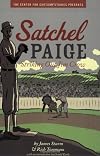
Leaving home as a young man, the narrator of this fictionalized tale is full of dreams of stardom. As a baseball player, he makes far more than his sharecropper neighbors. However, blowing out his knee in a game against Satchel Paige, he is forced to return home to the cotton fields. Years later, Paige comes to play an exhibition game against the local white landowners. It is through this game that the narrator regains the pride that has been slowly leached from him.
This is a truly excellent graphic novel. The sparsely colored illustrations work well with the material. By putting the narrative in the hands of someone other than Paige, Strum shows us what a miracle Paige's success really was, and places him in historical context without becoming dry or preachy.
This is a truly excellent graphic novel. The sparsely colored illustrations work well with the material. By putting the narrative in the hands of someone other than Paige, Strum shows us what a miracle Paige's success really was, and places him in historical context without becoming dry or preachy.
Clay is excited to receive the unmarked package, and puzzled when he sees it contains 13 numbered audiotapes. Discovering the tapes are the suicide note of Hannah, a classmate, he spends the night listening to her name the 13 people she feels are complicit in her death -- and his name is one of them. Hannah is a victim of rumor and circumstance, and the 13 people she names on the tape started and spread those rumors. Crisscrossing their small town, Clay relives Hannah's high school years, until she makes the final decision to end her life.
Having heard a lot of buzz around this book, I was expecting more. While it is an original conceit, this book gets very heavy handed in it's final third. Also, it think it was a mistake to have Clay be exonerated from Hannah's list. While it does give the reader a character to sympathize with, it makes that character Clay, and not Hannah. Since Clay is such a nothing character -- vanilla to the extreme -- it makes for a less compelling narrative. This book would probably resonate with teen readers, and could spark good discussions, but overall, this one doesn't earn it's hype.
Having heard a lot of buzz around this book, I was expecting more. While it is an original conceit, this book gets very heavy handed in it's final third. Also, it think it was a mistake to have Clay be exonerated from Hannah's list. While it does give the reader a character to sympathize with, it makes that character Clay, and not Hannah. Since Clay is such a nothing character -- vanilla to the extreme -- it makes for a less compelling narrative. This book would probably resonate with teen readers, and could spark good discussions, but overall, this one doesn't earn it's hype.
Seventeen-year-old Jade DeLuna suffers from panic attacks/ Therapy and medication help, and so does watching the elephants at the local zoo. It is on the zoo webcam that she first sees Sebastian, a handsome boy with a 15-month-old son. Jade soon falls in love with him and becomes privy to a shocking secret. As Jade struggles with her relationship with Sebastian, she must also come to terms with her parents' deteriorating marriage, her friends drifting apart, and an A.P.-heavy course load.
I enjoyed this book immensely, and I feel it is a fresh approach to the "teen parent" novel. Although Jade and Sebastian's relationship is a shade melodramatic, it feels authentic. My only quibble is with the presentation of Jade's mom and dad. It seems unlikely to me that Jade's mom wouldn't have been called up for her smothering behavior as a part of Jade's therapy, and Jade's dad is really nothing more than a cardboard cutout. But overall, this is an outstanding book.
I enjoyed this book immensely, and I feel it is a fresh approach to the "teen parent" novel. Although Jade and Sebastian's relationship is a shade melodramatic, it feels authentic. My only quibble is with the presentation of Jade's mom and dad. It seems unlikely to me that Jade's mom wouldn't have been called up for her smothering behavior as a part of Jade's therapy, and Jade's dad is really nothing more than a cardboard cutout. But overall, this is an outstanding book.
Connor is a troublemaker. Risa is a ward of the state. Levi comes from a life of privledge and piety. What do the three have in common? They are all going to be unwound.
In a world where abortion is illegal, but you can abandon your baby on any doorstep, unwanted teens can be retroactively aborted -- "unwound" -- their body parts harvested for transplant. Some kids, like Connor, are unwound because their parents can't deal with them anymore. Some, like Risa, are the victims of budget cuts. Others still, like Levi, are "tithes" part of a religious offering. However, when fate brings the three together, it gives them a chance to survive to see adulthood.
This is a really outstanding book, that manages to be both thought provoking and action packed. Each of the three teens takes a very different journey, both physically and mentally, although they all come to a similar place. The teens are believable, as is the social-political structure of their world. Although some of the subplots might not be necessary (Humphrey Dunfrees) all in all this is a tight, well-paced read.
In a world where abortion is illegal, but you can abandon your baby on any doorstep, unwanted teens can be retroactively aborted -- "unwound" -- their body parts harvested for transplant. Some kids, like Connor, are unwound because their parents can't deal with them anymore. Some, like Risa, are the victims of budget cuts. Others still, like Levi, are "tithes" part of a religious offering. However, when fate brings the three together, it gives them a chance to survive to see adulthood.
This is a really outstanding book, that manages to be both thought provoking and action packed. Each of the three teens takes a very different journey, both physically and mentally, although they all come to a similar place. The teens are believable, as is the social-political structure of their world. Although some of the subplots might not be necessary (Humphrey Dunfrees) all in all this is a tight, well-paced read.