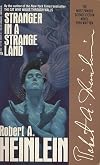
A fine idea left unrealized. The church of the Fosterites stands as one of the great satires of modern religious expression. Heinlein's understanding of religious alternatives is surprisingly well-rounded. However, the anti-homosexual bias proves that even the most progressive ideas remain shackled in the culture of their time, however enlightened they may be. Statements from characters like: "9 out of 10 women get raped, it's their fault" sound truly horrid today. Portions about Smith's life after leaving Harshaw's care are much less compelling than earlier text, but overall the book meets the expectations carried via its reputation.
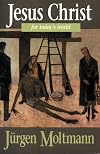
Moltmann's view of Christ stands as one of the most compelling of recent times. He rejects all interpretations of Christ's militaristic second coming as antithetical to the whole of his teaching life. Instead, Moltmann points to the cooperative nature of Jesus's life, of his insistence on equality and social justice, and finds a more suitable Christology there.

A wonderful collection of visual and verbal puns. For example:
A picture of 'William the Conker' conking a saxon on the head. Two bystanders (mice), turn to one another the first mouse comments on the, "Saxon violence." To which his fellow says: "Saxon violins? I don't hear anything."
There's also a big spread about Edward Elgar and conductor Sir Thomas Beecham, heir to the Beecham's Pills empire. If you get the joke, you officially know too much about British music.
A picture of 'William the Conker' conking a saxon on the head. Two bystanders (mice), turn to one another the first mouse comments on the, "Saxon violence." To which his fellow says: "Saxon violins? I don't hear anything."
There's also a big spread about Edward Elgar and conductor Sir Thomas Beecham, heir to the Beecham's Pills empire. If you get the joke, you officially know too much about British music.

There are at least four layers to what is depicted in Tripp's work, and running all of them down is often beyond most adults, to say nothing of children. This book is one of several reasons I was such a warped child.

Cobb uses the example of Buddhism and Christianity to construct a viable method for two different religions to engage in dialogue which does not presume to force values from one religious tradition onto another, but instead to produce mutually transformative discussion.

When it came out, this book was like a dropped bomb. Even today, many in the C of E consider reading this book to stand as the doorway between mere church attendance, and actual, active congress with their faith.
Robinson wrote this text in response to what he saw as the church's tendency to respond to modernism with obstinate parochialism. New theological ideas from people like Paul Tillich or even Huxley were found to be too odd, too unorthodox. As a result, many found church to be rife with banal supernaturalism and incapable of self-examination in the face of the 1960's. The result was what John Shelby Spong would later call, "believers in exile." That is, people who stopped attending church because it had ceased to be relevant to their lives and experience. "Honest to God" called for the work of constructive iconoclasm, for the church to look at encroaching modernism and actually be able to respond constructively to it, and indeed to incorporate itself into the movement. A classic of radical theology.
Robinson wrote this text in response to what he saw as the church's tendency to respond to modernism with obstinate parochialism. New theological ideas from people like Paul Tillich or even Huxley were found to be too odd, too unorthodox. As a result, many found church to be rife with banal supernaturalism and incapable of self-examination in the face of the 1960's. The result was what John Shelby Spong would later call, "believers in exile." That is, people who stopped attending church because it had ceased to be relevant to their lives and experience. "Honest to God" called for the work of constructive iconoclasm, for the church to look at encroaching modernism and actually be able to respond constructively to it, and indeed to incorporate itself into the movement. A classic of radical theology.
The Five Gospels: What Did Jesus Really Say? The Search for the AUTHENTIC Words of Jesus by Robert W. Funk
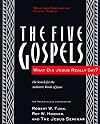
An interesting study of the historical reliability of scripture. The often quoted, "only 18% of what it says Jesus said was actually said by the man himself," often provokes a visceral negative reaction in some readers. Many people fixate upon the figure of Jesus (and equate that historical person to Christ, the theological figure) that they forget that the earliest Gospel (Mark's) was completed around the 60's CE, this was before the fall of Jerusalem in 70 CE. This afforded Christians plenty of time to develop their thought after the death of their prophet and include those insights in their writings--just as would be the case with the other Gospels. To say, "Jesus didn't really say that," does not mean the statement is without value, nor that it was not said by a student of Jesus who, one might argue, was a co-founder of the Christian faith. Remember that Jesus lived and died as a Jew, it was his followers who formed a cult around his teachings. If you have a high Christology and insist that the incarnation is utterly required for the Christian life, this might be a problem. With somewhat more historical perspective, however, it does not detract at all from the importance of the Gospels, nor from Jesus' teachings, it simply provides additional depth to our understanding of the development of the faith and much-needed contextualization for the Gospels.
Much is made of the voting procedures applied by the Seminar. However, people forget that a very similar method was used show more to compose the Nicene Creed, as well as actually form the Bible canon itself. That is, a vote was held and it was assumed that God's guidance would penetrate that voting procedure.
This is a must for anyone interested in serious Bible study. I might even go so far as to suggest it be required reading for all Christians. However, many Christians view their faith as such a fragile thing that books such as this one are considered dangerous to consider, lest one's faith be broken by too much thought and questions. show less
Much is made of the voting procedures applied by the Seminar. However, people forget that a very similar method was used show more to compose the Nicene Creed, as well as actually form the Bible canon itself. That is, a vote was held and it was assumed that God's guidance would penetrate that voting procedure.
This is a must for anyone interested in serious Bible study. I might even go so far as to suggest it be required reading for all Christians. However, many Christians view their faith as such a fragile thing that books such as this one are considered dangerous to consider, lest one's faith be broken by too much thought and questions. show less
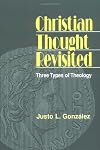
A nice little piece about what the author sees as the three most important early theologians and the characteristics of their theological methods.
Gonzalez gives us good breakdowns of Tertullian, Irenaeus, and Origen's thought. He then goes further, and classifies later theologies as adhering chiefly to one of these three schools of thought. What Gonzalez also ably avoids is falling back on easy classification as he draws connections between figures. It would be quite easy to say that so-and-so was an intellectual disciple of Irenaeus or whomever. He does not do that, and draws all conclusions with plenty of wiggle room built into them.
Gonzalez gives us good breakdowns of Tertullian, Irenaeus, and Origen's thought. He then goes further, and classifies later theologies as adhering chiefly to one of these three schools of thought. What Gonzalez also ably avoids is falling back on easy classification as he draws connections between figures. It would be quite easy to say that so-and-so was an intellectual disciple of Irenaeus or whomever. He does not do that, and draws all conclusions with plenty of wiggle room built into them.
A dizzying book. Is doing good for others a service to yourself or service to them? This book causes one to question whether or not the actions we take, any of them, can actually be purely altruistic. Do we help the old lady across the street just to help, or is it for the thrill of being told, "thank you" or is it so as to appear meritorious to others? One of a very few books that stood me on my ear after reading it.
It's a picture book. When you have to read picture books, you're often reminded of those silly textbooks for geography or civics you were expected to read in junior high. In the case of this book, it has pretty pictures and moderately interesting text. However, it is still about pretty much the dullest subject in Christian thought, piety. At the mere mention of the word you hear eyelids snapping shut around the world.
So at least you get the pretty pictures.
So at least you get the pretty pictures.
A distressingly narrow explanation of what Christianity is and what the author has misconstrued about Christianity. Only four possible interpretations of atonement theory? Nope, sorry, far too simplistic.
A neat little book, if somewhat Orthodox. Quite good and a wonderful example of more recent feminist theology. My personal bias against anything that leans too heavily on Trinitarian thought colored my reading, probably unfairly, I need to take another run at this one.

This is a lovely collection of essays about different interpretations and approaches to Christology. Many significant theologians have contributions in here. Perhaps most importantly (and surprisingly) are essays detailing non-Christian interpretations of Christ and Jesus by non-Christian authors. After reading this book, I was pleased and surprised to discover that I had subscribed to a Hindu-type Christology when I was about seven.
Bleech! Peake must have been a single most unwelcome guest at the Inkling's table at the Eagle and Child. Lewis and Tolkien probably just learned to tune him out.

Odd little pulp novel. Not Zelazny's best, but a nice display of his ability to create new novels with wholly unique worlds.
The Screwtape Letters: How a Senior Devil Instructs a Junior Devil in the Art of Temptation by C. S. Lewis

It is my deep and sickening fear that America's George W. Bush, whose understanding of Christian values can generously be identified as provincial, read this book, accepted it, possibly said "Amen!" and then sought to emulate the recommendations of its final letters, not realizing that the tone of the book is heavily sarcastic.
As fine a book about self-delusion as ever there was. A series of warning signs about how easily faith in one's righteousness or religion can become poisonous hypocrisy. While the book is quite good, the full humor of it is best conveyed in the version on tape, as read by John Cleese.
As fine a book about self-delusion as ever there was. A series of warning signs about how easily faith in one's righteousness or religion can become poisonous hypocrisy. While the book is quite good, the full humor of it is best conveyed in the version on tape, as read by John Cleese.
This is the book which codified the theological ideas of Whitehead and Hartshorne into a cohesive theological method. Because of this book, there is a Center for Process studies; because of this book theological schools offer Process studies as a viable degree option. The language might be a little thick at times, but what it has to say is well worth the effort. If you get too confused, there is help with terminology at www.ctr4process.org.
The book is not without its critics, who cite departure by Cobb and Griffin from ideas established by Whitehead as a problem endemic to Process theology. Many worry that this theological method does not take God's sovereignty seriously, and elevates humans as their own creators. While this is a fair evaluation which Process thinkers must always address, Process thought points out and stands to combat the human tendency to make God look very much like ourselves. Another critique leveled at Process is that it does not take sin seriously. “Not so,” says the Process thinker. Our faults and failures stand to become incorporated into the very fabric of God. I doubt one could take the problem of sin more seriously than that.
What Process theology offers is a view which sees both God, the universe, and humanity as involved in a process of growth and change which many of us may experience, but be unable to articulate in a theological sense. All things participate in the process of becoming, and are connected with one another through that show more process of becoming. It is because of this comfort with the radical interconnectedness of life that many Jewish and Buddhist thinkers have incorporated ideas from Cobb and Griffin’s book into their own religiosity. show less
The book is not without its critics, who cite departure by Cobb and Griffin from ideas established by Whitehead as a problem endemic to Process theology. Many worry that this theological method does not take God's sovereignty seriously, and elevates humans as their own creators. While this is a fair evaluation which Process thinkers must always address, Process thought points out and stands to combat the human tendency to make God look very much like ourselves. Another critique leveled at Process is that it does not take sin seriously. “Not so,” says the Process thinker. Our faults and failures stand to become incorporated into the very fabric of God. I doubt one could take the problem of sin more seriously than that.
What Process theology offers is a view which sees both God, the universe, and humanity as involved in a process of growth and change which many of us may experience, but be unable to articulate in a theological sense. All things participate in the process of becoming, and are connected with one another through that show more process of becoming. It is because of this comfort with the radical interconnectedness of life that many Jewish and Buddhist thinkers have incorporated ideas from Cobb and Griffin’s book into their own religiosity. show less
The exegetical resource no pastor should be without. Anchor Bible may be an older, more venerable series, but New Interpreters has a better stable of scholars to contribute to it.
That said, only having this as a source of exegesis would be quite foolish, because no method of exegesis is going to tell you everything, nor should logically be expected to do so. For this reason, it is rated well, but not perfectly.
That said, only having this as a source of exegesis would be quite foolish, because no method of exegesis is going to tell you everything, nor should logically be expected to do so. For this reason, it is rated well, but not perfectly.

If you could only read one piece by Zelazny, this is it. Gods and Goddesses, science fiction that might actually be fantasy but you're never quite sure, the sixties-era drive to look at everything in a new way. Pretty much the only example of the space colonist clones impersonating Hindu deities genre of fiction. Utterly perfect.
Zelazny was the standout great of Science Fiction's "New Wave." The New Wave-ers were into deep character psychology and philosophy, as well as appreciative of pulp writers who had up until that point been unfairly ostracized. The Amber series was Zelazny at his most accessible and (in many portions of the Amber series) his finest form. The long free-form poetry of “traveling through Shadow” can be startling, but lovely once you figure out what it’s about. You feel as if you really understand Corwin and Merlin, yet when either narrator is talking about the other, those same characters feel alien and mysterious in their motivations. How cool is that?
However, I must say that this volume drives me to distraction. The typos are numerous and easy to read around, but every twenty or so pages is a wrong word that got past the woodsheding process. These typos are actually more common in the first (better) half of the ten-book cycle. I took to reading this book with a red flare pen in hand. All that said, Zelazny writes so well that you don’t really care if Avon let a few typos slip into the text. Stylistically, Zelazny is unmistakable. That seamless blend of Spenserian hero-talk and seventies hip, the missing direct article that somehow gives a greater degree of visceral punch to the narrative.
However, I must say that this volume drives me to distraction. The typos are numerous and easy to read around, but every twenty or so pages is a wrong word that got past the woodsheding process. These typos are actually more common in the first (better) half of the ten-book cycle. I took to reading this book with a red flare pen in hand. All that said, Zelazny writes so well that you don’t really care if Avon let a few typos slip into the text. Stylistically, Zelazny is unmistakable. That seamless blend of Spenserian hero-talk and seventies hip, the missing direct article that somehow gives a greater degree of visceral punch to the narrative.
There are good books, and then there are "important books." A good book tells you a story, paints characters and scenes well, but might not necessarily be called literary art. "Gravity’s Rainbow" is an important book. It does odd things with narrative structure and character construction, it pushes writing as an artform in unusual and important directions. While this book is significant from an artistic standpoint, it isn’t the sort of thing one casually reads, this isn’t the latest Harry Potter novel.
All that said, this book is beautifully written. If you don’t mind having no idea what is going on or who happens to wear the narrator hat at the moment (or which character is on stage at that moment) it is a lovely book. While I would strongly encourage anyone interested in fiction to read this book, I would suggest a particular mindset. Put your evaluative machinery on standby and, without sounding too California-ish, just read the words…dude.
All that said, this book is beautifully written. If you don’t mind having no idea what is going on or who happens to wear the narrator hat at the moment (or which character is on stage at that moment) it is a lovely book. While I would strongly encourage anyone interested in fiction to read this book, I would suggest a particular mindset. Put your evaluative machinery on standby and, without sounding too California-ish, just read the words…dude.
In reading Harry Potter: Order of the Phoenix I constantly had to remind myself to slow down. I felt as if I was in a cafeteria line, always looking further along for something I realized I wanted more than what was already on my tray.
Overall, the book is as good as its nearest competetor in quality, Prisoner of Azkaban, once again Rowling neatly enfolds the reader in Harry's world. In previous books Rowling has been at her best in describing the classes and relationships of Hogwart's, but seemed to bog down when it came to action. Not so in her latest offering; Rowling's consistency in that regard has improved markedly.
We get to see Harry slowly come to the realization that he is noteworthy. Although he remains modest it begins to dawn on him that his magical abilites are significant and he begins to trust them. More than just reacting to danger when it's thrown at him he becomes a leader (somewhat reluctantly) seeking out his enemies. Still modest, but no longer a babe in the woods.
It is difficult to imagine that we would detest any teacher more than Snape. The frank injustice he uses in dealing with Harry has been a mainstay of the series. Then along comes Umbridge and we find ourselves thinking cold-blooded murder isn't all bad and that Snape is a capital fellow. Revelations about his past add to this sense and make Umbridge even more detestable.
By keeping the terrific Dumbledore out of most of the book in an active sense we as readers feel Harry's alienation. show more Alluded to in earlier books we never quite get the "alone among friends" sense that Rowling has tried to convey in the past. Again, in this book she seems to have found a very effective way to accomplish what up until now she has not quite managed in earlier books.
I was delighted by the light hand Rowling uses to deal with first romances. Harry's confusion and preoccupation with Cho Chang makes many of us remember the fun and sheer terror of our first crushes and I was glad to experience it again with Harry. Eventually gaining the ability to form complete sentences around a crush is one of the great victories of youth and we share that small triumph with Harry.
Okay, gushing complete, criticism to follow. The end of the book feels a little abrubt. Harry misses obvious things (such as Sirius' gift to him) that make you want to set the book aside and pull on your hair for a while. Dumbledore's admission of his mistakes highlights one of the profound truths for children: adults screw up. However, at the end of the book it makes us feel rather cheated, which is probably exactly what Rowling was after. show less
Overall, the book is as good as its nearest competetor in quality, Prisoner of Azkaban, once again Rowling neatly enfolds the reader in Harry's world. In previous books Rowling has been at her best in describing the classes and relationships of Hogwart's, but seemed to bog down when it came to action. Not so in her latest offering; Rowling's consistency in that regard has improved markedly.
We get to see Harry slowly come to the realization that he is noteworthy. Although he remains modest it begins to dawn on him that his magical abilites are significant and he begins to trust them. More than just reacting to danger when it's thrown at him he becomes a leader (somewhat reluctantly) seeking out his enemies. Still modest, but no longer a babe in the woods.
It is difficult to imagine that we would detest any teacher more than Snape. The frank injustice he uses in dealing with Harry has been a mainstay of the series. Then along comes Umbridge and we find ourselves thinking cold-blooded murder isn't all bad and that Snape is a capital fellow. Revelations about his past add to this sense and make Umbridge even more detestable.
By keeping the terrific Dumbledore out of most of the book in an active sense we as readers feel Harry's alienation. show more Alluded to in earlier books we never quite get the "alone among friends" sense that Rowling has tried to convey in the past. Again, in this book she seems to have found a very effective way to accomplish what up until now she has not quite managed in earlier books.
I was delighted by the light hand Rowling uses to deal with first romances. Harry's confusion and preoccupation with Cho Chang makes many of us remember the fun and sheer terror of our first crushes and I was glad to experience it again with Harry. Eventually gaining the ability to form complete sentences around a crush is one of the great victories of youth and we share that small triumph with Harry.
Okay, gushing complete, criticism to follow. The end of the book feels a little abrubt. Harry misses obvious things (such as Sirius' gift to him) that make you want to set the book aside and pull on your hair for a while. Dumbledore's admission of his mistakes highlights one of the profound truths for children: adults screw up. However, at the end of the book it makes us feel rather cheated, which is probably exactly what Rowling was after. show less
A Manual for Writers of Term Papers, Theses, and Dissertations (Chicago Guides to Writing, Editing, and Publishing) by Kate L. Turabian
Turabian is the norm for citation in most North American post-graduate institutions. It is also garbage. Poorly arranged and deeply counter-intuitive, finding the entry you want takes far too much time--assuming it appears in the book at all. Kate Turabian died years ago and every grad student in America is the victim of her family's nest egg. Still, it's a standard.
If you get through the introductory section, you'll be okay. The problem is, the introductory section is very very badly written. For example, the first sentence of the first chapter: "I have not even one family in my parish that has so much as one brick in their home, they are so poor." But if you get through the first chapter it's much smoother sailing. I'm going to guess that Gunderson was pressed for time in getting an introductory chapter to his editor and it never really got properly examined. Let me say again, a rotten introduction and first chapter--just skip them.
Early problems aside, what Gunderson has to say about leadership is insightful. A leader isn't some jackass in an office, they are instead someone who by dint of happenstance or personality find themselves followed. A good book to read for people who think leadership means doing everything yourself. It points out that leadership doesn't occur in a void and that leaders must be among those they guide and be willing to delegate responsibilities.
Early problems aside, what Gunderson has to say about leadership is insightful. A leader isn't some jackass in an office, they are instead someone who by dint of happenstance or personality find themselves followed. A good book to read for people who think leadership means doing everything yourself. It points out that leadership doesn't occur in a void and that leaders must be among those they guide and be willing to delegate responsibilities.
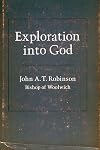
Robinson is one of the great theologians of the later 20th century. He (along with Harvey Cox) worked in what has since become known as "Secular Theology." That is, a theology which explicitly says, "'God' or 'the Transcendent' can be found in places other than temples and churhces. Go look for the holy amidst the profane, you'll find it there and see new dimensions within the religious realm."
"Exploration into God" is, in essence, the answer to the question posed by "Honest to God." Robinson's earlier book is a good and provocative one, but a little light on the follow-through. "Exploration into God" is that follow-through, and it is quite odd that it isn't more popular or well-known than "Honest to God." Perhaps this is due to its heavier academic content.
Stylistically, Robinson is better that almost anyone I know of about taking the reader into his brain. He's not telling the reader what his decision/idea is, he is making the decision while the reader is in the back seat. You therefore get a more rounded sense of Robinson's ideas--where they're coming from and what the drive is like between here and there.
An exceptional piece of work.
"Exploration into God" is, in essence, the answer to the question posed by "Honest to God." Robinson's earlier book is a good and provocative one, but a little light on the follow-through. "Exploration into God" is that follow-through, and it is quite odd that it isn't more popular or well-known than "Honest to God." Perhaps this is due to its heavier academic content.
Stylistically, Robinson is better that almost anyone I know of about taking the reader into his brain. He's not telling the reader what his decision/idea is, he is making the decision while the reader is in the back seat. You therefore get a more rounded sense of Robinson's ideas--where they're coming from and what the drive is like between here and there.
An exceptional piece of work.
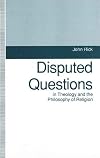
I am intimidated by writers who can express so much so succinctly. Hick is such a man, so was John A.T. Robinson, so was Paul Tillich (when he wanted to be).
Hick has been called, "a man who knows how to poke a bear with a stick." This is quite right, his ideas are provocative. One cannot simply read them, nod, and move on. Virtually every paragraph of this book incites a vast array of thoughts in a vast number of directions. This is not the sort of book one cannot gallop through in an afternoon, despite its length. This is one of those pondering, ponderous reads. This was the first piece of Hick's that I ever read and he quickly jumped to the top of my short list of thinkers. Many people would no doubt find this book threatening, beyond this possibility I have no criticisms of the text except a general evaluation of Hick's point of view.
Religious pluralism (Hick's position) has a tendency to assume Christian-type values and motives of religious groups who may have no such commonality with Christianity. Pluralists are fond of saying, "many paths to the mountaintop." While this statement might be insightful within the Abrahamic tradition, it tends to force everyone onto the same mountain, whether they want to be or not. While this position of Hick's does not really come up in this book, it is enough in the background of Hick's thought that readers should be aware of this feature.
Hick has been called, "a man who knows how to poke a bear with a stick." This is quite right, his ideas are provocative. One cannot simply read them, nod, and move on. Virtually every paragraph of this book incites a vast array of thoughts in a vast number of directions. This is not the sort of book one cannot gallop through in an afternoon, despite its length. This is one of those pondering, ponderous reads. This was the first piece of Hick's that I ever read and he quickly jumped to the top of my short list of thinkers. Many people would no doubt find this book threatening, beyond this possibility I have no criticisms of the text except a general evaluation of Hick's point of view.
Religious pluralism (Hick's position) has a tendency to assume Christian-type values and motives of religious groups who may have no such commonality with Christianity. Pluralists are fond of saying, "many paths to the mountaintop." While this statement might be insightful within the Abrahamic tradition, it tends to force everyone onto the same mountain, whether they want to be or not. While this position of Hick's does not really come up in this book, it is enough in the background of Hick's thought that readers should be aware of this feature.
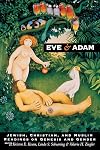
I'm not going to say it's a bad book. There are very few books that draw together so many fine and seminal pieces of literature and play them against one another so well. It's a fine book.
There are, however, features of the book which are just maddening. Did ancient religious scholars stop to question the historicity of Genesis 1-3? No, out of enlightened self-interest they did not. As the modern inheritors of that legacy, we are not quite so bound up in the literal. I think the editors, all very capible, might have included more material from the mythological, metaphysical, and allegorical readings of creation and fall.
It is an exceptional book as it is--but it could be a real masterwork if some slightly more heretical material were included.
There are, however, features of the book which are just maddening. Did ancient religious scholars stop to question the historicity of Genesis 1-3? No, out of enlightened self-interest they did not. As the modern inheritors of that legacy, we are not quite so bound up in the literal. I think the editors, all very capible, might have included more material from the mythological, metaphysical, and allegorical readings of creation and fall.
It is an exceptional book as it is--but it could be a real masterwork if some slightly more heretical material were included.