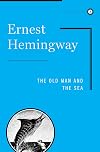
Who said that books with simple vocabulary had to be simple? It's a misconception we get as we grow up that grown up books have to have grown up words, but here Ernest Hemmingway shows us that is not the case. He tells a beautiful story of the ultimate conflict between man and nature through the narrative of an aging fisherman and the one that got away. It's not a story that's entirely original by any means (there are plenty of fishing stories like this) but instead of the originality of the plot we are instead made to look at the craft of the book.
It is written beautifully, each page a painting of the wild seas around Cuba that the fisherman braves. For the length of the book, we are thrown into the fisherman's shoes without it being written in his point of view as most teen fiction writers tend to do today. There's nothing particularly wrong with first person writing - I myself as a writer tend to fall back on it more than I should - but to be able to paint as beautiful of a narrative as Hemmingway does - and in third person to boot.
Overall, this story is short and sweet, able to be understood and enjoyed by most reading levels in different ways. There's not a flaw in this story to be found, and that is truly an accomplishment to be proud of.
It is written beautifully, each page a painting of the wild seas around Cuba that the fisherman braves. For the length of the book, we are thrown into the fisherman's shoes without it being written in his point of view as most teen fiction writers tend to do today. There's nothing particularly wrong with first person writing - I myself as a writer tend to fall back on it more than I should - but to be able to paint as beautiful of a narrative as Hemmingway does - and in third person to boot.
Overall, this story is short and sweet, able to be understood and enjoyed by most reading levels in different ways. There's not a flaw in this story to be found, and that is truly an accomplishment to be proud of.
Browsing the review section on this website I was suprised to find a slew of one-star reviews. S
I admit that the book had faults, but in my mind it's an amazing read.
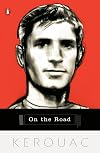
On The Road is an all-American odyssey of cross country adventure, filled to the brim with beautifully and vividly described characters, stunning locales and off the wall happenings that make every chapter it's own unique feeling. The Beat Generation was an interesting time in American history, the beginning of a lot of art and music but also the start of a good deal of stigma concerning said art forms. As drugs became more commonly used and more potent over time, the environment of the United States changed dramatically. In this book, however, the bigger picture is thrown to the side for a good old fashioned road trip - or two - or three. Sal Paradise and Dean Moriarty changed over the course of the story in subtle ways more similar to actual passage of time than to common plot development, which lead to the overall feeling of the story and realism that holds every contrivance down by its legs and says "No, that's TOO FAR," to become all the more stronger.
For me personally, the book has inspired a lust for adventure that has not yet been fulfilled. I crave the on-off experience of road traveling, bumping into the same circle of people over a longer period of time and seeing how they've changed. I yearn for the long conversations Carlo Marx and Dean would have in their basement, stretching into the wee small show more hours of the morning. As a writer, I want to see the world to make my own worlds more enjoyable, and having only been as East as Buffalo, as south as Washington DC, as North as New Hampshire and as west as maybe not even Cape Cod, this makes my situation all the more frustrating.
For a book to have such an impact on my life despite its slight difficulty to follow, I know it has to be good. I'll admit that at times I got exhausted by the narrative, but such is the way of traveling. Sometimes, you just need to take a while off and rest. show less
I admit that the book had faults, but in my mind it's an amazing read.
On The Road is an all-American odyssey of cross country adventure, filled to the brim with beautifully and vividly described characters, stunning locales and off the wall happenings that make every chapter it's own unique feeling. The Beat Generation was an interesting time in American history, the beginning of a lot of art and music but also the start of a good deal of stigma concerning said art forms. As drugs became more commonly used and more potent over time, the environment of the United States changed dramatically. In this book, however, the bigger picture is thrown to the side for a good old fashioned road trip - or two - or three. Sal Paradise and Dean Moriarty changed over the course of the story in subtle ways more similar to actual passage of time than to common plot development, which lead to the overall feeling of the story and realism that holds every contrivance down by its legs and says "No, that's TOO FAR," to become all the more stronger.
For me personally, the book has inspired a lust for adventure that has not yet been fulfilled. I crave the on-off experience of road traveling, bumping into the same circle of people over a longer period of time and seeing how they've changed. I yearn for the long conversations Carlo Marx and Dean would have in their basement, stretching into the wee small show more hours of the morning. As a writer, I want to see the world to make my own worlds more enjoyable, and having only been as East as Buffalo, as south as Washington DC, as North as New Hampshire and as west as maybe not even Cape Cod, this makes my situation all the more frustrating.
For a book to have such an impact on my life despite its slight difficulty to follow, I know it has to be good. I'll admit that at times I got exhausted by the narrative, but such is the way of traveling. Sometimes, you just need to take a while off and rest. show less
At one point, I said of this book the following:
"its like if House of Leaves drank a few more beers and decided it would be a good idea to find someone's car and hide in the trunk until the people driving it found out"
I stand by this view.
"its like if House of Leaves drank a few more beers and decided it would be a good idea to find someone's car and hide in the trunk until the people driving it found out"
I stand by this view.