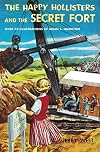
The Happy Hollisters was my first favorite series of books. I was around 20 years late to the party, as the books were written in the 1950s and I was a young reader in the 1970s, but I loved them anyway. It is very interesting, nowadays, to see how different society was back then from how it is today. As an example, in the opening chapter of the book, a truck with two construction workers pulls up to the Hollister home to find directions to a construction site. The kids - aged between 12 and 6 - claim it would be faster to show them the way, so, after checking with Mom who gives them the OK, they all pile into the truck with these two strangers and drive away! While it may seem dangerously naïve today, one can't help but feel we have lost something along the way...
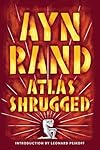
I read this for the first time in 2011, and it was scary how prescient Rand was - I saw example after example of real-life parallels between the economic actions of her fictional US government and the actions taken by the current administration. Excellent book on the whole, although I have reservations about certain parts of the book (the morality of Hank and Dangy's affair being one of them).
Baseball Fiends and Flying Machines: The Many Lives and Outrageous Times of George and Alfred Lawson by Jerry Kuntz
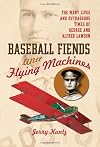
A very interesting book about my favorite crackpot, Alfred W. Lawson. While I had always been interested in Lawson's later career as a nutty pseudoscientist, this book focuses more on his early career as a baseball player and pirate league organizer, providing a very interesting look at early baseball in the process. It also covers his career as an aviation pioneer. I was not as interested in the details about Lawson's brother George, who I had never heard of before, but the bulk of the book focused on Al, who in his final years billed himself as "God's Greatest Gift to Man".
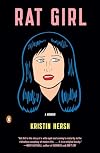
I discovered Throwing Muses in college, just a couple of years after the events of this book. This is a fascinating look at the life of lead singer Kristin Hersh, during the year her band was starting to take off. Back then, I read article after article about how she "heard" songs and how her amazing lyrics were not her own conscious creation, this book goes into fascinating detail about that - and about how life is like for someone struggling with undiagnosed bipolar disorder.

I read this book when I was in fifth grade, at the height of the "rapture fever" of the late Seventies, and it terrified me.
Hands down, the funniest book I have ever read in my life!! Based on the strength of this, I am in the process of reading as many Jeeves stories and novels as I can find. Although the part where Gussie Fink-Nottle is giving his speech at the grammar school is often cited as the funniest piece of writing in the English language, I found the entire novel to be at the same level of entertainment. Now, is it just me, or does anyone else hear Hugh Laurie's voice in his head as he reads Bertie Wooster's prose?

This book has a fascinating, though somewhat improbable, premise. The author's contention is that the USS Pueblo incident was, in fact, an operation by the NSA to feed false data to the North Koreans (and by extension, the Soviets). It makes for a great read, and it would have been a great operation had it come about the way he describes, but my own knowledge of naval procedures makes it seem a little unlikely to me. For example, the author claims that skipper Lloyd Bucher was not cleared to know about the operation, and was little more than a taxi driver for the real heads of the operation - the Chiefs who ran the code room. Even the operations officer, one of Bucher's lieutenants, was just there to make sure the Chief Petty Officers in the code room got what they needed to do their jobs. That does not sound like the Navy I know.
This book, quite simply, blew my mind. Fast-paced and hilarious at the start, then suddenly veers into the subjects of neurolinguistics and Sumerian mythology, all delivered with the same entertaining flair as the cyberpunk tropes at the beginning.
The science behind this book is rubbish, and it was used as the justification for a lot of evil by the eugenics movement. It is interesting from the pov of psychoceramics (the study of crack-pottery). This is the book where photos of so-called feeble-minded were altered to make them look more sinister.

Very interesting book! My copy was a gift from my friend J.K. Kelley, who contributed several articles to this book.
Moderately enjoyable thriller. I got my copy autographed by Ollie at our local Costco. My favorite part of the book was the way the author wrote himself into the book as a heroic character - not, as other authors do, under an assumed name, but under his own name!
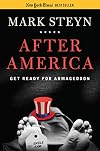
I love Mark Steyn, but the reason this book only got 4 stars from me is that it is so depressing. And sadly, that isn't Steyn's fault.
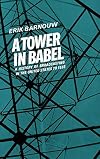
An absolutely fascinating look at the earliest days of the broadcasting industry. Much of the focus of the book is on the radio industry, of course, but the earliest incarnations of television are also covered. This is a very detailed look at the people, inventions and events that shaped the industry that still commands tremendous influence today. I first devoured this book, as well as the two sequels "The Golden Web" and "The Image Empire" in 1982, and I was thrilled to find a used copy for a reasonable price in the past week.
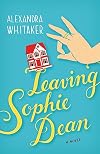
Initially, I wrote that this was a very light and quick read, engrossing, thought provoking... and ultimately disappointing at the end.
However, the book is more complex than it appears, and after a couple of days reflection, the ending makes perfect sense, even if it wasn't what I wanted to see. Which is a lot like life sometimes, isn't it?
However, the book is more complex than it appears, and after a couple of days reflection,

This was one of my favorite books when I first read it in junior high school in 1980. Written in 1967, it was then 13 years old. On re-reading it today (I have just purchased a used copy), it is interesting to see how much the default ideological assumptions have changed in the past 45 years. One quick example, the Socialist Party is in the section labelled "Moderate Left", while National Review is in the section labelled "Far Right". (National Review is today one of the most influential political publications out there, when the book was written it was described as being on the fringes of the political scene and of absolutely no influence in Washington, DC.)
The book is an entertaining look at the fringe political scene in the late 1960s, it has some interesting descriptions of the revolutionary left, racist organizations, black and Guamanian nationalists, and the paleo-conservative right, as well as amusing descriptions of such oddballs as the Prohibition Party, the American Vegetarian Party and the Poor Man's Party.
The book is an entertaining look at the fringe political scene in the late 1960s, it has some interesting descriptions of the revolutionary left, racist organizations, black and Guamanian nationalists, and the paleo-conservative right, as well as amusing descriptions of such oddballs as the Prohibition Party, the American Vegetarian Party and the Poor Man's Party.

One of the first science fiction novels I ever read, as a kid in grade school. I particularly like the claustrophobic atmosphere evoked in the early part of the book, as the US and USSR stand poised on the verge of nuclear war. The ending of the book is kind of preachy, but I have always enjoyed it nonetheless.

Classic collection of space opera short-stories. I first found these books at the library and must have monopolized both volumes for six months or more!