
It's been dang near 20 years since I first read this and probably 10ish since my last re-read. I wanted to re-read this series before I watched the new Netfilx series and I was wondering (concerned?) about how it was going to hold up. I'm happy to say it holds up wonderfully!
O'Malley really captures the experience of a very specific mid-2000s subculture. Re-reading Scott Pilgrim's Precious Little Life made me incredibly nostalgic for my listless, directionless mid-twenties. A strange post 9-11 era where young adults could instinctively tell it's all downhill from here, so we might as well enjoy the first few years of our cultural freefall. This is also one of the first pieces of popular media that took video games & "internet culture" seriously. I know this series has gotten a reputation of being "hey, remember this?" type humor, but I don't think that's very accurate. All of the jokes feel in universe and un-forced, and the vast majority still land today.
Re-reading 'Scott Pilgrim' also reminded me how much I enjoy likeable dirtbags. Both Scott and Ramona are clearly going through some issues, and those issues sometimes involve taking advantage of others, but both are very amicable characters. I've seen reviews saying Scott's a jerk, and while I may not disagree, I'll argue he's a likable jerk. Too much of modern American media, especially stuff targeted toward a YA audience, spends too much time ensuring their audience that their protagonists aren't problematic, but I'll show more always appreciate a hero that learns the lesson of being a good person is an active effort and not just a passive state of being.
I'm not entirely sure how this series would land for modern 20 somethings, but it's been a huge influence on my personal tastes and it's definitely a snapshot of its era. It's also a ton of fun! show less
O'Malley really captures the experience of a very specific mid-2000s subculture. Re-reading Scott Pilgrim's Precious Little Life made me incredibly nostalgic for my listless, directionless mid-twenties. A strange post 9-11 era where young adults could instinctively tell it's all downhill from here, so we might as well enjoy the first few years of our cultural freefall. This is also one of the first pieces of popular media that took video games & "internet culture" seriously. I know this series has gotten a reputation of being "hey, remember this?" type humor, but I don't think that's very accurate. All of the jokes feel in universe and un-forced, and the vast majority still land today.
Re-reading 'Scott Pilgrim' also reminded me how much I enjoy likeable dirtbags. Both Scott and Ramona are clearly going through some issues, and those issues sometimes involve taking advantage of others, but both are very amicable characters. I've seen reviews saying Scott's a jerk, and while I may not disagree, I'll argue he's a likable jerk. Too much of modern American media, especially stuff targeted toward a YA audience, spends too much time ensuring their audience that their protagonists aren't problematic, but I'll show more always appreciate a hero that learns the lesson of being a good person is an active effort and not just a passive state of being.
I'm not entirely sure how this series would land for modern 20 somethings, but it's been a huge influence on my personal tastes and it's definitely a snapshot of its era. It's also a ton of fun! show less
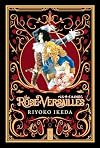
I realized that I rated every individual volume of 'The Rose of Versailles' 4 out of 5 stars, yet I'd consider this to be a 5 star series. Weird.
Anyways, the main narrative of 'The Rose of Versailles' ended last volume and this last omnibus is a collection of side stories starring Lady Oscar's crime-solving niece. Admittedly, that does sound like a joke, but it works surprisingly well! These stories manage to carry on with the main series' themes about classism, mainly how the aristocracy preys on the common folk, as well as Oscar's choice to rebel against them once she realizes justice within the system is impossible since the government is designed to protect nobles. I don't think any of these stories are as good as the main narrative, but they're a good excuse to spend more time with these characters. I also think this is probably the best looking book of the bunch. Ikeda's linework is beautiful and these are probably the best renditions of Oscar and Andre.
Overall, I loved the time I spent with this series. Lady Oscar is such a cool and inspiring and relatable character. Recommending a series in the review of its last book seems kinda dumb, but I highly recommend this series to anyone reading this and think it sounds even remotely interesting. It's a seminal work in the medium for a reason!
Anyways, the main narrative of 'The Rose of Versailles' ended last volume and this last omnibus is a collection of side stories starring Lady Oscar's crime-solving niece. Admittedly, that does sound like a joke, but it works surprisingly well! These stories manage to carry on with the main series' themes about classism, mainly how the aristocracy preys on the common folk, as well as Oscar's choice to rebel against them once she realizes justice within the system is impossible since the government is designed to protect nobles. I don't think any of these stories are as good as the main narrative, but they're a good excuse to spend more time with these characters. I also think this is probably the best looking book of the bunch. Ikeda's linework is beautiful and these are probably the best renditions of Oscar and Andre.
Overall, I loved the time I spent with this series. Lady Oscar is such a cool and inspiring and relatable character. Recommending a series in the review of its last book seems kinda dumb, but I highly recommend this series to anyone reading this and think it sounds even remotely interesting. It's a seminal work in the medium for a reason!
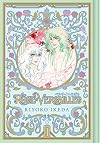
This volume focuses on the build-up right before the French Revolution really kicks off. Tempers are rising, lines have been drawn, and all other options to resolve the class disparity have failed. The tension in this series is real and the story only gets better as it continues. I'm very excited to read the next volume.
There's a lot to like about this series, but I think Ikeda handling Oscar's dueling identities is where it shines. Oscar is split between the noble/commoner divide in the same way she's split between the masculine/feminine divide. Oscar was born on one side, understands the other side better, but can sympathize with both. It's always interested in seeing how older works deal with highly contentions modern social issues in a way that's unburdened by our current political climate.
There's a lot to like about this series, but I think Ikeda handling Oscar's dueling identities is where it shines. Oscar is split between the noble/commoner divide in the same way she's split between the masculine/feminine divide. Oscar was born on one side, understands the other side better, but can sympathize with both. It's always interested in seeing how older works deal with highly contentions modern social issues in a way that's unburdened by our current political climate.

There are some creators that just speak you personally and Tatsuki Fujimoto is that creator for me.
You can tell Fujimoto has spent a lot of time thinking about why people create and why other people engage with those creations. Both here and in Look Back, he asks the question why do we even bother with art when there are so many more important things constantly happening all around us. And the answer he comes to is that 'well, it's personal.'
Everyone gets something different out of every piece of art. Sometimes that's something similar to our own, or very different, or even contradictory, but all are valid. Even time can change what one person takes from the same piece of art. Life is chaotic and impermanent and our creations are like a memorial to a specific viewpoint in time. Also Fujimoto is a master at juxtaposing heartfelt emotion with really dumb funny stuff to surprisingly meaningful effect.
I can't wait to read any and everything Tatsuki Fujimoto puts out over his career.
You can tell Fujimoto has spent a lot of time thinking about why people create and why other people engage with those creations. Both here and in Look Back, he asks the question why do we even bother with art when there are so many more important things constantly happening all around us. And the answer he comes to is that 'well, it's personal.'
Everyone gets something different out of every piece of art. Sometimes that's something similar to our own, or very different, or even contradictory, but all are valid. Even time can change what one person takes from the same piece of art. Life is chaotic and impermanent and our creations are like a memorial to a specific viewpoint in time. Also Fujimoto is a master at juxtaposing heartfelt emotion with really dumb funny stuff to surprisingly meaningful effect.
I can't wait to read any and everything Tatsuki Fujimoto puts out over his career.
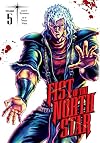
'Fist of the North Star' is living proof that simple morality tales about unquestionably good guys beating up unrepentant evil guys can be amazing if told with enough style.
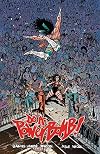
Daniel Warren Johnson draws the most dynamic and impactful fight scenes in western comics currently. Every page of this book has a kinetic energy that's just a joy to look at.
Will someone who doesn't care for professional wrestling like this book? I don't know, but if you do, it's fantastic and one of the most fun comics I've read all year. 'Do a Powerbomb!' exemplifies the spirit, passion, skill and emotion that is the art of pro wrestling.
Will someone who doesn't care for professional wrestling like this book? I don't know, but if you do, it's fantastic and one of the most fun comics I've read all year. 'Do a Powerbomb!' exemplifies the spirit, passion, skill and emotion that is the art of pro wrestling.
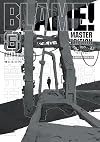
I recently heard the argument that movies aren't really "narrative delivery devices", but rather "vibe delivery devices." Blame! is an excellent example of an artistic work being the latter.
I could explain the broad plot of Blame! if asked to, but I'd have difficulty describing its more intricate details. This is a weird, inhuman world, and the lack of specifics only enhances that strangeness. Still, Nihei is very clearly a student of architecture, and he's able to convey a lot to the reader via a silent landscape.
The world of Blame! takes place in an endless, ever-growing city that has long grown past the needs of humans. The architecture here has its own reasons for existing, and anyone or anything that exists within this city is on its own. This series is definitely one of the more interesting fictional worlds I've visited recently. I really appreciate it's eeriness and emptiness. The Master Editions are great because they really showcase Neihi's artwork. I feel modern media has a tendency to over explain things, getting too caught up in lore over storytelling, and I think Blame! works so well precisely because of it's obtuse world building.
I could explain the broad plot of Blame! if asked to, but I'd have difficulty describing its more intricate details. This is a weird, inhuman world, and the lack of specifics only enhances that strangeness. Still, Nihei is very clearly a student of architecture, and he's able to convey a lot to the reader via a silent landscape.
The world of Blame! takes place in an endless, ever-growing city that has long grown past the needs of humans. The architecture here has its own reasons for existing, and anyone or anything that exists within this city is on its own. This series is definitely one of the more interesting fictional worlds I've visited recently. I really appreciate it's eeriness and emptiness. The Master Editions are great because they really showcase Neihi's artwork. I feel modern media has a tendency to over explain things, getting too caught up in lore over storytelling, and I think Blame! works so well precisely because of it's obtuse world building.
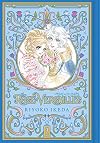
A lot more drama than the first omnibus, the seeds of the French Revolution are starting to sprout. I'm very interested in seeing how this series plays out.
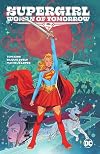
I realize, and accept, that Tim King can be a very verbose comic writer. His storytelling usually benefits from this style, however Supergirl is just long & exposition heavy and did not work for me. Love the art though.
My least favorite King book.
My least favorite King book.
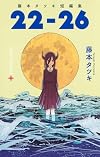
I particularly enjoyed 'Nayuta of the Prophecy', it has that 'Chainsaw Man' vibe of combining heartfelt endearment with the gonzo macabre.
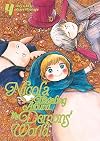
A super cute conclusion to a super cute series.
I really enjoyed my time traveling with Nicola. There's some good world building here that doesn't get too bogged down in minutiae. This series doesn't do anything particularly new, but it does everything with heart. Short and sweet, a good read for the Halloween season.
I really enjoyed my time traveling with Nicola. There's some good world building here that doesn't get too bogged down in minutiae. This series doesn't do anything particularly new, but it does everything with heart. Short and sweet, a good read for the Halloween season.
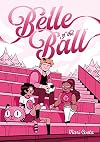
Cute and endearing, but maybe a little too cozy for my personal tastes.
Took a while to get really going, but the characters are all very likable so it's not like it drags. Also the various shades of red color palette made my cones hurt after reading for a while, but I'm old, YMMV.
Took a while to get really going, but the characters are all very likable so it's not like it drags. Also the various shades of red color palette made my cones hurt after reading for a while, but I'm old, YMMV.
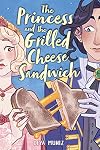
At least a dozen cheese-related puns too many, but a cute and engaging story about being true to yourself within the confines of a restrictive society.
I really loved the artwork, vibrant colors, great fashion & wonderful expressions throughout.
I really loved the artwork, vibrant colors, great fashion & wonderful expressions throughout.

Wow, this is such interesting world building.
In 2023, if seems as if every franchise will have it's lore over explained. Every tiny bit of minutiae will be explored and covered via side stories told in every form of media imaginable. "Blame!" is the opposite of that. It throws you head first into the deep end of a foreign, dangerous, and alien world. And in that way it's thematically apt!
This is a world long dead, living on via inertia alone. The inhabits of this city don't know much more than the reader, and any answer is slowly revealed simply by exploring further into the city. The artwork here is beautiful, filled with detailed cityscapes and horrifying creatures. I think the action scenes can be a bit messy, but the imagery itself is enough to keep reading.
I'm not entirely sure why I've avoided this for as long as I have, but I'm excited to finally get around to reading Blame!
In 2023, if seems as if every franchise will have it's lore over explained. Every tiny bit of minutiae will be explored and covered via side stories told in every form of media imaginable. "Blame!" is the opposite of that. It throws you head first into the deep end of a foreign, dangerous, and alien world. And in that way it's thematically apt!
This is a world long dead, living on via inertia alone. The inhabits of this city don't know much more than the reader, and any answer is slowly revealed simply by exploring further into the city. The artwork here is beautiful, filled with detailed cityscapes and horrifying creatures. I think the action scenes can be a bit messy, but the imagery itself is enough to keep reading.
I'm not entirely sure why I've avoided this for as long as I have, but I'm excited to finally get around to reading Blame!
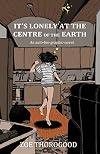
There’s a whole lot I like about this book, but one I want to mention is how Thorogood uses wildly different techniques and art styles to create a mood or represent a thematic element. Her usage of line, space and color expertly conveys her ideas, no matter how non-traditional she may get. Everyone’s journey with depression is unique, and Thorogood is able to use the medium of comics to craft a very personal tale about her own brand of mental illness.
I have a ton of thoughts and feelings about this book, but overall it’s an excellent comic about creating your own meaning both in art and in life. I’m excited to follow Zoe’s career!
I have a ton of thoughts and feelings about this book, but overall it’s an excellent comic about creating your own meaning both in art and in life. I’m excited to follow Zoe’s career!
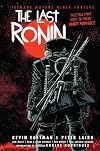
I'm pretty bored with legacy sequels nowadays. Every major, and most minor, media franchises from my youth have been revisited in some way in an attempt to update a proven property to appeal to modern audiences. I can understand the appeal, I certainly understand the economic reasoning, but most of them fall flat to me. Works of media are of their age, and you can't just pull them out of their time and expect them to have the same impact on an entirely new generation. And most of them just remind me I could be engaging with the original, and usually much better, version.
The Last Ronin is a legacy sequel, but it's good! it's not just a continuation of the original Eastman & Laird TMNT series, it's the end. It feels very much like the stories of theirs I read back in the 90s, and it's a perfect ending to that story. Sad, sure, but also a love letter to one of the most enduring pop culture franchises of the past 40 years. After reading this I hope there are more legacy sequels intent on ending their story instead of trying to create a new, updated version with the main purpose of making more money.
The Last Ronin is a legacy sequel, but it's good! it's not just a continuation of the original Eastman & Laird TMNT series, it's the end. It feels very much like the stories of theirs I read back in the 90s, and it's a perfect ending to that story. Sad, sure, but also a love letter to one of the most enduring pop culture franchises of the past 40 years. After reading this I hope there are more legacy sequels intent on ending their story instead of trying to create a new, updated version with the main purpose of making more money.
Cute, interesting, extremely well done, but it seems to be written more for adults than actual children?
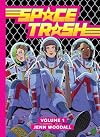
I really wasn't engaged until the very end, but it has some nice artwork and a Bull Nakano reference so I can't hate it. A solid foundation for future stories though.
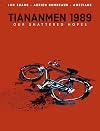
An oral history of a group of young people willing to risk it all in hopes for a better tomorrow, only for it to be violently crushed by those in power in order to preserve the status quo at all costs. Thankfully every nation on Earth learned from this incident and nothing like this has ever happened again.
I'm very wary about reading anything modern about China since I expect it to be either pro-CCP or anti-Chinese propaganda. However, this book feels as if it's being told by people who were actually a part of the pro-democracy student movement so it seems believable, at least to me. I was very young when this occurred but I still remember seeing these images playing across the evening news. I appreciate the nuanced explanation of how and why this particular pro-democracy movement started, especially the media's role at attempting to influence popular opinion. The book can be occasionally dense, but it's presented in a clear and concise way that doesn't bog down the narrative.
I think the thing that personally stuck out to me is the acknowledgement that revolutions are joyous, hopeful things, driven more by a desire to help everyone rather than an angry desire to overthrow the state.
I'm very wary about reading anything modern about China since I expect it to be either pro-CCP or anti-Chinese propaganda. However, this book feels as if it's being told by people who were actually a part of the pro-democracy student movement so it seems believable, at least to me. I was very young when this occurred but I still remember seeing these images playing across the evening news. I appreciate the nuanced explanation of how and why this particular pro-democracy movement started, especially the media's role at attempting to influence popular opinion. The book can be occasionally dense, but it's presented in a clear and concise way that doesn't bog down the narrative.
I think the thing that personally stuck out to me is the acknowledgement that revolutions are joyous, hopeful things, driven more by a desire to help everyone rather than an angry desire to overthrow the state.
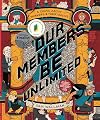
Living in America, it feels as if we're constantly told that all of our labor freedoms are kind gifts deigned upon us workers by the rich and powerful. So it's always refreshing to see the long history of labor movements presented without the constant validation of capitalism's righteousness.
I like a lot about this book! It's brilliantly drawn, with very evocative layouts, but occasionally the text can be hard to read in print. It probably works much better via a digital medium, but I had a few instances of needing to squint to read. It's also informative, including anecdotes about labor movements dating back to the 1700s. However that information can be kind of dense. Combined that with some of the layout difficulties I had, doesn't always make for an easy read, but I enjoyed the content well enough to recommend to anyone interested in unionizing, which should be everyone.
I like a lot about this book! It's brilliantly drawn, with very evocative layouts, but occasionally the text can be hard to read in print. It probably works much better via a digital medium, but I had a few instances of needing to squint to read. It's also informative, including anecdotes about labor movements dating back to the 1700s. However that information can be kind of dense. Combined that with some of the layout difficulties I had, doesn't always make for an easy read, but I enjoyed the content well enough to recommend to anyone interested in unionizing, which should be everyone.
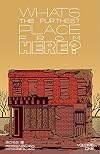
Super interesting world building, but probably a little too obtuse for its own good. I'm not sure I know much more about this world at the end of issue #6 than I did and the end of issue #1.
I am interested in what happens next, if not terribly compelled.
I am interested in what happens next, if not terribly compelled.
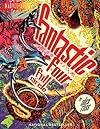
I'm never been the biggest Alex Ross fan. I always felt a lot of his work looked stiff. However, he absolutely shines here. The colors are wonderful and there's the right amount of Kirby influence in his lines. FF: Full Circle is probably the best looking book I've ever seen from Ross.
Is it a good story? I dunno. I don't think it'd make a bit sense to anyone who isn't overly familiar with Lee/Kirby's FF run, but I am, so it worked for me. It helps that Ross understands that a good FF story has more in common with Star Trek or the X-Files than summer blockbuster movies.
Is it a good story? I dunno. I don't think it'd make a bit sense to anyone who isn't overly familiar with Lee/Kirby's FF run, but I am, so it worked for me. It helps that Ross understands that a good FF story has more in common with Star Trek or the X-Files than summer blockbuster movies.
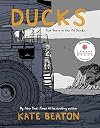
I remember reading Kate Beaton's 'Ducks' back in 2014 when it was just a series of sketch comics on her "Hark a Vagrant" website. A lot of those stories made it into this book verbatim, which is good because I loved those comics.
This is not your typical Kate Beaton book. It's still smart and occasionally funny, but it's also very grounded in the mundane. None of her usual whimsy is to be found here. Even so, Beaton has proven herself to be an excellent storyteller with heavy subject matters.
Beaton does an amazing job humanizing her colleagues from the oil sands of northern Alberta, even the ones she doesn't seem to recall that fondly. She's empathetic enough to understand that even the surliest laborer is a distinct individual with their own inner life. It's this same empathy that makes this book a heavy read. Beaton has no shortage of sad or traumatic stories about her time spent working the oil sands. Stories about the long-term effects living an isolated life with little to do has on a person. The oil industry doesn't just remove value from the Earth for profit, it does the same for the humans who work for it.
There's a lot going on in this book, but the one overarching theme that unites everything is the incredible ability humans have to compartmentalize literally anything and keep moving forward. Environmental destruction, exploitative labor practices, harassment, drug addiction, sexual assault, & workplace fatalities are all things that occur within the pages of this show more book, and the people affected by these events are able to be file them away to be dealt with at some other time. Or not at all. "That's just how things are here!" is a common response for tragedies both large and small. Humanity's superhuman ability to persevere through tragedy can be easily commodified to tolerate abuse.
I don't think this is a book for everyone, it is challenging & sobering, but it is very good. Kate Beaton is a longtime favorite of mine, and I'm glad to finally see those sketch comic PNGs become a full fledged book. show less
This is not your typical Kate Beaton book. It's still smart and occasionally funny, but it's also very grounded in the mundane. None of her usual whimsy is to be found here. Even so, Beaton has proven herself to be an excellent storyteller with heavy subject matters.
Beaton does an amazing job humanizing her colleagues from the oil sands of northern Alberta, even the ones she doesn't seem to recall that fondly. She's empathetic enough to understand that even the surliest laborer is a distinct individual with their own inner life. It's this same empathy that makes this book a heavy read. Beaton has no shortage of sad or traumatic stories about her time spent working the oil sands. Stories about the long-term effects living an isolated life with little to do has on a person. The oil industry doesn't just remove value from the Earth for profit, it does the same for the humans who work for it.
There's a lot going on in this book, but the one overarching theme that unites everything is the incredible ability humans have to compartmentalize literally anything and keep moving forward. Environmental destruction, exploitative labor practices, harassment, drug addiction, sexual assault, & workplace fatalities are all things that occur within the pages of this show more book, and the people affected by these events are able to be file them away to be dealt with at some other time. Or not at all. "That's just how things are here!" is a common response for tragedies both large and small. Humanity's superhuman ability to persevere through tragedy can be easily commodified to tolerate abuse.
I don't think this is a book for everyone, it is challenging & sobering, but it is very good. Kate Beaton is a longtime favorite of mine, and I'm glad to finally see those sketch comic PNGs become a full fledged book. show less
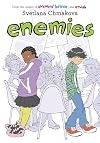
I'm far removed from middle school, but I find Svetlana Chmakova's Berrybrook series captivating. They're filled with interesting, relatable characters going through things I went through at that age. The character design in these books is top notch too. I love seeing cameos from other entries show up in the background, it makes it feel like a real school.
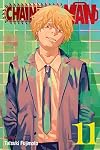
One of those series that reminds me why I love this medium.
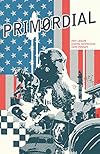
I preferred it when the animals were at the forefront, the human storylines interested less so.
Sorta reminded me of Grant Morrison's 'We3', for I guess obvious reasons.
Sorta reminded me of Grant Morrison's 'We3', for I guess obvious reasons.
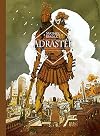
Looks absolutely beautiful, Mythic Greek by way of Shadow of the Colossus.
The story is appropriately epic, but it didn't hold my attention the way the art style did.
The story is appropriately epic, but it didn't hold my attention the way the art style did.
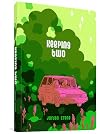
Crane does a lot of formally interesting things with comics here. I especially like the unclear manner in which the story is told, which mirrors the doubt/uncertainty the characters are experiencing. Page layouts and panel borders are used to create confusion, but in a way that also clearly tells the story. Unfortunately, I wasn't terribly interested in the characters or the story told within this book.
One aspect I did find interesting was the way Crane frames the way people interpret things. At one point, the two main characters are arguing about whether or not a book ends with the death of the main characters:
A: "It was awful and miserable...They die at the end."
B: "At the end they're alive...if they drown, that's because you are drowning them."
As someone who often finds hopeful, humanistic messages in endings that many people would call a 'downer,' I appreciate the way Crane points out how the same text can be read very differently by different people. People fill in the gaps of their knowledge with their own experiences.
One aspect I did find interesting was the way Crane frames the way people interpret things. At one point, the two main characters are arguing about whether or not a book ends with the death of the main characters:
A: "It was awful and miserable...They die at the end."
B: "At the end they're alive...if they drown, that's because you are drowning them."
As someone who often finds hopeful, humanistic messages in endings that many people would call a 'downer,' I appreciate the way Crane points out how the same text can be read very differently by different people. People fill in the gaps of their knowledge with their own experiences.
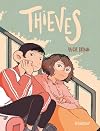
Love the art style here, great character design, wonderful expressions, cute outfits. Impressed with the visual storytelling too, Bryon does some fun stuff with the layouts.
It didn't immediately grab me, but once the plot started rolling along it was easy to get invested.
It didn't immediately grab me, but once the plot started rolling along it was easy to get invested.
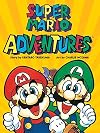
Never knew Wario's canonical villain origin story stems from Mario being a jerk.