Jovita llevaba pantalones: La historia de una mexicana que luchó por la libertad (Jovita Wore Pants) (Spanish Edition) by Aida Salazar
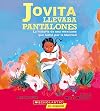
Biography of a girl who became a soldier and fought against the socialists who prohibited the exercise of the catholic religion. She became a colonel of the resistance. At a time where all girls were expected to wear dresses, she wore pants, overalls, and a straw hat with a wide brim.

Dos ninos tratan regalarle a sus papa para su cumpleanos pero no tienen pega. Usas cosas diferentes hasta que hay un gran desorden.
Jun 1, 2025Spanish
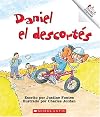
This book has polite phrases in spanish. A empezado Daniel es descortés pero cuando sus amigos no querian jugar con el, cambio a cortes. Prefiere tener amigos.
La mariquita Lara / Lara Ladybug (Rookie Ready to Learn En Espanol) (Spanish Edition) by Christine Florie
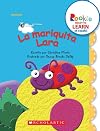
La marquita Lara se perdio tus manchas. Buscaba en algunas lugares hasta los descubrió abajo de un árbol cuando estaba descansando.
Jun 1, 2025Spanish
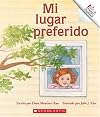
Este libro tieno vocabolario simplemente de lugares en cas que repiten. Cada persona en la familia de la niña tiene un lugar preferida y le gusta hacer cosas diferentes. Al fin, ella le decide compartir tu lugar. Todo es en el presente.
May 28, 2025Spanish
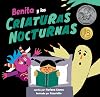
Una niña encuentra algunos monstruos peruanos en su dormitorio. Ella no tiene miedo porque ella tiene un nuevo libro. Los monstruos tratan todo que pueden, pero ella no se para de leyendo su libro. Los monstruos estaban curiosas del libro y al fin leen con ella.
My Diary from Here to There / Mi diario de aqui hasta allá (Spanish and English Edition) by Amada Irma Perez
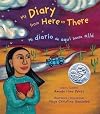
Cuando la papa de una nina perdió su trabajo, el dejo Mexico con su familia a Los Angeles California en Los Estados Unidos. El libro es un diario. Primera su padre fue para obtener tarjetas verdes y después el resto de la familia. Los tios y tias de ella les sigue tratando de hacerles reir en ves de llorar. Fue emocionada.
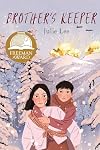
Retelling: Sora and her younger brother Youngsoo find themselves separated from their family as they flee from the fighting between the North Korean and South Korean armies to reunite again in Busan. Sora's attitude towards her brother changes throughout the book as she weighs her value against his. At home in North Korea, she is forced to give up her dreams of getting an education to stay home and care for Youngsoo and his younger brother. She battles the resentment she feels at having to live in his shadow. On the path towards South Korea, where girls can go to school with their younger brothers, Sora is reminded by a little girl in pigtails that in order to take care of her brother she must first take care of herself. She humbles herself before strangers and breaks with her own moral convictions to feed herself and her family's oldest son. Youngsoo's gratitude and awe of her sister's strength and courage help build and sustain her confidence through their harrowing trials.
Thoughts and Feelings: Author Julie Lee made me love Sora by showing how strong, brave, and clever she could be in her every act. By the end of the book, I grew to see her as extremely valuable, so when her auntie made the careless claim that her family had nothing without their sons, I felt her indignation. What a wonderful, emotional ride! I highly recommend this book.
Thoughts and Feelings: Author Julie Lee made me love Sora by showing how strong, brave, and clever she could be in her every act. By the end of the book, I grew to see her as extremely valuable, so when her auntie made the careless claim that her family had nothing without their sons, I felt her indignation. What a wonderful, emotional ride! I highly recommend this book.

Retelling: In a village in Benin a little girl is asked to take care of her younger sibling. She is proud to have the job and keeps announcing "all by myself." She quickly learns that taking care of a child is a job for many.
Thoughts and feelings: The villagers in the book are quick to identify the child's needs and respond with care. What a wonderful community to be a part of. I hope to teach in a classroom where everyone cares for one another as though it is a shared responsibility.
Thoughts and feelings: The villagers in the book are quick to identify the child's needs and respond with care. What a wonderful community to be a part of. I hope to teach in a classroom where everyone cares for one another as though it is a shared responsibility.
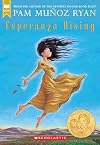
Retelling: The book opened with the main character, Esperanza, eagerly anticipating her upcoming birthday. She lived on a plantation in Mexico with dresses and servants. Her childhood friend, Miguel, was the son of her Mother's servant and even though they loved one another, she knew they would never be together because of class differences. That changed when she was forced to move to the United States under the care of her former servants. Her father was killed and her uncle threatened to destroy everything if her mother did not marry him to further his political career. With hard work and determination, she grew to overcome her own prejudices, and keep her family together. She learned to find riches in friendships rather than wealth.
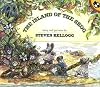
Retelling: The book begins with a society of mice living in fear of cats and dogs. After their party is interrupted by a ferocious cat, they decide to leave their homes and seek a more peaceful place. After a long voyage, they arrive at an island with a sole inhabitant called a "skog." Know one knows what a skog so the mice imagine the worst and make plans to defeat the skog before it can defeat them. In a delightful twist, the poor skog is revealed to be a much smaller, more frightened animal than them leading the society of mice to wonder what would have happened if they had only talked to the skog instead of jumping to conclusions.
Thoughts and Feelings: I enjoyed the juxtaposition of Jenny and Bouncer's character. Jenny was much more careful, more deliberate, while Bouncer aimed to take charge. Bouncer's haste was well balanced by Jenny's deliberation. I like that Bouncer lead a chorus of mice at the end instead of an army of mice.
Questions: What does Jenny mean when she says "we can all feel like kings, and isn't that what matters?" What does it mean to feel like a king? Do you have to rule over others, or can you just be master of your own destiny?
Thoughts and Feelings: I enjoyed the juxtaposition of Jenny and Bouncer's character. Jenny was much more careful, more deliberate, while Bouncer aimed to take charge. Bouncer's haste was well balanced by Jenny's deliberation. I like that Bouncer lead a chorus of mice at the end instead of an army of mice.
Questions: What does Jenny mean when she says "we can all feel like kings, and isn't that what matters?" What does it mean to feel like a king? Do you have to rule over others, or can you just be master of your own destiny?
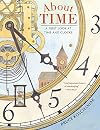
Retelling: This book traces the development of clocks from the Egyption sundial to the modern day atomic clock. The illustrations carefully demonstrate the inner workings of each style of clock.
Thoughts and feelings: Unfortunately, this book has no page numbers. I would love to tell you the page that my favorite diagram was on, the one that showed how the time zones move. The center of the circle is labeled "North Pole," making the device mimic the rotation of the earth so it's easy to understand why the different time zones are necessary if you don't want people in the United States to experience sundown at 11pm. Reading about clocks really makes you want to build models. I still don't feel like I can really understand unless I see things spin. Try getting your kids to bed!
Thoughts and feelings: Unfortunately, this book has no page numbers. I would love to tell you the page that my favorite diagram was on, the one that showed how the time zones move. The center of the circle is labeled "North Pole," making the device mimic the rotation of the earth so it's easy to understand why the different time zones are necessary if you don't want people in the United States to experience sundown at 11pm. Reading about clocks really makes you want to build models. I still don't feel like I can really understand unless I see things spin. Try getting your kids to bed!
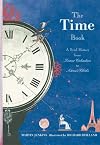
Retelling: Martin Jenkin's Time Book is organized from our understanding of years and months on through seconds, tracing major developments from civilizations throughout history. First, months were a problem because they followed the regular patterns of the moon, but the regular patterns of the moon didn't fit neatly in the regular patterns of the sun. A few civilizations organized the calendar by both separately, with the lunar calendar indicating major religious events, and the year indicating the seasons. Then there was the problem of the days, hours, minutes, and seconds. The Romans, it seems added days to the year when it served their political purposes, putting the whole system wildly out of whack until Julius Caesar came and fixed it (sort of). The hours and seconds were nearly impossible to measure accurately with the most notable attempts involving weights or water and taking up walls.
Thoughts and feelings: The story was engaging, but the font didn't have enough contrast with the background which often made it difficult to read. My favorite parts of the book were Linnaeus' flower clock (a clock that told time by the blooming of flowers) and descriptions of how animals (particularly the bees) manage time. We still don't know how Cicadas seem to know when 13 and 17 years have passed, even though we are pretty sure they know when a year has passed from the changing chemicals of the tree roots they feed on. It makes me curious!
Thoughts and feelings: The story was engaging, but the font didn't have enough contrast with the background which often made it difficult to read. My favorite parts of the book were Linnaeus' flower clock (a clock that told time by the blooming of flowers) and descriptions of how animals (particularly the bees) manage time. We still don't know how Cicadas seem to know when 13 and 17 years have passed, even though we are pretty sure they know when a year has passed from the changing chemicals of the tree roots they feed on. It makes me curious!
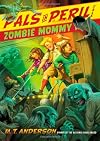
Retelling: As Lily becomes more involved in the lives of her friends' science fiction novels, her mother experiences the foreboding realization that her own role in the stories might be a grim one. Mothers in books, after all, tend not to have the best outcomes. She packs up her bags and travels to a town where she believes she will be safe as they have the lowest death rate. As it turns out, they can't die because they are already ghosts and zombies. In a series of surprising twists and turns, the crazy crew of young people that attempt to save her implement a dangerous plan to exorcise the quirky ghost of a Hollywood has-been and it frequently fails in delightfully funny ways.
Thoughts and feelings: The BEST chapter in this book is the one where the author breaks the forth wall to explain how he came up with the names of designer clothing to support the fashionista character, Madigan, Katie's upper-west side cousin. SO FUNNY. You must read this author.
If an M.T. Anderson book makes you laugh out loud in no one is around to hear it, is it still funny?
Thoughts and feelings: The BEST chapter in this book is the one where the author breaks the forth wall to explain how he came up with the names of designer clothing to support the fashionista character, Madigan, Katie's upper-west side cousin. SO FUNNY. You must read this author.
If an M.T. Anderson book makes you laugh out loud in no one is around to hear it, is it still funny?
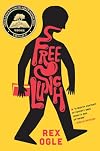
Retelling: This was an autobiography of Rex Ogle's 6th grade year. He explored feelings of shame at his own poverty in a school where it seemed everyone had money. Poverty loomed large in his home life as well, possessing his mother and stepfather like a poltergeist and turning them into verbally, and physically abusive parents. At the end of the book, Rex's Mom got a job and a huge weight was lifted. His mother and step father both softened without the pressure to save and pay, and he remembered moments of joy and love. There's a lot that money can buy and poverty is cruel.
Thoughts and feelings: As I was reading about the abuse that this man experienced in sixth grade, it did occur to me that his real life was not appropriate for a sixth grader. I wanted to scream, "get out! You are way to young to hear these words, and feel this pain." I'm glad the book is available to young people so that children who are going through a similar experience won't feel so strange and alone.
I'm not sure what it means that I couldn't recommend this autobiography to my whole class. I'm not sure what it means that I would be afraid how the fear, anger, and hatred of someone's real life would be too frightening for some.
Thoughts and feelings: As I was reading about the abuse that this man experienced in sixth grade, it did occur to me that his real life was not appropriate for a sixth grader. I wanted to scream, "get out! You are way to young to hear these words, and feel this pain." I'm glad the book is available to young people so that children who are going through a similar experience won't feel so strange and alone.
I'm not sure what it means that I couldn't recommend this autobiography to my whole class. I'm not sure what it means that I would be afraid how the fear, anger, and hatred of someone's real life would be too frightening for some.
Retelling: Young Grace is troubled by "rightiness thoughts." She was born on the plantation of a wealthy land-owner named Master Allen and his brutal wife. The book opens with Grace expressing her fear of moving away from her mother, two brothers, and uncle Jim who looks out for their family, and into the "Big House" with the masters. She is troubled by the unfairness of the world she was born into, and she is troubled that saying so might imperil her family. The more cruel her world becomes, the more she has to fight to keep her thoughts to herself until finally, a final act of unnecessary cruelty makes the dangerous path of running away--of battling natural dangers in a rugged swampland with little food, shelter, or protection--less terrifying than the dangers of slavery.
Thoughts and feelings: As someone who always has an opinion, I'm sure it would be nearly impossible for me to suppress the outrage that Grace felt. I was warmed by the love in her family, and the ingenuity of the brave black men and women around her who used the dangers of the swamp as protection against the dangers of society. The language was poetic and the author used a dialect but I think it would be accessible to young readers. Grace's account reads smoothly and the plot is engaging. The author includes a note at the back of the book stating which historical discoveries her novel in verse was based on.
Thoughts and feelings: As someone who always has an opinion, I'm sure it would be nearly impossible for me to suppress the outrage that Grace felt. I was warmed by the love in her family, and the ingenuity of the brave black men and women around her who used the dangers of the swamp as protection against the dangers of society. The language was poetic and the author used a dialect but I think it would be accessible to young readers. Grace's account reads smoothly and the plot is engaging. The author includes a note at the back of the book stating which historical discoveries her novel in verse was based on.
Retelling: The friendship tale was told from two perspectives. Ravi moved to the United States from India and was prepared to dominate his new school, just like he did back home. His expectations were dashed on the first day of school when the teacher couldn't understand his English, mispronounced his name, and sent him to a specialist. Joe, on the other hand, had been attending Einstein Elementary for his whole school career and knew the ropes. He knew he wasn't going to be Mr. Popular, and has been the target of the class bully for some time. Each character made assumptions about the other, and about the class bully, and it's only after a series of run-ins that their assumptions were challenged, and they began to see the friend they were looking for.
Thoughts and Feelings: Ravi and Joe's assumptions about each other were challenged, but the class bully Dillan's actions are never really explored. I'm always wary when characters seem to have no redeeming qualities. I found it bold and beautiful that the author decided to explore the xenophobia in Joe's family and I was pretty impressed that Joe called his own father out.
Thoughts and Feelings: Ravi and Joe's assumptions about each other were challenged, but the class bully Dillan's actions are never really explored. I'm always wary when characters seem to have no redeeming qualities. I found it bold and beautiful that the author decided to explore the xenophobia in Joe's family and I was pretty impressed that Joe called his own father out.
Retelling: Each of these tales share a personal encounter with athletics of some kind. The players often need to overcome the expectations of others and sometimes even transform their own expectations of themselves.
Thoughts and feelings: I didn't know anything about this book when I picked it up so I half expected it to recount famous moments in professional games. I was delighted to find a more relatable theme. Reading these tales inspired personal connections. I realized that athletics, whether you love them, hate them, or somewhere in between are a shared experience. I used to care deeply about mastering physical feats, and sharing the moment with friends. I remember the shame and embarrassment of the shared locker room. The book left me wondering who else has a story.
Thoughts and feelings: I didn't know anything about this book when I picked it up so I half expected it to recount famous moments in professional games. I was delighted to find a more relatable theme. Reading these tales inspired personal connections. I realized that athletics, whether you love them, hate them, or somewhere in between are a shared experience. I used to care deeply about mastering physical feats, and sharing the moment with friends. I remember the shame and embarrassment of the shared locker room. The book left me wondering who else has a story.
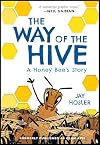
Retelling: Nyuki, a particularly anxious young larva is guided through her fears by her older and wiser sister Dvorah to become an older/wiser mentor to another young bee, Melissa, herself after (spoiler alert) Dvorah dies defending the hive.
Thoughts and feelings: This book is very carefully researched and written. Apart from personifying the animals and a spattering of witty science puns intending to capture and hold the attention of audiences young and old, the author, Jay Hosler, stays true to bee behaviors. I learned a lot and because it had such a nice story arch, I'm more likely to remember what I learned. I read this book aloud to my son (7 years) and he loved it. He was fascinated by the big bloom theory and the character of Zambur who talks in the third person. As we were reading, a whole lot of questions about bees were raised. The author answered many in a strictly nonfiction chapter at the end of the book.
Thoughts and feelings: This book is very carefully researched and written. Apart from personifying the animals and a spattering of witty science puns intending to capture and hold the attention of audiences young and old, the author, Jay Hosler, stays true to bee behaviors. I learned a lot and because it had such a nice story arch, I'm more likely to remember what I learned. I read this book aloud to my son (7 years) and he loved it. He was fascinated by the big bloom theory and the character of Zambur who talks in the third person. As we were reading, a whole lot of questions about bees were raised. The author answered many in a strictly nonfiction chapter at the end of the book.
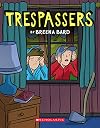
Retelling: Gabby goes to visit a lake house with her family and encounters a pair of unruly neighbors. At first she is reluctant to be friends with them, but their interests intersect when they discover an abandoned lake house and Gabby's passion for writing mystery is ignited. The two have to piece together clues to solve a murder that happened in the house long ago.
Thoughts and Feelings: I like how the author included classic plot twists in this murder mystery. It turned the book into a real page-turner.
Thoughts and Feelings: I like how the author included classic plot twists in this murder mystery. It turned the book into a real page-turner.
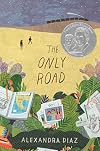
Retelling: Jaime and his cousin Angela embark on a perilous journey from their home in Guatemala after a violent gang murdered Angela's brother, Miguel. Their goal is to find sanctuary with Jaime's brother, Tomas, in los Estados Unidos. The author, Alexandra Diaz, hints at the true brutality of the journey for people with no other place to go as her heros witness the misfortune of their fellow travelers and narrowly escape the same fates themselves. Jaime is not known for his brawn, but uses the strength and talents he has as an artist to gain favor and support his cousin.
Thoughts and feelings: One good turn deserves another. My favorite moment in the book was when the scrappy dog they saved from a slow death turns out to be their salvation (I won't give it away). I also liked that Jaime's paternalism towards his cousin Angela was challenged when she stepped up to save them in unexpected ways. I would love to have read a little from her perspective, or from the perspective of Joaquin (who dressed like a boy to avoid unwanted attention on the road).
Thoughts and feelings: One good turn deserves another. My favorite moment in the book was when the scrappy dog they saved from a slow death turns out to be their salvation (I won't give it away). I also liked that Jaime's paternalism towards his cousin Angela was challenged when she stepped up to save them in unexpected ways. I would love to have read a little from her perspective, or from the perspective of Joaquin (who dressed like a boy to avoid unwanted attention on the road).
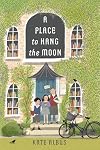
Retelling: 3 British children become orphans when their final living relative passes away. In an attempt to keep all three siblings together, the solicitor recommends they assume the false identity of evacuees and search for a good home among the families temporarily adopting children to support the war effort. The author expertly paints the children's every thought and feeling and clearly describes their unique personalities as they search for the storybook family they've always wanted.
Thoughts and Feelings: My favorite thing about this book is the author's word choice! I've already returned it to the library so I don't have any examples here, but (similar to P.G. Woodhouse) the author, Kate Albus, aptly describes the children's naivete and uncertainty creating a kind of narrative tension that makes them seem so very real people.
Thoughts and Feelings: My favorite thing about this book is the author's word choice! I've already returned it to the library so I don't have any examples here, but (similar to P.G. Woodhouse) the author, Kate Albus, aptly describes the children's naivete and uncertainty creating a kind of narrative tension that makes them seem so very real people.

Retelling: Nestor Lopez is the son of an Army Sargent serving in Afghanistan. He and his mother are constantly moving, so he has trouble setting down roots. When mystical creatures threaten the animals of his new town, Nestor quickly overcomes his reservations about making friends, reveals a secret special ability, and solves the mystery to save the day.
Thoughts and feelings: The mysterious creatures of the woods had me turning the pages of this fast-moving book, but I did get weary of listening to Nestor's self-pity. I also wish that the book's villains had a little more depth. I loved the sarcastic animals, who often reflected my own attitude towards Nestor, and the quirky Grandmother. I would love to try her pastelles for breakfast or any time.
Thoughts and feelings: The mysterious creatures of the woods had me turning the pages of this fast-moving book, but I did get weary of listening to Nestor's self-pity. I also wish that the book's villains had a little more depth. I loved the sarcastic animals, who often reflected my own attitude towards Nestor, and the quirky Grandmother. I would love to try her pastelles for breakfast or any time.
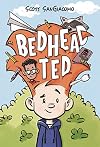
Retelling: Bedhead Ted is relentlessly mocked by his classmates for his unusual hair. The only one who supports him is his best friend Stacy, and he supports Stacy's fascination with an imaginary threat that haunts the woods. When Stacy starts hanging out with Bedhead Ted's former rivals Ted gets jealous. He doesn't want to share his talents with his erstwhile enemies.
Thoughts and feelings: I appreciate that most of the bullies from the beginning of the novel were given some dimension by the end and I'm glad that Ted found his capacity for forgiveness by the end.
Thoughts and feelings: I appreciate that most of the bullies from the beginning of the novel were given some dimension by the end and I'm glad that Ted found his capacity for forgiveness by the end.
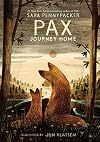
Retelling: Set in an almost post-apocolyptic fantacy world, where the war is over, and poisons have permeated the natural resources of the land, a young boy, Peter, repairs the damage endured by the death of his parents, and the loss of his beloved animal friend, Pax, on a journey of redemption to restore the safety of the physical environment for people and animals, and the Peters emotional environment. The story alternates between the perspective of Peter and his fox friend, Pax.
Thoughts and Feelings: I liked how this book explored how to overcome self-inflicted wounds. Fearing more loss, Peter distanced himself from the people who were trying to get close to him because he was so afraid of more great losses. The persistent and patient love of his fox, his new family, and his friends cut through his prickly exterior, and taught him to love again. Pax's adventure, by contrast, was fraught with dangers from the outside that threatened his family, and kept the book moving fast.
Thoughts and Feelings: I liked how this book explored how to overcome self-inflicted wounds. Fearing more loss, Peter distanced himself from the people who were trying to get close to him because he was so afraid of more great losses. The persistent and patient love of his fox, his new family, and his friends cut through his prickly exterior, and taught him to love again. Pax's adventure, by contrast, was fraught with dangers from the outside that threatened his family, and kept the book moving fast.
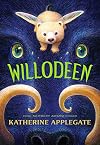
Retelling: The book is set in the fantastical town of Perchance, where the strange native wildlife plays an important role in both the town's problems and its attractions. A young girl named Willodeen becomes disconnected with the humans in the town when her own family is taken from her in a mighty forest fire, and she is taken in by a kind older couple of thespians who make it their mission to help her reconnect. Willodeen has always had a special connection to nature, and spends endless hours recording changes in her environment in her notebook. Two animals in particular take centerstage, the one for its vices (the skreecher), and the other for its virtues (the hummingbear). When the beloved hummingbears stop migrating to perchance, Willodeen has to overcome her shyness to report on her findings and save the town.
Thoughts and feelings: Willodeen felt like a real activist to me. When the cause is right, people can overcome their greatest fears and push the limits of their comfort to accomplish what they know is right. The book makes you really root for Willodeen, and Collin is just delightful.
Thoughts and feelings: Willodeen felt like a real activist to me. When the cause is right, people can overcome their greatest fears and push the limits of their comfort to accomplish what they know is right. The book makes you really root for Willodeen, and Collin is just delightful.

Retelling: Mimi is transplanted from her home in Houston Texas to her mother's Childhood home in Pakistan over her summer vacation to live with her grandmother Nana. She forms an instant connection to Sakina, a servant in her grandmother's class who is learning English and responds to Mimi's open communication and non-judgmental American Humor. When Mimi learns that her long lost father is reporting in the city they traveled to, she begins a quest to reunite with him, supported by her new friend Sakina. Sakina is on a quest to pass an English Exam so that she can be the first in her family to go to school. Her own father's own ailing health threatens to interfere with her plans. Together they struggle to understand one another through the gulf of culture and language and to help each other through their respective struggles.
Thoughts and feelings: One moment that stood out in my mind after reading this book was when Mimi offered Sakina the money she desperately needed to buy the medicine that would save her father's life. Sakina hesitated. I remember reading a psychology study (unfortunately I don't remember where-message me if you know) where the author examined attitudes towards the giving and receiving of gifts in a variety of cultures. What should feel like generosity is sometimes confirmation of the power the wealthy elite have over the poor, and accepting the gift can reify that structure. While Sakina did not read any elitism in Mimi's offer, she did consider how show more she could ever pay Mimi back. Mimi explained that she and her family had already paid in-kind, serving her family for many years, sacrificing her own time and advancement to keep the household running, and helping her find her father. I asked my 6-year old why the author might have chosen to make Sakina hesitate and he did not know. He said, the choice is obvious-take the money. Save your father. show less
Thoughts and feelings: One moment that stood out in my mind after reading this book was when Mimi offered Sakina the money she desperately needed to buy the medicine that would save her father's life. Sakina hesitated. I remember reading a psychology study (unfortunately I don't remember where-message me if you know) where the author examined attitudes towards the giving and receiving of gifts in a variety of cultures. What should feel like generosity is sometimes confirmation of the power the wealthy elite have over the poor, and accepting the gift can reify that structure. While Sakina did not read any elitism in Mimi's offer, she did consider how show more she could ever pay Mimi back. Mimi explained that she and her family had already paid in-kind, serving her family for many years, sacrificing her own time and advancement to keep the household running, and helping her find her father. I asked my 6-year old why the author might have chosen to make Sakina hesitate and he did not know. He said, the choice is obvious-take the money. Save your father. show less
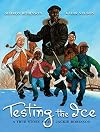
Retelling: This story is told from the perspective of Jackie Robinson's daughter. Sharon Robinson and Kadir Nelson give the legendary baseball player a rare glimpse into his family life. She recounts the moment she recognized the character trait that made her father a hero to many others in her own life.
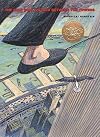
Retelling: Gerstein tells the modern legend of a street performer named Phillipe who once walked on a tightrope between the twin towers of New York City. The illustrations are breathtaking! Think twice about reading this book if you have a fear of heights.
Thoughts and Feelings: It's like this book was written just for me! When I was younger I wanted to be a dare devil. When I grew up, I learned how to juggle. I know how it feels to dream about doing something that seems daring and impossible and then do it. While my five-ball juggling feat was not nearly as astonishing as Pierre's walk across the wire, I can totally understand how empowering it can be to develop accomplish something most people feel like they could never do.
Thoughts and Feelings: It's like this book was written just for me! When I was younger I wanted to be a dare devil. When I grew up, I learned how to juggle. I know how it feels to dream about doing something that seems daring and impossible and then do it. While my five-ball juggling feat was not nearly as astonishing as Pierre's walk across the wire, I can totally understand how empowering it can be to develop accomplish something most people feel like they could never do.
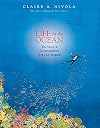
Retelling: This book celebrates the life of Sylvia Earle. The author emphasizes Sylvia's "investigations," the careful observations she made of the natural world in her notebooks throughout her life, and shares some direct quotes from her. During her life, Syvlia set diving records, was the chief scientist on the NOAA, served as an explorer in residence at the National Geographic Society, consulted as an expert on oil spills, and spoke widely on the ocean habitat. The author's note at the end of this book, reveals the AUTHOR'S passion about saving the natural habitat hat Sylvia explored, and continuing her legacy.
Thoughts and Feelings: Ever since my ocean animal project in third grade I wanted to study the sea. When my family vacationed in Maine, I would spend hours staring at the fish in the Lake. I had never heard of Sylvia Earle before I found this book. I particularly impressed when I found out that she was born in 1936. There are many female scientists now, but back then... well, I guess that's why she was 1 woman in the company of 70 men on her expedition. It's interesting that the author doesn't tell you the year of Sylvia's birth until the Author's Note at the end. I felt like I had to read it twice to put things in better context.
I was surprised that of, Sylvias many accomplishments, the author focused on her writing. Not all scientists are great descriptive writers. That set her apart for me.
Thoughts and Feelings: Ever since my ocean animal project in third grade I wanted to study the sea. When my family vacationed in Maine, I would spend hours staring at the fish in the Lake. I had never heard of Sylvia Earle before I found this book. I particularly impressed when I found out that she was born in 1936. There are many female scientists now, but back then... well, I guess that's why she was 1 woman in the company of 70 men on her expedition. It's interesting that the author doesn't tell you the year of Sylvia's birth until the Author's Note at the end. I felt like I had to read it twice to put things in better context.
I was surprised that of, Sylvias many accomplishments, the author focused on her writing. Not all scientists are great descriptive writers. That set her apart for me.