Merit of the Horse in Islam & Sketches on Courses of the Highest Breeding (2 Volumes in one) by Al-Hafez Abdul-Mu'men Al-Dumati

This book is apparently quite rare (outside of the Middle East). I have not been able to find it for sale in any of the usual places. A shame, because it's a very interesting and important work if one wishes to understand the great importance of the horse in Islam. Modern translations of some very old Arabic texts.

A very interesting book on what most people would consider a niche subject in the United States--Arabian horse racing. This book goes into a bit of detail about Traveler's Rest and J. M. Dickinson, the owner of Traveler's Rest.
There are still racing Arabians in the United States, and the horses which are not fast enough for racing make excellent endurance horses, so there are definitely people who are both racing fans and people who are endurance riders who would find this book to be of great interest.
There are still racing Arabians in the United States, and the horses which are not fast enough for racing make excellent endurance horses, so there are definitely people who are both racing fans and people who are endurance riders who would find this book to be of great interest.


14th annual catalogue, including two pieces from the estate of Myrna Loy.


My forebears, although not mentioned by name, lived, worked, and died in the slums of Salford. Indeed, one of the street courts where my gggggreat grandfather lived is discussed.
This isn't just an interesting look at social history--this is a direct line right into the lives of my ancestors.
Definitely worth the read.
This isn't just an interesting look at social history--this is a direct line right into the lives of my ancestors.
Definitely worth the read.
The Perfect Horse : the daring U.S. mission to rescue the priceless stallions kidnapped by the Nazis by Elizabeth Letts
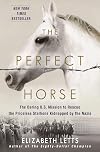
Unlike most of the other reviewers, my main interest in The Perfect Horse involved the story behind the saving of the Polish Arabians.
It is impossible to estimate the importance of these horses to the Arabian horse world. Of my own Arabians, 75% of them are/were descended from the Polish horses saved.
With sad tears for those who died in World War II, but with grateful tears for those who managed to save the horses which would have otherwise left the world a poorer place.
It is impossible to estimate the importance of these horses to the Arabian horse world. Of my own Arabians, 75% of them are/were descended from the Polish horses saved.
With sad tears for those who died in World War II, but with grateful tears for those who managed to save the horses which would have otherwise left the world a poorer place.

A revealing look at the mindset of a young American woman saw in her two years of living in Germany. She was there before the United States entered the Great War, and is for the most part, filled with admiration for the efficient way Germany handled rationing (although she does a lot of complaining about having to comply with the paperwork). She does talk about the way Germany is helping the men disabled by the war, but even that is done with admiration, and overall, the impression I got from reading this book was that Germany was not such a bad place after all, even though they were at war.
'McAuley (1882-1971) was not only one of the inaugural members of the Associated Artists Pittsburgh, she was also a journalist, author, illustrator, painter and teacher. During World War I, too, McAuley as a wartime correspondent in Germany for The Pittsburgh Post Dispatch'. After her return from Germany, she apparently did a series of paintings about her experiences--apparently the cover of my copy of the book is a reproduction of one of her paintings.
'McAuley (1882-1971) was not only one of the inaugural members of the Associated Artists Pittsburgh, she was also a journalist, author, illustrator, painter and teacher. During World War I, too, McAuley as a wartime correspondent in Germany for The Pittsburgh Post Dispatch'. After her return from Germany, she apparently did a series of paintings about her experiences--apparently the cover of my copy of the book is a reproduction of one of her paintings.

Although the book itself was quite interesting, I can't really give it more than one star because these are not POISONOUS animals. They are VENOMOUS animals, and the title should let you know that!

This is the fictionalized, but true, story about an Arabian colt, MonaLisas Majesty, who lost his whinny one day.

Can't get much better than this for anything you need to know about the deer of the world. This was written by the world's foremost authority on deer. Absolutely the best book written on deer out there.

This glorious book commemorates the opening of the Al-Marah Arabian Horse Galleries. The Al-Marah Arabian Horse Galleries are located in the Kentucky Horse Park, at the International Museum of the Horse. The Kentucky Horse Park is located in Lexington, KY.

Gives formulas and instructions for making a great variety of fixing and toning solutions, including uranium toning. In 1934 it was possible to get most of the chemicals without a lot of trouble, but I suspect modern times have made the acquisition of some of these rather problematic. Still, a handy guide and look back at how things were done when almost all photos were in black and white.

A bit technical, so this isn't for children, but a really interesting look at various phenomena of light and colour. The author looks at not just shadows, rainbows, and mirages, but delves into the whys and wherefores of things like interference colours in ferruginous water, how colours are affected by humidity, etc.
The lexicographer's dilemma : the evolution of "proper" English, from Shakespeare to South Park by Jack Lynch
I am absolutely not a professional writer, but I did find this to be a fascinating look at how the English language, and the rules regarding usage to be much more interesting than I would have suspected. Other reviewers have gone into great depth about the views presented here, but I do not have the temerity to follow in their footsteps as I am not a professional. I did thoroughly enjoy reading the book!
 This review was written for LibraryThing Early Reviewers.
Through the alimentary canal with gun and camera; a fascinating trip to the interior by George S. Chappell

A reviewer in the JAMA of May 1931 had this to say: "
Nothing is so nonsensical as science made nonsensical. Mr. Chappell has written previous burlesques on books of travel. This book describes the adventures of a number of explorers who undertake a trip through the gastro-intestinal tract, where they stalk the heebee-geebees in the nerve forest of the lumbar region and rescue a hot dog that battles against the intestinal current. They capture phagocytes in their native lair. Some of the humor is based on analogy, some of it on puns, but most of it is pure nonsense and, as such, exceedingly funny to all who can appreciate nonsense."
I would just leave my review at "it is pure nonsense", but not exceedingly funny. I read the first chapter, which I found tedious. I dipped into several other chapters, but could never get beyond a page or two.
You, the reader, may find it more amusing than I did.
Nothing is so nonsensical as science made nonsensical. Mr. Chappell has written previous burlesques on books of travel. This book describes the adventures of a number of explorers who undertake a trip through the gastro-intestinal tract, where they stalk the heebee-geebees in the nerve forest of the lumbar region and rescue a hot dog that battles against the intestinal current. They capture phagocytes in their native lair. Some of the humor is based on analogy, some of it on puns, but most of it is pure nonsense and, as such, exceedingly funny to all who can appreciate nonsense."
I would just leave my review at "it is pure nonsense", but not exceedingly funny. I read the first chapter, which I found tedious. I dipped into several other chapters, but could never get beyond a page or two.
You, the reader, may find it more amusing than I did.
An interesting account of a botanist's studies and experiments involving kibbutz in Israel.

Great collection of anecdotes from a veterinarian in Idaho.

Amazingly, Richard Bibler seems to have made a living from these cartoons. Life was simpler and more sexist back then.

Catalogue of Lionel trains, 'O' and 027 gauge; 'S' gauge; Standard gauge; Large Scale; Electric trains and accessories

An amazing work of love, this book details every Polish Arabian and descendants from 1937-1991.

More of a pamphlet than a 'book', but a great introduction to Colleen Moore's doll house, which is now located in the Museum of Science and Industry. Quirky little treasures abound in the doll house, and just a few of these stories are told. Best to see it in person, but this little book will bring back good memories.
The Sherlock Holmes cookbook : or, Mrs. Hudson's storeside campanion [sic] formed upon principles of economy and adapted to the use of private families by Sean Wright

Titles taken from the Canon, but there did not seem to be much authenticity in the recipes. The meal planning was disappointing. Too 'cute' for my taste.

Plenty of photos, but not much of substance.
Canals by J. C. Gagg

Not a complete and total in-depth look at the canals which served as commercial links in England's past, but a nice overall look at fun places to spend a few hours to perhaps months floating along.

My first reading of this book ended with me deciding it was too boring to get past the first couple of chapters. I am going to try reading it again to see if it has improved with age.

N. B. Lundwall writes about the horrible things which happened to the men who assassinated Joseph Smith. A lot of people want to believe that these horrible things really did happen. Except that they didn't happen.
http://www.deseretnews.com/article/705377262/A-different-take-on-the-Carthage-mo...
"Those who were responsible for the death of the Prophet Joseph Smith and his brother Hyrum on June 27, 1844, were not who might you think they were, according to one presenter at the BYU Studies 50th Anniversary Symposium. Debra Marsh, a master's student at the University of Utah, presented evidence Friday that the members of the Illinois mob that sought to put an end to Mormonism at Carthage Jail didn't rot away because of "the Mormon curse," as N.B. Lundwall claimed in his book, "The Fate of the Persecutors of the Prophet Joseph Smith," but went on to live normal lives. Another characterization from B.H. Roberts found in the introduction to volume 6 of the History of the Church, which called the mob a "criminal element" and "ruffians" isn't correct, either, Marsh said.Marsh, in her paper "Respectable Assassins: A Collective Biography and Socioeconomic Study of the Carthage Mob," said that contrary to popular belief the mobsters did not suffer for their actions, and actually were respected people who went on to greater accomplishments."The Carthage mob members lived normal life spans, through which they prospered financially," Marsh said. "They ran for and won political office, show more and generally appear to be protected and honored by their fellow citizens for their participation in the murders of Joseph and Hyrum Smith. "Marsh used a list of 89 men compiled by Sheriff Jacob Backenstos and a variety of other records to paint a picture of who these mobsters were. According to her research, while they came from the same regions of the country as others who lived in the area, mobsters were generally older than the general male population of Hancock County and were mostly learned professionals, businessmen and farmers who had their own property. The mob also had 16 men who held 24 different public offices, including state senator and U.S. senator. A large majority of the mob would have been considered in the upper class."This was a group of men that represented the top tier of Hancock county, in regards to power and socioeconomic status."Marsh then showed what happened to the mob after the martyrdom of the Smith brothers."Most of these individuals seem to have lived normal life spans in which they prospered," Marsh said. "Obviously, living a long life doesn't necessarily translate into good fortune. But if financial well-being is an indicator of the quality of one's life, then they lived quite well."In 1850, the average earnings of the mob were barely more than the U.S. average, with mobsters earning $1,540 compared to $1,050 for the average American. But at the end of the decade, mobsters had increased their earnings by 249 percent, or five times the national average, earning an average of $7,842 compared to $2,140. One member, Mark Aldrich, was extremely successful in the California Gold Rush and later became a merchant in Tucson, Ariz., with his personal estate valued at $50,000. Another, Jacob C. Davis, ended up being a state senator and eventually a U.S. senator for Illinois. Mob members held 24 public offices between 1844 and 1856.Marsh also referred to various historical accounts in which men list being part of the proceedings at Carthage Jail as one of their life's greatest achievements. Seeing the killers of Mormonism's founder doesn't take away from Marsh's testimony of the church, and she says it shouldn't bother other Mormons, either."Some people are uncomfortable with the idea that the mob members prospered. I know that the notion that an unseen hand dispersing justice to the wicked is very comforting," Marsh said."However, it quite simply isn't true. The wicked often prosper in this life. As many of us believe, though, we all will have to account for our actions, if not in this life, in the next. The most important fact remains, regardless of what happened to the Carthage mob: Joseph and Hyrum Smith were martyrs for God, and Joseph did more, save Jesus only, for the salvation of men in this world than any other man that lived in it."
Credit goes to Nick Newman, Mormon Times, who wrote the synopsis of the seminar. show less
http://www.deseretnews.com/article/705377262/A-different-take-on-the-Carthage-mo...
"Those who were responsible for the death of the Prophet Joseph Smith and his brother Hyrum on June 27, 1844, were not who might you think they were, according to one presenter at the BYU Studies 50th Anniversary Symposium. Debra Marsh, a master's student at the University of Utah, presented evidence Friday that the members of the Illinois mob that sought to put an end to Mormonism at Carthage Jail didn't rot away because of "the Mormon curse," as N.B. Lundwall claimed in his book, "The Fate of the Persecutors of the Prophet Joseph Smith," but went on to live normal lives. Another characterization from B.H. Roberts found in the introduction to volume 6 of the History of the Church, which called the mob a "criminal element" and "ruffians" isn't correct, either, Marsh said.Marsh, in her paper "Respectable Assassins: A Collective Biography and Socioeconomic Study of the Carthage Mob," said that contrary to popular belief the mobsters did not suffer for their actions, and actually were respected people who went on to greater accomplishments."The Carthage mob members lived normal life spans, through which they prospered financially," Marsh said. "They ran for and won political office, show more and generally appear to be protected and honored by their fellow citizens for their participation in the murders of Joseph and Hyrum Smith. "Marsh used a list of 89 men compiled by Sheriff Jacob Backenstos and a variety of other records to paint a picture of who these mobsters were. According to her research, while they came from the same regions of the country as others who lived in the area, mobsters were generally older than the general male population of Hancock County and were mostly learned professionals, businessmen and farmers who had their own property. The mob also had 16 men who held 24 different public offices, including state senator and U.S. senator. A large majority of the mob would have been considered in the upper class."This was a group of men that represented the top tier of Hancock county, in regards to power and socioeconomic status."Marsh then showed what happened to the mob after the martyrdom of the Smith brothers."Most of these individuals seem to have lived normal life spans in which they prospered," Marsh said. "Obviously, living a long life doesn't necessarily translate into good fortune. But if financial well-being is an indicator of the quality of one's life, then they lived quite well."In 1850, the average earnings of the mob were barely more than the U.S. average, with mobsters earning $1,540 compared to $1,050 for the average American. But at the end of the decade, mobsters had increased their earnings by 249 percent, or five times the national average, earning an average of $7,842 compared to $2,140. One member, Mark Aldrich, was extremely successful in the California Gold Rush and later became a merchant in Tucson, Ariz., with his personal estate valued at $50,000. Another, Jacob C. Davis, ended up being a state senator and eventually a U.S. senator for Illinois. Mob members held 24 public offices between 1844 and 1856.Marsh also referred to various historical accounts in which men list being part of the proceedings at Carthage Jail as one of their life's greatest achievements. Seeing the killers of Mormonism's founder doesn't take away from Marsh's testimony of the church, and she says it shouldn't bother other Mormons, either."Some people are uncomfortable with the idea that the mob members prospered. I know that the notion that an unseen hand dispersing justice to the wicked is very comforting," Marsh said."However, it quite simply isn't true. The wicked often prosper in this life. As many of us believe, though, we all will have to account for our actions, if not in this life, in the next. The most important fact remains, regardless of what happened to the Carthage mob: Joseph and Hyrum Smith were martyrs for God, and Joseph did more, save Jesus only, for the salvation of men in this world than any other man that lived in it."
Credit goes to Nick Newman, Mormon Times, who wrote the synopsis of the seminar. show less

Not a scientific study of frogs. This is a 'frogs in the media' book. Kind of a 'mystical stuff about frogs from an era that liked to write books about unicorns and such as if they were real' book. Plenty of nice drawings of frogs. Some nice old fables about frogs. There's even a recipe for Ragout de Grenouilles, which seems rather out of place here, but, it was the early Eighties. Two stars for the nice pictures of frogs, but minus 1/2 star for the Stewed Frogs recipe.

Overall this is worth having in one's collection, at least for the photos and line drawings illustrating the period. However, I purchased this book brand new, and within a couple of months it had already started falling apart. Books dealing with fashion, especially one which will be heavily used as reference material, should be stoutly bound! The book overall gets 4 stars, the binding is a complete and total disaster--zero stars.