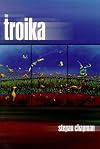
Stepan Chapman’s The Troika is brilliant. A surreal fantasy about a twisted family – an old mexican woman, Eva; a Jeep, Alex; and a Brontosaurus, Naomi, travelling together across an endless desert. It’s engaging and wildly inventive, a book of layered dreams and delusions, featuring guardian angels, fiddler-crab cops, Plasma Wars, and insanity.
A short novel inspired by a Jules Verne story known in English as Off On A Comet. Hector travels to the ranch owned by his father, Hector Senior, who has gathered a group of followers under the belief that the earth is about to be hit by an object that will destroy the planet, leaving only a small fragment upon which the ranch is situated. The story, at heart, is about the relationship Hector has with his father, how that has shaped his life, and how it prevents him from fully believing his father’s prophecy, even after events begin to challenge his skepticism.
Given the strong father-son themes of the book, I couldn’t help thinking of Charles Yu’s How To Live Safely in a Science Fictional Universe. Both are narrated by the adult son struggling to move out of the father’s shadow. For Yu’s protagonist, the father is dead, and it is the emptiness of the father’s last years and the son’s failure to stay close to him that has left him adrift. Hector Junior’s father lives, but there is a lot between him and Hector Senior that makes it hard for him to get close – not least the realisation, in watching Hector Senior as a leader of what is almost a cult, that he knew very little of his father as a man.
More:
http://anotherplace.wordpress.com/2012/03/31/splinter/
Given the strong father-son themes of the book, I couldn’t help thinking of Charles Yu’s How To Live Safely in a Science Fictional Universe. Both are narrated by the adult son struggling to move out of the father’s shadow. For Yu’s protagonist, the father is dead, and it is the emptiness of the father’s last years and the son’s failure to stay close to him that has left him adrift. Hector Junior’s father lives, but there is a lot between him and Hector Senior that makes it hard for him to get close – not least the realisation, in watching Hector Senior as a leader of what is almost a cult, that he knew very little of his father as a man.
More:
http://anotherplace.wordpress.com/2012/03/31/splinter/
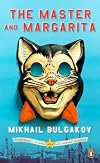
With my usual slow pace, it took me a couple of months to get through Mikhail Bulgakov’s The Master and Margarita. It’s an entertaining read. The devil and his associates turn up in Soviet Moscow and begin causing havok; the book is a farce, concerning itself mainly with the unlikely chains of events that occur as the result of the improbable feats performed by this troupe.
The book touches on – and satirises – a lot of subjects: writers and literary critics, the greedy and status-seekers, the bureaucracy of Moscow, love and desire in contest with respectability. Threaded through the novel is a second story of Pontius Pilate around the day of the execution of Yeshua (something that he participates in and yet regrets, having felt a connection to the philosopher when they spoke) – a story which at times both echoes and contrasts the themes within the depiction of events in Moscow.
More:
http://anotherplace.wordpress.com/2012/02/28/master-and-margarita/
The book touches on – and satirises – a lot of subjects: writers and literary critics, the greedy and status-seekers, the bureaucracy of Moscow, love and desire in contest with respectability. Threaded through the novel is a second story of Pontius Pilate around the day of the execution of Yeshua (something that he participates in and yet regrets, having felt a connection to the philosopher when they spoke) – a story which at times both echoes and contrasts the themes within the depiction of events in Moscow.
More:
http://anotherplace.wordpress.com/2012/02/28/master-and-margarita/
I don’t read much sci-fi, so it’s taken me a longer time to get around to reading this book than it did for me to read a lot of “classics” on the fantasy end of the spectrum.
I can see where the inadequate and too-predictable comparisons to Lord of the Rings came from – the world-building in Dune is superb. Herbert doesn’t over-rely on it, however, tending to reveal only what’s necessary and leave a lot implied, which is much to his credit; the appendices reveal the depth of detail that underlies the main work.
The plotting and structure of the novel are also strong points, the sense of inevitability of the outcome – carried by the passages from books about Muad’dib, written after the events of the story, that prelude each scene – but the uncertainty of how it will come about mirroring the form of the main character’s own prophetic skill. This is weaker in the first section of the novel, “Dune”, the whole plot of which is chiefly laid out in an early scene where the Baron Harkonnen reveals his plans to his nephew Feyd-Rautha; rather than increasing the dramatic tension of these parts of the book, I found the knowledge worked against it, making the characters actions seem driven by the need to follow this plotline.
More:
http://anotherplace.wordpress.com/2011/10/01/dune/
I can see where the inadequate and too-predictable comparisons to Lord of the Rings came from – the world-building in Dune is superb. Herbert doesn’t over-rely on it, however, tending to reveal only what’s necessary and leave a lot implied, which is much to his credit; the appendices reveal the depth of detail that underlies the main work.
The plotting and structure of the novel are also strong points, the sense of inevitability of the outcome – carried by the passages from books about Muad’dib, written after the events of the story, that prelude each scene – but the uncertainty of how it will come about mirroring the form of the main character’s own prophetic skill. This is weaker in the first section of the novel, “Dune”, the whole plot of which is chiefly laid out in an early scene where the Baron Harkonnen reveals his plans to his nephew Feyd-Rautha; rather than increasing the dramatic tension of these parts of the book, I found the knowledge worked against it, making the characters actions seem driven by the need to follow this plotline.
More:
http://anotherplace.wordpress.com/2011/10/01/dune/
Ever since the levels of publicity surrounding the release of Cormac McCarthy’s The Road rose so high, there has been a lot of talk on the web about mainstream fiction that uses science-fictional tropes–with one of the most common questions being, Why do these books get treated differently from other SF?
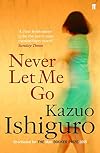
Kazuo Ishiguro’s Never Let Me Go is one of these kinds of novels, and it demonstrates quite neatly, I think, the places where science fiction and mainstream fiction with SF elements diverge. The novel is about three people, Kathy, Ruth, and Tommy, and their life together, at the private school Hailsham and beyond into their adult lives. The story is narrated by Kathy, now thirty-one, and right from the beginning, with her talk about “carers” and “donors”, it is clear there is something not quite normal about this story. Over the course of the story it is revealed in hints and small revelations, what the truth is about these children. Ishiguro quite adeptly manages the slow release of information, using to this effect the way the characters perceive these things which are, to them, simple facts they have known since childhood and, as such, have had little reason to ponder or question.
A genre author might have made the story about this mystery, had the characters spend the book searching for the Awful Troof. Instead, Ishiguro’s novel is about the relationships of the characters, of the way children and teenagers behave and how they can hurt each other simply show more in order to fit in, and, ultimately, of the search of Kathy and Tommy for a way they can, finally, be together, in spite of a system that denies them this opportunity. Kathy and Tommy are not interested in the Awful Troof; in fact, when finally presented with it, they remain unable to understand the way in which others see them, or the reasons for the emotion they attach to the issues. All they want to know is whether they will get their reprieve. By presenting the story this way, the reader still gets their revelation; but layered on top of this is the empathy we are brought to feel for these characters, naive in many ways, who want only to be together. The innocence and acceptance presented by their attitude only compounds the grief felt for the what has been done to these people, the way they have been and will continue to be treated by their society.
A very moving novel, Ishiguro demonstrates a great skill with recreating the perspective of the young child, teenager, and grown woman Kathy, and in deftly handling the way in which the story unfolds, truths opening up to us as the characters grow and their horizons widen. Definately recommended.
Originally posted:
http://anotherplace.wordpress.com/2007/10/19/never-let-me-go/ show less
Kazuo Ishiguro’s Never Let Me Go is one of these kinds of novels, and it demonstrates quite neatly, I think, the places where science fiction and mainstream fiction with SF elements diverge. The novel is about three people, Kathy, Ruth, and Tommy, and their life together, at the private school Hailsham and beyond into their adult lives. The story is narrated by Kathy, now thirty-one, and right from the beginning, with her talk about “carers” and “donors”, it is clear there is something not quite normal about this story. Over the course of the story it is revealed in hints and small revelations, what the truth is about these children. Ishiguro quite adeptly manages the slow release of information, using to this effect the way the characters perceive these things which are, to them, simple facts they have known since childhood and, as such, have had little reason to ponder or question.
A genre author might have made the story about this mystery, had the characters spend the book searching for the Awful Troof. Instead, Ishiguro’s novel is about the relationships of the characters, of the way children and teenagers behave and how they can hurt each other simply show more in order to fit in, and, ultimately, of the search of Kathy and Tommy for a way they can, finally, be together, in spite of a system that denies them this opportunity. Kathy and Tommy are not interested in the Awful Troof; in fact, when finally presented with it, they remain unable to understand the way in which others see them, or the reasons for the emotion they attach to the issues. All they want to know is whether they will get their reprieve. By presenting the story this way, the reader still gets their revelation; but layered on top of this is the empathy we are brought to feel for these characters, naive in many ways, who want only to be together. The innocence and acceptance presented by their attitude only compounds the grief felt for the what has been done to these people, the way they have been and will continue to be treated by their society.
A very moving novel, Ishiguro demonstrates a great skill with recreating the perspective of the young child, teenager, and grown woman Kathy, and in deftly handling the way in which the story unfolds, truths opening up to us as the characters grow and their horizons widen. Definately recommended.
Originally posted:
http://anotherplace.wordpress.com/2007/10/19/never-let-me-go/ show less
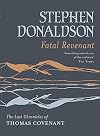
The Runes of the Earth was the introductory novel, one that showed us the stakes but left us with no idea of how the many threats would be confronted. In Fatal Revenant the real story has well and truly begun, but we are also given yet more introduction to yet more problems, and the book leaves you with far more qustions than answers. Donaldson’s not quite at his best, with events failing to flow quite as naturally or seamlessly as they should have, but when its working, Fatal Revenant is a step up from the somewhat lacklustre Runes of the Earth. Here’s hoping the author can iron out a few of those problems while working on book three of the series, Against All Things Ending.
Excerpt from:
http://anotherplace.wordpress.com/2007/12/14/fatal-revenant/
Excerpt from:
http://anotherplace.wordpress.com/2007/12/14/fatal-revenant/
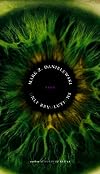
I was a big fan of Danielewski’s House of Leaves, and devoured every page of it – though I didn’t go so far as trying to decipher all the hidden messages – but Only Revolutions is a very different work, just as clever and carefully constructed, but it didn’t quite grab me in the same way. It’s fascinating in the way it is constructed, and I think the novel works in that sense; I just don’t have much of a taste for the almost stream-of-consciousness, near-poetic style of prose that this one was written in. Despite that, I would still recommend it – but I’d recommend House of Leaves first.
Taken from:
http://anotherplace.wordpress.com/2011/06/29/only-revolutions/
Taken from:
http://anotherplace.wordpress.com/2011/06/29/only-revolutions/
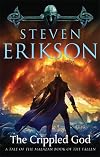
“What’s three and a half million words between friends?” Steven Erikson asks in the Acknowledgements at the beginning of this, the tenth and final volume of his massive epic fantasy series. If there’s any word to describe Erikson’s novels, it wouldn’t be brief.
The Tales of the Malazan Book of the Fallen is probably the longest, most complex, and most ambitious series I’ve read. Though it faltered a little in the beginning – the first book, Gardens of the Moon, suffering from Erikson’s unpracticed early prose – the later volumes are leaps and bounds ahead. With the sheer number of characters Erikson has introduced, and the number of story threads that have continued through the series, I had expressed doubt over whether he could successfully pull this into a satisfying conclusion, but he has done far better than I had imagined. In The Crippled God, all these threads are drawn together in a way that makes the planning, and the patience, of the author come clear.
This is the ambition I speak of – in reading this novel, and looking back over the series as a whole, I can see how, though good novels in their own right, the first three, and much of the fourth and fifth book, were in fact just setting the stage for the arcs of volume six onward. And when finished, they aren’t forgotten – the events of each prior book interact directly with the ones that follow. The Crippled God completes this convergence, drawing together elements right from the series show more beginning as it tells the story of the Bonehunters’ last march toward a purpose they never chose – to free the Crippled God, the Chained God, a foreign god who has seemingly done little but bring pain and suffering to their world.
More:
http://anotherplace.wordpress.com/2011/05/29/crippled-god/ show less
The Tales of the Malazan Book of the Fallen is probably the longest, most complex, and most ambitious series I’ve read. Though it faltered a little in the beginning – the first book, Gardens of the Moon, suffering from Erikson’s unpracticed early prose – the later volumes are leaps and bounds ahead. With the sheer number of characters Erikson has introduced, and the number of story threads that have continued through the series, I had expressed doubt over whether he could successfully pull this into a satisfying conclusion, but he has done far better than I had imagined. In The Crippled God, all these threads are drawn together in a way that makes the planning, and the patience, of the author come clear.
This is the ambition I speak of – in reading this novel, and looking back over the series as a whole, I can see how, though good novels in their own right, the first three, and much of the fourth and fifth book, were in fact just setting the stage for the arcs of volume six onward. And when finished, they aren’t forgotten – the events of each prior book interact directly with the ones that follow. The Crippled God completes this convergence, drawing together elements right from the series show more beginning as it tells the story of the Bonehunters’ last march toward a purpose they never chose – to free the Crippled God, the Chained God, a foreign god who has seemingly done little but bring pain and suffering to their world.
More:
http://anotherplace.wordpress.com/2011/05/29/crippled-god/ show less
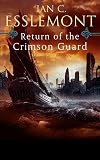
Esselmont’s previous work, Night of Knives, was a short novel depicting events over the course of a single night in the city of Malaz, and while it showed Esselmont’s writing skills were not yet a match for co-creator Erikson’s, the difference in structure avoided many direct comparisons that might have been made.
Return of the Crimson Guard, then, is the work where Esselmont is truly establishing himself within this setting. Set on the continent of Quon Tali, heart of the Malazan Empire, the novel tells of a civil war that breaks out against the rule of the Empress Laseen, masterminded by a number of the “Old Guard” – officers and generals from the previous Emperor’s reign. Heading into the midst of this is the titular Crimson Guard, an old military organisation led by the Avowed, a group of individuals sworn to “undying opposition to the Empire”. Gathered together for the first time in recent history, many of the Guard themselves are uncertain of the reasons for their return.
The book is much larger in size and scope than Esselmont’s previous work, and follows much in the same structure of plot that Erikson’s novels do, inviting more direct comparison. Unfortunately for Esselmont, coming in at this point means that the books against which his work is inevitably compared are the latter volumes in a well established series – Erikson has years of experience and more than half of his series behind him, and the gap between the two authors has grown show more rather large, something that was made more obvious when I began after reading this novel to read Dust of Dreams, the ninth and penultimate book in Erikson’s series.
More:
http://anotherplace.wordpress.com/2009/10/03/return-of-the-crimson-guard/ show less
Return of the Crimson Guard, then, is the work where Esselmont is truly establishing himself within this setting. Set on the continent of Quon Tali, heart of the Malazan Empire, the novel tells of a civil war that breaks out against the rule of the Empress Laseen, masterminded by a number of the “Old Guard” – officers and generals from the previous Emperor’s reign. Heading into the midst of this is the titular Crimson Guard, an old military organisation led by the Avowed, a group of individuals sworn to “undying opposition to the Empire”. Gathered together for the first time in recent history, many of the Guard themselves are uncertain of the reasons for their return.
The book is much larger in size and scope than Esselmont’s previous work, and follows much in the same structure of plot that Erikson’s novels do, inviting more direct comparison. Unfortunately for Esselmont, coming in at this point means that the books against which his work is inevitably compared are the latter volumes in a well established series – Erikson has years of experience and more than half of his series behind him, and the gap between the two authors has grown show more rather large, something that was made more obvious when I began after reading this novel to read Dust of Dreams, the ninth and penultimate book in Erikson’s series.
More:
http://anotherplace.wordpress.com/2009/10/03/return-of-the-crimson-guard/ show less
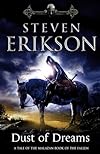
Dust of Dreams is the ninth and penultimate volume in Steven Erikson’s Tales of the Malazan Book of the Fallen. The story forms a sequel to the seventh volume, Reaper’s Gale, and occurs concurrently with Toll the Hounds. In this book we’re back to following the renegade Malazan army called the Bonehunters, who find themselves following their commander Adjunct Tavore east toward the Wastelands with very little idea of what they are heading toward, or why. Meanwhile, Elder God the Errant seeks out allies from his past in an attempt to reclaim his power, and the K’Chain CheMalle – a race of lizards believed long dead but revealed now to still live out in the Wastelands – send out a human servant to find a new way to survive.
The book is typical of the Malazan series, with a lot of the old familiar characters and several new ones. The theme of extinction – that of species and of tribes – continues, with several viewpoint characters being last survivors of their people, and highlights too the storylines which feature old gods being replaced by new, and the old ways of magic in turn being replaced with new forms.
Erikson’s prose, to my mind, improves with each volume, and he has developed quite a skill for poetic imagery, displayed in bits and pieces throughout the book. His characters are little changed, however; there are different types, and some distinctive personalities, but in many ways a lot of the characters lack a unique voice.
More:
show more target="_top">http://anotherplace.wordpress.com/2009/10/22/dust-of-dreams/ show less
The book is typical of the Malazan series, with a lot of the old familiar characters and several new ones. The theme of extinction – that of species and of tribes – continues, with several viewpoint characters being last survivors of their people, and highlights too the storylines which feature old gods being replaced by new, and the old ways of magic in turn being replaced with new forms.
Erikson’s prose, to my mind, improves with each volume, and he has developed quite a skill for poetic imagery, displayed in bits and pieces throughout the book. His characters are little changed, however; there are different types, and some distinctive personalities, but in many ways a lot of the characters lack a unique voice.
More:
show more target="_top">http://anotherplace.wordpress.com/2009/10/22/dust-of-dreams/ show less
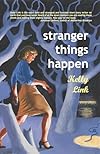
Link’s work is often categorised as Slipstream, mixing elements of sci fi, fantasy, horror, and realism. Stranger Things Happen was her first collection. I had read one or two stories from Link’s later collections before picking up Stranger Things Happen, but I didn’t know exactly what to expect.
Nick Mamatas made a post recently about people asking the question what is the point of this story?, and I must admit I can be guilty of this myself sometimes; Link’s stories quite often do not follow conventional lines of storytelling, and because of this I found myself early in the collection trying to decide if there was something I had missed, some extra meaning to the story, but this is more a failing on my part than any flaw in the work. Link often blurs the lines of fantasy and reality in a way that gives the stories a very dreamlike quality, and questions such as what part is real are irrelevant – something I had to remind myself.
More:
http://anotherplace.wordpress.com/2009/11/15/stranger-things-happen/
Nick Mamatas made a post recently about people asking the question what is the point of this story?, and I must admit I can be guilty of this myself sometimes; Link’s stories quite often do not follow conventional lines of storytelling, and because of this I found myself early in the collection trying to decide if there was something I had missed, some extra meaning to the story, but this is more a failing on my part than any flaw in the work. Link often blurs the lines of fantasy and reality in a way that gives the stories a very dreamlike quality, and questions such as what part is real are irrelevant – something I had to remind myself.
More:
http://anotherplace.wordpress.com/2009/11/15/stranger-things-happen/
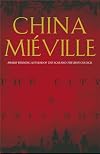
China Miéville’s The City & The City opens at the scene of a murder – Inspector Tyador Borlú of the Besźel Extreme Crime Squad is investigating the death of a young woman whose body has been dumped in the dead of night near a skate park. What seems like an ordinary case, however, soon becomes complicated when the Inspector begins to suspect that the woman did not die in Besźel at all.
[...]
To fans of Miéville’s Bas Lag novels, The City & The City is very different. Where those books were full of fantastic and disturbing creations that made the setting thoroughly unreal, the setting of this novel is almost mundane – the distinction between the two cities is one of perspective, the world within and surrounding each city indistinguishable from the real world.
From:
http://anotherplace.wordpress.com/2010/04/05/the-city-the-city/
[...]
To fans of Miéville’s Bas Lag novels, The City & The City is very different. Where those books were full of fantastic and disturbing creations that made the setting thoroughly unreal, the setting of this novel is almost mundane – the distinction between the two cities is one of perspective, the world within and surrounding each city indistinguishable from the real world.
From:
http://anotherplace.wordpress.com/2010/04/05/the-city-the-city/
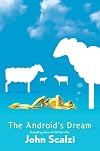
"Dirk Moeller didn’t know if he could fart his way into a major diplomatic incident. But he was ready to find out."
So begins John Scalzi’s The Android’s Dream: with a fart joke. This might seem like a bad sign, but the situation that plays out in the first chapter manages to turn it into a believable setup for the story, and instead it sets the tone for the rest of the novel as a light, fun affair.
[...]
The Android’s Dream touches a lot of classic action and sci-fi tropes, from the shootout in a mall (with a twist) and fight through the decks of a cruise ship against boarding soldiers, to interplanetary political scheming, to cyberpunk-style artificial intelligences. Scalzi keeps a good balance between the action, humour, and the more serious details of the plot. The result is a fun, fast-paced read with plenty of interesting ideas, and certainly a lot more to it than a fart joke.
From:
http://anotherplace.wordpress.com/2010/06/06/the-androids-dream/
So begins John Scalzi’s The Android’s Dream: with a fart joke. This might seem like a bad sign, but the situation that plays out in the first chapter manages to turn it into a believable setup for the story, and instead it sets the tone for the rest of the novel as a light, fun affair.
[...]
The Android’s Dream touches a lot of classic action and sci-fi tropes, from the shootout in a mall (with a twist) and fight through the decks of a cruise ship against boarding soldiers, to interplanetary political scheming, to cyberpunk-style artificial intelligences. Scalzi keeps a good balance between the action, humour, and the more serious details of the plot. The result is a fun, fast-paced read with plenty of interesting ideas, and certainly a lot more to it than a fart joke.
From:
http://anotherplace.wordpress.com/2010/06/06/the-androids-dream/
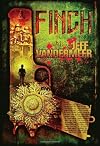
Finch, by Jeff VanderMeer, is probably the best book I’ve read this year.
John Finch is a detective in an Ambergris under Grey Cap rule – six years after they Rose from the underground, the city is flooded, fractured, and mutating. Finch is put on the case of a double murder that seems impossible. His partner, Wyte, is transforming, in the process of colonisation by fungus. And as he delves deeper into the case, he finds himself contending with most of the major elements fighting for some kind of control in the city.
Each novel in the Ambergris Cycle has been a different experience – City of Saints and Madmen a mosaic novel of short pieces in a wide variety of styles, from the straightforward to the experimental. Shriek: An Afterword was a biography covering several decades in the history of Ambergris and of the siblings Duncan and Janice Shriek, through Duncan’s explorations into the Grey Cap underworld and the beginning of the Wars of the Houses that tore the city apart across a hundred years. Throughout both, the Grey Caps remain mysterious, lurking, and decidedly sinister, with only cryptic fragments offered as to their ultimate purposes.
In Finch, the model is that of detective fiction, a story that begins with a murder to solve and has plenty of gunfights, interrogation, spies, and people who know much more than they’re willing to share. The prose emulates a style often associated with the hardboiled genre, direct and to the point, and keeps the story moving show more at a strong pace. The choice of this mode allows VanderMeer to take us down inside the city of Ambergris, to look at it through the eyes of one of its citizens during one of its lowest points, and to watch as the investigation of Finch’s case draws all these mysteries from the previous books up to the surface. Finch is experienced, but in this case as uninformed as the reader, presented with an impossible situation and tasked with trying to come up with an explanation from very shaky evidence.
More:
http://anotherplace.wordpress.com/2009/12/20/finch/ show less
John Finch is a detective in an Ambergris under Grey Cap rule – six years after they Rose from the underground, the city is flooded, fractured, and mutating. Finch is put on the case of a double murder that seems impossible. His partner, Wyte, is transforming, in the process of colonisation by fungus. And as he delves deeper into the case, he finds himself contending with most of the major elements fighting for some kind of control in the city.
Each novel in the Ambergris Cycle has been a different experience – City of Saints and Madmen a mosaic novel of short pieces in a wide variety of styles, from the straightforward to the experimental. Shriek: An Afterword was a biography covering several decades in the history of Ambergris and of the siblings Duncan and Janice Shriek, through Duncan’s explorations into the Grey Cap underworld and the beginning of the Wars of the Houses that tore the city apart across a hundred years. Throughout both, the Grey Caps remain mysterious, lurking, and decidedly sinister, with only cryptic fragments offered as to their ultimate purposes.
In Finch, the model is that of detective fiction, a story that begins with a murder to solve and has plenty of gunfights, interrogation, spies, and people who know much more than they’re willing to share. The prose emulates a style often associated with the hardboiled genre, direct and to the point, and keeps the story moving show more at a strong pace. The choice of this mode allows VanderMeer to take us down inside the city of Ambergris, to look at it through the eyes of one of its citizens during one of its lowest points, and to watch as the investigation of Finch’s case draws all these mysteries from the previous books up to the surface. Finch is experienced, but in this case as uninformed as the reader, presented with an impossible situation and tasked with trying to come up with an explanation from very shaky evidence.
More:
http://anotherplace.wordpress.com/2009/12/20/finch/ show less