The dance of person and place : one interpretation of American Indian philosophy by Thomas M. Norton-Smith
A Shawnee philosopher draws on indigenous knowledge while engaging with and refining a Western constructivist frame of reality as "equally privileged, well-made actual worlds." This is a technical yet humane and humorous essay proposing four common themes in American Indian philosophy: relatedness, circularity, expansive personhood, and the semantic power of performance such as dance.
O.N. Pruitt's Possum Town : photographing trouble and resistance in the American South by Berkley Hudson
(Pasted a published review in the wrong place. My own review is still pending.)

A 1979 novel about tyranny by a South African writer. It's divided into three sections, named for each of the three main characters:
Trust me, I have not spoiled the plot; the facts given above are all revealed quite early in the book.
The three sections are bracketed by chorus-like comic passages involving two refugee prisoners, from Zimbabwe and South Africa. Sometimes they converse with their visitors, Moyo or a South African teacher called Studs Letanka. The tale is set in a fictionalized Malawi immediately before and after independence, in the 1950s and '60s. There is a python motif throughout the book. The characters come from a kaleidoscope of ethnic groups: Bemba, Lozi, Tumbuka, Tonga [Chi]Nyanja, etc. History is invoked, and there are memories of wars with Ngoni and with Yao slave raiders. Studs Letanka says:
- Chirundu, the ambitious government minister, convinced he is “destined for great things”
- Tirenje, Chirundu’s devoted wife, who divorces him after he takes a second wife in secret
- Moyo, Chirundu’s nephew, a trade union activist who leads a strike against his uncle’s transport ministry
Trust me, I have not spoiled the plot; the facts given above are all revealed quite early in the book.
The three sections are bracketed by chorus-like comic passages involving two refugee prisoners, from Zimbabwe and South Africa. Sometimes they converse with their visitors, Moyo or a South African teacher called Studs Letanka. The tale is set in a fictionalized Malawi immediately before and after independence, in the 1950s and '60s. There is a python motif throughout the book. The characters come from a kaleidoscope of ethnic groups: Bemba, Lozi, Tumbuka, Tonga [Chi]Nyanja, etc. History is invoked, and there are memories of wars with Ngoni and with Yao slave raiders. Studs Letanka says:
…we must know where we came from to understand where we are — where we’re going — we must remember — that’s a tremendous gift — memory — you know what I mean? Not to forget. But we cannot now hold ceremonies over the millions dead and gone during the long journey in slavery — the journey across the seas. Memory should strengthen us, it should not detainshow more
us in the funeral parlour or at the graveside — it gets tiresome to have to keep going to funerals without corpses — I am tired, God! —That’s a good sample of Mphahlele’s loquacious, unpolished, introspective style. This is a book of thoughts and anxieties about the future. show less

This is a selection of poems by South African dissident poet Breyten Breytenbach, written 1964 to 1977, translated from Afrikaans by Denis Hirson.
The poems are grim, humorous, dreamlike and full of fear. Breytenbach left his native country in 1960 and lived in Paris for years. He was jailed in 1975 when he returned to white-ruled South Africa with a false passport to attempt an act of sabotage on behalf of the dissident African National Congress. The South African government had already labeled him a criminal because of his marriage to a Vietnamese woman, Yolande Ngo Thi Hoang Lien. So-called interracial marriage was a crime then.
This volume was published as part of an award given to Breytenbach in 1978, which provided for a selection of his work to be published in seven European countries. This is the British edition. A few poems are printed in the original Afrikaans as well as an English translation — soos byvoorbeeld / for example:
Afrikaans:
Dames en Here, vergun my om te stel aan Breyten Breytenbach,
die maer man met die groen trui; hy is vroom
en stut en hamer sy langwerpige kop om vir u
'n gedig te fabriseer
English:
Ladies and Gentlemen, allow me to introduce you to Breyten Breytenbach,
the lean man in the green sweater; he is devout
and braces and hammers his oblong head
to fabricate a poem for you
I found it ca. 1985 as a college student, having picked up an interest in Afrikaans and the dissident Afrikaner poets while working on an Amnesty International campaign show more against human rights abuses by the apartheid regime. show less
The poems are grim, humorous, dreamlike and full of fear. Breytenbach left his native country in 1960 and lived in Paris for years. He was jailed in 1975 when he returned to white-ruled South Africa with a false passport to attempt an act of sabotage on behalf of the dissident African National Congress. The South African government had already labeled him a criminal because of his marriage to a Vietnamese woman, Yolande Ngo Thi Hoang Lien. So-called interracial marriage was a crime then.
This volume was published as part of an award given to Breytenbach in 1978, which provided for a selection of his work to be published in seven European countries. This is the British edition. A few poems are printed in the original Afrikaans as well as an English translation — soos byvoorbeeld / for example:
Afrikaans:
Dames en Here, vergun my om te stel aan Breyten Breytenbach,
die maer man met die groen trui; hy is vroom
en stut en hamer sy langwerpige kop om vir u
'n gedig te fabriseer
English:
Ladies and Gentlemen, allow me to introduce you to Breyten Breytenbach,
the lean man in the green sweater; he is devout
and braces and hammers his oblong head
to fabricate a poem for you
I found it ca. 1985 as a college student, having picked up an interest in Afrikaans and the dissident Afrikaner poets while working on an Amnesty International campaign show more against human rights abuses by the apartheid regime. show less
It's been a while since I finished a book in one sitting, but this absorbing biography of a once famous loser is shocking at times, and at other times it seems to be on the verge of going off the rails. Jill Lepore is a masterful writer whose prose is lean and purposeful, and even her brief asides about her fears and doubts as a researcher are always in support of the story. ("The past is what's written down. It is very quiet; only people who can write make any sound at all." ) The paradoxes pile up thick and fast, and the cast of characters is full of familiar names from literature class, but the most astonishing character is a woman you never heard of, but should have, if the world were a better place.
This peculiar book was on my wishlist for years, ever since I first red a description of it. Henry Adams, a grandson of President John Quincy Adams and great-grandson of John Adams, made his name as an essayist and historian, but he is best remembered today for this autobiography. As a creature of one of the most elite American families, Adams could hardly avoid living an extraordinary life in regular contact with rich and influential people. He also had an imposing family legacy that was perhaps impossible for anyone to live up to. In this book, looking back over his life from the perspective of old age, Adams resorts to laconic detachment, writing of himself in the third person (”Adams”).
The book enjoyed its greatest popularity in the 1920s, in part because the name-dropping that Adams does throughout the book was about people who were then still widely known. (Modern editions include a name glossary.) Adams’s comfortable pessimism also must have appealed to the generation that endured the catastrophe of World War I and formed the materialist culture of the ’20s. The book’s star fell during the Great Depression, but the Education has always had its devotees. (One of them is Edmund Morris, who wrote the introduction to my edition.)
My progress through the book was gradual. I spent about three evenings a week with it, and occasionally I wasted some daylight on it. While I never stopped finding Adams interesting, I did begin to feel that marching through the show more book was a duty more than a plesure. I'm usually happy to indulge writers who digress frequently and who come at their subject indirectly, by tortuous paths, or as if by accident. I even try to win skeptics over to the delights of that pioneering novel about nothing, Tristram Shandy. But the Education was a harder slog than I expected. The conceits that had delighted readers in the 1910s and ’20s soon wore a bit thin for me, sometimes lapsing into predictability. Everything, I soon realized, would turn out in the end not to be education. I found myself wishing Adams would describe, however tentatively and circuitously, what ”education” ment to him. But I feel sure that this silence was intentional.
Another famous silence is his omission of any mention of his wife, Marian “Clover” H. Adams, a fascinating woman to whom he was intensely devoted, and who killed herself during a struggle with depression in 1885. She was one of America’s first portrait photographers, and she poisoned herself with some of the potassium cyanide she used to develop photographs. This giant lacuna in The Education of Henry Adams is only indicated by a chapter title: “Twelve Years Later.”
Adams was a very young man during the Civil War, serving his father in the American embassy to Britain. So slavery and the southern “Slave Power” are lively presences in the Education. Black people, however, are invisible; one would probably search the whole text in vain for the contemporary word ”Negro.” Instead, Adams’s meditations on race — an important topic to him — are consistently directed beyond American shores. It is interesting to watch him struggle with the idea of race, convinced that it exists, aware that it is the foundation upon which the edifice of world history was being raised, but troubled by the elusiveness, the insubstantiality of it.
The passage I just quoted is from Adams’s trip to Hammerfest, Norway where, in the footsteps of Thomas Carlyle’s protagonist Diogenes Teufelsdröckh, he seeks the edge of the polar ice cap, and marvels to find it not only easy to reach but illuminated with electric light. He then meditates on ”the Norse” (his quaint term for Scandinavians) as embodying “unity” (his unexplained synonym for modernity) and contrasts them with Russia, where he had just visited. Russia, for him, exemplifies a universal “inertia” that would surely resist incorporation into ”unity“ — or change of any kind, for that matter — for generations to come. The ikon-kissing peasant exemplified all Russians for Adams. How surprised he must have been to hear of the Russian Revolution, less than five months before his deth in March 1918.
While contemplating the Hammerfest glacier he also glances at the indigenous people, whom he calls, reflexively and with an unconscious pun, the last Laps. One wonders how surprised he might be at the survival of the Lapps — now known by their own name of Sámi — and at their limited autonomy within Norway and Finland, and their protected rights to their language, culture, and self-determination. All these developments would be the opposite of Adams’s idea of progress and “unity.”
The world we live in is unlike the abstract future that Henry Adams fabricated, piece by piece, during his unevenly documented life of contemplation. I couldn’t help wondering, after I finished the book, whether Henry Adams himself had taken it seriously. Was it all just a performance to amuse his many friends? Or was it a task to keep the author distracted from the great loss at the center of his life? In parts of the book — such as the sermonette about unity and inertia, or the chapter "The Dynamo and the Virgin" about another pair of opposed archetypes — his words glow with a steady zeal, like the orange fire in a vacuum tube. None the less, whatever else all this may have ment to Henry Adams, we can safely assume that there was no education in it. show less
The book enjoyed its greatest popularity in the 1920s, in part because the name-dropping that Adams does throughout the book was about people who were then still widely known. (Modern editions include a name glossary.) Adams’s comfortable pessimism also must have appealed to the generation that endured the catastrophe of World War I and formed the materialist culture of the ’20s. The book’s star fell during the Great Depression, but the Education has always had its devotees. (One of them is Edmund Morris, who wrote the introduction to my edition.)
My progress through the book was gradual. I spent about three evenings a week with it, and occasionally I wasted some daylight on it. While I never stopped finding Adams interesting, I did begin to feel that marching through the show more book was a duty more than a plesure. I'm usually happy to indulge writers who digress frequently and who come at their subject indirectly, by tortuous paths, or as if by accident. I even try to win skeptics over to the delights of that pioneering novel about nothing, Tristram Shandy. But the Education was a harder slog than I expected. The conceits that had delighted readers in the 1910s and ’20s soon wore a bit thin for me, sometimes lapsing into predictability. Everything, I soon realized, would turn out in the end not to be education. I found myself wishing Adams would describe, however tentatively and circuitously, what ”education” ment to him. But I feel sure that this silence was intentional.
Another famous silence is his omission of any mention of his wife, Marian “Clover” H. Adams, a fascinating woman to whom he was intensely devoted, and who killed herself during a struggle with depression in 1885. She was one of America’s first portrait photographers, and she poisoned herself with some of the potassium cyanide she used to develop photographs. This giant lacuna in The Education of Henry Adams is only indicated by a chapter title: “Twelve Years Later.”
Adams was a very young man during the Civil War, serving his father in the American embassy to Britain. So slavery and the southern “Slave Power” are lively presences in the Education. Black people, however, are invisible; one would probably search the whole text in vain for the contemporary word ”Negro.” Instead, Adams’s meditations on race — an important topic to him — are consistently directed beyond American shores. It is interesting to watch him struggle with the idea of race, convinced that it exists, aware that it is the foundation upon which the edifice of world history was being raised, but troubled by the elusiveness, the insubstantiality of it.
Race ruled the conditions; conditions hardly affected race; and yet no one could tell the patient tourist what race was, or how it should be known. History offered a feeble and delusive smile at the sound of the word; evolutionists and ethnologists disputed its very existence; no one knew what to make of it; yet, without the clue, history was a nursery tale. (pp. 411-412)
The passage I just quoted is from Adams’s trip to Hammerfest, Norway where, in the footsteps of Thomas Carlyle’s protagonist Diogenes Teufelsdröckh, he seeks the edge of the polar ice cap, and marvels to find it not only easy to reach but illuminated with electric light. He then meditates on ”the Norse” (his quaint term for Scandinavians) as embodying “unity” (his unexplained synonym for modernity) and contrasts them with Russia, where he had just visited. Russia, for him, exemplifies a universal “inertia” that would surely resist incorporation into ”unity“ — or change of any kind, for that matter — for generations to come. The ikon-kissing peasant exemplified all Russians for Adams. How surprised he must have been to hear of the Russian Revolution, less than five months before his deth in March 1918.
While contemplating the Hammerfest glacier he also glances at the indigenous people, whom he calls, reflexively and with an unconscious pun, the last Laps. One wonders how surprised he might be at the survival of the Lapps — now known by their own name of Sámi — and at their limited autonomy within Norway and Finland, and their protected rights to their language, culture, and self-determination. All these developments would be the opposite of Adams’s idea of progress and “unity.”
The world we live in is unlike the abstract future that Henry Adams fabricated, piece by piece, during his unevenly documented life of contemplation. I couldn’t help wondering, after I finished the book, whether Henry Adams himself had taken it seriously. Was it all just a performance to amuse his many friends? Or was it a task to keep the author distracted from the great loss at the center of his life? In parts of the book — such as the sermonette about unity and inertia, or the chapter "The Dynamo and the Virgin" about another pair of opposed archetypes — his words glow with a steady zeal, like the orange fire in a vacuum tube. None the less, whatever else all this may have ment to Henry Adams, we can safely assume that there was no education in it. show less
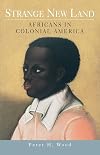
For anyone interested in a short introduction to the African diaspora in North America, I recommend Peter H. Wood's Strange New Land: Africans in Colonial America. The main text weighs in at less than 100 pages, but gives a fast-moving, substantive overview of the way colonial society became a slave society, and where the crucial turning points were. It will be a familiar story to some, but I think Wood's approach — combining big-picture perspective with individual lives — is refreshing. There's a good bibliography in the back, current through 2003.
Wood is the first author I've read who points out that African Americans, although often compared with immigrant groups, have deeper roots in America than most other Americans, as two-thirds of their ancestors arrived before 1776, and almost all of the rest were here by 1807, when Congress abolished the trans-Atlantic slave trade. Yet slavery and associated legal and cultural habits kept them alien to the white majority, even as that majority silently adopted elements of African American culture, without acknowledgement. (We're talking 17th century here, not jazz and Motown.)
I was intrigued with one counterfactual speculation: The history of the "Lost Colony" of Roanoke usually omits the fact that when Francis Drake arrived there in 1586, his reinforcements included liberated African and Indian slaves along with lots of captured Spanish goods and materiel. A storm wrecked most of his fleet and drowned these people. Had show more they survived, perhaps Roanoke, with such a mixed population, would have succeeded in a way that allowed less scope, later, for chattel slavery. As it happened, Drake returned to England, and the next, small, all-white contingent at Roanoke assimilated into surrounding Indian towns by 1590. By the time Jamestown got off the ground, the opportunity was lost.
Virginia and even Carolina (later divided into North and South Carolina) did afford some room for free black citizens for several generations, but they were too few to stop the gradual slide toward a racial caste system and perpetual, inheritable chattel slavery. Under that shadow, the memory of Roanoke was reduced to a story of the birth of Virginia Dare, the first native-born WASP — although she almost certainly ended her days as an Algonquian Indian. This book suggests that the real "lost colony" was the pre-racial one (antedating our long obsession with skin color) that just missed getting started in the summer of 1586.
Maybe it would have made a difference. Who knows? show less
Wood is the first author I've read who points out that African Americans, although often compared with immigrant groups, have deeper roots in America than most other Americans, as two-thirds of their ancestors arrived before 1776, and almost all of the rest were here by 1807, when Congress abolished the trans-Atlantic slave trade. Yet slavery and associated legal and cultural habits kept them alien to the white majority, even as that majority silently adopted elements of African American culture, without acknowledgement. (We're talking 17th century here, not jazz and Motown.)
I was intrigued with one counterfactual speculation: The history of the "Lost Colony" of Roanoke usually omits the fact that when Francis Drake arrived there in 1586, his reinforcements included liberated African and Indian slaves along with lots of captured Spanish goods and materiel. A storm wrecked most of his fleet and drowned these people. Had show more they survived, perhaps Roanoke, with such a mixed population, would have succeeded in a way that allowed less scope, later, for chattel slavery. As it happened, Drake returned to England, and the next, small, all-white contingent at Roanoke assimilated into surrounding Indian towns by 1590. By the time Jamestown got off the ground, the opportunity was lost.
Virginia and even Carolina (later divided into North and South Carolina) did afford some room for free black citizens for several generations, but they were too few to stop the gradual slide toward a racial caste system and perpetual, inheritable chattel slavery. Under that shadow, the memory of Roanoke was reduced to a story of the birth of Virginia Dare, the first native-born WASP — although she almost certainly ended her days as an Algonquian Indian. This book suggests that the real "lost colony" was the pre-racial one (antedating our long obsession with skin color) that just missed getting started in the summer of 1586.
Maybe it would have made a difference. Who knows? show less
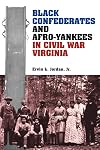
The best thing about this book (by Virginia archivist Ervin L. Jordan) is that it calls attention to the fact that some black southerners did see themselves as having a personal stake in the success of the Confederacy. Generally this was because of personal attachments or felt obligations to white Confederates. Jordan, an African American author, acknowledges that these “Afro-Confederates” (his term) were quite a small group, resented by other “Afro-Virginians.”
Some of the book’s flaws spring from Jordan’s manifest Virginia patriotism; he assumes that black Virginians of the 1860s felt the same love for the Old Dominion that he does. Jordan also tends to overinterpret his evidence to support his quixotic thesis of a “biracial” Confederacy.
Jordan is not naive, and he doesn’t intend to say that white and black Confederates had the same politics, or that white Confederates were not racist defenders of chattel slavery. But the book is all too amenable to selective quoting by neo-Confederates willing to ignore these qualifications. (An effective rejoinder is Confederate Emancipation by Bruce Levine, a rigorous study of Confederate recruitment of slave soldiers, with none of the eccentricities of Jordan’s book.)
Some of the book’s flaws spring from Jordan’s manifest Virginia patriotism; he assumes that black Virginians of the 1860s felt the same love for the Old Dominion that he does. Jordan also tends to overinterpret his evidence to support his quixotic thesis of a “biracial” Confederacy.
Jordan is not naive, and he doesn’t intend to say that white and black Confederates had the same politics, or that white Confederates were not racist defenders of chattel slavery. But the book is all too amenable to selective quoting by neo-Confederates willing to ignore these qualifications. (An effective rejoinder is Confederate Emancipation by Bruce Levine, a rigorous study of Confederate recruitment of slave soldiers, with none of the eccentricities of Jordan’s book.)
Creek Indian history : a historical narrative of the genealogy, traditions, and downfall of the Ispocoga or Creek tribe of indians by George Stiggins
This 1830s manuscript was the first narrative history of the Creek Indians to be written by a member of the tribe. For generations it gathered dust in the collections of the Wisconsin Historical Society, one of hundreds of documents on southern history acquired or "borrowed" by a man named Lyman Draper. In the 1970s a transcription was finally published in two issues of the academic journal Ethnohistory.
The manuscript finally appeared between hard covers in 1989, thanks to the efforts of Birmingham, Alabama librarian Virginia Pounds Brown. But the result is not entirely a happy one. Brown followed the old-fashioned (and inexcusable) practice of silently "improving" the text by normalizing spelling, punctuation, etc., without indicating where and how she did it. That is why the book is almost never cited by scholars.
The introduction to Brown's edition is a recycled 19th-century essay from the unpublished papers of William Stokes Wyman. Best known as a Victorian-era president of the University of Alabama, Wyman was a scholar of Latin and Greek who also dabbled in American Indian languages. The essay is of interest only as a period piece.
Stiggins' text is important because of its uniqueness, but it should be taken with a grain of salt. He was a strongly biased observer. Perhaps the most enduring influence this text has had on southern history is in promoting the author's brother-in-law, William Weatherford, to reluctant principal leader of the 1813 Red Stick rebellion. show more Weatherford certainly played an important role, but there is little reason to believe that anyone dominated the Red Stick movement. Anyway, thanks largely to Stiggins' publicity for his kinsman, Weatherford went on to become a romantic hero in Alabama historical literature — especially after a white poet gave him the pseudo-Indian name "Red Eagle." show less
The manuscript finally appeared between hard covers in 1989, thanks to the efforts of Birmingham, Alabama librarian Virginia Pounds Brown. But the result is not entirely a happy one. Brown followed the old-fashioned (and inexcusable) practice of silently "improving" the text by normalizing spelling, punctuation, etc., without indicating where and how she did it. That is why the book is almost never cited by scholars.
The introduction to Brown's edition is a recycled 19th-century essay from the unpublished papers of William Stokes Wyman. Best known as a Victorian-era president of the University of Alabama, Wyman was a scholar of Latin and Greek who also dabbled in American Indian languages. The essay is of interest only as a period piece.
Stiggins' text is important because of its uniqueness, but it should be taken with a grain of salt. He was a strongly biased observer. Perhaps the most enduring influence this text has had on southern history is in promoting the author's brother-in-law, William Weatherford, to reluctant principal leader of the 1813 Red Stick rebellion. show more Weatherford certainly played an important role, but there is little reason to believe that anyone dominated the Red Stick movement. Anyway, thanks largely to Stiggins' publicity for his kinsman, Weatherford went on to become a romantic hero in Alabama historical literature — especially after a white poet gave him the pseudo-Indian name "Red Eagle." show less
Empire of the summer moon : Quanah Parker and the rise and fall of the Comanches, the most powerful Indian tribe in American history by S. C. Gwynne
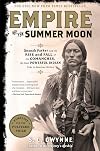
As a student of American Indian history (in the Southeast), I have been asked more than once whether I’ve read this popular book. I’m no expert on the Comanches and only have a general acquaintance with the Great Plains nations. But I do have an in-depth understanding of how challenging it is to write the history of a people whose records were kept by their conquerors. Knowing how much better Indian histories have become in recent years, I came to Empire of the Summer Moon with high hopes. But my first scout through the pages, including a long camp in the bibliography, showed me a history as dead and barren as Ezekiel’s plain of dry bones. Reading the book is like having the ghosts of cavalrymen and settlers rise up to harangue us about the bloody deeds of “wild Indians,” while Indian ghosts remain quiet in their unmarked graves.
This old-fashioned western history pits civilized white people against savage redmen in a bloody contest for control of land. The contest is a racial one and the outcome is inevitable. Because race explains so much, the book dwells with fascination on the “white squaw” Cynthia Ann Parker and her “mixed-blood” son, Quanah. The Comanches as a whole are treated, not as a nation with a history and culture, but as a body of fierce, “primitive” horseback warriors with women and children stowed back at camp under tepees. Because they are so primitive, the Comanches have no history: the way they lived in the 1800s is assumed to be show more the way they had always lived, and the only way they ever could live.
A good counterpoint to this book would be Comanche author Paul Chaat Smith’s funny and insightful Everything You Know About Indians Is Wrong. It’s too bad Sam Gwynne didn’t have a chance to read it before he embarked on Empire of the Summer Moon. Maybe it would have made a difference.
More: https://alarob.wordpress.com/2015/02/10/book-review-empire-of-the-summer-moon/ show less
This old-fashioned western history pits civilized white people against savage redmen in a bloody contest for control of land. The contest is a racial one and the outcome is inevitable. Because race explains so much, the book dwells with fascination on the “white squaw” Cynthia Ann Parker and her “mixed-blood” son, Quanah. The Comanches as a whole are treated, not as a nation with a history and culture, but as a body of fierce, “primitive” horseback warriors with women and children stowed back at camp under tepees. Because they are so primitive, the Comanches have no history: the way they lived in the 1800s is assumed to be show more the way they had always lived, and the only way they ever could live.
A good counterpoint to this book would be Comanche author Paul Chaat Smith’s funny and insightful Everything You Know About Indians Is Wrong. It’s too bad Sam Gwynne didn’t have a chance to read it before he embarked on Empire of the Summer Moon. Maybe it would have made a difference.
More: https://alarob.wordpress.com/2015/02/10/book-review-empire-of-the-summer-moon/ show less
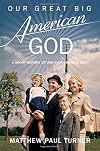
This is a book about the history of Christianity in America, written by a young, white, evangelical blogger from Nashville, Tennessee. As best I can tell, Matthew Paul Turner (whom I’ll call Matthew in this review) gained a following online by blogging stories of his personal experiences as a believer, seasoned with irreverent, edgy humor. One such episode kicks off this book: During a friendly debate, a friend of Matthew’s asks, “Where would God be without America?” He’s not being ironic. It’s an engaging anecdote about how nationalism can seep into the very foundations of sincere belief. I found it to include the most insightful of Matthew’s several attempts to define fundamentalism.
This opening dialogue with “Dave” (not his real name) also introduces Matthew’s willingness to use figures of speech that might offend some readers. Here’s one: “Well, I don’t think anybody questions the fact that America and Christianity have shared the same bed from time to time. But I hate to break it to you, man, God gets around.” Hilarious. And sloppy. Setting aside the question of how useful it is to portray God as a bed hopper, you’ll notice that Matthew has conflated “God” with “Christianity” in these sentences. This fuzziness about the meaning of the word “God” persists throughout the book. It can mean a concept of the Deity, or a strain of Christianity, a new form of worship, a “message,” or perhaps a sense of identity as a certain show more kind of Christian. Often it’s not clear what Matthew is thinking — for instance, when he writes that God in America, around the year 1700, “still smelled like a European.” (That phrase earned an eye roll from this reader.)
This book does presume some familiarity with terms such as “premillennial,” “postmillennial,” “charismatic,” and “prosperity gospel.” (That last term does get defined, eventually, but not the first time it appears.) For example, Matthew’s friend Dave is a “Christian Zionist,” and if you don’t know what that means, this book won’t help you.
Well, let me begin saying what I liked best about this book. The initial dialogue with “Dave” was an entertaining way to raise some profound issues, and while it was irreverent, it also showed (I thought) a sincere effort to understand where Dave was coming from as he worked his way through a series of video lectures by one of the latest of many End Times preachers our nation has produced. As a southerner who has had similar intense dialogues with friends who are boiling over with Christian zeal (including one in Matthew’s hometown of Nashville), I thought this dialogue was a very promising start to the book. Going in, I already knew that not all “conservative” Christians think alike, and some of their bitterest fights are with each other. This stuff matters to me, and I looked forward to gaining some insight into the diverse cultures and perspectives of American Christianity.
That’s not what I got. True, there are a couple more anecdotes about believers — namely, “Caroline,” who calls Jesus “my husband” and invokes his name with every breath, and an unnamed couple in Chicago who were planning a public event starring the Holy Spirit. (“The more I listened,” Matthew quips, “the more the Holy Spirit sounded like a diva.”) Matthew makes good use of these anecdotes; for instance, he uses Caroline’s intense Jesus-speak as a counterpoint to the fact that the first generations of American evangelicals had remarkably little to say about the Son. They were all about the Father.
Matthew wants American Christians to understand their history a little better. More specifically, he wants to teach evangelical Christians about their past. This is not a history of “God in America” or even of the Christian God in America; it is a history of evangelical Christianity in America. Except for the charismatic sects (Pentecostals, Church of God, etc.) that compete with evangelicals for members and influence, most other denominations are an afterthought here. Even the Roman Catholics only attract attention here as the objects of evangelical prejudice, rivalry, and finally, political alliance.
I don’t really have a problem with this; after all, evangelical Christianity is a large enough topic for a book. I did expect some attention, though, to how evangelicals deal with an ever more pluralistic society, in which the fastest growing belief systems are apparently Islam and “none of the above.” The last chapter, “One Nation under Gods,” looked like it might be about that pluralism. Instead, it describes a schism within the right wing of evangelicalism: what Matthew calls a “Great Split” between the more “relational” God of Billy Graham and the biblical-literalist God of Graham’s reactionary critics. This “Great Split” was presumably bad for evangelical Christianity, although it coincided with a surge in evangelical growth and influence. Pity the poor reader: Matthew presents us with two evangelical Gods, plus a third, Pentecostal God whom he remembers to tack on. There is a digression about a commodified GOD™ (spelled in all-caps, followed by a trademark symbol) who makes Matthew very angry. By now, the conceit of using the word “God” to mean almost anything related to Christianity has been stretched beyond the breaking point. An experienced editor could have been a great help here.
Matthew’s free-wheeling style occasionally scores a hit, as in his summary of the difference between Arminian and Calvinist views on predestination: "One side cannot fathom a God who cherry-picks souls that will go to heaven and souls that will go to hell, and the other side believes that God's sovereignty over the eternal destinies of humanity (divine cherry-picking) only magnifies his glory, power, and honor." (p. 98) OK, that seems fair to both sides.
In other cases, though, Matthew’s style makes me wince. When I read “a more tangible and hopeless narrative thread,” or of a movement “from providence to tragedy,” or of Christians being "slightly merciful” to a cause, or of two things that are "morphed perfectly together,” I have to ask myself: Is he even trying to think of the right words? When I read of preachers "loading Jesus into the guns of soldiers,” I resent both the absurd image and the awkward way it’s expressed. These screw-ups aren’t just a matter of style. Even a few of the most polished, prominent passages are slipshod, confused in thought as well as language. Take the opening of Chapter 5: “God in America is a free spirit, a supernatural entity capable of being shaped to fit a variety of ideas… (l)ike divine Play-Doh.…" As usual, “God” is used here to refer to almost anything except God. Whatever that thing is, it is “free.” And in Matthew’s world, “free” apparently means “subject to the irresistible shaping influence of others; malleable.” I mean, what the hell?
His historical narrative is entertaining but unreliable. Most readers will probably figure this out for themselves; after all, a statement like "America's most famous Christian slave owner was Patrick Henry” is so obviously untrue as to be dazzling. Other errors are more likely to be shared by readers, such as the assumption that 19th-century "voices that supported abolition” were also for “racial equality.” This was true only of most black abolitionists; most white people who sought to abolish slavery also assumed that black people were inherently and permanently inferior. Unfortunately this book shies away from racial subjects, which leads to an implicit bias toward whiteness that I am sure was unintended. For example, slavery and the Civil War leave almost no trace, even though the war forever changed American views of death and the afterlife. There is nothing about the “color line” that W.E.B. Dubois famously identified as “the problem of the twentieth century,” and nothing about the formation of racially segregated denominations within the ambit of evangelicalism. Matthew finds that “racism ran amok in the South," but not anywhere else, apparently. Describing the Azusa Street revivals that led to Pentecostalism, Matthew lets us know that these congregations did a remarkable job of overcoming race prejudice (which apparently did exist outside the South after all). But then, as the new church institutionalized, it also segregated. Why did this happen? Is it “natural”? It certainly is not, but Matthew seems unwilling to face the subject. He does somewhat better at describing women who influenced the course of Christianity in America. Ann Hutchinson, the colonial dissenter, seems to be a favorite of his.
Like a typical evangelical, Matthew has no idea what mysticism is. He is forced to try to describe it, though, because two of the founding fathers of evangelicalism, Jonathan Edwards and George Whitefield, were sincere mystics. In other words, each of them believed that he had, briefly, experienced God’s presence in a way that transformed his life, but this experience could not be recounted or explained. These days, among evangelicals, such talk would get you funny looks at best. The only Christian mystics left in America are Quakers (and a few other, even smaller sects). Almost everyone else thinks mystical experience is the domain of “Eastern religions,” and therefore highly suspect, at least if you’re a conservative Christian. Certainly it has nothing to do with Christianity, right?
So immediately after calling Jonathan Edwards “one of the most misunderstood individuals in American history,” Matthew proceeds to misunderstand his mystical experience. In effect, he calls Edwards a liar, and an arrogant one at that. As for Whitefield (whose name sounds like “Whitfield”), Matthew treats the “Divine Light” he experienced as just another manifestation of the preacher’s ego. This cynicism seemed to me to stem from our young evangelical author’s discomfort with an unfamiliar subject. It’s true that Edwards, in particular, was a tragically flawed figure, and both he and Whitefield are easy to criticize. But Matthew commits a young man’s error in assuming that it makes sense to subject their entire careers to withering ridicule. After a while this kind of thing gets a little tedious. Sometimes it’s all that Matthew has to offer, and that disappoints me.
There are some passages where I felt that this young writer had taught me something worth knowing. He does a decent job of describing the rise of dispensationalism, that bizarre end-of-the-world doctrine that plays such an outsized role in American culture. (The book lacks an index, so let me direct you to pages 133-143.) Matthew’s discussion of John Nelson Darby and his disciples won’t sway any convinced fundamentalists, but for me it shed some gentle light on a subject that is usually vexing. It may give some readers pause to realize that what we have been taught about the Last Days and the Second Coming is nothing like what was believed by, say, George Washington or Abraham Lincoln.
The discussion of Reinhold Niebuhr, from Missouri, is another of the book’s gems. (It concludes Chapter 8, pp. 163-66.) I sensed that Niebuhr has been very important to the author and that he was probably trying to keep his own feelings and opinions out. Maybe he should have let them in.
Matthew Turner has a fertile imagination and a quick wit. As a faithful Christian of the so-called Millennial generation, he manifests some restless discontent with the noisier forms of postmodern Christianity: the Jesus-themed merchandise, the fire-and-brimstone video performances, the arrogant “Messianic consciousness” denounced by Niebuhr and others. He clearly enjoys irreverence and mockery, perhaps because it helps protect him from genuine commitment or engagement with opponents. When he writes about God and America “exchanging DNA” in a drawn-out love affair, or about how “God lost fair and square” at the Scopes trial, any ensuing controversies are liable to stay on the level of language. As a result, what might have been a cogent critique of the practice of Christianity in America instead merely expresses a mood of restless dissatisfaction, mixed with cynicism and a (subdued, but unmistakable) sense of superiority. The book is something like a political tract to rouse the base, in that the message will probably only reach fans. A young conservative evangelical reading this book would find much to distract or offend, even more to mistrust, and little to challenge his or her received beliefs.
It seems best to conclude this review with a list of some of the books most often cited by Matthew Turner in footnotes. He also mentions them all with approval in the text of his book.
- Frank Lambert, Religion in American Politics: A Short History (2008).
- George M. Marsden, Understanding Fundamentalism and Evangelicalism (1991).
- George M. Marsden, Fundamentalism and American Culture (2006).
- Mark A. Noll, A History of Christianity in the United States and Canada (1992).
- Stephen Prothero, American Jesus: How the Son of God Became a National Icon (2003).
- Garry Wills, Head and Heart: American Christianities (2007).
Comments: https://alarob.wordpress.com/2015/04/28/book-review-our-great-big-american-god/ show less
This opening dialogue with “Dave” (not his real name) also introduces Matthew’s willingness to use figures of speech that might offend some readers. Here’s one: “Well, I don’t think anybody questions the fact that America and Christianity have shared the same bed from time to time. But I hate to break it to you, man, God gets around.” Hilarious. And sloppy. Setting aside the question of how useful it is to portray God as a bed hopper, you’ll notice that Matthew has conflated “God” with “Christianity” in these sentences. This fuzziness about the meaning of the word “God” persists throughout the book. It can mean a concept of the Deity, or a strain of Christianity, a new form of worship, a “message,” or perhaps a sense of identity as a certain show more kind of Christian. Often it’s not clear what Matthew is thinking — for instance, when he writes that God in America, around the year 1700, “still smelled like a European.” (That phrase earned an eye roll from this reader.)
This book does presume some familiarity with terms such as “premillennial,” “postmillennial,” “charismatic,” and “prosperity gospel.” (That last term does get defined, eventually, but not the first time it appears.) For example, Matthew’s friend Dave is a “Christian Zionist,” and if you don’t know what that means, this book won’t help you.
Well, let me begin saying what I liked best about this book. The initial dialogue with “Dave” was an entertaining way to raise some profound issues, and while it was irreverent, it also showed (I thought) a sincere effort to understand where Dave was coming from as he worked his way through a series of video lectures by one of the latest of many End Times preachers our nation has produced. As a southerner who has had similar intense dialogues with friends who are boiling over with Christian zeal (including one in Matthew’s hometown of Nashville), I thought this dialogue was a very promising start to the book. Going in, I already knew that not all “conservative” Christians think alike, and some of their bitterest fights are with each other. This stuff matters to me, and I looked forward to gaining some insight into the diverse cultures and perspectives of American Christianity.
That’s not what I got. True, there are a couple more anecdotes about believers — namely, “Caroline,” who calls Jesus “my husband” and invokes his name with every breath, and an unnamed couple in Chicago who were planning a public event starring the Holy Spirit. (“The more I listened,” Matthew quips, “the more the Holy Spirit sounded like a diva.”) Matthew makes good use of these anecdotes; for instance, he uses Caroline’s intense Jesus-speak as a counterpoint to the fact that the first generations of American evangelicals had remarkably little to say about the Son. They were all about the Father.
Matthew wants American Christians to understand their history a little better. More specifically, he wants to teach evangelical Christians about their past. This is not a history of “God in America” or even of the Christian God in America; it is a history of evangelical Christianity in America. Except for the charismatic sects (Pentecostals, Church of God, etc.) that compete with evangelicals for members and influence, most other denominations are an afterthought here. Even the Roman Catholics only attract attention here as the objects of evangelical prejudice, rivalry, and finally, political alliance.
I don’t really have a problem with this; after all, evangelical Christianity is a large enough topic for a book. I did expect some attention, though, to how evangelicals deal with an ever more pluralistic society, in which the fastest growing belief systems are apparently Islam and “none of the above.” The last chapter, “One Nation under Gods,” looked like it might be about that pluralism. Instead, it describes a schism within the right wing of evangelicalism: what Matthew calls a “Great Split” between the more “relational” God of Billy Graham and the biblical-literalist God of Graham’s reactionary critics. This “Great Split” was presumably bad for evangelical Christianity, although it coincided with a surge in evangelical growth and influence. Pity the poor reader: Matthew presents us with two evangelical Gods, plus a third, Pentecostal God whom he remembers to tack on. There is a digression about a commodified GOD™ (spelled in all-caps, followed by a trademark symbol) who makes Matthew very angry. By now, the conceit of using the word “God” to mean almost anything related to Christianity has been stretched beyond the breaking point. An experienced editor could have been a great help here.
Matthew’s free-wheeling style occasionally scores a hit, as in his summary of the difference between Arminian and Calvinist views on predestination: "One side cannot fathom a God who cherry-picks souls that will go to heaven and souls that will go to hell, and the other side believes that God's sovereignty over the eternal destinies of humanity (divine cherry-picking) only magnifies his glory, power, and honor." (p. 98) OK, that seems fair to both sides.
In other cases, though, Matthew’s style makes me wince. When I read “a more tangible and hopeless narrative thread,” or of a movement “from providence to tragedy,” or of Christians being "slightly merciful” to a cause, or of two things that are "morphed perfectly together,” I have to ask myself: Is he even trying to think of the right words? When I read of preachers "loading Jesus into the guns of soldiers,” I resent both the absurd image and the awkward way it’s expressed. These screw-ups aren’t just a matter of style. Even a few of the most polished, prominent passages are slipshod, confused in thought as well as language. Take the opening of Chapter 5: “God in America is a free spirit, a supernatural entity capable of being shaped to fit a variety of ideas… (l)ike divine Play-Doh.…" As usual, “God” is used here to refer to almost anything except God. Whatever that thing is, it is “free.” And in Matthew’s world, “free” apparently means “subject to the irresistible shaping influence of others; malleable.” I mean, what the hell?
His historical narrative is entertaining but unreliable. Most readers will probably figure this out for themselves; after all, a statement like "America's most famous Christian slave owner was Patrick Henry” is so obviously untrue as to be dazzling. Other errors are more likely to be shared by readers, such as the assumption that 19th-century "voices that supported abolition” were also for “racial equality.” This was true only of most black abolitionists; most white people who sought to abolish slavery also assumed that black people were inherently and permanently inferior. Unfortunately this book shies away from racial subjects, which leads to an implicit bias toward whiteness that I am sure was unintended. For example, slavery and the Civil War leave almost no trace, even though the war forever changed American views of death and the afterlife. There is nothing about the “color line” that W.E.B. Dubois famously identified as “the problem of the twentieth century,” and nothing about the formation of racially segregated denominations within the ambit of evangelicalism. Matthew finds that “racism ran amok in the South," but not anywhere else, apparently. Describing the Azusa Street revivals that led to Pentecostalism, Matthew lets us know that these congregations did a remarkable job of overcoming race prejudice (which apparently did exist outside the South after all). But then, as the new church institutionalized, it also segregated. Why did this happen? Is it “natural”? It certainly is not, but Matthew seems unwilling to face the subject. He does somewhat better at describing women who influenced the course of Christianity in America. Ann Hutchinson, the colonial dissenter, seems to be a favorite of his.
Like a typical evangelical, Matthew has no idea what mysticism is. He is forced to try to describe it, though, because two of the founding fathers of evangelicalism, Jonathan Edwards and George Whitefield, were sincere mystics. In other words, each of them believed that he had, briefly, experienced God’s presence in a way that transformed his life, but this experience could not be recounted or explained. These days, among evangelicals, such talk would get you funny looks at best. The only Christian mystics left in America are Quakers (and a few other, even smaller sects). Almost everyone else thinks mystical experience is the domain of “Eastern religions,” and therefore highly suspect, at least if you’re a conservative Christian. Certainly it has nothing to do with Christianity, right?
So immediately after calling Jonathan Edwards “one of the most misunderstood individuals in American history,” Matthew proceeds to misunderstand his mystical experience. In effect, he calls Edwards a liar, and an arrogant one at that. As for Whitefield (whose name sounds like “Whitfield”), Matthew treats the “Divine Light” he experienced as just another manifestation of the preacher’s ego. This cynicism seemed to me to stem from our young evangelical author’s discomfort with an unfamiliar subject. It’s true that Edwards, in particular, was a tragically flawed figure, and both he and Whitefield are easy to criticize. But Matthew commits a young man’s error in assuming that it makes sense to subject their entire careers to withering ridicule. After a while this kind of thing gets a little tedious. Sometimes it’s all that Matthew has to offer, and that disappoints me.
There are some passages where I felt that this young writer had taught me something worth knowing. He does a decent job of describing the rise of dispensationalism, that bizarre end-of-the-world doctrine that plays such an outsized role in American culture. (The book lacks an index, so let me direct you to pages 133-143.) Matthew’s discussion of John Nelson Darby and his disciples won’t sway any convinced fundamentalists, but for me it shed some gentle light on a subject that is usually vexing. It may give some readers pause to realize that what we have been taught about the Last Days and the Second Coming is nothing like what was believed by, say, George Washington or Abraham Lincoln.
The discussion of Reinhold Niebuhr, from Missouri, is another of the book’s gems. (It concludes Chapter 8, pp. 163-66.) I sensed that Niebuhr has been very important to the author and that he was probably trying to keep his own feelings and opinions out. Maybe he should have let them in.
Matthew Turner has a fertile imagination and a quick wit. As a faithful Christian of the so-called Millennial generation, he manifests some restless discontent with the noisier forms of postmodern Christianity: the Jesus-themed merchandise, the fire-and-brimstone video performances, the arrogant “Messianic consciousness” denounced by Niebuhr and others. He clearly enjoys irreverence and mockery, perhaps because it helps protect him from genuine commitment or engagement with opponents. When he writes about God and America “exchanging DNA” in a drawn-out love affair, or about how “God lost fair and square” at the Scopes trial, any ensuing controversies are liable to stay on the level of language. As a result, what might have been a cogent critique of the practice of Christianity in America instead merely expresses a mood of restless dissatisfaction, mixed with cynicism and a (subdued, but unmistakable) sense of superiority. The book is something like a political tract to rouse the base, in that the message will probably only reach fans. A young conservative evangelical reading this book would find much to distract or offend, even more to mistrust, and little to challenge his or her received beliefs.
It seems best to conclude this review with a list of some of the books most often cited by Matthew Turner in footnotes. He also mentions them all with approval in the text of his book.
- Frank Lambert, Religion in American Politics: A Short History (2008).
- George M. Marsden, Understanding Fundamentalism and Evangelicalism (1991).
- George M. Marsden, Fundamentalism and American Culture (2006).
- Mark A. Noll, A History of Christianity in the United States and Canada (1992).
- Stephen Prothero, American Jesus: How the Son of God Became a National Icon (2003).
- Garry Wills, Head and Heart: American Christianities (2007).
Comments: https://alarob.wordpress.com/2015/04/28/book-review-our-great-big-american-god/ show less
 This review was written for LibraryThing Early Reviewers.
This erroneous, sentimental book is one of the worst of many poor attempts to narrate Creek Indian history. Its countless errors begin with the title. The illustrations are another embarrassment. Unfortunately the book received a stamp of approval from William H. Faulkner Sr., the prominent Alabama politician who has two colleges named after him; he contributed the foreword. If I were a librarian, I would remove this misbegotten book from every shelf I was responsible for, along with its slightly revised successor, Massacre at Fort Mims.
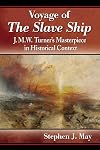
I came to this book deeply interested in the history of the Atlantic slave trade, so I was naturally curious about the artist who painted the lurid canvas called The Slave Ship, or to give it its full title: Slavers Throwing overboard the Dead and Dying — Typhon (sic) coming on.
After some struggle, I put this book down with impatience, contempt, and a certain amount of anger at the author's occasionally frivolous treatment of a subject (slavery) that demands our serious attention. My bias is that I do not care for the author's giddy style, in which the sun rises "like a pearl" to shine on a scene of slaughter, or the city of London is "awash in gin, sin, and din." (Ha ha!) Some readers might enjoy these touches. I did not. In his straining to appear clever, Stephen May failed to realize how these cheap tricks tend to diminish his subject, making everything he touches seem smaller, more distant, and less real.
This is not a long book, but I found it tedious, and after only two chapters I resorted to skimming. I also scanned the index and ended up reading a majority of the text. On that basis, I estimate that these 206 pages contain about six pages of fresh insight. Stephen May pads the book with novelistic digressions that, I feel, tell us more about the author's sensibility than about Turner, his painting, or his times. For instance, May devotes much space to the slave ship Zong and its crew, who threw dozens of slaves overboard as the ship, due to the captain's show more incompetence, ran low on water. This was in 1781. The ensuing court case was tried when J.M.W. Turner was 8 years old. May finds no evidence of much political engagement by the adult Turner in the cause of abolishing slavery. Nevertheless, May assumes that the Zong case, which unfolded in fair weather near Jamaica, had an important influence on The Slave Ship, painted fifty-seven years later, even though the painting's cold Atlantic palette and looming storm seem to contradict that assumption.
For me, this book went completely off the rails during May's clumsy attempt to recount the horrors of crossing the Atlantic on an English slave ship. Turning abruptly to the few women whom a captain might choose for sexual use during a voyage, May makes a nonsensical comparison of these women's lot with those of the other slaves kept below decks. These sex slaves, he writes, "enjoyed a posher voyage" than the others; they wore "a more delicate ankle shackle" that, affixed to the floor of the captain's cabin, "allowed for mobility and ease of movement." (36) Nothing is said about the cost to the women of providing "sexual pleasure" to their violent enslavers. No, May represents these women as the lucky ones on the ship. I don’t accuse May of deliberately making light of the suffering of slaves. I do accuse him of incompetence and a lack of analytical stamina; he doesn’t seem able to achieve a comprehensive view of any of the topics he takes on, and this lapse is only the most morally obtuse example I found. In any case, whatever his intent, the effect of his half-baked prose about the slave trade is obnoxious. I feel that a writer who fails to comprehend the ordeal of the Middle Passage should not attempt to describe it — especially in a book about art history.
What is this book about, anyway? The title promises to give us the figurative "voyage" of The Slave Ship, "in historical context." We do indeed get a narrative of the painting's first exhibition, its acquisition by an admiring John Ruskin, and sale after Turner's death to a series of American buyers until it ends up in the Museum of Fine Arts, Boston. May also poses two loosely related sets of questions in his introduction — interesting questions, mostly, but the answers are usually disappointing, when they can be located at all among the thickets of useless prose.
May's analysis of the painting and related subjects is composed of feelings, clichés, and binary juxtapositions, as in the first chapter title, "Painter of Light, Creature of Darkness." Dramatic, isn’t it? I mentioned that May's analyses lack stamina. He repeatedly belabors a topic with bottom-heavy prose, pushing through to an unanswered question that calls for critical analysis backed by evidence. For instance, the judge who tried the murders of slaves aboard the Zong ordered a retrial, so why did it never take place? Why did Turner's erotic "secret sketches," which his executor claimed to have burned, turn up later in the Tate Gallery archives? After ploughing into these problems like a ship foundering on a reef, May walks away from the wreckage with a shrug, seemingly uninterested in choosing between answers. He merely lists the possible alternatives that occur to him.
But surely Turner's masterpiece, The Slave Ship, comes in for intelligent discussion in this book. What it does not get is a decent graphic reproduction: The painting looks muddy on the book cover and indistinct on the brighter color plate inside the book. Fortunately for the reader, there are better reproductions on the Web, so when May describes the odd-looking fish in the foreground, it isn’t necessary to squint at the color plate and wonder whether he's referring to those dark paper-clip shapes or those pale spitball things. (Wikimedia Commons has you covered.) Anyway, contrary to the author's intention, I found that this book almost persuaded me that The Slave Ship is a much poorer work than it should have been, painted by a narrow-minded artist whose ignorance of the world beyond England added fantastic touches to his attempts at nautical subjects. His reputation as an artist was buoyed by the fact that a privileged young man, John Ruskin, was unaccountably smitten with Turner and had the time and energy to turn out six volumes of appealing prose about Turner's supposed greatness. Years after Turner's death, the painting's transfer to American ownership gave it a new lease on life in the aftermath of the Civil War, when few other artists had even pretended to address the matter of slavery, which was understood to have caused the war. Ruskin is the key to this story. Without Ruskin, Turner would have faded into obscurity. Because of Ruskin, the graying Turner found a new market of fashionable buyers who cheerfully bought up his backlog of canvases even while some of them scratched their heads over his "indistinct" style. In fact, although May would never even hint at this, Turner's success may well be an earlier example of the commodification of artworks that is reaching its logical conclusion in our time.
The book title promises "historical context," but whenever May strays beyond the bare facts about the painting's timeline, his history is often both superficial and wrong. I've already mentioned how his attempt at describing a slaving voyage is so obtuse as to verge on the obscene. Another glaring example that caught my attention is his superficial definition of the Whig faction in 18th-century British politics. "Attempting to sustain their liberal tradition," he writes, "they battled for constitutional monarchism and opposed absolute rule by a king or queen." (76) Sorry, thank you for playing. May is writing about issues that had been settled by the first generation of Whigs, about a century earlier. The Whigs of the late 18th century had already enjoyed a long "Whig Supremacy" during which their ideals were no longer subject to question. It may seem like an obscure error, but imagine a future art historian writing about the effort by the American government, ca. 2010-2015, to prevail over fascism and defeat the Empire of Japan. So much for historical context.
Not that May doesn’t know what era in history he's writing about: It's the Victorian era. To make sure we know it, he begins the first chapter and ends the last one with trivial anecdotes about Queen Victoria and Buckingham Palace. Neither the queen nor the palace play any meaningful role in Turner's life or the reception of his painting, but at least we know how the queen felt about her palace at three different points in her life. In case you were dying to know.
Did I mention the meaningless statements? The frequent choice of the wrong verb? The mechanical errors that McFarland copy editors failed to catch? Never mind, I don’t have time to get into all that.
In search of facts and analysis, I finally skipped to Chapter 6, "The Poetry of Devastation," where May's attention almost focuses on the painting itself. Here we find a few lines of bad poetry (inaccurately quoted by May), which Turner probably found inspirational. There are descriptions of other canvases about shipwrecks that Turner would have seen, and a pretty good account of the 1840 Royal Academy exhibition where The Slave Ship was exhibited along with other Turner paintings. All in all, the facts and insights are comparable to what one would find in a good encyclopedia article. I found more than I cared to know about Turner's decrepit gallery, cluttered studio, and ugly housekeeper. What I failed to find was any cogent description of the artist at work or the process by which this painting came to be. Apparently May is content to regard it as a spontaneous efflorescence of genius.
More than once, May repeats Turner's quip about himself, "indistinctiveness is my forte." I have to conclude that it is this fuzziness — to quote a critic, this "pea-green insipidity" about Turner's work — that resonated with Stephen May and caused him to attempt a history. This book fails in structure, coherence, style, accuracy, and attention to detail. It is one hot mess. show less
After some struggle, I put this book down with impatience, contempt, and a certain amount of anger at the author's occasionally frivolous treatment of a subject (slavery) that demands our serious attention. My bias is that I do not care for the author's giddy style, in which the sun rises "like a pearl" to shine on a scene of slaughter, or the city of London is "awash in gin, sin, and din." (Ha ha!) Some readers might enjoy these touches. I did not. In his straining to appear clever, Stephen May failed to realize how these cheap tricks tend to diminish his subject, making everything he touches seem smaller, more distant, and less real.
This is not a long book, but I found it tedious, and after only two chapters I resorted to skimming. I also scanned the index and ended up reading a majority of the text. On that basis, I estimate that these 206 pages contain about six pages of fresh insight. Stephen May pads the book with novelistic digressions that, I feel, tell us more about the author's sensibility than about Turner, his painting, or his times. For instance, May devotes much space to the slave ship Zong and its crew, who threw dozens of slaves overboard as the ship, due to the captain's show more incompetence, ran low on water. This was in 1781. The ensuing court case was tried when J.M.W. Turner was 8 years old. May finds no evidence of much political engagement by the adult Turner in the cause of abolishing slavery. Nevertheless, May assumes that the Zong case, which unfolded in fair weather near Jamaica, had an important influence on The Slave Ship, painted fifty-seven years later, even though the painting's cold Atlantic palette and looming storm seem to contradict that assumption.
For me, this book went completely off the rails during May's clumsy attempt to recount the horrors of crossing the Atlantic on an English slave ship. Turning abruptly to the few women whom a captain might choose for sexual use during a voyage, May makes a nonsensical comparison of these women's lot with those of the other slaves kept below decks. These sex slaves, he writes, "enjoyed a posher voyage" than the others; they wore "a more delicate ankle shackle" that, affixed to the floor of the captain's cabin, "allowed for mobility and ease of movement." (36) Nothing is said about the cost to the women of providing "sexual pleasure" to their violent enslavers. No, May represents these women as the lucky ones on the ship. I don’t accuse May of deliberately making light of the suffering of slaves. I do accuse him of incompetence and a lack of analytical stamina; he doesn’t seem able to achieve a comprehensive view of any of the topics he takes on, and this lapse is only the most morally obtuse example I found. In any case, whatever his intent, the effect of his half-baked prose about the slave trade is obnoxious. I feel that a writer who fails to comprehend the ordeal of the Middle Passage should not attempt to describe it — especially in a book about art history.
What is this book about, anyway? The title promises to give us the figurative "voyage" of The Slave Ship, "in historical context." We do indeed get a narrative of the painting's first exhibition, its acquisition by an admiring John Ruskin, and sale after Turner's death to a series of American buyers until it ends up in the Museum of Fine Arts, Boston. May also poses two loosely related sets of questions in his introduction — interesting questions, mostly, but the answers are usually disappointing, when they can be located at all among the thickets of useless prose.
May's analysis of the painting and related subjects is composed of feelings, clichés, and binary juxtapositions, as in the first chapter title, "Painter of Light, Creature of Darkness." Dramatic, isn’t it? I mentioned that May's analyses lack stamina. He repeatedly belabors a topic with bottom-heavy prose, pushing through to an unanswered question that calls for critical analysis backed by evidence. For instance, the judge who tried the murders of slaves aboard the Zong ordered a retrial, so why did it never take place? Why did Turner's erotic "secret sketches," which his executor claimed to have burned, turn up later in the Tate Gallery archives? After ploughing into these problems like a ship foundering on a reef, May walks away from the wreckage with a shrug, seemingly uninterested in choosing between answers. He merely lists the possible alternatives that occur to him.
But surely Turner's masterpiece, The Slave Ship, comes in for intelligent discussion in this book. What it does not get is a decent graphic reproduction: The painting looks muddy on the book cover and indistinct on the brighter color plate inside the book. Fortunately for the reader, there are better reproductions on the Web, so when May describes the odd-looking fish in the foreground, it isn’t necessary to squint at the color plate and wonder whether he's referring to those dark paper-clip shapes or those pale spitball things. (Wikimedia Commons has you covered.) Anyway, contrary to the author's intention, I found that this book almost persuaded me that The Slave Ship is a much poorer work than it should have been, painted by a narrow-minded artist whose ignorance of the world beyond England added fantastic touches to his attempts at nautical subjects. His reputation as an artist was buoyed by the fact that a privileged young man, John Ruskin, was unaccountably smitten with Turner and had the time and energy to turn out six volumes of appealing prose about Turner's supposed greatness. Years after Turner's death, the painting's transfer to American ownership gave it a new lease on life in the aftermath of the Civil War, when few other artists had even pretended to address the matter of slavery, which was understood to have caused the war. Ruskin is the key to this story. Without Ruskin, Turner would have faded into obscurity. Because of Ruskin, the graying Turner found a new market of fashionable buyers who cheerfully bought up his backlog of canvases even while some of them scratched their heads over his "indistinct" style. In fact, although May would never even hint at this, Turner's success may well be an earlier example of the commodification of artworks that is reaching its logical conclusion in our time.
The book title promises "historical context," but whenever May strays beyond the bare facts about the painting's timeline, his history is often both superficial and wrong. I've already mentioned how his attempt at describing a slaving voyage is so obtuse as to verge on the obscene. Another glaring example that caught my attention is his superficial definition of the Whig faction in 18th-century British politics. "Attempting to sustain their liberal tradition," he writes, "they battled for constitutional monarchism and opposed absolute rule by a king or queen." (76) Sorry, thank you for playing. May is writing about issues that had been settled by the first generation of Whigs, about a century earlier. The Whigs of the late 18th century had already enjoyed a long "Whig Supremacy" during which their ideals were no longer subject to question. It may seem like an obscure error, but imagine a future art historian writing about the effort by the American government, ca. 2010-2015, to prevail over fascism and defeat the Empire of Japan. So much for historical context.
Not that May doesn’t know what era in history he's writing about: It's the Victorian era. To make sure we know it, he begins the first chapter and ends the last one with trivial anecdotes about Queen Victoria and Buckingham Palace. Neither the queen nor the palace play any meaningful role in Turner's life or the reception of his painting, but at least we know how the queen felt about her palace at three different points in her life. In case you were dying to know.
Did I mention the meaningless statements? The frequent choice of the wrong verb? The mechanical errors that McFarland copy editors failed to catch? Never mind, I don’t have time to get into all that.
In search of facts and analysis, I finally skipped to Chapter 6, "The Poetry of Devastation," where May's attention almost focuses on the painting itself. Here we find a few lines of bad poetry (inaccurately quoted by May), which Turner probably found inspirational. There are descriptions of other canvases about shipwrecks that Turner would have seen, and a pretty good account of the 1840 Royal Academy exhibition where The Slave Ship was exhibited along with other Turner paintings. All in all, the facts and insights are comparable to what one would find in a good encyclopedia article. I found more than I cared to know about Turner's decrepit gallery, cluttered studio, and ugly housekeeper. What I failed to find was any cogent description of the artist at work or the process by which this painting came to be. Apparently May is content to regard it as a spontaneous efflorescence of genius.
More than once, May repeats Turner's quip about himself, "indistinctiveness is my forte." I have to conclude that it is this fuzziness — to quote a critic, this "pea-green insipidity" about Turner's work — that resonated with Stephen May and caused him to attempt a history. This book fails in structure, coherence, style, accuracy, and attention to detail. It is one hot mess. show less
This review was written for LibraryThing Early Reviewers.
A novel about an Iraqi woman in London, written by a Lebanese woman in London. Both the Arabic novel and this English translation appeared in 2001.
There are four characters who meet for the first time on a Dubai-London flight: Lamis is the beautiful, shy Iraqi who recently divorced her wealthy husband. Nicholas, an Englishman, has just been in the Emirates appraising fine Arab daggers for Sotheby’s. Amira, from Morocco, earns her living from (let us say) the generosity of traveling Arab businessmen. Finally, Samir is a transvestite from Lebanon who has let himself be talked into smuggling a monkey into the United Kingdom.
The characterizations seemed a bit broad to my wife, who read the book first, but they made sense to me. After all, the Arab characters are coping with the alien environment of London, floundering at times like a typical American in Cairo or Damascus.
The novel is well constructed, and punctuated by heartfelt portraits of women living in seclusion or under constraint. There is also some pointed satire, esp. connected to Amira’s get-rich scheme. (I feel sure that this novel is banned in Saudi Arabia.)
There are four characters who meet for the first time on a Dubai-London flight: Lamis is the beautiful, shy Iraqi who recently divorced her wealthy husband. Nicholas, an Englishman, has just been in the Emirates appraising fine Arab daggers for Sotheby’s. Amira, from Morocco, earns her living from (let us say) the generosity of traveling Arab businessmen. Finally, Samir is a transvestite from Lebanon who has let himself be talked into smuggling a monkey into the United Kingdom.
The characterizations seemed a bit broad to my wife, who read the book first, but they made sense to me. After all, the Arab characters are coping with the alien environment of London, floundering at times like a typical American in Cairo or Damascus.
The novel is well constructed, and punctuated by heartfelt portraits of women living in seclusion or under constraint. There is also some pointed satire, esp. connected to Amira’s get-rich scheme. (I feel sure that this novel is banned in Saudi Arabia.)

This book for young readers (or for reading to them) is a retelling of the founding myth of the Iroquois (Haudenosaunee, People of the Longhouse). I'm not able to judge how closely it hews to Iroquois tradition, but the author does name her sources, including an Iroquois storyteller whose performances of the story influenced this written version.
The artwork is colorful, sometimes gruesome, and very likely to capture the imagination of young people.
For readers unfamiliar with the tradition, the story may seem to have a dreamlike quality. Yet it can be a good way to get young people to think deeply about questions of power and how people can live together in peace.
Adults may be surprised to find that Hiawatha is the culture hero of the Iroquois people — not a character invented by Longfellow.
The artwork is colorful, sometimes gruesome, and very likely to capture the imagination of young people.
For readers unfamiliar with the tradition, the story may seem to have a dreamlike quality. Yet it can be a good way to get young people to think deeply about questions of power and how people can live together in peace.
Adults may be surprised to find that Hiawatha is the culture hero of the Iroquois people — not a character invented by Longfellow.
This review was written for LibraryThing Early Reviewers.
I already knew of Robert Williams for his work on American Indian legal issues and as a contributor to the conceptual framework of settler colonialism. So I was intrigued to find that he was taking on the whole sweep of "Western civ" from an indigenous perspective. And why shouldn't he? Western observers have been making sweeping judgments about indigenous peoples, based on little or no evidence, since 1492.
No, wait, not 1492. More like 900 BCE.
Williams' thesis is that the idea of the savage permeates and helps to shape Western civilization. As in many other areas of human thought, the thing called "civilization" is understood largely through contrast with its opposite, "savagery." The most stimulating aspect of this book is Williams' demonstration of how the elements of "savagery" have a remarkable continuity throughout history, regardless of specific times, places, and peoples.
Among the characteristics of the "savage," he finds:
Williams has an agenda here, and he writes like the advocate he is. I find, though, that sometimes an obvious bias can be an aid to the reader, and Savage Anxieties is a case in point. I prefer a little moralizing to the fake impartiality of historians who assume a god's-eye view of history. And to be clear, Williams is not one of those deterministic revisionists out to install a slighted ethnic group as the fount of all that is good and true in the world. (I'm looking at you, Martin Bernal, Thomas Cahill, Arthur Herman, Ivan Van Sertima, Jack Weatherford, etc., etc.)
Williams is revealingly judgmental about Western society. He finds that already by Roman times there is "an emptiness at the heart of modernity that is likely irremediable" (119). The vows of medieval monastics are "silly" (138). Williams doesn't pause to reflect that such snap judgments are not unlike the routine dismissal of indigenous cultures as "primitive," or the all too common technique of defining them by what they lack in comparison to their conquerors.
Sometimes Williams doesn’t dig deep enough. For example, he assumes that the "Wild Man" myth is a Christian invention, when in fact it goes back much farther, to the Epic of Gilgamesh. In that tale, the great hero-king meets his match in a shaggy nature boy called Enkidu; Gilgamesh and the wild Enkidu each find their fulfillment in the other. This suggests that the Wild Man is a more complex figure than Williams has realized, and folkloric Wild Men must have influenced the preconceptions of many Europeans as they encountered American Indians for the first time. (This video from Switzerland shows a modern example of a domesticated Wild Man ritual dating from European antiquity; the Wild Man is joined by a Griffin and a Lion.) These preconceptions, although they did help interfere with an accurate understanding of native peoples, were not always in perfect sync with the doctrines of popes and archbishops, as Williams assumes.
Williams lacks the formal qualifications to write a synthetic history of the classical and medieval West. His survey of Roman architecture and sculpture rests mainly on photographs and impressions from his personal tour of Rome. I didn't mind that, but I did notice his weak grasp of languages: He repeatedly uses the Greek verb infinitive skythizein ("to drink like a Scythian") as if it were an adjective ("skythizein drunk"), and he assumes that English savage is identical with French sauvage — so a perfume called Eau Sauvage must be about "the noble savage theme," right? — Well, no, not exactly.
His use of that scholarly cliché, "noble savage," is anachronistic, and it doesn't really excuse him to point out that legions of other scholars have made the same error. His effort to make the 19th-century "noble savage" concept identical with the thought of ancient Greeks is not convincing to me: Even as shorthand for an ideological complex, it's way too short.
Despite its brevity, this book could have been improved by some omissions. At one point Williams fixes his attention on the obscure, possibly nonexistent "Goliards" without demonstrating any persuasive connection between them and the theme of savagery. Later, in describing the Renaissance revival of the myth of the Golden Age, he feels compelled to toss in an episode from Don Quixote, but gives the unfortunate impression that he is more familiar with the Broadway musical than the 16th-century novel. Williams also clings to a few rhetorical flourishes that weaken his case through overuse. One of these is the repetition of Voltaire's "African madman" insult for Tertullian, the early Christian church leader. Although Williams insists Tertullian "was not crazy," somehow he can't mention his name without also using the "African Madman" label. He even indexes him as "Tertullian ('African Madman')." I really couldn't see the point of this conceit. There are a few other instances like this in the book, and they tended to undermine my confidence in the author.
Still, despite all these criticisms, I found the book engaging and convincing. Savage Anxieties is an amateur effort that punches above its weight. Sometimes it takes an amateur to bring a fresh perspective to a discipline, and I think Williams has opened some ground that others may explore more thoroughly. In bringing indigenous perspectives to bear on Western intellectual history, he does us a service that no classical scholar, to date, has been able to provide. I don't mean to imply that no other scholar has critically examined classical texts regarding ancient indigenous peoples; in fact, Williams cites some of them in his eclectic bibliography. What is new here is that Williams is able to address the subject from another angle, one that does not implicitly treat indigeneity as abnormal or deficient. He also writes with authority on the legal fictions that have been devised since 1492 to legitimize the taking of indigenous land and the mistreatment of indigenous people. How many classical scholars could do that?
So in sum, I find the book stimulating and convincing, and it kept suggesting new connections to other ideas, which is a thing that good books often do. I'm grateful to Robert Williams for his efforts and I hope he keeps it up. show less
No, wait, not 1492. More like 900 BCE.
Williams' thesis is that the idea of the savage permeates and helps to shape Western civilization. As in many other areas of human thought, the thing called "civilization" is understood largely through contrast with its opposite, "savagery." The most stimulating aspect of this book is Williams' demonstration of how the elements of "savagery" have a remarkable continuity throughout history, regardless of specific times, places, and peoples.
Among the characteristics of the "savage," he finds:
- They have no fixed abode, but lead wandering lives.
- Their life is crude and uncomfortable.
- They are devoted to passions — lust, rage, vengeance — which they cannot control.
- They get drunk easily. (Scythians can't hold their liquor like Greeks can.)
- Female savages are "unsexed" in some way.
- Most if not all savages are cannibals.
Williams has an agenda here, and he writes like the advocate he is. I find, though, that sometimes an obvious bias can be an aid to the reader, and Savage Anxieties is a case in point. I prefer a little moralizing to the fake impartiality of historians who assume a god's-eye view of history. And to be clear, Williams is not one of those deterministic revisionists out to install a slighted ethnic group as the fount of all that is good and true in the world. (I'm looking at you, Martin Bernal, Thomas Cahill, Arthur Herman, Ivan Van Sertima, Jack Weatherford, etc., etc.)
Williams is revealingly judgmental about Western society. He finds that already by Roman times there is "an emptiness at the heart of modernity that is likely irremediable" (119). The vows of medieval monastics are "silly" (138). Williams doesn't pause to reflect that such snap judgments are not unlike the routine dismissal of indigenous cultures as "primitive," or the all too common technique of defining them by what they lack in comparison to their conquerors.
Sometimes Williams doesn’t dig deep enough. For example, he assumes that the "Wild Man" myth is a Christian invention, when in fact it goes back much farther, to the Epic of Gilgamesh. In that tale, the great hero-king meets his match in a shaggy nature boy called Enkidu; Gilgamesh and the wild Enkidu each find their fulfillment in the other. This suggests that the Wild Man is a more complex figure than Williams has realized, and folkloric Wild Men must have influenced the preconceptions of many Europeans as they encountered American Indians for the first time. (This video from Switzerland shows a modern example of a domesticated Wild Man ritual dating from European antiquity; the Wild Man is joined by a Griffin and a Lion.) These preconceptions, although they did help interfere with an accurate understanding of native peoples, were not always in perfect sync with the doctrines of popes and archbishops, as Williams assumes.
Williams lacks the formal qualifications to write a synthetic history of the classical and medieval West. His survey of Roman architecture and sculpture rests mainly on photographs and impressions from his personal tour of Rome. I didn't mind that, but I did notice his weak grasp of languages: He repeatedly uses the Greek verb infinitive skythizein ("to drink like a Scythian") as if it were an adjective ("skythizein drunk"), and he assumes that English savage is identical with French sauvage — so a perfume called Eau Sauvage must be about "the noble savage theme," right? — Well, no, not exactly.
His use of that scholarly cliché, "noble savage," is anachronistic, and it doesn't really excuse him to point out that legions of other scholars have made the same error. His effort to make the 19th-century "noble savage" concept identical with the thought of ancient Greeks is not convincing to me: Even as shorthand for an ideological complex, it's way too short.
Despite its brevity, this book could have been improved by some omissions. At one point Williams fixes his attention on the obscure, possibly nonexistent "Goliards" without demonstrating any persuasive connection between them and the theme of savagery. Later, in describing the Renaissance revival of the myth of the Golden Age, he feels compelled to toss in an episode from Don Quixote, but gives the unfortunate impression that he is more familiar with the Broadway musical than the 16th-century novel. Williams also clings to a few rhetorical flourishes that weaken his case through overuse. One of these is the repetition of Voltaire's "African madman" insult for Tertullian, the early Christian church leader. Although Williams insists Tertullian "was not crazy," somehow he can't mention his name without also using the "African Madman" label. He even indexes him as "Tertullian ('African Madman')." I really couldn't see the point of this conceit. There are a few other instances like this in the book, and they tended to undermine my confidence in the author.
Still, despite all these criticisms, I found the book engaging and convincing. Savage Anxieties is an amateur effort that punches above its weight. Sometimes it takes an amateur to bring a fresh perspective to a discipline, and I think Williams has opened some ground that others may explore more thoroughly. In bringing indigenous perspectives to bear on Western intellectual history, he does us a service that no classical scholar, to date, has been able to provide. I don't mean to imply that no other scholar has critically examined classical texts regarding ancient indigenous peoples; in fact, Williams cites some of them in his eclectic bibliography. What is new here is that Williams is able to address the subject from another angle, one that does not implicitly treat indigeneity as abnormal or deficient. He also writes with authority on the legal fictions that have been devised since 1492 to legitimize the taking of indigenous land and the mistreatment of indigenous people. How many classical scholars could do that?
So in sum, I find the book stimulating and convincing, and it kept suggesting new connections to other ideas, which is a thing that good books often do. I'm grateful to Robert Williams for his efforts and I hope he keeps it up. show less
This review was written for LibraryThing Early Reviewers.Poems by the late Josias Lyndon Arnold, Esq; of St. Johnsbury (Vermont) formerly of Providence, and a tutor in Rhode-Island College by Josias Lyndon Arnold

This volume of verse from the early United States includes several poems written by (but not here attributed to) the much more acclaimed Philip Freneau. The volume was edited by a U.S. senator from Rhode Island, James Burrill jun., or by someone from Rhode Island with the same name.

This is a well curated, densely packed anthology of African American literature that I have returned to constantly over the years. Published in 1968, it includes work ranging from Frederick Douglass's autobiography to a 1967 essay by Stanley Sanders, a young activist from the Watts district of Los Angeles. The strongest emphasis is on the Harlem Renaissance of the 1920s. In hindsight, there is a notable absence of voices from the nonviolent protest movement: Malcolm X is here, but Martin Luther King Jr., author of six books, is missing. Five years after the historic March on Washington, this collection, like a lot of frustrated activists in '68, has no truck with nonviolent conflict. Instead, the voices selected by Abraham Chapman often express a kind of vague macho militancy, as in the refrain of one of Sterling A. Brown's dialect poems: "The strong men keep a-comin' on / The strong men git stronger." Or as Margaret Walker's anthemic "For My People" concludes, "Let the martial songs be written, let the dirges disappear. Let a race of men now rise and take control." I imagine that this collection was very welcome to Black Power partisans. In any case, it has been an indispensable book to me. It is expertly edited, the introduction and biographical notes are excellent, and the selections are generous. I have encountered many writers through this book whom I probably never would have known without it, including several great ones.
A book of quotations from Gandhi, selected by Richard Attenborough and published at or near the release of his film Gandhi. Quotes are arranged under five subjects: Daily Life, Cooperation, Nonviolence, Faith, Peace.

I’m glad I finally read this famous book. It’s easy to see both why Victorian pundits despised it and why Oscar Wilde claimed to be baffled that anyone would find it “immoral.” Maybe he was being disingenuous; after all, the most enjoyable parts of the book are Lord Henry Wotton’s devilish and highly quotable maxims. (Isn’t it strange? He talks just like Oscar Wilde.)
Rather than meditate on the famous fable-like plot, I'll offer up some nearly random impressions:
Most Wildean sentence: In the grass, white daisies were tremulous. I’d say white and tremulous are Wilde’s two favorite adjectives, and flowers are among his favorite props.
Regarding the flowers, two examples:
1. As Lord Henry preaches his gospel of hedonism to Dorian at their first meeting, notice how the bees plunge lustily into the flowers as if to prove that Henry’s doctrine really is a “law of nature.”
2. In the climactic Chapter 13, Dorian’s treatment of the flower in his coat demonstrates how cool and detached he is, in contrast to his doomed guest.
Then there are what I'll call the Edward Said elements, rife with capital-O Orientalism:
Turn to almost any page and you’ll find some sign of the plunder accruing to the elite of the British Empire. Where would our London gentlemen be without their Astrakhan coats, Turkish rugs, Moorish lamps, Chinese boxes, African ivory, ebony, tea, tropical flowers, Florentine furniture, or South American silver?
There are a number of “oriental” show more touches to Isaacs, the Jewish manager of a theatre frequented by “tawdry” East Enders. Our gentleman protagonists find it hard to believe that the two-legged creatures in the audience, although English, are really of “the same flesh and blood” as themselves. The Jew, of course, is assumed not to be, although he gets credit for being willing to bankrupt himself for the sake of Shakespeare. (Wonder how often he staged The Merchant of Venice?)
Ch. 16: The opium dens of London are peopled by Malays, “half-castes” and other “grotesque” beings from the fringes of the Empire, human objects with hideous, crooked grins and “lustreless eyes” that can flash red sparks.
The cover of my 1986 edition was no less monstrous, and not in a good way, so I'm glad Penguin changed it. Given the hundreds of editions of this book, which never goes out of print, it's unlikely that you will ever see this particular cover, so it's not worth belaboring how its every detail clashes with the narrative. I only mention it because it's frustrating to see a major publisher be so obtuse. If you happen to acquire a copy that pictures someone holding a candle up to a gaudily framed portrait of a red-nosed man, just ignore it. Tear it off and throw it away.
Notes: The endnotes in this Penguin edition are as good as the cover is bad. But do you really need to refer to them? You do. This is why: Dorian Gray moves in a world of 1890s fashion and fads, and terms such as “a Patti night” were bound to fade fairly quickly. And if you already knew a “Blue-book” from a “Blue Book,” you’re way ahead of me. Wilde also assumes that his reader knows which London neighborhoods are wealthy and fashionable, and which aren’t, but these facts have changed more than slightly since 1891.
So the notes are good; brief and helpful. Only one runs longer than a few lines, and that’s because Wilde insisted on including several stanzas of French verse in the novel. The note translates them for you.
P.S. I read this book in 2003, the year that Dorian Gray reappeared as a character in one of the American empire's fantasies, viz., The League of Extraordinary Gentlemen. It's a comic-book epic, transferred to film, in which we re-imagine the turn of the 20th century rather than face the consequences of our own actions at the turn of the 21st. Instead of a tragic hero, Dorian Gray becomes a sort of cross between Beau Brummel and the Terminator. The movie is ridiculous for countless reasons, but may be worth your time anyway. It's an artifact of, I don't know, something. show less
Rather than meditate on the famous fable-like plot, I'll offer up some nearly random impressions:
Most Wildean sentence: In the grass, white daisies were tremulous. I’d say white and tremulous are Wilde’s two favorite adjectives, and flowers are among his favorite props.
Regarding the flowers, two examples:
1. As Lord Henry preaches his gospel of hedonism to Dorian at their first meeting, notice how the bees plunge lustily into the flowers as if to prove that Henry’s doctrine really is a “law of nature.”
2. In the climactic Chapter 13, Dorian’s treatment of the flower in his coat demonstrates how cool and detached he is, in contrast to his doomed guest.
Then there are what I'll call the Edward Said elements, rife with capital-O Orientalism:
Turn to almost any page and you’ll find some sign of the plunder accruing to the elite of the British Empire. Where would our London gentlemen be without their Astrakhan coats, Turkish rugs, Moorish lamps, Chinese boxes, African ivory, ebony, tea, tropical flowers, Florentine furniture, or South American silver?
There are a number of “oriental” show more touches to Isaacs, the Jewish manager of a theatre frequented by “tawdry” East Enders. Our gentleman protagonists find it hard to believe that the two-legged creatures in the audience, although English, are really of “the same flesh and blood” as themselves. The Jew, of course, is assumed not to be, although he gets credit for being willing to bankrupt himself for the sake of Shakespeare. (Wonder how often he staged The Merchant of Venice?)
Ch. 16: The opium dens of London are peopled by Malays, “half-castes” and other “grotesque” beings from the fringes of the Empire, human objects with hideous, crooked grins and “lustreless eyes” that can flash red sparks.
The cover of my 1986 edition was no less monstrous, and not in a good way, so I'm glad Penguin changed it. Given the hundreds of editions of this book, which never goes out of print, it's unlikely that you will ever see this particular cover, so it's not worth belaboring how its every detail clashes with the narrative. I only mention it because it's frustrating to see a major publisher be so obtuse. If you happen to acquire a copy that pictures someone holding a candle up to a gaudily framed portrait of a red-nosed man, just ignore it. Tear it off and throw it away.
Notes: The endnotes in this Penguin edition are as good as the cover is bad. But do you really need to refer to them? You do. This is why: Dorian Gray moves in a world of 1890s fashion and fads, and terms such as “a Patti night” were bound to fade fairly quickly. And if you already knew a “Blue-book” from a “Blue Book,” you’re way ahead of me. Wilde also assumes that his reader knows which London neighborhoods are wealthy and fashionable, and which aren’t, but these facts have changed more than slightly since 1891.
So the notes are good; brief and helpful. Only one runs longer than a few lines, and that’s because Wilde insisted on including several stanzas of French verse in the novel. The note translates them for you.
P.S. I read this book in 2003, the year that Dorian Gray reappeared as a character in one of the American empire's fantasies, viz., The League of Extraordinary Gentlemen. It's a comic-book epic, transferred to film, in which we re-imagine the turn of the 20th century rather than face the consequences of our own actions at the turn of the 21st. Instead of a tragic hero, Dorian Gray becomes a sort of cross between Beau Brummel and the Terminator. The movie is ridiculous for countless reasons, but may be worth your time anyway. It's an artifact of, I don't know, something. show less

This 1964 study (reprinted in 1994) was the first notable venture into the history of African American civilians during the Civil War. The great majority of such studies have focused on the much better documented experience of black soldiers in the Union army.
This book analyzes the documentary record of white northern missionaries to plantation slaves in the occupied Sea Islands near Beaufort, S.C. It finds that the former slaves on the Sea Islands were not just passive recipients of emancipation, aid, and education from paternalistic whites. Their isolation, ignorance of the wider world, and lack of resources certainly told against the Sea Islanders, and postwar policy was destined to reduce many of them to a kind of tenancy by restoring confiscated land to prewar owners. Nevertheless, Rose finds that the Sea Islanders were sound judges of their own interests who guarded their independence and “became, in their own way, as self-governing as many a small New England town.”
This book is also notable for being one of the first studies to consider how Civil War experiences transformed American slavery during its last four years. To the best of my knowledge, nothing else comparable to Rehearsal for Reconstruction was published until the mid-1980s, when state-level emancipation studies finally began to appear.
This book analyzes the documentary record of white northern missionaries to plantation slaves in the occupied Sea Islands near Beaufort, S.C. It finds that the former slaves on the Sea Islands were not just passive recipients of emancipation, aid, and education from paternalistic whites. Their isolation, ignorance of the wider world, and lack of resources certainly told against the Sea Islanders, and postwar policy was destined to reduce many of them to a kind of tenancy by restoring confiscated land to prewar owners. Nevertheless, Rose finds that the Sea Islanders were sound judges of their own interests who guarded their independence and “became, in their own way, as self-governing as many a small New England town.”
This book is also notable for being one of the first studies to consider how Civil War experiences transformed American slavery during its last four years. To the best of my knowledge, nothing else comparable to Rehearsal for Reconstruction was published until the mid-1980s, when state-level emancipation studies finally began to appear.

David Halberstam is a self-styled “child of the fifties,” and this large book is a highly personal reflection on the events of the decade. From the author’s monogram on the front cover to the reflective “Author’s Note” on the final pages, The Fifties bears the imprint of the author’s sense of self. Halberstam was a college student and cub reporter during the fifties, and he reports to the reader that this era shaped his values and outlook. He therefore undertook this project in order to reflect on “things that happened when I was much younger” (799). Halberstam also assumes the role of a champion for what he considers an unjustly neglected decade in United States history.
As one of the most acclaimed non-fiction writers of his generation, Halberstam understandably presents his survey of the fifties in engaging, novelistic prose. The book belongs in the tradition of previous popular “decade” summaries including Eric F. Goldman’s The Crucial Decade and After (which Halberstam cites) and Frederick Lewis Allen’s Only Yesterday, on the 1920s, and Since Yesterday, on the 1930s.
Halberstam’s thesis — that the fifties were “a more interesting and complicated decade than most people imagine,” and that developments in the fifties show “why the sixties took place” (799) — is not so much demonstrated as assumed, and Halberstam does not marshal evidence to support it. Instead, his approach is to narrate what he considers key events of the show more decade, combined with convincing character sketches of influential figures in politics, business, academia, entertainment, and the arts. Halberstam’s unevenly documented research rests on published memoirs, secondary works, and a considerable number of interviews by the author. The narrative drive of the book allows no room for criticism of these sources, and Halberstam seems to place implicit faith in the accuracy and truthfulness of his informants’ memories, even decades after the events being recalled.
The book’s structure is neither chronological nor thematic. Instead, the text is arranged in forty-six numbered chapters divided into three large chunks labeled, somewhat less than helpfully, as “One,” “Two,” and “Three.” Most topics are dispensed with in a single chapter, but some narrative threads, such as the career of Richard Nixon and the development of the oral contraceptive pill, are advanced in each of the three parts. The arrangement of the material appears to have been made for reasons of literary taste, further reinforcing the book’s resemblance to a contemporary novel. The index is thorough, but some entries point to adjacent pages rather than the page containing the targeted reference. For these reasons the book is difficult to use as a historical resource.
By interspersing character sketches within a well-written narrative, Halberstam uses a historiographical method dating back at least to Clarendon’s history of the English civil wars. Like Clarendon, Halberstam is an engaged narrator, writing for instance of U.S. foreign policy in terms of “we,” “us,” and “ours.” But whereas the royalist earl wrote from the perspective of order and authority, Halberstam’s sympathies are more often with his decade’s outsiders, rebels, and malcontents, from Jack Kerouac to Rosa Parks. Even his portrait of Joe McCarthy stresses the maverick senator’s misfit qualities.
In sum, The Fifties is highly subjective history. Its value lies in its comprehensive coverage of a wide range of events and trends by an engaged chronicler. show less
As one of the most acclaimed non-fiction writers of his generation, Halberstam understandably presents his survey of the fifties in engaging, novelistic prose. The book belongs in the tradition of previous popular “decade” summaries including Eric F. Goldman’s The Crucial Decade and After (which Halberstam cites) and Frederick Lewis Allen’s Only Yesterday, on the 1920s, and Since Yesterday, on the 1930s.
Halberstam’s thesis — that the fifties were “a more interesting and complicated decade than most people imagine,” and that developments in the fifties show “why the sixties took place” (799) — is not so much demonstrated as assumed, and Halberstam does not marshal evidence to support it. Instead, his approach is to narrate what he considers key events of the show more decade, combined with convincing character sketches of influential figures in politics, business, academia, entertainment, and the arts. Halberstam’s unevenly documented research rests on published memoirs, secondary works, and a considerable number of interviews by the author. The narrative drive of the book allows no room for criticism of these sources, and Halberstam seems to place implicit faith in the accuracy and truthfulness of his informants’ memories, even decades after the events being recalled.
The book’s structure is neither chronological nor thematic. Instead, the text is arranged in forty-six numbered chapters divided into three large chunks labeled, somewhat less than helpfully, as “One,” “Two,” and “Three.” Most topics are dispensed with in a single chapter, but some narrative threads, such as the career of Richard Nixon and the development of the oral contraceptive pill, are advanced in each of the three parts. The arrangement of the material appears to have been made for reasons of literary taste, further reinforcing the book’s resemblance to a contemporary novel. The index is thorough, but some entries point to adjacent pages rather than the page containing the targeted reference. For these reasons the book is difficult to use as a historical resource.
By interspersing character sketches within a well-written narrative, Halberstam uses a historiographical method dating back at least to Clarendon’s history of the English civil wars. Like Clarendon, Halberstam is an engaged narrator, writing for instance of U.S. foreign policy in terms of “we,” “us,” and “ours.” But whereas the royalist earl wrote from the perspective of order and authority, Halberstam’s sympathies are more often with his decade’s outsiders, rebels, and malcontents, from Jack Kerouac to Rosa Parks. Even his portrait of Joe McCarthy stresses the maverick senator’s misfit qualities.
In sum, The Fifties is highly subjective history. Its value lies in its comprehensive coverage of a wide range of events and trends by an engaged chronicler. show less
The soldier and the state : the theory and politics of civil-military relations by Samuel P. Huntington

This Cold War volume of military sociology takes an unapologetically functionalist approach to analyzing the "military mind" and its relationship to what we now call civil society. It's an early work from the scholar best known for his reductive "clash of civilizations" thesis. His discussion of a supposedly timeless complex of military professionalism that rests on unchanging assumptions about human nature and society seems to have been influential on the thought of many U.S. military officers. May be of interest to anyone exploring the development of modern social and military sciences.

There really was a place called Kewahatchie. This dead settlement with a Creek Indian name is now just a parcel of swampy Alabama woods about forty miles south of Birmingham. Even in its heyday it was probably just a no-account farming community on some of the less desirable land that had been seized from the Creek Nation in 1814. For Louise Sims, though, Kewahatchie is the setting for a bizarre tale featuring Indian "princesses" and characters named after some of the author's ancestors. It's a harmless enough book, except to those readers who are inexperienced enough to accept it as the fruit of valid genealogical research.
Judging from this book, Louise Sims was a sloppy researcher with peculiar ideas. Her narrative is full of Indian "braves," princesses, priests, bogus legends, and stilted dialogue that is supposed to resemble Welsh dialect. She is convinced that the Creek Indians originated at Wupatki National Monument in Arizona, apparently because she happened to visit that place herself and found it inspiring. She invents a chief called Squire Cloud, possibly based on garbled family legend. Then she invents a "Cloud Clan" for him to belong to.
Predictably, there is an obsession with character traits supposedly inherited from Indian ancestors, although the terminology is updated. Instead of "Indian blood," Sims refers to "Indian genes" that supposedly helped shape the personalities of American southerners like her.
In sum, this book is pure invention, and it has a show more poor reputation with knowledgable genealogists. Unless you enjoy or are interested in the modern folklore of southern Americans, reading this book will only waste your time. show less
Judging from this book, Louise Sims was a sloppy researcher with peculiar ideas. Her narrative is full of Indian "braves," princesses, priests, bogus legends, and stilted dialogue that is supposed to resemble Welsh dialect. She is convinced that the Creek Indians originated at Wupatki National Monument in Arizona, apparently because she happened to visit that place herself and found it inspiring. She invents a chief called Squire Cloud, possibly based on garbled family legend. Then she invents a "Cloud Clan" for him to belong to.
Predictably, there is an obsession with character traits supposedly inherited from Indian ancestors, although the terminology is updated. Instead of "Indian blood," Sims refers to "Indian genes" that supposedly helped shape the personalities of American southerners like her.
In sum, this book is pure invention, and it has a show more poor reputation with knowledgable genealogists. Unless you enjoy or are interested in the modern folklore of southern Americans, reading this book will only waste your time. show less
He’ll give us a nickel for ice cream if we promise to die for Ireland and we promise but we never get the nickel. (p. 39)
It’s not perfect, but almost. One of the strongest impressions this book has made on me is of the slow violence of poverty: how it keeps grinding away at people, making difficult even the routine tasks of living, and how many lives it steals — not only from among the McCourt children but from among relations and neighbors in the lanes.
Frank McCourt skillfully preserves a child's perspective throughout the memoir. If the tale had been told from Angela's perspective, rather than from that of her boy Frank, it might well have been too grim to read. I’m sure McCourt didn’t really remember, for example, his younger brother’s exact words in the funeral carriage on the day the family buried a third dead child. But his account always feels truthful, which is what counts more than actual veracity in a book like this one.
For me, the McCourt family's story has been a challenge never to be ungenerous, like the priests who kept slamming doors in Frank’s face, or the rich of Limerick who, in Paddy Clohessy’s vivid phrase, wouldn’t give a neighbor the steam of their piss. I guess it’s a failure of imagination: We can’t imagine how poor people live, but we too easily dream up terrible things that might happen if we part with a few bucks for a stranger. And so we (and I include myself) are too easily frightened out of charity and kindness. show more
Angela’s Ashes is not some plodding fable with a moral at the end. Instead, it poses a question: Would you ever give something to a stranger now and again? show less
It’s not perfect, but almost. One of the strongest impressions this book has made on me is of the slow violence of poverty: how it keeps grinding away at people, making difficult even the routine tasks of living, and how many lives it steals — not only from among the McCourt children but from among relations and neighbors in the lanes.
Frank McCourt skillfully preserves a child's perspective throughout the memoir. If the tale had been told from Angela's perspective, rather than from that of her boy Frank, it might well have been too grim to read. I’m sure McCourt didn’t really remember, for example, his younger brother’s exact words in the funeral carriage on the day the family buried a third dead child. But his account always feels truthful, which is what counts more than actual veracity in a book like this one.
For me, the McCourt family's story has been a challenge never to be ungenerous, like the priests who kept slamming doors in Frank’s face, or the rich of Limerick who, in Paddy Clohessy’s vivid phrase, wouldn’t give a neighbor the steam of their piss. I guess it’s a failure of imagination: We can’t imagine how poor people live, but we too easily dream up terrible things that might happen if we part with a few bucks for a stranger. And so we (and I include myself) are too easily frightened out of charity and kindness. show more
Angela’s Ashes is not some plodding fable with a moral at the end. Instead, it poses a question: Would you ever give something to a stranger now and again? show less

My globe-trotting sister bought me this book just before going to work a season or two as a veterinarian in New South Wales. I thought Down Under (first released as In a Sunburned Country) was simply the most enjoyable travel book I had ever read. When I finished it, I promptly read it through a second time, with no less enjoyment.
Among Bryson’s observations about what makes Australia unique:
Among Bryson’s observations about what makes Australia unique:
- It’s the only country where a prime minister can go for a swim and just disappear without a trace.
- It has more deadly animals per square meter than anyplace else on earth.
- Cult members apparently set off a nuclear bomb in the desert, but it took years for anyone else to notice.
- It contains Uluru, the world’s most inexplicably arresting landmark: “Go to the third planet and fly around till you see the big red rock. You can’t miss it.”

Bryson is an American humorist who married an Englishwoman and started a family with her in the UK. This book marks the occasion when, after some 20 years, he was about to move Stateside with his British family. So the book documents his lonely, eccentric farewell tour of the scepter’d isle.
He spends most of his time taking trains to towns that Yanks seldom visit, at a time of year when most Britons stay home. Now and then he'll stumble on something like a historic site or tourist attraction, but as often as not it’s locked up tight, closed for the day or for the season. But hey, this isn’t Fodor’s or Lonely Planet. The point of the book is to see Britain, not as a tourist, but through the eyes of the author, who presents himself as a befuddled, moody, and flatulent pub crawler. I mean, what's not to love?
Throughout, Bryson affects a cunning naiveté, constantly putting himself down as if by accident, both during his tour and while reflecting on his earlier life in Britain. For example, here is his fond reminiscence about the moment, during an internship at a mental hospital, when he first laid eyes on his future bride: "At the far end of the room, there moved a pretty young nurse of clear and radiant goodness, caring for these helpless wrecks with boundless reserves of energy and compassion — guiding them to a chair, brightening their day with chatter, wiping dribble from their chins — and I thought, This is just the sort of person I need."
Of course, the show more real Bill Bryson is not as clueless as the persona he uses in his books. He is, however, a genuine Anglophile, and his writing has an English flavor. The book seems to be directed as much toward British as American readers. Since reading it, my wife and I have adopted "Oo, lovely!" as an ironic catchphrase.
I'm not quite sure whether Anglophiles will be more likely to enjoy or resent this book. As a moderate Anglophile, I thought it was fun, except at moments when Bryson began sounding like the Prince of Wales whinging on about soulless modern architecture. Two or three such lectures might even have been endurable, but I think there were at least six, each as humorless as the last. Ah, well, it was still worth it. The book would probably reward a second reading. show less
He spends most of his time taking trains to towns that Yanks seldom visit, at a time of year when most Britons stay home. Now and then he'll stumble on something like a historic site or tourist attraction, but as often as not it’s locked up tight, closed for the day or for the season. But hey, this isn’t Fodor’s or Lonely Planet. The point of the book is to see Britain, not as a tourist, but through the eyes of the author, who presents himself as a befuddled, moody, and flatulent pub crawler. I mean, what's not to love?
Throughout, Bryson affects a cunning naiveté, constantly putting himself down as if by accident, both during his tour and while reflecting on his earlier life in Britain. For example, here is his fond reminiscence about the moment, during an internship at a mental hospital, when he first laid eyes on his future bride: "At the far end of the room, there moved a pretty young nurse of clear and radiant goodness, caring for these helpless wrecks with boundless reserves of energy and compassion — guiding them to a chair, brightening their day with chatter, wiping dribble from their chins — and I thought, This is just the sort of person I need."
Of course, the show more real Bill Bryson is not as clueless as the persona he uses in his books. He is, however, a genuine Anglophile, and his writing has an English flavor. The book seems to be directed as much toward British as American readers. Since reading it, my wife and I have adopted "Oo, lovely!" as an ironic catchphrase.
I'm not quite sure whether Anglophiles will be more likely to enjoy or resent this book. As a moderate Anglophile, I thought it was fun, except at moments when Bryson began sounding like the Prince of Wales whinging on about soulless modern architecture. Two or three such lectures might even have been endurable, but I think there were at least six, each as humorless as the last. Ah, well, it was still worth it. The book would probably reward a second reading. show less
Robert E. Lee is the most iconic figure from the American Civil War. Known during his youth at West Point as “the marble man,” Lee was celebrated after the war, even in the northern states, as an icon of both chivalry and Christian virtue. His portrait has looked down from a place of honor on the inmates of countless prep schools and military academies.
Modern biographical studies occur in the long shadow of Douglas Southall Freeman’s multi-volume life of Lee. Revisionist forays into Lee biography have mostly challenged Lee’s reputation as a military genius, without usually delving into his presumed noble character, or his reputation as a Confederate leader who ultimately transcended sectionalism. In the twenty-first century authors continue to turn out unabashedly worshipful titles such as Duty Faithfully Performed, Duty Most Sublime, and The Genius of Robert E. Lee.
Michael Fellman’s The Making of Robert E. Lee is less a narrative of Lee’s life than an essay on his character. Through a close, psychologically informed reading of Lee’s private correspondence and public utterances, Fellman proposes that Lee’s stoic character was the result of unceasing internal struggle to embody the profoundly conservative values of the Virginia gentry.
The son of a heroic but disgraced father, Lee was (as Fellman convincingly argues) destined for obscurity himself until the Civil War summoned him to duty. Success on the battlefield provided an outlet for his repressed show more drives in the form of his famed “audacity” and contempt for the enemy. Humbled at Gettysburg, Lee did not, in Fellman’s finding, accept the blame for the defeat, but pinned it on his generals while holding the army and himself blameless. Far from being a focal point for reconciliation between North and South, Lee was instrumental, in Fellman’s view, in the establishment of “Lost Cause” ideology. After the Confederate defeat, Lee took his stand once again on the conservative values of racial paternalism, southern sectionalism, and stoic self-control — an ideology he passed on as an educator and, after his death, as an idealized memory of southern gentility.
Fellman’s study of the life of Lee is distinguished by its focus on private correspondence before and after the war, rather than on military affairs. The author’s principal concern is with Lee’s roles as husband, father, slaveowner, school administrator, and public figure, each of which sheds light on his performance as commander of the Army of Northern Virginia and bastion of the Confederacy.
This is not a definitive book, and it certainly will not end the spate of books on Robert E. Lee. Some of Fellman’s speculations, e.g. on Lee’s epistolary dalliances with young women, are plausible even if they must remain unproven in detail. At a minimum, they serve as a useful counterpoint to traditional reverence for Lee. But what is most valuable about the book is that it uses a skillful and fair reading of Lee’s own correspondence to provide new insight on the perennial topic of Lee’s character. show less
Modern biographical studies occur in the long shadow of Douglas Southall Freeman’s multi-volume life of Lee. Revisionist forays into Lee biography have mostly challenged Lee’s reputation as a military genius, without usually delving into his presumed noble character, or his reputation as a Confederate leader who ultimately transcended sectionalism. In the twenty-first century authors continue to turn out unabashedly worshipful titles such as Duty Faithfully Performed, Duty Most Sublime, and The Genius of Robert E. Lee.
Michael Fellman’s The Making of Robert E. Lee is less a narrative of Lee’s life than an essay on his character. Through a close, psychologically informed reading of Lee’s private correspondence and public utterances, Fellman proposes that Lee’s stoic character was the result of unceasing internal struggle to embody the profoundly conservative values of the Virginia gentry.
The son of a heroic but disgraced father, Lee was (as Fellman convincingly argues) destined for obscurity himself until the Civil War summoned him to duty. Success on the battlefield provided an outlet for his repressed show more drives in the form of his famed “audacity” and contempt for the enemy. Humbled at Gettysburg, Lee did not, in Fellman’s finding, accept the blame for the defeat, but pinned it on his generals while holding the army and himself blameless. Far from being a focal point for reconciliation between North and South, Lee was instrumental, in Fellman’s view, in the establishment of “Lost Cause” ideology. After the Confederate defeat, Lee took his stand once again on the conservative values of racial paternalism, southern sectionalism, and stoic self-control — an ideology he passed on as an educator and, after his death, as an idealized memory of southern gentility.
Fellman’s study of the life of Lee is distinguished by its focus on private correspondence before and after the war, rather than on military affairs. The author’s principal concern is with Lee’s roles as husband, father, slaveowner, school administrator, and public figure, each of which sheds light on his performance as commander of the Army of Northern Virginia and bastion of the Confederacy.
This is not a definitive book, and it certainly will not end the spate of books on Robert E. Lee. Some of Fellman’s speculations, e.g. on Lee’s epistolary dalliances with young women, are plausible even if they must remain unproven in detail. At a minimum, they serve as a useful counterpoint to traditional reverence for Lee. But what is most valuable about the book is that it uses a skillful and fair reading of Lee’s own correspondence to provide new insight on the perennial topic of Lee’s character. show less

For generations after the Civil War the most notable attempt to document the experience of soldiers in combat was Stephen Crane’s 1895 novel The Red Badge of Courage. Despite the rich primary literature of soldiers’ letters and memoirs, historians never really studied common soldiers' experiences until after World War II, when Bell Wiley wrote his Life of Johnny Reb and Life of Billy Yank.
In the 1980s historians including Michael Barton and Grady McWhiney began theorizing about the morale and military traditions of Union and Confederate troops. Political scientist Joseph Allan Frank and National Park Service historian George A. Reaves entered the field in 1989 with this book. “Seeing the Elephant” is a quantitative study that tests a hypothesis based on relevant twentieth-century research, especially Anthony Kellett’s book Combat Motivation. “Seeing the elephant” was a common expression in the 1860s, both north and south, for experiencing battle for the first time. Frank and Reaves compiled a data set of what might be called first elephant sightings, drawn from the writings of 381 Union and Confederate men who had experienced brigade-level combat for the first time at the Battle of Shiloh.
Why focus on Shiloh? The April 1862 battle, in which some 90,000 troops saw combat, had the highest proportion of raw troops of any major engagement of the war. Generals on both sides soon lost control of what became a horrifying two-day bloodbath. Frank and Reaves show more expected to find that “seeing the elephant” would traumatize new recruits. What they found, however, was that the soldiers were remarkably resilient despite heavy casualties and that they remained as committed to their cause after the battle as they had been beforehand.
These results, Frank and Reaves found, are consistent with modern studies of combat psychology and military sociology. Combat experiences of fear, disorientation, rage, and euphoria seem to have been similar in the Civil War and in more recent wars. Where there are differences between the experience of Civil War veterans and their modern counterparts, Frank and Reaves suggest that it can be attributed in part to the greater unit cohesion of regiments whose members normally all came from the same community, and who constantly drilled and fought in close formation. Civil War soldiers were somewhat less likely than modern soldiers to experience a sense of isolation in combat. The proximity of comrades from their community increased pressure not to flee, and Civil War veterans were much more disparaging of shirkers than was the case in World War II. After their first experience of combat they were also more likely than World War II soldiers to express personalized hatred of the enemy. Frank and Reaves suggest that this was because the enemy was physically closer and easily seen as a numerous threat, unlike the enemy in twentieth-century wars.
Frank and Reaves find no evidence to support the contentions of Michael Barton (Goodmen: The Character of Civil War Soldiers) and of Grady McWhiney and Perry D. Jamieson (Attack and Die: Civil War Militia Tactics and the Southern Heritage) that there were substantial differences in the fighting traditions of northern and southern soldiers. At least in the western theater, where soldiers in either army were very likely to have recent kinship ties to their enemies, northern and southern soldiers seem to have had almost everything in common, except their allegiance. Frank and Reaves also reject arguments that most soldiers did not fire their weapons or that desertion was unusually high among Civil War troops.
For Frank and Reaves, the typical raw recruit was a patriotic citizen-soldier motivated to fight out of a sense of duty to country. There are a few caveats that may prevent readers from wholeheartedly assenting to this thesis.
In compiling their data set, Frank and Reaves took care to record the kind of source that supplied each record and the kind of audience it was intended for. In their text, unfortunately, they make no effort to distinguish between private letters, letters to newspapers, and memoirs written late in life. At one point the authors cross-tabulate records by date of composition, but do not appear to take account of types of source or intended audiences. The reader is left to wonder whether the authors’ finding that soldiers were patriotic and politically astute rests on an over-selection of letters to newspaper editors.
It would have been useful to have more detailed information on the authors’ data set, perhaps in an appendix. As it is, the reader must rely on the authors’ judgment, including some “inferences” concerning soldiers for whom only limited data were available. One inference that the authors fail to consider is the possibility that soldiers may have remained at the front because the horrors of combat and the experiences of military life had estranged them from civilian society.
Despite these shortcomings, “Seeing the Elephant” is a valuable contribution to Civil War history — perhaps the closest we will ever come to an opinion survey of Union and Confederate recruits in 1862. show less
In the 1980s historians including Michael Barton and Grady McWhiney began theorizing about the morale and military traditions of Union and Confederate troops. Political scientist Joseph Allan Frank and National Park Service historian George A. Reaves entered the field in 1989 with this book. “Seeing the Elephant” is a quantitative study that tests a hypothesis based on relevant twentieth-century research, especially Anthony Kellett’s book Combat Motivation. “Seeing the elephant” was a common expression in the 1860s, both north and south, for experiencing battle for the first time. Frank and Reaves compiled a data set of what might be called first elephant sightings, drawn from the writings of 381 Union and Confederate men who had experienced brigade-level combat for the first time at the Battle of Shiloh.
Why focus on Shiloh? The April 1862 battle, in which some 90,000 troops saw combat, had the highest proportion of raw troops of any major engagement of the war. Generals on both sides soon lost control of what became a horrifying two-day bloodbath. Frank and Reaves show more expected to find that “seeing the elephant” would traumatize new recruits. What they found, however, was that the soldiers were remarkably resilient despite heavy casualties and that they remained as committed to their cause after the battle as they had been beforehand.
These results, Frank and Reaves found, are consistent with modern studies of combat psychology and military sociology. Combat experiences of fear, disorientation, rage, and euphoria seem to have been similar in the Civil War and in more recent wars. Where there are differences between the experience of Civil War veterans and their modern counterparts, Frank and Reaves suggest that it can be attributed in part to the greater unit cohesion of regiments whose members normally all came from the same community, and who constantly drilled and fought in close formation. Civil War soldiers were somewhat less likely than modern soldiers to experience a sense of isolation in combat. The proximity of comrades from their community increased pressure not to flee, and Civil War veterans were much more disparaging of shirkers than was the case in World War II. After their first experience of combat they were also more likely than World War II soldiers to express personalized hatred of the enemy. Frank and Reaves suggest that this was because the enemy was physically closer and easily seen as a numerous threat, unlike the enemy in twentieth-century wars.
Frank and Reaves find no evidence to support the contentions of Michael Barton (Goodmen: The Character of Civil War Soldiers) and of Grady McWhiney and Perry D. Jamieson (Attack and Die: Civil War Militia Tactics and the Southern Heritage) that there were substantial differences in the fighting traditions of northern and southern soldiers. At least in the western theater, where soldiers in either army were very likely to have recent kinship ties to their enemies, northern and southern soldiers seem to have had almost everything in common, except their allegiance. Frank and Reaves also reject arguments that most soldiers did not fire their weapons or that desertion was unusually high among Civil War troops.
For Frank and Reaves, the typical raw recruit was a patriotic citizen-soldier motivated to fight out of a sense of duty to country. There are a few caveats that may prevent readers from wholeheartedly assenting to this thesis.
In compiling their data set, Frank and Reaves took care to record the kind of source that supplied each record and the kind of audience it was intended for. In their text, unfortunately, they make no effort to distinguish between private letters, letters to newspapers, and memoirs written late in life. At one point the authors cross-tabulate records by date of composition, but do not appear to take account of types of source or intended audiences. The reader is left to wonder whether the authors’ finding that soldiers were patriotic and politically astute rests on an over-selection of letters to newspaper editors.
It would have been useful to have more detailed information on the authors’ data set, perhaps in an appendix. As it is, the reader must rely on the authors’ judgment, including some “inferences” concerning soldiers for whom only limited data were available. One inference that the authors fail to consider is the possibility that soldiers may have remained at the front because the horrors of combat and the experiences of military life had estranged them from civilian society.
Despite these shortcomings, “Seeing the Elephant” is a valuable contribution to Civil War history — perhaps the closest we will ever come to an opinion survey of Union and Confederate recruits in 1862. show less
William Tecumseh Sherman may have been too candid for his own good. The red-haired general had a habit of reflecting in unsparing terms on the frights and hardships that war in general, and the Civil War in particular, visited on civilians. Selective quotes from Sherman, combined with southern legends of Yankee atrocities during the general’s 1864-65 campaigns in Georgia and the Carolinas, have bolstered a still-influential narrative that charges Union soldiers with unprecedented severity against civilians.
Modern campaign studies (such as Joseph Glatthaar’s The March to the Sea and Beyond) have done much to undermine traditional comparisons of Yankee invaders with Huns and Goths. Yet even historians who reject the myth of a gallant South overwhelmed by a barbarous North nevertheless often fall into another error, viewing Sherman’s campaigns as a foretaste of twentieth-century “total war,” in which noncombatant status offered no guarantee of safety from enemy attack.
The Hard Hand of War ought to lay these problems to rest for good, while also supplying a useful model for interpreting the evolution of U.S. policy toward enemy civilians over the course of the war. It is among the most essential classics of Civil War military history.
The Union entered the war with a policy of "conciliation," seeking to spare southern noncombatants from the burdens of war as much as possible. This policy, which was never popular with the Union rank and file, evolved by July 1862 show more into an improvised pragmatism, or “war in earnest,” in which the goal was to keep civilians who might serve the enemy as spies or guerrillas entirely out of the conflict, even if the innocent had to share the burdens of the guilty.
Early in 1864 the policy shifted to “hard war” and a focus on raiding the southern interior to demoralize civilians. Yet even during this closing phase of the war, Northern soldiers consistently maintained a distinction between actively disloyal southerners and those who supported the Union or tried to remain neutral. Grimsley writes that Union soldiers “wanted to see the hard hand of war descend on those who deserved it, and usually only in rough proportion to the extent of their sins.”
Grimsley develops his simple three-stage model — conciliation, pragmatism, “hard war” — with appropriate attention to the complexity of the events the model attempts to describe. Railroads, for instance, were always considered a legitimate military target. In Missouri, Union commanders opted for a hard-line stance from the outset. Moves toward the next, “harder” stage of policy tended to come early in the western theater and more slowly in the East, but there were exceptions.
Grimsley disagrees with scholars who have portrayed conciliatory measures toward the South as founded on a naive inability to appreciate the realities of war. In light of what we now know of internal divisions within the Confederacy, conciliation seems to have been a well-reasoned policy that secured the border states and (until Lee forced McClellan to abandon his ponderous advance on Richmond) nearly sufficed to bring about a Confederate defeat. Yet conciliation was always a fragile policy, challenged by “cold, wet, and famished” Union troops as well as by ardent Confederates unwilling to be conciliated, and who grew in number as Union armies penetrated further south.
Slavery complicated efforts to convey a conciliatory message to southerners, and the drive for emancipation in 1862 clearly signaled the end of conciliation. With the upper South largely secured, and amid growing agreement in the North that slavery was the root cause of the war, civil leaders prepared to wage “war in earnest” on the Confederacy and its civilian supporters. Whole communities were now held responsible for guerrilla activity and punished with fines or destruction of property. Coarsened veterans and undisciplined new recruits continually tested the limits of officers’ authority. But even angry and vengeful soldiers continued to distinguish disloyal southern civilians from others, confining most of their looting and destruction to “sesesh” property.
In perhaps his most significant contribution, Grimsley shows that the move to “hard war” and a strategy of raids on the southern interior was not an innovation but “a rediscovery of older forms of warfare” that proved to be “on the whole, quite well-adapted to the demands of a mid-nineteenth-century American civil war.” Foraging on enemy territory, a procedure disdained at first by Union commanders, was an age-old method for supplying an army while denying supply to the enemy. Sherman’s campaign in Georgia and the Carolinas revived the European chevauchée, a scorched-earth campaign to demoralize civilians and undermine the enemy government’s authority. According to the “law of nations,” and even by the more rigorous standards adopted by the U.S. Army, such actions were well within the confines of “military necessity.” It is another marker of U.S. restraint that, while refusing to recognize the Confederacy as an independent nation, the Union chose to fight according to the “law of nations” rather than by the much harsher standard then permitted for suppressing a rebellion.
Grimsley rightly points out that Sherman’s march through Georgia could not have been further from the minds of twentieth-century innovators of “total war.” Yet thanks to the exceptionalist myth of Yankee ferocity, historians have overlooked what was, in Grimsley’s view, truly innovative about “hard war.” The raids that brought down the Confederacy were a revival of the ancient chevauchée, but in the hands of a politically sensitive “citizen-soldiery capable of discrimination and restraint as well as destruction.” Even in the context of “hard war,” Union commanders demanded restraint from their men, and they usually got it. show less
Modern campaign studies (such as Joseph Glatthaar’s The March to the Sea and Beyond) have done much to undermine traditional comparisons of Yankee invaders with Huns and Goths. Yet even historians who reject the myth of a gallant South overwhelmed by a barbarous North nevertheless often fall into another error, viewing Sherman’s campaigns as a foretaste of twentieth-century “total war,” in which noncombatant status offered no guarantee of safety from enemy attack.
The Hard Hand of War ought to lay these problems to rest for good, while also supplying a useful model for interpreting the evolution of U.S. policy toward enemy civilians over the course of the war. It is among the most essential classics of Civil War military history.
The Union entered the war with a policy of "conciliation," seeking to spare southern noncombatants from the burdens of war as much as possible. This policy, which was never popular with the Union rank and file, evolved by July 1862 show more into an improvised pragmatism, or “war in earnest,” in which the goal was to keep civilians who might serve the enemy as spies or guerrillas entirely out of the conflict, even if the innocent had to share the burdens of the guilty.
Early in 1864 the policy shifted to “hard war” and a focus on raiding the southern interior to demoralize civilians. Yet even during this closing phase of the war, Northern soldiers consistently maintained a distinction between actively disloyal southerners and those who supported the Union or tried to remain neutral. Grimsley writes that Union soldiers “wanted to see the hard hand of war descend on those who deserved it, and usually only in rough proportion to the extent of their sins.”
Grimsley develops his simple three-stage model — conciliation, pragmatism, “hard war” — with appropriate attention to the complexity of the events the model attempts to describe. Railroads, for instance, were always considered a legitimate military target. In Missouri, Union commanders opted for a hard-line stance from the outset. Moves toward the next, “harder” stage of policy tended to come early in the western theater and more slowly in the East, but there were exceptions.
Grimsley disagrees with scholars who have portrayed conciliatory measures toward the South as founded on a naive inability to appreciate the realities of war. In light of what we now know of internal divisions within the Confederacy, conciliation seems to have been a well-reasoned policy that secured the border states and (until Lee forced McClellan to abandon his ponderous advance on Richmond) nearly sufficed to bring about a Confederate defeat. Yet conciliation was always a fragile policy, challenged by “cold, wet, and famished” Union troops as well as by ardent Confederates unwilling to be conciliated, and who grew in number as Union armies penetrated further south.
Slavery complicated efforts to convey a conciliatory message to southerners, and the drive for emancipation in 1862 clearly signaled the end of conciliation. With the upper South largely secured, and amid growing agreement in the North that slavery was the root cause of the war, civil leaders prepared to wage “war in earnest” on the Confederacy and its civilian supporters. Whole communities were now held responsible for guerrilla activity and punished with fines or destruction of property. Coarsened veterans and undisciplined new recruits continually tested the limits of officers’ authority. But even angry and vengeful soldiers continued to distinguish disloyal southern civilians from others, confining most of their looting and destruction to “sesesh” property.
In perhaps his most significant contribution, Grimsley shows that the move to “hard war” and a strategy of raids on the southern interior was not an innovation but “a rediscovery of older forms of warfare” that proved to be “on the whole, quite well-adapted to the demands of a mid-nineteenth-century American civil war.” Foraging on enemy territory, a procedure disdained at first by Union commanders, was an age-old method for supplying an army while denying supply to the enemy. Sherman’s campaign in Georgia and the Carolinas revived the European chevauchée, a scorched-earth campaign to demoralize civilians and undermine the enemy government’s authority. According to the “law of nations,” and even by the more rigorous standards adopted by the U.S. Army, such actions were well within the confines of “military necessity.” It is another marker of U.S. restraint that, while refusing to recognize the Confederacy as an independent nation, the Union chose to fight according to the “law of nations” rather than by the much harsher standard then permitted for suppressing a rebellion.
Grimsley rightly points out that Sherman’s march through Georgia could not have been further from the minds of twentieth-century innovators of “total war.” Yet thanks to the exceptionalist myth of Yankee ferocity, historians have overlooked what was, in Grimsley’s view, truly innovative about “hard war.” The raids that brought down the Confederacy were a revival of the ancient chevauchée, but in the hands of a politically sensitive “citizen-soldiery capable of discrimination and restraint as well as destruction.” Even in the context of “hard war,” Union commanders demanded restraint from their men, and they usually got it. show less