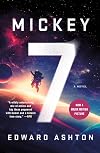
Years ago I was still going to the library when I could, and I was desperately in a cyberpunk mood but had difficulty finding a cyberpunk book. Some might not want to read this next part, but I literally prayed that I could find one before it was time to go. Well, whether or not you believe in God doesn't change the fact that I found that book: Three Days in April by Edward Ashton. Its warning sign cover screamed “maybe cyberpunk” to me, and sure enough, the back of the book didn't just confirm that genre, but the comedy genre as well. Borrowed it, almost loved it. Easy 9/10 for me. But I had difficulty finding his other books.
Years later, I look through a list of upcoming movies and find one called “Mickey 17.” The name was familiar, and I was already famiiar with the director attached to it: South Korean genius Bong-Joon Ho of Parasite fame. But when I clicked the article, the name “Edward Ashton” was all it took for me to want to get to a book store. And this was just after I already used up a fifty dollar gift card for Barnes and Noble on two Stephen Kings and one Gaiman (and a pistachio latte). But I got another birthday gift card, and my family finally had the opportunity to reach a Barnes & Noble. I got Mickey7 and its sequel, Antimatter Blues. After getting through some older goals and cataloguing them here, I finally got around to Mickey7.
I finished the entire thing in one day. Lightly speedreading it, I was able to get through 30 pages in ten minutes show more and finished the book in roughly two hours while listening to some new albums released in the last two weeks. My final consensus is simple: as much as I like Three Days in April, this book blew it out of the water in all respects.
This is a story about an Expendable named Mickey working on colonizing a dead planet, and gaining a new cloned body every time he dies. Except, this time, he was only presumed dead before a new Mickey was created. Both Mickey's operate as separate characters very well, and perfectly natural within the context of how two clones would act if they were used to the very idea as "perfectly plausible" and "part of normal life." Ashton captures the idea of bouncing characters beautifully, especially in the context of worrying about discovery. In fact, for a while the leading threat is his strict and religious boss, who largely does things by the book but can't deny that his religious beliefs play a part in his decisions. Watching Mickey dodge his antics and screw him over is a real treat, one that makes you wanna hi-five Mickey right in the soul.
And the twists? Well, any real off-world future tale with a hint of dystopia needs that, and we get more than our fair share off these. In fact, the story's strongest aspect is how well Ashton develops his world and narrates it as a perfectly natural world to live on. Every bit of future-world exploration is driven by the kind of "cheap-ass powers above giving you crap to live on" that you'd find in other sci-fi stories, like the ration cards, or even the gruel with more scientific terms like "cycler paste." It might be the future, but there will always be people living in crap just to make a living to begin with. Excellent work there.
I knew I'd like Mickey7 a lot if it was easily better than Three Days in April, I didn't think I'd like Mickey7 this much! It gives me pretty much everything I ask for in a great novel: excellent world-development, twisty plotting, personality and a natural feel. I can honestly day that I consider this a perfect novel. Ashton has proven his genius with this one. Glad I read it all in one day. It was one hell of a ride. show less
Years later, I look through a list of upcoming movies and find one called “Mickey 17.” The name was familiar, and I was already famiiar with the director attached to it: South Korean genius Bong-Joon Ho of Parasite fame. But when I clicked the article, the name “Edward Ashton” was all it took for me to want to get to a book store. And this was just after I already used up a fifty dollar gift card for Barnes and Noble on two Stephen Kings and one Gaiman (and a pistachio latte). But I got another birthday gift card, and my family finally had the opportunity to reach a Barnes & Noble. I got Mickey7 and its sequel, Antimatter Blues. After getting through some older goals and cataloguing them here, I finally got around to Mickey7.
I finished the entire thing in one day. Lightly speedreading it, I was able to get through 30 pages in ten minutes show more and finished the book in roughly two hours while listening to some new albums released in the last two weeks. My final consensus is simple: as much as I like Three Days in April, this book blew it out of the water in all respects.
This is a story about an Expendable named Mickey working on colonizing a dead planet, and gaining a new cloned body every time he dies. Except, this time, he was only presumed dead before a new Mickey was created. Both Mickey's operate as separate characters very well, and perfectly natural within the context of how two clones would act if they were used to the very idea as "perfectly plausible" and "part of normal life." Ashton captures the idea of bouncing characters beautifully, especially in the context of worrying about discovery. In fact, for a while the leading threat is his strict and religious boss, who largely does things by the book but can't deny that his religious beliefs play a part in his decisions. Watching Mickey dodge his antics and screw him over is a real treat, one that makes you wanna hi-five Mickey right in the soul.
And the twists? Well, any real off-world future tale with a hint of dystopia needs that, and we get more than our fair share off these. In fact, the story's strongest aspect is how well Ashton develops his world and narrates it as a perfectly natural world to live on. Every bit of future-world exploration is driven by the kind of "cheap-ass powers above giving you crap to live on" that you'd find in other sci-fi stories, like the ration cards, or even the gruel with more scientific terms like "cycler paste." It might be the future, but there will always be people living in crap just to make a living to begin with. Excellent work there.
I knew I'd like Mickey7 a lot if it was easily better than Three Days in April, I didn't think I'd like Mickey7 this much! It gives me pretty much everything I ask for in a great novel: excellent world-development, twisty plotting, personality and a natural feel. I can honestly day that I consider this a perfect novel. Ashton has proven his genius with this one. Glad I read it all in one day. It was one hell of a ride. show less

Recently, Ridley Scott listed one of his own movies as one of his favorites: Blade Runner. I saw this on the Letterboxd Reddit, and many comments were saying that he should be open about being proud of his work. This inspired me to be open about mine, even though this book that I wrote isn't really a "favorite" in that sense. So, really sorry to be reviewing my own book. But I have a lot of projects saved that I'm quite disappointed in, and I would never release something I honestly didn't like. I don't think this novel as perfect, but it's loads of fun.
This is a story about myths from another planet basically coming to life. It's all about what life would be like on an alien planet that hadn't yet developed that kind of technology you see in Star Trek. There's a little Dark Crystal influence here, but it's well-molded into the entire idea of mythology being a leading force in what characters do and how they interact with each other, especially since there will be conflicting philosophies based on conflicting religions and beliefs. I think this is one of the best things I managed to capture, especially since the two main characters are polar opposites who still have to deal with a villain that represents self-worship.
I never once allowed style to overtake the plotting. I remember being constantly insistent on letting the style drive the second most important component of the character's actions and plotting: world development. And lemme tell you, I had as much of a blast show more reading it as I did writing it. What's especially fun is trying to find either magical or pseudo-scientific reasons for the planet's magic system and any varying scientific patterns that Earth does not follow. But characterization always came first. This is true both in personality and visualization, since I use various alien species to mirror Earth's many cultures. The biggest challenge, however, was keeping all the naming systems in line via written notes about their languages and alphabets.
But there are two flaws with this debut of mine, and both go hand in hand. 1. I wanted to go for more meta-commentary on tropes in mythology and fantasy writing, and I really think I failed in that regard. 2. Although I wanted this to be quite different, the failure to further differentiate this novel with meta-commentary lead me to also forget to make this more unique in its plot than simply "beat the wizard in the evil castle."
Like I said, I'd never release anything I wasn't confident in, and I have a lot of projects that need reworking. This, however, feels complete despite its shortcomings, and it's loaded with strong pros to help the novel remain enjoyable despite its two cons. So, I hope to not only start something truly great with this, but improve as a writer by using the two flaws as a basis for improvement (besides, I only ever got one review other than mine, so I'm gonna have to rely on myself for now). show less
This is a story about myths from another planet basically coming to life. It's all about what life would be like on an alien planet that hadn't yet developed that kind of technology you see in Star Trek. There's a little Dark Crystal influence here, but it's well-molded into the entire idea of mythology being a leading force in what characters do and how they interact with each other, especially since there will be conflicting philosophies based on conflicting religions and beliefs. I think this is one of the best things I managed to capture, especially since the two main characters are polar opposites who still have to deal with a villain that represents self-worship.
I never once allowed style to overtake the plotting. I remember being constantly insistent on letting the style drive the second most important component of the character's actions and plotting: world development. And lemme tell you, I had as much of a blast show more reading it as I did writing it. What's especially fun is trying to find either magical or pseudo-scientific reasons for the planet's magic system and any varying scientific patterns that Earth does not follow. But characterization always came first. This is true both in personality and visualization, since I use various alien species to mirror Earth's many cultures. The biggest challenge, however, was keeping all the naming systems in line via written notes about their languages and alphabets.
But there are two flaws with this debut of mine, and both go hand in hand. 1. I wanted to go for more meta-commentary on tropes in mythology and fantasy writing, and I really think I failed in that regard. 2. Although I wanted this to be quite different, the failure to further differentiate this novel with meta-commentary lead me to also forget to make this more unique in its plot than simply "beat the wizard in the evil castle."
Like I said, I'd never release anything I wasn't confident in, and I have a lot of projects that need reworking. This, however, feels complete despite its shortcomings, and it's loaded with strong pros to help the novel remain enjoyable despite its two cons. So, I hope to not only start something truly great with this, but improve as a writer by using the two flaws as a basis for improvement (besides, I only ever got one review other than mine, so I'm gonna have to rely on myself for now). show less
Disturbing in the sex department and rambling on and on, the book attempts to save itself with clever dialogue and narration, but the book is extremely boring until the third act.
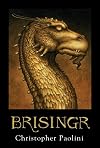
Paolini finally balances the most interesting aspects of the series, notably the dragon-rider relations and the mystique of the magic of the ancient language, as well as the cultures of the world and the plot. Many of these things were built up in the first book, but terribly balanced to the point of forgetting certain aspects in the second. Brisingr is overstuffed, but does justice to the series.
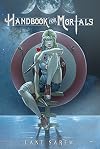
OK, I admit that I've only written one book as well as Lani, and I only have one review of it so far. But as an American, I have to get my little bit of free speech out here. I have NOTHING against romance, fantasy, teen novels or the like. I don't think, as an anime fan, that I have a right to be against any of those things, especially since when I was younger I went on a Sword Art Online binge. And I'm aware of the flaws of SAO: notably the tropy characters. But the story still told the romance fairly well, and I admit to loving the first "Before Sunrise" film.
Handbook for Mortals, however, is completely different. Not only are the characters even less enjoyable and generic than SAO, but nothing about the romance or magic is interesting. Instead of developing something unique, Sarem relies on pop culture references to compare her so-called "magic system" to, like pointing out that it's closer to Practical Magic than Charmed. Also, the romance is hardly romantic, and instead it just gets boring or even annoying. The book will spend 100 pages forgetting that it's also a FANTASY book, so we go long and drawn out moments without magic. Not only that, did we ever get any resolution with that other magic woman, or with that female performer who didn't like our protagonist Zade?
The book doesn't really succeed in the poetry or wording department either. There was a clearly missed typo: "I took everything I owed" as opposed to "owned," as the girl was talking about moving out. show more Also, twice within 30 short pages, she writes that the “tension was so high you could cut it with a knife.” But the tension is hardly felt by the reader because it's such a generic and uninteresting story.
This book was drawn out, uninteresting, difficult to relate to due to one-sided and generic magicians and family members, and no real sense of creativity. I haven't read Twilight, but I'll bet this makes Twilight look like a masterpiece. show less
Handbook for Mortals, however, is completely different. Not only are the characters even less enjoyable and generic than SAO, but nothing about the romance or magic is interesting. Instead of developing something unique, Sarem relies on pop culture references to compare her so-called "magic system" to, like pointing out that it's closer to Practical Magic than Charmed. Also, the romance is hardly romantic, and instead it just gets boring or even annoying. The book will spend 100 pages forgetting that it's also a FANTASY book, so we go long and drawn out moments without magic. Not only that, did we ever get any resolution with that other magic woman, or with that female performer who didn't like our protagonist Zade?
The book doesn't really succeed in the poetry or wording department either. There was a clearly missed typo: "I took everything I owed" as opposed to "owned," as the girl was talking about moving out. show more Also, twice within 30 short pages, she writes that the “tension was so high you could cut it with a knife.” But the tension is hardly felt by the reader because it's such a generic and uninteresting story.
This book was drawn out, uninteresting, difficult to relate to due to one-sided and generic magicians and family members, and no real sense of creativity. I haven't read Twilight, but I'll bet this makes Twilight look like a masterpiece. show less
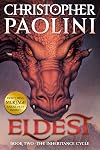
Rambling on about dwarf and elf culture as opposed to getting to some real progress in Eragon's adventures, getting through the third book and its generic twists is a chore. At least the book is still well-detailed enough to keep the interest-factor fairly strong.
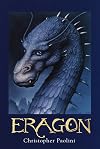
Paolini follows a little too closely to Tolkien in the world-building and twist departments, but the dragon-rider mythos, relations and magics add a level of depth most generic fantasy novels don't have.
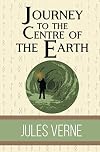
The adventure itself is weird and imaginative, making the most out of pseudo-scientific cheese. However, our smarty pants deuteragonist is annoying as hell and learns nothing.
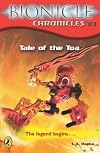
Power Rangers action plus mythology makes for a decent kids story.
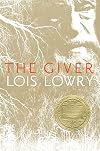
It starts out a little boring at first due to its setting, but the magic of its sci-fi plot and the cruelty of the setting eventually take a strong hold.
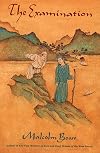
Among the hokey bits are some good adventure scenes.
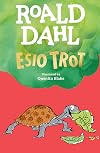
This barely has any of the charm of Roald Dahl's better works, and the cuteness and so-so storytelling only last for so long even in such a short book.
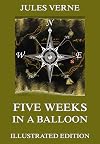
Verne had some polishing to do, but for his first book, this has all the best stuff about his adventure / non-sci-fi works.